How to Make Your Summer Memorable

Escape Adulthood with Kim & Jason. Get more here: How to Make Your Summer Memorable.

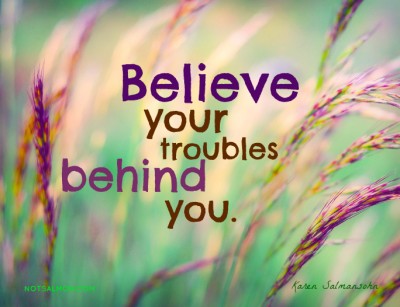
Believe your troubles behind you.

notsalmon via Believe your troubles behind you..

…in which no one shows up for the first hangout, so this is just a brief overview…

Why is the Queen still revered?

The ever controversial Niall O’Dowd writes this:

If the Queen of England were an elected position Elizabeth II  would have been forced out long ago.

Her sixty-year reign has coincided with the total loss of the British Empire and a deeply reduced place for Britain in the world.

Just consider 1953, the year she came to the throne.

It was still the aftermath of the Second World War and Britain was first among all countries in Europe.

The detested Germans were defeated and partitioned and their economy and country seemingly in ruins.

Fast forward 60 years and the Germans are running Europe again and Britain is back to being sick man of Europe along with Spain, Portugal, Italy, Greece, and Ireland of course.

They hardly have a voice in European affairs which are now overseen by France and Germany basically.

Back in 1953 the new Queen oversaw an empire that governed vast tracts of land in Africa, Asia, Europe, and elsewhere on the globe.

During her reign the British were reduced to fighting Argentina over an utterly nondescript island called Malvinas/Falklands and playing second fiddle to American forces just about everywhere.

The decline and fall of the British Empire under Elizabeth in another era would have resulted in a trial and the Tower of London for a goodly spell methinks.” Get more here: Why the Queen who lost the British Empire is still revered — Elizabeth II lucky she’s not locked in the Tower of London | Periscope Niall O’Dowd | IrishCentral.

I’m not sure I have a retort…

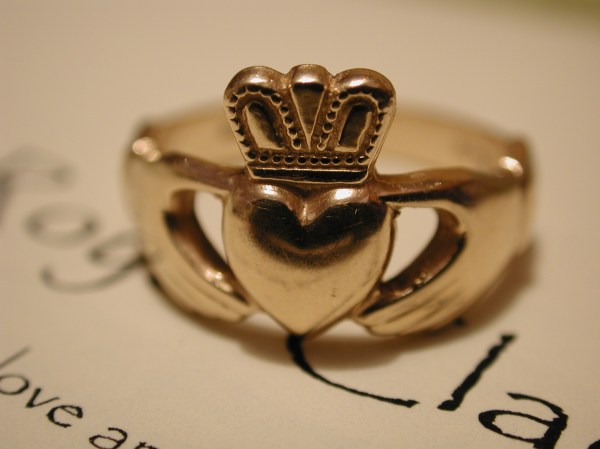
Claddagh rings

English: Gold Royal Claddagh Ring Français : C...

The Claddagh ring (Irish: fáinne Chladaigh) is a traditional Irish ring given as a token of friendship, love, or marriage. The design and customs associated with it originated in the Irish fishing village of Claddagh, located just outside the city of Galway. The ring was first produced in the 17th century, though elements of the design date to the late Roman period.

The Claddagh’s distinctive design features two hands clasping a heart, and usually surmounted by a crown. The elements of this symbol are often said to correspond to the qualities of love (the heart), friendship (the hands), and loyalty (the crown). A “Fenian” Claddagh ring, without a crown, was later designed in Dublin. Claddagh rings, with or without the crown (most commonly with a crown), have come to denote pride in Irish heritage, while continuing to be symbols of love or marriage.

Claddagh rings are commonly used as friendship rings, but are most commonly used as engagement/wedding rings. In Ireland, America and other places, the Claddagh is handed down mother-to-daughter or grandmother-to-granddaughter. The way that a Claddagh ring is worn on the hand is usually intended to convey the wearer’s relationship status:

On the right hand with the point of the heart toward the fingertips, the wearer is single and may be looking for love. (This is most commonly the case when a young woman has first received the ring from a relative, unless she is already engaged).

On the right hand with the point of the heart toward the wrist, the wearer is in a relationship, or their heart has been “captured”.

On the left hand with the point of the heart toward the fingertips, the wearer is engaged.

On the left hand with the point of the heart toward the wrist, the wearer is married.

There are other localised variations in the traditions involving the hand and the finger upon which the Claddagh is worn. Folklore about the ring is relatively recent, not ancient, with “very little native Irish writing about the ring”.

The Claddagh ring belongs to a group of European finger rings called “fede rings”. The name “fede” comes from the Italian phrase mani in fede (“hands [joined] in faith” or “hands [joined] in loyalty”). These rings date from Roman times, when the gesture of clasped hands was a symbol of pledging vows, and they were used as love and marriage rings in medieval and Renaissance Europe.

Fede rings are cast in the form of two clasped hands, symbolizing faith, trust, or “plighted troth”. The Claddagh ring is a variation on the fede ring, while the hands, heart, and crown motif was used in England in the early 18th century.” via Claddagh ring – Wikipedia, the free encyclopedia.

My wife and I have chosen this ring as an intentional symbol of our desire for friendship, love and loyalty above all else…

For the Next 24 Hours…

Melody Beattie writes:

For the next twenty-four hours…

In recovery, we live life one day at a time, an idea requiring an enormous amount of faith. We refuse to look back—unless healing from the past is part of today’s work. We look ahead only to make plans. We focus on this day’s activity, living it to the best of our ability. If we do that long enough, we’ll have enough connected days of healthy living to make something valuable of our life.

…I pray for knowledge of Your will for me only,…

We surrender to God’s will. We stop trying to control, and we settle for a life that is manageable. We trust our Higher Power’s will for us—that it’s good, generous, and with direction. We’re learning, through trial and error, to separate our will from God’s will. We’re learning that God’s will is not offensive. We’ve learned that sometimes there’s a difference between what others want us to do and God’s will. We’re also learning that God did not intend for us to be codependent, to be martyrs, to control or caretake. We’re learning to trust ourselves.

…and the power to carry that through.

Some of recovery is accepting powerlessness. An important part of recovery is claiming the power to take care of ourselves. Sometimes, we need to do things that are frightening or painful. Sometimes, we need to step out, step back, or step forward. We need to call on the help of a Power greater than ourselves to do that. We will never be called upon to do anything that we won’t be empowered to do.

Today, I can call upon an energizing Power Source to help me. That Power is God. I will ask for what I need.

Beattie, Melody (2009-12-15). The Language of Letting Go (Hazelden Meditation Series) (pp. 122-123). Hazelden. Kindle Edition.

Splitting

Split face photo

Splitting creates instability in relationships, because one person can be viewed as either personified virtue or personified vice at different times, depending on whether he or she gratifies the subject’s needs or frustrates them. This along with similar oscillations in the experience and appraisal of the self lead to chaotic and unstable relationship patterns, identity diffusion, and Other-directed mood swings. Consequently, the therapeutic process can be greatly impeded by these oscillations, because the therapist too can become the target of splitting. To overcome the negative effects on treatment outcome, constant interpretations by the therapist are needed.[1]

Splitting contributes to unstable relationships and intense emotional experiences, something that has been noted especially with narcissists. Alexander Abdennur writes in his book on narcissistic personality disorder, Camouflaged Aggression, that “[t]hrough this splitting mechanism, the narcissist can suddenly and radically shift his allegiance. A trusted friend can become an enemy; the partner may become an adversary.”[2]

Treatment strategies have been developed for individuals and groups based on dialectical behavior therapy, and for couples.[3] There are also self help books on related topics such as mindfulness and emotional regulation that have been helpful for individuals who struggle with the consequences of splitting.[4]” Get more here: Splitting (psychology) – Wikipedia, the free encyclopedia.

Letting Go of Being Right

Happy

“How many times have you heard the question, “would you rather be right, or happy?”

It’s always made me a little nuts. Because quite frankly, most times I say, “right, please.” I’ve recently had a change of heart in this matter and hope you will oblige me in exploring the idea of choosing happiness.

Isn’t that funny, I actually have to try to choose happiness.

I used to believe that “right” was an irrefutable fact, thereby making everything and everyone else “wrong.” It seemed to me that “happy” went hand-in-hand with “ignorance is bliss,” and I was not about to wear the dunce cap. So, with my talons firmly embedded in whatever position or idea I was holding, I stood my ground.

In hindsight, I can see that I was simply engaged in black-and-white thinking.

I often encourage my clients in psychotherapy to try to live in the gray. There are a million shades of gray on the spectrum of white to black, and each provides a much richer telling of a story that is hardly ever as clear as this or that. So, when I looked a bit more closely, I saw that “right vs. happy” wasn’t so much about getting crowned the winner or loser, a genius or fool; it was more about my flawed thinking and my desire to feel like I was in control. Yes, that illusion that so many of us want to sink our talons into: Control.

As I reframe the debate of “right vs. happy” to “the illusion of control vs. acceptance / surrender / taking it all a little less seriously,” I can start to see the value in choosing the latter.

Ken Wilber said, “Sometimes you need to allow things to hurt you more, but bother you less.”

Let’s unpack that a little. Why would we want to choose “hurt?” Well, if we are letting go of being right, hurt might mean that we have to grieve. Maybe it’s grieving the idea that we have control and facing our vulnerability. Maybe it’s grieving the dream that never had a chance to be, our attachment to it, and all that we thought it would afford. In this case, we weren’t actually right in the moment, we wanted to eventually be right. It was more of an, “I’ll show you” kind of right.

When we engage in the grieving process—in letting go, the loss no longer has such a tight grip. We can move into the cyclical process of death and rebirth. We can open up to new ideas and experiences. Once this occurs, we are certainly “bothered less.” The unmetabolized grief isn’t gnawing on you like a monkey on your back, and you’re not working so hard to deny its existence. You’ve faced it, taken away its power, and given yourself some choices. And at this point, you are probably a little more “happy.”

Let’s take a moment to define happy in this context. I’m not talking about winning-the-lottery happy, or people-doing-what-you-want-them–to-do happy. Those are external things that we can’t do much about. I’m talking about acceptance happy—where we aren’t in opposition to our own lives. I’m talking about contentment happy. I know, it’s not as flashy as winning the lottery, but trust me, it’s much more attainable and sustainable.

So, the next time your talons are firmly embedded in the position you are holding, see how much grief it is causing you and consider letting it go. Think of it as a social experiment. Perhaps you’ll start with something small, like where to meet your friend for lunch. You may know for certain that the best deli is on the corner of Smith Street, but do you really want to argue that point? I imagine that connecting with a friend about what really matters is much more enjoyable, and far more important.

And when it comes to the bigger stuff, know that you are not alone in having a hard time letting go. We all struggle in this regard. Perhaps you can start with a simple intention to do it differently, knowing that is enough to start the process of moving towards less rigidity, more flow, and ultimately more “happy.” via A Million Shades of Gray: Letting Go of Being Right « Positively Positive.
Conceive, believe, achieve…

Quin is a winner…

…no matter how you look at it. Did we think that Quin would win state as a sophomore? No. Did we hope for a better outcome? Yes. In the end, we’re grateful Quin had the opportunity to go and see what it was all about…

We hope that he’ll use this as a learning experience that will fuel him through long winter months in the weight room and propel him to a better outcome at State 2.0 next spring. Let the preparation begin!

Just in case you missed this for 6/4/2012

  1. “The trouble with most of us is that we’d rather be ruined by praise than saved by criticism.”

    – Norman Vincent Peale

  2. “With forgiveness, your victim identity dissolves, and your true power emerges – the power of presence. Instead of blaming the darkness you bring in the light.”

    – Eckhart Tolle

  3. “When you are inspired by some great purpose, some extraordinary project, all your thoughts break their bonds: Your mind transcends limitations, your consciousness expands in every direction, and you find yourself in a new, great, and wonderful world. Dormant forces, faculties and talents become alive, and your discover yourself to be a greater person by far than you ever dreamed yourself to be.”

    – Patanjali

  4. Todd’s tweets…

How to Become Your Spouse’s Best Friend

Michael Hyatt writes:

What does marriage have to do with leadership? If you are married, everything. Nothing will undermine your effectiveness as a leader faster than a bad marriage. Your marriage is a living example of what it is like to be in a close relationship with you. This is why it is so important that leaders get this right if they want to influence others.

Unfortunately, we live in a culture that is very me-centered. Gail and I often talk to people who are frustrated with their spouses. Most of this stems from the fact that they are not getting what they think they need or what they think they should be getting.

I am not saying that it is wrong to give voice to your needs. I am saying that it is often an ineffective way to get them met, unless you first sow the seeds of giving and servanthood. (This is also good practice for being a leader in any sphere of life.)

Gail and I have been married for 33 years next month. We can both honestly say that we are one another’s best friends. We talk constantly, go on long walks together, and eat almost every meal together. We just love being in each other’s company.

But what if you don’t have this kind of relationship with your spouse? We work with enough couples to know that this kind of intimacy and friendship is rare.

But, honestly, we are not special. I don’t want to be naive, but I don’t think it is that difficult—if you are willing to make the investment.” Get more here: How to Become Your Spouse’s Best Friend | Michael Hyatt.

Becoming my wife’s best friend [still in process] is the best thing I have ever done. It is NOT difficult if you are willing to make the investment and it is breathing new life into a marriage that should have ended long ago. Dig deep into Michael Hyatt’s advice!

Wisconsin Recall Election Seen as Referendum

You might be thinking to yourself “Hey, what’s this political crap doing on Todd’s blog?” Well, I got my start in political blogging and stopped 3 years ago because I found it wasn’t healthy for me or my family or my business. The things I learned as a political blogger I now apply in my business practice and to the ideas I post here…

I’m going back to politics for one post simply because I feel that this recall election affects everyone in the country — not just us cheeseheads — but at the same time, I think people don’t have much bandwidth for civic issues they perceive don’t affect them. Here’s ABC’s perspective on the Wisconsin recall…

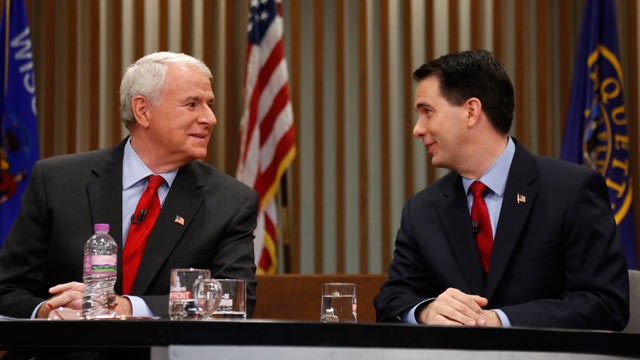
“In a battle viewed largely as a barometer for November’s showdown between President Obama and Republican challenger Mitt Romney, Wisconsin voters on Tuesday will decide whether to oust Gov. Scott Walker for what Democrats contend is an unacceptable attack on organized labor by the GOP lawmaker.

During the winter of 2011, the Badger State became locked in a standoff as Walker pushed to roll back union rights for many public employees, infuriating labor groups in the state and around the country. While the governor ultimately succeeded in signing a law that stripped most public employees of their collective bargaining rights on pensions and health care, and limited their pay increases, the backlash against Walker set the stage for this week’s recall vote.

“It’s a statement about what role we think the public sector ought to play,” said Barry Burden, a professor of political science at the University of Wisconsin-Madison. “There are fundamental differences between the two parties here, and they mimic the debate in Washington. Republicans want to reduce the size of government, and they view the public sector as a hindrance to job growth, while Democrats want to use the public sector to spur job growth, promote fairness and serve as a safety net. We can’t do both. Wisconsin is a swing state, and it represents a lot of the diversity we find in the country in general, so for that reason I think the recall here is a symbol of the larger argument going on.”

Recent polls show Walker leading his Democratic opponent, Milwaukee Mayor Tom Barrett. A survey of likely voters conducted by Marquette University Law School from May 23-26 showed Walker with a 52 percent to 45 percent advantage over Barrett. But public polling can be unpredictable because of the special nature of the summertime election, and that poll came before the two opponents engaged in a heated debate Thursday night.” Get more here: Wisconsin Scott Walker Recall Election Viewed ss Referendum – ABC News.

In 2008, I stepped down from my position as 3rd Vice Chairman of the Republican Party of Wisconsin due in large part to bad experiences in dealing with campaigns and party officials. While I never had a bad experience with Scott personally I did have one with his campaign. Despite the bitter taste in my mouth, I’ll be voting for Scott tomorrow. For me, there is an important issue at stake; namely, from my perspective powerful forces like unions outside our state are trying to influence how we live here for their own purposes. Scott Walker promised to bring fiscal sanity back to Wisconsin and for the most part he has kept those promises. Of course people and organizations who have been feeding at the public trough are pissed but Wisconsin and the United States cannot continue handing out public monies they way they have. Scott Walker has been good for Wisconsin and the US; I encourage you to support him tomorrow…

PS Did you know this is only the third time in our nation’s history that a governor has faced a recall election?

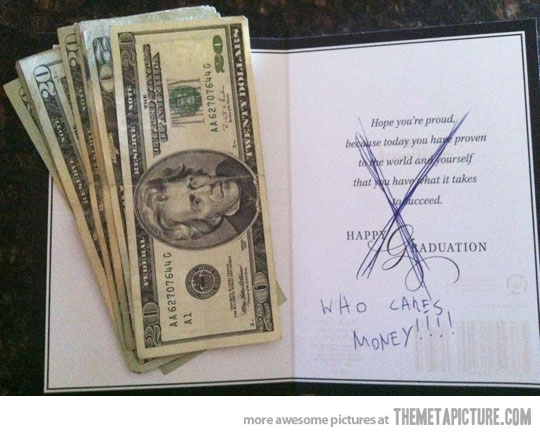
Best graduation card ever…

The Meta Picture via Best graduation card ever….

Ford brochure, 1955

Retronaut via Ford brochure, 1955.

Enter The Real Dragon

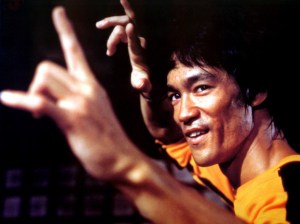
“To hell with circumstances. I create opportunities.” Bruce Lee. Get more here: Enter The Real Dragon – I Am Bruce Lee | FinerMinds.

Follow Your Bliss!

The Daily Love via Visual Inspiration: Follow Your Bliss!.

ParadoxicalProductivity: The First 14


Nicholas Bate writes…

“1: Send Less E-Mail. Get less e-mail.

2: Tidy Up. Gain clarity.

3: Fewer People. Faster, focused and easier.

4: Use A Wall Planner Not Your Phone To Plan. The future, not just today.

5: You KNOW the problem: (1) Wake Up (2) Look Up (3) Get Real

6: Stand Up. Gain determination.

7: You Don’t Need To Be Nice. Polite, loyal and on time definitely. But this ain’t kindergarten.

8: Put the work in at the start. For an easy life later on.

9: Take A Break. It activates higher brain where the best work is always done.

10: Start at the end. Start with the result you want and work backwards.

11: Work Hard To Maintain The Relationship. Productive business needs trusting relationships.

12: Make Small, Big. And Big, Small. Get perspective/get a plan.

13: Know Your Rhythm. Follow your rhythm rather than just the Siren’s call of pure urgency.

14: Re-claim your unique advantage. Stop & Think.

The detail here.

Bonus 1:  Professionalism 101

Bonus 2: How To Be Brilliant

Bonus 3: How To Be Brilliant at Business” via ParadoxicalProductivity, Director’s Cut: The First 14.

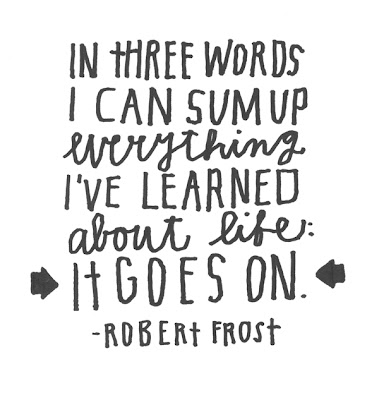
Lessons…

Anderson Layman’s Blog via Lessons…………….

:-D

Just in case you missed these; click the image to enlarge…

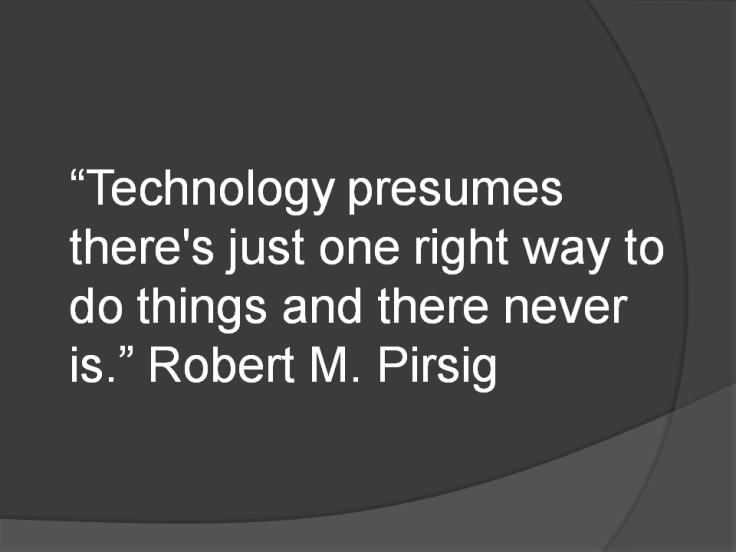
Technology

Start a Blog at WordPress.com.

Up ↑