Heh, heh, heh…


Need Better Results? Shift Your Thoughts!

Ponder this:
Are your thoughts fueling the results you want to bring into your life?
Your individual thoughts and beliefs are similar to chapters in a book. When you put them all together, you have the belief system that becomes your story.
You have beliefs about yourself at work, at home, in relationships, and in all others areas of your life. The more you repeat your story, the more you believe it. Therefore, one seemingly insignificant doubt or negative thought can have a major impact on your results—it shifts what you think is possible.
Here’s what the link between your thoughts and results looks like. Your results feed back into your thoughts, so everything is related.
Thoughts —> Beliefs —> Mindset —> Actions —> Results/Reality
Full story at: Need Better Results? Shift Your Thoughts! « Positively Positive

10 Things to Stop Caring About Today
Royale Scuderi has a post that I thought was so good I curated the whole thing for you:

Some things you can feel free to stop caring about
Other people’s expectations for your life
This is your life. You are the one who has to live it. You have to live with the consequences of the decisions you make and the actions you take, so you should make them according to what you want for and from your life, not what someone else thinks you “should” do with your life. We care way too much about what other people think about us and far too little about what we think about ourselves.
How much you weigh
It’s just a number people! We live in such a weight-obsessed culture that our weight is often a measure by which we are judged and worse by which we judge ourselves. I’m not saying to stop caring about being healthy, that’s a completely different thing, and one definitely worth worrying about. Just don’t fixate on the number on the scale. Care about healthier food choices, care about how strong you are, how much exercise you’re getting, just stop attaching your value, your success, your confidence, your attractiveness and your health to this one single number.
How other people live
Let other people live their own lives, just as you’d like to be able to live yours. Stop judging what other people do and how they live. That’s their business. If it doesn’t affect you, stop caring about it. Stop comparing what you have, how you look, the money, the status, the possessions, the beauty to what you “think” others have. Don’t measure yourself against other people, measure yourself against your own yardstick.
How many Facebook friends you have
Same goes for Twitter followers. The number of social connections you have is not a good indicator of either the strength of your network or your true popularity. True connections are measured by the quality of interactions and the people you who actually care about you and what you have to say. How people respond to you and share with you is a far better indicator or your social status.
Perfection
We suffer so much anguish caring about being perfect. Perfection is nearly unattainable and our striving for it, costs us so much. Perfect is a waste of time, perfect is unreasonable, perfect is a recipe for stress. Pretty darn good is a better goal. It’s usually more than good enough and far less stressful. (Note: If you’re a brain surgeon or a pilot, please try for close to perfect, but as long as you leave my gray matter in place and get me on the ground safely, I’m good.)
Aging
You can’t stop the clock. It’s a fact, no matter how much you worry about it or how much money you spend trying to hide it, time is going to keep right on ticking and taking you along with it. Stop caring about how old you are. It’s not a good measure of the quality of life anyway. Or maybe it is…Studies have shown that people are actually happier as they age. So stop caring about your biological age and wrinkles (whether you have them or worry about getting them,) and start caring about what how you want to live the years you have left.
Fitting in
We place too much value on conformity. If you like to listen to jazz and wear purple shoes, go for it. If you are the sculptor in a family of accountants, good for you. No make-up, big jewelry, cowboy boots, bow tie, thrift store clothes, dinner on cushions, no TV…it’s all fine. You’re not hurting anyone, and though they may judge you, that’s their problem, not yours.
Star Watching
Why are we so obsessed with celebrities? From reality shows to magazines, entertainment news shows to paparazzi photos, clothing lines to hairstyles, we are so infatuated with the lives of the rich and famous. Why? Are we so unhappy in our own lives that we have to get our excitement and pleasure by watching public figures live theirs? Stop wasting your time caring about what famous people do, good, bad, crazy, sad or fabulous. It has nothing to do with you. It’s only a distraction from your own life.
Being right
We all want to be right. It must be intrinsically bred into our DNA, but more times than not, it’s very destructive. When we’re striving to be right, we’re focused on proving other people wrong. We’re grasping for power by trying to prove our infallibility. Care about finding solutions, collaborating with others to find the best answers, and cultivating relationships. Care about the result, not who is right or wrong.
Anything you can’t control
Stop caring about things you can’t control. If there’s nothing you can do to impact the person or the situation, then don’t waste your energy. There are so many important things in your life, in this world that you can affect. Focus on what you can change, where you can have the most impact, make a difference, and let the rest go.
Thanks for your excellent thoughts, Royale – hope you don’t mind that I promoted your content here…
15 Great Excuses Not to Form the Fitness Habit

 Leo Babauta writes:
Lots of people know they should be getting fit, but they can’t seem to find the time to form the fitness habit.
And while I understand this completely — I was stuck in overweight, unhealthy mode for years — I think it’s useful to take a look at the justifications we give ourselves to put it off.
I put things off because I didn’t have time, or energy, or I had too many family commitments, or not enough motivation, or work kept getting in the way, or I didn’t feel good enough to run, or I was sick, or other people would make things difficult, or I didn’t have the money for a gym membership … you get the idea.
But I’ve learned to kill all the excuses. Or to put it less violently, I’ve found loving ways to let them go and embrace the joy of a fit and healthy life.
I did it with six kids and a wife, a full-time job (and now my own business), a ton of family and work commitments, freelancing on the side, building a blog on the side, while writing various books … and so the excuses were ultimately meaningless.
Why might you be putting things off? Let’s look at the justifications, and try to blast them.
Full story at: » 15 Great Excuses Not to Form the Fitness Habit :zenhabits
Related articles
- Healthier Choices: Leo Babauta’s Daily Routine (greatist.com)
- Why the Fitness Habit is More Important Than the Plan (zenhabits.net)
- New Habits (barbsfitublog.wordpress.com)
- The Beginner’s Guide to Unschooling (toddlohenry.com)

Accepting love…

 Melody Beattie write:
Many of us have worked too hard to make relationships work; sometimes those relationships didn’t have a chance because the other person was unavailable or refused to participate.
To compensate for the other person’s unavailability, we worked too hard. We may have done all or most of the work. This may mask the situation for a while, but we usually get tired. Then, when we stop doing all the work, we notice there is no relationship, or we’re so tired we don’t care.
Doing all the work in a relationship is not loving, giving, or caring. It is self-defeating and relationship defeating. It creates the illusion of a relationship when in fact there may be no relationship. It enables the other person to be irresponsible for his or her share. Because that does not meet our needs, we ultimately feel victimized.
In our best relationships, we all have temporary periods where one person participates more than the other. This is normal. But as a permanent way of participating in relationships, it leaves us feeling tired, worn out, needy, and angry.’
We can learn to participate a reasonable amount, and then let the relationship find it’s own life. Are we doing all the calling? Are we doing all the initiating? Are we doing all the giving? Are we the one talking about feelings and striving for intimacy?
Are we doing all the waiting, the hoping, and the work?
We can let go. If the relationship is meant to be, it will be, and it will become what it is meant to be. We do not help that process by trying to control it. We do not help the other person, the relationship, or ourselves by trying to force it or by doing all the work.
Let it be. Wait and see. Stop worrying about making it happen. See what happens and strive to understand if that is what you want.
Today, I will stop doing all the work in my relationships. I will give myself and the other person the gift of requiring both people to participate. I will accept the natural level my relationships reach when I do my share and allow the other person to choose what his or her share will be. I can trust my relationships to reach their own level. I do not have to do all the work; I need only do my share.” Source: Just For Today Meditations – Maintaining A Life
Questions? Feedback?
Related articles
- Conflict and Detachment (toddlohenry.com)
- Payoffs from Destructive Relationships (toddlohenry.com)
- Intimate Relationship (hyattractions.wordpress.com)
- Coping with Families (toddlohenry.com)
- Take responsibility for your life and choices (toddlohenry.com)
- Birthdays: A New Chance to Embrace Life (ariannasrandomthoughts.com)
- Recovery (toddlohenry.com)
- Love… (mimiiluv.wordpress.com)
- Four Signs That Healthy Love Is On Its Way (psychologytoday.com)
- The Love Dare: Love promotes intimacy – Day 17 (njorogejustus.wordpress.com)
David Allen on How to Fix Your Life

One of my favorite clients sent me an article from one of my favorite writers [James Fallows, Free Flight, et al] about my favorite productivity thinker David Allen and I share it with you here. Fallows writes:
As I mentioned… I’ve been writing about and learning from the productivity expert David Allen for nearly a decade. Eight years ago, I wrote a profile of him for the magazine. In our newest issue I have highlights from a conversation I had with him, about coping with the modern nightmare of email and all-hours connectedness.
Source: David Allen on How to Fix Your Life – James Fallows – The Atlantic
Here are some highlights from the article online…
Everybody’s going to top out at some point, where your psyche just can’t manage any more. I was just reading that J. S. Bach had 20 kids. People complain now, “I’m so busy with the kids.” Okay, have 20 kids and see what happens. If you’re a musician or a writer, you could always be doing more work. So I don’t know that it’s ever been different for someone with an open-ended profession or interest.
So again, back to my general philosophy, [which] is: look, make as few plans as you can, capture every single thing that is potentially meaningful, and make sure you’ve got the appropriate maps to be able to know where to focus. It’s always been true about GTD, but I think [you need] a way to be able to see: How do you set priorities about all this stuff? Well, you need maps. You need maps to orient yourself. You need a map that says “Hey, in the next three years, what’s coming toward me that I need to be aware of?” “In the next three minutes, what’s coming toward me?” Those are different maps. By the way, you know, a “map” would be any list that you have that orients you: “Here’s my whatever-it-is project.” That’s a map. Obviously your calendar is a map. So having all the potentially relevant data determined so you can populate your appropriate maps and then spread out [in] your map room and say “Okay, what do I need to look at right now?” So the ability to be able to decide what needs to go on what map and then building the behaviors to make sure that you’re then negotiating with those maps appropriately.
What’s different these days? Nothing is different really, except how frequently this occurs. You and I have gotten more change-producing and priority-shifting inputs in the past 72 hours than your parents got in a month, some of them in a year. I was reading that in 1912, someone was complaining about the telephone, exactly the same things you hear people say about e-mail: “Oh my God, it’s going to ruin our quality of life”; “conversations are going to become surface-only and not meaningful”; “all the interruptions and distractions!” It reads like right now. I am hearing the same things I did when I first got into these issues, at Lockheed in 1983. In those days, if you even had a pocket Day-Timer, you were considered something of a productivity geek. The difference is that rather than a small minority of people experiencing this stress, it’s a much larger group of people, at every level.
Allen is brilliant and Fallows captures him at his best! Read the full story and then go back and consider how to apply Getting Things Done [GTD] to your internet tasks as I have outlined in this ongoing series! You might also enjoy this audio interview I did with David Allen several years ago…
Full story at: David Allen on How to Fix Your Life – James Fallows – The Atlantic


Some good thoughts from the Content Marketing Institute for bloggers that getting serious about blogging ‘on purpose’…
If one thing is certain in life it’s that very few ideas are genuinely groundbreaking, never-seen-before moments of genius. The reality is that almost everything that we do now is either a reinvention of the wheel or a plain-and-simple rehashing of something that has come before.
Some might say these ideas are lame concepts created for and by people too lazy to come up with something of their own. If you believe that, then you’re missing out on a lifetime of learning. Put simply, ideas are very rarely about the concepts themselves but more about the execution. It’s in the execution that brilliance lies.
I use reverse engineering a lot, and when it comes to content strategy, there are few better ways of using this little trick than by “borrowing” content flow and content strategy from the guys and girls who know it best.
Magazine planning has been perfected over decades of iteration, and the very best print-based titles leave a footprint that offers the ultimate blueprint from which you can create your perfect content strategy online.
Source: Reverse Engineer Content Strategy | Content Marketing Institute
For years I said I don’t need no stinkin’ editorial calendar but my results got better when I started thinking like a publisher. This article will help you understand how so go to the source and drink it in…
Related articles
- Content Strategy: How Europe Sees It (business2community.com)
- 5 Ways to Create a Likeable Content Marketing Strategy (convinceandconvert.com)
- 7 Content Marketing Strategies For 2013 (business2community.com)
- Developing An Effective Content Strategy (freemakemoneyadvice.com)
- A simple content strategy for your business blog from +Tadeusz Szewczyk (plus.google.com)
- Our Content Strategy Philosophy: “Only as Good as the Hands It’s In” (business2community.com)




Healthy Dependency?
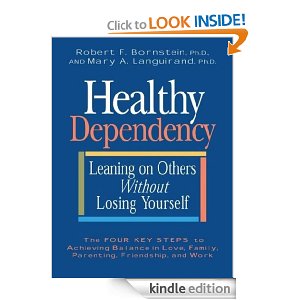
I didn’t know what it looked like either until I read this book. I knew what it looked like to be unheathily attached — it looked like codependency. I knew what it looked like to be unheathily detached — it looked like ‘eff you — I’m taking my marbles and leaving’. If you struggle with either being overly detached or attached, this book will help evision what healthy dependency looks like…

 Bright, shiny objects!
You must be logged in to post a comment.