Touching Peace by Thich Nhat Hanh

See on Scoop.itWholeheartedness

Todd Lohenry‘s insight:

Free download! Developing upon teachings on the art of mindful living begun in Being Peace, Thich Nhat Hanh shows the connection between inner peace and peace on earth. Recorded live in New York in 1991, he teaches us how mindful breathing and awareness is refreshing and healing, and how it can be used as the basis for examining the roots of war and social problems. His vision for rebuilding society through strengthening families and communities coalesces the ultimate reach of each act in our daily lives.

See on www.betterlisten.com

Small Things

See on Scoop.itWholeheartedness

Buddha Doodle – ‘Small Things’ – The Huffington Post

Todd Lohenry‘s insight:

I enjoy Molly Hahn’s art…

See on www.huffingtonpost.com

Is Housework The Great Equalizer in Couples?

It is in our home!

Men, when was the last time you rolled up your sleeves and tackled the dishes?

Today’s modern family has women in the workplace and men much more involved in the home and parenting. This means men and women are figuring out how to divide the labor and conquer the household chores.

When it comes to marital satisfaction, at-home work seems to be a great equalizer. Husbands who pitch in and help around the house make their wives happy! That’s right, the quality of marriage is affected by men doing housework!

The division of labor matters. Husbands don’t have to work with their wives to get things done at home, just take on some of the tasks (April 2013, Journal of Family Issues).  It’s not the togetherness of doing house work, but the fact that men are participating that makes a difference.

So men, pull out those culinary skills, clean a few toilets, and mop that floor…it just might improve your marriage! Your wives will be impressed and think you care.

And men, don’t worry, your leisure time is not at risk. According to Pew researchers, you might be spending more time at work than your female counterparts, doing more around the house, but you still have more leisure time than your wife. So no complaints. Doing housework can only help your marriage!

via Is Housework The Great Equalizer in Couples? – Doing Life Together.

Housework is so beneficial for both of us that I call it ‘choreplay’. Plus, it gives me an opportunity to practice mindfulness while I’m engaged in housework. Men, make it a priority to love your wife through acts of service by sharing the load. You and your wife will both benefit…

On being replaceable…

Click image to enlarge…

Dilbert comic strip for 03/23/2013 from the official Dilbert comic strips archive..

Heh, heh, heh…

You are not your story

Every negative experience or thought is an opportunity to awaken. What thoughts are holding you back from connecting to your inherit love and light?

Every negative experience or thought is an opportunity to awaken. What thoughts are holding you back from connecting to your inherent love and light?

via Molly Hahn: Buddha Doodle – ‘Not Your Story’.

Emotional Abuse

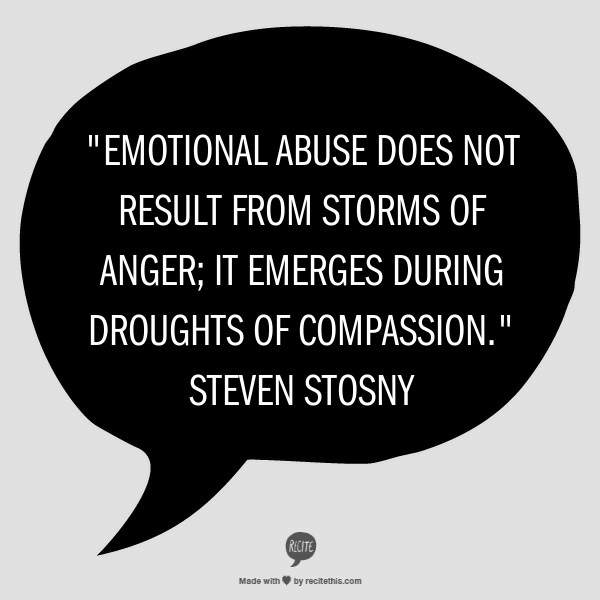
Merely refraining from abusive behaviors will do nothing to improve a relationship, though it may slow its rate of deterioration. To repair the harm done, there must be a corresponding increase in compassion on the part of the abuser. Abusers do not change by receiving compassion; they change by learning to give it. Emotional abuse does not result from storms of anger; it emerges during droughts of compassion.Steven Stosny writes:

Emotionally abusive behavior is anything that intentionally hurts the feelings of another person. Since almost everyone in intimate relationships does that at some time or other, emotionally abusive behavior must be distinguished from an emotionally abusive relationship, which is more than the sum of emotionally abusive behaviors. Continue reading “Emotional Abuse”

Love Yourself First!

…and remember to practice self-compassion this weekend!

How Can a Few Seconds Be Useful?

By using them to ‘reboot’ yourself! Ctrl-Alt-Del for the mind…

Do you like me?

Being a WordPress consultant in the WordPress.com community is a terrible thing. I’m always coming across things that I’d like to change or add to my blog as I read your content on your sites. Changing the look and feel of my blog is something that I could do even more often than I do, but recently, I changed to the Splendio theme and I’m quite happy with the results. It’s a little bit edgy for me, but I think the generally upbeat ‘feel’ is consistent with my message of wholeheartedness and self-compassion…

What about you? What’s your take?

Why We Need to Have Compassion for Our Inner Critic

Kristin Neff writes:

We know how much it hurts. “I’m an idiot!” “I’m disgusting.” “No one will ever love me.” “What a lame-ass.”

So why do we do it? As soon as we ask ourselves this question, we often just pile on more self-criticism. “I’m such a bitch, even to myself.” “That’s why I’m such a loser, I’m always putting myself down.”

Don’t beat yourself up for beating yourself up in the vain hope that somehow it will help you stop beating yourself up. Instead, take a step back, and give your inner critic some slack. In its ineffective, counterproductive way, your inner critic is actually trying to keep you safe.

As humans we have two main evolved safety systems. The oldest and most quickly triggered is the threat defense system, which involves the amygdala. When we sense danger, our response is typically fight, flight, freeze, or submit: We turn and fight the threat, run like hell away from the threat, play dead in hopes the threat will pass, or show our bellies and hope the threat will be placated. These strategies are very successful for animals living in the wild, helping them to survive and pass on their genes. For humans, however, these responses often just make things worse. That’s because the threat we’re usually facing is a threat to our self-concept. We confuse our thoughts and representations of ourselves for our actual selves, meaning that when our self-image is under siege, we react as if our very existence is threatened. When this happens, our threat defense system uses the same strategies to stay safe:

Fight — we beat ourselves up emotionally, using cruel language to cut ourselves down.

Flight — we become anxious and restless, fleeing from ourselves by numbing out or using distractions like food or alcohol.

Freeze — we get stuck in rumination, thinking about our perceived inadequacies over and over again.

Submit — we admit that yes, we’re terrible, and accept all the harsh judgments we throw at ourselves.

More often than not we engage in some combination of all these strategies. Our stress levels go up as our amygdala activates our sympathetic nervous system (which arouses us so we can deal with threats) and floods our system with adrenaline and cortisol. And it’s a double whammy because when we criticize ourselves, we are both the attacker and the attacked. This type of chronic stress can eventually lead to anxiety and depression, undermining our physical and emotional wellbeing.

Still, it’s important to remember that when our inner critic attacks, at root it is trying to ward off danger. Marshal Rosenberg, author of the book Non-Violent Communication, says self-criticism is the “tragic expression of an unmet need.” It’s tragic because self-criticism makes us feel horrible and doesn’t effectively motivate productive change. (See my blog “The Motivational Power of Self-Compassion.”) But if we look closely — our inner critic cares. There is some safety need it is trying to meet. Our inner critic wants us to be happy, but doesn’t know a better way to go about it. Let’s say you criticize yourself for not going to the gym, calling yourself a “lazy slob.” At some level, your inner critic is reacting out of concern that if you don’t go to the gym you won’t be healthy, or that you’ll be rejected by others. We can be kind and compassionate to this part of ourselves, because at some level it has our best interests at heart. And believe it or not, by giving compassion to our inner critic, we are moving out of the threat defense system and into our other safety system.

As mammals, we also evolved the attachment/affiliation system as a survival strategy. Mammals have the innate capacity to be soothed by warmth and affection, meaning that our young are likely to stay near caregivers, be protected, and survive. The care-giving system deactivates the sympathetic nervous system (reducing cortisol) and activates the parasympathetic nervous system, which calms us down. This route to emotional safety is much more effective — reducing our stress and anxiety rather than exacerbating it. And it gives us the emotional balance needed to make wise decisions, including making behavioral changes if needed. (I write about self-compassion and the mammalian care-giving system in my blog “The Chemicals of Care.”)

So the next time you find yourself in the throws of harsh self-criticism, instead of beating yourself up for beating yourself up, thank your inner critic for its efforts, then try the strategy of giving yourself some compassion instead. It’s more effective, and a lot less painful!

Full story at: Kristin Neff: Why We Need to Have Compassion for Our Inner Critic.
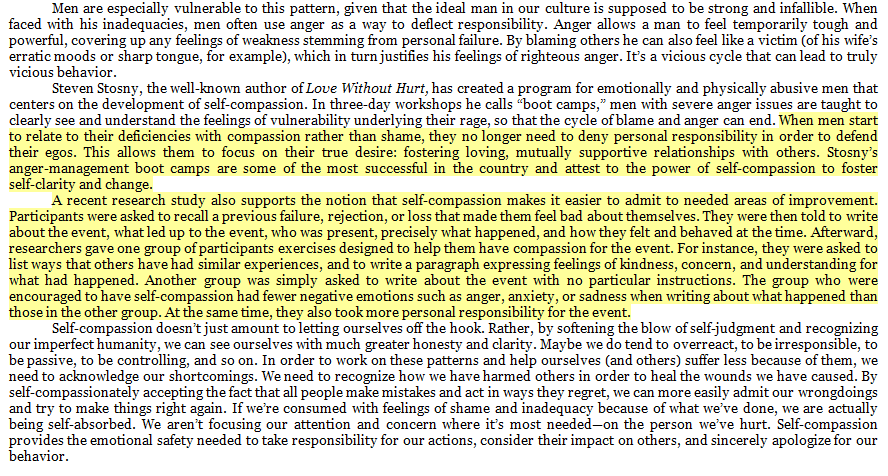
Another excerpt…

…from Kristen Neff’s book ‘Self-compassion’. Click image to enlarge…

ScreenClip
You can find Steven Stosny’s books here and his website here. If you’re not familiar with Kristen Neff, you can catch her bio and a few posts at HuffPo

recite-28106--1764563529-cm1852

A Tale of Two Coaches: What Kind Are You?

See on Scoop.itWholeheartedness

There’s more to coaching than sharing your expertise. The way you communicate that expertise is as important as the knowledge itself.

Todd Lohenry‘s insight:

Michael Hyatt shares an interesting story about picking up golf again. More interesting to me is this question; when coaching your Self, which one of these two coaches do you most resemble? Which one would you like to be more like?

See on michaelhyatt.com

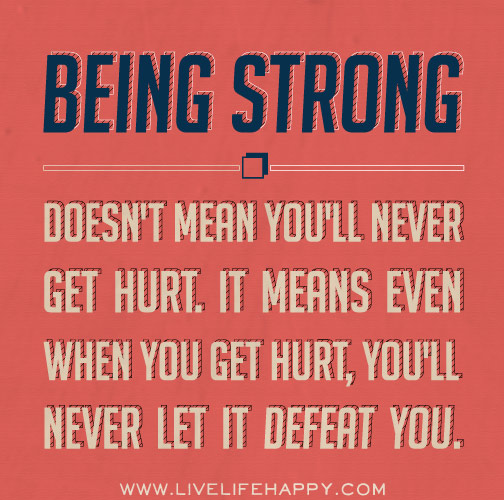
Being Strong Doesn’t Mean

Live Life Quotes, Love Life Quotes, Live Life Happy

via Being Strong Doesn’t Mean.

Crazy Train

Funny. A year ago this time I thought I was doing well to know that I could get off the Crazy Train. Now, thanks to the works of Brene Brown, Tara Brach and Kristin Neff I am realizing I don’t have to react to every opportunity to get on the train; I can respond to those opportunities by sitting at the station and watching the Crazy Train go by. It may seem silly to you, but it’s a big revelation for me…

:-D

Todd Lohenry's avatarBright, shiny objects!

I’m not much of an Ozzy Osbourne fan but I heard the words to this song for the first time today and I actually thought it was quite good…

Crazy,but that’s how it goes
Millions of people living as foes
Maybe it’s not too late
To learn how to love
And forget how to hate
Mental wounds not healing
Drivin’ me insane
I’m going off the rails on a crazy train
I’ve listened to preachers
I’ve listened to fools
I’ve watched all the dropouts
Who make their own rules
One person conditioned to rule and control
The media sells it and you live the role
Mental wounds still screaming
Driving me insane
I’m going off the rails on a crazy train
I know that things are going wrong for me
You gotta listen to my words
Yeah
Heirs of a cold war
That’s what we’ve become
Inheriting troubles I’m mentally…

View original post 70 more words

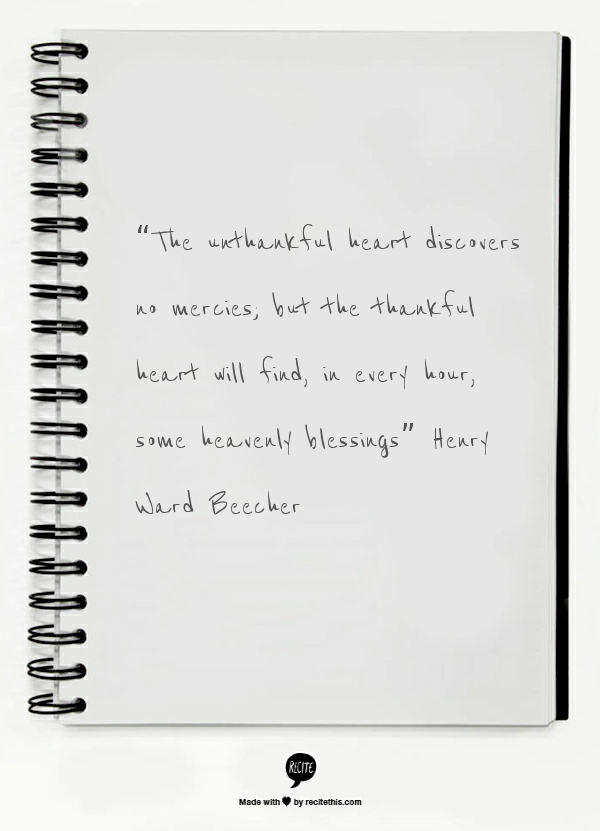
“The unthankful heart discovers no mercies; but the thankful heart will find, in every hour, some heavenly blessings” ~Henry Ward Beecher

4 Quickies To Improve Listening Skills

Unconditional love

Don’t take refuge in anything outside of you

Ahhh. And remember my good Christian friends who freak out at the ‘B word’ that Jesus said ‘the Kingdom of God’ is within you. If you practice ‘deep ecumenism‘ you may find that there is one river and many wells

Lou's avatarZen Flash

When the Buddha was very old,
just before he died, he said,
My dear friends, my dear disciples,
don’t take refuge in anything outside of you.

In every one of us
there is a very safe island we can go to.

Every time you go home to that island
with mindful breathing, you create a space of
relaxation, concentration, and insight.

If you dwell on that island in yourself
with your mindful breathing, you are safe.

That is a place where you can take refuge
whenever you feel fearful, uncertain, or confused.

~~ Thich Nhat Hanh

View original post

Meditation, mindfulness, and introversion

Julie's avatarmindfulness. authenticity. introversion.

pelicans

Zen Habits: “But what many people don’t realize is that meditation is perhaps the most important habit if you want to change other habits.”

I have been asking myself more frequently why I am writing about mindfulness and its benefits and yet my meditation – just sitting down and doing it – is pretty non-existent.

Thankfully there are little pockets of the memory of meditation from years past, but it is barely enough.

Then I got two prompts in the same day. An email from Zen Habits about how meditation is the most fundamental habit. An article in Australian Yoga Life magazine on re-energising your focus on meditation. Both reminded me about the importance of commitment, and about placing meditation within the rhythm of your daily life.

Starting small and starting now are great ways to begin a habit. But it’s often useful to unpack why I am resisting…

View original post 618 more words

what is mindfulness?

Start a Blog at WordPress.com.

Up ↑