What happens in an Internet Minute?

Popular stories · Storify

via So ein Dings løbende Pipstrøm.

Thank you, @davidkanigan, for sharing this…

Live & Learn's avatarLive & Learn

It’s an Amazing Grace feeling-kind-of-morning.  Here’s Rodney Britt and friends with 53-second clip, which I wished kept going and going.


And from a simple, spiritual, soulful version – – we move to the soul stirring pipes.  Amazing Grace hits a crescendo after 4:00 minutes.  

View original post 14 more words

"Who would I be if I did not believe something was wrong with me?" Tara Brach

Via http://tarabrach.com

No Matter What May Have Happened

No matter what may have happened yesterday, a new day of fresh possibility has dawned. You are not the same person today as you were yesterday! -Daisaku Ikeda

Live Life Quotes, Love Life Quotes, Live Life Happy

via No Matter What May Have Happened.


“If we could read the secret history of our enemies, we should find in each man's life sorrow and suffering enough to disarm all hostility.”

ARE YOU BLIND?

Tara Brach shared this story in a recent podcast:

“Imagine walking along a sidewalk with your arms full of groceries, and someone roughly bumps into you so that you fall and your groceries are strewn over the ground. As you rise up from the puddle of broken eggs and tomato juice, you are ready to shout out, ‘You idiot! What’s wrong with you? Are you blind?’ But just before you can catch your breath to speak, you see that the person who bumped into you is actually blind. He, too, is sprawled in the spilled groceries, and your anger vanishes in an instant, to be replaced by sympathetic concern: ‘Are you hurt? Can I help you up?’

“Our situation is like that. When we clearly realize that the source of disharmony and misery in the world is ignorance, we can open the door of wisdom and compassion.”

— B. Alan Wallace in Tibetan Buddhism from the Ground Up

via Spirituality & Practice: Book Review: The Buddha Is Still Teaching, by Jack Kornfield.

I heard this story in Tara Brach’s weekly meditation which you can hear here… :-D

The Chemicals of Care: How Self-Compassion Manifests in Our Bodies

Neff, Kristin_400Kristin Neff writes:

In my work I have defined self-compassion as having three main interacting components: self-kindness, a sense of common humanity and mindfulness. Self-kindness refers to the tendency to be caring and understanding with oneself rather than being harshly critical or judgmental. Instead of taking a cold “stiff-upper-lip” approach in times of suffering, self-kindness offers soothing and comfort to the self. Common humanity involves recognizing that all humans are imperfect, fail and make mistakes. It connects one’s own flawed condition to the shared human condition so that one can take greater perspective towards one’s personal shortcomings and difficulties. Mindfulness involves being aware of one’s painful feelings in a clear and balanced manner so that one neither ignores nor obsesses about disliked aspects of oneself or one’s life.

For the past decade or so I’ve been conducting research on self-compassion and have found that people who are compassionate to themselves are much less likely to be depressed, anxious and stressed and are much more likely to be happy, resilient and optimistic about their future. In short, they have better mental health.

The power of self-compassion is not just an idea; it’s very real and actually manifests in our bodies. When we soothe our own pain, we are tapping into the mammalian care-giving system. And one important way the care-giving system works is by triggering the release of oxytocin. Research indicates that increased levels of oxytocin strongly increase feelings of trust, calm, safety, generosity and connectedness and facilitates the ability to feel warmth and compassion for ourselves. Oxytocin is released in a variety of social situations, including when a mother breastfeeds her child, when parents interact with their young children or when someone gives or receives a soft, tender caress. Because thoughts and emotions have the same effect on our bodies whether they’re directed to ourselves or to others, this research suggests that self-compassion may be a powerful trigger for the release of oxytocin.

Self-criticism appears to have a very different effect on our body. The amygdala is the oldest part of the brain and is designed to quickly detect threats in the environment. When we experience a threatening situation, the fight-or-flight response is triggered: the amygdala sends signals that increase blood pressure, adrenaline and the hormone cortisol, mobilizing the strength and energy needed to confront or avoid a threat. Although this system was designed by evolution to deal with physical attacks, it is activated just as readily by emotional attacks — by ourselves or others. Recent research indicates that generating feelings of self-compassion actually decreases our cortisol levels. In one study conducted by Helen Rockliff and her colleagues, researchers asked participants to imagine receiving compassion and feeling it in their bodies. Every minute they were told things like, “Allow yourself to feel that you are the recipient of great compassion; allow yourself to feel the loving-kindness that is there for you.” It was found that the participants given these instructions had lower cortisol levels after the imagery than those in the control group. Participants also demonstrated increased heart rate variability afterwards. The safer people feel, the more open and flexible they can be in response to their environment, and this is reflected in how much their heart rate varies in response to stimuli. So you could say that by giving themselves compassion, participants’ hearts actually opened and became less defensive.

When we soothe our painful feelings with the healing balm of self-compassion, not only are we changing our mental and emotional experience, we’re also changing our body chemistry. An effective aspect of self-compassion practice, therefore, is to tap into our body’s self-healing system through physical sensations.

This means that an easy way to calm and comfort yourself when you’re feeling bad is through soothing touch. It seems a bit silly at first, but your body doesn’t know that. It just responds to the physical gesture of warmth and care, just as a baby responds to being held in its mother’s arms. Remember, physical touch releases oxytocin, reduces cortisol and calms cardiovascular stress. So why not try it? If you notice that you’re feeling tense, upset or self-critical, try giving yourself a warm hug, or tenderly stroking your arm or face, or gently rocking your body. What’s important is that you make a clear gesture that conveys feelings of love, care and tenderness. If other people are around, you can often fold your arms in a non-obvious way, gently squeezing yourself in a comforting manner. Notice how your body feels after receiving the hug or caress. Does it feel warmer, softer, calmer? It’s amazing how easy it is to tap into mammalian care-giving system and change your biochemical experience.

via Kristin Neff: The Chemicals of Care: How Self-Compassion Manifests in Our Bodies.

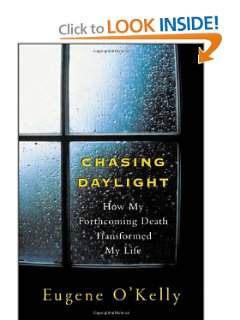
You have three months to live. Now what?

Click image to see contents...
Click image to see contents…

@TomRapsasTweets writes:

At 53, Eugene O’Kelly was on top of the world. He was Chairman and CEO at one of the Big Four accounting firms, a job he loved. He lived in a penthouse apartment in New York City, had a lakefront vacation home and a happy family life with a wife and two children.Then one day, he went to the doctor for what he thought was a small issue. Continue reading “You have three months to live. Now what?”

:-D

See on Scoop.itWholeheartedness

Todd Lohenry‘s insight:

Heh, heh, heh…

See on bizarrocomics.com

New Video! – Gavotte

How was your day?

How was your day?

9GAG.com Site Feed

via How was your day?.

Thanks you for sharing this video, Steven — I’m doing my best to help amplify this excellent video…

This Moment is Enough

See on Scoop.itWholeheartedness

When we are fully present, we know this moment is “enough.” In this short talk we look at our chronic habit of feeling “something is missing,” and how it pre…

Todd Lohenry‘s insight:

:-D

See on www.youtube.com

Remembering Self Compassion

Tara Brach talks:

A key to realizing our goodness is offering self-compassion in moments of difficulty. This short talk shares a quick yet powerful way to remember kindness. To watch the rest of this talk, go to http://www.tarabrach.com/video/2012-0…

via Tara Talks: Remembering Self Compassion – YouTube.

If you’d like more, here is an audio version of a recent retreat talk on self-compassion [28Mb download]…

12 Signs You’re In A Toxic Relationship

See on Scoop.itWholeheartedness

Sometimes it’s hard to know whether you are in good, mutually supportive relationships with your partner, friends and family. If you’re worried about what kind of relationship you’re in, here are…

Todd Lohenry‘s insight:

Excellent insight from Victoria Kasunic at MindBodyGreen…

See on www.mindbodygreen.com

Thanks for curating this great story, @davidkanigan…

Live & Learn's avatarLive & Learn

wrestler,inspirational,inspiring,wrestling, sport

A goose bump story from Deadspin.  Anthony Robles was born poor and one-legged in Mesa, Arizona. Anthony never met his biological father.  He longed for acceptance from his stepfather who wouldn’t forgive him for the color of his skin.  He criticized his step-son mercilessly and physically abused his Mother in his presence.  Anthony was bullied at school and he chose wrestling to toughen up. He lost every match at first. Then he found the key… Opponents were baffled. Four years later he was a national champion. And now he planned to quit a sport just as he had come to dominate.

Whether you love, hate or are indifferent about sports or wrestling, this is one of the most powerful human interest stories that I’ve read. Some excerpts:

“The day Robles entered the world, doctors whisked him from the delivery room, to spare his mother, 16 years old and single…

View original post 424 more words

Blue Ice

Blue Ice – Icicle Photo – Pops DigitalPops Digital.

How to Increase Your Odds of Finding a Miracle

Full story at:  How to Increase Your Odds of Finding a Miracle « Positively Positive.

Choose How You Want to Feel

See on Scoop.itWholeheartedness

Instead of trying to change your feelings (as cognitive therapy attempts to do), change how you choose to view your thoughts. Practicing this way, we can notice what’s without immediately reacting, thus become better to choose how we want to react.

Todd Lohenry‘s insight:

You DO have a choice; in fact, how you want to feel is one of the few things you can actually control in life…

See on www.huffingtonpost.com

What Your Busyness Really Says About You

See on Scoop.itWholeheartedness

“If you live in America in the 21st century you’ve probably had to listen to a lot of people tell you how busy they are. It’s become the default response when you ask anyone how they’re doing: ‘Busy!’ ‘So busy.’ ‘Crazy busy.’ It is, pretty obviously, a boast disguised as a complaint.”
–The ‘Busy’ Trap – NYTimes.com

Todd Lohenry‘s insight:

Hear, hear…

See on kimandjason.com

Start a Blog at WordPress.com.

Up ↑