If you had a rocky childhood, it doesn’t have to ruin your adulthood.
If you are in a career that doesn’t fulfill you, you can do something new.
If you are in a toxic relationship, you can change the rules or move on.
If you were in an unhealthy relationship in the past, it doesn’t mean your next relationship can’t be wonderful.
If you have lived in the same place forever, you can find new scenery that stimulates your growth.
If you have been overweight for most of your life, you can get healthy today.
If you are addicted to alcohol, drugs, food or anything else, you can seek help now.
Just because you have always done it one way doesn’t mean you have to keep doing it that way.
No matter what road you’re on, no matter how long you have been on it, no matter who you are traveling it with, it is never too late to change direction.
Looking back and wishing you could change history or have done something differently is a waste of energy. Keep moving forward.
One of our choices in recovery is choosing what we want to think—using our mental energy positively. Positive mental energy, positive thinking, does not mean we think unrealistically or revert to denial. If we don’t like something, we respect our own opinion. If we spot a problem, we’re honest about it. If something isn’t working out, we accept reality. But we don’t dwell on the negative parts of our experience. Whatever we give energy to, we empower. There is magic in empowering the good, because whatever we empower grows bigger. One way to empower the good is through affirmations: simple positive statements we make to ourselves: I love myself…. I’m good enough…. My life is good…. I’m glad I’m alive today…. What I want and need is coming to me…. I can…. Our choice in recovery is not whether to use affirmations. We’ve been affirming thoughts and beliefs since we were old enough to speak. The choice in recovery is what we want to affirm. Today, I will empower the good in myself, others, and life. I’m willing to release, or let go of, negative thought patterns and replace them with positive ones. I will choose what I want to affirm, and I will make it good.
Beattie, Melody (2009-12-15). The Language of Letting Go (Hazelden Meditation Series) (pp. 358-359). Hazelden. Kindle Edition.
Detachment is a key to recovery from codependency. It strengthens our healthy relationships the ones that we want to grow and flourish. It benefits our difficult relations hips the ones that are teaching us to cope. It helps us!
Detachment is not something we do once. It’s a daily behavior in recovery. We learn it when we’re beginning our recovery from codependency and adult children issues. And we continue to practice it along the way as we grow and change, and as our relationships grow and change.
We learn to let go of people we love, people we like, and those we don’t particularly care for. We separate ourselves, and our process, from others and their process.
We relinquish our tight hold and our need to control in our relationships. We take responsibility for ourselves; we allow others to do the same. We detach with the understanding that life is unfolding exactly as it needs to, for others and ourselves. The way life unfolds is good, even when it hurts. And ultimately, we can benefit from even the most difficult situations. We do this with the understanding that a Power greater than ourselves is in charge, and all is well.
Today, I will apply the concept of detachment, to the best of my ability, in my relationships. if I can’t let go completely, I’ll try to “hang on loose”
Gemma Stone has some great thoughts on dealing with the drama that sometimes accompanies the holidays…
Gemma calls out a strategy and tactic that I have been using recently with some positive results, although I did not realize it was called ‘non-violent communication’.
“When something ‘dramatic’ come up” she says “use this four step communication process.
1. When I see/hear…
2. The story I tell myself about that is…
3. What I feel is…
4. What I need/want/like is…
Here’s what it might sound like,
“When I hear you raising your voice, the story I tell myself is that you don’t respect me and I feel hurt. What I really need is for us to speak to each other with kindness.”
Let’s say your attempt at influencing the family drama is an epic fail. Don’t lose hope (or storm out), you can always control your internal environment.”
Step 2 is new to me, but I have been working with “what I see, what I feel, what I would like to see” and that has been helping to de-escalate some of the drama in my life and I agree with Gemma that it is a valuable tool…
Go to the source of the article to read the rest of Gemma’s thoughts on the topic and I strongly urge you to follow her blog for more great thinking like this…
I have also found great comfort and help in Melody Beattie‘s works on Codependency; Codependent No More, The ‘Codependent No More’ Workbook, and The Language of Letting Go. Recently, I found this in The Language of Letting Go and it helps me to better understand the concept of using boundaries and healty detachment to remain sane during the holidays…
When we don’t ask for what we want and need, we discount ourselves. We deserve better. Maybe others taught us it wasn’t polite or appropriate to speak up for ourselves. The truth is, if we don’t, our unmet wants and needs may ultimately come back to haunt our relationships. We may end up feeling angry or resentful, or we may begin to punish someone else for not guessing what we need. We may end the relationship because it doesn’t meet our needs. Intimacy and closeness are only possible in a relationship when both people can say what they want and need. Sustained intimacy demands this. Sometimes, we may even have to demand what we want. That’s called setting a boundary. We do this not to control another person, but to gain control of our life. Our attitude toward our needs is important too. We must value them and take them seriously if we expect others to take us seriously. When we begin to place value and importance on our needs, we’ll see a remarkable change. Our wants and needs will begin to get met. Today, I will respect the wants and needs of myself and others. I will tell myself, others, and my Higher Power what I want and need. I will listen to what they want and need too.
On the topic of detaching in love, Melody recently wrote this…
Few things can make us feel crazier than expecting something from someone who has nothing to give. Few things can frustrate us more than trying to make a person someone he or she isn’t; we feel crazy when we try to pretend that person is someone he or she is not. We may have spent years negotiating with reality concerning particular people from our past and our present. We may have spent years trying to get someone to love us in a certain way, when that person cannot or will not. It is time to let it go. It is time to let him or her go. That doesn’t mean we can’t love that person anymore. It means that we will feel the immense relief that comes when we stop denying reality and begin accepting. We release that person to be who he or she actually is. We stop trying to make that person be someone he or she is not. We deal with our feelings and walk away from the destructive system. We learn to love and care differently in a way that takes reality into account. We enter into a relationship with that person on new terms—taking ourselves and our needs into account. If a person is addicted to alcohol, other drugs, misery, or other people, we let go of his or her addiction; we take our hands off it. We give his or her life back. And we, in the process, are given our life and freedom in return. We stop letting what we are not getting from that person control us. We take responsibility for our life. We go ahead with the process of loving and taking care of ourselves. We decide how we want to interact with that person, taking reality and our own best interests into account. We get angry, we feel hurt, but we land in a place of forgiveness. We set him or her free, and we become set free from bondage. This is the heart of detaching in love. Today, I will work at detaching in love from troublesome people in my life. I will strive to accept reality in my relationships. I will give myself permission to take care of myself in my relationships, with emotional, physical, mental, and spiritual freedom for both people as my goal.
Beattie, Melody (2009-12-15). The Language of Letting Go (Hazelden Meditation Series) (pp. 352-353). Hazelden. Kindle Edition.
Whatever you take from this, I hope it leaves you feeling better about the holidays and better equipped to deal with some of the drama that may pop up along the way…
“When we don’t ask for what we want and need, we discount ourselves. We deserve better. Maybe others taught us it wasn’t polite or appropriate to speak up for ourselves. The truth is, if we don’t, our unmet wants and needs may ultimately come back to haunt our relationships. We may end up feeling angry or resentful, or we may begin to punish someone else for not guessing what we need. We may end the relationship because it doesn’t meet our needs. Intimacy and closeness are only possible in a relationship when both people can say what they want and need. Sustained intimacy demands this. Sometimes, we may even have to demand what we want. That’s called setting a boundary. We do this not to control another person, but to gain control of our life. Our attitude toward our needs is important too. We must value them and take them seriously if we expect others to take us seriously. When we begin to place value and importance on our needs, we’ll see a remarkable change. Our wants and needs will begin to get met. Today, I will respect the wants and needs of myself and others. I will tell myself, others, and my Higher Power what I want and need. I will listen to what they want and need too.”
One of my clients — the lovely and uber-wise Gemma Stone — recently posted this on her blog…
While I cursed her at the time for posting this in November and not April [because I don’t have a treadmill] I have heeded her advice several times since then and it has always yielded the benefits she touted. This morning, I took a couple of minutes to walk a few blocks down to the harbor in our town and this is some of what I saw. I’m tempted to say ‘huge piles of shame on me for not doing this before’ but I’m sure that Gemma would be the first to tell me to love myself and let it go [and learn from my ‘mistake’]. Thanks, Gemma…
This is a ‘well done’ post from a reader of The Daily Love…
I need to remind myself of several things:
I am worthy
I am loveable
I am smart
I am beautiful
I am not perfect
I should stop trying to be
Love will come when it will
Miracles are possible
There is always a solution
I am not what people think of me
Sometimes, it’s okay to take a break and sit out for a round or three
It’s okay to be lost. And it’s not necessary to always be found. I find that it’s better to forage my own trail than to step in others foot prints. Mistakes happen. But that how I LEARN. And yes, sometimes I touch a hot stove twice because there is always a possibility that by some strange chance, I won’t get burned, that there will be a different out come.
Mostly, it’s time to stop being so self critical, and show a little self love.
…Beattie, that is. I really wish I would have stayed on top of my readings the past couple of days – it might have helped me avoid a lot of drama. At the risk of appearing to be a Melody Beattie fan boy, I’m going to share both of them as a reminder for me and a lesson [maybe] for you…
Letting Go: December 4 “How much do we need to let go of?” a friend asked one day. “I’m not certain,” I replied, “but maybe everything.” Letting go is a spiritual, emotional, mental, and physical process, a sometimes mysterious metaphysical process of releasing to God and the Universe that which we are clinging to so tightly. We let go of our grasp on people, outcomes, ideas, feelings, wants, needs, desires—everything. We let go of trying to control our progress in recovery. Yes, it’s important to acknowledge and accept what we want and what we want to happen. But it’s equally important to follow through by letting go. Letting go is the action part of faith. It is a behavior that gives God and the Universe permission to send us what we’re meant to have. Letting go means we acknowledge that hanging on so tightly isn’t helping to solve the problem, change the person, or get the outcome we desire. It isn’t helping us. In fact, we learn that hanging on often blocks us from getting what we want and need. Who are we to say that things aren’t happening exactly as they need to happen? There is magic in letting go. Sometimes we get what we want soon after we let go. Sometimes it takes longer. Sometimes the specific outcome we desire doesn’t happen. Something better does. Letting go sets us free and connects us to our Source. Letting go creates the optimum environment for the best possible outcomes and solutions. Today, I will relax. I will let go of that which is upsetting me the most. I will trust that by letting go, I have started the wheels in motion for things to work out in the best possible way.
Difficult People: December 5 Few things can make us feel crazier than expecting something from someone who has nothing to give. Few things can frustrate us more than trying to make a person someone he or she isn’t; we feel crazy when we try to pretend that person is someone he or she is not. We may have spent years negotiating with reality concerning particular people from our past and our present. We may have spent years trying to get someone to love us in a certain way, when that person cannot or will not. It is time to let it go. It is time to let him or her go. That doesn’t mean we can’t love that person anymore. It means that we will feel the immense relief that comes when we stop denying reality and begin accepting. We release that person to be who he or she actually is. We stop trying to make that person be someone he or she is not. We deal with our feelings and walk away from the destructive system. We learn to love and care differently in a way that takes reality into account. We enter into a relationship with that person on new terms—taking ourselves and our needs into account. If a person is addicted to alcohol, other drugs, misery, or other people, we let go of his or her addiction; we take our hands off it. We give his or her life back. And we, in the process, are given our life and freedom in return. We stop letting what we are not getting from that person control us. We take responsibility for our life. We go ahead with the process of loving and taking care of ourselves. We decide how we want to interact with that person, taking reality and our own best interests into account. We get angry, we feel hurt, but we land in a place of forgiveness. We set him or her free, and we become set free from bondage. This is the heart of detaching in love. Today, I will work at detaching in love from troublesome people in my life. I will strive to accept reality in my relationships. I will give myself permission to take care of myself in my relationships, with emotional, physical, mental, and spiritual freedom for both people as my goal.
Learning to be a healthy giver can be a challenge. Many of us got caught up in compulsive giving charitable acts motivated by uncharitable feelings of guilt, shame, obligation, pity, and moral superiority.
We now understand that caretaking and compulsive giving don’t work. They backfire. Caretaking keeps us feeling victimized.
Many of us gave too much, thinking we were doing things right; then we became confused because our life and relationships weren’t working. Many of us gave so much for so long, thinking we were doing God’s will; then in recovery, we refused to give, care, or love for a time.
That’s okay. Perhaps we needed a rest. But healthy giving is part of healthy living. The goal in recovery is balance caring that is motivated by a true desire to give, with an underlying attitude of respect for ourselves and others. The goal in recovery is to choose what we want to give, to whom, when, and how much. The goal in recovery is to give, and not feel victimized by our giving.
Are we giving because we want to, because it’s our responsibility? Or are we giving because we feel obligated, guilty, ashamed, or superior? Are we giving because we feel afraid to say no? Are the ways we try to assist people helpful, or do they prevent others from facing their true responsibilities? Are we giving so that people will like us or feel obligated to us? Are we giving to prove we’re worthy? Or are we giving because we want to give and it feels right?
Recovery includes a cycle of giving and receiving. It keeps healthy energy flowing among us, our Higher Power, and others. It takes time to learn how to give in healthy ways. It takes time to learn to receive. Be patient. Balance will come.
I gave because I expected something in return; I wanted people to think I’m brilliant and to be eternally indebted to me when I helped them. It didn’t work. I’m getting healthier now…
“I’ve missed more than 9000 shots in my career. I’ve lost almost 300 games. 26 times, I’ve been trusted to take the game winning shot and missed. I’ve failed over and over and over again in my life. And that is why I succeed.”
Before we get angry at someone else for the way our lives are, let us look within and see how we have participated in creating our life to this moment. And then let us take full responsibility for our lives and begin to build a new and miraculous life one day at a time with the powerful Uni-verse. We can do amazing things when we remain calm within the center of the storm and take full responsibility for our lives.
At our very core, we were born to be the full unique expression of Love that we are. When we do this, miracles happen and we step into a way of living and being that far surpasses even our own understanding. It requires that we take responsibility, focus on the solution and find peace within the chaos of our lives.
“We are the greatest thing that will ever happen to us. Believe It. It makes life much easier.” – Codependent No More
It is time to stop this nonsense of running around picking on ourselves. We may have walked through much of our life apologizing for ourselves either directly or indirectly feeling less valuable than others, believing that they know better than we do, and believing that somehow others are meant to be here and we are not. We have a right to be here. We have a right to be ourselves. We are here. There is a purpose, a reason, and an intention for our life. We do not have to apologize for being here or being who we are. We are good enough, and deserving. Others do not have our magic. We have our magic. It is in us. It doesn’t matter what we’ve done in our past. We all have a past, woven with mistakes, successes, and learning experiences. We have a right to our past. It is ours. It has worked to shape and form us. As we progress on this journey, we shall see how each of our experiences will be turned around and used for good. We have already spent too much time being ashamed, being apologetic, and doubting the beauty of ourselves. Be done with it. Let it go. It is an unnecessary burden. Others have rights, but so do we. We are neither less than nor more than. We are equal. We are who we are. That is who we were created and intended to be. That, my friend, is a wonderful gift. God, help me own my power to love and appreciate myself. Help me give myself validity instead of looking to others to do that.” Source; November 29: Appreciating Ourselves | Language of Letting Go
These words should not be as important to me as they are, but they are! Hey, relatives — you know who you are: “Others have rights, but so do we. We are neither less than nor more than. We are equal. We are who we are. That is who we were created and intended to be.” This holiday season will be the best in a long time because I’m giving myself permission not to play a role in their drama or buy into their bullsh!t…
Many good marriages slip into crisis because we don’t or won’t believe how much work it takes to keep relationships humming at optimal levels. Another reason is a simple failure in imagination.
But – if successful courting requires commitment, hard work and imagination to pull off… then why does it surprise us when neglect hurts relationships after we walk down the aisle? She wouldn’t have married you if you took her for granted – why risk everything now?
There are many good strategies if we want to restore a problematic – or “under the weather” – marriage. All Pro Dad suggests the following 10 for men who want to get the ball rolling…
Our minds are programmed to keep us away from dangerous things like tigers.
This can be a good thing in some situations, but when it comes to getting stuff done, it can really complicate matters. Especially if you’re not living in the jungle.
There are basically two kinds of mistakes we can make when it comes to the tiger.
The first mistake is to think there’s a tiger in the bush and there really isn’t. This causes unnecessary anxiety.
The second mistake is to think that there isn’t a tiger in the bush and there really is. This causes death.
Because of the severity consequences of each of these mistakes your mind would prefer that you always make the first mistake in order to avoid the consequence of ever making second mistake.
In order to keep us alive (avoiding tigers) our brains trick us into making three mistakes:
Overestimating threats
Underestimating opportunities
Underestimating resources
When you think about it, this is a great way to keep us alive, but it’s a lousy way to live.
“Eating delicious food and enjoying your time with family tend to be the focus for Thanksgiving, and that’s fantastic (especially if you’re making a healthy meal) yet the central activity of the day shouldn’t be forgotten: Thanks-giving = Giving thanks. On this wonderful holy day, remember to take the time to meditate on gratitude. Sometimes our minds play tricks on us, especially if we’re going through difficult times emotionally or financially, and we find it hard to identify things to be thankful for. If that’s the case for you, check out our article A Different Kind of Thanks for a new perspective on situations that may be blessings in disguise. If you feel the gratitude and see plenty to be grateful for in your life but don’t know where to start with your thankful thoughts, check out An Exercise in Gratitude. You’ll see that practicing gratitude is a very powerful tool of creation, and that you can use it at any time with anything from the simplest stuff in your life to the grandest of wonders. You can do either of these Thanks-Giving activities quietly on your own or out loud as a group meditation, maybe after dinner and before games and movies. You can also do either as a prayer before the meal. Gratitude, like courage, is contagious, and you’ll find that sharing a sincere moment of thanks creates a common feeling and sets the tone for an even more satisfying gathering.” Source: Silvie+Maryl | Upgrading Minds, Transforming Lives
“The thought and feeling of gratitude are among the most powerful tools of creation. Thinking about the things in your life that you are grateful for having not only makes you appreciate them more – it also sends out a message of “have” versus “lack” into the Universe. And since you attract what you are, you activate the mechanism that allows you to have that which you desire and are thankful for. Gratitude is most powerful when followed by action – when thought and deed are aligned – so showing your gratitude brings even more of this ‘have’ energy to you. Thinking, feeling, and acting thankful every day doesn’t take much – just awareness of what you’re already doing and connecting these to the thought and feeling of gratitude. Here are some examples:
I’m grateful for my fully functioning body, and I show it by walking in joy.
I’m grateful for my creativity, and I show it by coming up with new recipes in the kitchen.
I’m grateful for my family, and I show it by telling them that I love them whenever I can.
I’m grateful for this beautiful planet and I show it by recycling.
I’m thankful for my desire to help others, and I show it by sharing valuable information for a healthy lifestyle.
I’m thankful for my need to be who I am and say what I think, and I show it by “telling it like it is” and speaking/writing/standing for the bottom line.
I’m thankful for the sun, and I show it by closing my eyes and feeling the sun’s rays for a second every morning that I open my curtains to a clear day.
I’m thankful for knowing that I am connected to every single soul on this planet and beyond, and I show it by smiling at everyone I meet and treating them with the Golden Rule: do unto others as you would have done unto you.
As you can see, you can practice gratefulness with the smallest thing or the most profound ideas. I challenge you to, right now, think of something or someone for which you are thankful, and show it. Share it with us here too, because nothing spreads the joy and power of gratitude like sharing it with others. What are you grateful for?” Source: Silvie+Maryl | Upgrading Minds, Transforming Lives
You’re fat. You know what to do. There’s not really a new book that will change it. It’s you who will change it.
You’re unemployed. That’s temporary, even if temporary is stretching into 14 months. You know what you need, even if that means education, a move, a change of circumstances. But I promise you that you know.
You’re broke. Money exchanges hands every day. More money than we’ll ever earn in a lifetime flows all around you. You can find ways to have some of it. You know some of those ways. Very few books or speeches will amaze you and set you on a path to claim them all.
Then Why Do We Read and Overstudy?
Because we’re afraid, because we’re procrastinating, because we feel many emotions that “seem” like uncertainty, but are more often good old fashioned lack of self-esteem. Because we’ve tried and failed one too many times and we’re upset with ourselves for this. Because we listen to our Inner Critic and we believe that He or She is right (is yours a male or female?).
Why do I read and overstudy? Because I’m not confident I’m good enough yet the things I read resonate with what I already believe. How short a distance would it be from consuming to producing with what I already know?
Some good thoughts from Laura Fenamore this morning…
“We all spend so much time thinking about our relationships with others that we forget our relationships to our own selves. Before we can find love without, we must find love within.
Self-love first, True Love second.
We ought to be our own best friends, but all too often we end up being our own worst critics. We develop a negative voice, the one that berates us when we mess up at work, the one that critiques our reflections as we pass by a store window. That voice is so present, so ubiquitous, we may not even realize that we don’t have to listen to it. With that little guy or gal talking in our ears, it’s no wonder so many of us have trouble walking the path of self-love.” Source; Turn Down Your Negative Voice – Turn Up Self-Love!
She goes on to say…
“And so I taught self-love to myself. Love, both of ourselves and others, isn’t just a sense of peace and bliss, though that is where it may end up eventually. At the beginning, it’s a deep sense of desire and drive. I’d like to share with you three inspirational practices I used as I learned to walk the path of heart.
1. Accept Who You Are Now
Accepting yourself, warts and all, puts you in charge of your destiny. On my own journey, I began to see that while my negative voice as a part of me – the wounded part of me – it was not me. I ultimately learned is that I never would escape negativity by ignoring it or making myself wrong for my feelings. I first had to accept that yes, I am depressed, but that is not who I am. It is simply where I am in this moment, whether that moment is an hour or a year.
2. Affirm, Affirm, Affirm Again
Affirmations are a great way to work from the outside in – remind yourself how loveable you are, and eventually you’ll start believing it, too. Write yourself an affirmation.
• Make it about yourself – “I” statements only.
• Be positive – instead of “I don’t give up on my goals,” say “I stay focused on my goals.”
• Use the present tense – because you already are wonderful! Use the boldest, most positive phrasing you can muster.
• Be precise, be specific – list particular qualities about yourself that you love.
3. Quiet Your Negative Self-Talk
Negative self-talk takes many forms; it can be personally attacking thoughts (“You’re an idiot!”), complaints about your situation and the people in it (blaming others disempowers us), or silent judgments (“Is he/she better looking than I am?”). These thoughts reinforce our negative perceptions of ourselves and make it impossible for self-love to take hold. While we may not be able to turn off our negative voices, we can definitely turn them down.
Tune into that voice, and identify and write down seven negative thoughts you have about yourself in the next week. The next time you find yourself thinking that negative thought (“You screwed up this project!”), gently replace it with an affirmation.
Stick with it! Self-love is about being gentle and firm. Let go of the excuses and the stories about your lack of worth. Love requires us to stretch and to grow – not so that we may become someone worth loving (which we all already are), but rather so we can become someone who can love others and ourselvesgreatly and unconditionally.” Source; Turn Down Your Negative Voice – Turn Up Self-Love!
The following is from Melody Beattie’s ‘The Language of Letting Go’…
“I sat in the car, looking at the sign on the door of the food shelf office: “Closed until Friday.” It was Wednesday. I had two hungry children and myself; I had no money. I laid my head on the steering wheel. I couldn’t take it anymore. I had been so strong, so brave, so trusting for so long. I was a single parent with two children, recently divorced. I had worked so courageously at being grateful for what I had, while setting financial goals and working at believing I deserved the best. I had put up with so much poverty, so much deprivation. Daily, I worked the Eleventh Step. I worked so hard at praying for knowledge of God’s will for me only, and the power to carry it through. I believed I was doing what I needed to do in my life. I wasn’t lollygagging. I was doing my best, working my hardest. And there just wasn’t enough money. Life had been a struggle in many ways, but the financial struggle seemed endless. Money isn’t everything, but it takes money to solve certain problems. I was sick of “letting go” and “letting go” and “letting go.” I was sick of “acting as if” I had enough money. I was tired of having to work so hard daily at letting go of the pain and fear about not having enough. I was tired of working so hard at being happy without having enough. Actually, most of the time I was happy. I had found my soul in poverty. But now that I had my soul and my self, I wanted some money too. While I sat in the car trying to compose myself, I heard God speak to me in that silent, still voice that whispers gently to our souls. “You don’t ever have to worry about money again, child. Not unless you want to. I told you that I would take care of you. And I will.” Great, I thought. Thanks a lot. I believe you. I trust you. But look around. I have no money. I have no food. And the food shelf is closed. You’ve let me down. Again I heard His voice in my soul: “You don’t have to worry about money again. You don’t have to be afraid. I promised to meet all your needs.” I went home, called a friend, and asked to borrow some money. I hated borrowing, but I had no choice. My breakdown in the car was a release, but it didn’t solve a thing—that day. There was no check in the mailbox. But I got food for the day. And the next day. And the next. Within six months, my income doubled. Within nine months, it tripled. Since that day, I have had hard times, but I have never had to go without—not for more than a moment in time. Now, I have enough. Sometimes I still worry about money because that seems to be habitual. But now I know I don’t have to, and I know I never did. God, help me work hard at what I believe is right for me in my life today, and I’ll trust You for the rest. Help me let go of my fears about money. Help me turn that area over to You, God. Take away the blocks and barriers in my life to financial success.”
Beattie, Melody (2009-12-15). The Language of Letting Go (Hazelden Meditation Series) (pp. 336-337). Hazelden. Kindle Edition.
Create in me a pure heart, O God,
and renew a steadfast spirit within me. Do not cast me from your presence
or take your Holy Spirit from me. Restore to me the joy of your salvation
and grant me a willing spirit, to sustain me.

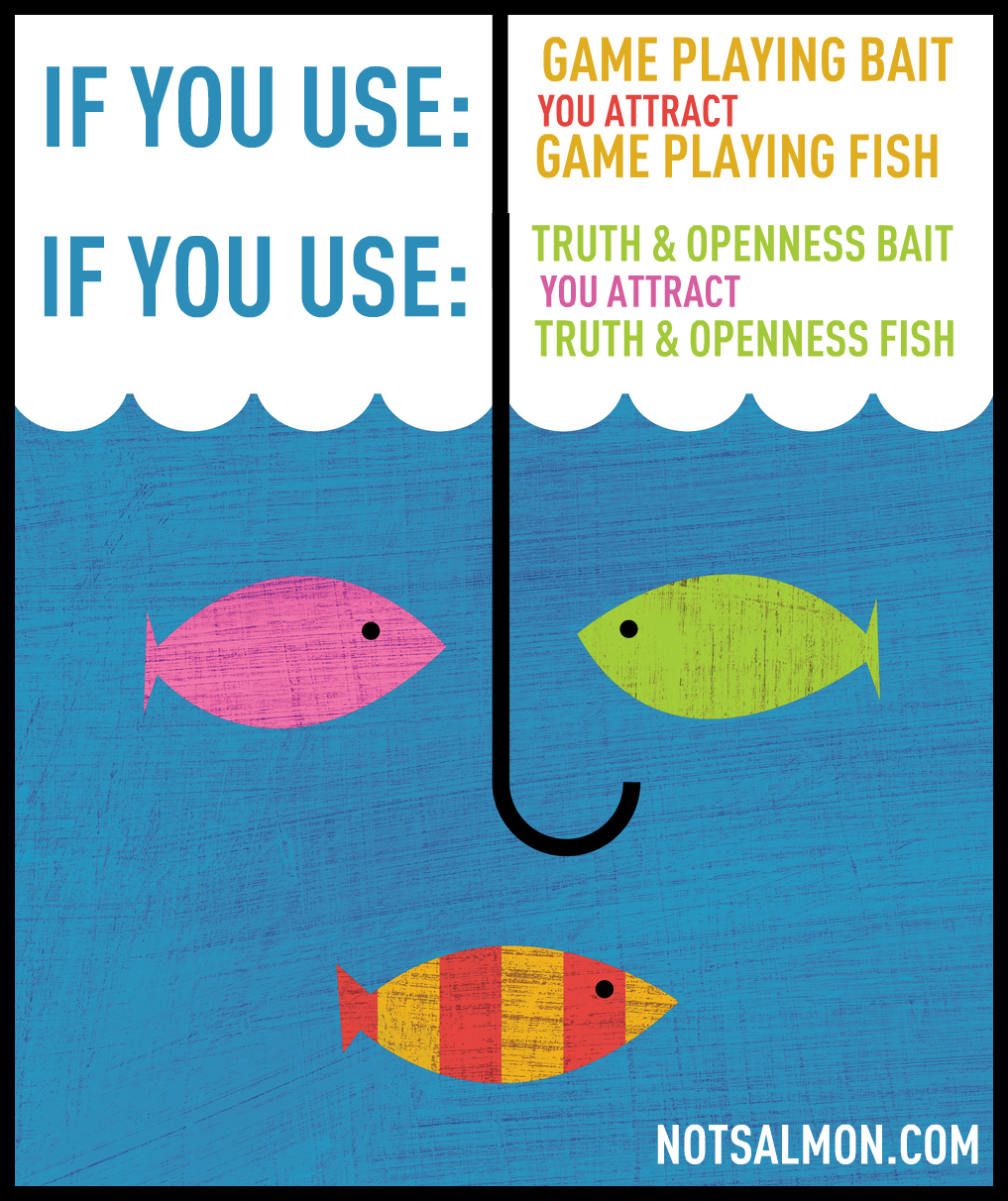


 This is a ‘well done’ post from a reader of The Daily Love…


“We are the greatest thing that will ever happen to us. Believe It. It makes life much easier.” – Codependent No More


 Bright, shiny objects!
You must be logged in to post a comment.