For the Next 24 Hours…

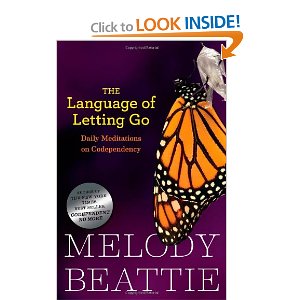
Melody Beattie writes:

For the next twenty-four hours…

In recovery, we live life one day at a time, an idea requiring an enormous amount of faith. We refuse to look back—unless healing from the past is part of today’s work. We look ahead only to make plans. We focus on this day’s activity, living it to the best of our ability. If we do that long enough, we’ll have enough connected days of healthy living to make something valuable of our life.

…I pray for knowledge of Your will for me only,…

We surrender to God’s will. We stop trying to control, and we settle for a life that is manageable. We trust our Higher Power’s will for us—that it’s good, generous, and with direction. We’re learning, through trial and error, to separate our will from God’s will. We’re learning that God’s will is not offensive. We’ve learned that sometimes there’s a difference between what others want us to do and God’s will. We’re also learning that God did not intend for us to be codependent, to be martyrs, to control or caretake. We’re learning to trust ourselves.

…and the power to carry that through.

Some of recovery is accepting powerlessness. An important part of recovery is claiming the power to take care of ourselves. Sometimes, we need to do things that are frightening or painful. Sometimes, we need to step out, step back, or step forward. We need to call on the help of a Power greater than ourselves to do that. We will never be called upon to do anything that we won’t be empowered to do.

Today, I can call upon an energizing Power Source to help me. That Power is God. I will ask for what I need.

Beattie, Melody (2009-12-15). The Language of Letting Go (Hazelden Meditation Series) (pp. 122-123). Hazelden. Kindle Edition.

Letting Go of Being Right

Happy

“How many times have you heard the question, “would you rather be right, or happy?”

It’s always made me a little nuts. Because quite frankly, most times I say, “right, please.” I’ve recently had a change of heart in this matter and hope you will oblige me in exploring the idea of choosing happiness.

Isn’t that funny, I actually have to try to choose happiness.

I used to believe that “right” was an irrefutable fact, thereby making everything and everyone else “wrong.” It seemed to me that “happy” went hand-in-hand with “ignorance is bliss,” and I was not about to wear the dunce cap. So, with my talons firmly embedded in whatever position or idea I was holding, I stood my ground.

In hindsight, I can see that I was simply engaged in black-and-white thinking.

I often encourage my clients in psychotherapy to try to live in the gray. There are a million shades of gray on the spectrum of white to black, and each provides a much richer telling of a story that is hardly ever as clear as this or that. So, when I looked a bit more closely, I saw that “right vs. happy” wasn’t so much about getting crowned the winner or loser, a genius or fool; it was more about my flawed thinking and my desire to feel like I was in control. Yes, that illusion that so many of us want to sink our talons into: Control.

As I reframe the debate of “right vs. happy” to “the illusion of control vs. acceptance / surrender / taking it all a little less seriously,” I can start to see the value in choosing the latter.

Ken Wilber said, “Sometimes you need to allow things to hurt you more, but bother you less.”

Let’s unpack that a little. Why would we want to choose “hurt?” Well, if we are letting go of being right, hurt might mean that we have to grieve. Maybe it’s grieving the idea that we have control and facing our vulnerability. Maybe it’s grieving the dream that never had a chance to be, our attachment to it, and all that we thought it would afford. In this case, we weren’t actually right in the moment, we wanted to eventually be right. It was more of an, “I’ll show you” kind of right.

When we engage in the grieving process—in letting go, the loss no longer has such a tight grip. We can move into the cyclical process of death and rebirth. We can open up to new ideas and experiences. Once this occurs, we are certainly “bothered less.” The unmetabolized grief isn’t gnawing on you like a monkey on your back, and you’re not working so hard to deny its existence. You’ve faced it, taken away its power, and given yourself some choices. And at this point, you are probably a little more “happy.”

Let’s take a moment to define happy in this context. I’m not talking about winning-the-lottery happy, or people-doing-what-you-want-them–to-do happy. Those are external things that we can’t do much about. I’m talking about acceptance happy—where we aren’t in opposition to our own lives. I’m talking about contentment happy. I know, it’s not as flashy as winning the lottery, but trust me, it’s much more attainable and sustainable.

So, the next time your talons are firmly embedded in the position you are holding, see how much grief it is causing you and consider letting it go. Think of it as a social experiment. Perhaps you’ll start with something small, like where to meet your friend for lunch. You may know for certain that the best deli is on the corner of Smith Street, but do you really want to argue that point? I imagine that connecting with a friend about what really matters is much more enjoyable, and far more important.

And when it comes to the bigger stuff, know that you are not alone in having a hard time letting go. We all struggle in this regard. Perhaps you can start with a simple intention to do it differently, knowing that is enough to start the process of moving towards less rigidity, more flow, and ultimately more “happy.” via A Million Shades of Gray: Letting Go of Being Right « Positively Positive.

Perfection

Melody Beattie writes:

Many of us picked on ourselves unmercifully before recov­ery. We may also have a tendency to pick on ourselves after we begin recovery.

“If I was really recovering, I wouldn’t be doing that again…:’ “I should be further along than I am:’ These are statements that we indulge in when were feeling shame. We don’t need to treat ourselves that way. There is no benefit.

Remember, shame blocks us. But self-love and acceptance enable us to grow and change. If we truly have done some­thing we feel guilty about, we can correct it with an amend and an attitude of self-acceptance and love.

Even if we slip back to our old, codependent ways of think­ing, feeling, and behaving, we do not need to be ashamed. We all regress from time to time. That’s how we learn and grow. Relapse, or recycling, is an important and necessary part of recovery. And the way out of recycling is not by sham­ing ourselves. That leads us deeper into codependency.

Much pain comes from trying to be perfect. Perfection is impossible unless we think of it in a new way: Perfection is being who and where we are today; it’s accepting and lov­ing ourselves just as we are. We are each right where we need to be in our recovery.

Today, I will love and accept myself for who I am and where I am in my recovery process. I am right where I need to be to get to where I’m going tomorrow.” via June 2: Perfection | Language of Letting Go.

The Accidental Asshole

The Accidental Asshole: Pinpoint How You're Annoying People and Do Something About It

Pinpoint How You’re Annoying People and Do Something About It!

We all have our pet peeves. But have you ever wondered about the annoying things you do that your friends, family, and strangers are too polite to tell you about? I do, and I decided to do something about it.

It’s easy to talk about self improvement, but in reality we’re not that adept at seeing our own faults. The problem is that most people aren’t going to tell you when you’re doing something wrong until it gets to a point where they don’t want to hang around you anymore. I’m the type who’s easily annoyed, so I assume most of my friends and family are as well. It’s also no secret that humans as a race have a lot of pet peeves, whether it’s at the office, on a mobile phone, or in a restaurant.

To find out how I may be annoying the people around me, I wanted to open up a dialogue where friends and strangers could give me a performance review to help me pinpoint when I’m being an asshole and actually do something about it. Here’s how I did it, and how you can do the same.” Get more here: The Accidental Asshole: Pinpoint How You’re Annoying People and Do Something About It.

Happiness Tip

notsalmon via Happiness Tips via Bhutan and Bentham.

Just in case you missed this for 5/30/2012

  1. Todd’s tweets…

Rethinking social networking

Let go and let God

Melody Beattie writes:

A friend was experiencing some financial difficulties. He was getting to the point of despair. “I don’t know what to do,” he said.

“Why don’t you ask God?” I said.

“I couldn’t do that. I’ve already asked God too many times to bail me out.”

“I don’t mean ask God to bail you out,” I said. “Ask God to show you what to do.”

“I never thought of that,” he said.

We all have access to the greatest resource in the world. We don’t have to sign up, register, or pay dues. Wherever we are, whatever we’re facing, all we need to do is ask our Higher Power what to do next. Why is it that the simplest things in life can be the hardest things to do?

Application: Got financial problems? Relationship problems? Facing a quandary in life? Stepping into the vast wilderness called the unknown? If we’ve run out of our own answers, it is time to ask for guidance. Or better yet, we can ask for guidance before running out of our own resources. Asking for guidance—for knowledge of God’s Will for us and the power to carry that out—is a good thing to do as needed and each day.” via May 30.

Affirm Yourself…

Cover of "The Language of Letting Go (Haz...

Melody Beattie writes:

Who or what do you want to become? A good parent? A sober, recovering person? A good girlfriend, boyfriend, or spouse? Do you want to become happy, peaceful, tolerant? Don’t wait until you’re successful to tell yourself you’re that. Start now by saying you are what you want to become instead of reinforcing the words I’m not. Yes, you have much to learn. Yes, there’s a ways to go on that path. And you may not be proficient at it, or an expert, yet. But you don’t have to be to say those two little words I am.

Help create the new part of your personality by using and affirming those powerful words I am. Then watch as a new part of yourself emerges.

God, help me use my creative powers to create a better, more fulfill­ing life. Help me use the words I am to create who you and I want me to be…

via April 23: Affirm Yourself | Language of Letting Go.

Are You Making Someone Else Your Higher Power?

Mastin Kipp writes:

A definition of interdependence is: “a reciprocal relation between interdependent entities.”

The key word here is: “reciprocal”. Interdependence can be thought of as a relationship where each party gives and receives from his or her own internal overflow. This is TOTALLY different than “codependence” which can be thought of as being “addicted to someone”.

Another way to look at it, spiritually, is this:

A codependent person makes someone else his or her Higher Power. An interdependent person knows that The Uni-verse is their Higher Power and keeps their focus on that, while choosing to be in a relationship with someone else who is also looking to The Uni-verse to fulfill them.” Get more here: Are You Making Someone Else Your Higher Power?.

If any of this gives you pause to think, you might want to take a look at Melody Beattie‘s book Codependent No More — it’s full of pratical thoughts, tools and tactics for taking codependency head on. You can download a free sample here. I first became aware of this issue in my life about a year ago but this book, the accompanying workbook and her meditation book “Language of Letting Go” have been helpful to me in overcoming codependency and having better relationships…

On being connected…

LOL. ‘Make me one with everything’…

What did the Buddhist monk say to the hot-dog vendor? Can you make me one with everything?

I was buckling my seat belt in the little Cessna one day, get­ting ready for flight training, when my instructor Rob turned to me.

“I just take a second when I strap myself in and tell myself I’m becoming one with the plane as I do,” Rob said. “It really helped me in the beginning when I was nervous and felt so separate from the airplane.”

What a great idea, I thought. That day turned into one of my most comfortable flying sessions. It reminded me of a lesson I had learned a while back.

For most of my life, I felt disconnected from things: from myself, from other people, from life. That feeling of separate­ness haunted me. It explains why I tried so desperately to attach myself codependently to people, places, and things.

Over the years, I began to see that my separateness was an illusion. The same energy, the same life force, that runs through all the universe runs through you and me, too.

We’re connected, whether we know it or not.

Nobody has to make you one with everything. You already are.

Let go of your illusion of separateness.

Connect yourself.

God, help me know my oneness with the world. Help me know how connected I really am so I don’t have to connect in ways that don’t work.

via April 15: Connect Yourself | Language of Letting Go.

Something else I like about Melody Beattie — she’s a pilot, or at least a student pilot…

Be the Hero of Your Own Life

“Many of us look outside of ourselves for our heroes, our inspiration. But what does it look like to look inwards…and discover the hero that’s been there all along.” Be the Hero of Your Own Life via Be the Hero of Your Own Life « Positively Positive.

Twenty years from now…

Twenty years from now, you will be more disappointed by the things you didn’t do than by the ones you did do. So throw off the bowlines. Sail away from the safe harbor. Catch the trade winds in your sails. Explore. Dream. Discover.” Mark Twain via Quote of the Day.

Just in case you missed this for 5/29/2012

  1. “I really, deeply believe that dreams do come true. Often, they might not come when you want them. They come in their own time.”

    – Diana Ross

  2. Todd’s tweets…

Letting Go of Self Doubt

Melody Beattie writes:

A married woman who had recently joined Al-Anon called me one afternoon. She worked part-time as a registered nurse, had assumed all the responsibilities for raising her two children, and did all the household chores, including repairs and finances. “I want to separate from my husband,” she sobbed. “I can’t stand him or his abuse any longer. But tell me, please tell me,” she said, “do you think I can take care of myself?” Codependent No More

Not only is it okay to take care of ourselves, we can take good care of ourselves.

Many of us, so confident about our ability to take care of others, doubt our inherent strength to care for ourselves. We may have come to believe, from our past or present circumstances, that we need to take care of others and we need others to take care of us. This is the ultimate codependent belief.

No matter where this self-defeating belief was born, we can release it and replace it with a better one, a healthier one, a more accurate one.

We can take care of ourselves — whether we are in or out of a relationship. Everything we need will be provided. We will have loved ones, friends, and our Higher Power to help.

Knowing that we can take care of ourselves doesn’t mean we won’t have feelings of fear, discomfort, doubt, anger, and fragility at times. It means we practice “courageous vulnerability,” as Colette Dowling called it in Cinderella Complex. We may feel scared, but we do it anyway.

Today, God, help me know how I can take care of myself.” via Daily Meditation ~ Letting Go of Self Doubt – Miracles In Progress Codependents Anonymous Group.

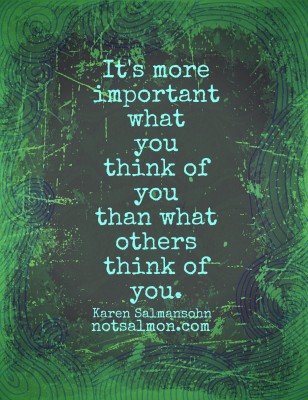
What you think of you…

notsalmon via What you think of you….

Because life is speedily short…

notsalmon via Because life is speedily short….

Nothing more than phenomenal?

A toilet with the potentially dangerous arrang...

Actually, it’s nothing LESS than phenomenal, but you’ll get the drift if you listen to this special audio post:

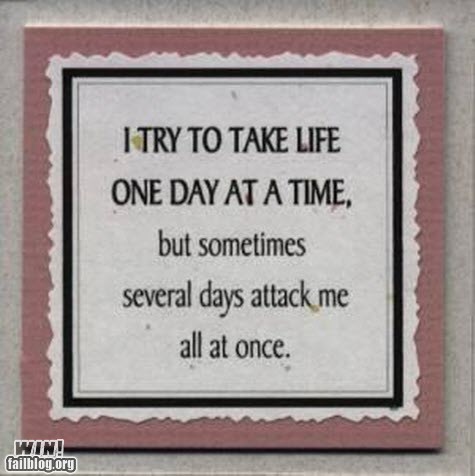
One Day at a Time

“One day at a time–this is enough. Do not look back and grieve over the past for it is gone; and do not be troubled about the future, for it has not yet come. Live in the present, and make it so beautiful it will be worth remembering.” via One Day at a Time – Single Parents – Families.com.

I had a bit of an epiphany yesterday while weeding in the garden. My wife and I were talking about taking things one day at a time. I told her that while she was in Italy, sometimes it was all I could do to live second to second, minute to minute, hour to hour let alone a day at a time. The purpose of living one day at a time is to reduce life to bite sized chunks — like the old riddle how do you eat an elephant? One bite at a time…

Jesus said ‘sufficient unto the day is the evil thereof‘ [I don’t know why I like the King James version of that quote so much, but I do]. The epiphany for me was that this not only applies to looking forward, but also looking back. Sometimes I can’t bear up under the future OR the past but I don’t have to. I can live one moment at a time when things get overwhelming!

The Apostle Paul said in Philippians chapter 3:”12 Not that I have already obtained all this, or have already arrived at my goal, but I press on to take hold of that for which Christ Jesus took hold of me. 13 Brothers and sisters, I do not consider myself yet to have taken hold of it. But one thing I do: Forgetting what is behind and straining toward what is ahead, 14 I press on toward the goal to win the prize for which God has called me heavenward in Christ Jesus.”

I forget what is behind and I strain toward what is ahead one day at a time…

How to be happy: Perspective is Everything

Alltop Organic RSS via How to be happy: Perspective is Everything by Rory Sutherland. Click to watch a great TED talk…

Choices

Melody Beattie says:

“We have choices, more choices than we let ourselves see. We may feel trapped in our relationships, our jobs, our life. We may feel locked into behaviors — such as caretaking or controlling. Feeling trapped is a symptom of codependency.

When we hear ourselves say, “I have to take care of this person…”, “I have to say yes….” ,”I have to try to control that person…”, “I have to behave this way, think this way, feel this way…” we can know we are choosing not to see choices.

That sense of being trapped is an illusion. We are not controlled by circumstances, our past, the expectations of others or our unhealthy expectations for ourselves. We can choose what feels right for us, without guilt. We have options.

Recovery is not about behaving perfectly or according to anyone else’s rules. More than anything else; recovery is about knowing we have choices and giving ourselves the freedom to choose.” via Inspiration.

Start a Blog at WordPress.com.

Up ↑