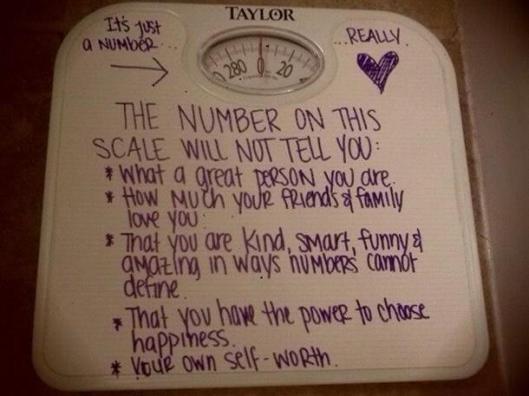
You’re probably no stranger to the power of positive thinking and manifesting, and that by putting a shiny spin on any situation, you really can turn things around. However, when you apply this type of mindset to achieving your dreams, the sky really is the limit.
So if you’re ready to start carving out your dreams, here are four steps to help you create that blueprint for success. (Warning: step four does contain a powerful video that will prompt you to take action!)” Full story at: 4 Ways To Become A Reality Architect | FinerMinds.
11 Questions to Clarify Your Beliefs About Love
Why does finding love seem simple for some and impossible for others? Is love only for the lucky? Is it really about being in the right place at the right time or is there something more to it?Actually, there is plenty more to it. How we view romantic love and our own lovability has everything to do with what we learned growing up. Every family has their own cultural norms around love and marriage. I call these belief systems Downloaded Blueprints. Someone else designed them, perhaps generations ago, and they have been systematically reinforced for years, becoming your reality.In order to understand the effect your downloaded LOVE blueprint is having on your romantic life, you must get conscious of what limiting beliefs your blueprint contains—how your current mental state is structured.” Get the full story at: 11 Questions to Clarify Your Beliefs About Love « Positively Positive.
Responses…
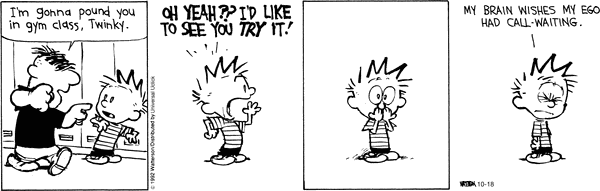
Calvin and Hobbes Comic Strip, October 18, 2012 on GoComics.com.
Calvin is one of the great philosophers of our age. Another great philosopher Steven Covey said:
“Our unique human endowments lift us above the animal world. The extent to which we exercise and develop these endowments empowers us to fulfill our uniquely human potential. Between stimulus and response is our greatest power—the freedom to choose.” Covey, Stephen R. (2009-12-02). The 7 Habits of Highly Effective People (p. 70). RosettaBooks. Kindle Edition.
Your brain does have call waiting. Use it! :-D
Expectations, Disappointment, Anger, Depression
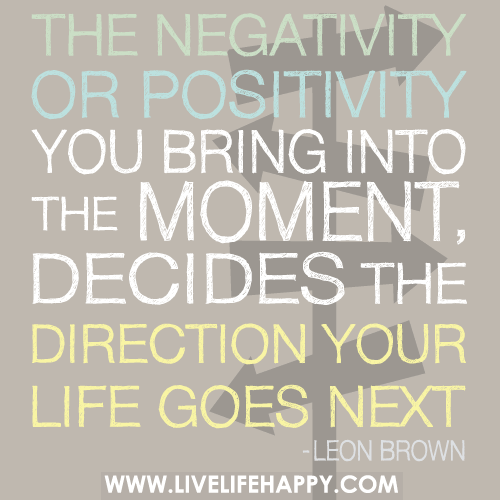
Thank God for my friend Steve — he’s one of the best blessings in my life! We frequently talk first thing in the day during his morning commute. This morning we talked about expectations of other people and how they are frequently a source of disappointment and then anger and then depression. Hence the quote above…
I was sitting down to prep a screencast on the topic when I started googling for a quote from Francois Fénélon I remember as “disappointments are the bastard child of false expectations” but my memory must be off because according to Google, no such quote exists. Still it makes a point and I found some writings of Fénélon that you might find interesting…
More interesting to me at the moment is this quote from Dr. Michael Yapko:
“What single factor most determines your degree of satisfaction with your relationships, whether it’s your relationships with your government or your relationship with your kids, friends and neighbors? What single factor most influences how you gauge whether your relationship with someone is good or bad, healthy or unhealthy, worthwhile or a waste of time? Your expectations.
When you have unrealistic expectations of other people, you are at high risk for getting hurt, disappointed and depressed. It’s easiest, perhaps even reflexive, to blame them and self-righteously say, “That person let me down.” And, maybe that person did let you down. But, it’s at least as likely that you let yourself down by having unrealistic expectations to begin with.
On one level, I’m talking about your expectations of others, but on another level, I’m really talking about you – the degree to which you are aware of what your expectations are and how well you can determine whether your expectations for others- and for yourself- are realistic. If they’re not, you can suffer repeated disappointments and hurts in your relationships, and these can be victimizing and painful enough to lead to frustration, anger, disillusionment – and depression.
Peoples’ poorly informed and therefore unrealistic expectations fuel their anger and discontent. Before you get angry, it would be great if you could sit down quietly for awhile and ask yourself what you expect, how you know whether your expectations are realistic, and whether you need much more information before you get too attached to your ideas about how you think things “should” be. You’ll get much further dealing skillfully with how things really are when you catch yourself getting wrapped up in the “shoulds.”
Don’t mistake what you want for what you’re actually going to get.” Full story at: Expectations, Disappointment, Anger, Depression | Managing Depression Skillfully.
So, as Dr. Yapko says “I’m talking about your expectations of others, but on another level, I’m really talking about you – the degree to which you are aware of what your expectations are and how well you can determine whether your expectations for others- and for yourself- are realistic.” So in the end, I think you and I are called to love ourselves and part of that loving is to have reasonable expectations of our capabilities and to work to increase those capabilities. In closing, the words of the great Apostle Paul:
12 Not that I have already obtained all this, or have already arrived at my goal, but I press on to take hold of that for which Christ Jesus took hold of me. 13 Brothers and sisters, I do not consider myself yet to have taken hold of it. But one thing I do: Forgetting what is behind and straining toward what is ahead, 14 I press on toward the goal to win the prize for which God has called me heavenward in Christ Jesus.” Phil. 3:12-14
Jack and the squirrel
In the 5 years we’ve lived on our farm, I’ve never seen a squirrel — predators must keep ’em away — until now. Earlier this summer, our golden retriever Jack was obsessed with the squirrel and couldn’t get him off his mind. In this video, Jack had him treed…
It seems to me that Jack is ‘yelling’ the same thing over and over again, despite the fact that the squirrel is not obeying his doggy commands. To do the same thing and expect different results is insanity, right? Then why do I behave like Jack sometimes? So easy to see stupid behaviors in others isn’t it?
A Credo for Your Relationships with Others
You and I are in a relationship which I value and want to keep. We are also two separate persons with our own individual values and needs. So that we will better know and understand what each of us values and needs, let us always be open and honest in our communication. When you are experiencing a problem in your life, I will try to listen with genuine acceptance and understanding in order to help you find your own solutions rather than imposing mine. And I want you to be a listener for me when I need to find solutions to my problems. At those times when your behavior interferes with what I must do to get my own needs met, I will tell you openly and honestly how your behavior affects me, trusting that you respect my needs and feelings enough to try to change the behavior that is unacceptable to me. Also, whenever some behavior of mine is unacceptable to you, I hope you will tell me openly and honestly so I can try to change my behavior. And when we experience conflicts in our relationship, let us agree to resolve each conflict without either of us resorting to the use of power to win at the expense of the other’s losing. I respect your needs, but I also must respect my own. So let us always strive to search for a solution that will be acceptable to both of us. Your needs will be met, and so will mine–neither will lose, both will win. In this way, you can continue to develop as a person through satisfying your needs, and so can I. Thus, ours can be a healthy relationship in which both of us can strive to become what we are capable of being. And we can continue to relate to each other with mutual respect, love and peace.” via A Credo for Your Relationships with Others – Gordon Training International.
This is a work-worthy goal but I am sooooooooo far away from this…
Do something you love this weekend…

Melody Beattie writes:
“This week, I went scuba diving.” a man told me. “Hadn’t done it for years. I forgot how much doing something I love. even for one afternoon. can change my entire outlook on life.”
It’s easy to tell ourselves we can’t have what we want and can’t do what we want. And sometimes. we can’t. But once in a while. even for an afternoon. it is helpful to treat yourself.
Inventory Focus: How long has it been since you did something you loved? Are you willing to be open to what excites and inspires you? If you can’t do what you love. can you find passion in what you are doing?” Full story at: October 12 | Language of Letting Go.
The World Needs You to Come Alive
“Don’t ask what the world needs, ask what makes you come alive and go do that, because what the world needs is people who have come alive.” ~Howard Thurman
Full story at: The World Needs You to Come Alive | Tiny Buddha.
Go Ahead and Care—It Won’t Break You
“What you do have control over is how you react to what happens in your life.” ~Oprah
Full story at: Go Ahead and Care—It Won’t Break You | Tiny Buddha.
You’re going to hurt someone
Hannah B. writes:
You’re going to hurt other people.
Even though you don’t want to.
Even though you don’t mean to.
To no fault of your own.
You’re going to hurt someone.
We’re all bumping up against each other with our cravings and sensibilities,
reaching clumsily for fulfillment.
We bond and then unbind.
We stretch our arms to grab more life,
and we give someone a black eye.
Egos get hurt; vows are broken; fires doused.
Becoming whole leaves breakage.
Why does it help to know the inevitability of hurting someone?
It helps to know of this inevitability
so that you don’t retreat when you need to lift off,
so that you choose to leave the house of familiarity
for Morocco, or Broadway, or love.
Or the center of your Soul.
It helps to know how nature works when you are exploring wilderness.”via You’re going to hurt someone..
Recovery
Melody Beattie offers a simple explanation of codependency, acceptance, faith and recovery:
How easy it is to blame our problems on others. “Look at what he’s doing.” . . . “Look how long I’ve waited.” . . . “Why doesn’t she call?” . . . “If only he’d change then I’d be happy.” . . .
Often, our accusations are justified. We probably are feeling hurt and frustrated. In those moments, we may begin to believe that the solution to our pain and frustration is getting the other person to do what we want, or having the outcome we desire. But these self-defeating illusions put the power and control of our life in other people’s hands. We call this codependency.
The solution to our pain and frustration, however valid is to acknowledge our own feelings. We feel the anger, the grief; then we let go of the feelings and find peace – within ourselves. We know our happiness isn’t controlled by another person, even though we may have convinced ourselves it is. We call this acceptance.
Then we decide that although we’d like our situation to be different, maybe our life is happening this way for a reason. Maybe there is a higher purpose and plan in play, one that’s better than we could have orchestrated. We call this faith.
Then we decide what we need to do, what is within our power to do to take care of ourselves. That’s called recovery.
It’s easy to point our finger at another, but it’s more rewarding to gently point it at ourselves.
Today, I will live with my pain and frustration by dealing with my own feelings.” via Just For Today Meditations – Maintaining A Life.
If you struggle with codependency, I have three resources to recommend. One is to follow this blog via WordPress or Google Reader — I am continually sharing the good thoughts I find on defeating codependency. The two books that follow have been the most valuable resources I have found in my fight…
You can click the images to go to the book’s page on Amazon.com…
Payoffs from Destructive Relationships
Sometimes it helps to understand that we may be receiving a payoff from relationships that cause us distress.
The relationship may be feeding into our helplessness or our martyr role.
Maybe the relationships feeds our need to be needed, enhancing our self-esteem by allowing us to feel in control or morally superior to the other person.
Some of us feel alleviated from financial or other kinds of responsibility by staying in a particular relationship.
“My father sexually abused me when I was a child,” said one woman. “I went on to spend the next twenty years blackmailing him emotionally and financially on this. I could get money from him whenever I wanted, and I never had to take financial responsibility for myself.”
Realizing that we may have gotten a codependent payoff from a relationship is not a cause for shame. It means we are searching out the blocks in ourselves that may be stopping our growth.
We can take responsibility for the part we may have played in keeping ourselves victimized. When we are willing to look honestly and fearlessly at the payoff and let it go, we will find the healing we’ve been seeking. We’ll also be ready to receive the positive, healthy payoffs available in relationships, the payoffs we really want and need.
Today, I will be open to looking at the payoffs I may have received from staying in unhealthy relationships, or from keeping destructive systems operating. I will become ready to let go of my need to stay in unhealthy systems; I am ready to face myself.” via Just For Today Meditations – Maintaining A Life.
And, there are ALWAYS payoffs. They just might not be so obvious…
The Magic Pill
Craig Harper shares this thought that I think is worth repeating:
There’s Always… You
- There is no magic pill; there’s you
- There is no quick-fix; there are better behaviours.
- There is no perfect time; there’s… now.
- There is no universal best diet; there’s your best diet.
- There is no pre-ordained destiny; there’s your life and what you choose to do with it.
Some people won’t like this message because it doesn’t make them feel good. It might not be uplifting or positive enough. One or two might even send me an email asking if I’ve had a bad weekend. I get that. To those people I say, don’t confuse reality with negativity.
In the not-always-credible world of personal development (AKA self help), I’ve long been of the opinion that the back-slapping, high-fiving, you-can-be-anything-you-want-to-be, quick-fix brigade have a lot to answer for. Mostly, because the majority of their motivational-poster (type), feel-good fluff rarely leads to any kind of lasting positive transformation – the common objective of most self-help consumers – out here in the real (three-dimensional) world.
The ‘Rah, Rah’ invariably becomes Blah.
Real change happens when we are more committed to creating practical change over the long term than we are with being comfortable and feeling good in the short term. It’s only then that we begin to tap into our untapped potential and power. The irony of self-help is that many people look for answers everywhere but within.
That is, self.
When all else fails, there’s you.” via The Magic Pill.
And there is no magic pill, silver bullet, or wooden stake. Get over it…


You must be logged in to post a comment.