Letting Go of Sh*tty Relationships

Joshua Fields Millburn writes:

Some relationships are incredibly pernicious. We often develop relationships out of convenience, without considering the traits necessary to build a successful bond with another person—important traits like unwavering support and shared trust and loving encouragement.

When a relationship is birthed out of convenience or proximity or chemistry alone, it is bound to fail. We need more than a person’s physical presence to maintain a meaningful connection, but we routinely keep people around because … well, simply because they’re already around

We’ve all held on to someone who didn’t deserve to be there before. And most of us still have someone in our lives who continually drains us: Someone who doesn’t add value. Someone who isn’t supportive. Someone who takes and takes and takes without giving back to the relationship. Someone who contributes very little and prevents us from growing. Someone who constantly plays the victim.

But victims become victimizers. And these people are dangerous. They keep us from feeling fulfilled. They keep us from living meaningful lives. Over time, these negative relationships become part of our identity—they define us, they become who we are.

Fortunately, this needn’t be the case. Several actions can be taken to rid ourselves of negative relationships.

Go to the source: Letting Go of Shitty Relationships | The Minimalists

5 Reasons Detachment Can Save Your Relationship

Jasmin Bedria writes:

When most people envision the ideal relationship, they think of engulfing, inseparable love. Being “attached at the hip” is typically an early sign that you and your new love share the ever-consuming, romantic high of a Nicholas Sparks novel.

You want to keep learning about each other, acting as sponges to the other’s every word and affection.

So, how in the world can detachment actually strengthen an intensely loving and growing relationship?

Detachment is one of the most important aspects in achieving true, profound fulfillment. Believe it or not, practicing detachment while remaining vulnerable will benefit you in remarkable ways.

Get the full story here: 5 Reasons Detachment Can Save Your Relationship

And, for me it’s one of the most difficult concepts imaginable. Sigh…

The Freedom (and Challenge) of Detachment

Detach660

Danielle Robinson has some valuable insights on the topic of detachment I’d like to share with you:

Most spiritual teachers worth their salt, including all the popular ones (Deepak, Eckhart, Osho), speak in depth about attachment.

Being aware of our impending deaths practically since birth, we humans cling to life and our possessions as though we can bring them with us into the next phase. We cannot. And thank the universe, because that would all be quite burdensome.

There’s a fine line between defining and adhering ourselves to our accomplishments, beliefs and opinions, jobs, loved ones, homes and other assets; and severing all ties between us and those outside “things.”

I’d never want to live life aloof, indifferent or apathetic, but that’s not what detachment implies.

Detachment implies acceptance, specifically of life’s transience. We cannot predict or control another and therefore, we’re bound to be surprised and disappointed by many in our lifetime. How we process this delight or disturbance indicates our level of attachment to outside influences.

I’ve had my heart broken and it sucked, royally. If the me now could talk to the me then, I’d say, “He wasn’t what you’d hope he’d be, someone else is. Move the f*ck on, idiot. “

I am mean to myself sometimes. I’m very, very blunt. I spent three years attached to my heartache and disconnected with thousands of potentially great human beings because of it. My attachment to what was left me incapable of embracing what is or open to what could be. I glued myself to the past. If this happened to me today, I’d allow time to mourn and be sad, but you bet your ass I’d be keeping myself in line toward a better future, and more importantly, a happier present.

No one owes us anything. That’s the hard part to accept.

Get the rest of Danielle’s thoughts here: The Freedom (and Challenge) of Detachment

imho, detachment is one of the most important skills a healthy person can master and I have so far to go. This book has been a great help in showing me what healthy dependency actually looks like…

The grief process

Melody Beattie writes:

To let ourselves wholly grieve our losses is how we surrender to the process of life and recovery. Some experts, like Patrick Carnes, call the Twelve Steps “a program for dealing with our losses, a program for dealing with our grief.”

How do we grieve?

Awkwardly. Imperfectly. Usually with a great deal of resistance. Often with anger and attempts to negotiate. Ultimately, by surrendering to the pain.

The grief process, says Elisabeth Kubler Ross, is a five stage process: denial, anger, bargaining, sadness, and, finally, acceptance. That’s how we grieve; that’s how we accept; that’s how we forgive; that’s how we respond to the many changes life throws our way.

Although this five-step process looks tidy on paper, it is not tidy in life. We do not move through it in a compartmentalized manner. We usually flounder through, kicking and screaming, with much back and forth movement – until we reach that peaceful state called acceptance.

When we talk about “unfinished business” from our past, we are usually referring to losses about which we have not completed grieving. We’re talking about being stuck somewhere in the grief process. Usually, for adult children and codependents, the place where we become stuck is denial.. Passing through denial is the first and most dangerous stage of grieving, but it is also the first step toward acceptance.

We can learn to understand the grief process and how it applies to recovery. Even good changes in recovery can bring loss and, consequently, grief. We can learn to help others and ourselves by understanding and becoming familiar with this process. We can learn to fully grieve our losses, feel our pain, accept, and forgive, so we can feel joy and love.

Today, God, help me open myself to the process of grieving my losses. Help me allow myself to flow through the grief process, accepting all the stages so I might achieve peace and acceptance in my life. Help me learn to be gentle with others and myself while we go through this very human process of healing.” via Just For Today Meditations – Maintaining A Life.

Whatever your losses, they will hang in there until you work the grieving process. Long ago a priest friend of mine told me that all loss is a death of sorts so applying Ross’ stages is appropriate for just about anything…

The best of @toddlohenry for 10/17/2012

  1. The way that I say it is that without self-acceptance your spiritual path is spiritual entertainment at best. I mean you might as well watch a movie and just observe someone else going through a transformation. It’s so true. I’ve spent a lot of my life trying to “change” or “fix” myself. And what I’ve concretely come to understand is that The Path is not so much about changing or fixing ourselves as it is accepting ourselves. Acceptance of who you REALLY are is the beginning of a brand new life. And not who you are on a personality level. Who you are on a SOUL level. That is to say – you are a Divine child of The Uni-verse, and when you accept that – you claim your Divine birthright, everything changes. This doesn’t mean your life will be showered in riches, but it does mean that you will begin to live a path that is in alignment with your highest creative potential.
  2. Todd’s tweets…

  3. toddlohenry
    Francois Fenelon: The Inner Life: The Divine Life of the Soul http://twy.la/WmVqvx
  4. e1evation
    The Todd Tracker is out! http://bit.ly/xwdjH1 ▸ Top stories today via @toddlohenry
  5. toddlohenry
    Let’s remind our girls to love themselves from the inside out. http://bit.ly/PBGwQh
  6. toddlohenry
    Pigeon of Discontent: News of the World Makes Me Unhappy. http://bit.ly/QUME2h
  7. toddlohenry
    4 Surefire Ways To Turn Your Problems Into Blessings http://bit.ly/P9scyp
  8. toddlohenry
    Felix Baumgartner’s jump from space: By the numbers « What I see, what I feel, what I’d like to see… http://twy.la/OEN4MB
  9. toddlohenry
    Behind Every Beautiful Thing « What I see, what I feel, what I’d like to see… http://twy.la/TtmnHn
  10. toddlohenry
    If it’s peace you want… « What I see, what I feel, what I’d like to see… http://twy.la/Ttl23a

The best of @toddlohenry for 10/16/2012

  1. The way that I say it is that without self-acceptance your spiritual path is spiritual entertainment at best. I mean you might as well watch a movie and just observe someone else going through a transformation. It’s so true. I’ve spent a lot of my life trying to “change” or “fix” myself. And what I’ve concretely come to understand is that The Path is not so much about changing or fixing ourselves as it is accepting ourselves. Acceptance of who you REALLY are is the beginning of a brand new life. And not who you are on a personality level. Who you are on a SOUL level. That is to say – you are a Divine child of The Uni-verse, and when you accept that – you claim your Divine birthright, everything changes. This doesn’t mean your life will be showered in riches, but it does mean that you will begin to live a path that is in alignment with your highest creative potential.
  2. “Everything you want is out there waiting for you to ask. Everything you want also wants you. But you have to take action to get it.”  – Jack Canfield
  3. Todd’s tweets…

  4. e1evation
    The Todd Tracker is out! http://bit.ly/xwdjH1 ▸ Top stories today via @e1evation @toddlohenry
  5. toddlohenry
    Was out cycling 10.09 miles with #Endomondo. See it here: http://bit.ly/V57n9K
  6. toddlohenry
    Just saw this on Amazon: 11 Rules for Creating Value in the Social Era by Nilofer Merchant for $3.03 http://amzn.to/QNKelQ via @amazon
  7. HardenKurt
    RT @gurnick: The Best “I’m With Stupid” Sign Ever http://wp.me/p2aO5-8c6 via @wordpressdotcom
  8. toddlohenry
    The Greatist Table: 5 Healthy Avocado Recipes from Around the Web http://bit.ly/P5t6fo
  9. toddlohenry
    First-Person Footage From Felix Baumgartner’s Edge-Of-Space Skydive | TechCrunch http://twy.la/V2AjPH
  10. toddlohenry
    Felix Baumgartner Skydives From Inner Space Back to Earth (VIDEO) http://bit.ly/QJekXI
  11. toddlohenry
    What Truly Drives Us? « What I see, what I feel, what I’d like to see… http://twy.la/P53ajR
  12. Business tweets…

  13. e1evation
    .@YouTube, @GuyKawasaki, @nilofer, @jackiedumaine, and @danavan, you’re my top influencers on @klout! Who influences you? http://bit.…
  14. e1evation
    The Todd Tracker is out! http://bit.ly/xwdjH1 ▸ Top stories today via @e1evation @toddlohenry
  15. e1evation
    Just saw this on Amazon: 11 Rules for Creating Value in the Social Era by Nilofer Merchant for $3.03 http://amzn.to/QNKelQ via @amazon
  16. rontite
    @margaretatwood I worked w @e1evation who did a complete redesign (virtually), integrated some widgets, and provides on-going tutorials. Gr8
  17. e1evation
    Democrat says Congress will slap the FTC if it dares to sue Google http://bit.ly/V2dV9a
  18. e1evation
    How and When Should Your Nonprofit Organization Invest in Mobile http://bit.ly/QJm77S
  19. e1evation
    Career tip: Authentic self-promotion | SmartBlogs SmartBlogs http://twy.la/R1cYtT @nilofer rt?
  20. e1evation
    New Gmail Android update will at last provide pinch-to-zoom capabilities http://bit.ly/PuMG4G
  21. e1evation
    Making Facebook Marketing as Easy as One, Two, Free http://bit.ly/V1SaWY
  22. e1evation
    What Is on Your Business Website That Shouldn’t Be? http://bit.ly/QIKMJX
  23. e1evation
    How Self-Employed Bloggers and Online Marketers Should Schedule their Time | Social Media Today http://twy.la/RtOXJ1
  24. e1evation
    Windows 8 reportedly getting ‘overwhelmingly negative’ response from vendors http://bit.ly/P4VaPO
  25. e1evation
    Apple’s new iPod touch takes a step back: No light sensor http://bit.ly/RM6i0A

A Credo for Your Relationships with Others

Dr. Thomas Gordon wrote this:

You and I are in a relationship which I value and want to keep. We are also two separate persons with our own individual values and needs. So that we will better know and understand what each of us values and needs, let us always be open and honest in our communication. When you are experiencing a problem in your life, I will try to listen with genuine acceptance and understanding in order to help you find your own solutions rather than imposing mine.  And I want you to be a listener for me when I need to find solutions to my problems. At those times when your behavior interferes with what I must do to get my own needs met, I will tell you openly and honestly how your behavior affects me, trusting that you respect my needs and feelings enough to try to change the behavior that is unacceptable to me.  Also, whenever some behavior of mine is unacceptable to you, I hope you will tell me openly and honestly so I can try to change my behavior. And when we experience conflicts in our relationship, let us agree to resolve each conflict without either of us resorting to the use of power to win at the expense of the other’s losing.  I respect your needs, but I also must respect my own.  So let us always strive to search for a solution that will be acceptable to both of us.  Your needs will be met, and so will mine–neither will lose, both will win. In this way, you can continue to develop as a person through satisfying your needs, and so can I. Thus, ours can be a healthy relationship in which both of us can strive to become what we are capable of being. And we can continue to relate to each other with mutual respect, love and peace.” via A Credo for Your Relationships with Others – Gordon Training International.

This is a work-worthy goal but I am sooooooooo far away from this…

Conflict and Detachment

Melody Beattie writes:

In a relationship, there are those wonderful times when things go smoothly for both people, and neither person needs to focus too heavily on the concept of detachment. But there are those challenging times when one person is in crisis or changing – and we need to detach.

Then there are stressful cycles when both people in a relationship are in the midst of dealing with intense issues. Both are needy and neither has anything to give.

These are times when detachment and taking care of ourselves are difficult.

It is helpful, in these moments, to identify the problem. Both people are in the midst of dealing and healing. Neither has much to give, at least at the moment. And both are feeling particularly needy.

That is the problem.

What’s the solution?

There may not be a perfect solution. Detachment is still the key, but that can be difficult when we need support ourselves. In fact, the other person may be asking for support rather than offering it.

We can still work toward detachment. We can still work through our feelings. We can accept this as a temporary cycle in the relationship, and stop looking to the other person for something he or she cannot give at the moment.

We can stop expecting ourselves to give at the moment as well.

Communication helps. Identifying the problem and talking about it without blame or shame is a start. Figuring out alternative support systems, or ways to get our needs met, helps.

We are still responsible for taking care of ourselves – even when we are in the best of relationships. We can reasonably expect conflicts of need and the clashing of issues to occur in the most loving, healthy relationships.

It is one of the cycles of love, friendship, and family.

If it is a healthy relationship, the crisis will not go on endlessly. We will regain our balance. The other person will too. We can stop making ourselves so crazy by looking for the other person to be balanced when he or she isn’t.

Talk things out. Work things out. Keep our expectations of other people, our relationships, and ourselves healthy and reasonable.

A good relationship will be able to sustain and survive low points. Sometimes we need them, so we can both grow and learn separately.

Sometimes, people who are usually there for us cannot be there for us. We can find another way to take care of ourselves.

Today, I will remember that my best relationships have low points. If the low point is the norm, I may want to consider the desirability of the relationship. If the low point is a temporary cycle, I will practice understanding for myself and the other person. God, help me remember that the help and support I want and need does not come in the form of only one person. Help me be open to healthy options for taking care of myself, if any normal support system is not available.” via Just For Today Meditations – Daily Recovery Readings – September 11, 2012.

Detaching in Relationships

Melody Beattie writes:

When we first become exposed to the concept of detachment, many of us find it objectionable and questionable. We may think that detaching means we don’t care. We may believe that by controlling, worrying, and trying to force things to happen, we’re showing how much we care.

We may believe that controlling, worrying, and forcing will somehow affect the outcome we desire. Controlling, worrying, and forcing don’t work. Even when we’re right, controlling doesn’t work. In some cases, controlling may prevent the outcome we want from happening.

As we practice the principle of detachment with the people in our life, we slowly begin to learn the truth. Detaching, preferably detaching with love, is a relationship behavior that works.

We learn something else too. Detachment – letting go of our need to control people – enhances all our relationships. It opens the door to the best possible outcome. It reduces our frustration level, and frees us and others to live in peace and harmony.

Detachment means we care, about others and ourselves. It frees us to make the best possible decisions. It enables us to set the boundaries we need to set with people. It allows us to have our feelings, to stop reacting and initiate a positive course of action. It encourages others to do the same.

It allows our Higher Power to step in and work.” via Detaching in Relationships – Saturday, August 21 – Adult Children Anonymous.

Love and detachment

“Love is the ability and willingness to allow those that you care for to be what they choose for themselves, without any insistence that they satisfy you.” Wayne Dyer

“Yes” Doesn’t Count if you can’t say “No” – Why Clear Boundaries are Important in Intimate Relationships

English: A young woman and man embracing while...

I found this over at Psychology Today:

Most people think of an ideal romantic relationship as a union of two inseparable beings forged into one heart, one mind, and one dream. If either partner has a conflicting desire, he or she too often does not express it. They consciously or unconsciously choose to protect the fantasy of perfect compatibility, but may not realize the limitations that are wedded to that decision.
Eventual conflicts are not as noticeable early when relationships are new. The joy of new discovery and lustful connection often eclipse any disagreements that might arise. Newly-in-love partners too often do not want to know anything about each other that could threaten the perfection they cherish. Both may choose to leave well enough alone even if the result is incomplete or inauthentic communication. In the void of unexpressed conflicts, the partners often want to maintain the illusion of a perfect match.

“He finishes my sentences before I even know what I’m going to say.”

“She anticipates what I want before I tell her.”

“We agree on everything. It’s amazing.”

“It’s so easy to be together. We love all the same things.”

Sadly, those constructed realities of perfect compatibility cannot sustain over time. People cannot feel genuinely loved if their partners are not aware of the other’s core feelings and desires. They can only keep renewing their love if they can face their conflicts openly and work through them.

That requires that both partners are willing to follow these six principles:

They are able to say what they need from their partners

They know what they are able to offer

They honestly share those thoughts and feelings

They listen to their partner’s needs without becoming defensive

They have or are willing to learn the skills to negotiate their differences

They respect each other’s conflicting desires

To make these principles work, partners must be clear from the beginning of their relationship to set clear boundaries that they both agree to honor. Boundaries are like the borders between countries. They can be barriers to communication and cooperation, or viable interfaces for exchanging ideas and resources.

When beautifully used in intimate relationships, they are symbolic lines of demarcation that help partners understand their differences while they seek whatever ways are necessary to authentically connect. Only the acceptance of those known similarities and differences can keep partners truly validating their mutual needs.

Healthy boundaries should be fluid and openly susceptible to changes by either partner during any time in their relationship. They hopefully know or are willing to learn what is personally important to them and make every effort to share those thoughts with each other. By working together over time, they learn to quickly recognize when they are in agreement, when they need to negotiate, and when they must turn down a request that could destroy their personal integrity.” Get more here: “Yes” Doesn’t Count if you can’t say “No” – Why Clear Boundaries are Important in Intimate Relationships | Psychology Today.

Healthy Boundaries: A Good Practice

English: Slate fencing marking field boundarie...

Kristin Barton Cuthriell writes:

“Boundaries are those invisible lines that separate you from other people. When children grow up in families that practice healthy boundaries, these boundaries are typically passed down through generations. The same is true when individuals are raised in dysfunctional families that have no sense of healthy boundaries. These poor boundaries, too, are often passed down the generational line.

Poor boundaries are usually too rigid or too loose. Like a concrete wall, rigid boundaries keep people out. When a person is closed off with rigid boundaries, they do not allow themselves to become vulnerable, which makes true intimacy impossible.

People with loose boundaries have little fence or no fence at all. The separation between self and others is blurred. Individuals with loose boundaries do not have a clear sense of self. These people trust easily, disclose too much, have a difficult time setting limits, and often become enmeshed with others.

Healthy relationships require healthy boundaries. If you are aware that your personal boundaries are either too loose or too rigid, you can learn healthy boundaries.

The first step to change is recognizing that change is needed.  What you do not acknowledge, you do not change.

What is a healthy boundary? Take a look.” Get more here: Healthy Boundaries: A Good Practice – Let Life in Practices.

Family Buttons

Melody Beattie writes:

“I was thirty five years old the first time I spoke up to my mother and refused to buy into her games and manipulation. I was terribly frightened and almost couldn’t believe I was doing this. I found I didn’t have to be meant. I didn’t have to start an argument. But I could say what I wanted and needed to say to take care of myself. I learned I could love and honor myself, and still care about my mother – the way I wanted to – not the way she wanted me to.” –Anonymous

Who knows better how to push our buttons than family members? Who, besides family members, do we give such power?

No matter how long we or our family members have been recovering, relationships with family members can be provocative.

One telephone conversation can put us in an emotional and psychological tailspin that lasts for hours or days.

Sometimes, it gets worse when we begin recovery because we become even more aware of our reactions and our discomfort. That’s uncomfortable, but good. It is by beginning this process of awareness and acceptance that we change, grow, and heal.

The process of detaching in love from family members can take years. So can the process of learning how to react in a more effective way. We cannot control what they do or try to do, but we can gain some sense of control over how we choose to react.

Stop trying to make them act or treat us any differently. Unhook from their system by refusing to try to change or influence them.

Their patterns, particularly their patterns with us, are their issues. How we react, or allow these patterns to influence us, is our issue. How we take care of ourselves is our issue.

We can love our family and still refuse to buy into their issues. We can love our family but refuse their efforts to manipulate, control, or produce guilt in us.

We can take care of ourselves with family members without feeling guilty. We can learn to be assertive with family members without being aggressive. We can set the boundaries we need and want to set with family members without being disloyal to the family.

We can learn to love our family without forfeiting love and respect for ourselves.

Today, help me start practicing self care with family members. Help me know that I do not have to allow their issues to control my life, my day, or my feelings. Help me know it’s okay to have all my feelings about family members, without guilt or shame.

Source: Detachment – Cyber Recovery Social Network Forums – Alcohol and Drug Addiction Help/Support

Go to the source for additional self-care thoughts on attachment and detachment.

The Power of Acceptance: Stop Resisting and Find the Lesson

“Of course there is no formula for success except, perhaps, an unconditional acceptance of life and what it brings.” ~Arthur Rubinstein. Get more here: The Power of Acceptance: Stop Resisting and Find the Lesson | Tiny Buddha.

Just in case you missed this for 7/2/2012

  1. Maybe you know the drill here, maybe you don’t. Every day I share the best of what I find in my Google Reader that day. It’s amazing to me that even though I pull content from all over the internet, frequently it seems the Universe is acting in concert to emphasize a particular lesson. Today’s lesson? Starting over. Beginning. Letting go. Here’s the best of what I found this morning…
  2. “It’s easy to get lost in endless speculation. So today, release the need to know why things happen as they do. Instead, ask for the insight to recognize what you’re meant to learn.”

    – Caroline Myss

How to Create Healthy Boundaries

“An intimate relationship is one in which neither party silences, sacrifices, or betrays the self and each party expresses strength and vulnerability, weakness and competence in a balanced way.” Harriet Lerner

Setting boundaries is essential if we want to be both physically and emotionally healthy.

Creating healthy boundaries is empowering. By recognizing the need to set and enforce limits, you protect your self-esteem, maintain self-respect, and enjoy healthy relationships.

Unhealthy boundaries cause emotional pain that can lead to dependency, depression, anxiety, and even stress-induced physical illness. A lack of boundaries is like leaving the door to your home unlocked: anyone, including unwelcome guests, can enter at will. On the other hand, having too rigid boundaries can lead to isolation, like living in a locked-up castle surrounded by a mote. No one can get in, and you can’t get out.

What Are Boundaries?

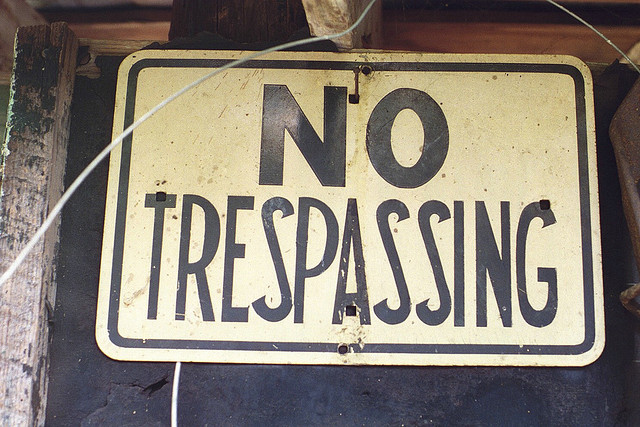
The easiest way to think about a boundary is a property line. We have all seen “No Trespassing” signs, which send a clear message that if you violate that boundary, there will be a consequence. This type of boundary is easy to picture and understand because you can see the sign and the border it protects. Personal boundaries can be harder to define because the lines are invisible, can change, and are unique to each individual.

Personal boundaries, just like the “No Trespassing” sign, define where you end and others begin and are determined by the amount of physical and emotional space you allow between yourself and others. Personal boundaries help you decide what types of communication, behavior, and interaction are acceptable.” Get more here: How to Create Healthy Boundaries « Positively Positive.

six {more} strategies for staying sane

Gemma Stone writes:

Last week, I chatted about the six strategies I use daily to help me from slipping into the darkness of mental health struggles. I actually use twelve strategies daily (I try, anyway). Here are the other six ::

Media. I am super strict with the type of media I expose myself to. I went on a negative media fast a few years ago, and it made all the difference.

Giving. I focus on giving throughout the day. A smile, a cup of coffee, passing on a book, sending a loving e-mail, writing a thank-you card, making a donation. Giving feels good.

Fun. My “purpose” is to have fun inspiring myself and others to live from love rather than fear. I tried living my purpose without the fun part and, well, it was no fun. So now I make plans for fun and giggles.

Boundaries. Saying “no” to what doesn’t deeply matter means I get to say “yes” to what does. Life is full, right? I know now that if I’m going to live fully, it means I have to set boundaries that honor who I am and the life I want to live.

Nature. Every day I chill with Mother Nature. It takes the edge off.

Self-reflection. When stuff comes up, I let myself get into it. If I don’t, I know it comes up in another (much less desirable) way. I feel what I am feeling and explore why I’m feeling that way

That’s it! My twelve secrets to staying sane.

Remember, there is so much to know and so much truth to discover. The direction my feet take and what speaks to my heart may not be right for you. I share my spark of truth with you to guide you through the dark, but not to tell you what to see.

Love,

via six {more} strategies for staying sane.

I feel more sane already…

Figuring out God’s will

Melody Beattie writes:

It was a stressful time in my life. I didn’t know what to do. I had pressing business decisions to make, and painful relationship issues to face. Everything felt like a mess.

I gathered up a few favorite books, the Bible, a journal, and some clothes. Then I headed for the mountains, a resort that was a favorite place of mine to hide out in and gather my thoughts.

I told myself, “I’m going to stay in there. Write in my journal. Pray. And meditate. I’m not coming out until I know what to do.”

After forty-eight hours of writing about my problems, praying about my problems, and meditating about my problems, I remembered something a friend had said to me.

“What are you doing?” he had asked.

“I’m trying to surrender to God’s will.”

“No you’re not, you’re trying to figure it out.”

Within six months, each of the problems I was wrestling with worked themselves out. I was either guided into an action that naturally felt right at the time, or a solution came to me. The immediate solution to each problem was the same: let go. Just surrender to the situation taking place. Sometimes, what we need to do next is surrender.

If you don’t like the word surrender, try calling it making peace.

God, help me surrender to your will, especially when I don’t know what to do next.” via Just For Today Meditations » Daily Recovery Readings – June 25, 2012.

Just in case you missed this for 6//25/2012

  1. “Learn to say ‘no’ to the good so you can say ‘yes’ to the best.”

    – John C. Maxwell

  2. It is good to have an end to journey towards, but it is the journey that matters, in the end.
    —Ursula K. LeGuin
  3. A man who has committed a mistake and doesn’t correct it is committing another mistake.
    –Confucius
  4. Don’t argue for other people’s weaknesses. Don’t argue for your own. When you make a mistake, admit it, correct it, and learn from it–immediately.
    –Stephen Covey
  5. Left to itself, nature takes ordinary garbage and transforms it into useful nutrients that help sustain life. It’s usually poor human action that makes garbage a problem.

    Our mental and emotional garbage takes the forms of bad memories, festering resentments, and useless regrets. We waste time berating ourselves and others about bad decisions and experiences that are behind us.

    The magic of the 12 Step program is that we can use it to transform this mental garbage into useful experience. A past mistake can become as asset when we share it with others. Pain and suffering can teach a lesson that helps all of us to grow. By forgiving others, a resentment can be turned into a friendship.

    I’ll resolve today not to worry about garbage any longer than it takes to identify it and release it to my Higher Power for transformation.

  6. Quote: When a man points a finger at someone else, he should remember that three of his fingers are pointing at himself.
    —Louis Nizer

    It’s so easy to blame others. Others are always making mistakes we can hide behind. That’s what blame is—hiding. When we blame others for our mistakes, we’re trying to hide our character defects.

    It’s nobody else’s fault that we act the way we do. It’s our fault. We’re responsible for our actions.

    And with the help of our Higher Power, we can change. We can turn over our character defects. Over time, we’re not afraid to learn about ourselves—even the parts we don’t like—because we want to know ourselves better.

    Prayer for the Day: I pray for help in facing my character defects.

    Action for the Day: I’ll think about the past week. I’ll list times I’ve used blame to hide from reality.

Charity

International Money Pile in Cash and Coins

Melody Beattie writes:

We need healthy boundaries about receiving money, and we need healthy boundaries about giving money.

Some of us give money for inappropriate reasons.

We may be ashamed because we have money and don’t believe we deserve it. We may belong to an organization that uses shame as a form of control to coerce us out of our money that the organization wants.

We can get hooked into giving money to our children, family members, or friends because we have earned or un­earned guilt. We allow ourselves to be financially black­mailed, sometimes by the people we love.

This is not money freely given, or given in health.

Some of us give money out of a sense of caretaking. We may have exaggerated feelings of responsibility for others, including financial responsibility.

We may be giving simply because we have not learned to own our power to say no when the answer is no.

Some of us give because we hope or believe people will love us if we take care of them financially.

We do not have to give money to anyone. Giving money is our choice. We do not have to allow ourselves to be victimized, manipulated, or coerced out of our money. We are financially responsible for ourselves. Part of being healthy is allowing those around us be financially responsible for themselves.

We do not have to be ashamed about having the money that we earn; we deserve to have the money we have been given — whatever the amount, without feeling obligated to give it all away, or guilty because others want what we have.

Charity is a blessing. Giving is part of healthy living. We can learn to develop healthy boundaries around giving.

Today, I will strive to begin developing healthy boundaries about giving money. I understand that giving is my choice.

via June 25: Charity | Language of Letting Go.

Work and recovery

Melody Beattie writes this about work:

Just as we have relationship histories, most of us have work histories.

Just as we have a present circumstance to accept and deal with in our relationship life, we have a present circumstance to accept and deal with in our work life.

Just as we develop a healthy attitude toward our relationship history – one that will help us learn and move forward – we can develop a healthy attitude toward our work history.

I have worked many jobs in my life, since I was eleven years old. Just as I have learned many things about myself through my relationships, I have learned many lessons through my work. Often, these lessons run parallel to the lessons I’m learning in other areas of my life.

I have worked at jobs I hated but was temporarily dependent on. I have gotten stuck in jobs because I was afraid to strike out on my own and find my next set of circumstances.

I have been in some jobs to develop skills. Sometimes, I didn’t realize I was developing those skills until later on when they become an important part of the career of my choice.

I have worked at jobs where I felt victimized, where I gave and gave and received nothing in return. I have been in relationships where I manufactured similar feelings.

I have worked at some jobs that have taught me what I absolutely didn’t want; others sparked in me an idea of what I really did want and deserve in my career.

Some of my jobs have helped me develop character; others have helped me fine tune skills. They have all been a place to practice recovery behaviors.

Just as I have had to deal with my feelings and messages about myself in relationships, I have had to deal with my feelings and messages about myself, and what I believed I deserved at work.

I have been through two major career changes in my life. I learned that neither career was a mistake and no job was wasted time. I have learned something from each job, and my work history has helped create who I am.

I learned something else: there was a Plan, and I was being led. The more I trusted my instincts, what I wanted, and what felt right, the more I felt that I was being led.

The more I refused to lose my soul to a job and worked at it because I wanted to and not for the paycheck, the less victimized I felt by any career, even those jobs that paid a meager salary. The more I set goals and took responsibility for achieving the career I wanted, the more I could decide whether a particular job fit into that scheme of things. I could understand why I was working at a particular job and how that was going to benefit me.

There are times I have even panicked at work and about where I was in my employment history. Panic never helped. Trust and working my program did.

There were times I looked around and wondered why I was where I was. There were times people thought I should be someplace different. But when I looked into myself and at God, I knew I was in the right place, for the moment.

There were times I have had to quit a job and walk away in order to be true to myself. Sometimes, that was frightening. Sometimes, I felt like a failure. But I learned this: If I was working my program and true to myself, I never had to fear where I was being led.

There have been times I couldn’t survive on the small amount of money I was receiving. Instead of bringing that issue to a particular employer and making it his or her fault, I have had to learn to bring the issue to my Higher Power and myself. I’ve learned I’m responsible for setting my boundaries and establishing what I believe I deserve. I’ve also learned God, not a particular employer, is my source of guidance.

I’ve learned that I’m not stuck or trapped in a job no more than I am in a relationship. I have choices. I may not be able to see them clearly right now, but I do have choices. I’ve learned that if I really want to take care of myself in a particular way on a job, I will do that. And if I really want to be victimized by a job, I will allow that to happen too.

I am responsible for my choices, and I have choices.

Above all else, I’ve learned to accept and trust my present circumstances at work. That does not mean to submit; it does not mean to forego boundaries. It means to trust, accept, then take care of myself the best I’m able to on any given day.

God, help me bring my recovery behaviors to my career affairs.” via Thought for the Day — Hazelden.

Start a Blog at WordPress.com.

Up ↑