How to Practice Radical Acceptance

Kristin Barton Cuthriell got me started with her post this morning and I can’t let this thought go. Here, an eHow contributor give instructions on how to practice radical acceptance:

Radical acceptance is the practice of accepting life on its own terms and finding effective strategies to cope with whatever is happening. It doesn’t mean being passive, but accepting “what is” with the understanding that you have the power of choice. Practicing radical acceptance is a choice that can ease stress and depression and enhance your overall quality of life.

Get the instructions here: How to Practice Radical Acceptance | eHow.com.

Letting Go

Melody Beattie writes:

“For those of us who have survived by controlling and surrendering, letting go may not come easily.” Beyond Codependency

In recovery, we learn that it is important to identify what we want and need. Where does this concept leave us? With a large but clearly identified package of currently unmet wants and needs. We’ve taken the risk to stop denying and to start accepting what we want and need. The problem is, the want or need hangs there, unmet.

This can be a frustrating, painful, annoying, and sometimes obsession-producing place to be.

After identifying our needs, there is a next step in getting our wants and needs met. This step is one of the spiritual ironies of recovery. The next step is letting go of our wants and needs after we have taken painstaking steps to identify them.

We let them go, we give them up – on a mental, emotional, spiritual, and physical level. Sometimes, this means we need to give up. It is not always easy to get to this place, but this is usually where we need to go.

How often I have denied a want or need, then gone through the steps to identify my needs, only to become annoyed, frustrated, and challenged because I don’t have what I want and don’t know how to get it. If I then embark on a plan to control or influence getting that want or need met, I usually make things worse. Searching, trying to control the process, does not work. I must, I have learned to my dismay, let go.

Sometimes, I even have to go to the point of saying, “I don’t want it. I realize it’s important to me, but I cannot control obtaining that in my life. Now, I don’t care anymore if I have it or not. In fact, I’m going to be absolutely happy without it and without any hope of getting it, because hoping to get it is making me nuts – the more I hope and try to get it, the more frustrated I feel because I’m not getting it.”

I don’t know why the process works this way.

I know only that this is how the process works for me. I have found no way around the concept of letting go.

We often can have what we really want and need, or something better. Letting go is part of what we do to get it.

Today, I will strive to let go of those wants and needs that are causing me frustration. I will enter them on my goal list, then struggle to let go. I will trust God to bring me the desires of my heart, in God’s time and in God’s way.” via Just For Today Meditations » Blog.

The Gift of Readiness

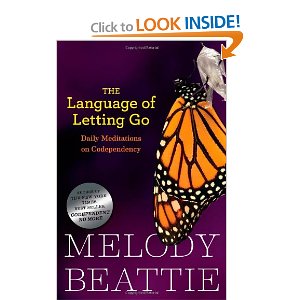
Melody Beattie is one of America's most beloved self-help authors and a household name in addiction and recovery circles. Her international bestselling book, Codependent No More, introduced the world to the term "codependency" in 1986. Millions of readers have trusted Melody's words of wisdom and guidance because she knows firsthand what they're going through. In her lifetime, she has survived abandonment, kidnapping, sexual abuse, drug and alcohol addiction, divorce, and the death of a child. "Beattie understands being overboard, which helps her throw bestselling lifelines to those still adrift," said Time Magazine.Melody Beattie writes:

“Were entirely ready to have God remove all these defects of character.” Step Six of Al-Anon.

We progress to the Sixth Step by working diligently, to the best of our ability, on the first five Steps. This work readies us for a change of heart, an openness to becoming changed by a Power greater than ourselves — God.

The path to this willingness can be long and hard. Many of us have to struggle with a behavior or feeling before we become ready to let it go. We need to see, over and over again, that the coping device that once protected us is no longer useful.

The defects of character referred to in Step Six are old sur­vival behaviors that once helped us cope with people, life, and ourselves. But now they are getting in our way, and it is time to be willing to have them removed.

Trust in this time. Trust that you are being readied to let go of that which is no longer useful. Trust that a change of heart is being worked out in you.

God, help me become ready to let go of my defects of character. Help me know, in my mind and soul, that I am ready to let go of my self-defeating behaviors, the blocks and barriers to my life.” via June 28: The Gift of Readiness.

Surviving Slumps

Melody Beattie writes:

A slump can go on for days. We feel sluggish, unfocused, and sometimes overwhelmed with feelings we can’t sort out. We may not understand what is going on with us. Even our attempts to practice recovery behaviors may not appear to work. We still don’t feel emotionally, mentally, and spiritually as good as we would like.

In a slump, we may find ourselves reverting instinctively to old patterns of thinking, feeling, and behaving, even when we know better. We may find ourselves obsessing, even when we know that what we’re doing is obsessing and that it doesn’t work.

We may find ourselves looking frantically for other people to make us feel better, the whole time knowing our happiness and well being does not lay with others.

We may begin taking things personally that are not our issues, and reacting in ways we’ve learned all to well do not work.

We’re in a slump. It won’t last forever. These periods are normal, even necessary. These are the days to get through. These are the days to focus on recovery behaviors, whether or not the rewards occur immediately. These are sometimes the days to let ourselves be and love ourselves as much as we can.

We don’t have to be ashamed, no matter how long we’ve been recovering. We don’t have to unreasonably expect “more” from ourselves. We don’t ever have to expect ourselves to live life perfectly.

Get through the slump. It will end. Sometimes, a slump can go on for days and then, in the course of an hour, we see ourselves pull out of it and feel better. Sometimes it can last a little longer.

Practice one recovery behavior in one small area, and begin to climb uphill. Soon, the slump will disappear. We can never judge where we will be tomorrow by where we are today.

Today, I will focus on practicing one recovery behavior on one of my issues, trusting that this practice will move me forward. I will remember that acceptance, gratitude, and detachment are a good place to begin.” via Just For Today Meditations » Daily Recovery Readings – June 26, 2012.

Powerlessness & Unmanageability

Melody Beattie writes:

Willpower is not the key to the way of life we are seeking. Surrender is.

“I have spent much of my life trying to make people be, do, or feel something they aren’t, don’t want to do, and choose not to feel. I have made them, and myself, crazy in that process,” said one recovering woman.

I spent my childhood trying to make an alcoholic father who didn’t love himself be a normal person who loved me. I then married an alcoholic and spent a decade trying to make him stop drinking.

I have spent years trying to make emotionally unavailable people be emotionally present for me. I have spent even more years trying to make family members, who are content feeling miserable, happy.

What I’m saying is this: I’ve spent much of my life desperately and vainly trying to do the impossible and feeling like a failure when I couldn’t. It’s been like planting corn and trying to make the seeds grow peas. Won’t work!

By surrendering to powerlessness, I gain the presence of mind to stop wasting my time and energy trying to change and control that which I cannot change and control. It gives me permission to stop trying to do the impossible and focus on what is possible: being who I am, loving myself, feeling what I feel, and doing what I want to do with my life.

In recovery, we learn to stop fighting lions, simply because we cannot win. We also learn that the more we are focused on controlling and changing others, the more unmanageable our life becomes. The more we focus on living our own life, the more we have a life to live, and the more manageable our life will become.

Today, I will accept powerlessness where I have no power to change things, and I’ll allow my life to become manageable.” via Daily Meditation ~ Powerlessness & Unmanageability – Miracles In Progress Codependents Anonymous Group.

Today, I am thinking about how to apply this to my in-laws…

My mother in law will never love me like a son and my sibling in laws will never treat me like a brother. Three years ago during the ‘summer of forgiveness’, I made amends and was forgiven and yet I remain in their ‘penalty box‘. I refuse to let myself in an close the lid on top of me. I refuse to play a role in their drama. If I’m not going to get what I need it’s not worth the work…

Here’s What You Can Do!

Terri Cole has an amazing post over at The Daily Love today. She writes:

Are you wasting your energy, youth and beauty focusing on things you cannot change? Thinking too much about situations where you have no control or experiences that have already happened? Oftentimes we get so wrapped up in what’s happening in the world and political systems, in what the neighbors are doing and in the mistakes we’ve made, that we lose focus on what we CAN DO right here, right now to help make our lives and those around us better.

Focusing on that over which you have no control (the past, the state of the world and the drama of other people’s lives… to name a few) is a common cause of stress. This type of thinking makes us feel powerless, leading to feelings of hopelessness, anxiety, and depression, which are all key players in the game of stress. I could go on and on about the myriad of the side effects from stress, but you can check them out for yourself while we focus on what you CAN DO to switch your thinking from what you should have done to what you will do now.

This week, I want to challenge you to pay attention to what thoughts are taking up real estate in your mind. When you are ruminating about people and situations over which you have no control, jot down a quick line about the issue at hand. Over the course of the week, what patterns are you discovering? What is the content of your predominant thoughts? How do they make you feel?

Now make a plan to Do Something. If it’s politics that sets you into a tailspin, volunteer for a political campaign, get to know the issues, VOTE. If it’s an ethical or world issue (e.g. animal welfare, bullying, the environment, researching/living with/preventing/curing a particular disease), volunteer for an organization focusing on that particular agenda.

Now, to the biggie…. How often are you ruminating about the past? When you find yourself living anywhere but in the present moment, ask yourself why you are still holding onto the past incident or regret. Try to break down what really happened. Once you have established the facts around the scenario, dial into what you are meant to learn from the experience and use that information to inform your decisions now.

Remaining in a state of frustrated helplessness takes a toll – physically and emotionally. You can relieve stress and feel more empowered by getting into action. Being part of the solution, instead of stressing about the problem, will contribute to your ability to build a more peaceful and productive life. You have the power to change your life and your perspective. Do not give that power to politicians, lawmakers, your neighbors or anyone else. Most of these people you do not even know, so why be dominated by their choices? And the ones you do know most likely do not want to have power over your thoughts and feelings. Keep your side of the street clean and use your special talents to make life better. Interestingly enough, you will make others’ better in the process.

Share your thoughts and comments with us. Let’s start a rich dialogue with the focus on what is possible rather than what is wrong. I am curious to see what changes you notice physically and mentally when you become aware of your thoughts and flip the script.

I hope you have a meaningful week, filled with positive action, and, as always, take care of you.

Source: Here’s What You Can Do!

Making Life Easier

Melody Beattie writes:

Life doesn’t have to be hard.
Yes, there are times we need to endure, struggle through, and rely on our survival skills. But we don’t have to make life, growth, recovery, change, or our day-to-day affairs that hard all the time.
Having life be that hard is a remnant of our martyrdom, a leftover from old ways of thinking, feeling, and believing. We are worthy, even when life isn’t that hard. Our value and worth are not determined by how hard we struggle.
If we’re making it that hard, we may be making it harder than it needs to be, said one woman. Learn to let things happen easily and naturally. Learn to let events, and our participation in them, fall into place. It can be easy now. Easier than it has been. We can go with the flow, take the world off our shoulders, and let our Higher Power ease us into where we need to be.
Today, I will stop struggling so hard. I will let go of my belief that life and recovery have to be hard. I will replace it with a belief that I can walk this journey in ease and peace. And sometimes, it can actually be fun.

Source: Daily Meditation ~ Making Life Easier – Miracles In Progress Codependents Anonymous Group

Basics of Codependency

Codependency: The Game

“Whether Codependency is developed in childhood or in adulthood the Codependent demonstrates a lack of trust in themselves. Because they are unable to fix what they see as other peoples problems they feel deficient. Because they believe the lies that a Dependent tells them after being challenged by the Codependent (who often correctly asses the situation in the first place) they learn not to trust their own judgement or intuition. This lack of trust in themselves often leads to them clinging on to those who cannot or will not love them back – often settling for too little. Codependents are also controlled by others and find it hard to resist when someone they grow tired of caring for says or does something that indicates things may change, that they will make more effort and behave how the Codependent expects. So they stick by the Dependent hoping things will be different this time.

Codependents deny their true feelings (fear, neediness, anger, ambivalence towards a Dependent) because they are afraid that they may have to acknowledge that they have to take an action that they really don’t want to take e.g. leaving the Dependent or face a truth that they do not want to face e.g. they can’t fix this problem, the Dependent is abusive etc. Denial of feelings leads to physical problems as the body starts to struggle with the effects of stress and anxiety e.g. high blood pressure, fatigue etc. or as often can happen the effects of substance abuse/food abuse that the Codependent practices in order to numb their emotional pain.

Codependents undertake in manipulative behaviour in the name of love and trying to help but in the end “We aren’t the people who ‘make things happen’. Co-dependents are the people who consistently, and with a great deal of effort and energy, try to force things to happen” Beattie pg. 76. Codependents don’t understand that they don’t have to control others and that any element of control means that the other person would normally have no interest in achieving the outcome the Codependent wants to achieve. They ignore the reality because they are frightened of what it really means for them. “People ultimately do what they want to do. They feel how they want to feel (or how they are feeling); they think what they want to think; they do the things they believe they need to do; and they will change only when they are ready to change. It doesn’t matter if they’re wrong and we’re right. It doesn’t matter if they’re hurting themselves. It doesn’t matter that we could help them if they’d only listen to, and cooperate with, us. IT DOESN’T MATTER” Beattie pg. 80-81.” via Basics of Codependency.

The Path To Healing

Tommy Rosen has been doing a great job covering the 12 step program over at The Daily Love. Today he writes:

In this Step, we will practice taking full ownership of the circumstances of our relationships in our lives to this point. We will own our side of the street completely and we will approach those that we have harmed with humility, honesty, compassion and a sincere desire to set things right. We will put out of our minds anything that they may have done wrong and approach them to apologize and also to make an amends. Many people confuse making amends with an apology. An apology is to say sorry for what you have done. To “make amends” is to express that you are changing yourself in such a way that you will not commit the same act again. To make amends also has a connotation of making reparations. We will need to make the situation right. If we have stolen, then we re-pay what we have stolen. If we have cheated, then we ask what we can do to make it up to them. Far beyond a simple apology, which by the way, we may have given before many times, when we give an amends, it is a more profound act that can bring true healing in its wake.

Go to your 8th Step list and note all the people who are in your general location. These are people who you can get to easily face to face. Begin to make appointments to see them. No need to let them know exactly what your intention is other than to get together to connect and that it is important to you. Sometimes they will not want to see you. We always try to make amends face to face unless it is not possible. If a person refuses to see you, or lives halfway across the world or if they have passed on, then writing a letter will be sufficient. Prepare yourself before you meet someone to make an amends. Make certain you are ready to own your side of the street and stay off of theirs. It is wise to discuss each amends first with your sponsor or teacher.” Get more here: Step Nine – The Path To Healing – Making Amends!.

Follow the link and read the whole series in you’re interested…

Attack shame!

Melody Beattie writes:

“Shame can hold us back, hold us down, and keep us staring at our feet.” Beyond Codependency

Watch out for shame.

Many systems and people reek of shame.  They are controlled by shame and may want us to play their game with them.  They may be hoping to hook us and control us through shame.

We dont have to fall into their shame.  Instead, we’ll take the good feelings self, acceptance, love, and nurturing.

Compulsive behaviors, sexually addictive behaviors, overeating, chemical abuse, and addictive gambling are shame-based behaviors.  If we participate in them, we will feel ashamed.  Its inevitable.  We need to watch out for addictive and other compulsive behaviors because those will immerse us in shame.

Our past, and the brainwashing we may have had that imposed original shame upon us, may try to put shame on us.  This can happen when were all alone, walking through the grocery store or just quietly going about living our life.  Dont think.  Dont feel.  Dont grow or change.  Dont be alive.  Dont live life.  Be ashamed!

Be done with shame.  Attack shame.  Go to war with it.  Learn to recognize it and avoid it like the plague.

Today, I will deliberately refuse to get caught up in the shame floating around in the world.  If I cannot resist it, I will feel it, accept it, then be done with it as quickly as possible.  God, help me know that its OK to love myself and help me refuse to submit to shame.  If I get off course, help me learn to change shame into guilt, correct the behavior, and move forward with my life in immediate self-love.” via Adult Children Anonymous.

One Day at a Time

“One day at a time–this is enough. Do not look back and grieve over the past for it is gone; and do not be troubled about the future, for it has not yet come. Live in the present, and make it so beautiful it will be worth remembering.” via One Day at a Time – Single Parents – Families.com.

I had a bit of an epiphany yesterday while weeding in the garden. My wife and I were talking about taking things one day at a time. I told her that while she was in Italy, sometimes it was all I could do to live second to second, minute to minute, hour to hour let alone a day at a time. The purpose of living one day at a time is to reduce life to bite sized chunks — like the old riddle how do you eat an elephant? One bite at a time…

Jesus said ‘sufficient unto the day is the evil thereof‘ [I don’t know why I like the King James version of that quote so much, but I do]. The epiphany for me was that this not only applies to looking forward, but also looking back. Sometimes I can’t bear up under the future OR the past but I don’t have to. I can live one moment at a time when things get overwhelming!

The Apostle Paul said in Philippians chapter 3:”12 Not that I have already obtained all this, or have already arrived at my goal, but I press on to take hold of that for which Christ Jesus took hold of me. 13 Brothers and sisters, I do not consider myself yet to have taken hold of it. But one thing I do: Forgetting what is behind and straining toward what is ahead, 14 I press on toward the goal to win the prize for which God has called me heavenward in Christ Jesus.”

I forget what is behind and I strain toward what is ahead one day at a time…

We have choices


Melody Beattie says:

“We have choices, more choices than we let ourselves see.

We may feel trapped in our relationships, our jobs, our life. We may feel locked into behaviors such as caretaking or controlling.

Feeling trapped is a symptom of codependency. When we hear ourselves say, I have to take care of this person . . . I have to say yes . . . I have to try to control that person . . . I have to behave this way, think this way, feel this way . . . we can know we are choosing not to see choices.

That sense of being trapped is an illusion. We are not controlled by circumstances, our past, the expectations of others, or our unhealthy expectations for ourselves. We can choose what feels right for us, without guilt. We have options.

Recovery is not about behaving perfectly or according to anyone else’s rules. More than anything else, recovery is about knowing we have choices and giving ourselves the freedom to choose.

Today, I will open my thinking and myself to the choices available to me. I will make choices that are good for me.” via Adult Children Anonymous.

Getting Needs Met

“I want to change careers . . .  I need a friend . . . I’m ready to be in a relationship . . .

Regularly, we become aware of new needs. We may need to change our behavior with our children. We may need a new couch, love and nurturing, a dollar, or help.

Do not be afraid to recognize a want or need. The birth of a want or need, the temporary frustration from acknowledging a need before it’s met, is the start of the cycle of receiving what we want. We follow this by letting go, then receiving that which we want and need. Identifying our needs is preparation for good things to come.

Acknowledging our needs means we are being prepared and drawn to that which will meet them. We can have faith to stand in that place in between.

Today, I will let go of my belief that my needs never get met. I will acknowledge my wants and needs, and then turn them over to my Higher Power. My Higher Power cares, sometimes about the silliest little things, if I do. My wants and needs are not an accident. God created me and all my desires.” via Daily Meditation ~ Getting Needs Met – Miracles In Progress Codependents Anonymous Group.

Psychology Today Blog: Quick and Easy Stress Busters for 10 of the Most Common Stressors.

Take Care of Yourself no Matter What

Alcoholics Anonymous
Image by KayVee.INC via Flickr

Some days, we wake up in the morning, and by the time we go to bed that evening, our life has twisted, changed in a way that we couldn’t predict and don’t want. Our worst fears have come true.

Life as we have known it will never be the same again. The problem isn’t just that this tragedy has come along and knocked our lives for a loop, although that alone would be enough. To complicate matters, we now know how vulnerable we are. And we wonder, in that vulnerability if we can ever trust God, life, or ourselves again.

Many years ago, the founders of Alcoholics Anonymous, a spiritually based program designed to help alcoholics recover, cautioned people not to base sobriety and faith in God on the false notion that any person is immune from tragedy. They knew that life would continue to be life.

You are not alone, in your joy or in your sorrow. You may feel that way for a while. But soon you’ll begin to see that many others have experienced, surrendered to, and transcended a similar misfortune or loss. Your pain is important. But you’re not being singled out. Don’t use your misfortune to prove that you were right all along you’re a victim of circumstance, fate, and God.

“God must really love me,” a young man said one day after walking away from a motorcycle accident that should have been tragic.

God loves all of us, whether we walk away pain free or not.

Keep taking care of yourself, no matter what.

God, transform my pain into compassion for others and myself

Start a Blog at WordPress.com.

Up ↑