Time for a course correction? Updated 12/13/2012

Here’s another post in an infrequent series that I do to give back to the WordPress.com community

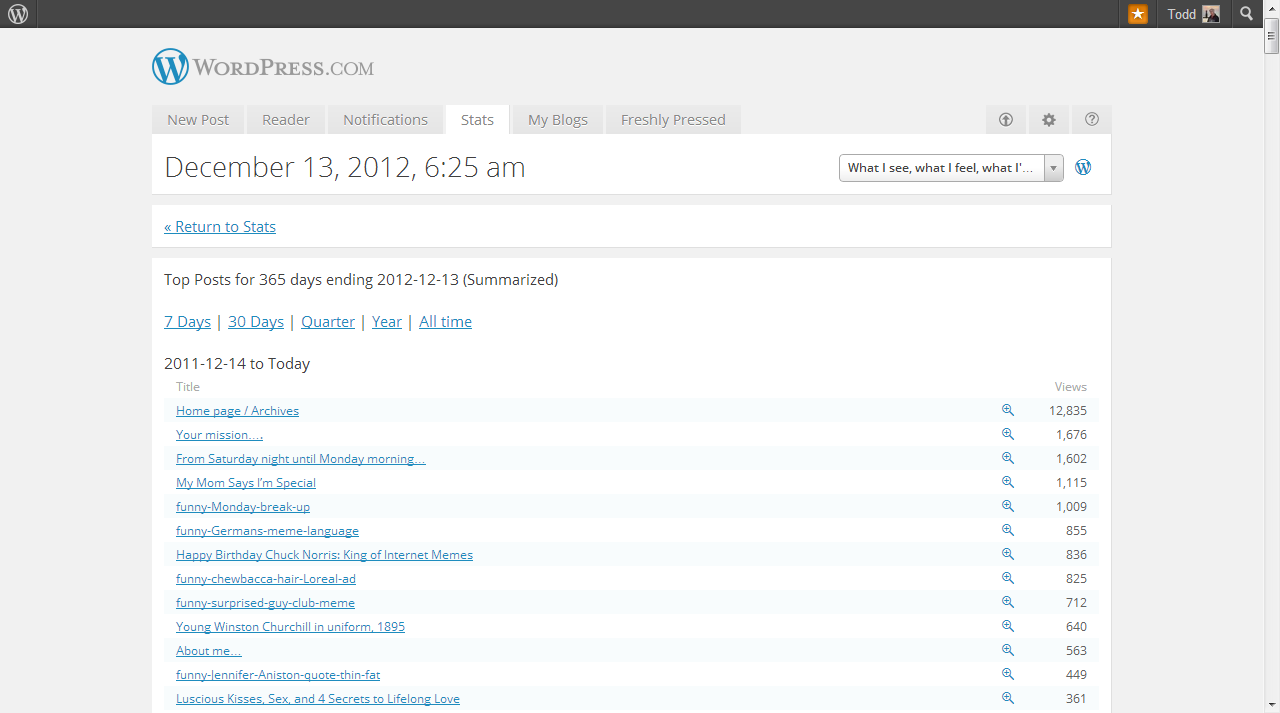
A famous comment usually attributed to Lord Leverhulme goes: “I know that half of my advertising budget is wasted, but I’m not sure which half”. The same is true of your blogging and social media time! How can you tell if you’re on track? Which 50% is working? What can you do if you’re off course? Well, the simplest way may be to check your WordPress.com stats for the past year and see what links people are actually clicking on…

12-12-2012 5-21-44 AM
Click to enlarge…

…then give them more of what they like and less of what they don’t! @jonswanson reminded me that reviewing your mosts popular posts and doing more like them is a good review do to as well!
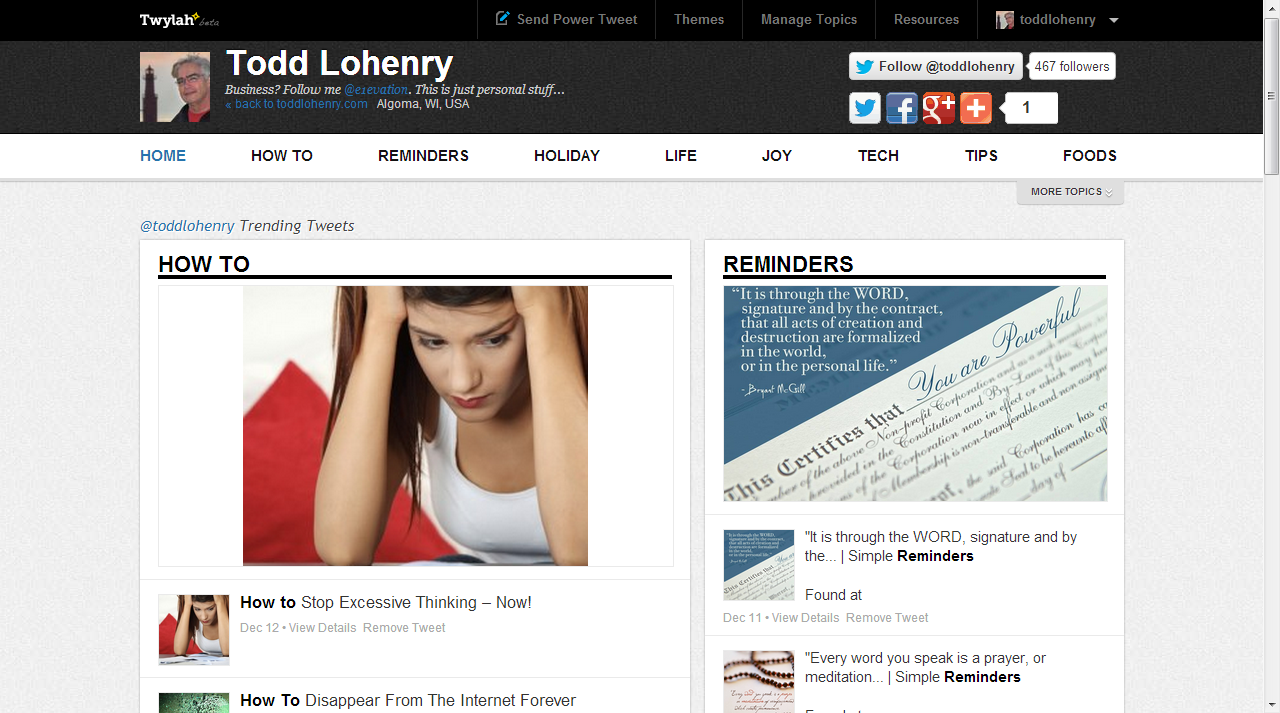
12-13-2012 6-26-13 AM

Another interesting way is to add twitter tool Twylah to your mix. Twylah brings your brand message into focus, extends the life of your tweets, and helps you get discovered beyond Twitter. Twitter you say? I don’t even use that! Well, you might want to start! I use the sharing feature in the WordPress settings to send every WordPress post to Twitter as a way of amplifying my posts. I also use Twitter to share articles that I don’t feel like sharing on the blog. Together — my blog posts and my tweets — create what I call a lifestream and Twylah is the place where I put that lifestream. Twylah automagically organizes my lifestream by topic and gives me a pretty good indication of how the internet views my lifestream. If the topics are way off, it might be time for a course correction! If the topics look like who you want to be known as, then Twylah provides that validation as well…
12-12-2012 5-44-39 AM

Another reason why I love Twylah in closing is that I can host Twylah on my domain so that I can effectively add Twylah to my WordPress.com blog and get Search Engine Optimization [SEO] benefits from my tweets as well. Oh, and did I mention that Twylah is free?

Blogging in the WordPress.com community is fun, but if you actually want to be recognized as an authority in an area and get found when people are looking for you, these two tools may be all you need to amp your internet presence! Oh, and by the way if you’re looking for WordPress.com or ‘thought leadership’ marketing coaching, you can stop by my business site at http://e1evation.com/services/

Friend, mentor and client Nilofer Merchant posted recently about the problem of fragmentation:

It’s a fragmented world. And it’s only becoming more so. It used to be that when people wrote, they wrote more deeply. In the early days of the web (pre-twitter), I remember hand picking the few voices I would listen to and then putting them into my RSS feeder and checking for their essays. Essays, not tweets, were the way we shared what we were thinking. But as “content” has become more important to maintain a standing online, more and more people are entering into the fray. More and more people who may not even have a point of view to advocate but just want to participate in the conversation.

As content becomes more fragmented, you could try and compete with that by doing more and more, by curating other people’s content, by then running your content through Twylah, by having that “twitter magazine” come out which puts all your tweets and links in one place so that people can catch it if they missed each particular one.

Or you could do the opposite. You could go deep. You could be that voice that everyone listens to because when it speaks, it is so deep and rich that it’s worth slowing down to listen to. Sort of a Morgan Freeman voice, in the times of Justin Bieber bop. Maybe it will allow the light of an idea to be seen more clearly.” There’s more at the source: In a fragmented world, go deep – Nilofer Merchant

If I were talking with Nilofer, I’d gently push back on this one. ‘Going deep’ does not preclude using Twylah; rather, I think, the answer to fragmentation and ‘going deep’ is focus…

When I first started blogging I was not confident in my own skillset and my focus was a mile wide and six inches deep. My tagline was “Marketing, Sales and Technology for small business, non-profits and academic institutions”. It makes me laugh now because there are no dozen websites that can cover THIS landscape effectively. I used to curate anything and everything related to those topics sometimes posting over 20 times a day! I got traffic but it wasn’t really relevant and it didn’t get me customers. Over time, Nilofer helped me go deep and realize my ‘onlyness’ was really helping thinkers to become thought leaders through the use of a minimal toolkit for content marketing. Now my tagline is “content marketing for thought leadership” and I help experts get found when people are looking for what they do. By going deeper, I may lose the opportunity to develop a small business website but I might gain the opportunity to work with a TED Fellow like Nina Tandon which is much more rewarding in the long run. Now, too, I’m more confident in my onlyness, I only post a couple of times per week…

Nilofer and I have had this discussion before and I think we both agree: If our thoughts are going to resonate with our target audience we need to understand the questions they are asking and align our answers with their queries. If we position ourselves as the obvious answer to the questions of the people we want to attract, we will get found when people are looking for ‘that one voice’. It’s not good enough however simply to think deep thoughts; we need to let people know that we are thinking them. Nilofer is a great thinker on strategy but I direct my energy toward ‘thoughts, tools and tactics’ for content marketing and ‘thought leadership’ marketing; I think the answer here is not either/or it’s both/and. I don’t think Nilofer’s saying that Twylah is a bad thing and I think she’d agree you need to go deep thoughtwise AND master ‘thought leadership’ marketing toolwise because the two go together like peanut butter and chocolate — it’s just that mindlessly tweeting and retweeting doesn’t do much to add value…

In closing, here are the 3 tools I recommend for ‘thought leadership’ marketing:

  • Google Reader
  • WordPress
  • Twylah

Ed. 2019: The current version of this list would be:

  • Google News or Inoreader
  • WordPress
  • Buffer

I posted about them here just last week. They are the tools that will help you get found when you decide to ‘go deep’ and become the one voice [because it doesn’t matter how deep you go if no one can find you]…

Sometimes, I think I post more about how much I love Twylah than the folks at Twylah do. Whether that’s true or not, I’m a huge fan and the main reason why is Twylah is the only social networking tool I know of that actually adds Search Engine Optimization [SEO] to your domain simply by tweeting. Still, if the DNS manager of your domain host is unfamiliar territory you may not be getting the maximum value out of Twylah and Twitter. I talk you through it here…

So, in summary, the three things you must do are:

  • Use Twylah
  • Add the Twylah widget to your WordPress sidebar
  • Host Twylah on your domain

Questions? Feedback? Comment below or connect with me so we can talk about how this applies to you and your situation…

Going back to our Getting Things Done [GTD] decision diagram for a minute…

The in basket I’m using more often than not is Google Reader. When I see ‘actionable’ content, I decide where is the best place to share that content using the following diagram:

I focused in an earlier post about sharing via Twylah and other tools — today the focus is on curation and blogging as a means of Getting Things Done [GTD]…

How do I decide that something is bloggable? Well here are some guidelines that I use…

  • When I come across content that is so brilliant that I could have written it myself if I would only take the time. Seriously, when I come across really good content that I want to expound upon and call out to my clients and readers…
  • When I find a great illustration or infographic
  • When I find a great YouTube video
  • When commenting on this content gives me a change to share something about my brand by agreeing, disagreeing, adding or subtracting…

You get the idea, right? Anything I find on the Internet is fair game as long as I remember to do three things:

  • Block quote and indent the content I am curating
  • Provide a link back to the original source
  • Be ready to move the content if requested by the owner

I firmly believe that when you curate effectively everybody wins. The original author gives exposure to my readers. My readers get a different perspective. Finally, my post is easier to write and I get the Search Engine Optimization [SEO] benefits from the content I curate…

Here are some thoughts from Suzanne Bird-Harris and a few others on the rationale for curation and some ideas on how to structure a curative post along with a screencast on how I do it using Windows Live Writer, a free blog editor from Microsoft…

Personally? I think curation is one of the best ways to supplement the original thinking on my blog. Here are some thoughts on curation in the blogging process…

Personally? I think curation is one of the best ways to supplement the original thinking on my blog. Here are some thoughts on curation in the blogging process…

Personally? I think curation is one of the best ways to supplement the original thinking on my blog. Here are some thoughts on curation in the blogging process…

http://storify.com/e1evation/thoughts-on-getting-things-done-gtd-in-curation

Here’s the diagram from the video…

Heidi Cohen shares this valuable tidbit today:

About nine out of ten B2B marketers use social media to distribute their content marketing according to recent research by the Content Marketing Institute and MarketingProfs. On average these marketers use five social media sites to spread their content marketing more broadly through social sharing.

For B2B marketers, this requires that your content marketing be formatted to work well on the social media platforms where you place it and that you encourage readers to share it. (Here’s a chart showing how to leverage different types of content marketing across social media.)

Respondents cited fourteen different social media platforms that they used to distribute content. (Here’s additional research and analysis from the content marketing survey.) Half of the social media venues were used by over 20% of respondents.

Source: Social Media: Where to Distribute B2B Content Marketing [Research/Chart] | Heidi Cohen

Go to the source if you’d like to have the rest of Heidi’s insights – come back here if you’re not sure how to put them into practice!

Open-mouthed smile

10 Simple Tips to Becoming a Better Blogger Jeff Bullas has some interesting thoughts on how to become a better blogger:

Blogging plus Social Media

The rise of social media has allowed bloggers to display and market themselves and their content globally without having to pay a cent to a newspaper, television mogul or to the mass media elite.

Bloggers that were previously undiscovered became global brands on topics as diverse as food, fashion and technology. Marketing your blog was no longer restricted to building an RSS or email subscription list.

Publishing and marketing has been democratized. Freedom to express yourself globally is available in seconds and it is also mobile.

The age of the printing press is now threatened after 573 years. Print media marketing has now been surpassed by digital media for the first time in history.

So How do you Become a Better Blogger?

It is quite simple really.

  1. Blog late or early
  2. Blog while travelling
  3. Blog on holidays
  4. Blog even when your friends think you’re mad
  5. Blog on the bus
  6. Blog on the plane
  7. Blog when the boss isn’t watching
  8. Blog when your partner nags you to stop blogging
  9. Blog when your passion has taken a holiday
  10. Blog when you think no one cares about your blog

Get more here:  10 Simple Tips to Becoming a Better Blogger | Jeffbullas’s Blog

Jeff has a great perspective on the importance of blogging. Comment below or connect with me so we can talk about how this applies to you and your situation…

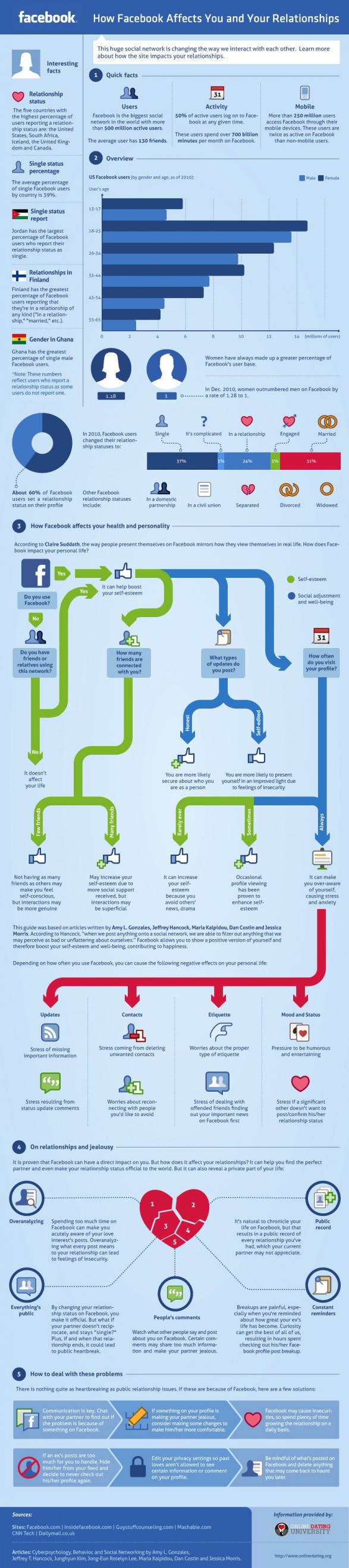
How Is Facebook Affecting Your Relationships?

FinerMinds

via How Is Facebook Affecting Your Relationships? (Infographic).


Guy Kawasaki has a clever quote on Inbound Marketing. It goes like this:

“If you have more money than brains, spend it on outbound marketing but if you have more brains then money, spend it on inbound marketing”.

Let’s take a look at inbound marketing HubSpot style…


With all due respect to Guy, inbound marketing may be smarter, but many of the top tier inbound marketing ‘suites’ still carry a hefty price tag. Here are 4 that emphasize content marketing and curation that come to mind [listed most expensive first]:

My own ‘e1evation workflow‘ on the other hand costs less than $25 per year if you know what you’re doing and all the products used meet the following criteria:

  • Best in class
  • Free or freemium
  • Completely cross platform down to the smartphone level

Great inbound marketing doesn’t have to cost and arm and a leg. Comment below or connect with me so we can talk about how this applies to you and your situation. Remember, the key is to get found when people are looking for you and what you do and that doesn’t need to cost an arm and a leg!

[contact-form][contact-field class="zem_slink" title="Record label" href="http://en.wikipedia.org/wiki/Record_label" rel="wikipedia" target="_blank">label</a>='Name' type="name" required="1" label="Name"/][contact-field label="Email" type="email" required="1"/][contact-field label="Website" type="url"/][contact-field label="Comment" type="textarea" required="1"/][/contact-form]

There are three main reasons why I think of Twylah as my ULTIMATE lifestream repository. First, let me share a definition of ‘lifestreaming‘ for those of you unfamiliar with the concept:

The term lifestream was coined by Eric Freeman and David Gelernter at Yale University in the mid-1990s to describe “…a time-ordered stream of documents that functions as a diary of your electronic life; every document you create and every document other people send you is stored in your lifestream. The tail of your stream contains documents from the past (starting with your electronic birth certificate). Moving away from the tail and toward the present, your stream contains more recent documents — papers in progress or new electronic mail; other documents (pictures, correspondence, bills, movies, voice mail, software) are stored in between. Moving beyond the present and into the future, the stream contains documents you will need: reminders, calendar items, to-do lists.”[1]

Lifestreams are also referred to as social activity streams or social streams.

Social network aggregators adapt Freeman and Gelernters original concept to address the vast flows of personal information and exchange created by social network services such as MySpace or Facebook “Web companies large and small are embracing this stream” of providing lifestreaming.[2] Other online applications have emerged to facilitate a users lifestream. Posterous offers a variety of unique features to enhance its basic blogging function. Tumblr is a similar concept, but with slightly different features.” via Lifestreaming – Wikipedia, the free encyclopedia.

Now, why do I think Twylah is the ultimate lifestreaming tool? Because…

  • Twylah can be the ultimate container for EVERYTHING you curate or create online [because you can ultimately get EVERYTHING into Twitter!]
  • Twylah drives enagement 40x better than Twitter alone
  • Twylah converts your tweets into valuable Search Engine Optimization [SEO]

Here’s how it works:

Bottom line? If you can get it to Twitter, Twylah will do the rest. Automatically! Now, because I’d rather talk than type, I’ll talk you through the concept below…

Questions? Feedback? Comment below…

I’m always trying to explain things in a way that is as simple as possible but no simpler, so I thought of another way to take a pass at David Allen’s Getting Things Done [GTD] principles as applied to the curation process. Here is the workflow map:

Here is how I apply it to the curation process:


Now, let me talk you through it:

Here are the two posts I mentioned in the screencast:

How to Get the Biggest Boost from Sharing Content

A rich infographic with valuable tips about optimizing your curation:

Full story at: http://contently.com/blog/2012/10/09/how-to-get-the-biggest-boost-from-sharing-content-infographic/#

Stick to the 3-B Plan when Emailing Busy People

Gregory Ciotti writes this:

If you want to get in touch with influential people (aka: BUSY people), you need to know how to contact them. Despite the buzz around social media, far more people use email to communicate than any other online medium, and business today still gets done over email, not through tweets. Sparring Mind’s Gregory Ciotti explains how to make things happen over email with the 3-B Plan.

Why it’s Important to Know

Knowing how to write outreach emails might seem like a no-brainer or maybe even an unnecessary skill to have, but I can assure you the opposite, on both accounts. If you’re serious about networking and building your platform/personal brand, you MUST know how to email important people. Important people are busy people. You can’t rely on random encounters to get in touch with people who can help you flourish; while it may happen once in a while, the rest of the time it’s up to you.

Due to the fact that tweeting is so impersonal and a cold phone call is so annoying, email is the ideal platform for reaching out. For busy people, even their inbox is something that is viewed as a “task,” meaning they want to get in and out as quickly as possible. Understanding how to properly email people is a skill that sets you apart from others (trust me, I’ve received some truly awful emails) and is essential for making things happen with influencers.

The 3-B Plan

When deciding whether to read or delete an email, our brains go through this common evaluation process:

1. Who is emailing me (and is this spam)?
2. What do they want?
3. How long will this take?

Getting a “pass” on all 3 of these can be tougher than it looks, especially for busy people. Here’s my 3-step technique to avoid the trash bin.

I call it the 3-B plan. I always double-check my emails to make sure they follow the guidelines below, and I’ve been able to get some fantastic response rates.

Brevity

If there is one thing that busy people value above all else, it’s brevity. If you were receiving upwards of 50-100 emails per day, or had so many obligations that you were only left with a short amount of time to check email, it’d be easy to see why. In order to get your messages read ASAP, it’s best to make sure your opening email follows the ASAP rule: as short as possible.

I wouldn’t put a set limit on email length, because it’s a case by case basis. The important thing to remember is to always edit your emails at least once to trim unnecessary information. People don’t need your enthralling life story over email, they just need “who, what, why” so they can get back to business.

Blunt

Being blunt doesn’t mean not being persuasive, it simply means getting to the point without trying to be clever. Stories and jokes are essential for other forms of writing, but NOT for emails. Get to the incentive on why the other person should respond right away.

If possible, list a number in the title to signal commitment time (Ex: “3 quick questions”) and state exactly what the email is about in the subject line.

Basic

I sometimes am in disbelief that this one needs to be said, but it’s so true. I’ve had emails where people send what looks like a newsletter, emails with tons of images in them (so I have to click “display images” to even read it), and emails with a DOZEN attachments. When it’s your first time emailing someone…

Keep it simple, stupid.

Read Greg’s complete 9-step email guide here.

Source: Stick to the 3-B Plan when Emailing Busy People
To this I would add one thought that is becoming obvious to me lately. I divide information into two categories; just in time and just in case. Just in time is information that affects relationship and revenue and should go in an inbox. A link, however, is most often just in case information. Now, think about the context of the person receiving the information and where they will receive it. If your communication is ‘just in time’ then follow the rules above to get a response – I even go so far as to try to limit my communication to the amount of space available in a single smartphone screen or limiting the message to a single thought so that the busy person on the other end [who is hopefully a Getting Things Done [GTD] practitioner] can do it in two minutes or less. If I’m sending a link, however, why not send it to them in their favorite social network? You will find them in a context where they are already looking at links anyway! I believe that if you think about the context in which a busy person will be reading your message and you communicate accordingly, you will eventually move to the top of the heap. What do you think?

Getting Things Done [GTD] on the Internet…

Today I’m announcing an epic series called Getting Things Done [GTD] on the Internet. Every Friday for the foreseeable future I will post on some aspect of applying David Allen’s classic work “Getting Things Done” to the basics of Internet marketing…

I’d like to start by thanking those of you who have not read David Allen’s book — you have given me a competitive advantage for years! Seriously, though, I’m continually surprised at how many people have not read this classic work. For me, it ranks among the three best business books I’ve ever read. It’s right up there with the seven habits of highly effective people and that is saying a lot for me. In fact, I think these two books go together like peanut butter and chocolate; Stephen Covey‘s book provides a strategic framework on David Allen’s book gives great insight on how to implement Covey’s framework…

Allen says:

THE CORE PROCESS I teach for mastering the art of relaxed and controlled knowledge work is a five-stage method for managing workflow. No matter what the setting, there are five discrete stages that we go through as we deal with our work. We (1) collect things that command our attention; (2) process what they mean and what to do about them; and (3) organize the results, which we (4) review as options for what we choose to (5) do. This constitutes the management of the “horizontal” aspect of our lives—incorporating everything that has our attention at any time.

Allen, David (2002-12-31). Getting Things Done: The Art of Stress-Free Productivity (p. 24). Penguin. Kindle Edition.

In my practice, my emphasis is on what I call “practical, tactical social media“. Chapter 2 of Allen’s book gave me a tool that I apply in multiple was to the social media process…


In the next couple of weeks, I’ll be talking about how to apply this diagram to everything from email to social media management, including…

  • Getting Things Done with Gmail, Google Apps and Google Tasks…
  • Getting Things Done with Google Reader for ‘Personal News Aggregation‘…
  • Getting Things Done with WordPress for Business Blogging…
  • Getting Things Done with Twitter for social media…
  • Getting Things Done with social media management…

I’ll also entertain ‘how would I apply Getting Things Done [GTD] to ________’ kind of questions if you have one you’d like to ask. I’ll share theses posts each Friday so you can ponder them and implement the parts you like over the weekend so stop by next Friday for Getting Things Done with Gmail, Google Apps and Google Tasks…

The ever brilliant Heidi Cohen shares this:

Pinterest is the fourth largest source of traffic in the world according to data from Shareaholic. Pinterest’s traffic has doubled since May making it an important entryway to your business.

Since the beginning of 2012, Pinterest has passed other social media platforms including LinkedIn, Google+, YouTube, Twitter and StubbleUpon, in terms of the amount of traffic it refers to other sites. Additionally, Pinterest refers more traffic than Bing and Yahoo. (Here are nineteen other reasons to use Pinterest with charts.)” Get the rest here: Pinterest: The Best New Source of Traffic [Research] | Heidi Cohen.

Here’s my approach to blogging and social media in a nutshell…

“You’ve got to accentuate the positive
Eliminate the negative
Latch on to the affirmative
Don’t mess with Mister In-Between

You’ve got to spread joy up to the maximum
Bring gloom down to the minimum
Have faith or pandemonium
Liable to walk upon the scene”

Whether you’re a solopreneur or the ‘Director, Corporate Marketing and Brand Communications Worldwide’ for a large farm implement manufacturer you can use good, fast and cheap social media tools to implement the ‘Perry Como’ approach to publicizing your business. Did you find some great news about your company on the web? “Accentuate the positive” by posting it to your corporate blog. Is someone harassing you online? “Eliminate the negative” by posting positive content and feeding your fans. Get the picture? Old Perry had it right, even if social media didn’t exist in 1958 when he recorded that song…

So, you latch on to the Perry Como method when you think about promoting your own personal brand

PS Originally posted 02/24/2010, updated 9/21/2012; still true over two years later…

Before and after; Nilofer Merchant site ‘TBO’

2011 version…

What is TBO you ask? Why ‘total beauty makeover’ of course! Wednesdays are the days we talk about high-performing websites at elevation and today I like to share with you some recent work that I did for friend and client Nilofer Merchant…

I enjoy telling people that I have worked with Nilofer since the days when she was a mere mortal when our paths crossed at Apple in the late 90s. Since then, Nilofer has gone on to become an author, corporate director, and speaker while I became a humble social media mechanic. About 18 months ago, Nilofer had a ‘brochureware’ website and was blogging on Posterous. I ask ‘what’s a nice girl like you doing using sites like these’? Nilofer considered my question and came back a month or two later asking if I could guide her through the process of consolidating her Internet presence on WordPress. The picture you see above was the result of our first collaboration and it served her well for almost a year…

A month ago Nilofer approached me with the idea of giving the site a total beauty makeover in preparation for her September 12 book launch of 11 Rules for Creating Value in the #Social Era. Nothing could have made me happier because helping Nilofer promote her thinking is truly a labor of love!

As we talked about the new site we both agreed we wanted something simple and straightforward that would accurately communicate her brand. We chose a simple but powerful WordPress theme that would showcase images reflecting the different aspects of Nilofer’s brand. I really wanted the website to “get out of the way” so that people could see how beautiful SHE really is. I wish I could take credit for the images but she worked with Cooper Bates Photography to get what we needed and their images really carry the site. It was pretty easy going from that point forward; here is the result of our collaboration:

Click to go to website…

What about you? Does your website accurately reflect the beauty of your brand? If not, I’d be happy to work with you as well! You can use the contact form below to connect…

Go back

Your message has been sent

Warning
Warning
Warning
Warning

Warning.

A ‘course correction’…

One of the best things I get to do as e1evation, llc is to enjoy a huge quality-of-life living in rural Wisconsin on the shores of Lake Michigan and yet get to work with some of the smartest people in the world through the magic of the Internet. I’ve been thinking a lot lately about some of the advice I dole out to my clients and then deciding to eat my own dog food. I took a walk this morning to my thinking place; the Algoma lighthouse — from my office to the breakwater, it’s one mile round trip…

In her new book “11 Rules for Creating Value in the #SocialEra, Nilofer Merchant says…

Purpose can become an alignment system.

Merchant, Nilofer (2012-09-12). 11 Rules for Creating Value in the Social Era (Kindle Location 261). Perseus Books Group. Kindle Edition.

I’m realigning what I do around my ‘true’ purpose; being an internet ‘mechanic’. Here’s what I came up with while I was there [another one of my epic videos where you need to close your eyes to focus on the content! I’ll keep trying.]…

Updated video…

Previous video… [go ahead — the joke’s on me!]

Questions? Feedback?

Bonus! Images from my walk to the breakwater…

[imagebrowser id=1]

How to make your blog more ‘pinteresting’…

Afraid it’s a massive time suck? Here are two ideas for having your Pinterest cake and eating it too…

It’s a brand new day!!!

Nice obscure version of Ryan Star’s ‘Lie to Me’ song to roll out my site relaunch! It’s a brand new day…

5 Things You Should Never, Ever Share On Twitter

Image representing Twitter as depicted in Crun...


Ponder this:


Twitter is a network that praises transparency. If you’re honest about who you are, you can’t go wrong in your tweets, right?

Well, there’s honest as in “I made a mistake and now I’m owning up to it”, but there’s also honest as in “here is all my personal info, do with it what you will”. In your path to honesty and transparency online, here are 5 things you should never, ever share.

Source: 5 Things You Should Never, Ever Share On Twitter – AllTwitter


Heidi Cohen writes:

“Social media isn’t the holy grail,” according to Social Media Examiner’s Mike Stelzner, author of Launch: How to Quickly Propel Your Business Beyond the Competition, speaking at Content Marketing World 2012. At first blush this may sound ludicrous coming from the founder of one of the largest social media blogs but the reality is that social media isn’t a business goal!

Rather, social media is a conduit for delivering content to and engaging with your prospects, customers, fans and the public, and to answer their questions. To this end, Mike Stelzner recommended becoming a publisher in order to build your own audience cost effectively by creating valuable content for your target audience. This requires knowing who you want to reach and asking them what they want to know. Once you have answers to these two questions, it’s a matter of giving your audience relevant content that’s educational and easy-to-digest.

Otherwise, “social media is just talk without listening” in the words of Content Rules  co-author, C.C. Chapman. Without taking the time to hear what your prospects and customers want to know, you’ll never create what Social Media Explorer’s Jason Falls, co-author of No Bullshit Social Media, refers to as “holy smokes content.” This information drives social media because it gets you in front of your prospects and customers by providing solutions to their problems. Therefore, optimize your content for people by using the words your audience uses to get found because your ultimate goal is to sell your prospects and customers your products and services, not just build a social media following as an end in itself.” Get the rest here: Why Social Media Isn’t The Holy Grail (& Neither is Content Marketing) | Heidi Cohen.

Start a Blog at WordPress.com.

Up ↑