10 Reasons Why You’re Enough Just the Way You Are

Ally Palmer writes:

  1. Everyone’s a work­ in ­progress: Nobody’s perfect including yourself so stop putting so much pressure on yourself to be so.
  2. You have unique strengths: There’s a quality you have right now that someone else wishes they had. Stop focusing on what you don’t have and make the best of what you do.
  3. Your strength lies in your ability to be okay with your weaknesses: We don’t have to be ashamed of our weaknesses. We’re human, we all have them. When you simply accept that you have weaknesses, you can stop spending so much energy trying to hide them. Continue reading “10 Reasons Why You’re Enough Just the Way You Are”

Ending Codependency in Relationships: Find And Live Who You Really Are

“Be yourself; everyone else is already taken.”  ~Oscar Wilde

Full story at: Ending Codependency in Relationships: Find And Live Who You Really Are | Tiny Buddha.

Is it just me…

…or does it seem like most ‘love songs’ are really deeply codependent?

New Year’s Stupidity

feat-craigharper.pngCraig Harper writes:

Waiting…

Despite the fact that New Year’s Resolutions rarely lead to lasting change, millions of Australians [and Americans for that matter. ed.] will sit on their hands for the next two weeks waiting for January 1 to roll around so they can magically change their lives. Good grief. What a stupid habit. We wouldn’t take a drug that failed 98% of the time, so why are we so committed to such an ineffective and irrational ritual? Authentic and lasting transformation has everything to do with courage, commitment, attitude and resilience and nothing to do with some number on a calendar.

Tell someone to start their new program (diet, gym regime, running program, etc.) on December 30 (for example) and they’ll look at you like you’re a total idiot. Why on earth would anyone do that? Tell that same person to start two days later (the day with an overwhelming failure rate) and they’ll enthusiastically nod in agreement because the first day of the new year is the ‘right day’ to start.

Wow.

As my dad says; never let the facts get in the way of a good story.

Here’s a crazy idea… if you’re serious about changing some aspect of your reality, then start your journey of transformation now. Stop looking for comfort, convenience and cop-outs and simply do what success demands – today. Forget about the calendar, tradition and the expectations of others and stop giving yourself an escape clause.” via New Year’s Stupidity.

http://youtu.be/sIHmty265Us

Boundaries

Melody-Beattie-8x6.jpgMelody Beattie writes:

Boundaries aren’t limited to saying no. Boundaries reflect what we believe we deserve. Some people were born into situations that encouraged listening to and trusting themselves. Others had their right to self-respect violated at an early age. If our ability to trust ourselves was tam­pered with when we were young. we may have to work extra hard to acquire and keep boundaries—and self­esteem—in place.

“Someone who barely knew me mentioned to a friend that he thought I was selfish,” a woman said. “For the next six months, I had the worst time setting limits. I kept trying to prove how unselfish I was.”

No matter how many boundaries we’ve set, it’s not unusual to still feel guilty each time we say no. We may be afraid that we’ll lose the other person. or that he or she will go away if we say no. But when we don’t honor ourselves by setting boundaries, we’re the ones who disappear.

Challenge: The hardest thing about boundaries can be recognizing that we’ve lost or misplaced ourselves again. Maybe we could look at setting boundaries as an on­going process of discovering who we are.

via December 15.

In her meditation for February 20, she writes:

We are powerless over other people’s expectations of us. We cannot control what others want, what they expect, or what they want us to do and be. We can control how we respond to other people’s expectations. During the course of any day, people may make demands on our time, talents, energy, money, and emotions. We do not have to say yes to every request. We do not have to feel guilty if we say no. And we do not have to allow the barrage of demands to control the course of our life. We do not have to spend our life reacting to others and to the course they would prefer we took with our life. We can set boundaries, firm limits on how far we shall go with others. We can trust and listen to ourselves. We can set goals and direction for our life. We can place value on ourselves. We can own our power with people. Buy some time. Think about what you want. Consider how responding to another’s needs will affect the course of your life. We live or own life by not letting other people, their expectations, and their demands control the course of our life. We can let them have their demands and expectations; we can allow them to have their feelings. We can own our power to choose the path that is right for us. Today, God, help me own my power by detaching, and peacefully choosing the course of action that is right for me. Help me know I can detach from the expectations and wants of others. Help me stop pleasing other people and start pleasing myself.

Beattie, Melody (2009-12-15). The Language of Letting Go (Hazelden Meditation Series) (p. 49). BookMobile. Kindle Edition.

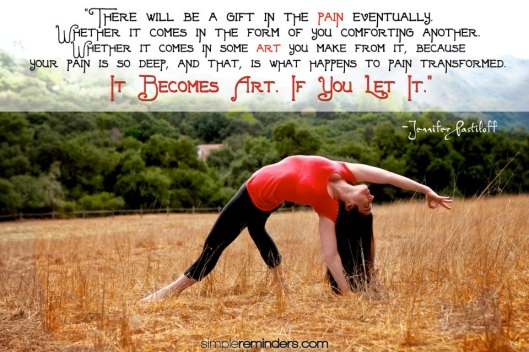
It all becomes art if you let it…

Chicken Bones In The Throat. « The Manifest-Station.

2 Corinthians 3 Praise be to the God and Father of our Lord Jesus Christ, the Father of compassion and the God of all comfort, 4 who comforts us in all our troubles, so that we can comfort those in any trouble with the comfort we ourselves receive from God. 5 For just as we share abundantly in the sufferings of Christ, so also our comfort abounds through Christ.

Letting Go of Sh*tty Relationships

Joshua Fields Millburn writes:

Some relationships are incredibly pernicious. We often develop relationships out of convenience, without considering the traits necessary to build a successful bond with another person—important traits like unwavering support and shared trust and loving encouragement.

When a relationship is birthed out of convenience or proximity or chemistry alone, it is bound to fail. We need more than a person’s physical presence to maintain a meaningful connection, but we routinely keep people around because … well, simply because they’re already around

We’ve all held on to someone who didn’t deserve to be there before. And most of us still have someone in our lives who continually drains us: Someone who doesn’t add value. Someone who isn’t supportive. Someone who takes and takes and takes without giving back to the relationship. Someone who contributes very little and prevents us from growing. Someone who constantly plays the victim.

But victims become victimizers. And these people are dangerous. They keep us from feeling fulfilled. They keep us from living meaningful lives. Over time, these negative relationships become part of our identity—they define us, they become who we are.

Fortunately, this needn’t be the case. Several actions can be taken to rid ourselves of negative relationships.

Go to the source: Letting Go of Shitty Relationships | The Minimalists

5 Reasons Detachment Can Save Your Relationship

Jasmin Bedria writes:

When most people envision the ideal relationship, they think of engulfing, inseparable love. Being “attached at the hip” is typically an early sign that you and your new love share the ever-consuming, romantic high of a Nicholas Sparks novel.

You want to keep learning about each other, acting as sponges to the other’s every word and affection.

So, how in the world can detachment actually strengthen an intensely loving and growing relationship?

Detachment is one of the most important aspects in achieving true, profound fulfillment. Believe it or not, practicing detachment while remaining vulnerable will benefit you in remarkable ways.

Get the full story here: 5 Reasons Detachment Can Save Your Relationship

And, for me it’s one of the most difficult concepts imaginable. Sigh…

Want to be happy? Stop trying to be perfect

I posted a TEDTalk from author Brené Brown yesterday. Here’s an article she did on the CNN site:

The quest for perfection is exhausting and unrelenting, but as hard as we try, we can’t turn off the tapes that fill our heads with messages like “Never good enough” and “What will people think?”

Why, when we know that there’s no such thing as perfect, do most of us spend an incredible amount of time and energy trying to be everything to everyone? Is it that we really admire perfection? No — the truth is that we are actually drawn to people who are real and down-to-earth. We love authenticity and we know that life is messy and imperfect.

We get sucked into perfection for one very simple reason: We believe perfection will protect us. Perfectionism is the belief that if we live perfect, look perfect, and act perfect, we can minimize or avoid the pain of blame, judgment, and shame.

We all need to feel worthy of love and belonging, and our worthiness is on the line when we feel like we are never ___ enough (you can fill in the blank: thin, beautiful, smart, extraordinary, talented, popular, promoted, admired, accomplished).

Perfectionism is not the same thing as striving to be our best. Perfectionism is not about healthy achievement and growth; it’s a shield. Perfectionism is a 20-ton shield that we lug around thinking it will protect us when, in fact, it’s the thing that’s really preventing us from being seen and taking flight.

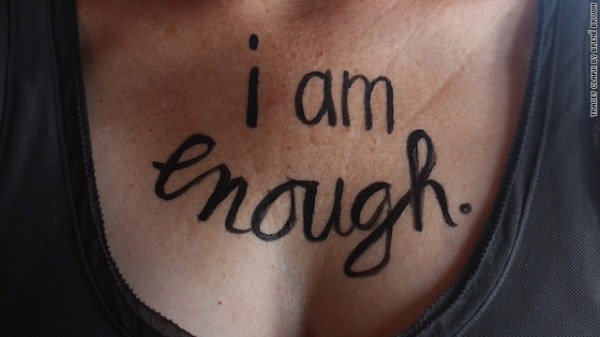
Living in a society that floods us with unattainable expectations around every topic imaginable, from how much we should weigh to how many times a week we should be having sex, putting down the perfection shield is scary. Finding the courage, compassion and connection to move from “What will people think?” to “I am enough,” is not easy. But however afraid we are of change, the question that we must ultimately answer is this:

What’s the greater risk? Letting go of what people think — or letting go of how I feel, what I believe, and who I am?

Go to the source for more: Want to be happy? Stop trying to be perfect – CNN.com

She is soooo on my radar! I’m looking forward to reading one of her books sometime soon…

Timing…

Melody Beattie writes:

Wait until the time is right. It is self-defeating to postpone or procrastinate; it is also self-defeating to act too soon, before the time is right.

Sometimes, we panic and take action out of fear. Sometimes, we take untimely action for revenge or because we want to punish someone. We act or speak too soon as a way to control or force someone to action. Sometimes, we take action too soon to relieve feelings of discomfort or anxiety about how a situation will turn out.

An action taken too soon can be as ineffective as one taken too late. It can backfire and cause more problems than it solves. Usually, when we wait until the time is right – sometimes only a matter of minutes or hours – the discomfort dissolves, and we’re empowered to accomplish what we need to do.

In recovery, we are learning to be effective.

Our answers will come. Our guidance will come. Pray. Trust. Wait. Let go. We are being led. We are being guided.

Today, I will let go of my need to control by waiting until the time is right. When the time is right, I will take action.

Source: Just For Today Meditations » Daily Recovery Readings – November 12, 2012

Let Enlightenment Come

The everwise Melody Beattie writes:

Sometimes, the harder we try to see a lesson, the more lost and confused we become. “What does it mean?” we ask, squinting at the problem.

Relax. Let go of your expectations and your interpretations. Quit trying so hard to see.

Sometimes the lesson may be a simple reminder to see the sacred in your ordinary life or to practice compassion for yourself as well as for others. Sometimes what we’re going through is part of a larger lesson, one that may take us years to complete and comprehend. It’s easy to fall into the false belief that there’s some lesson that we have to push and struggle to learn. There isn’t.

We only have to see what we see and know what we know right now.

Sometimes, the harder we try to see a lesson, the more lost and confused we become. “What does it mean?” we ask, squinting at the problem.

Relax. Let go of your expectations and your interpretations. Quit trying so hard to see.

Sometimes the lesson may be a simple reminder to see the sacred in your ordinary life or to practice compassion for yourself as well as for others. Sometimes what we’re going through is part of a larger lesson, one that may take us years to complete and comprehend. It’s easy to fall into the false belief that there’s some lesson that we have to push and struggle to learn. There isn’t.

We only have to see what we see and know what we know right now.

Experience your life.

More shall be revealed when it’s time. Practice seeing without squinting.

God, help me be present to the situations in my life without trying to read too deeply into them. Help me trust that my lessons will become clear when it’s time.” via September 27: Let Enlightenment Come.

Peace with the Past

Melody Beattie writes:

Holding on to the past, either through guilt, longing, denial, or resentment, is a waste of valuable energy – energy that can be used to transform today and tomorrow.

“I used to live in my past,” said one recovering woman. “I was either trying to change it, or I was letting it control me. Usually both.

“I constantly felt guilty about things that had happened. Things I had done; things others had done to me – even though I had made amends for most everything, the guilt ran deep. Everything was somehow my fault. I could never just let it go.

“I held on to anger for years, telling myself it was justified. I was in denial about a lot of things. Sometimes, I’d try to absolutely forget about my past, but I never really stopped and sorted through it; my past was like a dark cloud that followed me around, and I couldn’t shake clear of it. I guess I was scared to let it go, afraid of today, afraid of tomorrow.

I’ve been recovering now for years, and it has taken me almost as many years to gain the proper perspective on my past. I’m learning I can’t forget it; I need to heal from it. I need to feel and let go of any feelings I still have, especially anger.

“I need to stop blaming myself for painful events that took place, and trust that everything has happened on schedule, and truly all is okay. I’ve learned to stop regretting, and to start being grateful.

“When I think about the past, I thank God for the healing and the memory. If something occurs that needs an amend, I make it and am done with it. I’ve learned to look at my past with compassion for myself, trusting that my Higher Power was in control, even then.

“I’ve healed from some of the worst things that happened to me. I’ve made peace with myself about these issues, and I’ve learned that healing from some of these issues has enabled me to help others to heal too. I’m able to see how the worst things helped form my character and developed some of my finer points.

“I’ve even developed gratitude for my failed relationships because they have brought me to who and where I am today.

“What I’ve learned has been acceptance – without guilt, anger, blame, or shame. I’ve even had to learn to accept the years I spent feeling guilty, angry, shameful, and blaming.”

We cannot control the past. But we can transform it by allowing ourselves to heal from it and by accepting it with love for others and ourselves. I know, because that woman is me.

Today, I will begin being grateful for my past. I cannot change what happened, but I can transform the past by owning my power, now, to accept, heal, and learn from it.” via Just For Today Meditations » Blog.
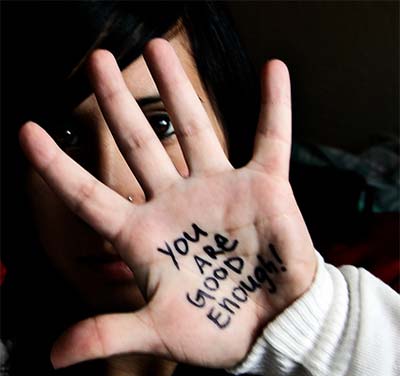
Forget Perfection: Strive Toward Progress

Chris Freytag writes:

I used to be a total perfectionist, but I have had a total change of heart. I’ve learned that it isn’t worth it to be consumed with the little things, or sweat the small stuff as they say. I no longer bicker with my husband or kids about the stupid stuff. I’ve incorporated a progress over perfection philosophy throughout my life—from how I live to what I teach to my fitness followers.

Perfection is unachievable. It often leads to disappointment and it can set you up for failure. Strive for progress, not perfection.

I now call myself a recovering perfectionist and there are so many benefits to letting go of perfection.

You can be less concerned about what others think of you.  I am less worried about what others think about me as long as I’m proud of my behavior. I don’t have to look perfect or act perfect. It is liberating to let go of what other people think. Start to value your own opinion more than anyone else’s. Your confidence will soar when you alone determine how you should feel about you.

Teach your kids progress over perfection. I want my kids to escape the whole perfectionist pursuit, so as long as they are giving their best effort, I am happy. I want my kids to be hard workers and caring citizens, to acknowledge their weaknesses, admit when they are wrong, and strive to be better and improve where they can—progress over perfection.

By letting go of perfectionism, you can stop procrastinating. Fear of making a mistake can keep people stuck. Some people may not even take step one on something they want to accomplish for fear of not doing it flawlessly. Perfection stalls progress. What if you flipped perfection on its head and gave yourself permission that it’s okay to fail miserably, but you are just going to try anyway.  I guarantee if try, you will make progress. Just give it your best and have some compassion for yourself if you aren’t flawless.

Giving up on perfection doesn’t mean you work less hard. I work hard at my job, my family and my relationships; I just don’t expect or need perfection anymore.” via Forget Perfection: Strive Toward Progress.

Revenge

Melody Beattie writes:

No matter how long we’ve been recovering, no matter how solid our spiritual ground, we may still feel an overwhelming desire at times to punish, or get even, with another person.

We want revenge.

We want to see the other person hurt the way he or she has hurt us. We want to see life deal that person just rewards. In fact, we would like to help life out.

Those are normal feelings, but we do not have to act on them. These feelings are part of our anger but it’s not our job to deal justice.

We can allow ourselves to feel the anger. It is helpful to go one step deeper and let ourselves feel the other feelings – the hurt, the pain, the anguish. But our goal is to release the feelings, and be finished with them.

We can hold the other person accountable. We can hold the other person responsible. But it is not our responsibility to be judge and jury. Actively seeking revenge will not help us. It will block us and hold us back.

Walk away. Stop playing the game. Unhook. Learn your lesson. Thank the other person for having taught you something valuable. And be finished with it. Put it behind, with the lesson intact.

Acceptance helps. So does forgiveness – not the kind that invites that person to use us again, but a forgiveness that releases the other person and sets him or her free to walk a separate path, while releasing our anger and resentments. That sets us free to walk our own path.

Today, I will be as angry as I need to be, with a goal of finishing my business with others. Once I have released my hurt and anger, I will strive for healthy forgiveness – forgiveness with boundaries. I understand that boundaries, coupled with forgiveness and compassion, will move me forward.” via Just For Today Meditations – Daily Recovery Readings – September 16, 2012.

Conflict and Detachment

Melody Beattie writes:

In a relationship, there are those wonderful times when things go smoothly for both people, and neither person needs to focus too heavily on the concept of detachment. But there are those challenging times when one person is in crisis or changing – and we need to detach.

Then there are stressful cycles when both people in a relationship are in the midst of dealing with intense issues. Both are needy and neither has anything to give.

These are times when detachment and taking care of ourselves are difficult.

It is helpful, in these moments, to identify the problem. Both people are in the midst of dealing and healing. Neither has much to give, at least at the moment. And both are feeling particularly needy.

That is the problem.

What’s the solution?

There may not be a perfect solution. Detachment is still the key, but that can be difficult when we need support ourselves. In fact, the other person may be asking for support rather than offering it.

We can still work toward detachment. We can still work through our feelings. We can accept this as a temporary cycle in the relationship, and stop looking to the other person for something he or she cannot give at the moment.

We can stop expecting ourselves to give at the moment as well.

Communication helps. Identifying the problem and talking about it without blame or shame is a start. Figuring out alternative support systems, or ways to get our needs met, helps.

We are still responsible for taking care of ourselves – even when we are in the best of relationships. We can reasonably expect conflicts of need and the clashing of issues to occur in the most loving, healthy relationships.

It is one of the cycles of love, friendship, and family.

If it is a healthy relationship, the crisis will not go on endlessly. We will regain our balance. The other person will too. We can stop making ourselves so crazy by looking for the other person to be balanced when he or she isn’t.

Talk things out. Work things out. Keep our expectations of other people, our relationships, and ourselves healthy and reasonable.

A good relationship will be able to sustain and survive low points. Sometimes we need them, so we can both grow and learn separately.

Sometimes, people who are usually there for us cannot be there for us. We can find another way to take care of ourselves.

Today, I will remember that my best relationships have low points. If the low point is the norm, I may want to consider the desirability of the relationship. If the low point is a temporary cycle, I will practice understanding for myself and the other person. God, help me remember that the help and support I want and need does not come in the form of only one person. Help me be open to healthy options for taking care of myself, if any normal support system is not available.” via Just For Today Meditations – Daily Recovery Readings – September 11, 2012.

Detaching in Relationships

Melody Beattie writes:

When we first become exposed to the concept of detachment, many of us find it objectionable and questionable. We may think that detaching means we don’t care. We may believe that by controlling, worrying, and trying to force things to happen, we’re showing how much we care.

We may believe that controlling, worrying, and forcing will somehow affect the outcome we desire. Controlling, worrying, and forcing don’t work. Even when we’re right, controlling doesn’t work. In some cases, controlling may prevent the outcome we want from happening.

As we practice the principle of detachment with the people in our life, we slowly begin to learn the truth. Detaching, preferably detaching with love, is a relationship behavior that works.

We learn something else too. Detachment – letting go of our need to control people – enhances all our relationships. It opens the door to the best possible outcome. It reduces our frustration level, and frees us and others to live in peace and harmony.

Detachment means we care, about others and ourselves. It frees us to make the best possible decisions. It enables us to set the boundaries we need to set with people. It allows us to have our feelings, to stop reacting and initiate a positive course of action. It encourages others to do the same.

It allows our Higher Power to step in and work.” via Detaching in Relationships – Saturday, August 21 – Adult Children Anonymous.

Love and detachment

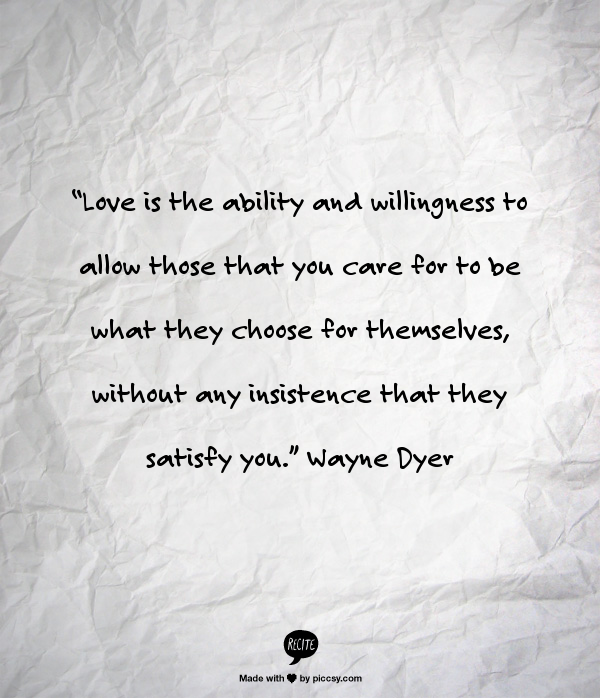
“Love is the ability and willingness to allow those that you care for to be what they choose for themselves, without any insistence that they satisfy you.” Wayne Dyer

“Yes” Doesn’t Count if you can’t say “No” – Why Clear Boundaries are Important in Intimate Relationships

English: A young woman and man embracing while...

I found this over at Psychology Today:

Most people think of an ideal romantic relationship as a union of two inseparable beings forged into one heart, one mind, and one dream. If either partner has a conflicting desire, he or she too often does not express it. They consciously or unconsciously choose to protect the fantasy of perfect compatibility, but may not realize the limitations that are wedded to that decision.
Eventual conflicts are not as noticeable early when relationships are new. The joy of new discovery and lustful connection often eclipse any disagreements that might arise. Newly-in-love partners too often do not want to know anything about each other that could threaten the perfection they cherish. Both may choose to leave well enough alone even if the result is incomplete or inauthentic communication. In the void of unexpressed conflicts, the partners often want to maintain the illusion of a perfect match.

“He finishes my sentences before I even know what I’m going to say.”

“She anticipates what I want before I tell her.”

“We agree on everything. It’s amazing.”

“It’s so easy to be together. We love all the same things.”

Sadly, those constructed realities of perfect compatibility cannot sustain over time. People cannot feel genuinely loved if their partners are not aware of the other’s core feelings and desires. They can only keep renewing their love if they can face their conflicts openly and work through them.

That requires that both partners are willing to follow these six principles:

They are able to say what they need from their partners

They know what they are able to offer

They honestly share those thoughts and feelings

They listen to their partner’s needs without becoming defensive

They have or are willing to learn the skills to negotiate their differences

They respect each other’s conflicting desires

To make these principles work, partners must be clear from the beginning of their relationship to set clear boundaries that they both agree to honor. Boundaries are like the borders between countries. They can be barriers to communication and cooperation, or viable interfaces for exchanging ideas and resources.

When beautifully used in intimate relationships, they are symbolic lines of demarcation that help partners understand their differences while they seek whatever ways are necessary to authentically connect. Only the acceptance of those known similarities and differences can keep partners truly validating their mutual needs.

Healthy boundaries should be fluid and openly susceptible to changes by either partner during any time in their relationship. They hopefully know or are willing to learn what is personally important to them and make every effort to share those thoughts with each other. By working together over time, they learn to quickly recognize when they are in agreement, when they need to negotiate, and when they must turn down a request that could destroy their personal integrity.” Get more here: “Yes” Doesn’t Count if you can’t say “No” – Why Clear Boundaries are Important in Intimate Relationships | Psychology Today.

Healthy Boundaries: A Good Practice

English: Slate fencing marking field boundarie...

Kristin Barton Cuthriell writes:

“Boundaries are those invisible lines that separate you from other people. When children grow up in families that practice healthy boundaries, these boundaries are typically passed down through generations. The same is true when individuals are raised in dysfunctional families that have no sense of healthy boundaries. These poor boundaries, too, are often passed down the generational line.

Poor boundaries are usually too rigid or too loose. Like a concrete wall, rigid boundaries keep people out. When a person is closed off with rigid boundaries, they do not allow themselves to become vulnerable, which makes true intimacy impossible.

People with loose boundaries have little fence or no fence at all. The separation between self and others is blurred. Individuals with loose boundaries do not have a clear sense of self. These people trust easily, disclose too much, have a difficult time setting limits, and often become enmeshed with others.

Healthy relationships require healthy boundaries. If you are aware that your personal boundaries are either too loose or too rigid, you can learn healthy boundaries.

The first step to change is recognizing that change is needed.  What you do not acknowledge, you do not change.

What is a healthy boundary? Take a look.” Get more here: Healthy Boundaries: A Good Practice – Let Life in Practices.

Start a Blog at WordPress.com.

Up ↑