Conflict and Detachment

Melody Beattie writes:

In a relationship, there are those wonderful times when things go smoothly for both people, and neither person needs to focus too heavily on the concept of detachment. But there are those challenging times when one person is in crisis or changing – and we need to detach.

Then there are stressful cycles when both people in a relationship are in the midst of dealing with intense issues. Both are needy and neither has anything to give.

These are times when detachment and taking care of ourselves are difficult.

It is helpful, in these moments, to identify the problem. Both people are in the midst of dealing and healing. Neither has much to give, at least at the moment. And both are feeling particularly needy.

That is the problem.

What’s the solution?

There may not be a perfect solution. Detachment is still the key, but that can be difficult when we need support ourselves. In fact, the other person may be asking for support rather than offering it.

We can still work toward detachment. We can still work through our feelings. We can accept this as a temporary cycle in the relationship, and stop looking to the other person for something he or she cannot give at the moment.

We can stop expecting ourselves to give at the moment as well.

Communication helps. Identifying the problem and talking about it without blame or shame is a start. Figuring out alternative support systems, or ways to get our needs met, helps.

We are still responsible for taking care of ourselves – even when we are in the best of relationships. We can reasonably expect conflicts of need and the clashing of issues to occur in the most loving, healthy relationships.

It is one of the cycles of love, friendship, and family.

If it is a healthy relationship, the crisis will not go on endlessly. We will regain our balance. The other person will too. We can stop making ourselves so crazy by looking for the other person to be balanced when he or she isn’t.

Talk things out. Work things out. Keep our expectations of other people, our relationships, and ourselves healthy and reasonable.

A good relationship will be able to sustain and survive low points. Sometimes we need them, so we can both grow and learn separately.

Sometimes, people who are usually there for us cannot be there for us. We can find another way to take care of ourselves.

Today, I will remember that my best relationships have low points. If the low point is the norm, I may want to consider the desirability of the relationship. If the low point is a temporary cycle, I will practice understanding for myself and the other person. God, help me remember that the help and support I want and need does not come in the form of only one person. Help me be open to healthy options for taking care of myself, if any normal support system is not available.” via Just For Today Meditations – Daily Recovery Readings – September 11, 2012.

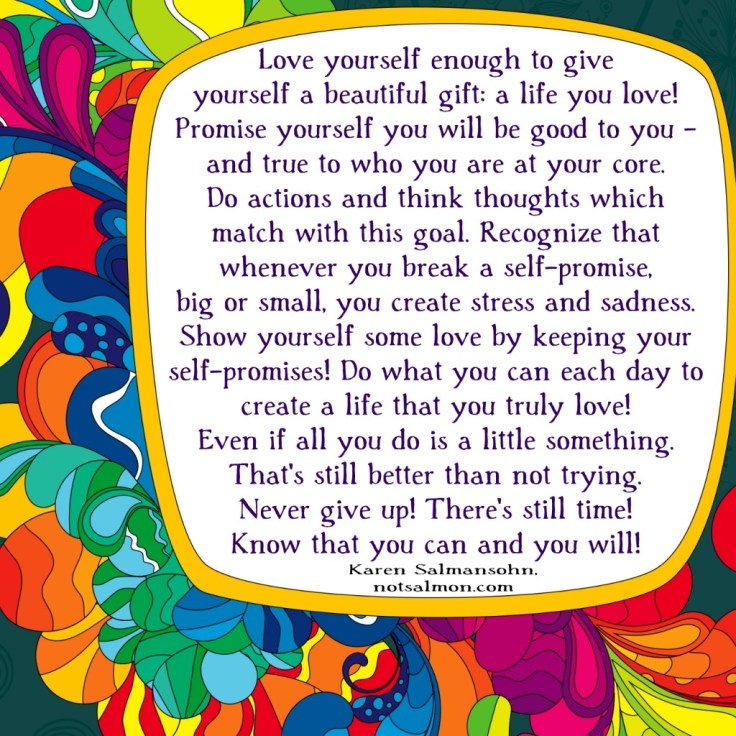
Love yourself enough to give yourself this beautiful gift…

notsalmon

via Love yourself enough to give yourself this beautiful gift….

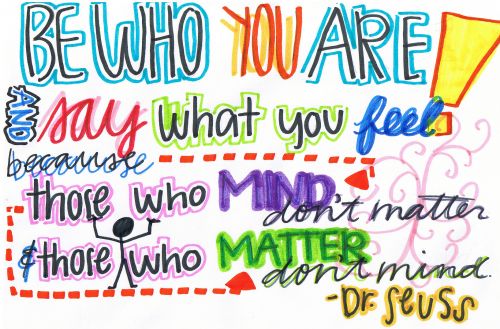
In The End


Live Life Quotes, Love Life Quotes, Live Life Happy

via In The End.


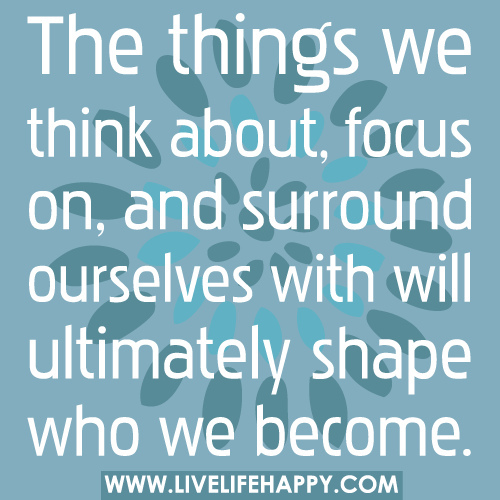
The Things We Think About


Live Life Quotes, Love Life Quotes, Live Life Happy

via The Things We Think About.


Why It Doesn’t Matter What People Think

One of the hardest aspects of making positive changes in your life is dealing with other people. Mainly your family, friends, and colleagues who believe that, because they’re in your life, they have a say in what you do and that their opinion should always be considered.

But when it comes to YOU and YOUR life, YOU are the only person whose opinion matters.

If you make the choice to create positive changes, FOR YOURSELF, that is all that matters. You don’t need anyone’s approval, validation, or support, and most of the time, you really should avoid it.” Get more here: Why It Doesn’t Matter What People Think « Positively Positive.

Open Your Mind… or you may miss something

Open Mind (album)

Kristin Barton Cuthriell writes:

Often, people come into counseling because something in their lives is not working for them. They may be depressed. They may have anxiety. Their marriage may be falling apart. Maybe they have been grieving old wounds for years, and they just can’t find joy in life. Teenagers may be rebelling. People feel stuck in dead-end jobs. Addictions are impacting the family. People have lost the ability to let life in.

People want help. They want to feel better. Some, come in with an open mind and are ready to look at things in new ways; do things in new ways. They are ready to change. Others, however, resist change, no matter how bad they feel. They continue to do the same thing over and over again, bringing them the same undesirable results.

We are creatures of habit. We often resist change and stay with the status quo no matter how miserable we feel. We avoid doing something different.

We must stop and think about what we are doing. We must ask ourselves if what we are doing is working for us. We need to remember that if we always do what we have always done, we will always get what we have always gotten.

Let go of always being right.

Let go of thinking that there is only one way to do something.

If it is not working for you, try something different.

Be open to suggestions.

Open your mind… or you may miss something.” via Open Your Mind… or you may miss something.

One of the tools I use to keep my mind open is this quote: Nietszche said “You have your way. I have my way. As for the right way, the correct way, and the only way, it does not exist.” I agree with Kristin! Let go of always being right — it’s a terrible burden to bear and you’ll feel much better when you put it down… :-D

Accepting powerlessness

Back to back Melody Beattie! Here she writes:

Since I’ve been a child, I’ve been in an antagonistic relationship with an important emotional part of myself: my feelings. I have consistently tried to ignore, repress, or force my feelings away. I have tried to create unnatural feelings or force away feelings that were present.

I’ve denied I was angry, when in fact I was furious. I have told myself there must be something wrong with me for feeling angry, when anger was a reasonable and logical response to the situation.

I have told myself things didn’t hurt, when they hurt very much. I have told myself stories such as “That person didn’t mean to hurt me.” . . . “He or she doesn’t know any better.” . . . “I need to be more understanding.” The problem was that I had already been too understanding of the other person and not understanding and compassionate enough with myself.

It has not just been the large feelings I have been at war with; I have been battling the whole emotional aspect of myself. I have tried to use spiritual energy, mental energy, and even physical exertion to not feel what I need to feel to be healthy and alive.

I didn’t succeed at my attempts to control emotions. Emotional control has been a survival behavior for me. I can thank that behavior for helping me get through many years and situations where I didn’t have any better options. But I have learned a healthier behavior – accepting my feelings.

We are meant to feel. Part of our dysfunction is trying to deny or change that. Part of our recovery means learning to go with the flow of what we’re feeling and what our feelings are trying to tell us.

We are responsible for our behaviors, but we do not have to control our feelings. We can let them happen. We can learn to embrace, enjoy, and experience – feel – the emotional part of ourselves.

Today, I will stop trying to force and control my emotions. Instead, I will give power and freedom to the emotional part of myself.” via Just For Today Meditations » Blog.

Love this reminder from Jennifer Pastiloff…

notsalmon via Love this reminder from Jennifer Pastiloff….

Does Gratitude Matter in Marriage?

Susan Heitler, Ph.D. writes:

“Please” and “thank you” often come out of our mouths automatically. How can we use true gratitude and thankfulness to cultivate healthy relationships?

Gratitude is “the quality of being thankful; readiness to show appreciation for and to return kindness.”

As children we’re taught to say “thank you” automatically in return for a favor. On this surface level, we are taught that gratitude is an appropriate social response.

At the same time, on a more complex level, gratitude is a way of being. When we truly feel gratitude, we experience heartfelt awe and appreciation for the goodness of something outside ourselves. Having gratitude towards someone or something means respecting its value and treasuring how unique, beautiful, or indispensable it is.

New studies support the idea that gratitude is an integral part of healthy relationships. As marriages move past the honeymoon stage, couples go from appreciating and loving every little detail about each other to taking each other for granted. Amie Gordon, a psychologist from U.C. Berkeley, blames this for the downfall of many relationships: ”You get used to having [your spouse] in your life and forget why you chose to be with them.” We become deadened to our spouse’s special qualities and instead focus on things that annoy us about them. These doldrums leave couples confused and discouraged: “Maybe the man they married isn’t so great after all…What happened to the spark in our relationship?…What do we do now?”

Dr. Gordon’s study in the Journal of Personality and Social Psychology explores the role of gratitude and appreciation in maintaining long and healthy relationships. In the study, 50 committed couples were given a week to fill out appreciation journals. On days when one partner reported feeling more appreciated, he or she tended to appreciate his or her partner more the next day.

Couples who had ongoing reciprocal appreciation were less likely to break up in the next nine months and even reported being more committed at the end of that time. The researchers concluded that a nourishing cycle of encouragement and appreciation provides extra incentive to maintain our relationships. In other words, when we appreciate our partners, we develop trust and respect. When we feel appreciated, we feel needed and encouraged.

In the second part of the study, Gordon’s researchers observed how couples of all ages–from 18 to 60–communicated appreciation. The team noticed that “highly appreciative” pairs tended to use body language and response skills to show that they valued their spouses. Foremost of these was a Power of Two favorite skill: active listening. When their partner spoke, appreciative spouses leaned in, made eye contact, and responded thoughtfully to what they were saying. They made it clear that they were listening to and digesting what their spouse said, thereby showing that they valued their spouse’s opinion. Appreciative couples also used touch and physical encouragement such as handholding or an encouraging pat on the leg.

This study observed the healthy relationships benefits of naturally appreciate couples. The flipside is that some couples are not naturally appreciative. It can be incredibly discouraging to not feel appreciated–you may even feel like your marriage is over. Luckily, our behavior and thoughts are malleable; just as we fell out of patterns of love and gratitude, we can grow back into them.

The key to sparking healthy relationships with gratitude is to take the initiative: “Instead of just waiting for the other person to make you feel good, you can jumpstart that cycle and take it into your own hands by focusing on what’s good in your relationship,” says Dr. Gordon. Start with small and easily achievable goals, such as giving your spouse five compliments a day, or simply smiling at her more often.

Gratitude is a skill that you cultivate—nurture it in yourself, and soon your will see positivity radiate back at you.

Source: Does Gratitude Matter in Marriage? | Psychology Today

Your Other Half Is Within You!

Jenna Phillips writes:

We LOVE love. We write poems about it. We sing songs about it. We create lines that wrap around the building to watch the latest film about it.

We crave it, want it and search for it on a daily basis. At times, the search for our idealistic love – or soul mate – can be exhausting and disappointing. We go on unfulfilling dates and wonder why our fantasy of meeting our life partner while we both reach for the same apple at farmers’ market hasn’t happened yet. We people-watch and measure up possible contenders for the position of our “other half”. You know – that person who will complete us, make us happy or fulfill our innermost desires.

Jeez! That’s a whole lot of pressure to put on another person, and giving anyone that kind of power takes away from our own. What if you were to realize, in this exact moment, that you are 100% fulfilled? Yes, your other half is already within you. There is no separation of the incredible being that you’ve always been. Your authentic Self is whole and complete.

The truest part about your existence is pure love. You already have it within you, and you’ve had it all along. You don’t need to go find it from someone else to feel or be loved. It’s no one else’s job to make sure you smile. You can smile whenever you want. Smile right now. Do it! See how great that feels? That was actually 100% your choice. I didn’t make you do it. That choice was entirely up to you.

We have the ability, the power and the choice to acknowledge that we are perfect RIGHT NOW. When we accept that we are fulfilled, lovable and powerful – we seem to attract people who, in fact, add to those qualities. When we search for people to bring us up and out of our state of misery, we attract people who reflect exactly that. Instead of searching for love, own it. Instead of talking about it, BE about it. Instead of complaining about it, celebrate it.

Every person we encounter is a perfect reflection of what’s going on within us. Instead of looking for someone, and then trying to mold them into a “perfect something” we want to look at, what about splashing water on our own face? What about combing our own hair and straightening our own shirt? What about choosing to be the best versions of ourselves?

Well, luckily for us, since everyone is our reflection we get to look at LOVE, beauty, awesomeness and fulfillment if we choose to BE all of that. True love starts with YOU. Search no more.” via Your Other Half Is Within You!.

Couples 911 – LaShelle’s Top 3 Tips for Couples

Taylor Duvall shares this:

I have followed CNVC Trainer LaShelle Lowe-Charde for years now and feel so grateful for learning how I typically ‘react’ in my long term relationships and how I can break any habitual pattern.  Her main focus is supporting couples and watch my interview with her on YouTube to hear her top 3 tips:

  • Spend a designated time each day focused on each other.
  • Share even small appreciations as often as possible.
  • Develop a language of feeling and needs to communicate what’s in our heart (what we want) not what’s wrong.

She also shares her relationship saving request and why once we ‘get’ the floor, we tend to go on and on…” via Couples 911 – LaShelle’s Top 3 Tips for Couples | The Center for Nonviolent Communication.

Here are a couple of bonus videos from LaShelle…

Is Your Spouse Really Your Best Friend?

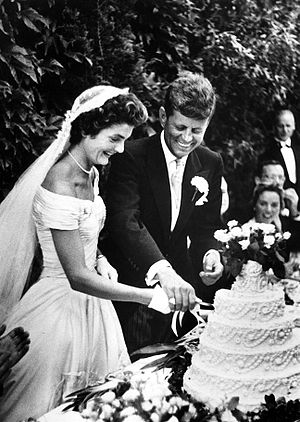
Kennedy marriage

A few weeks ago I curated an article from Michael Hyatt on ‘How to be your spouse’s best friend’. A few days ago, I found this article in Psychology Today by author Isadora Alman who has an interesting perspective and some good advice:

With any client’s first visit, usually presenting with some aspect of a relationship concern, I always review other aspects of their life – general health, the work he or she does and feelings about it, other people in their life (family, friends), what recreational activities are pursued, and if the person has enough time for him or herself.  Almost always the answer to this last question is “no”.  While all the other aspects of a life I ask about may have some bearing on a relationship issue, this last one always does.

Most of us these days lead frantic lives with demands for time coming at us from all directions.  Priorities have to be assigned and almost always personal needs beyond the most basic of food and sleep are often swept aside.  Even then, many people are not eating well or getting enough sleep so a half hour a day to simply take a deep breath of fresh air is just not there. Time to connect with a partner about how your day went or what’s on your mind in general is left, if it happens at all, to a few groggy moments before sleep takes over.

Let’s say, however, that one does manage to schedule a movie or a meal out.  What if your partner prefers a different movie than the one you want to see, or a different type of restaurant food?  What if he or she would prefer not to go to a movie at all but to a sports event or an art museum?  Do you forego what you want for the sake of couple harmony?  If so, no wonder you might be feeling lonely although coupled.  You’re living your life via someone else’s choices rather than your own.

An oversimplification perhaps, but I strongly feel that you need to be your own best friend.  Your own needs must be given some priority so that, as a fulfilled person, you can then be in a position to be more generous with your partner and others around you.  If you’re feeling lonely and not getting the support, sympathy or help from your spouse that is the very definition of friendship, look elsewhere – for a friend, usually same sex, and not place that burden of such expectations entirely on your spouse.  If you are feeling too much closeness within the coupled bonds, take what space you need for maximum enjoyment of life….and for maximum enjoyment of your partnership as well.  Two people who each have their needs met, who take responsibility of fulfilling their own needs, will make much better and more interesting partners to each other.

Source: Is Your Spouse Really Your Best Friend? | Psychology Today

Directness

Melody Beattie shares this:

We feel safe around direct, honest people. They speak their minds, and we know where we stand with them.

Indirect people, people who are afraid to say who they are, what they want, and what they’re feeling, cannot be trusted. They will somehow act out their truth even though they do not speak it. And it may catch everyone by surprise.

Directness saves time and energy. It removes us as victims. It dispenses with martyrdom and games. It helps us own our power. It creates respectful relationships.

It feels safe to be around direct, honest people. Be one.

Today, I will own my power to be direct. I do not have to be pas­sive, nor do I need to be aggressive. I will become comfortable with my own truth, so those around me can become comfortable with me.” via June 23: Directness.

Commitment

Couple in love

Melody Beattie writes:

As we walk through life, there are many things and people we may lose, or lose out on, if we are unwilling to commit. We need to make a commitment for relationships to grow beyond the dating stage, to have the home or apartment we want, the job we want, or the car we desire.

We must commit, on deep levels, to careers — to goals ­to family, friends, recovery. Trying something will not ena­ble us to succeed. Committing ourselves will.

Yet, we need never commit before we are ready.

Sometimes, our fear of commitment is telling us some­thing. We may not want to commit to a particular relation­ship, purchase, or career. Other times, it is a matter of our fears working their way out. Wait, then. Wait until the issue becomes clear.

Trust yourself. Ask your Higher Power to remove your fear of commitment. Ask God to remove your blocks to commit­ment. Ask God for guidance.

Ask yourself if you are willing to lose what you will not commit to. Then listen, quietly. And wait until a decision seems consistently right and comfortable.

We need to be able to commit, but we need never commit until we are ready.

Trust that you will commit when you want to.

God, guide me in making my commitments. Give me the courage to make those that are right for me, the wisdom to not commit to that which does not feel right, and the patience to wait until I know.” via June 21: Commitment.

What We Pay Attention To

See on Scoop.itTodd Lohenry’s lifestream

If we can observe and understand how our thoughts are impacting us, we can change who we’re being and what we’re experiencing in the world.

See on tinybuddha.com

Letting the Cycles Flow

A beautiful monarch butterfly bears her transp...

Melody Beattie writes:

Life is cyclical, not static. Our relationships benefit when we allow them to follow their own natural cycles.

Like the tide ebbs and flows, so do the cycles in relation­ships. We have periods of closeness and periods of distance. We have times of coming together and times of separating to work on individual issues.

We have times of love and joy, and times of anger.

Sometimes, the dimensions of relationships change as we go through changes. Sometimes, life brings us new friends or a new loved one to teach us the next lesson.

That does not mean the old friend disappears forever. It means we have entered a new cycle.

We do not have to control the course of our relationships, whether these be friendships or love relationships. We do not have to satisfy our need to control by imposing a static form on relationships.

Let it flow. Be open to the cycles. Love will not disappear. The bond between friends will not sever. Things do not re­main the same forever, especially when we are growing and changing at such a rapid pace.

Trust the flow. Take care of yourself, but be willing to let people go. Hanging on to them too tightly will make them disappear.

The old adage about love still holds true: “If it’s meant to be, it will be. And if you love someone, let them go. If they come back to you, the love is yours.”

Today, I accept the cyclical nature of life and relationships. I will strive to go with the flow. I will strive for harmony with my own needs and the needs of the other person.” via June 15: Letting the Cycles Flow.

Hanging on to Old Relationships

More Melody Beattie:

“We want to travel baggage-free on this journey. It makes the trip easier.

Some of the baggage we can let go of is lingering feelings and unfinished business with past relationships: anger; resentments; feelings of victimization, hurt, or longing.

If we have not put closure on a relationship, if we cannot walk away in peace, we have not yet learned our lesson. That may mean we will have to have another go-around with that lesson before we are ready to move on.

We may want to do a Fourth Step (a written inventory of our relationships) and a Fifth Step (an admission of our wrongs). What feelings did we leave with in a particular relationship? Are we still carrying those feelings around? Do we want the heaviness and impact of that baggage on our behavior today?

Are we still feeling victimized, rejected, or bitter about something that happened two, five, ten, or even twenty years ago?

It may be time to let it go. It may be time to open ourselves to the true lesson from that experience. It may be time to put past relationships to rest, so we are free to go on to new, more rewarding experiences.

We can choose to live in the past, or we can choose to finish our old business from the past and open ourselves to the beauty of today.

Let go of your baggage from past relationships.

Today, I will open myself to the cleansing and healing process that will put closure on yesterday and open me to the best today, and tomorrow, has to offer in my relationships.” Source: Hanging on to Old Relationships

What Are You Waiting For?

“Before someone’s tomorrow has been taken away, cherish those you love, appreciate them today.” Michelle C. Ustaszesk via Tiny Wisdom: What Are You Waiting For? | Tiny Buddha: Wisdom Quotes, Letting Go, Letting Happiness In.

Make you feel my love

When the rain is blowing in your face
and the whole world is on your case
I could offer you a warm embrace
to make you feel my love…

When the evening shadows and the stars appear
And there is no one there to dry your tears
I could hold you for a million years
to make you feel my love…

Luscious Kisses, Sex, and 4 Secrets to Lifelong Love

“In a world captivated by 50 Shades of Grey: Why ‘Mommy Porn’ is Hot, ABC News, maybe it is time to remember that loving kisses are a powerful turn-on — not just a 10 second kiss but a 30 second lip lock that includes running your fingers through each other’s hair or rubbing his bald head which many young men today are sporting. And if he is not a good kisser, teach him how and move on to satisfying sex!

And if you have forgotten the flavor of a really good kiss think back to a time when someone stole a kiss from you and it made you blush.” Full story at: Luscious Kisses, Sex, and 4 Secrets to Lifelong Love | Psychology Today.

Men’s Top 4 Wishes and Why You Should Grant Them


“What do men really want in a relationship and should women be catering to their needs?  The answer is a bit complicated and it appears to differ with age. For those under the age of 40, sex ranked first. For the over 40s cuddling and kissing took the top spot.  Archives of Sexual Behavior. Ever since the Kinsey Institute report this summer regarding relationship fulfillment, I have been curious about men’s wishes.

While it appears that men and women have different desires, in fact many have similar wishes that simply become confused in translation.

One reason for this says Mark Gungor, in his Laugh Your Way to a Better Marriage® seminars is that men and women have different brains.  The male brain is compartmentalized, whereas women’s brains are a mass of connected circuits that remember “everything!”

In the world of relationships, we know that women want love, commitment, and romance—but what do men really want? After reading through a manuscript from the Beltway Bachelor—and reminding him that no woman could live up to his 160 page ideal—I asked, “What do men really want?”

He replied, “Let me give it some thought.”” Go to the source: Men’s Top 4 Wishes and Why You Should Grant Them | Psychology Today.

Start a Blog at WordPress.com.

Up ↑