How To Be A Supportive Partner (And What You Gain As A Result)

Shelly Bullard writes:

Sometimes we fail to support our partners in becoming the best versions of the of themselves because we’re scared of what that means for us. What if he wants something I don’t want? What if her desire takes her away from me?

We fear if he learns to fly, he might fly away. So we hold our partners back, sometimes without even knowing it. This strategy always backfires – it ends up holding our relationships back, as well.

But there’s a way to feel safe enough to support your partner to fly, and why doing so will take your relationship to new heights of love.

Get the rest of the article here: How To Be A Supportive Partner (And What You Gain As A Result)

I love Shelly’s writing — always powerful and prescient! You can find more of her stuff here


The Secrets That Keep Happy Couples Together

Cynthia Belmer shares this:

What makes a relationship work? What can couples do to stay happy in their relationship, especially in this modern age with stress all around us?

Everyone wants to make their relationship last and everyone wants to feel loved, happy, and in harmony with their partner, but few experience it.

Harmony is about a mutual agreement of giving and receiving in the most balanced, loving and humble way, while maintaining the space needed for self-nurturing and self-love. You can realize it and live it in your relationship when you:

1. Become best friends. Understand the likes, dislikes, the fears, the pain and the gain of your partner and ask open-ended questions.

2. Explore your common vision for the future. Discuss your goals and your visions for the future. How does a great and lasting relationship look like to you? Follow through with this view and commit to realizing and nurturing it.

3. Be humble. Take responsibility of our own actions and say that you’re sorry when you mess up.

4. Be generous. Allow yourself to give with humbleness, to appreciate with love, to forgive with softness, to listen with care and to compromise while receiving your needs in return.

5. Invest in your own and constant self-growth. Follow through with your interests, your goals, your emotional needs and wants and share them with your partner.

6. Trust. Speak your truth, always and allow both of your fears to surface and share them gently together.

7. Listen and never forget. Listen very carefully to your partner and remember what interests them, what they enjoy, they dislike and most importantly, remember their stories.

8. Allow spaciousness. Give some alone time to yourself and your partner and do unique things that you enjoy and that make you feel good.

9. Get intimate. Express your love through hugging, kissing, caressing, cuddling, holding, and other forms of physical affection.

10. Have faith. Never give up on realizing the picture of a great relationship, especially when going through a big storm.

So my question to you is: If you were to make a change so you could live happily and in harmony in your relationship, what would you be doing?

via The Secrets That Keep Happy Couples Together.

Into the great unknown…

Melody-Beattie.pngMelody Beattie writes:

“When I go into the Unknown. I immediately start making lists,” one man said.

We each respond differently to loss, letting go. and the Unknown. We may try to fill up the vacuum immediately with something else. That usually doesn’t work, at least not well.

Try to he as present as you can for what you’re going through.

Action: Protect yourself. You’re vulnerable now. Do the simple. easy things that need to be done, one task at a time, even if nothing feels completely right. Remember the basics of self-care. Eat. Sleep. Shower. Get plenty of rest. Talk to trusted friends. Express what you’re feeling at the moment the best that you can.

We may vacillate between anger, rage, guilt, and sadness when we’re letting go. And then we may go numb and nor be able to think clearly. Don’t worry about that; your ability to think clearly will return. Don’t do anything that hurts yourself or anyone else. That won’t help. It’ll make things worse. Lists may help us stay on track.

Try not to see the big picture right nom It probably hasn’t been shown to you yet.” via December 3.

45 Characteristics of Healthy Relationships + The Secret to Applying Them

Sometimes, when I start curating content, I don’t know when to stop. In those times, only copying and pasting will suffice! Kristen Barton Cuthriell writes:

Is your relationship healthy?

Relationships take work.  Hard work.  But the rewards to having a fulfilling relationship are MANY.  Are you doing the things necessary to keep your relationship strong?  Could it be stronger?  Look for ways to improve your relationship today and everyday.

Characteristics of Healthy Relationships

  1. You can be your true self with the other.
  2. Communication is spontaneous and open.
  3. There is a balance of closeness and separateness.
  4. You are able to take responsibility for your own behaviors without blaming your partner for your actions. (Get rid of “He/she made me do it.”)
  5. You discuss and negotiate rather than fight.
  6. You feel comfortable sharing your fears and insecurities.
  7. Rules and boundaries are clear, yet flexibility exists.
  8. You don’t lie, but you also refrain from using hurtful language in the name of being brutally honest.  (Don’t say something just to be mean.)
  9. You enjoy doing things for yourself, as well as for the other.
  10. Personal growth is encouraged.
  11. You make it through rough times without splitting up or threatening divorce.
  12. You treat each other the way you would like to be treated.
  13. You have a strong sense of interdependence rather than dependency or co-dependency. (Equality within the relationship)
  14. There is play and humor in the relationship.  You have fun together.
  15. You enjoy being together, but are able to spend time alone.
  16. You do not attempt to control each other.
  17. Each is trustful of the other.
  18. Privacy is respected.
  19. You both refrain from passive-aggressive behavior. (Silent treatment, hanging up phone, being late when the other is waiting)
  20. You forgive each other for mistakes.
  21. You actively listen to the other. (Really hear what the other is saying)
  22. You both are able to apologize. (Even when you do not think you are at fault, you can be sorry that your partner is feeling hurt.)
  23. You avoid mind reading and making assumptions.  When upset you both seek clarity.
  24. You are able to validate each other- even when you disagree. (You recognize that the opinions and feelings of the other are important.)
  25. There is a balance in giving and receiving.
  26. Conflict is faced and resolved.  Avoid allowing resentment to take hold.
  27. Negotiations are fair and compromise is present.  Create win-win resolutions.
  28. Mistakes are accepted and lessons are learned.
  29. You NEVER bring up the intimate disclosures of the other when angry or arguing.  Intimate disclosures are off-limits.
  30. Humility is present.  You are able to give up always being “right.”  Don’t let your ego get in the way.
  31. You are willing to make sacrifices for the other.
  32. You speak each other’s love language even when it differs from your own.
  33. You share mutual activities and interests.
  34. You NEVER call each other names or physically assault one another.
  35. You have strong friendship.
  36. You encourage and support each other. (“I have got your back.”)
  37. In conflict, you respect your partner’s need for a time out.  (Time to calm down and think rationally before resolving an issue.)
  38. You do not expect your partner to complete you.  You are secure in your own worth and want to share your life with them.
  39. Physical contact is mutually enjoyed.
  40. Appreciate each other’s strengths and overlook each other’s idiosyncrasies.
  41. Both are open to constructive feedback.
  42. Other meaningful relationships and interests are present.
  43. You have similar values, but do not demand that the other have the same values as you. (Mutual respect exists)
  44. You are willing to take risks and be vulnerable.
  45. You avoid intentionally hurting the other because you have been hurt.  No tit for tat.  No keeping score of grievances.

The Secret to Applying Them

Focus on what you can change about yourself rather than concentrating on what your partner needs to change.  Instead of approaching your partner with a “This is what you need to work on” approach- approach them with a “this is what we need to work on approach.” Then work on yourself regardless of the actions of your partner.  You may be surprised to see what teaching by example can do for you and your relationship.

The more of these things you are doing- the healthier the relationship.  Use this list to guide your growth rather than to judge your relationship.  Just as no person is perfect, no relationship is perfect.  Rather than demanding that you or your partner be perfect, look for areas of needed growth.   See what you can do to improve the relationship with the one that you love.

Source: 45 Characteristics of Healthy Relationships + The Secret to Applying Them – Let Life in Practices

5 Reasons Detachment Can Save Your Relationship

Jasmin Bedria writes:

When most people envision the ideal relationship, they think of engulfing, inseparable love. Being “attached at the hip” is typically an early sign that you and your new love share the ever-consuming, romantic high of a Nicholas Sparks novel.

You want to keep learning about each other, acting as sponges to the other’s every word and affection.

So, how in the world can detachment actually strengthen an intensely loving and growing relationship?

Detachment is one of the most important aspects in achieving true, profound fulfillment. Believe it or not, practicing detachment while remaining vulnerable will benefit you in remarkable ways.

Get the full story here: 5 Reasons Detachment Can Save Your Relationship

And, for me it’s one of the most difficult concepts imaginable. Sigh…

No more drama

I’m not a big Mary J. Blige fan, but this song is a good reminder that you don’t have to play a role in other people’s dramas if you don’t want to…

As a bonus, here’s the other music video of hers [along with U2] that I really like…

When life falls apart

Gemma Stone writes this about our mutual friend Farhana Dhalla:

Sometimes a crisis is a summons to reconfigure our entire lives.

Even though we are resilient creatures, we are still easily hurt. There are times when living hurts. A lot.

There is purpose in pain; often life falls apart exactly when it needs to be rebuilt.

Our stories become burdensome & false.

Our defenses become exhausting & crumble.

When we are no longer able to maintain the stories and defenses that protect us, we can easily dissolve to bits.

When our lives fall apart, it’s the perfect opportunity to build something newer, truer, fuller.

When Farhana’s life crumbled, she used it as a catalyst for transformation. She courageously ventured within herself, found truth, and emerged glowing with love and light.

And that is why I rely on to her to pull me along when I’m dragging my feet and to shine some light when all I see is darkness.

Thank You for Leaving Me is being released today. Farhana’s story is a heartfelt, refreshingly real account of her journey through divorce.

If you’re moving through the end of a relationship, struggling with heartache, or questioning your relationship patterns, I’m confident this book will be helpful. If you’re hesitant, check out this video. If this sounds like the medicine you need, head over here to pick up her book.

Source: {gems} when life falls apart | Gemma Stone

Kudos, Farhana! For the book and a life well lived in the face of overwhelming hardship…

Accepting love…

Melody Beattie write:

Many of us have worked too hard to make relationships work; sometimes those relationships didn’t have a chance because the other person was unavailable or refused to participate.

To compensate for the other person’s unavailability, we worked too hard. We may have done all or most of the work. This may mask the situation for a while, but we usually get tired. Then, when we stop doing all the work, we notice there is no relationship, or we’re so tired we don’t care.

Doing all the work in a relationship is not loving, giving, or caring. It is self-defeating and relationship defeating. It creates the illusion of a relationship when in fact there may be no relationship. It enables the other person to be irresponsible for his or her share. Because that does not meet our needs, we ultimately feel victimized.

In our best relationships, we all have temporary periods where one person participates more than the other. This is normal. But as a permanent way of participating in relationships, it leaves us feeling tired, worn out, needy, and angry.’

We can learn to participate a reasonable amount, and then let the relationship find it’s own life. Are we doing all the calling? Are we doing all the initiating? Are we doing all the giving? Are we the one talking about feelings and striving for intimacy?

Are we doing all the waiting, the hoping, and the work?

We can let go. If the relationship is meant to be, it will be, and it will become what it is meant to be. We do not help that process by trying to control it. We do not help the other person, the relationship, or ourselves by trying to force it or by doing all the work.

Let it be. Wait and see. Stop worrying about making it happen. See what happens and strive to understand if that is what you want.

Today, I will stop doing all the work in my relationships. I will give myself and the other person the gift of requiring both people to participate. I will accept the natural level my relationships reach when I do my share and allow the other person to choose what his or her share will be. I can trust my relationships to reach their own level. I do not have to do all the work; I need only do my share.” Source: Just For Today Meditations – Maintaining A Life

Questions? Feedback?

Revenge

Melody Beattie writes:

No matter how long we’ve been recovering, no matter how solid our spiritual ground, we may still feel an overwhelming desire at times to punish, or get even, with another person.

We want revenge.

We want to see the other person hurt the way he or she has hurt us. We want to see life deal that person just rewards. In fact, we would like to help life out.

Those are normal feelings, but we do not have to act on them. These feelings are part of our anger but it’s not our job to deal justice.

We can allow ourselves to feel the anger. It is helpful to go one step deeper and let ourselves feel the other feelings – the hurt, the pain, the anguish. But our goal is to release the feelings, and be finished with them.

We can hold the other person accountable. We can hold the other person responsible. But it is not our responsibility to be judge and jury. Actively seeking revenge will not help us. It will block us and hold us back.

Walk away. Stop playing the game. Unhook. Learn your lesson. Thank the other person for having taught you something valuable. And be finished with it. Put it behind, with the lesson intact.

Acceptance helps. So does forgiveness – not the kind that invites that person to use us again, but a forgiveness that releases the other person and sets him or her free to walk a separate path, while releasing our anger and resentments. That sets us free to walk our own path.

Today, I will be as angry as I need to be, with a goal of finishing my business with others. Once I have released my hurt and anger, I will strive for healthy forgiveness – forgiveness with boundaries. I understand that boundaries, coupled with forgiveness and compassion, will move me forward.” via Just For Today Meditations – Daily Recovery Readings – September 16, 2012.

“Yes” Doesn’t Count if you can’t say “No” – Why Clear Boundaries are Important in Intimate Relationships

English: A young woman and man embracing while...

I found this over at Psychology Today:

Most people think of an ideal romantic relationship as a union of two inseparable beings forged into one heart, one mind, and one dream. If either partner has a conflicting desire, he or she too often does not express it. They consciously or unconsciously choose to protect the fantasy of perfect compatibility, but may not realize the limitations that are wedded to that decision.
Eventual conflicts are not as noticeable early when relationships are new. The joy of new discovery and lustful connection often eclipse any disagreements that might arise. Newly-in-love partners too often do not want to know anything about each other that could threaten the perfection they cherish. Both may choose to leave well enough alone even if the result is incomplete or inauthentic communication. In the void of unexpressed conflicts, the partners often want to maintain the illusion of a perfect match.

“He finishes my sentences before I even know what I’m going to say.”

“She anticipates what I want before I tell her.”

“We agree on everything. It’s amazing.”

“It’s so easy to be together. We love all the same things.”

Sadly, those constructed realities of perfect compatibility cannot sustain over time. People cannot feel genuinely loved if their partners are not aware of the other’s core feelings and desires. They can only keep renewing their love if they can face their conflicts openly and work through them.

That requires that both partners are willing to follow these six principles:

They are able to say what they need from their partners

They know what they are able to offer

They honestly share those thoughts and feelings

They listen to their partner’s needs without becoming defensive

They have or are willing to learn the skills to negotiate their differences

They respect each other’s conflicting desires

To make these principles work, partners must be clear from the beginning of their relationship to set clear boundaries that they both agree to honor. Boundaries are like the borders between countries. They can be barriers to communication and cooperation, or viable interfaces for exchanging ideas and resources.

When beautifully used in intimate relationships, they are symbolic lines of demarcation that help partners understand their differences while they seek whatever ways are necessary to authentically connect. Only the acceptance of those known similarities and differences can keep partners truly validating their mutual needs.

Healthy boundaries should be fluid and openly susceptible to changes by either partner during any time in their relationship. They hopefully know or are willing to learn what is personally important to them and make every effort to share those thoughts with each other. By working together over time, they learn to quickly recognize when they are in agreement, when they need to negotiate, and when they must turn down a request that could destroy their personal integrity.” Get more here: “Yes” Doesn’t Count if you can’t say “No” – Why Clear Boundaries are Important in Intimate Relationships | Psychology Today.

Healthy Boundaries: A Good Practice

English: Slate fencing marking field boundarie...

Kristin Barton Cuthriell writes:

“Boundaries are those invisible lines that separate you from other people. When children grow up in families that practice healthy boundaries, these boundaries are typically passed down through generations. The same is true when individuals are raised in dysfunctional families that have no sense of healthy boundaries. These poor boundaries, too, are often passed down the generational line.

Poor boundaries are usually too rigid or too loose. Like a concrete wall, rigid boundaries keep people out. When a person is closed off with rigid boundaries, they do not allow themselves to become vulnerable, which makes true intimacy impossible.

People with loose boundaries have little fence or no fence at all. The separation between self and others is blurred. Individuals with loose boundaries do not have a clear sense of self. These people trust easily, disclose too much, have a difficult time setting limits, and often become enmeshed with others.

Healthy relationships require healthy boundaries. If you are aware that your personal boundaries are either too loose or too rigid, you can learn healthy boundaries.

The first step to change is recognizing that change is needed.  What you do not acknowledge, you do not change.

What is a healthy boundary? Take a look.” Get more here: Healthy Boundaries: A Good Practice – Let Life in Practices.

Does Gratitude Matter in Marriage?

Susan Heitler, Ph.D. writes:

“Please” and “thank you” often come out of our mouths automatically. How can we use true gratitude and thankfulness to cultivate healthy relationships?

Gratitude is “the quality of being thankful; readiness to show appreciation for and to return kindness.”

As children we’re taught to say “thank you” automatically in return for a favor. On this surface level, we are taught that gratitude is an appropriate social response.

At the same time, on a more complex level, gratitude is a way of being. When we truly feel gratitude, we experience heartfelt awe and appreciation for the goodness of something outside ourselves. Having gratitude towards someone or something means respecting its value and treasuring how unique, beautiful, or indispensable it is.

New studies support the idea that gratitude is an integral part of healthy relationships. As marriages move past the honeymoon stage, couples go from appreciating and loving every little detail about each other to taking each other for granted. Amie Gordon, a psychologist from U.C. Berkeley, blames this for the downfall of many relationships: ”You get used to having [your spouse] in your life and forget why you chose to be with them.” We become deadened to our spouse’s special qualities and instead focus on things that annoy us about them. These doldrums leave couples confused and discouraged: “Maybe the man they married isn’t so great after all…What happened to the spark in our relationship?…What do we do now?”

Dr. Gordon’s study in the Journal of Personality and Social Psychology explores the role of gratitude and appreciation in maintaining long and healthy relationships. In the study, 50 committed couples were given a week to fill out appreciation journals. On days when one partner reported feeling more appreciated, he or she tended to appreciate his or her partner more the next day.

Couples who had ongoing reciprocal appreciation were less likely to break up in the next nine months and even reported being more committed at the end of that time. The researchers concluded that a nourishing cycle of encouragement and appreciation provides extra incentive to maintain our relationships. In other words, when we appreciate our partners, we develop trust and respect. When we feel appreciated, we feel needed and encouraged.

In the second part of the study, Gordon’s researchers observed how couples of all ages–from 18 to 60–communicated appreciation. The team noticed that “highly appreciative” pairs tended to use body language and response skills to show that they valued their spouses. Foremost of these was a Power of Two favorite skill: active listening. When their partner spoke, appreciative spouses leaned in, made eye contact, and responded thoughtfully to what they were saying. They made it clear that they were listening to and digesting what their spouse said, thereby showing that they valued their spouse’s opinion. Appreciative couples also used touch and physical encouragement such as handholding or an encouraging pat on the leg.

This study observed the healthy relationships benefits of naturally appreciate couples. The flipside is that some couples are not naturally appreciative. It can be incredibly discouraging to not feel appreciated–you may even feel like your marriage is over. Luckily, our behavior and thoughts are malleable; just as we fell out of patterns of love and gratitude, we can grow back into them.

The key to sparking healthy relationships with gratitude is to take the initiative: “Instead of just waiting for the other person to make you feel good, you can jumpstart that cycle and take it into your own hands by focusing on what’s good in your relationship,” says Dr. Gordon. Start with small and easily achievable goals, such as giving your spouse five compliments a day, or simply smiling at her more often.

Gratitude is a skill that you cultivate—nurture it in yourself, and soon your will see positivity radiate back at you.

Source: Does Gratitude Matter in Marriage? | Psychology Today

Is He Worth It? Six Questions to Ask When Sacrificing in Relationships

What about ‘is she worth it?’ Despite the slant, I think this is worth a read if you’re asking yourself this question:

We must all face situations in our close relationships that require us to make a sacrifice. Perhaps, your spouse receives a big promotion, and it requires that you quit your job and move across the country. Or your boyfriend wants you to miss an important work event to attend his family reunion. Maybe you and your wife get jobs in different cities and must decide who has to make the long commute. For me, it was deciding whether to apply to graduate programs in areas that weren’t near where my husband (then boyfriend) was working. When faced with these situations, what information do we use to decide whether or not to make the sacrifice? In addition to consulting the pros and cons list, there are also important questions we should be asking ourselves. Below, I suggest six questions that might help when deciding whether or not making a sacrifice is right for you.” Get the answer here: Is He Worth It? Six Questions to Ask When Sacrificing in Relationships | Psychology Today.

Imperfection

Mastin Kipp writes:

“We learn from Tony Robbins that everyone’s core fear is that they are not enough, and that because they aren’t enough, they won’t get Love. And LOVE is the oxygen of the Soul.

This much we know already.

But then I thought about what made me successful and what made so many people I know successful and what I love about my favorite characters. And there was always something in common.

The imperfect person overcomes. It boils down to that.

So I had an “ah-ha!” on the phone with my client and I blurted out, “We become successful by admitting we are not perfect, rather than trying to be perfect and thinking that we’re not enough.”

And I think this about sums it up.” via OK, I just had a MAJOR AHA moment! Check it out!.

Is Your Spouse Really Your Best Friend?

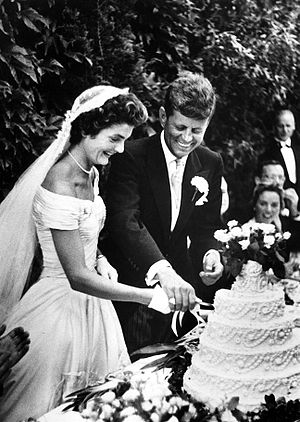
Kennedy marriage

A few weeks ago I curated an article from Michael Hyatt on ‘How to be your spouse’s best friend’. A few days ago, I found this article in Psychology Today by author Isadora Alman who has an interesting perspective and some good advice:

With any client’s first visit, usually presenting with some aspect of a relationship concern, I always review other aspects of their life – general health, the work he or she does and feelings about it, other people in their life (family, friends), what recreational activities are pursued, and if the person has enough time for him or herself.  Almost always the answer to this last question is “no”.  While all the other aspects of a life I ask about may have some bearing on a relationship issue, this last one always does.

Most of us these days lead frantic lives with demands for time coming at us from all directions.  Priorities have to be assigned and almost always personal needs beyond the most basic of food and sleep are often swept aside.  Even then, many people are not eating well or getting enough sleep so a half hour a day to simply take a deep breath of fresh air is just not there. Time to connect with a partner about how your day went or what’s on your mind in general is left, if it happens at all, to a few groggy moments before sleep takes over.

Let’s say, however, that one does manage to schedule a movie or a meal out.  What if your partner prefers a different movie than the one you want to see, or a different type of restaurant food?  What if he or she would prefer not to go to a movie at all but to a sports event or an art museum?  Do you forego what you want for the sake of couple harmony?  If so, no wonder you might be feeling lonely although coupled.  You’re living your life via someone else’s choices rather than your own.

An oversimplification perhaps, but I strongly feel that you need to be your own best friend.  Your own needs must be given some priority so that, as a fulfilled person, you can then be in a position to be more generous with your partner and others around you.  If you’re feeling lonely and not getting the support, sympathy or help from your spouse that is the very definition of friendship, look elsewhere – for a friend, usually same sex, and not place that burden of such expectations entirely on your spouse.  If you are feeling too much closeness within the coupled bonds, take what space you need for maximum enjoyment of life….and for maximum enjoyment of your partnership as well.  Two people who each have their needs met, who take responsibility of fulfilling their own needs, will make much better and more interesting partners to each other.

Source: Is Your Spouse Really Your Best Friend? | Psychology Today

Rebuilding Trust After Being Hurt

Letting Go

“When mistrust comes in, love goes out.” ~Irish saying.

An old friend of mine felt betrayed by her boyfriend, but chose not to leave him. Instead, she made him pay for it over and over again.

Through subtle digs and less subtle slights, she repeatedly expressed that she felt contempt for him. But instead of forgiving or walking away, she stayed behind a wall of resentment.

Soon he started responding in kind, until their relationship became a container for mutual silent bitterness. It was two people sharing a suffocating space, overwhelmed by the weight of everything they didn’t say.

I suspect many of us can relate to that feeling of clinging to a grievance. In at least one of our relationships, we’ve felt angry and indignant, and despite wanting to forgive, we just couldn’t.

I know I’ve been there before.

It’s not easy to forget when someone breaks your trust, especially if you fear it might be broken again, but holding onto doubt is a surefire way to suffer.

Little hurts worse than the suspicion that someone else might hurt you.

This isn’t the kind of thing you can just brush off through positive thinking. You can’t make yourself feel trusting by telling yourself you should be, or rationalizing away your feelings.

The reality is it takes time and effort to trust again. It takes the courage to acknowledge how you feel and willingness from the other person to hear and honor it. It takes a mutual commitment to move beyond what happened instead of reliving and rehashing.

But most importantly, it requires you to believe in the goodness of the person who hurt you.

You have to believe someone can treat you with respect and consideration—even if it takes you a while to get there—or else you’ll never let your guard down. That’s a painful place to be.

The thing about being defensive is that everything becomes a battle, and no one ever wins.

Of course this doesn’t mean we can ever know for certain that someone won’t hurt us again. The only way we can know if we’re able to trust someone is by first giving them trust.

That means we need to ask ourselves: Is this relationship worth that risk?

Is it worth feeling vulnerable?

Is it worth letting go of the story?

And if it’s worth it, what would it look like to give trust, starting right now?

via Tiny Wisdom: Rebuilding Trust After Being Hurt | Tiny Buddha: Wisdom Quotes, Letting Go, Letting Happiness In.

Gossip

Cover

A second shot of Melody Beattie for today! The Universe must think I need it:

Intimacy is that warm gift of feeling connected to others and enjoying our connection to them.

As we grow in recovery, we find that gift in many, some­times surprising places. We may discover we’ve developed intimate relationships with people at work, with friends, with people in our support groups — sometimes with family members. Many of us are discovering intimacy in a special love relationship.

Intimacy is not sex, although sex can be intimate. Intimacy means mutually honest, warm, caring, safe relationships ­relationships where the other person can be who he or she is and we can be who we are — and both people are valued.

Sometimes there are conflicts. Conflict is inevitable. Some­times there are troublesome feelings to work through. Some­times the boundaries or parameters of relationships change. But there is a bond — one of love and trust.

There are many blocks to intimacy and intimate relation­ships. Addictions and abuse block intimacy. Unresolved fam­ily of origin issues prevent intimacy. Controlling blocks intimacy. Off balance relationships, where there is too great a discrepancy in power, prevent intimacy. Caretaking can block intimacy. Nagging, withdrawing, and shutting down can hurt intimacy.

So can a simple behavior like gossip — for example, gos­siping about another for motives of diminishing him or her in order to build up ourselves or to judge the person. To dis­cuss another person’s issues, shortcomings, or failures with someone else will have a predictable negative impact on the relationship.

We deserve to enjoy intimacy in as many of our relation­ships as possible. We deserve relationships that have not been sabotaged.

That does not mean we walk around with our heads in the clouds; it means we strive to keep our motives clean when it comes to discussing other people.

If we have a serious issue with someone, the best way to resolve it is to bring the issue to that person.

Direct, clean conversation clears the air and paves the way for intimacy, for good feelings about ourselves and our relationships with others.

Today, God, help me let go of my fear of intimacy. Help me strive to keep my communications with others clean and free from mali­cious gossip. Help me work toward intimacy in my relationships. Help me deal as directly as possible with my feelings.” via June 17: Gossip.

Relationship Martyrs

Are you a relationship martyr? Consider this:

Many of us have gone so numb and discounted our feelings so completely that we have gotten out of touch with our needs in relationships.

We can learn to distinguish whose company we enjoy, whether we’re talking about friends, business acquaintances, dates, or spouses. We all need to interact with people we might prefer to avoid, but we don’t have to force ourselves through long-term or intimate relationships with these people.

We are free to choose friends, dates, and spouses. We are free to choose how much time we spend with those people we can’t always choose to be around, such as relatives. This is our life. This is it. We can decide how we want to spend our days and hours. We’re not enslaved. We’re not trapped. And not one of us is without options. We may not see our options clearly. Although we may have to struggle through shame and learn to own our power, we can learn to spend our valuable hours and days with the people we enjoy and choose to be with.

God, help me value my time and life. Help me place value on how I feel being around certain people. Guide me as I learn to develop healthy, intimate, sharing relationships with people. Help me give myself the freedom to experiment, explore, and learn who I am and who I can be in my relationships.

Source: Daily Meditation ~ Relationship Martyrs – Miracles In Progress Codependents Anonymous Group

Who And What Are You Attracting?

I love Kute Blackson’s energy and insights. Today’s is no exception:

You attract to you in life who you are.

The experiences and people of your life are an incredible mirror showing you where you are today in your consciousness.

So you are constantly in relationship with yourself. The real relationship is with aspects of yourself that you attract to you in the physical, in the form of the partner and experiences that are in front of you at any given moment.

Take a moment to look at who and what you are attracting.

Do you like what you see? Are there any repetitive patterns?

To the degree you are willing to be responsible for your current reality and the people you attract is the degree to which you will be free and have the power to change your reality.

You are not a victim…

Regardless of what might have happened in your past or what someone might have done to you.

You have a choice in this moment to choose what your experience of yourself and life will be today. You have a choice as to how you will respond and live your present and future.

Playing victim doesn’t serve you in any way. It just keeps you small and powerless. Who you are is so much more.

Sometimes we hold onto being a victim out of feeling right that we were wronged. Staying stuck in victimhood is simply giving away your power to the person that you have perceived hurt you.

Is it really worth it?

Nothing is worth your freedom.

Nothing.

Life is too short and precious. Every second wasted is a moment you will never get back.

Trust that if any wrong is done to you, it is not your job to “right” it. The Uni-verse will rebalance all actions. You cannot cheat the Uni-verse. When you retaliate with anger, resentment or vindictiveness, you simply end up hurting yourself. And it certainly won’t bring you real joy.

It takes real courage to forgive and let go. It takes real courage to take responsibility for your inner experience, especially when someone has wronged or hurt you.

So how much freedom do you want to experience?

You choose.

Relationship is a great mirror in life.

Many of us want a relationship out there, with a special person, but we’re not even in relationship with ourselves. We want someone out there to give us something, to love us in a certain way, to accept us unconditionally, but we’re not giving that to ourselves.

It has to start with YOU. This is the foundation. This is the key.

In order to attract the right person and relationship into your life you must be the right person with yourself. That’s what you can control. You can’t control others behaviors out there, but you can control taking an honest look at yourself and seeing what the blocks, wounds, insecurities, resentments and fears are inside of you, and releasing them. The more you release, the more in alignment you become with your authentic self, and as a result the more life will reflect this back to you.

As you heal and transform what no longer serves you, you access your innate wholeness. From there, not only will you be able to feel differently within yourself, you will be attracted and attracting differently based on who you have become. No longer seeking to get love from the outside, but living in touch with the love that you are inside.

This is the power you have.

So remember this:

1- Take responsibility for your inner and outer experiences.
2- Learn your lessons from life.
3- Forgive yourself and the others involved.
4- Let go and trust the Uni-verse.
5- Envision your inspired future letting that pull you forward.

You are born to be the best you can be and evolve into the highest expression that your soul is seeking to become in this lifetime.

Focus on what is real, important and brings you more joy.

You are Infinite.

Love. Now.” Source: Who And What Are You Attracting?

Discovering intimacy

Intimacy is that warm gift of feeling connected to others and enjoying our connection to them.

As we grow in recovery, we find that gift in many, sometimes surprising, places. We may discover we’ve developed intimate relationships with people at work, with friends, with people in our support groups – sometimes with family members. Many of us are discovering intimacy in a special love relationship.

Intimacy is not sex, although sex can be intimate. Intimacy means mutually honest, warm, caring, safe relationships – relationships where the other person can be who he or she is and we can be who we are – and both people are valued.

Sometimes there are conflicts. Conflict is inevitable. Sometimes there are troublesome feelings to work through. Sometimes the boundaries or parameters of relationships change. But there is a bond – one of love and trust.

There are many blocks to intimacy and intimate relationships. Addictions and abuse block intimacy. Unresolved family of origin issues prevents intimacy. Controlling blocks intimacy. Off balance relationships, where there is too great a discrepancy in power, prevent intimacy. Caretaking can block intimacy. Nagging, withdrawing, and shutting down can hurt intimacy. So can a simple behavior like gossip — for example, gossiping about another for motives of diminishing him or her in order to build up ourselves or to judge the person. To discuss another person’s issues, shortcomings, or failures with someone else will have a predictable negative impact on the relationship.

We deserve to enjoy intimacy in as many of our relationships as possible. We deserve relationships that have not been sabotaged. That does not mean we walk around with our heads in the clouds; it means we strive to keep our motives clean when it comes to discussing other people.

If we have a serious issue with someone, the best way to resolve it is to bring the issue to that person.

Direct, clean conversation clears the air and paves the way for intimacy, for good feelings about ourselves and our relationships with others.

Today, God, help me let go of my fear of intimacy. Help me strive to keep my communications with others clean and free from malicious gossip. Help me work toward intimacy in my relationships. Help me deal as directly as possible with my feelings.

via Adult Children Anonymous.

The Heart in Our Homes

Tiny Buddha: Wisdom Quotes, Letting Go, Letting Happiness In via Tiny Wisdom: The Heart in Our Homes.

Start a Blog at WordPress.com.

Up ↑