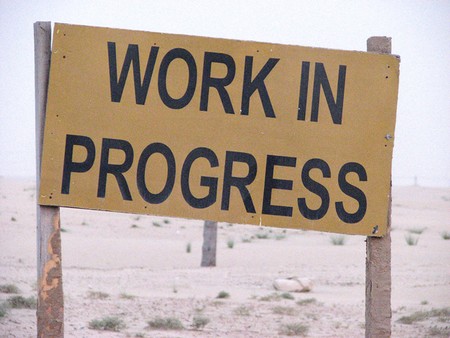
Work and recovery

Melody Beattie writes this about work:

Just as we have relationship histories, most of us have work histories.

Just as we have a present circumstance to accept and deal with in our relationship life, we have a present circumstance to accept and deal with in our work life.

Just as we develop a healthy attitude toward our relationship history – one that will help us learn and move forward – we can develop a healthy attitude toward our work history.

I have worked many jobs in my life, since I was eleven years old. Just as I have learned many things about myself through my relationships, I have learned many lessons through my work. Often, these lessons run parallel to the lessons I’m learning in other areas of my life.

I have worked at jobs I hated but was temporarily dependent on. I have gotten stuck in jobs because I was afraid to strike out on my own and find my next set of circumstances.

I have been in some jobs to develop skills. Sometimes, I didn’t realize I was developing those skills until later on when they become an important part of the career of my choice.

I have worked at jobs where I felt victimized, where I gave and gave and received nothing in return. I have been in relationships where I manufactured similar feelings.

I have worked at some jobs that have taught me what I absolutely didn’t want; others sparked in me an idea of what I really did want and deserve in my career.

Some of my jobs have helped me develop character; others have helped me fine tune skills. They have all been a place to practice recovery behaviors.

Just as I have had to deal with my feelings and messages about myself in relationships, I have had to deal with my feelings and messages about myself, and what I believed I deserved at work.

I have been through two major career changes in my life. I learned that neither career was a mistake and no job was wasted time. I have learned something from each job, and my work history has helped create who I am.

I learned something else: there was a Plan, and I was being led. The more I trusted my instincts, what I wanted, and what felt right, the more I felt that I was being led.

The more I refused to lose my soul to a job and worked at it because I wanted to and not for the paycheck, the less victimized I felt by any career, even those jobs that paid a meager salary. The more I set goals and took responsibility for achieving the career I wanted, the more I could decide whether a particular job fit into that scheme of things. I could understand why I was working at a particular job and how that was going to benefit me.

There are times I have even panicked at work and about where I was in my employment history. Panic never helped. Trust and working my program did.

There were times I looked around and wondered why I was where I was. There were times people thought I should be someplace different. But when I looked into myself and at God, I knew I was in the right place, for the moment.

There were times I have had to quit a job and walk away in order to be true to myself. Sometimes, that was frightening. Sometimes, I felt like a failure. But I learned this: If I was working my program and true to myself, I never had to fear where I was being led.

There have been times I couldn’t survive on the small amount of money I was receiving. Instead of bringing that issue to a particular employer and making it his or her fault, I have had to learn to bring the issue to my Higher Power and myself. I’ve learned I’m responsible for setting my boundaries and establishing what I believe I deserve. I’ve also learned God, not a particular employer, is my source of guidance.

I’ve learned that I’m not stuck or trapped in a job no more than I am in a relationship. I have choices. I may not be able to see them clearly right now, but I do have choices. I’ve learned that if I really want to take care of myself in a particular way on a job, I will do that. And if I really want to be victimized by a job, I will allow that to happen too.

I am responsible for my choices, and I have choices.

Above all else, I’ve learned to accept and trust my present circumstances at work. That does not mean to submit; it does not mean to forego boundaries. It means to trust, accept, then take care of myself the best I’m able to on any given day.

God, help me bring my recovery behaviors to my career affairs.” via Thought for the Day — Hazelden.
Directness

Melody Beattie shares this:

We feel safe around direct, honest people. They speak their minds, and we know where we stand with them.

Indirect people, people who are afraid to say who they are, what they want, and what they’re feeling, cannot be trusted. They will somehow act out their truth even though they do not speak it. And it may catch everyone by surprise.

Directness saves time and energy. It removes us as victims. It dispenses with martyrdom and games. It helps us own our power. It creates respectful relationships.

It feels safe to be around direct, honest people. Be one.

Today, I will own my power to be direct. I do not have to be pas­sive, nor do I need to be aggressive. I will become comfortable with my own truth, so those around me can become comfortable with me.” via June 23: Directness.

Forget “Not Enough” Or “Too Much.” Be Just YOU!

Lissa Rankin writes:

All you have to do is turn on the television, check out a magazine or log onto the internet to realize that the media is blasting us with the message that we’re somehow “not enough.”

Coming at us from all sides are messages that we’re not pretty enough, smart enough, rich enough, popular enough, skinny enough, successful enough, healthy enough – whatever enough.

But then if you step it up a notch – really pump up the volume – you get the opposite message. “No! Now you’ve gone off and overdone it! Now you’re ‘too much.’ You should be less intense, less honest, less sexy, less smart, less complicated, less personal, less talented, less ambitious, less dramatic, less emotional, less fierce.

Where Should You Be On The Dial?

The message being sent is that somewhere between “not enough” and “too much” is a perfect setting on the dial that every one of us should emulate – maybe a perfect 7 or something.

Well, I’m here to tell you that’s total bullshit.

Here’s the real truth. If life is a dial from 1 to 10, some days you’ll be a 1. Others you’ll be an off-the-charts 11.

And that’s just perfect.

Get more here: Forget “Not Enough” Or “Too Much.” Be Just YOU!

Perfection

Melody Beattie writes:

Try harder. Do better. Be perfect. These messages are tricks that people have played on us. No matter how hard we try, we think we have to do better. Perfection always eludes us and keeps us unhappy with the good we’ve done.
Messages of perfectionism are tricks because we can never achieve their goal. We cannot feel good about ourselves or what we have done while these messages are driving us. We will never be good enough until we change the
messages and tell ourselves we are good enough now.
We can start approving of and accepting ourselves. Who we are is good
enough. Our best yesterday was good enough; our best today is plenty good
too.
We can be who we are, and do it the way we do it – today. That is the
essence of avoiding perfection.
Help me let go of the messages that drive me into the crazies. I will
give myself permission to be who I am and let that be good enough.” Source: Daily SNIPS Discussion: 062706 0507-1111 – DailyStrength

Powerlessness & Unmanageability

Melody Beattie writes:

Willpower is not the key to the way of life we are seeking. Surrender is.

“I have spent much of my life trying to make people be, do, or feel something they aren’t, don’t want to do, and choose not to feel. I have made them, and myself, crazy in that process,” said one recovering woman.

I spent my childhood trying to make an alcoholic father who didn’t love himself be a normal person who loved me. I then married an alcoholic and spent a decade trying to make him stop drinking.

I have spent years trying to make emotionally unavailable people be emotionally present for me. I have spent even more years trying to make family members, who are content feeling miserable, happy.

What I’m saying is this: I’ve spent much of my life desperately and vainly trying to do the impossible and feeling like a failure when I couldn’t. It’s been like planting corn and trying to make the seeds grow peas. Won’t work!

By surrendering to powerlessness, I gain the presence of mind to stop wasting my time and energy trying to change and control that which I cannot change and control. It gives me permission to stop trying to do the impossible and focus on what is possible: being who I am, loving myself, feeling what I feel, and doing what I want to do with my life.

In recovery, we learn to stop fighting lions, simply because we cannot win. We also learn that the more we are focused on controlling and changing others, the more unmanageable our life becomes. The more we focus on living our own life, the more we have a life to live, and the more manageable our life will become.

Today, I will accept powerlessness where I have no power to change things, and I’ll allow my life to become manageable.” via Daily Meditation ~ Powerlessness & Unmanageability – Miracles In Progress Codependents Anonymous Group.

Today, I am thinking about how to apply this to my in-laws…

My mother in law will never love me like a son and my sibling in laws will never treat me like a brother. Three years ago during the ‘summer of forgiveness’, I made amends and was forgiven and yet I remain in their ‘penalty box‘. I refuse to let myself in an close the lid on top of me. I refuse to play a role in their drama. If I’m not going to get what I need it’s not worth the work…

Boundaries

Fence
Good fences make good neighbors…

Melody Beattie writes:

“Having boundaries doesn’t complicate life; boundaries simplify life.” Beyond Codependency.

There is a positive aspect to boundary setting. We learn to listen to ourselves and identify what hurt us and what we don’t like. But we also learn to identify what feels good.

When we are willing to take some risks and begin actively doing so, we will enhance the quality of our life.

What do we like? What feels good? What brings us pleasure? Whose company do we enjoy? What helps us to feel good in the morning? What’s a real treat in our life? What are the small, daily activities that make us feel nurtured and cared for?

What appeals to our emotional, spiritual, mental, and physical self? What actually feels good to us?

We have deprived ourselves too long. There is no need to do that anymore, no need. If it feels good, and the consequences are self-loving and not self-defeating, do it!

Today, I will do for myself those little things that make life more pleasurable. I will not deny myself healthy treats.” via Thought for the Day.

Commitment

Couple in love

Melody Beattie writes:

As we walk through life, there are many things and people we may lose, or lose out on, if we are unwilling to commit. We need to make a commitment for relationships to grow beyond the dating stage, to have the home or apartment we want, the job we want, or the car we desire.

We must commit, on deep levels, to careers — to goals ­to family, friends, recovery. Trying something will not ena­ble us to succeed. Committing ourselves will.

Yet, we need never commit before we are ready.

Sometimes, our fear of commitment is telling us some­thing. We may not want to commit to a particular relation­ship, purchase, or career. Other times, it is a matter of our fears working their way out. Wait, then. Wait until the issue becomes clear.

Trust yourself. Ask your Higher Power to remove your fear of commitment. Ask God to remove your blocks to commit­ment. Ask God for guidance.

Ask yourself if you are willing to lose what you will not commit to. Then listen, quietly. And wait until a decision seems consistently right and comfortable.

We need to be able to commit, but we need never commit until we are ready.

Trust that you will commit when you want to.

God, guide me in making my commitments. Give me the courage to make those that are right for me, the wisdom to not commit to that which does not feel right, and the patience to wait until I know.” via June 21: Commitment.

What If?

Melody Beattie writes:

I was talking to a friend one day about something I planned to do. Actually, I was worrying about how one par­ticular person might react to what I intended to do.

“What if he doesn’t handle it very well?” I asked.

“Then,” my friend replied, “you’re going to have to handle it well.”

“What if ‘s” can make us crazy. They put control over our life in someone else’s hands. “What if’s” are a sign that we have reverted to thinking that people have to react in a par­ticular way for us to continue on our course.

“What if’s” are also a clue that we may be wondering whether we can trust ourselves and our Higher Power to do what’s best for us. These are shreds of codependent ways of thinking, feeling, and behaving, and they signal fear.

The reactions, feelings, likes or dislikes of others don’t have to control our behaviors, feelings, and direction. We don’t need to control how others react to our choices. We can trust ourselves, with help from a Higher Power, to handle any out­come — even the most uncomfortable. And, my friend, we can trust ourselves to handle it well.

Today, I will not worry about other people’s reactions, or events outside of my control. Instead, I will focus on my reactions. I will handle my life well today and trust that, tomorrow, I can do the same.” via June 22: What If?.

Choices…

Anderson Layman’s Blog via Choices……………..

Connecting the dots for 6/21/2012

Here’s What You Can Do!

Terri Cole has an amazing post over at The Daily Love today. She writes:

Are you wasting your energy, youth and beauty focusing on things you cannot change? Thinking too much about situations where you have no control or experiences that have already happened? Oftentimes we get so wrapped up in what’s happening in the world and political systems, in what the neighbors are doing and in the mistakes we’ve made, that we lose focus on what we CAN DO right here, right now to help make our lives and those around us better.

Focusing on that over which you have no control (the past, the state of the world and the drama of other people’s lives… to name a few) is a common cause of stress. This type of thinking makes us feel powerless, leading to feelings of hopelessness, anxiety, and depression, which are all key players in the game of stress. I could go on and on about the myriad of the side effects from stress, but you can check them out for yourself while we focus on what you CAN DO to switch your thinking from what you should have done to what you will do now.

This week, I want to challenge you to pay attention to what thoughts are taking up real estate in your mind. When you are ruminating about people and situations over which you have no control, jot down a quick line about the issue at hand. Over the course of the week, what patterns are you discovering? What is the content of your predominant thoughts? How do they make you feel?

Now make a plan to Do Something. If it’s politics that sets you into a tailspin, volunteer for a political campaign, get to know the issues, VOTE. If it’s an ethical or world issue (e.g. animal welfare, bullying, the environment, researching/living with/preventing/curing a particular disease), volunteer for an organization focusing on that particular agenda.

Now, to the biggie…. How often are you ruminating about the past? When you find yourself living anywhere but in the present moment, ask yourself why you are still holding onto the past incident or regret. Try to break down what really happened. Once you have established the facts around the scenario, dial into what you are meant to learn from the experience and use that information to inform your decisions now.

Remaining in a state of frustrated helplessness takes a toll – physically and emotionally. You can relieve stress and feel more empowered by getting into action. Being part of the solution, instead of stressing about the problem, will contribute to your ability to build a more peaceful and productive life. You have the power to change your life and your perspective. Do not give that power to politicians, lawmakers, your neighbors or anyone else. Most of these people you do not even know, so why be dominated by their choices? And the ones you do know most likely do not want to have power over your thoughts and feelings. Keep your side of the street clean and use your special talents to make life better. Interestingly enough, you will make others’ better in the process.

Share your thoughts and comments with us. Let’s start a rich dialogue with the focus on what is possible rather than what is wrong. I am curious to see what changes you notice physically and mentally when you become aware of your thoughts and flip the script.

I hope you have a meaningful week, filled with positive action, and, as always, take care of you.

Source: Here’s What You Can Do!

The Good Feelings

Sunrise 3

Melody Beattie writes:

Let yourself feel the good feelings too.
Yes, sometimes, good feelings can be as distracting as the painful, more difficult ones. Yes, good feelings can be anxiety producing to those of us unaccustomed to them. But go ahead and feel the good feelings anyway.
Feel and accept the joy. The love. The warmth. The excitement. The pleasure. The satisfaction. The elation. The tenderness. The comfort.
Let yourself feel the victory, the delight.
Let yourself feel cared for.
Let yourself feel respected, important, and special.
These are only feelings, but they feel good. They are full of positive, upbeat energy – and we deserve to feel that when it comes our way.
We don’t have to repress. We don’t have to talk ourselves out of feeling good – not for a moment.
If we feel it, it’s ours for the moment. Own it. If it’s good, enjoy it.

Today, God, help me be open to the joy and good feelings available to me.

Source: Daily Meditation ~ The Good Feelings – Miracles In Progress Codependents Anonymous Group

Gossip

Cover

A second shot of Melody Beattie for today! The Universe must think I need it:

Intimacy is that warm gift of feeling connected to others and enjoying our connection to them.

As we grow in recovery, we find that gift in many, some­times surprising places. We may discover we’ve developed intimate relationships with people at work, with friends, with people in our support groups — sometimes with family members. Many of us are discovering intimacy in a special love relationship.

Intimacy is not sex, although sex can be intimate. Intimacy means mutually honest, warm, caring, safe relationships ­relationships where the other person can be who he or she is and we can be who we are — and both people are valued.

Sometimes there are conflicts. Conflict is inevitable. Some­times there are troublesome feelings to work through. Some­times the boundaries or parameters of relationships change. But there is a bond — one of love and trust.

There are many blocks to intimacy and intimate relation­ships. Addictions and abuse block intimacy. Unresolved fam­ily of origin issues prevent intimacy. Controlling blocks intimacy. Off balance relationships, where there is too great a discrepancy in power, prevent intimacy. Caretaking can block intimacy. Nagging, withdrawing, and shutting down can hurt intimacy.

So can a simple behavior like gossip — for example, gos­siping about another for motives of diminishing him or her in order to build up ourselves or to judge the person. To dis­cuss another person’s issues, shortcomings, or failures with someone else will have a predictable negative impact on the relationship.

We deserve to enjoy intimacy in as many of our relation­ships as possible. We deserve relationships that have not been sabotaged.

That does not mean we walk around with our heads in the clouds; it means we strive to keep our motives clean when it comes to discussing other people.

If we have a serious issue with someone, the best way to resolve it is to bring the issue to that person.

Direct, clean conversation clears the air and paves the way for intimacy, for good feelings about ourselves and our relationships with others.

Today, God, help me let go of my fear of intimacy. Help me strive to keep my communications with others clean and free from mali­cious gossip. Help me work toward intimacy in my relationships. Help me deal as directly as possible with my feelings.” via June 17: Gossip.

Relationship Martyrs

Are you a relationship martyr? Consider this:

Many of us have gone so numb and discounted our feelings so completely that we have gotten out of touch with our needs in relationships.

We can learn to distinguish whose company we enjoy, whether we’re talking about friends, business acquaintances, dates, or spouses. We all need to interact with people we might prefer to avoid, but we don’t have to force ourselves through long-term or intimate relationships with these people.

We are free to choose friends, dates, and spouses. We are free to choose how much time we spend with those people we can’t always choose to be around, such as relatives. This is our life. This is it. We can decide how we want to spend our days and hours. We’re not enslaved. We’re not trapped. And not one of us is without options. We may not see our options clearly. Although we may have to struggle through shame and learn to own our power, we can learn to spend our valuable hours and days with the people we enjoy and choose to be with.

God, help me value my time and life. Help me place value on how I feel being around certain people. Guide me as I learn to develop healthy, intimate, sharing relationships with people. Help me give myself the freedom to experiment, explore, and learn who I am and who I can be in my relationships.

Source: Daily Meditation ~ Relationship Martyrs – Miracles In Progress Codependents Anonymous Group

Powerlessness

Melody Beattie writes:

Willpower is not the key to the way of life we are seeking. Surrender is.

“I have spent much of my life trying to make people be, do, or feel something they aren’t, don’t want to do, and choose not to feel. I have made them, and myself, crazy in that process,” said one recovering woman.

“I spent my childhood trying to make an alcoholic father who didn’t love himself be a normal person who loved me. I then married an alcoholic and spent a decade trying to make him stop drinking.

“I have spent years trying to make emotionally unavail­able people be emotionally present for me.

“I have spent even more years trying to make family mem­bers, who are content feeling miserable, happy. What I’m saying is this: I’ve spent much of my life desperately and vainly trying to do the impossible and feeling like a failure when I couldn’t. It’s been like planting corn and trying to make the seeds grow peas. It won’t work!

“By surrendering to powerlessness, I gain the presence of mind to stop wasting my time and energy trying to change and control that which I cannot change and control. It gives me permission to stop trying to do the impossible and focus on what is possible: being who I am, loving myself, feeling what I feel, and doing what I want to do with my life.”

In recovery, we learn to stop fighting lions, simply because we cannot win. We also learn that the more we are focused on controlling and changing others, the more unmanage­able our life becomes. The more we focus on living our own life, the more we have a life to live, and the more manage­able our life will become.

Today, I will accept powerlessness where I have no power to change things, and allow my life to become manageable.” via June 20: Powerlessness.

Letting Go of Self-Doubt

A second shot of Melody Beattie for today:

A married woman who had recently joined Al Anon called me one afternoon. She worked part-time as a registered nurse, had assumed all the responsibilities for raising her two chil­dren, and did all the household chores, including repairs and finances. “I want to separate from my husband,” she sobbed. “I can’t stand him or his abuse any longer. But tell me, please tell me,” she said, “do you think I can take care of myself?” Codependent No More

Not only is it okay to take care of ourselves, we can take good care of ourselves.

Many of us, so confident about our ability to take care of others, doubt our inherent strength to care for ourselves. We may have come to believe, from our past or present circum­stances, that we need to take care of others and we need others to take care of us. This is the ultimate codependent belief.

No matter where this self-defeating belief was born, we can release it and replace it with a better one, a healthier one, a more accurate one.

We can take care of ourselves — whether we are in or out of a relationship. Everything we need will be provided. We will have loved ones, friends, and our Higher Power to help.

Knowing that we can take care of ourselves doesn’t mean we won’t have feelings of fear, discomfort, doubt, anger, and fragility at times. It means we practice “courageous vulner­ability,” as Colette Dowling called it in Cinderella Complex. We may feel scared, but we do it anyway.

Today, God, help me know how I can take care of myself.” via June 19: Letting Go of Self-Doubt.

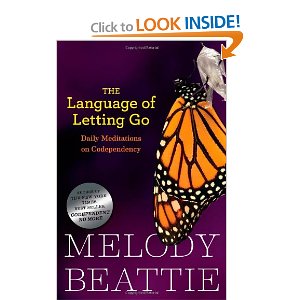
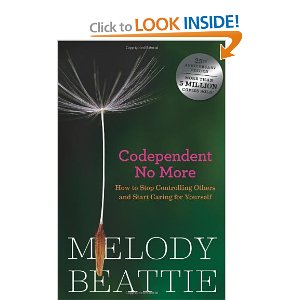
Few books have been more useful to me in my life — if any of the codependency scenarios resonate with you, I recommend you purchase it, the workbook and ‘The Language of Letting Go‘…

Give & Forgive!

Yes, but! Set healthy boundaries and remember the lesson of the sage and the scorpion. The Daily Love via Visual Inspiration: Give &Forgive!.

Making Life Easier

Melody Beattie writes:

Life doesn’t have to be hard.
Yes, there are times we need to endure, struggle through, and rely on our survival skills. But we don’t have to make life, growth, recovery, change, or our day-to-day affairs that hard all the time.
Having life be that hard is a remnant of our martyrdom, a leftover from old ways of thinking, feeling, and believing. We are worthy, even when life isn’t that hard. Our value and worth are not determined by how hard we struggle.
If we’re making it that hard, we may be making it harder than it needs to be, said one woman. Learn to let things happen easily and naturally. Learn to let events, and our participation in them, fall into place. It can be easy now. Easier than it has been. We can go with the flow, take the world off our shoulders, and let our Higher Power ease us into where we need to be.
Today, I will stop struggling so hard. I will let go of my belief that life and recovery have to be hard. I will replace it with a belief that I can walk this journey in ease and peace. And sometimes, it can actually be fun.

Source: Daily Meditation ~ Making Life Easier – Miracles In Progress Codependents Anonymous Group

Recognizing Choices

English: Choices, choices A network of paths a...

Melody Beattie writes:

We have choices, more choices than we let ourselves see.

We may feel trapped in our relationships, our jobs, our life. We may feel locked into behaviors — such as caretaking or controlling.

Feeling trapped is a symptom of codependency. When we hear ourselves say, “I have to take care of this person… .”

“I have to say yes… ” “I have to try to control that person…

“I have to behave this way, think this way, feel this way….” we can know we are choosing not to see choices.

That sense of being trapped is an illusion. We are not con­trolled by circumstances, our past, the expectations of others, or our unhealthy expectations for ourselves. We can choose what feels right for us, without guilt. We have options.

Recovery is not about behaving perfectly or according to anyone else’s rules. More than anything else, recovery is about knowing we have choices and giving ourselves the freedom to choose.

Today, I will open my thinking and myself to the choices available to me. I will make choices that are good for me.” via June 18: Recognizing Choices.

Surrender


Melody Beattie writes:

Master the lessons of your present circumstances.
We do not move forward by resisting what is undesirable in our life today. We move forward, we grow, we change by acceptance.
Avoidance is not the key; surrender opens the door.
Listen to this truth: We are each in our present circumstances for a reason. There is a lesson, a valuable lesson that must be learned before we can move forward.
Something important is being worked out in us, and in those around us. We may not be able to identify it today; but we can know that it is important. We can know it is good.
Overcome not by force, overcome by surrender. The battle is fought, and won, inside ourselves. We must go through it until we learn, until we accept, until we become grateful, until we are set free.
Today, I will be open to the lessons of my present circumstances. I do not have to label, know, or understand what I’m learning; I will see clearly in time. For today, trust and gratitude are sufficient.

Source: Language of Letting Go – June 17 – Surrender – SoberRecovery : Alcoholism Drug Addiction Help and Information

Maybe I should change the name of this blog to The Daily Beattie?! :-D

Surrender

Melody Beattie writes:

Master the lessons of your present circumstances.
We do not move forward by resisting what is undesirable in our life today. We move forward, we grow, we change by acceptance.
Avoidance is not the key; surrender opens the door.
Listen to this truth: We are each in our present circumstances for a reason. There is a lesson, a valuable lesson that must be learned before we can move forward.
Something important is being worked out in us, and in those around us. We may not be able to identify it today; but we can know that it is important. We can know it is good.
Overcome not by force, overcome by surrender. The battle is fought, and won, inside ourselves. We must go through it until we learn, until we accept, until we become grateful, until we are set free.
Today, I will be open to the lessons of my present circumstances. I do not have to label, know, or understand what I’m learning; I will see clearly in time. For today, trust and gratitude are sufficient.

Source: Language of Letting Go – June 17 – Surrender – SoberRecovery : Alcoholism Drug Addiction Help and Information

Start a Blog at WordPress.com.

Up ↑