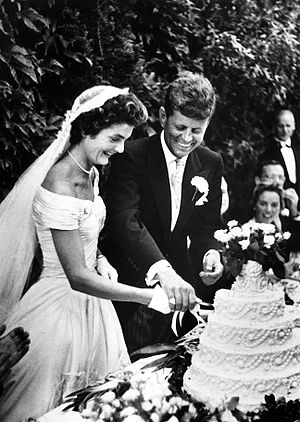
“An intimate relationship is one in which neither party silences, sacrifices, or betrays the self and each party expresses strength and vulnerability, weakness and competence in a balanced way.” Harriet Lerner
Setting boundaries is essential if we want to be both physically and emotionally healthy.
Creating healthy boundaries is empowering. By recognizing the need to set and enforce limits, you protect your self-esteem, maintain self-respect, and enjoy healthy relationships.
Unhealthy boundaries cause emotional pain that can lead to dependency, depression, anxiety, and even stress-induced physical illness. A lack of boundaries is like leaving the door to your home unlocked: anyone, including unwelcome guests, can enter at will. On the other hand, having too rigid boundaries can lead to isolation, like living in a locked-up castle surrounded by a mote. No one can get in, and you can’t get out.
What Are Boundaries?
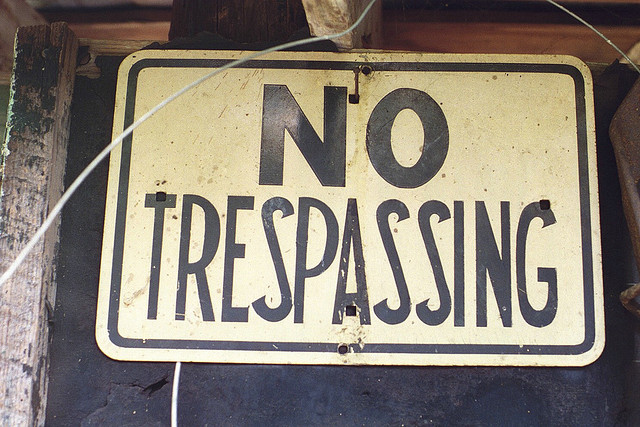
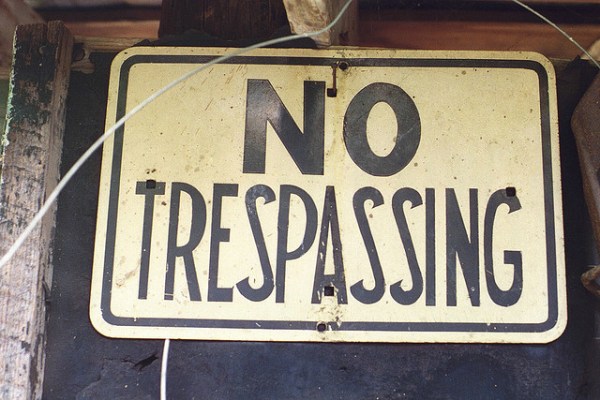
The easiest way to think about a boundary is a property line. We have all seen “No Trespassing” signs, which send a clear message that if you violate that boundary, there will be a consequence. This type of boundary is easy to picture and understand because you can see the sign and the border it protects. Personal boundaries can be harder to define because the lines are invisible, can change, and are unique to each individual.
Personal boundaries, just like the “No Trespassing” sign, define where you end and others begin and are determined by the amount of physical and emotional space you allow between yourself and others. Personal boundaries help you decide what types of communication, behavior, and interaction are acceptable.” Get more here: How to Create Healthy Boundaries « Positively Positive.
Into Orbit
“It doesn’t matter if they’re hurting themselves. It doesn’t matter that we could help them if they’d only listen to, and cooperate with, us. IT DOESN’T MATTER, DOESN’T MATTER, DOESN’T MATTER, DOESN’T MATTER.” Codependent No More
I think I can change him. Nobody’s ever really loved him and appreciated him before. I’ll be the one to do that, and then he’ll change.. .. She’s never been with anybody trustworthy before. I’ll prove how trustworthy I am, and then she’ll be able to love. . . . Nobody’s been able to get to her, to conquer her, before. I’ll be the one to do that … Nobody’s ever really given him a chance. . . . Nobody’s ever really believed in him before….
These are warning signs. Red lights. Red flags. In fact, if we’re thinking these thoughts, they need to be stop signs.
If we have gotten hooked into believing that somehow we will be the one who will make the difference in someone’s life, if we are trying to prove how good we can be for someone, we may be in trouble.
This is a game. A deception. It won’t work. It’ll make us crazy. We can trust that. We’re not seeing things clearly. Something’s going on with us.
It will be self-defeating.
We may be “the one” all right — the one to wind up victimized.
The whole thought pattern reeks of codependency, of not being responsible for oneself, and of victimization. Each person needs to do his or her own work.
Nobody in the past has really understood him…. Nobody has seen what I see in her…. It’s a set-up. It sets us up to stop paying attention to ourselves while we focus too much on the other person. It takes us away from our path and often puts us in orbit.
Nobody has appreciated him enough…. Nobody has been good enough to her, or done for her what I can do…. It’s a rescue. It’s a game move, a game we don’t have to play. We don’t have to prove were the one. If we’re out to show people we’re the best thing that ever happened to them, it may be time to see if they’re the best thing that ever happened to us.
We have not been appointed as guardian angel, godmother, godfather, or “the one who will.”
The help, support, and encouragement that truly benefits others and ourselves emerges naturally. Let it.
God, help me let go of my need to meet dysfunctional challenges in my relationships.” via June 29: Into Orbit.
six {more} strategies for staying sane
Gemma Stone writes:
Last week, I chatted about the six strategies I use daily to help me from slipping into the darkness of mental health struggles. I actually use twelve strategies daily (I try, anyway). Here are the other six ::
Media. I am super strict with the type of media I expose myself to. I went on a negative media fast a few years ago, and it made all the difference.
Giving. I focus on giving throughout the day. A smile, a cup of coffee, passing on a book, sending a loving e-mail, writing a thank-you card, making a donation. Giving feels good.
Fun. My “purpose” is to have fun inspiring myself and others to live from love rather than fear. I tried living my purpose without the fun part and, well, it was no fun. So now I make plans for fun and giggles.
Boundaries. Saying “no” to what doesn’t deeply matter means I get to say “yes” to what does. Life is full, right? I know now that if I’m going to live fully, it means I have to set boundaries that honor who I am and the life I want to live.
Nature. Every day I chill with Mother Nature. It takes the edge off.
Self-reflection. When stuff comes up, I let myself get into it. If I don’t, I know it comes up in another (much less desirable) way. I feel what I am feeling and explore why I’m feeling that way
That’s it! My twelve secrets to staying sane.
Remember, there is so much to know and so much truth to discover. The direction my feet take and what speaks to my heart may not be right for you. I share my spark of truth with you to guide you through the dark, but not to tell you what to see.
Love,
I feel more sane already…
The Gift of Readiness
“Were entirely ready to have God remove all these defects of character.” Step Six of Al-Anon.
We progress to the Sixth Step by working diligently, to the best of our ability, on the first five Steps. This work readies us for a change of heart, an openness to becoming changed by a Power greater than ourselves — God.
The path to this willingness can be long and hard. Many of us have to struggle with a behavior or feeling before we become ready to let it go. We need to see, over and over again, that the coping device that once protected us is no longer useful.
The defects of character referred to in Step Six are old survival behaviors that once helped us cope with people, life, and ourselves. But now they are getting in our way, and it is time to be willing to have them removed.
Trust in this time. Trust that you are being readied to let go of that which is no longer useful. Trust that a change of heart is being worked out in you.
God, help me become ready to let go of my defects of character. Help me know, in my mind and soul, that I am ready to let go of my self-defeating behaviors, the blocks and barriers to my life.” via June 28: The Gift of Readiness.
Combating Shame
“Shame can hold us back, hold us down, and keep us staring at our feet.” Beyond Codependency.
Watch out for shame.
Many systems and people reek of shame. They are controlled by shame and may want us to play their game with them. They may be hoping to hook us and control us through shame.
We don’t have to fall into their shame. Instead, well take the good feelings — self-acceptance, love, and nurturing.
Compulsive behaviors, sexually addictive behaviors, overeating, chemical abuse, and addictive gambling are shame-
based behaviors. If we participate in them, we will feel ashamed. It’s inevitable. We need to watch out for addictive and other compulsive behaviors because those will immerse us in shame.
Our past, and the brainwashing we may have had that imposed “original shame” upon us, may try to put shame on
us. This can happen when we’re all alone, walking through the grocery store or just quietly going about living our life. Don’t think . . Don’t feel…. Don’t grow or change… . Don’t be alive. . . . Don’t live life. . .. Be ashamed!
Be done with shame. Attack shame. Go to war with it. Learn to recognize it and avoid it like the plague.
Today, I will deliberately refuse to get caught up in the shame floating around in the world. If I cannot resist it, I will feel it, accept it, then be done with it as quickly as possible. God, help me know that it’s okay to love myself and help me to refuse to submit to shame. If I get off course, help me learn to change shame into guilt, correct the behavior, and move forward with my life in immediate self-love. via June 27: Combating Shame.
When you ASSUME you make an ASS out of ME and YOU!
Kute Blackson writes:
Just because you perceive something a certain way, doesn’t mean it is true.
We often think that reality is what we see and experience. We then make judgments about other people, situations or even ourselves based on our perceptions.
But in reality, the reality that you experience is based on your conditioning and past programming. The reality that you think is reality isn’t necessarily reality. As you become aware of this, it frees you up to see more clearly and question how you perceive a situation or person.
When you look at a situation or person, what you really see is what you bring to it. As a result, we make up assumptions and judgments about people which are often not true. Then we react based on our interpretation, which is not always accurate.
Have you ever reacted a certain way to a situation or person, only to realize afterwards that what you thought wasn’t necessarily so? It was simply how you were perceiving it in that moment based on your limited viewpoint.
Perhaps someone did or said something to you which left you feeling hurt. When you react to the situation based on your hurt, it only creates a negative spiral.
To the degree you live inside of your assumptions about what is going on, is to the degree you are not free and limit yourself.
The more you can step back, question your first reaction to a given situation and embrace what you feel, the more space you can have to actually choose a response that is empowering rather than reactive. Living from reactivity only creates more reactivity in a situation.
When you are in a relationship with a loved one and they do or say something that triggers something within you, we often think that our upset is about the other person. As a result we might react negatively, or even attack the other person out of hurt. We might make up a story about what they said or did, and what that means. In truth you may have no idea what was really going on with the other person or situation as a whole.
So we are all seeing through our individual lens/viewpoint and experiencing reality in unique ways. The challenge is when these realities do not agree, it often results in arguments we both think we are right.
Have you ever experienced this?
On some level you are both right. Everybody is right, based on the viewpoint your are looking through. It doesn’t mean it is reality though. When you realize this, you do not need to take the other person’s reaction to you personally; you realize that, based on their particular viewpoint which they think to be reality, they cannot help but react to you the way they are. It just frees you up to not keep fighting them, and be able to take a step back so that you can really choose your response.
The meaning you give to things controls your entire life. What’s the meaning you are giving to the experiences that happen to you?
Beware of:
Mind reading: When you project onto another other person what you think they are thinking and why they did what they did.
Living in fantasy: When you have an entire relationship with a person not based on reality, but what you have made up in your mind.
Preconceived ideas: This is where you have already made up in your mind who and what someone is and how that person will respond ahead of time. You then already feel reactive, even though nothing has happened yet.
The more you free yourself of your conditioning, the more clearly you are able to see reality clearly and really choose.
Before you judge someone or the situation.
Breathe. And take a step back.
Take a look at the situation from a more expanded viewpoint. Be willing to not know.
Question: Is this reality?
Choose authentically.
So, how much Freedom do you want to experience in your life?
You choose.
Source: When you ASSUME you make an ASS out of ME and YOU! (Give it UP!)
Related articles
- Transforming Your Reality (omtimes.com)
- Reality Show Reality (curmudgeonman.wordpress.com)
- What parcels are you getting from the universe’s delivery van? (trueconsciousness.net)
- On Perception (ahechoes.wordpress.com)
Trusting God
Yes, even more Melody Beattie!
A married couple, friends of mine, decided to make some changes in their living situation. They had always lived in the city, and now they decided they wanted to live in the country, on a lake.
They found a small, lake home. It wasn’t the house of their dreams, but when they sold their city home, they would have money to remodel it. They had saved some money, so they moved into their lake home before selling their city home.
One year passed, and the city home didn’t sell. My friends went through many changes during this time. They had times of patience and impatience. Some days they trusted God; other days they couldn’t figure out why God was making them wait so long, why God wouldn’t let them move forward with their plan. The doors just wouldn’t swing wide open.
One day, a neighbor came to visit my friends. His home on the lake was my friends’ dream home — everything they wanted, plus more. The first time my friends saw this house, they admired it, wishing they could have a home just like it, but then they forgot about the idea. They didn’t believe it could ever be possible.
The reason the neighbor came to visit my friends was that he and his wife had decided to move. He offered my friends the first option on purchasing his home.
My friends accepted his offer, and signed a purchase agreement. Within two months, they sold their city home and their small but adequate lake home. A short time later, they moved into the home of their dreams.
Sometimes, we experience times of frustration in our life. We believe we’re on track, trusting God and ourselves, yet things don’t work out. We have false starts and stops. The door refuses to swing wide open.
We may wonder if God has abandoned us, or doesn’t care. We may not understand where we’re going, or what our direction is.
Then one day we see: the reason we didn’t get what we wanted was because God had something much better planned for us.
Today, I will practice patience. I will ask, and trust, my Higher Power to send me His best.” via June 26: Trusting God.
Take a time-out
“Tickets! Tickets!” And you give yours to the big man in the beard and the T-shirt at the gate and step onto the carousel. So many choices! Horses and carriages of every color. The white one with the golden tail? The green one with fire in his eyes? Yes, he looks fast– but no, someone else got there first. You settle for the black-and-red horse with the sparkling silver saddle. Someone bumps past, leaving sticky cotton candy on your arm. And then the music starts– loud, creaky organ music, blaring through old blown-out speakers. The lights flash on and off, and the world spins around you. Children shriek in delight while you tug on the reins, guide your mount around the course, and try to let go of the nagging suspicion that the green horse would have been more fun. You vow to get back in line and get that one next time.
Step off of the carousel.
Take a break for a moment and watch all the horses go hurrying past. The green one is no better than the red one, just different, and certainly not any faster. All your frantic pulling on the reins is wasted effort,too. See, they come right back again. They keep right on going around whether you are there or not. Let them.
Sure, it’s fun to be on the ride, to be right in the middle of all the action, up and down,’ round and ’round, lights flashing, music blaring. Just remember that you have a choice. You can be on the ride, or you can get off. Be where you want to be, and occasionally, relax.
God, help me remember that I have choices, and relaxing and letting go are two of them.” via Just For Today Meditations » Daily Recovery Readings – June 26, 2012.
Surviving Slumps
A slump can go on for days. We feel sluggish, unfocused, and sometimes overwhelmed with feelings we can’t sort out. We may not understand what is going on with us. Even our attempts to practice recovery behaviors may not appear to work. We still don’t feel emotionally, mentally, and spiritually as good as we would like.
In a slump, we may find ourselves reverting instinctively to old patterns of thinking, feeling, and behaving, even when we know better. We may find ourselves obsessing, even when we know that what we’re doing is obsessing and that it doesn’t work.
We may find ourselves looking frantically for other people to make us feel better, the whole time knowing our happiness and well being does not lay with others.
We may begin taking things personally that are not our issues, and reacting in ways we’ve learned all to well do not work.
We’re in a slump. It won’t last forever. These periods are normal, even necessary. These are the days to get through. These are the days to focus on recovery behaviors, whether or not the rewards occur immediately. These are sometimes the days to let ourselves be and love ourselves as much as we can.
We don’t have to be ashamed, no matter how long we’ve been recovering. We don’t have to unreasonably expect “more” from ourselves. We don’t ever have to expect ourselves to live life perfectly.
Get through the slump. It will end. Sometimes, a slump can go on for days and then, in the course of an hour, we see ourselves pull out of it and feel better. Sometimes it can last a little longer.
Practice one recovery behavior in one small area, and begin to climb uphill. Soon, the slump will disappear. We can never judge where we will be tomorrow by where we are today.
Today, I will focus on practicing one recovery behavior on one of my issues, trusting that this practice will move me forward. I will remember that acceptance, gratitude, and detachment are a good place to begin.” via Just For Today Meditations » Daily Recovery Readings – June 26, 2012.
Figuring out God’s will
Melody Beattie writes:
It was a stressful time in my life. I didn’t know what to do. I had pressing business decisions to make, and painful relationship issues to face. Everything felt like a mess.
I gathered up a few favorite books, the Bible, a journal, and some clothes. Then I headed for the mountains, a resort that was a favorite place of mine to hide out in and gather my thoughts.
I told myself, “I’m going to stay in there. Write in my journal. Pray. And meditate. I’m not coming out until I know what to do.”
After forty-eight hours of writing about my problems, praying about my problems, and meditating about my problems, I remembered something a friend had said to me.
“What are you doing?” he had asked.
“I’m trying to surrender to God’s will.”
“No you’re not, you’re trying to figure it out.”
Within six months, each of the problems I was wrestling with worked themselves out. I was either guided into an action that naturally felt right at the time, or a solution came to me. The immediate solution to each problem was the same: let go. Just surrender to the situation taking place. Sometimes, what we need to do next is surrender.
If you don’t like the word surrender, try calling it making peace.
God, help me surrender to your will, especially when I don’t know what to do next.” via Just For Today Meditations » Daily Recovery Readings – June 25, 2012.
Related articles
- Withholding (toddlohenry.com)
- Sadness (toddlohenry.com)
- “That’s My Story and I’m Sticking to It” – An Interview with Melody Beattie (wheretheclientis.com)
- Codepedence is not just an issue for partners of addicts (toddlohenry.com)
- Get Nearer to God (teachingsofmasters.wordpress.com)
- Commitment (toddlohenry.com)
- Boundaries (toddlohenry.com)
Charity
Melody Beattie writes:
We need healthy boundaries about receiving money, and we need healthy boundaries about giving money.
Some of us give money for inappropriate reasons.
We may be ashamed because we have money and don’t believe we deserve it. We may belong to an organization that uses shame as a form of control to coerce us out of our money that the organization wants.
We can get hooked into giving money to our children, family members, or friends because we have earned or unearned guilt. We allow ourselves to be financially blackmailed, sometimes by the people we love.
This is not money freely given, or given in health.
Some of us give money out of a sense of caretaking. We may have exaggerated feelings of responsibility for others, including financial responsibility.
We may be giving simply because we have not learned to own our power to say no when the answer is no.
Some of us give because we hope or believe people will love us if we take care of them financially.
We do not have to give money to anyone. Giving money is our choice. We do not have to allow ourselves to be victimized, manipulated, or coerced out of our money. We are financially responsible for ourselves. Part of being healthy is allowing those around us be financially responsible for themselves.
We do not have to be ashamed about having the money that we earn; we deserve to have the money we have been given — whatever the amount, without feeling obligated to give it all away, or guilty because others want what we have.
Charity is a blessing. Giving is part of healthy living. We can learn to develop healthy boundaries around giving.
Today, I will strive to begin developing healthy boundaries about giving money. I understand that giving is my choice.
Withholding
Sometimes, to protect ourselves, we close ourselves off from a person we’re in a relationship with. Our body may be present, but we’re not. We’re not available to participate in the relationship.
We shut down.
Sometimes, it is appropriate and healthy to shut down in a relationship. We may legitimately need some time out. Sometimes it is self-defeating to close ourselves off in a relationship.
To stop being vulnerable, honest, and present for another person can put an end to the relationship. The other person can do nothing in the relationship when we are gone. Closing ourselves makes us unavailable to that relationship.
It is common to go through temporary periods of closing down in a relationship. But it is unhealthy to make this an ongoing practice. It may be one of our relationship-sabotaging devices.
Before we close down, we need to ask ourselves what we are hoping to accomplish by shutting down. Do we need some time to deal? To heal? To grow? To sort through things? Do we need time out from this relationship? Or are we reverting to our old ways – hiding, running, and terminating relationships because we are afraid we cannot take care of ourselves in any other way?
Do we need to shut down because the other person truly isn’t safe, is manipulating, lying, or acting out addictively or abusively? Are we shutting down because the other person has shut down and we no longer want to be available?
Shutting down, shutting off, closing ourselves and removing our emotional presence from a relationship is a powerful tool. We need to use it carefully and responsibly. To achieve intimacy and closeness in a relationship, we need to be present emotionally. We need to be available.
God, help me be emotionally present in the relationships I choose to be in.” via Just For Today Meditations » 2012 » June » 23.
Related articles
- Letting the Cycles Flow (toddlohenry.com)
- Directness (toddlohenry.com)
- Commitment (toddlohenry.com)
- Hanging on to Old Relationships (toddlohenry.com)
- Discovering intimacy (toddlohenry.com)
- Fear of Intimacy (toddlohenry.com)
- Recognizing Choices (toddlohenry.com)
This is your life
Are you who you want to be?
Yesterday is a wrinkle on your forehead
Yesterday is a promise that you’ve broken
Don’t close your eyes, don’t close your eyes
This is your life and today is all you’ve got now
Yeah, and today is all you’ll ever have
Don’t close your eyes
This is your life, are you who you want to be
This is your life, is it everything you dreamed it would be
When the world was younger and you had everything to lose
Yesterday is a kid in the corner
Yesterday is dead and over
This is your life, are you who you want to be
This is your life, is it everything you dreamed it would be
When the world was younger and you had everything to lose
Don’t close your eyes
This is your life are you who you want to be
This is your life are you who you want to be, yeah
This is your life, are you who you want to be, who you want to be yeah
This is your life, are you who you want to be (who you want to be)
This is your life, is it everything you dreamed it would be
When the world was younger and you had everything to lose
And you had everything to lose
Attachment
Adrienne M. posted on the flipside of detachment over at her blog today:
If you attach yourself to one person, you ultimately end up having an unhealthy relationship. Shirley MacLaine.
Needing people in our lives is healthy, human, and natural. Needing a single person to love at a very deep level is also soothing to the soul’s well-being. Love and attachment are not synonymous, however. They are close to being opposites. If we “attach” ourselves to others, our movements as separate individuals are hampered. Attachment means dependency; it means letting our movements be controlled by the one we are “hooked” to.
Dependency on mood-altering chemicals, on food, on people, means unmanageability in our individual lives. Many of us in this recovery program, though abstinent, still struggle with our dependency on a certain person or a certain friend.
The tools we are learning apply in all cases of dependency. It is healthy independence we are striving for—taking responsibility for our own lives—making choices appropriate for our personal selves. Loving others means letting them make their own choices unhampered by our “attachment.”
Are my relationships attachments or are they based on love? I will take an inventory of them today.” via Daily Reading – June 24, 2012 « 12 Steps – Think About It!.
The Universe is really putting this issue front and center today. Ugggh…
10 Ways To Eat Clean
See on Scoop.it – My Perspective on Loving, Living, Learning and Laughing
When the seasons change, I get inspired to take a close look at my eating habits and simplify my diet by eating the things that really make my body feel best. Here are 10 healthy eating habits I am focusing on right now to detox my diet.
See on www.huffingtonpost.com
Owning Our Power
More goodness for my spirit from Melody Beattie:
We don’t have to give others so much power and ourselves so little. We don’t have to give others so much credit and ourselves so little. In recovery from codependency, we learn there’s a big difference between humility and discounting ourselves.
When others act irresponsibly and attempt to blame their problems on us, we no longer feel guilty. We let them face their own consequences.
When others talk nonsense, we don’t question our own thinking.
When others try to manipulate or exploit us, we know it’s okay to feel anger and distrust and to say no to the plan.
When others tell us that we want something that we really don’t want, or someone tells us that we don’t want something that we really do want, we trust ourselves. When others tell us things we don’t believe, we know it’s okay to trust our instincts.
We can even change our mind later.
We don’t have to give up our personal power to anyone: strangers, friends, spouses, children, authority figures, or those over whom we’re in authority. People may have things to teach us. They may have more information than we have, and may appear more confident or forceful than we feel. But we are equals. Our magic is not in them. Our magic, our light, is in us. And it is as bright a light as theirs.
We are not second-class citizens. By owning our power, we don’t have to become aggressive or controlling. We don’t have to discount others. But we don’t discount ourselves either.
Today, I will own my power with people. I will let myself know what I know, feel what I feel, believe what 1 believe, and see what I see. I will be open to changing and learning from others and experience, but I will trust and validate myself too. I will stand in my own truth.” via June 24: Owning Our Power.
Detachment

Melody Beattie writes:
Detachment doesn’t come naturally for many of us. But once we realize
the value of this recovery principle, we understand how vital detachment
is. The following story illustrates how a woman came to understand
detachment.“The first time I practiced detachment was when I let go of my alcoholic
husband. He had been drinking for seven years, since I had married him.
For that long, I had been denying his alcoholism and trying to make him
stop drinking.“I did outrageous things to make him stop drinking, to make him see the
light, to make him realize how much he was hurting me. I really thought
I was doing things right by trying to control him.“One night, I saw things clearly. I realized that my attempts to control
him would never solve the problem. I also saw that my life was
unmanageable. I couldn’t make him do anything he didn’t want to do. His
alcoholism was controlling me, even though I wasn’t drinking.“I set him free, to do as he chose. The truth is, he did as he pleased
anyway. Things changed the night I detached. He could feel it, and so
could I. When I set him free, I set myself free to live my own life.
“I’ve had to practice the principle of detachment many times since then.
I’ve had to detach from unhealthy people and healthy people. It’s never
failed. Detachment works.”Detachment is a gift. It will be given to us when we’re ready for it.
When we set the other person free, we are set free….
Learning healthy detachment has been one of the most difficult things I’ve ever done. I knew how to be attached in an unhealthy way; it’s called codependency. I knew how to be detached in an unhealthy way; it’s called “Eff you — I’m leaving!”. Healthy detachment for me looks a lot like interdependence without giving over control or response-ability to my partner but I can’t say that I’ve mastered it yet or that I will in this lifetime. It may come naturally to some people but it does not come naturally to me — I have to work hard at it every day. I don’t claim perfection — only progress — but I know that learning healthy detachment is one of the best investments I can make in myself…
Related articles
- Codepedence is not just an issue for partners of addicts (toddlohenry.com)
- Choices (toddlohenry.com)
- Sadness (toddlohenry.com)
- Recognizing Choices (toddlohenry.com)
- Directness (toddlohenry.com)
- …on Control (toddlohenry.com)
I’m a rock star at rocky times
If that’s not true for you fake it ’til you make it! notsalmon via I’m a rock star at rocky times.


comments