Self Esteem or Other Esteem?

Mel Schwartz, L.C.S.W. M.Phil. writes:

I have come to believe that the way the term self-esteem is used is actually a misnomer. The first half of the expression, self, would seem to indicate that esteem, the second half of the expression, is derived from one’s self. Yet if we look closer, we find that most people seek a sense of worthiness from that which lies outside of them. For a student, it might come from good grades; for a businessperson or worker, it’s derived from a promotion or a raise; and for most individuals, praise or acknowledgement provide a temporary increase in esteem. Our society generates billions of dollars in revenues from inducing people to seek the quick fix of vanity as a means toward feeling better. Yet none of these actually contributes one iota to self-esteem. Ironically, they may even get in the way. 

Continue reading: Self Esteem or Other Esteem? | Psychology Today.

Your Time Has Come

If you are reading this column, count your blessings – you have survived a potentially catastrophic 2012. But the media tells us ‘Not so fast!’ Now we have to prepare to be sucked over the Fiscal Cliff. 2013 doesn’t have to be the new end of our old world. In fact, it can be the beginning of our new, sustainable, progressive world. But before we make plans for the future, let’s take some time to assess how far we’ve come recently. As the year winds down, we have the perfect opportunity to set ourselves up for a good new year – and maybe even the best for the rest of our lives.” Full story at:  Your Time Has Come | Psychology Today.

The Most Dangerous Word in the World

noMark Waldman and Andrew Newberg, M.D. write:

If I were to put you into an fMRI scanner—a huge donut-shaped magnet that can take a video of the neural changes happening in your brain—and flash the word “NO” for less than one second, you’d see a sudden release of dozens of stress-producing hormones and neurotransmitters. These chemicals immediately interrupt the normal functioning of your brain, impairing logic, reason, language processing, and communication.

In fact, just seeing a list of negative words for a few seconds will make a highly anxious or depressed person feel worse, and the more you ruminate on them, the more you can actually damage key structures that regulate your memory, feelings, and emotions.[1] You’ll disrupt your sleep, your appetite, and your ability to experience long-term happiness and satisfaction.

If you vocalize your negativity, or even slightly frown when you say “no,” more stress chemicals will be released, not only in your brain, but in the listener’s brain as well.[2] The listener will experience increased anxiety and irritability, thus undermining cooperation and trust. In fact, just hanging around negative people will make you more prejudiced toward others![3]

via 3. The Most Dangerous Word in the World | Psychology Today.

You’ll Make It When You Fake It

Smile 2
Psychology Today reports:

In a newly released study subjects were given stressful tasks while holding chopsticks in their mouths to form a smile, and another group was asked to maintain a smile while performing the stress task.  None of the subjects were not told the true objective of the study and when compared with a control group performing the same stressful activities, both smiling groups had lower heart rates and faster cardiovascular stress recovery than the non-smiling controls.

As Ekman had predicted, when we hold a facial expression reflecting a particular emotion, even when the expression of happiness is faked, we experience some of that faked emotion.   ‘Fake it till you make it’ takes more meaning in light of this and other research along these lines.

These findings suggest that there is a pathway connecting facial muscle activity to our ‘fight/flight’ response and that we can change our physiological and psychological states  by deliberately controlling our facial expressions.  So perhaps the quote by Mark Twain is true, “The world always looks brighter behind a smile.”

The next time you are feeling stressed, have a difficult task, or just wake up on the grumpy side of the bed, smile for a while and see how your mood can change for the better.” via You’ll Make It When You Fake It | Psychology Today.

I first heard about this reading Tony Robbin’s book ‘Awaken the Giant Within’ and yesterday I tried it and it actually worked for me!

I got sucked into being a timer for a swim meet with over 500 kids and 88 different events and multiple heats. First of all, I don’t even like competitive swimming — that’s my wife’s thing and my son was having his first meet. My wife had volunteered for a 4 hour shift and not only did a volunteer not come to relieve her but I became a backup timer and then a timer when other people left their shift. It was hot, wet and hard on the joints standing on a pool deck for 9 hours. I remembered what I had heard from Tony Robbins earlier in the week and put it into practice. Every time I started

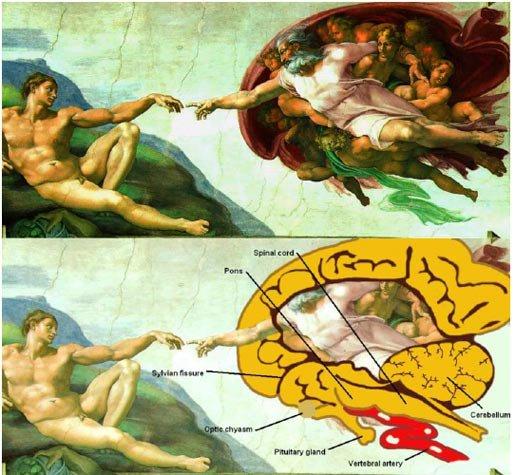
Michaelangelo and The Creation of God

Here’s something to ponder over the weekend. Was Michelangelo sending a ‘secret message’?

Get the scoop here and tell me what you think about this below: The Creation of God | Psychology Today.

Sixteen Strategies for Combating Rumination

Did you know that goats and cows and other animals that chew their cud are called ‘ruminants’? You learn all kinds of thinks living on a farm! Think about that image as you ruminate about rumination!

Conquering ruminative tendencies can make a big difference in your wellbeing.

Shakespeare said, “Nothing is good or bad but thinking makes it so.”  Many great thinkers and philosophers have articulated, in one form or another that altering your thoughts is the key to wellbeing.  Mind Shift, a technique in The Creativity Cure involves transforming self-defeating thoughts into life affirming ones.  It is possible.

When something terrible has happened it is tempting to ruminate. Over-thinking is a way of trying to attain a sense of mastery or a feeling of control when you feel trammeled, helpless or victimized.  There is a tiny hope that you can get somewhere if you just get to the bottom of it.  Accept that trying to understand what happened is often not a good investment of your time. Some people’s actions will never make sense so you will not uncover a satisfying answer. Pondering other subjects rather than ruminating allows your mood can change. Your creative thoughts can emerge.” Get more here: Sixteen Strategies for Combating Rumination | Psychology Today.

Don’t chew the cud of your past! Stop ruminating and move on…

Is He Worth It? Six Questions to Ask When Sacrificing in Relationships

What about ‘is she worth it?’ Despite the slant, I think this is worth a read if you’re asking yourself this question:

We must all face situations in our close relationships that require us to make a sacrifice. Perhaps, your spouse receives a big promotion, and it requires that you quit your job and move across the country. Or your boyfriend wants you to miss an important work event to attend his family reunion. Maybe you and your wife get jobs in different cities and must decide who has to make the long commute. For me, it was deciding whether to apply to graduate programs in areas that weren’t near where my husband (then boyfriend) was working. When faced with these situations, what information do we use to decide whether or not to make the sacrifice? In addition to consulting the pros and cons list, there are also important questions we should be asking ourselves. Below, I suggest six questions that might help when deciding whether or not making a sacrifice is right for you.” Get the answer here: Is He Worth It? Six Questions to Ask When Sacrificing in Relationships | Psychology Today.

See Your Imperfect Self As Precious

Leslie Becker-PhelpsLeslie Becker-Phelps writes:

As a therapist, I am often faced with people who struggle with feeling essentially flawed in some way. They are quick to take responsibility for their errors or to blame themselves for problems with friends. And, they experience their struggles, mistakes, and imperfections as proof that they are lesser as a person.

As I listen to them, I know that when they look in the mirror, they do not see the value in them that I see. It is this negative self-perception that is the real source of their torture, not the daily issues that loom so large for them. Being overweight, shy, depressed, or socially awkward may cause them great pain; but I see this pain as a distress that requires caring – not condemnation. Making mistakes at work or becoming upset with your children is just part of life. After all, there’s a reason that “It’s only human” has come to be an expression. No one – and I mean no one – handles everything well all the time. And everyone – and, again, I mean everyone – has things they really struggle with.” Get more here: See Your Imperfect Self As Precious | Psychology Today.

Is Your Life “Bucket” Leaking?

A plastic yellow bucket.

“Each of has a psychological “bucket.”

It’s our inner reservoir of positive energy that enables us to engage other people with good will, kindness, consideration, generosity, care and concern, acceptance, and respect.

And all of our buckets are leaky, to some extent or other.

At those times when our buckets are pretty well topped up, and not leaking very much, we feel good about ourselves and we’re likely to act in ways other people experience as “nourishing” – we help them feel good about themselves.

And when our internal buckets get leaky, we’re more inclined to treat others in ways they experience as “toxic” – we say and do things that cause them to feel offended, insulted, ignored, devalued, disrespected, unappreciated, or unloved.

Most of us manage to keep our buckets fairly well topped up, most of the time. Some days we’re more “up” than others, but over the long run most of us realize the value of expressing this positive energy to those around us.” Get the rest here: Is Your “Bucket” Leaking? | Psychology Today.

Are You Resilient Enough?

Psychology Today Features. Get more here: Are You Resilient Enough?.

Is Your Spouse Really Your Best Friend?

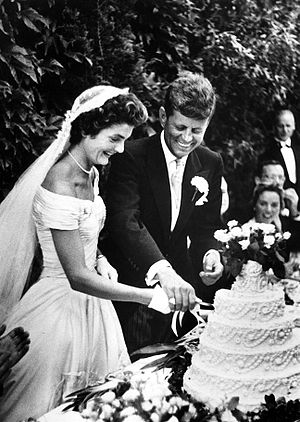
Kennedy marriage

A few weeks ago I curated an article from Michael Hyatt on ‘How to be your spouse’s best friend’. A few days ago, I found this article in Psychology Today by author Isadora Alman who has an interesting perspective and some good advice:

With any client’s first visit, usually presenting with some aspect of a relationship concern, I always review other aspects of their life – general health, the work he or she does and feelings about it, other people in their life (family, friends), what recreational activities are pursued, and if the person has enough time for him or herself.  Almost always the answer to this last question is “no”.  While all the other aspects of a life I ask about may have some bearing on a relationship issue, this last one always does.

Most of us these days lead frantic lives with demands for time coming at us from all directions.  Priorities have to be assigned and almost always personal needs beyond the most basic of food and sleep are often swept aside.  Even then, many people are not eating well or getting enough sleep so a half hour a day to simply take a deep breath of fresh air is just not there. Time to connect with a partner about how your day went or what’s on your mind in general is left, if it happens at all, to a few groggy moments before sleep takes over.

Let’s say, however, that one does manage to schedule a movie or a meal out.  What if your partner prefers a different movie than the one you want to see, or a different type of restaurant food?  What if he or she would prefer not to go to a movie at all but to a sports event or an art museum?  Do you forego what you want for the sake of couple harmony?  If so, no wonder you might be feeling lonely although coupled.  You’re living your life via someone else’s choices rather than your own.

An oversimplification perhaps, but I strongly feel that you need to be your own best friend.  Your own needs must be given some priority so that, as a fulfilled person, you can then be in a position to be more generous with your partner and others around you.  If you’re feeling lonely and not getting the support, sympathy or help from your spouse that is the very definition of friendship, look elsewhere – for a friend, usually same sex, and not place that burden of such expectations entirely on your spouse.  If you are feeling too much closeness within the coupled bonds, take what space you need for maximum enjoyment of life….and for maximum enjoyment of your partnership as well.  Two people who each have their needs met, who take responsibility of fulfilling their own needs, will make much better and more interesting partners to each other.

Source: Is Your Spouse Really Your Best Friend? | Psychology Today

The Complete Guide to Understanding Your Emotions

“Your emotions are crucial to your ability to adapt to the challenges of your daily life. When you feel good, you’re able to shrug off even the most burdensome of tasks, but when you’re miserable, you view even an enjoyable activity with a sense of gloom and doom. Emotions also affect our relationships with others. If a friend tells you a tragic story and you react by snickering instead of looking sad or concerned, you’ll seem rude and insensitive. On the other hand, if you frown when you should smile at your friend’s jokes, you’ll cause offense for different reasons.

Flying off the handle to a minor annoyance can make you seem hyper or even unbalanced. Conversely, if you react with undue glee to a relatively minor piece of good news, people will also question your maturity and stability.  Babies are allowed to shriek with pleasure or howl with rage but as adults, we’re expected to rein in the outward show of our feelings.

If you need more convincing about the role of emotions in our ability to succeed or fail in facing life’s challenges, think about some of the famous people whose careers have been undone by the improper show of their feelings. In the primary run up to the 2004 presidential election, Howard Dean’s candidacy ended virtually overnight after his “YAAAAHHH” moment became an overnight Internet sensation. Edmund Muskie, in the 1972 primary season, committed a similar political gaffe in which he shed tears after winning the New Hampshire primary (though he claimed they were snowflakes shimmering in the morning light). Ironically, tears are all the rage in the post-2000 political world. Hillary Clinton wasn’t considered sympathetic enough until her eyes misted over while answering a voter’s question (again in New Hampshire!), but many pundits used this against her to question her sincerity. Then there’s the sentimental carryings-on of House Republican leader John Boehner, whose tear ducts seem on constant overdrive.” Get more here: The Complete Guide to Understanding Your Emotions | Psychology Today.

Is Nonviolent Communication Practical?

Yellow daffodils

Have you ever heard of Nonviolent Communication? My wife and I have been using it our relationship for almost a year with a great degree of success…

“One of the most common critiques I hear of Nonviolent Communication is that it’s simply not practical. “It would be great if this can work,” the line often goes. “Too bad that in my (school, family, organization) we don’t have the luxury of taking all this time to do all this endless dialogue that it takes to get anywhere. No one would have the patience, anyway.” via Is Nonviolent Communication Practical? | Psychology Today.

Yes, Nonviolent Communication does take time but so does having arguments and recovering from them. Follow the ‘via’ link if you want to know more about Nonviolent Communication…

Fight Fair!

“A constructive complaint looks like this: You calmly ask him not to leave his things flung around the house, not because he’s a big slob (although that may be so) but because neatness is important to you. You “own” the problem (“I’m just not comfortable when you leave your briefcase and coat on the living room couch”) and appreciate that there are other women in the world who would be happy living with someone who didn’t pick up after himself. You mention the attacks you made earlier, at a time of frustration and you apologize for them.

At a relaxed time, you invite a conversation (“Can we make a rule about where briefcases and coats are kept?”) and figure out how to compromise on your different styles. You appreciate that change occurs slowly, in fits and starts, so you praise him for moves in the right direction. After all, you couldn’t transform yourself into a person comfortable with clutter overnight. You might even conclude that it would be simpler to sweep through the house twice a day and dump all his belongings on his big armchair until he decides what to do with them, if anything.

Constructive criticism asks for a specific behavioral adjustment that honors the other person’s capacity to change. It focuses on actions, not character judgments. The “lightly served” part is especially important if you’re talking to someone who responds poorly to anger or intensity in your voice.

People can say very difficult things if they calmly present the facts with no edge in their voice. And silliness helps enormously, as when my son’s wife threatened to charge him rent if he kept putting his clothes on her desk.” via Fight Fair! | Psychology Today.

Ever heard of ‘non violent communication‘? My wife and I have been using it as a tool for over a year. It’s simple, but it’s not easy — it is, however, effective. In NVC, there are 4 components. When I have an issue I talk about:

  • What I see
  • The story that I tell myself about what I see
  • How it makes me feel [mad, sad, glad, hurt]
  • What I would like to see instead

How your partner responds is their responsibility but if you use this tactic, you will have expressed yourself in a non-violent, non shaming, non blaming way and you might actually get heard. Oh and btw, I’ve found that it works even better if you keep the decibels down…

Luscious Kisses, Sex, and 4 Secrets to Lifelong Love

“In a world captivated by 50 Shades of Grey: Why ‘Mommy Porn’ is Hot, ABC News, maybe it is time to remember that loving kisses are a powerful turn-on — not just a 10 second kiss but a 30 second lip lock that includes running your fingers through each other’s hair or rubbing his bald head which many young men today are sporting. And if he is not a good kisser, teach him how and move on to satisfying sex!

And if you have forgotten the flavor of a really good kiss think back to a time when someone stole a kiss from you and it made you blush.” Full story at: Luscious Kisses, Sex, and 4 Secrets to Lifelong Love | Psychology Today.

Women’s Top 4 Wishes and Why Men Should Grant Them

“Since venturing into the world of Men’s Top 4 Wishes and Why You Should Grant Them, I have been talking to women about their relationship wishes.  And it seems we are in a pie in the sky world. But who says that women shouldn’t be reaching for the stars?

In my own research through the years, I have found that women are a faithful group, as confirmed by talks with W. Bradford Wilcox, Ph.D., a sociologist and director of the National Marriage Project at the University of Virginia. He says that just 14 percent of ever-married women reported an extramarital affair over their lifetime as compared to 22 percent of men.” Go to the source to get the wishes: Women’s Top 4 Wishes and Why Men Should Grant Them | Psychology Today.

Men’s Top 4 Wishes and Why You Should Grant Them


“What do men really want in a relationship and should women be catering to their needs?  The answer is a bit complicated and it appears to differ with age. For those under the age of 40, sex ranked first. For the over 40s cuddling and kissing took the top spot.  Archives of Sexual Behavior. Ever since the Kinsey Institute report this summer regarding relationship fulfillment, I have been curious about men’s wishes.

While it appears that men and women have different desires, in fact many have similar wishes that simply become confused in translation.

One reason for this says Mark Gungor, in his Laugh Your Way to a Better Marriage® seminars is that men and women have different brains.  The male brain is compartmentalized, whereas women’s brains are a mass of connected circuits that remember “everything!”

https://www.youtube.com/watch?v=1QoCXKPh9Zw

In the world of relationships, we know that women want love, commitment, and romance—but what do men really want? After reading through a manuscript from the Beltway Bachelor—and reminding him that no woman could live up to his 160 page ideal—I asked, “What do men really want?”

He replied, “Let me give it some thought.”” Go to the source: Men’s Top 4 Wishes and Why You Should Grant Them | Psychology Today.

Lets Eat, Drink and Grow Old Together

Apparently the Italians have a clue! Read this article from Psychology Today Blogs via Lets Eat, Drink and Grow Old Together.

Psychology Today Blog: Quick and Easy Stress Busters for 10 of the Most Common Stressors.

5 Tips for Boosting Your Willpower

Two views of local Extension leaders drilling ...

Need to get started? Ponder this:

“Who among us has not made a plan to get up in the morning and exercise, but then hit snooze one time too many, sleeping through our morning jog?

We may have been super-inspired by the incredible brain-boosting properties of exercise. We may have had every intention to start an exercise plan and stick to it. But then… we didn’t. Our warm bed sucked us in. We’ll exercise tomorrow. What we need is willpower.

Once we get in the habit of exercising—or of staying calm in the face of a toddler meltdown, of not checking our email after five o’clock, or of doing anything else we want to have the resolve to do—we don’t need to try so hard. But for now, because we are in the habit of pushing snooze—or yelling, or checking email compulsively all evening—we need self-discipline.” via 5 Tips for Boosting Your Willpower | Psychology Today.

Follow the ‘via’ link above to get 5 great tips…

Face the facts: we are all headed for an "iDisorder"

91562-87831[1]Who, me?

It should come as no surprise that we are all hopelessly addicted to our devices, particularly our smartphones. Why shouldn’t we be? We are now able to carry a powerful computer around 24/7 in our pocket or purse. The new “WWW” really means “Whatever, Wherever, Whenever.” And we are all succumbing to its draw. Just look at any restaurant table and you will see phones sitting next to forks and knives. It is normal to see someone pick up a smartphone, tap tap tap and put it back down while in the middle of talking. Is this healthy or are we all headed down a slippery slope toward what I call an “iDisorder.”

An iDisorder is where you exhibit signs and symptoms of a psychiatric disorder such as OCD, narcissism, addiction or even ADHD, which are manifested through your use—or overuse—of technology. Whether our use of technology makes us exhibit these signs or simply exacerbates our natural tendencies is an open question, but the fact is we are all acting as though we are potentially diagnosable.

Several recent studies from my lab highlight some of these issues. In one anonymous online survey of more than 1,000 Americans we found that more than half of teenagers and young adults of the iGeneration (born in the 1990s) and the Net Generation (born in the 1980s) told us that they became anxious if they couldn’t check their text messages all day long. And text they do! According to the Nielsen Company the “typical” teen sends and receives 3,417 text messages per month. Teen girls top that with nearly 4,000 per month! If the teens sleep 8 hours a night (which is an hour less than recommended) that’s between 7 and 8 text messages per waking hour.

Source: Face the Facts: We Are All Headed for an “iDisorder” | Psychology Today

Go to the source if you’d like the rest of Dr. Larry Rosen’s perspective…

Start a Blog at WordPress.com.

Up ↑