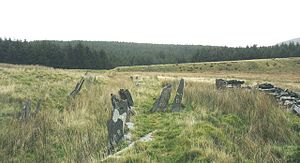

Kristin Barton Cuthriell writes:
“Boundaries are those invisible lines that separate you from other people. When children grow up in families that practice healthy boundaries, these boundaries are typically passed down through generations. The same is true when individuals are raised in dysfunctional families that have no sense of healthy boundaries. These poor boundaries, too, are often passed down the generational line.
Poor boundaries are usually too rigid or too loose. Like a concrete wall, rigid boundaries keep people out. When a person is closed off with rigid boundaries, they do not allow themselves to become vulnerable, which makes true intimacy impossible.
People with loose boundaries have little fence or no fence at all. The separation between self and others is blurred. Individuals with loose boundaries do not have a clear sense of self. These people trust easily, disclose too much, have a difficult time setting limits, and often become enmeshed with others.
Healthy relationships require healthy boundaries. If you are aware that your personal boundaries are either too loose or too rigid, you can learn healthy boundaries.
The first step to change is recognizing that change is needed. What you do not acknowledge, you do not change.
What is a healthy boundary? Take a look.” Get more here: Healthy Boundaries: A Good Practice – Let Life in Practices.
Related articles
- Boundaries (teristeel.com)
- A Better Way (toddlohenry.com)
- How To Teach Children The Benefits Of Developing Healthy Relationships (howtolearn.com)
- Personal Space and Boundaries in Relationships (bipolarlearningcurve.com)
- Emotional Maturity, Boundaries and Why Most of the People You Know Aren’t Actually Adults (goodmenproject.com)
- How to Draw the Line When You Have No Idea Where to Put It (toddlohenry.com)
- Why Saying No in Your Relationship Is a Good Thing (psychcentral.com)
- “Yes” Doesn’t Count if you can’t say “No” – Why Clear Boundaries are Important in Intimate Relationships (psychologytoday.com)
- The Benefits of Establishing Boundaries (rhachellenicol.com)
- How to Build Beautiful Boundaries (powerofslow.wordpress.com)
 Bright, shiny objects!