Rare A-36A to Invade Oshkosh

It’s that time of year again when cool aircraft from around the world invade Northeast Wisconsin. I’m starting to get excited about making my annual pilgrimage to see aircraft like this:

EAA confirmed Monday that the recently restored North American A-36A Invader fighter bomber owned by the Collings Foundation will be at AirVenture 2012, according to Gary Norville of American Aero Services, who did the restoration. It’s one of only three known existing A-36s in the world, and one of only two flying. A static display model is at the United States Air Force Museum in Dayton, while Chino Warbirds Inc. in Houston, Texas, also has a flying example.

The A-36 – also called an Apache – is a derivative of the P-51A Mustang or Mustang I as it was known in RAF service. The Collings Foundation airplane (serial No. 42-83738) rolled off North American’s assembly line in 1943 but never made it overseas. A total of 500 A-36s were built at a cost of $49,000 each before they were replaced by the P-51.

It’s powered by the low-altitude optimized 1,325-hp Allison V-1710-87 V12 engine and has a top speed of 365 mph. Norville claims the airplane is “the most authentic A-36 out there,” from the wing-mounted dive brakes right down to the original scoop and radiator – which needed to be rebuilt after it had been modified by a previous owner to accept a P-51D radiator. It carries the paint scheme of the 86th Fighter-Bomber Group based in Italy, which fought in Operation Torch, and is nicknamed Baby Carmen. “It’s painted just the way it would have been,” Norville said.

The visit comes a year after plans fell through to bring the airplane to Oshkosh last year. The restoration took seven years to complete, Norville said.

“Oshkosh was always our goal,” he added. Plans are to arrive at AirVenture on Sunday or Monday from New Smyrna Beach, Florida, and be on display throughout the week in the Warbirds area. This will be one aircraft you won’t want to miss.” via Rare A-36A to Invade Oshkosh.

LOL! This falls into the category of what I’d like to see… :-)

Limit Screen Time, Limit Sitting

Leo Babauta writes:

One of the hazards of our modern lifestyle is our tendency to become more and more addicted to staring at screens, and more and more sedentary.

We look at laptops and desktop computers, iPhones and Androids and iPads and iPods, TVs and movie screens, play video games, watch videos, surf the web, socialize online, work online. And we’re sitting the whole time.

I’m a victim of this as much as anyone else. My family and I are drifting toward this lifestyle, and while I’m no Luddite, I do believe that we should live less as victims and more consciously.

Too much screen time means less active time, less personal socializing, less focus on the present, less time for cooking healthy food, less time reading novels, painting, making music, making time for the ones you love. And too much sitting means fewer years on your life.

So what’s a better way?

Limits.

Limit how much screen time you have each day. Limit your sitting to short periods with breaks in between.

I realize that many people have jobs that require them to have a minimum amount of computer time, and probably mostly sitting. So I don’t recommend a certain number, only that you figure out a limit and work with that.

What I’ve Been Doing

Though I’ve set limits for myself in the past, I’ll admit that they’ve eroded in recent months, so that my screen time has grown over time. And not just for me — for my wife and kids. So recently Eva and I set limits for ourselves, and we’ve been working with them.

We find them to be great. I find daily limits to be a better balance than going on week-long or month-long digital sabbaticals, which aren’t realistic for many people.

Here’s an example:

  • We set a limit of either 4 or 5 hours of total screen time a day. (We haven’t figured out what’s best yet, still experimenting.)
  • That total is broken into 30-minute chunks. So if it’s 5 hours total, that’s 10 chunks of 30 minutes.
  • At the start of a 30-minute chunk, I set a computer timer and put a tally mark on a text document, so I know how many chunks I’ve used today. When the bell rings, I close my laptop.
  • After the 30-minute chunk, I take a break of at least 30 minutes. I try to get up and move, stretch, play with the kids, get outside. I also often read a novel. The moving is good for my body, and helps me to think.
  • If I have things I want to look up online, or write online, I’ll just make a note of it and do it when I start my next 30-minute chunk.

This isn’t the only way to do it — you’ll have to find the limit that works for you, and the chunk size that works for you. But the idea is to set limits, and to break the total up into pieces so you’ll take breaks and do other things.

Benefits of the Limits

We’ve loved it: we’re reading more books, spending more personal time with each other and the kids, getting more chores done, exercising more, playing outside more.

It also means that because we have a limit, we have to figure out the best way to use that time. We have to make choices — what’s worthy of our limited time, and what isn’t? This means more conscious use of our time.

We haven’t instituted the limits with the kids yet, though we have been talking to them about it and getting them thinking about what would work best for them. And we do tell them to take breaks from devices throughout the day, so they’ll do other things.

For the kids, this has meant they have more unstructured, imaginative play, more reading, more art and music, more activity. Kids get addicted to screens just as much as adults do, and it’s not a healthy thing for them. We’re trying to teach them ways to live a healthy lifestyle, which is a lesson with lifelong benefits.

We’ve found this lifestyle to be healthier, better for relationships, better for our peace of mind. And to me, that means it’s something work keeping.

More reading:

via Limit Screen Time, Limit Sitting.

Character is much easier kept than recovered

BrainyQuote via Character is much easier kept than recovered. – Thomas Paine.

Insisting on the Best

Melody Beattie writes:

We deserve the best life and love has to offer, but we are each faced with the challenge of learning to identify what that means in our life. We must each come to grips with our own understanding of what we believe we deserve, what we want, and whether we are receiving it.

There is only one place to start, and that is right where we are, in our current circumstances. The place we begin is with us.

What hurts? What makes us angry? What are we whining and complaining about? Are we discounting how much a particular behavior is hurting us? Are we making excuses for the other person, telling ourselves we’re “too demanding”?

Are we reluctant, for a variety of reasons, especially fear, to tackle the issues in our relationships that may be hurting us? Do we know what’s hurting us and do we know that we have a right to stop our pain, if we want to do that?

We can begin the journey from deprived to deserving. We can start it today. We can also be patient and gentle with ourselves as we travel in important increments from believing we deserve second best, to knowing in our hearts that we deserve the best, and taking responsibility for that.

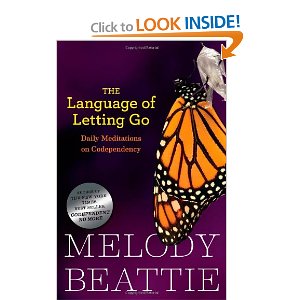
Today, I will pay attention to how I allow people to treat me, and how I feel about that. I will also watch how I treat others. I will not overreact by taking their issues too personally and too seriously; I will not under react by denying that certain behaviors are inappropriate and not acceptable to me.” Source: Language of Letting Go – July 16 – SoberRecovery : Alcoholism Drug Addiction Help and Information

Get the Guilt Stain Out

“Nagging guilt is like gray paint splashed over life’s sparkling moments” Sally Shannon. Get more here: Get the Guilt Stain Out « Positively Positive.

See Your Imperfect Self As Precious

Leslie Becker-PhelpsLeslie Becker-Phelps writes:

As a therapist, I am often faced with people who struggle with feeling essentially flawed in some way. They are quick to take responsibility for their errors or to blame themselves for problems with friends. And, they experience their struggles, mistakes, and imperfections as proof that they are lesser as a person.

As I listen to them, I know that when they look in the mirror, they do not see the value in them that I see. It is this negative self-perception that is the real source of their torture, not the daily issues that loom so large for them. Being overweight, shy, depressed, or socially awkward may cause them great pain; but I see this pain as a distress that requires caring – not condemnation. Making mistakes at work or becoming upset with your children is just part of life. After all, there’s a reason that “It’s only human” has come to be an expression. No one – and I mean no one – handles everything well all the time. And everyone – and, again, I mean everyone – has things they really struggle with.” Get more here: See Your Imperfect Self As Precious | Psychology Today.

Detachment breaks the bond

Santa Maria degli Angeli (Assisi)

“Joy fixes us to eternity and pain fixes us to time. But desire and fear hold us in bondage to time, and detachment breaks the bond.” Simone Weil.

We live both in the material realm and the spiritual. In our material dimension we seek material pleasures, inherent in which is pain. Our human emotions are tied to our material attachments, and joy, at its fullest, is never found here. Real joy lies outside of the material dimension while living fully within us too, in the secret, small place inside where we always know that all is well.

We are on a trip in this life. And our journey is bringing us closer to full understanding of joy with every sorrowful circumstance. When you or I are one with God, have aligned our will with the will of God, we know joy. We know this, fully, that all is well. No harm can befall us.

Each circumstance in the material realm is an opportunity for us to rely on the spiritual realm for direction, security, and understanding. As we turn within, to our spiritual nature, we will know joy.

Every day in every situation I have an opportunity to discover real joy. It’s so close and so ready for my invitation.” via Just For Today Meditations » Daily Recovery Readings – June 28, 2012.

8 thoughts while watching trainwrecks

Jon Swanson writes:

(First published July 19, 2011. And here’s the video version).

It happens to all of us. A friend, a family member, a coworker looks like they have picked the wrong track and are heading toward a trainwreck. Not physically, probably, but emotionally, spiritually, or relationally. I probably hear about more of these than many people because I’m one of the people that people talk to: “Jon, you’re a (social media) chaplain/pastor. You’ll know what to do. How do I stop them from wrecking everything?”

1. Maybe you are missing something. Probably not, but consider the possibility.

2. TV Movie endings are only in TV movies. If you want an intervention to always end with “How could I have been so foolish, I’m sorry, you were right,” you are going to be disappointed. Every time.

3. Humans almost always choose the short-term over the long-term. Even when the short-term looks painful, it’s because it is easier than the real hard work that would bring about long-term change.

4. Remorse and repentance aren’t the same thing. One is about getting caught. The other is about getting right. The first will only lead to avoidance. The second may lead to change.

5. Yelling almost never works. It just makes fingers go into ears.

6. Sin is fun like antifreeze is sweet. Both are delightful for the short term. And then kill you.

7. Self-destruction often isn’t evident to the self being destroyed. What looks obvious from the outside looks very different from the inside. Of course, the outside view can often see further down the track.

8. Consequence pain is often a good alarm clock. Sometimes people sleep through gentle warnings.

I know it hurts to watch. And you want to help. But sometimes the best help is to be around after the wreck. And to ask God for wisdom and clarity and the right words.

That’s what I do anyway.” via 8 thoughts while watching trainwrecks (from the archives).

Just in case you missed this for 7/2/2012

  1. Maybe you know the drill here, maybe you don’t. Every day I share the best of what I find in my Google Reader that day. It’s amazing to me that even though I pull content from all over the internet, frequently it seems the Universe is acting in concert to emphasize a particular lesson. Today’s lesson? Starting over. Beginning. Letting go. Here’s the best of what I found this morning…
  2. “It’s easy to get lost in endless speculation. So today, release the need to know why things happen as they do. Instead, ask for the insight to recognize what you’re meant to learn.”

    – Caroline Myss

The Healing Power Of Furry Friends

healing power of animals

Anyone who has ever had a pet can vouch for the fact that seeing their loving little eager-to-please faces as you come home can really lift your spirits after a long day.

Even if they do destroy your home, keep you up with their crying all night or leave unwanted presents on your new carpet – you can’t help but love their butter-wouldn’t-melt-in-their-mouth faces!

Therefore, it’s not surprising that studies have confirmed that having a little furry friend does indeed do wonders for your overall happiness. Study researcher Allen McConnell, of Miami University in Ohio, said in a statement.

“We observed evidence that pet owners fared better, both in terms of well-being outcomes and individual differences, than non-owners on several dimensions.

Specifically, pet owners had greater self-esteem, were more physically fit, tended to be less lonely, were more conscientious, were more extroverted, less fearful and less preoccupied than non-owners.”

On a deeper level, having a pet as a companion can also help mend the pain associated with loss, or during periods of loneliness or depression. They force you to care for another life – thus helping to take the focus off your own problems and provide you with unconditional love.

Everyone wants to be loved and needed – pets fulfill this nurturing role. This can be particularly important for middle-aged parents who may be suffering from ‘empty nest syndrome’ after their children have moved out, or for the elderly who are alone and have limited family and friends.

Of course if you’re not an animal person, or you’re having trouble looking after yourself, having an animal will not be for you. However, if you’re in a position to care for a special little friend, getting a pet can be the best remedy for loneliness.

One of our favorite pet stories has to be the story of Faith, a dog born with deformed front legs. However, as a result of her owner’s love and determination, she not only averted the doggy lethal injection, but now also walks on her back legs!

Has your pet helped you get through a difficult time or increased your overall happiness? We’d love to hear your story and how they’ve made a difference in your life, or to someone you know!” via The Healing Power Of Furry Friends.

Blog readers know all about my black cat Boo and how our ‘kitty time’ has changed my life. How about you? Got an animal friend?

Starting over again…

Melody Beattie writes:

Divorce. Breaking up. Moving. A new job. Getting sober. Stopping using or abusing drugs. Discovering we’re codependent, and redefining ourselves, our relationships (including our relationship with ourselves) and our behaviors. Finding out we have a chronic illness, and we need to center our lives around it. Empty nest syndrome (yes, it’s real).

We wake up in the morning and before we go to bed that night, our lives have been irrevocably changed. They’ll never be the same again.

Sometimes we lose it all (or almost all of it) all at once. A friend from many years back woke up one morning. That day, he discovered that his wife of 15 years had been cheating on him from day
one; that neither the son nor his daughter he thought belonged to him were his; and that day, his business went belly-up.

Some people may call it “reorganization.” Others name it a “new beginning.” Most of the time I hear it described like this: “Sigh. I’m starting all over. Again.”

I hate it, at least in the beginning. We’re walking in the dark and living in the mystery. We don’t have a clue about what’s next. Sometimes we may wonder if we’re dying – the transformation feels that profound. Usually the person isn’t dying – not in the physical sense. But the changes taking place can be so profound that the experience feels similar to a death.

Times it feels like our heart has been broken. If we tell people that, they may look at us like we’re overplaying the drama queen role, but recently Mayo Clinic identified “Broken Heart Syndrome” as a legitimate physical illness. A broken heart, which can be caused by the loss of a loved one or an overload of stress, shows itself with symptoms similar to those of a real heart attack. These symptoms may include heart pain that worsens with each heartbeat; difficulty breathing or shortness of breath; and nausea or vomiting.

I went out to do errands. Around lunch-time, I decided to find someplace to eat. I had driven out of my usual neighborhoods and didn’t recognize the mall I pulled into, at least not at first. Then I saw it – the restaurant where we celebrated my son, Shane’s last birthday – the one two days before the date of his death.

The pain hit hard and fast – right in my chest. I felt paralyzed. My hands gripped the steering wheel. I couldn’t move them to rummage around in my purse and find my cell phone. Movement of any kind hurt too much. I couldn’t even roll down my window and yell, “Help.” I’d rate the pain as a ten on the pain scale from one to ten.

For just over one hour I sat in the same position, leaning forward, clutching the steering wheel, stopped in my tracks by this pain in my heart. Then slowly the debilitating pain began to subside. I
didn’t get out of the car; I went home instead. A week later I went to my doctor. (This was before the identification of Broken Heart Syndrome as an actual physical illness.) The doctors made me stay overnight.

The diagnosis? “It’s the strangest thing,” the doctors said. “For all purposes, it looks like you had a myocardial infarction (heart attack). But then, it also doesn’t appear as though you actually suffered from a heart attack. It left the doctors scratching their heads but I’d known from the minute – the second – the nurse at the Emergency Room asked me if I had someone I could call after Shane’s
accident that his death had broken my heart.

Don’t rely on self-diagnosis. If your heart hurts, get a checkup.

Then, when your body stabilizes – which it will – you can get on with the business of Starting Over Again (SOA). One idea that may be helpful: although it feels like you’re starting over again, is remembering you’re not really starting over. Life is a continuum. You’re either jolted or sliding into the next experience. You’re moving on.

Here are a few tips for those of you in that uncomfortable place of SOA when you thought the last time you started over would be the last, only to find yourself SOA.

  1. Let yourself grieve your loss or losses. You don’t need to be so stoic. Give yourself room to be human. What you’re going through may be extremely difficult and it may hurt. But you will get through it.
  2. Remind yourself that what you’re going through won’t last forever. If you have to leave post-it notes around the house, then do it. Remember other times you’ve started over, and how you got through those experiences? Draw on what you learned, including that you did survive that devastating time.
  3. Give yourself time to cocoon. No, you’re not isolating. You’re resting, giving your body a chance to adapt to this sudden change.
  4. Tell your story as often as you need to, and tell it to people who will listen and care. While some people may accuse us of obsessiveness, telling our story over and over is an important way we integrate the unthinkable into our life story.
  5. Set goals. In the beginning, start by writing a list of what you want or need to accomplish just that day. Take life in small chunks. After some time passes, begin writing goal lists that go further into the future. For now, while you’re in shock, a list for today is enough.
  6. Be kind to yourself. There may be days when all you accomplish is getting out of bed and taking a shower. Instead of focusing on how little you did, tell yourself you did great – because you did.
  7. Slowly, as new people and interests come into your life, be willing to say “yes” to opportunities. I never fail to be amazed at how either a person or an interest that I think is just a “time killer” slowly becomes a major part of my new life.
  8. If you need help, ask.
  9. If you need to cry or get angry, cry or get angry. You may even be furious with your Higher Power. That’s okay. You’ll work it out further down the road.
  10. Know there is no one right way to start over. We have tools, not rules. Now is the time to dig into your toolbox and use what you’ve been given: living in the present moment; prayer; meditation; exercise (when your body can handle it); detachment (which involves feeling all your emotions); and sometimes Acting As If. Know that if the emotions become too intense, you can shut them down for a while without going into denial. Something as simple as taking a shower, going into another room, or going to the grocery store can help you stop falling deeper into what may feel like a bottomless pit of pain.

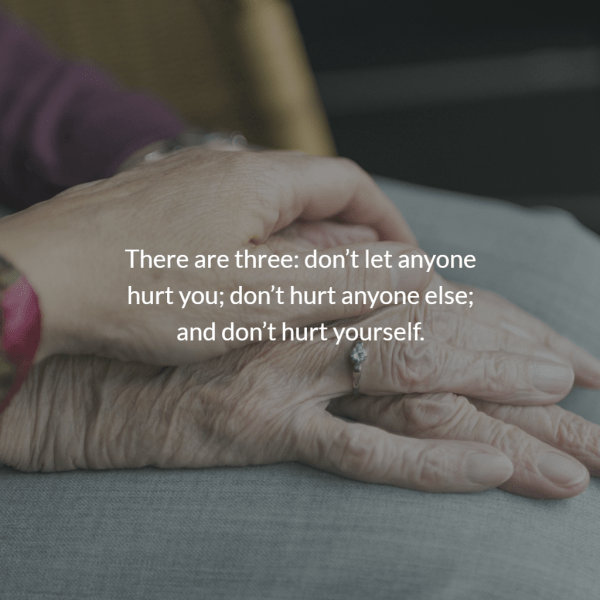
Although I said there aren’t any rules, I lied. There are three: don’t let anyone hurt you; don’t hurt anyone else; and don’t hurt yourself.

You will get through this – I promise. It might not happen as quickly as you want it to or it may happen so quickly it surprises you. But one morning you’ll wake up and find yourself living in a new normal instead of waking up to a blast of pain from what you’ve lost. Instead, your new life will be there, fully formed. You’ll be living it.

You’ve done it. You started over again, whether you wanted to or not. Now the next time you need to start over, you’ll be more prepared.

From the Desk of Melody Beattie

Related articles

How to Create Healthy Boundaries

“An intimate relationship is one in which neither party silences, sacrifices, or betrays the self and each party expresses strength and vulnerability, weakness and competence in a balanced way.” Harriet Lerner

Setting boundaries is essential if we want to be both physically and emotionally healthy.

Creating healthy boundaries is empowering. By recognizing the need to set and enforce limits, you protect your self-esteem, maintain self-respect, and enjoy healthy relationships.

Unhealthy boundaries cause emotional pain that can lead to dependency, depression, anxiety, and even stress-induced physical illness. A lack of boundaries is like leaving the door to your home unlocked: anyone, including unwelcome guests, can enter at will. On the other hand, having too rigid boundaries can lead to isolation, like living in a locked-up castle surrounded by a mote. No one can get in, and you can’t get out.

What Are Boundaries?

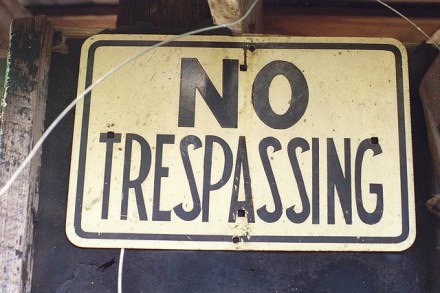
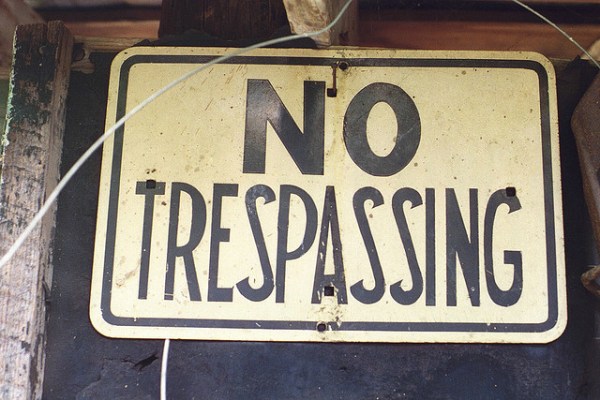
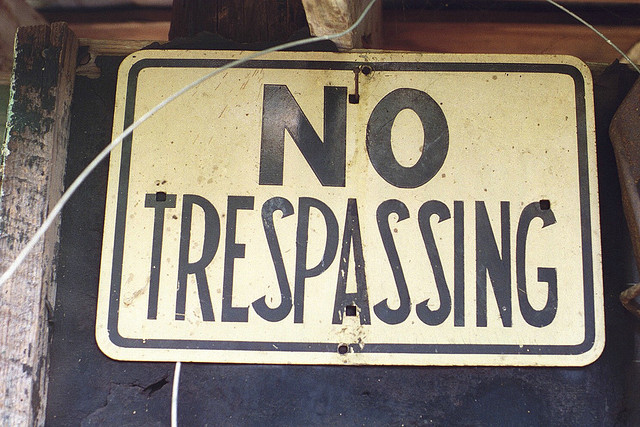
The easiest way to think about a boundary is a property line. We have all seen “No Trespassing” signs, which send a clear message that if you violate that boundary, there will be a consequence. This type of boundary is easy to picture and understand because you can see the sign and the border it protects. Personal boundaries can be harder to define because the lines are invisible, can change, and are unique to each individual.

Personal boundaries, just like the “No Trespassing” sign, define where you end and others begin and are determined by the amount of physical and emotional space you allow between yourself and others. Personal boundaries help you decide what types of communication, behavior, and interaction are acceptable.” Get more here: How to Create Healthy Boundaries « Positively Positive.

Just in case you missed this for 6/26/2012

  1. “Take up one idea. Make that one idea your life – think of it, dream of it, live on that idea. Let the brain, muscles, nerves, every part of your body, be full of that idea, and just leave every other idea alone. This is the way to success, that is way great spiritual giants are produced.”- Swami Vivekananda

    Mon, Jun 25 2012 13:14:54
  2. “I fear not the man who has practiced 10,000 kicks once, but I fear the man who has practiced one kick 10,000 times.”- Bruce Lee

    Mon, Jun 25 2012 13:14:59
  3. “The highest reward for a person’s toil is not what they get for it, but what they become by it.”- John Ruskin

    Mon, Jun 25 2012 13:14:52
  4. How many of us would presume to announce, “Well, I’m sober and I’m happy.  What more can I want, or do?  I’m fine just the way I am.”  Experience has taught us that the price of such smug complacency — or, more politely, self-satisfaction — is an inevitable backslide, punctuated sooner or later by a very rude awakening.  We have to grow, or else we deteriorate.  For us, the status quo can only be for today, never for tomorrow. Change we must;  we can’t stand still.  Am I sometimes tempted to rest on my laurels?”
    Mon, Jun 25 2012 13:14:59
  5. “There is no one giant step that does it. It’s a lot of little steps.”
    –Peter A. Cohen
    Mon, Jun 25 2012 13:14:56
  6. Be gentle with yourself, learn to love yourself, to forgive yourself, for only as we have the right attitude toward ourselves can we have the right attitude toward others.
    –Wilfred Peterson
    Mon, Jun 25 2012 13:14:54
  7. The true test of character is not how much we know how to do, but how we behave when we don’t know what to do.
    –John Holt
    Mon, Jun 25 2012 13:14:56
  8. However many holy words you read, However many you speak, What good will they do you, If you do not act upon them?
    –Buddha
    Mon, Jun 25 2012 13:14:52

Where is God?

“God is near me (or rather in me), and yet I may be far from God because I may be far from my own true self.” C. E. Roll.

Our relationship with God and our relationship with ourselves are always interwoven. Sometimes we feel disconnected from ourselves or emotionally flat. We may block the flow of communication with our deeper selves by trying to evade a difficult or painful truth. At those times we grope for some kind of contact and may even ask, “Where is God?”

God is always with us, but sometimes we are the missing party. In the past, most of us were deeply alienated from ourselves and from our Higher Power. Our first moments of spiritual awakening may have been when we saw how far we were from our true selves. This honest message from ourselves to ourselves was painful but was also a re-contact with the truth that made it possible to find God.

I need not ask where God is because God is loving and always near. I only need to ask, “Where am I?” via Just For Today Meditations » Daily Recovery Readings – June 26, 2012.

Figuring out God’s will

Melody Beattie writes:

It was a stressful time in my life. I didn’t know what to do. I had pressing business decisions to make, and painful relationship issues to face. Everything felt like a mess.

I gathered up a few favorite books, the Bible, a journal, and some clothes. Then I headed for the mountains, a resort that was a favorite place of mine to hide out in and gather my thoughts.

I told myself, “I’m going to stay in there. Write in my journal. Pray. And meditate. I’m not coming out until I know what to do.”

After forty-eight hours of writing about my problems, praying about my problems, and meditating about my problems, I remembered something a friend had said to me.

“What are you doing?” he had asked.

“I’m trying to surrender to God’s will.”

“No you’re not, you’re trying to figure it out.”

Within six months, each of the problems I was wrestling with worked themselves out. I was either guided into an action that naturally felt right at the time, or a solution came to me. The immediate solution to each problem was the same: let go. Just surrender to the situation taking place. Sometimes, what we need to do next is surrender.

If you don’t like the word surrender, try calling it making peace.

God, help me surrender to your will, especially when I don’t know what to do next.” via Just For Today Meditations » Daily Recovery Readings – June 25, 2012.

Just in case you missed this for 6//25/2012

  1. “Learn to say ‘no’ to the good so you can say ‘yes’ to the best.”

    – John C. Maxwell

  2. It is good to have an end to journey towards, but it is the journey that matters, in the end.
    —Ursula K. LeGuin
  3. A man who has committed a mistake and doesn’t correct it is committing another mistake.
    –Confucius
  4. Don’t argue for other people’s weaknesses. Don’t argue for your own. When you make a mistake, admit it, correct it, and learn from it–immediately.
    –Stephen Covey
  5. Left to itself, nature takes ordinary garbage and transforms it into useful nutrients that help sustain life. It’s usually poor human action that makes garbage a problem.

    Our mental and emotional garbage takes the forms of bad memories, festering resentments, and useless regrets. We waste time berating ourselves and others about bad decisions and experiences that are behind us.

    The magic of the 12 Step program is that we can use it to transform this mental garbage into useful experience. A past mistake can become as asset when we share it with others. Pain and suffering can teach a lesson that helps all of us to grow. By forgiving others, a resentment can be turned into a friendship.

    I’ll resolve today not to worry about garbage any longer than it takes to identify it and release it to my Higher Power for transformation.

  6. Quote: When a man points a finger at someone else, he should remember that three of his fingers are pointing at himself.
    —Louis Nizer

    It’s so easy to blame others. Others are always making mistakes we can hide behind. That’s what blame is—hiding. When we blame others for our mistakes, we’re trying to hide our character defects.

    It’s nobody else’s fault that we act the way we do. It’s our fault. We’re responsible for our actions.

    And with the help of our Higher Power, we can change. We can turn over our character defects. Over time, we’re not afraid to learn about ourselves—even the parts we don’t like—because we want to know ourselves better.

    Prayer for the Day: I pray for help in facing my character defects.

    Action for the Day: I’ll think about the past week. I’ll list times I’ve used blame to hide from reality.

Tolerance

Today

We have found tolerance to be a principle that no only strengthens our own recovery, but also our relationships with individuals who are a source of irritation to us. It becomes easier to accept other members’ frailties when we remember that we ourselves rarely turn over our own character defects until we become painfully aware of them.

Just for Today: I will strive to accept others as they are. I will try not to judge others. I will focus on the principles of love and acceptance.” via Just for Today Meditation.

About grace…

Love the quote and the accompanying image: “The winds of grace are always blowing, but you have to raise the sail.” Sri Ramakrishna via Anderson Layman’s Blog: About grace………………...

Connecting the dots for 6/21/2012

Rebuilding Trust After Being Hurt

Letting Go

“When mistrust comes in, love goes out.” ~Irish saying.

An old friend of mine felt betrayed by her boyfriend, but chose not to leave him. Instead, she made him pay for it over and over again.

Through subtle digs and less subtle slights, she repeatedly expressed that she felt contempt for him. But instead of forgiving or walking away, she stayed behind a wall of resentment.

Soon he started responding in kind, until their relationship became a container for mutual silent bitterness. It was two people sharing a suffocating space, overwhelmed by the weight of everything they didn’t say.

I suspect many of us can relate to that feeling of clinging to a grievance. In at least one of our relationships, we’ve felt angry and indignant, and despite wanting to forgive, we just couldn’t.

I know I’ve been there before.

It’s not easy to forget when someone breaks your trust, especially if you fear it might be broken again, but holding onto doubt is a surefire way to suffer.

Little hurts worse than the suspicion that someone else might hurt you.

This isn’t the kind of thing you can just brush off through positive thinking. You can’t make yourself feel trusting by telling yourself you should be, or rationalizing away your feelings.

The reality is it takes time and effort to trust again. It takes the courage to acknowledge how you feel and willingness from the other person to hear and honor it. It takes a mutual commitment to move beyond what happened instead of reliving and rehashing.

But most importantly, it requires you to believe in the goodness of the person who hurt you.

You have to believe someone can treat you with respect and consideration—even if it takes you a while to get there—or else you’ll never let your guard down. That’s a painful place to be.

The thing about being defensive is that everything becomes a battle, and no one ever wins.

Of course this doesn’t mean we can ever know for certain that someone won’t hurt us again. The only way we can know if we’re able to trust someone is by first giving them trust.

That means we need to ask ourselves: Is this relationship worth that risk?

Is it worth feeling vulnerable?

Is it worth letting go of the story?

And if it’s worth it, what would it look like to give trust, starting right now?

via Tiny Wisdom: Rebuilding Trust After Being Hurt | Tiny Buddha: Wisdom Quotes, Letting Go, Letting Happiness In.

When Painful Things Happen and You Don’t Understand Why

“We all have problems. The way we solve them is what makes us different.” ~Unknown. Get more here: When Painful Things Happen and You Don’t Understand Why | Tiny Buddha: Wisdom Quotes, Letting Go, Letting Happiness In.

Start a Blog at WordPress.com.

Up ↑