Michael Hyatt shares this:

Now is a good time to review your previous year’s blogging results and see what you can learn. I just went through this exercise today and thought I’d share what I learned. Hopefully, it will encourage you to do a similar assessment.

Full story at:  How a Quick Analysis of Your Top Posts Can Improve Your Blogging Results Next Year | Michael Hyatt.


How to Know When to Change Course

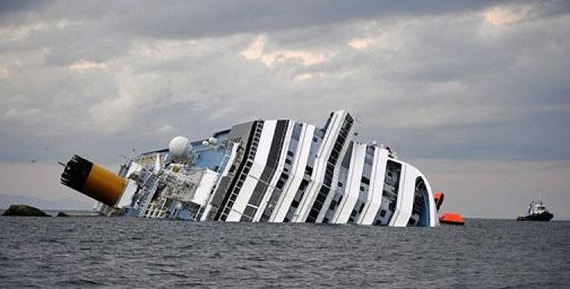
It is easy to compare the Costa Concordia with the Titanic, another cruise liner disaster from long ago. But there are some key differences. And it is in those differences that we can learn a few lessons to navigate life.

First, the Titanic was built in an era of big ships but with no technology available for the captain to see his way ahead. Radar was decades away from development. So as the Titanic was built and launched, its claim to being unsinkable was predicated on the toughness of the hull of the ship.

It is not surprising that the crew could not see an iceberg that was large above the water line and much larger still below the water line. Back then they could only see what their eyes could see. (Interestingly, if they really believed the ship was unsinkable, why would watches even need to be posted?)

The Costa Concordia, on the other hand, had all the advantages of modern technology. It not only had radar to see above the water, it had depth finders and quite possibly even sonar. (I am not one hundred percent sure of that, but the technology certainly exists today.) The crew should have known how deep the waters were and, because of GPS where they were within thirty feet of accuracy.

Yet due to hubris and human error, the Costa Concordia was where it should not have been. And despite the technology, the crew ran aground, the ship foundered, and lives were lost.

There is so much to learn here about leadership and life. Let me suggest four:

  • When we cannot see clearly, we should exercise caution. The Titanic’s crew could not see that far ahead, but they proceeded without caution. We may feel tough. We may feel unsinkable. But if we don’t have clear vision, or if we cannot enunciate a clear vision, we are in danger if we rush ahead blindly.
  • When we don’t pay attention to feedback, we can run aground. The danger here is due to not recognizing the danger. Failure to seek feedback is folly. Failure to listen to it is foolishness.
  • When we have vision, we need to clarify it regularly. Instruments on aircraft or ships need to be calibrated to verify accuracy. In life, we need to clarify our vision repeatedly in order to insure that we are on track with where we want to go. A friend once told me if you profess to have vision but no one is following you, it is likely you merely had indigestion.
  • When we have clarity, we need to practice humility. Every person who is more confident in themselves than in the vision they espouse is vulnerable to prideful downfalls. Great leaders can crash in the blink of an eye.

We all make choices as we navigate life. We all have an impact on others, whether it is our family, friends or colleagues. It is vitally important for us to have a clear sense of ourselves, a clear sense of our relationship with the Eternal, and a clear sense of our relationships with those we influence. If we have that clarity we will see success, but if we don’t we may well crash on the rocks.” via How to Know When to Change Course | Michael Hyatt.

Let me suggest two more:

  • Captains shouldn’t try to impress chicks by buzzing the shoreline in a cruise ship and…
  • …when they run aground, the should be the last, not the first, off the ship!

In other words think twice before and after engaging in bad behavior…

Is Your Spouse Really Your Best Friend?

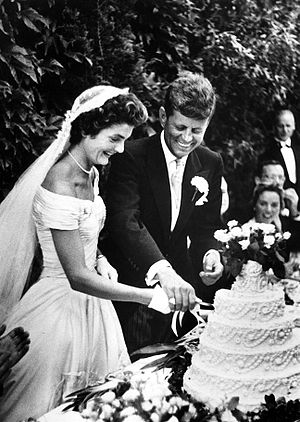
Kennedy marriage

A few weeks ago I curated an article from Michael Hyatt on ‘How to be your spouse’s best friend’. A few days ago, I found this article in Psychology Today by author Isadora Alman who has an interesting perspective and some good advice:

With any client’s first visit, usually presenting with some aspect of a relationship concern, I always review other aspects of their life – general health, the work he or she does and feelings about it, other people in their life (family, friends), what recreational activities are pursued, and if the person has enough time for him or herself.  Almost always the answer to this last question is “no”.  While all the other aspects of a life I ask about may have some bearing on a relationship issue, this last one always does.

Most of us these days lead frantic lives with demands for time coming at us from all directions.  Priorities have to be assigned and almost always personal needs beyond the most basic of food and sleep are often swept aside.  Even then, many people are not eating well or getting enough sleep so a half hour a day to simply take a deep breath of fresh air is just not there. Time to connect with a partner about how your day went or what’s on your mind in general is left, if it happens at all, to a few groggy moments before sleep takes over.

Let’s say, however, that one does manage to schedule a movie or a meal out.  What if your partner prefers a different movie than the one you want to see, or a different type of restaurant food?  What if he or she would prefer not to go to a movie at all but to a sports event or an art museum?  Do you forego what you want for the sake of couple harmony?  If so, no wonder you might be feeling lonely although coupled.  You’re living your life via someone else’s choices rather than your own.

An oversimplification perhaps, but I strongly feel that you need to be your own best friend.  Your own needs must be given some priority so that, as a fulfilled person, you can then be in a position to be more generous with your partner and others around you.  If you’re feeling lonely and not getting the support, sympathy or help from your spouse that is the very definition of friendship, look elsewhere – for a friend, usually same sex, and not place that burden of such expectations entirely on your spouse.  If you are feeling too much closeness within the coupled bonds, take what space you need for maximum enjoyment of life….and for maximum enjoyment of your partnership as well.  Two people who each have their needs met, who take responsibility of fulfilling their own needs, will make much better and more interesting partners to each other.

Source: Is Your Spouse Really Your Best Friend? | Psychology Today

3 Ways To Find the Truth—About Yourself

Michael Hyatt writes:

Many of us have a love/hate relationship with truth. We tell ourselves we want to know the truth, but we’re very selective about the kind of truth we seek. About others, yes—and usually about world events and situations that impact us directly, but we are less receptive to revelations about ourselves.

In fact, self-knowledge is a two-edged sword because we might find out something about ourselves that we would rather not know. We’ve carefully packaged ourselves to look and act in a manner that ensures success in the world. Our ego has dressed us up for so long that many of us don’t even know how to begin to peel back the layers of illusion to expose cold, hard facts about ourselves.” Get more here: 3 Ways To Find the Truth—About Yourself | Michael Hyatt.

A Thank You to Our Veterans

Michael Hyatt writes:

“Today is Memorial Day in the United States. It is a day we set aside to commemorate those who have died in the service of the military. It was first enacted to honor those in the Union Army who died in the American Civil War. After the first World War, it was expanded to include American casualties of any war or military action.

I have never had the privilege of serving in the military. However, I am profoundly grateful for those who have.

In the U.S., I fear we have come to take our national security for granted. The tragic events of 9/11 were a wake-up call. The fact we have not had another terrorist attack on U.S. soil is a testimony to the brave men and women who work tirelessly to protect our freedoms both here and around the world.” via A Thank You to Our Veterans | Michael Hyatt.

Your Life Is the Sum of Your Choices

“We can’t always choose what happens to us, but we can always choose how we respond. Viktor Frankl, an Austrian psychiatrist who survived two-and-a-half years in Nazi concentration camps, made this case in his bestselling book, Man’s Search for Meaning.

It’s easy to subscribe to this in theory, but what about your specific situation? Are you willing to own it?” via Your Life Is the Sum of Your Choices | Michael Hyatt.

Now, what choices will you make today and are you willing to own them and the power to make them?

12 Ways to Know If You Are a Leader

“While everyone has the potential to be a leader, most never take up the mantle. They are content to let others take the risk and do the work.

Several years ago, I read a post by Tony Morgan called “10 Easy Ways to Know You’re Not a Leader.” I took that list, and then inverted and expanded it.

Here are twelve ways to know if you are a leader.” Go to the source if you’re interested in Michael Hyatt’s 12 Ways: 12 Ways to Know If You Are a Leader | Michael Hyatt.

How to Build (or Rebuild) Trust

“If you are in a situation where you need to build trust—or even rebuild it—here are four specific steps you can take. These will work with your employees, your colleagues, your customers, your vendors—or even your spouse.” Go to the source: How to Build (or Rebuild) Trust | Michael Hyatt.

Start a Blog at WordPress.com.

Up ↑