Powerlessness

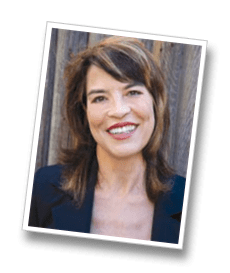
Melody Beattie writes:

Willpower is not the key to the way of life we are seeking. Surrender is.

“I have spent much of my life trying to make people be, do, or feel something they aren’t, don’t want to do, and choose not to feel. I have made them, and myself, crazy in that process,” said one recovering woman.

“I spent my childhood trying to make an alcoholic father who didn’t love himself be a normal person who loved me. I then married an alcoholic and spent a decade trying to make him stop drinking.

“I have spent years trying to make emotionally unavail­able people be emotionally present for me.

“I have spent even more years trying to make family mem­bers, who are content feeling miserable, happy. What I’m saying is this: I’ve spent much of my life desperately and vainly trying to do the impossible and feeling like a failure when I couldn’t. It’s been like planting corn and trying to make the seeds grow peas. It won’t work!

“By surrendering to powerlessness, I gain the presence of mind to stop wasting my time and energy trying to change and control that which I cannot change and control. It gives me permission to stop trying to do the impossible and focus on what is possible: being who I am, loving myself, feeling what I feel, and doing what I want to do with my life.”

In recovery, we learn to stop fighting lions, simply because we cannot win. We also learn that the more we are focused on controlling and changing others, the more unmanage­able our life becomes. The more we focus on living our own life, the more we have a life to live, and the more manage­able our life will become.

Today, I will accept powerlessness where I have no power to change things, and allow my life to become manageable.” via June 20: Powerlessness.

Are You Addicted To Suffering? (And Ready To Quit?)

I teach my students and clients that one should look for the best three paragraphs when curating; occasionally I say it’s OK to double dip and grab two quotes. When it comes to Kute Blackson, I usually break all my rules – his stuff is sooo good that I usually end up curating his entire post to that it’s easier for you to read the whole think. Today is no exception to the Kute Blackson rule:

Most guru’s or teachers will teach how to avoid suffering. I am going to share with you the seven steps of how to successfully create suffering in your life, so that you can be aware of them and make different choices.

Suffering can become a very dangerous addiction. An unhealthy way to feel. An ultimately unfulfilling way to feel alive. You can get so used to suffering that it becomes comfortable and familiar. Suffering is the ego’s way of feeling important.

Whether you are a businessman or a buddha, pain is inevitable. There is no way to avoid it. Just by virtue of being in a human body there will be some pain. Trying to avoid pain will only create more suffering. Embrace pain to release yourself from suffering.

Suffering is optional. Suffering is a choice.

Suffering comes from your story about what is happening in your life and less about what is actually happening. What is happening is simply what is happening. The suffering part comes from all your interpretations and meanings about the experience. Change your story and the way you are interpreting reality and you begin to change your reality. When you change your reality within yourself, you shift your experience of your reality outside. Once you understand this, you only suffer if you chose to.

What stories are you making up about yourself, your life, your partner, your current experience that is causing you suffering?

The Seven Keys to creating suffering:

1- Resist everything: Resist what is. Resist reality. Fight against what is happening in your life with all your might. This is a guaranteed method to suffer.

Key Solution: Accept what is, so that you can then decide how to shift it.

2- Holding the belief: “The experience that is happening to me should not be happening to me. I should be having some other experience than the one I am having. This shouldn’t be happening to me”. You have probably heard yourself doing some version of this. It just keeps you stuck.

Key Solution: Embrace your current experience. Your current experience is the experience that you are meant to be having because you are having it right now. Trust, and focus on what you can learn and how you can grow. The experience is here to help you evolve.

3- Focusing on all the things that you cannot control. This will only cause you to feel completely helpless and disempowered. It will leave you in a state of worry and anxiety. Some of us are professional “worriers”. No matter how much you worry, it doesn’t actually change the situation. Once you are done worrying, the situation will be the same. Worrying is a waste of time.

Key Solution: Focus on what you can control. Take actions that are in your power, step by step.

4- Refusing to change. Keep doing the same over and over and hoping for a different result. Well, as Einstein said, this is the definition of insanity. Are you so set in your ways that you are afraid of giving up the known suffering for the unknown possibility of happiness?

Key Solution: Embrace change. Be willing to do something different. Let go. Go into the unknown. Take different actions.

5- Give up your responsibility: Be a victim. Play the blame game, making everyone else at fault or responsible for your life and how you feel. Unless you take responsibility for your current experience, then you are powerless to change it.

Key Solution: Take full responsibility for your current reality and decide what changes you are committed to making. Give up blame.

6- Focus on everything that is wrong in your life. Whether a relationship or person. When you focus on what is wrong, you will surely find what is wrong. You will end up creating more of what is wrong to feel wrong about. Then the negative cycle continues.

Key Solution: Start focusing on what you are grateful for. Remember all your blessings, and appreciate that daily. What you appreciates, expands. What you thank about comes about.

7- Denial: Lie to yourself and others. Pretend that everything is fine when you know that it isn’t. When you avoid facing what is, you end up staying stuck and repeating the same patterns of pain and relationship. This only ends up prolonging your suffering.

Key Solution: Tell the truth to yourself first. Tell the truth to those in your life. Be honest. Face reality.

Life is too short to waste spent suffering. Most of what you worry about today, you won’t even remember a few months from now. Most of what you are trying to change in people today, you won’t care about on your deathbed.

You hold the padlock and you hold the key to your freedom.

Source: Are You Addicted To Suffering? (And Ready To Quit?)

Letting Go of Self-Doubt

A second shot of Melody Beattie for today:

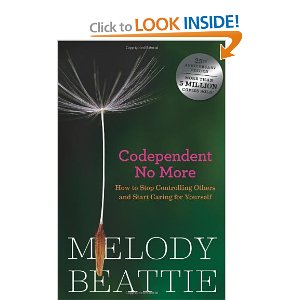
A married woman who had recently joined Al Anon called me one afternoon. She worked part-time as a registered nurse, had assumed all the responsibilities for raising her two chil­dren, and did all the household chores, including repairs and finances. “I want to separate from my husband,” she sobbed. “I can’t stand him or his abuse any longer. But tell me, please tell me,” she said, “do you think I can take care of myself?” Codependent No More

Not only is it okay to take care of ourselves, we can take good care of ourselves.

Many of us, so confident about our ability to take care of others, doubt our inherent strength to care for ourselves. We may have come to believe, from our past or present circum­stances, that we need to take care of others and we need others to take care of us. This is the ultimate codependent belief.

No matter where this self-defeating belief was born, we can release it and replace it with a better one, a healthier one, a more accurate one.

We can take care of ourselves — whether we are in or out of a relationship. Everything we need will be provided. We will have loved ones, friends, and our Higher Power to help.

Knowing that we can take care of ourselves doesn’t mean we won’t have feelings of fear, discomfort, doubt, anger, and fragility at times. It means we practice “courageous vulner­ability,” as Colette Dowling called it in Cinderella Complex. We may feel scared, but we do it anyway.

Today, God, help me know how I can take care of myself.” via June 19: Letting Go of Self-Doubt.

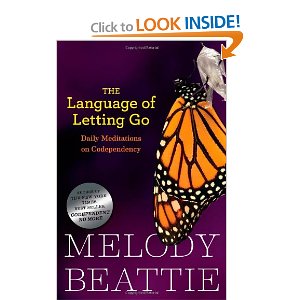
Few books have been more useful to me in my life — if any of the codependency scenarios resonate with you, I recommend you purchase it, the workbook and ‘The Language of Letting Go‘…

Give & Forgive!

Yes, but! Set healthy boundaries and remember the lesson of the sage and the scorpion. The Daily Love via Visual Inspiration: Give &Forgive!.

Making Life Easier

Melody Beattie writes:

Life doesn’t have to be hard.
Yes, there are times we need to endure, struggle through, and rely on our survival skills. But we don’t have to make life, growth, recovery, change, or our day-to-day affairs that hard all the time.
Having life be that hard is a remnant of our martyrdom, a leftover from old ways of thinking, feeling, and believing. We are worthy, even when life isn’t that hard. Our value and worth are not determined by how hard we struggle.
If we’re making it that hard, we may be making it harder than it needs to be, said one woman. Learn to let things happen easily and naturally. Learn to let events, and our participation in them, fall into place. It can be easy now. Easier than it has been. We can go with the flow, take the world off our shoulders, and let our Higher Power ease us into where we need to be.
Today, I will stop struggling so hard. I will let go of my belief that life and recovery have to be hard. I will replace it with a belief that I can walk this journey in ease and peace. And sometimes, it can actually be fun.

Source: Daily Meditation ~ Making Life Easier – Miracles In Progress Codependents Anonymous Group

Recognizing Choices

English: Choices, choices A network of paths a...

Melody Beattie writes:

We have choices, more choices than we let ourselves see.

We may feel trapped in our relationships, our jobs, our life. We may feel locked into behaviors — such as caretaking or controlling.

Feeling trapped is a symptom of codependency. When we hear ourselves say, “I have to take care of this person… .”

“I have to say yes… ” “I have to try to control that person…

“I have to behave this way, think this way, feel this way….” we can know we are choosing not to see choices.

That sense of being trapped is an illusion. We are not con­trolled by circumstances, our past, the expectations of others, or our unhealthy expectations for ourselves. We can choose what feels right for us, without guilt. We have options.

Recovery is not about behaving perfectly or according to anyone else’s rules. More than anything else, recovery is about knowing we have choices and giving ourselves the freedom to choose.

Today, I will open my thinking and myself to the choices available to me. I will make choices that are good for me.” via June 18: Recognizing Choices.

Surrender


Melody Beattie writes:

Master the lessons of your present circumstances.
We do not move forward by resisting what is undesirable in our life today. We move forward, we grow, we change by acceptance.
Avoidance is not the key; surrender opens the door.
Listen to this truth: We are each in our present circumstances for a reason. There is a lesson, a valuable lesson that must be learned before we can move forward.
Something important is being worked out in us, and in those around us. We may not be able to identify it today; but we can know that it is important. We can know it is good.
Overcome not by force, overcome by surrender. The battle is fought, and won, inside ourselves. We must go through it until we learn, until we accept, until we become grateful, until we are set free.
Today, I will be open to the lessons of my present circumstances. I do not have to label, know, or understand what I’m learning; I will see clearly in time. For today, trust and gratitude are sufficient.

Source: Language of Letting Go – June 17 – Surrender – SoberRecovery : Alcoholism Drug Addiction Help and Information

Maybe I should change the name of this blog to The Daily Beattie?! :-D

Four Steps To Cleanse Toxic People And Thoughts

Donna Gates shares this…

Sometimes when we experience a massive shift in our mental, emotional or spiritual life, things can get worse before they get better.

One of the first things that we must confront with any addiction, whether it is to a toxic substance, an unhealthy distraction or an abusive relationship, is the level of honesty that we bring to the table.

This means that in addition to coping with the neurochemical balancing act that is taking place in the body, we also must look closely at what we desire, our resolve and long-term objectives.

These are big questions. And asking them can stir up quite a storm. Nonetheless, every day many of us are making a change for the better. We are making changes, weathering the storm and seeing the benefits.

How we nourish our physical body is very similar to how we nourish our mental and emotional body.

When I cleanse or detoxify my physical body, I always apply four straightforward steps to the process. Guess what? These four steps work with the fundamental process of detoxification. They can be applied to any area of life!

Source: Four Steps To Cleanse Toxic People And Thoughts!

Go to the source if you’d like to know the 4 steps – they are full of ‘practical, tactical’ information you can use to detoxify spiritually, physically and emotionally…

Surrender

Melody Beattie writes:

Master the lessons of your present circumstances.
We do not move forward by resisting what is undesirable in our life today. We move forward, we grow, we change by acceptance.
Avoidance is not the key; surrender opens the door.
Listen to this truth: We are each in our present circumstances for a reason. There is a lesson, a valuable lesson that must be learned before we can move forward.
Something important is being worked out in us, and in those around us. We may not be able to identify it today; but we can know that it is important. We can know it is good.
Overcome not by force, overcome by surrender. The battle is fought, and won, inside ourselves. We must go through it until we learn, until we accept, until we become grateful, until we are set free.
Today, I will be open to the lessons of my present circumstances. I do not have to label, know, or understand what I’m learning; I will see clearly in time. For today, trust and gratitude are sufficient.

Source: Language of Letting Go – June 17 – Surrender – SoberRecovery : Alcoholism Drug Addiction Help and Information

Loving Ourselves Unconditionally

But most of all? You deserve it from YOURSELF! Melody Beattie writes:

Love yourself into health and a good life of your own.

Love yourself into relationships that work for you and the other person. Love yourself into peace, happiness, joy, success, and contentment.

Love yourself into all that you always wanted. We can stop treating ourselves the way others treated us, if they be­haved in a less than healthy, desirable way. If we have learned to see ourselves critically, conditionally, and in a diminishing and punishing way, it’s time to stop. Other people treated us that way, but it’s even worse to treat ourselves that way now.

Loving ourselves may seem foreign, even foolish at times. People may accuse us of being selfish. We don’t have to believe them.

People who love themselves are truly able to love others and let others love them. People who love themselves and hold themselves in high esteem are those who give the most, contribute the most, love the most.

How do we love ourselves? By forcing it at first. By faking it if necessary. By “acting as if.” By working as hard at lov­ing and liking ourselves as we have at not liking ourselves.

Explore what it means to love yourself.

Do things for yourself that reflect compassionate, nurtur­ing, self-love.

Embrace and love all of yourself — past, present, and fu­ture. Forgive yourself quickly and as often as necessary. Encourage yourself. Tell yourself good things about yourself.

If we think and believe negative ideas, get them out in the open quickly and honestly, so we can replace those beliefs with better ones.

Pat yourself on the back when necessary. Discipline your­self when necessary. Ask for help, for time; ask for what you need.

Sometimes, give yourself treats. Do not treat yourself like a pack mule, always pushing and driving harder. Learn to be good to yourself. Choose behaviors with preferable consequences — treating yourself well is one.

Learn to stop your pain, even when that means making difficult decisions. Do not unnecessarily deprive yourself. Sometimes, give yourself what you want, just because you want it.

Stop explaining and justifying yourself. When you make mistakes, let them go. We learn, we grow, and we learn some more. And through it all, we love ourselves.

We work at it, then work at it some more. One day we’ll wake up, look in the mirror, and find that loving ourselves has become habitual. We’re now living with a person who gives and receives love, because that person loves him- or herself. Self-love will take hold and become a guiding force in our life.

Today, I will work at loving myself. I will work as hard at loving myself as I have at not liking myself. Help me let go of self-hate and behaviors that reflect not liking myself. Help me replace those with behaviors that reflect self-love. Today, God, help me hold my­self in high self-esteem. Help me know I’m lovable and capable of giving and receiving love.” via June 16: Loving Ourselves Unconditionally.

Be a Dad. Or Just Act Like One.

Dr. Phil says:

FDblogBigWe’ve done a lot of shows about dads — absentee dads, dads who are too strict or not strict enough, and even about abusive dads.

Father’s Day is this week, and I’d like to talk about the dads who stick around. The fathers who take their share of the sleepless nights. Those who change diapers without being asked. Fathers who push the stroller and the swings, who stick bandages on skinned knees and who applaud both the kindergarten sing-alongs and the high school drama productions. All you dads who’ve thrown your arm around the shoulder of the new graduate: both of you grinning with pride.

Thanks to all of you! You are giving your children a priceless gift.

By being present — holding out love and support, establishing and maintaining rules and boundaries — you are modeling a vital part of healthy adulthood. You are giving your sons a pattern they can follow; You are showing your daughters what a healthy relationship looks like.

But for some children, their fathers are not present — a mom might be serving as both mother and father, or there may be abuse and neglect in their homes and so they’ve been removed and placed into the foster care system. For these children, having an advocate to make sure they don’t get lost in the social service system or languish in inappropriate foster homes is so important.

Robin and I have been telling you about CASA for Children. CASA for Children provides trained, compassionate Court Appointed Special Advocates who speak for abused and neglected children as they navigate the complexities of the child welfare system.

CASA for Children needs more volunteers — especially men. The children in the foster care system need someone who will keep showing up, someone who will stick by them and advocate for them until their case is settled — until the child is safe in the embrace of a loving family.

It takes 30 hours of training to become a CASA volunteer, half of that can be done online. Once you’re sworn in as an officer of the court, you’ll be assigned a case. You’ll be the voice of a child, in the courtroom and in the community. From the stories our guest bloggers tell, being a CASA volunteer is one of the most rewarding things they’ve ever done.

So this Father’s Day, I challenge you guys: are you man enough to become a CASA volunteer? Robin and I hope you’ll say, “Yes.”

via Be a Dad. Or Just Act Like One..

Just in case you missed this for 6/15/2012

  1. “I align myself with people who support my growth. If you meet someone whose soul is not aligned with yours, send them love and move along.”

    – Dr. Wayne Dyer

Letting the Cycles Flow

A beautiful monarch butterfly bears her transp...

Melody Beattie writes:

Life is cyclical, not static. Our relationships benefit when we allow them to follow their own natural cycles.

Like the tide ebbs and flows, so do the cycles in relation­ships. We have periods of closeness and periods of distance. We have times of coming together and times of separating to work on individual issues.

We have times of love and joy, and times of anger.

Sometimes, the dimensions of relationships change as we go through changes. Sometimes, life brings us new friends or a new loved one to teach us the next lesson.

That does not mean the old friend disappears forever. It means we have entered a new cycle.

We do not have to control the course of our relationships, whether these be friendships or love relationships. We do not have to satisfy our need to control by imposing a static form on relationships.

Let it flow. Be open to the cycles. Love will not disappear. The bond between friends will not sever. Things do not re­main the same forever, especially when we are growing and changing at such a rapid pace.

Trust the flow. Take care of yourself, but be willing to let people go. Hanging on to them too tightly will make them disappear.

The old adage about love still holds true: “If it’s meant to be, it will be. And if you love someone, let them go. If they come back to you, the love is yours.”

Today, I accept the cyclical nature of life and relationships. I will strive to go with the flow. I will strive for harmony with my own needs and the needs of the other person.” via June 15: Letting the Cycles Flow.

Enjoyment

Melody Beattie writes:

Life is not to be endured; life is to be enjoyed and embraced.

The belief that we must square our shoulders and get through a meager, deprived existence for far-off “rewards in Heaven” is a codependent belief.

Yes, most of us still have times when life will be stressful and challenge our endurance skills. But in recovery, were learning to live, to enjoy our life, and handle situations as they come.

Our survival skills have served us well. They have gotten us through difficult times — as children and adults. Our abil­ity to freeze feelings, deny problems, deprive ourselves, and cope with stress has helped us get where we are today. But we’re safe now. We’re learning to do more than survive. We can let go of unhealthy survival behaviors. We’re learning new, better ways to protect and care for ourselves. We’re free to feel our feelings, identify and solve problems, and give ourselves the best. We’re free to open up and come alive.

Today, I will let go of my unhealthy endurance and survival skills. I will choose a new mode of living, one that allows me to be alive and enjoy the adventure.” via June 14: Enjoyment.

The Key To Healing It Is Feeling It; Embrace All Your Feelings As A Gift!

The challenge with curation is often finding the best 3 paragraphs to share. Kute Blackson’s post is so good today that I just grabbed the whole think. Sorry, Kute – hope you don’t mind…

All of your feelings are a gift.

Yet we often judge feelings as good or bad. We often try to eliminate the bad ones and feel only the good ones. However, in doing so, you end up disconnecting from the full range of your heart, self-expression and power.

To the degree that you suppress what you might think of as the negative feelings is to the degree that you also disconnect from your capacity to fully experience the positive feelings.

Ultimately, there are no good or bad feelings. Feelings are just energy moving through your body. Every feeling is a signal, which if you pay attention to will point you in the direction of something that you actually need to deal with, a part of you that needs loving compassion or needs to be released. Even the feelings you label as bad are simply a signal. They are like a fire alarm trying to get you to pay attention to a part of yourself. If you don’t listen, the signal gets louder and louder until you do. If you keep suppressing, the feelings end up coming out anyway most likely in a not so gracious way (AKA -You lose it, or have a meltdown and explode)!

When you suppress your authentic feelings, those feelings simply remain incomplete buried deep within you. You often end up recreating situations and relationships in your life based on those old incomplete feelings, as there is a deep impulse within us to complete what is incomplete.

What you might call “bad” feelings show you the parts of yourself that need your love and healing. Healing is applying love to the parts of yourself that are hurting. When you hold a space of compassion for yourself and the full range of your feelings without any judgment, this compassion has a transformative effect.

As children we learn to disconnect from our authentic feelings. We disconnect as a way to avoid pain, hurt, rejection, shame etc.  And it becomes a survival mechanism in order to function and protect ourselves.  That way of being may have “worked” for us as children to survive, but take this way of being into our adulthood and end up recreating those same incomplete childhood patterns over and over, it only creates suffering.

What feelings are you suppressing?

What feelings are you disconnecting from?

What feelings are you afraid of feeling and acknowledging within your self?

Take an honest look.

The feelings that you suppress, or are unwilling to acknowledge and embrace, will run you!

The feelings that you are unable to have will end up having you.

When you suppress your real feelings, whether anger, sadness or hurt – over time, you might end up finding yourself feeling depressed, heavy, irritated and lacking aliveness. The heaviness is a sign that you are suppressing and ends up clouding your ability to now feel joy in the present moment.

No feelings last forever. But we are sometimes afraid to feel the feelings we think are bad because we are worried we will stay stuck there. Know this: all feelings pass. None are permanent. To the degree you can feel them, you will let them go and feel more alive.

So do not resist the negative feelings, feel them fully with total awareness whilst connecting to the sensations in your body. They will move through you and dissolve.

Similarly, no positive feelings will last forever either. So when you feel a positive feeling, simply feel it fully with total awareness, without trying to make it stay, and you might find yourself experiencing it longer. What often happens is in an effort to keep the “good” feelings we try to make it stay, which creates a contraction. In doing so we start to lose the positive feeling even more quickly!

When you are willing to embrace and love the dark in you, you are then able to more fully embrace your light. However, let me be clear, it is NOT about wallowing in your negativity and dark feelings using that as an excuse. Feeling authentically isn’t wallowing or indulging. It is simply about acknowledging and integrating what your feelings have to share with you and allowing them to move through you in a healthy way.

Ultimately you are not your feelings, whether good or bad. You are beyond them all. Your relationship with your feelings is as important as the feelings themselves. No need to be afraid or run away from them.

Your feelings are a portal into a deeper dimension of yourself and thus a deeper dimension of your own Divinity and freedom.

Your feelings are a gift. Sometimes you just need to patiently unwrap them, so you can find the important message inside.

When you feel it, you heal it.

And when you heal it, you can be more of the real you that you are meant to be.

It is time.

Love. Now.

Source: The Key To Healing It Is Feeling It…Embrace All Your Feelings As A Gift!

Hanging on to Old Relationships

More Melody Beattie:

“We want to travel baggage-free on this journey. It makes the trip easier.

Some of the baggage we can let go of is lingering feelings and unfinished business with past relationships: anger; resentments; feelings of victimization, hurt, or longing.

If we have not put closure on a relationship, if we cannot walk away in peace, we have not yet learned our lesson. That may mean we will have to have another go-around with that lesson before we are ready to move on.

We may want to do a Fourth Step (a written inventory of our relationships) and a Fifth Step (an admission of our wrongs). What feelings did we leave with in a particular relationship? Are we still carrying those feelings around? Do we want the heaviness and impact of that baggage on our behavior today?

Are we still feeling victimized, rejected, or bitter about something that happened two, five, ten, or even twenty years ago?

It may be time to let it go. It may be time to open ourselves to the true lesson from that experience. It may be time to put past relationships to rest, so we are free to go on to new, more rewarding experiences.

We can choose to live in the past, or we can choose to finish our old business from the past and open ourselves to the beauty of today.

Let go of your baggage from past relationships.

Today, I will open myself to the cleansing and healing process that will put closure on yesterday and open me to the best today, and tomorrow, has to offer in my relationships.” Source: Hanging on to Old Relationships

Moving Forward

Melody Beattie writes:

Much as we would like, we cannot bring everyone with us on this journey called recovery. We are not being disloyal by allowing ourselves to move forward. We don’t have to wait for those we love to decide to change as well.
Sometimes we need to give ourselves permission to grow, even though the people we love are not ready to change. We may even need to leave people behind in their dysfunction or suffering because we cannot recover for them. We don’t need to suffer with them.
It doesn’t help.
It doesn’t help for us to stay stuck just because someone we love is stuck. The potential for helping others is far greater when we detach, work on ourselves, and stop trying to force others to change with us.
Changing ourselves, allowing ourselves to grow while others seek their own path, is how we have the most beneficial impact on people we love. We’re accountable for ourselves. They’re accountable for themselves. We let them go, and let ourselves grow.

Today, I will affirm that it is my right to grow and change, even though someone I love may not be growing and changing alongside me.

Source: Moving Forward – Language of Letting Go – SoberRecovery : Alcoholism Drug Addiction Help and Information

Simple Tips to Calm Your Mental Chatter

David Magone: Simple Tips to Calm Your Mental Chatter.

Sadness

Grief

Melody Beattie via:

“Ultimately, to grieve our losses means to surrender to our feelings.

So many of us have lost so much, have said so many good-byes, have been through so many changes. We may want to hold back the tides of change, not because the change isn’t good, but because we have had so much change, so much loss.

Sometimes, when we are in the midst of pain and grief, we become shortsighted, like members of a tribe described in the movie Out of Africa.

“If you put them in prison;’ one character said, describ­ing this tribe, “they die:’

“Why?” asked another character.

“Because they can’t grasp the idea that they’ll be let out one day. They think it’s permanent, so they die:’

Many of us have so much grief to get through. Sometimes we begin to believe grief, or pain, is a permanent condition.

The pain will stop. Once felt and released, our feelings will bring us to a better place than where we started. Feeling our feelings, instead of denying or minimizing them, is how we heal from our past and move forward into a better future. Feeling our feelings is how we let go.

It may hurt for a moment, but peace and acceptance are on the other side. So is a new beginning.

God, help me fully embrace and finish my endings, so I may be ready for my new beginnings.” via June 11: Sadness.

How to Release Shame and Love All of You

From the Tiny Buddha blog:

“When there is no enemy within, the enemies outside cannot hurt you.” African Proverb.

If you’ve had any experiences where you had to keep your truth quiet, particularly as a child, it’s time to reclaim your truth and value its power. By doing so, you will release energy, old shame, and subconscious blocks that may now be holding you back from living your life to the fullest.

It could be that you had lots of family secrets that your parents made sure you told no one about (which creates shame), or it could be you were bullied and felt unable to confide in anyone about it.

There are many circumstances where we have our truth kept locked in, and unintentionally we create shame around our truths. If you feel unable to speak your truth, then you feel shame. It’s nature’s law.

When we become shameful of our truths, we end up cutting off, discrediting, and devaluing a hugely important chunk of who we are and how we show up in the world.” Get more here: How to Release Shame and Love All of You | Tiny Buddha: Wisdom Quotes, Letting Go, Letting Happiness In.

Codependency? What it is…

“Codependency (or codependence, interdependency ) is defined as a psychological condition or a relationship in which a person is controlled or manipulated by another who is affected with a pathological condition (as in an addiction to alcohol or heroin); and in broader terms, it refers to the dependence on the needs of or control of another.[1] It also often involves placing a lower priority on one’s own needs, while being excessively preoccupied with the needs of others.[2] Codependency can occur in any type of relationship, including family, work, friendship, and also romantic, peer or community relationships.[2] Codependency may also be characterized by denial, low self-esteem, excessive compliance, or control patterns.[2] Narcissists are considered to be natural magnets for the codependent.” Get more here: Codependency – Wikipedia, the free encyclopedia.

Wondering if this applies to you? Here are some questions that may help you decide

Start a Blog at WordPress.com.

Up ↑