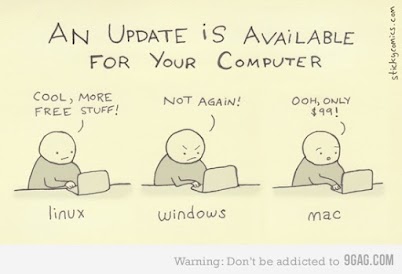
Just in case you missed this for 7/2/2012

  1. Maybe you know the drill here, maybe you don’t. Every day I share the best of what I find in my Google Reader that day. It’s amazing to me that even though I pull content from all over the internet, frequently it seems the Universe is acting in concert to emphasize a particular lesson. Today’s lesson? Starting over. Beginning. Letting go. Here’s the best of what I found this morning…
  2. “It’s easy to get lost in endless speculation. So today, release the need to know why things happen as they do. Instead, ask for the insight to recognize what you’re meant to learn.”

    – Caroline Myss

Are You Resilient Enough?

Psychology Today Features. Get more here: Are You Resilient Enough?.

Starting over again…

Melody Beattie writes:

Divorce. Breaking up. Moving. A new job. Getting sober. Stopping using or abusing drugs. Discovering we’re codependent, and redefining ourselves, our relationships (including our relationship with ourselves) and our behaviors. Finding out we have a chronic illness, and we need to center our lives around it. Empty nest syndrome (yes, it’s real).

We wake up in the morning and before we go to bed that night, our lives have been irrevocably changed. They’ll never be the same again.

Sometimes we lose it all (or almost all of it) all at once. A friend from many years back woke up one morning. That day, he discovered that his wife of 15 years had been cheating on him from day
one; that neither the son nor his daughter he thought belonged to him were his; and that day, his business went belly-up.

Some people may call it “reorganization.” Others name it a “new beginning.” Most of the time I hear it described like this: “Sigh. I’m starting all over. Again.”

I hate it, at least in the beginning. We’re walking in the dark and living in the mystery. We don’t have a clue about what’s next. Sometimes we may wonder if we’re dying – the transformation feels that profound. Usually the person isn’t dying – not in the physical sense. But the changes taking place can be so profound that the experience feels similar to a death.

Times it feels like our heart has been broken. If we tell people that, they may look at us like we’re overplaying the drama queen role, but recently Mayo Clinic identified “Broken Heart Syndrome” as a legitimate physical illness. A broken heart, which can be caused by the loss of a loved one or an overload of stress, shows itself with symptoms similar to those of a real heart attack. These symptoms may include heart pain that worsens with each heartbeat; difficulty breathing or shortness of breath; and nausea or vomiting.

I went out to do errands. Around lunch-time, I decided to find someplace to eat. I had driven out of my usual neighborhoods and didn’t recognize the mall I pulled into, at least not at first. Then I saw it – the restaurant where we celebrated my son, Shane’s last birthday – the one two days before the date of his death.

The pain hit hard and fast – right in my chest. I felt paralyzed. My hands gripped the steering wheel. I couldn’t move them to rummage around in my purse and find my cell phone. Movement of any kind hurt too much. I couldn’t even roll down my window and yell, “Help.” I’d rate the pain as a ten on the pain scale from one to ten.

For just over one hour I sat in the same position, leaning forward, clutching the steering wheel, stopped in my tracks by this pain in my heart. Then slowly the debilitating pain began to subside. I
didn’t get out of the car; I went home instead. A week later I went to my doctor. (This was before the identification of Broken Heart Syndrome as an actual physical illness.) The doctors made me stay overnight.

The diagnosis? “It’s the strangest thing,” the doctors said. “For all purposes, it looks like you had a myocardial infarction (heart attack). But then, it also doesn’t appear as though you actually suffered from a heart attack. It left the doctors scratching their heads but I’d known from the minute – the second – the nurse at the Emergency Room asked me if I had someone I could call after Shane’s
accident that his death had broken my heart.

Don’t rely on self-diagnosis. If your heart hurts, get a checkup.

Then, when your body stabilizes – which it will – you can get on with the business of Starting Over Again (SOA). One idea that may be helpful: although it feels like you’re starting over again, is remembering you’re not really starting over. Life is a continuum. You’re either jolted or sliding into the next experience. You’re moving on.

Here are a few tips for those of you in that uncomfortable place of SOA when you thought the last time you started over would be the last, only to find yourself SOA.

  1. Let yourself grieve your loss or losses. You don’t need to be so stoic. Give yourself room to be human. What you’re going through may be extremely difficult and it may hurt. But you will get through it.
  2. Remind yourself that what you’re going through won’t last forever. If you have to leave post-it notes around the house, then do it. Remember other times you’ve started over, and how you got through those experiences? Draw on what you learned, including that you did survive that devastating time.
  3. Give yourself time to cocoon. No, you’re not isolating. You’re resting, giving your body a chance to adapt to this sudden change.
  4. Tell your story as often as you need to, and tell it to people who will listen and care. While some people may accuse us of obsessiveness, telling our story over and over is an important way we integrate the unthinkable into our life story.
  5. Set goals. In the beginning, start by writing a list of what you want or need to accomplish just that day. Take life in small chunks. After some time passes, begin writing goal lists that go further into the future. For now, while you’re in shock, a list for today is enough.
  6. Be kind to yourself. There may be days when all you accomplish is getting out of bed and taking a shower. Instead of focusing on how little you did, tell yourself you did great – because you did.
  7. Slowly, as new people and interests come into your life, be willing to say “yes” to opportunities. I never fail to be amazed at how either a person or an interest that I think is just a “time killer” slowly becomes a major part of my new life.
  8. If you need help, ask.
  9. If you need to cry or get angry, cry or get angry. You may even be furious with your Higher Power. That’s okay. You’ll work it out further down the road.
  10. Know there is no one right way to start over. We have tools, not rules. Now is the time to dig into your toolbox and use what you’ve been given: living in the present moment; prayer; meditation; exercise (when your body can handle it); detachment (which involves feeling all your emotions); and sometimes Acting As If. Know that if the emotions become too intense, you can shut them down for a while without going into denial. Something as simple as taking a shower, going into another room, or going to the grocery store can help you stop falling deeper into what may feel like a bottomless pit of pain.

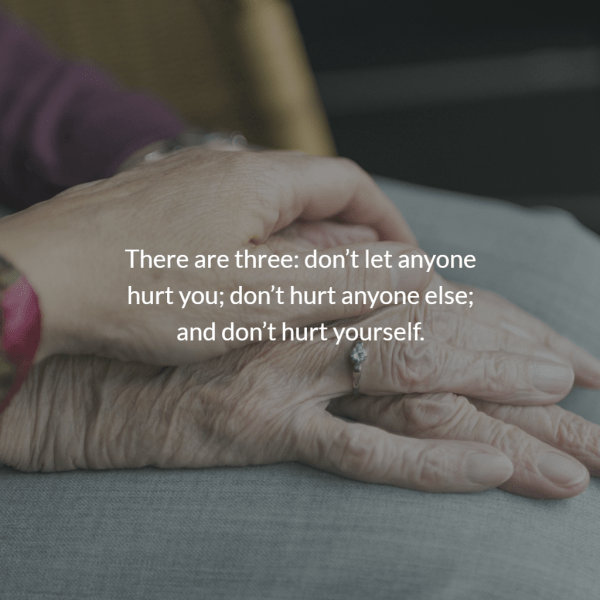
Although I said there aren’t any rules, I lied. There are three: don’t let anyone hurt you; don’t hurt anyone else; and don’t hurt yourself.

You will get through this – I promise. It might not happen as quickly as you want it to or it may happen so quickly it surprises you. But one morning you’ll wake up and find yourself living in a new normal instead of waking up to a blast of pain from what you’ve lost. Instead, your new life will be there, fully formed. You’ll be living it.

You’ve done it. You started over again, whether you wanted to or not. Now the next time you need to start over, you’ll be more prepared.

From the Desk of Melody Beattie

Related articles

How to Create Healthy Boundaries

“An intimate relationship is one in which neither party silences, sacrifices, or betrays the self and each party expresses strength and vulnerability, weakness and competence in a balanced way.” Harriet Lerner

Setting boundaries is essential if we want to be both physically and emotionally healthy.

Creating healthy boundaries is empowering. By recognizing the need to set and enforce limits, you protect your self-esteem, maintain self-respect, and enjoy healthy relationships.

Unhealthy boundaries cause emotional pain that can lead to dependency, depression, anxiety, and even stress-induced physical illness. A lack of boundaries is like leaving the door to your home unlocked: anyone, including unwelcome guests, can enter at will. On the other hand, having too rigid boundaries can lead to isolation, like living in a locked-up castle surrounded by a mote. No one can get in, and you can’t get out.

What Are Boundaries?

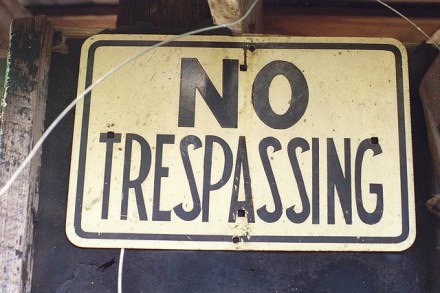
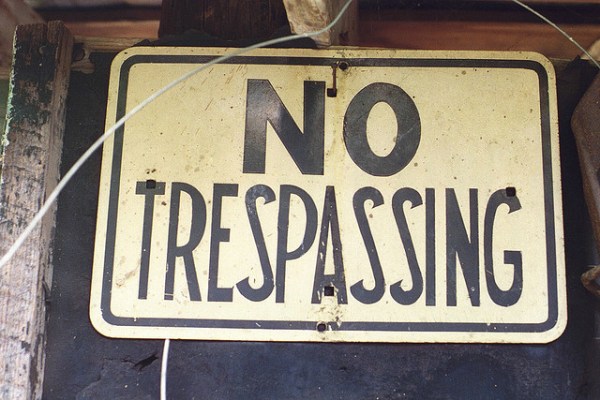
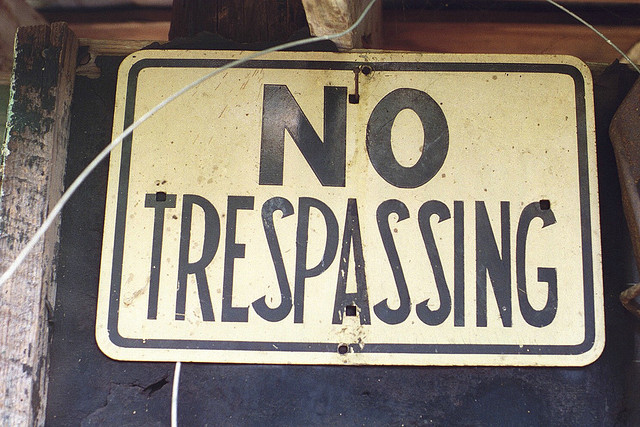
The easiest way to think about a boundary is a property line. We have all seen “No Trespassing” signs, which send a clear message that if you violate that boundary, there will be a consequence. This type of boundary is easy to picture and understand because you can see the sign and the border it protects. Personal boundaries can be harder to define because the lines are invisible, can change, and are unique to each individual.

Personal boundaries, just like the “No Trespassing” sign, define where you end and others begin and are determined by the amount of physical and emotional space you allow between yourself and others. Personal boundaries help you decide what types of communication, behavior, and interaction are acceptable.” Get more here: How to Create Healthy Boundaries « Positively Positive.

Into Orbit

Melody Beattie writes:

“It doesn’t matter if they’re hurting themselves. It doesn’t matter that we could help them if they’d only listen to, and cooperate with, us. IT DOESN’T MATTER, DOESN’T MATTER, DOESN’T MATTER, DOESN’T MATTER.” Codependent No More

I think I can change him. Nobody’s ever really loved him and appreciated him before. I’ll be the one to do that, and then he’ll change.. .. She’s never been with anybody trust­worthy before. I’ll prove how trustworthy I am, and then she’ll be able to love. . . . Nobody’s been able to get to her, to conquer her, before. I’ll be the one to do that … Nobody’s ever really given him a chance. . . . Nobody’s ever really believed in him before….

These are warning signs. Red lights. Red flags. In fact, if we’re thinking these thoughts, they need to be stop signs.

If we have gotten hooked into believing that somehow we will be the one who will make the difference in someone’s life, if we are trying to prove how good we can be for some­one, we may be in trouble.

This is a game. A deception. It won’t work. It’ll make us crazy. We can trust that. We’re not seeing things clearly. Something’s going on with us.

It will be self-defeating.

We may be “the one” all right — the one to wind up victimized.

The whole thought pattern reeks of codependency, of not being responsible for oneself, and of victimization. Each per­son needs to do his or her own work.

Nobody in the past has really understood him…. Nobody has seen what I see in her…. It’s a set-up. It sets us up to stop paying attention to ourselves while we focus too much on the other person. It takes us away from our path and often puts us in orbit.

Nobody has appreciated him enough…. Nobody has been good enough to her, or done for her what I can do…. It’s a rescue. It’s a game move, a game we don’t have to play. We don’t have to prove were the one. If we’re out to show people we’re the best thing that ever happened to them, it may be time to see if they’re the best thing that ever happened to us.

We have not been appointed as guardian angel, god­mother, godfather, or “the one who will.”

The help, support, and encouragement that truly benefits others and ourselves emerges naturally. Let it.

God, help me let go of my need to meet dysfunctional challenges in my relationships.” via June 29: Into Orbit.

Six month questions

Jon Swanson writes:

Sunday is July 1. The year is half over. This weekend, then, is a time to review the last 6 months, to check our goals or 3 words, to see if we are making progress.

Here are a bunch of questions to help in that review. But as you look at these questions, you will realize that progress isn’t always related to goals. Sometimes new things happen. Sometimes things change. Sometimes just keeping up with the basics (eating, breathing) is making progress.

Life change is its own set of goals…

  • Did a relationship end? start?
  • Did a family member die?
  • Did a child join the family? struggle? graduate?
  • Did a job change?
  • Did you keep doing the daily work?

Expression

  • Did you write an unplanned poem? a letter? a thank you note? a blog post? a song? a script?
  • Did you read a book? many books?

At least once…

  • Did you say no to an addiction? Can you do it again?
  • Did you change a habit?
  • Did you give someone flowers?
  • Did you choose to stay quiet?
  • Did you wrestle with a major question?
  • Did you apologize?
  • Did you say thank you?
  • Did you keep Sabbath?
  • Did you find solitude?
  • Did you forgive someone?

Looking at things as a farmer would (with thanks to Becky)….

  • Are you ripping out the old plants?
  • Are you between crops?
  • Are you planting?
  • Are you weeding?
  • Are you watering and waiting?
  • Are you harvesting?

Questions for thinking.

  • Did you complete one of last year’s goals? (right goal, wrong year)
  • Did you come back?
  • Did you step out?
  • Did you cry out for help?
  • Did you step back?
  • Did you let go?

Sounding formal…

  • How did you build capacity? Yours? someone else’s? your organization?
  • How have you developed infrastructure?
  • Are you looking forward to the next half of the year?
  • How did a goal change?
  • How did a new goal emerge?
  • Did you realize that your goals weren’t small enough? big enough?

via Six month questions..

six {more} strategies for staying sane

Gemma Stone writes:

Last week, I chatted about the six strategies I use daily to help me from slipping into the darkness of mental health struggles. I actually use twelve strategies daily (I try, anyway). Here are the other six ::

Media. I am super strict with the type of media I expose myself to. I went on a negative media fast a few years ago, and it made all the difference.

Giving. I focus on giving throughout the day. A smile, a cup of coffee, passing on a book, sending a loving e-mail, writing a thank-you card, making a donation. Giving feels good.

Fun. My “purpose” is to have fun inspiring myself and others to live from love rather than fear. I tried living my purpose without the fun part and, well, it was no fun. So now I make plans for fun and giggles.

Boundaries. Saying “no” to what doesn’t deeply matter means I get to say “yes” to what does. Life is full, right? I know now that if I’m going to live fully, it means I have to set boundaries that honor who I am and the life I want to live.

Nature. Every day I chill with Mother Nature. It takes the edge off.

Self-reflection. When stuff comes up, I let myself get into it. If I don’t, I know it comes up in another (much less desirable) way. I feel what I am feeling and explore why I’m feeling that way

That’s it! My twelve secrets to staying sane.

Remember, there is so much to know and so much truth to discover. The direction my feet take and what speaks to my heart may not be right for you. I share my spark of truth with you to guide you through the dark, but not to tell you what to see.

Love,

via six {more} strategies for staying sane.

I feel more sane already…

If Only…

Terri Cole writes:

Last week’s theme of focusing your energy on what you can do rather than on what makes your feel powerless continues this week as we explore the concept of Living in Non-Reality.

Start by asking yourself if you are in acceptance of certain factual aspects of your life, even if they are not exactly what you want them to be at the moment.

Let’s look at a common example in our lives today – traffic. When you are sitting in traffic, do you complain that if your boss hadn’t called you into a 4:45 pm meeting and you left right at 5pm as planned, you would not be sitting in traffic right now? This line of thinking is living in Non-Reality, and it can permeate all areas of your life if you are not aware of it.

Years ago when I was living in L.A. and spending many hours of my life sitting in traffic, I became aware of my non-reality based inner dialogue. My frustration at “wasting” time inspired elaborate stories of how it was someone else’s fault that I was caught up, and if the facts were just not the facts, I would be freely speeding down the PCH without a care. After a few futile weeks of this behavior, I decided to stop wasting my energy and re-framed my mind about traffic time.

Instead of spinning my wheels (no pun intended), I decided traffic time was my time to restore, to put space between my home and office life. In the morning, it gave me a chance to prepare for the day ahead, and in the evening, it gave me a chance to let go of the daily frustrations and not bring them into my peaceful home. I listened to books on tape, podcasts from interesting speakers and brushed up on my Spanish. This was a much better use of my time than ruminating about whose fault it was that the light turned red before I could cross the intersection.

Although we do have the power to actively change many aspects of our lives, there will always be situations that are out of our control. Your empowerment is in how you manage these events. Can you accept the things you cannot change and surrender to how it is rather than rail against it? Can you find the silver lining, like quality alone time, even when you’re sitting in traffic?

Source: If Only…!

Watch Terri here…

Combating Shame

Melody Beattie writes:

“Shame can hold us back, hold us down, and keep us staring at our feet.” Beyond Codependency.

Watch out for shame.

Many systems and people reek of shame. They are con­trolled by shame and may want us to play their game with them. They may be hoping to hook us and control us through shame.

We don’t have to fall into their shame. Instead, well take the good feelings — self-acceptance, love, and nurturing.

Compulsive behaviors, sexually addictive behaviors, over­eating, chemical abuse, and addictive gambling are shame-

based behaviors. If we participate in them, we will feel ashamed. It’s inevitable. We need to watch out for addictive and other compulsive behaviors because those will immerse us in shame.

Our past, and the brainwashing we may have had that im­posed “original shame” upon us, may try to put shame on

us. This can happen when we’re all alone, walking through the grocery store or just quietly going about living our life. Don’t think . . Don’t feel…. Don’t grow or change… . Don’t be alive. . . . Don’t live life. . .. Be ashamed!

Be done with shame. Attack shame. Go to war with it. Learn to recognize it and avoid it like the plague.

Today, I will deliberately refuse to get caught up in the shame float­ing around in the world. If I cannot resist it, I will feel it, accept it, then be done with it as quickly as possible. God, help me know that it’s okay to love myself and help me to refuse to submit to shame. If I get off course, help me learn to change shame into guilt, correct the behavior, and move forward with my life in immediate self-love. via June 27: Combating Shame.

Social psycho

The New Yorker via Cartoon of the day.  Don’t forget to enter this….

When you ASSUME you make an ASS out of ME and YOU!

Kute Blackson writes:

Just because you perceive something a certain way, doesn’t mean it is true.

We often think that reality is what we see and experience. We then make judgments about other people, situations or even ourselves based on our perceptions.

But in reality, the reality that you experience is based on your conditioning and past programming. The reality that you think is reality isn’t necessarily reality. As you become aware of this, it frees you up to see more clearly and question how you perceive a situation or person.

When you look at a situation or person, what you really see is what you bring to it. As a result, we make up assumptions and judgments about people which are often not true. Then we react based on our interpretation, which is not always accurate.

Have you ever reacted a certain way to a situation or person, only to realize afterwards that what you thought wasn’t necessarily so? It was simply how you were perceiving it in that moment based on your limited viewpoint.

Perhaps someone did or said something to you which left you feeling hurt. When you react to the situation based on your hurt, it only creates a negative spiral.

To the degree you live inside of your assumptions about what is going on, is to the degree you are not free and limit yourself.

The more you can step back, question your first reaction to a given situation and embrace what you feel, the more space you can have to actually choose a response that is empowering rather than reactive. Living from reactivity only creates more reactivity in a situation.

When you are in a relationship with a loved one and they do or say something that triggers something within you, we often think that our upset is about the other person. As a result we might react negatively, or even attack the other person out of hurt. We might make up a story about what they said or did, and what that means. In truth you may have no idea what was really going on with the other person or situation as a whole.

So we are all seeing through our individual lens/viewpoint and experiencing reality in unique ways. The challenge is when these realities do not agree, it often results in arguments we both think we are right.

Have you ever experienced this?

On some level you are both right. Everybody is right, based on the viewpoint your are looking through. It doesn’t mean it is reality though. When you realize this, you do not need to take the other person’s reaction to you personally; you realize that, based on their particular viewpoint which they think to be reality, they cannot help but react to you the way they are. It just frees you up to not keep fighting them, and be able to take a step back so that you can really choose your response.

The meaning you give to things controls your entire life. What’s the meaning you are giving to the experiences that happen to you?

Beware of:

Mind reading: When you project onto another other person what you think they are thinking and why they did what they did.

Living in fantasy: When you have an entire relationship with a person not based on reality, but what you have made up in your mind.

Preconceived ideas: This is where you have already made up in your mind who and what someone is and how that person will respond ahead of time. You then already feel reactive, even though nothing has happened yet.

The more you free yourself of your conditioning, the more clearly you are able to see reality clearly and really choose.

Before you judge someone or the situation.

Breathe. And take a step back.

Take a look at the situation from a more expanded viewpoint. Be willing to not know.

Question: Is this reality?

Choose authentically.

So, how much Freedom do you want to experience in your life?

You choose.

Source: When you ASSUME you make an ASS out of ME and YOU! (Give it UP!)

Trusting God

T.G. Henderson House, in Lake City, Florida

Yes, even more Melody Beattie!

A married couple, friends of mine, decided to make some changes in their living situation. They had always lived in the city, and now they decided they wanted to live in the country, on a lake.

They found a small, lake home. It wasn’t the house of their dreams, but when they sold their city home, they would have money to remodel it. They had saved some money, so they moved into their lake home before selling their city home.

One year passed, and the city home didn’t sell. My friends went through many changes during this time. They had times of patience and impatience. Some days they trusted God; other days they couldn’t figure out why God was mak­ing them wait so long, why God wouldn’t let them move forward with their plan. The doors just wouldn’t swing wide open.

One day, a neighbor came to visit my friends. His home on the lake was my friends’ dream home — everything they wanted, plus more. The first time my friends saw this house, they admired it, wishing they could have a home just like it, but then they forgot about the idea. They didn’t believe it could ever be possible.

The reason the neighbor came to visit my friends was that he and his wife had decided to move. He offered my friends the first option on purchasing his home.

My friends accepted his offer, and signed a purchase agree­ment. Within two months, they sold their city home and their small but adequate lake home. A short time later, they moved into the home of their dreams.

Sometimes, we experience times of frustration in our life. We believe we’re on track, trusting God and ourselves, yet things don’t work out. We have false starts and stops. The door refuses to swing wide open.

We may wonder if God has abandoned us, or doesn’t care. We may not understand where we’re going, or what our direction is.

Then one day we see: the reason we didn’t get what we wanted was because God had something much better planned for us.

Today, I will practice patience. I will ask, and trust, my Higher Power to send me His best.” via June 26: Trusting God.

Take a time-out

Melody Beattie writes:

“Tickets! Tickets!” And you give yours to the big man in the beard and the T-shirt at the gate and step onto the carousel. So many choices! Horses and carriages of every color. The white one with the golden tail? The green one with fire in his eyes? Yes, he looks fast– but no, someone else got there first. You settle for the black-and-red horse with the sparkling silver saddle. Someone bumps past, leaving sticky cotton candy on your arm. And then the music starts– loud, creaky organ music, blaring through old blown-out speakers. The lights flash on and off, and the world spins around you. Children shriek in delight while you tug on the reins, guide your mount around the course, and try to let go of the nagging suspicion that the green horse would have been more fun. You vow to get back in line and get that one next time.

Step off of the carousel.

Take a break for a moment and watch all the horses go hurrying past. The green one is no better than the red one, just different, and certainly not any faster. All your frantic pulling on the reins is wasted effort,too. See, they come right back again. They keep right on going around whether you are there or not. Let them.

Sure, it’s fun to be on the ride, to be right in the middle of all the action, up and down,’ round and ’round, lights flashing, music blaring. Just remember that you have a choice. You can be on the ride, or you can get off. Be where you want to be, and occasionally, relax.

God, help me remember that I have choices, and relaxing and letting go are two of them.” via Just For Today Meditations » Daily Recovery Readings – June 26, 2012.

What Would You Do if You Could Take a Year Off?

English: Harlech Beach On a Sunny June Day

Mallika Chopra poses an interesting question:

What would you do if you were given $100,000 to take the year off?

  • Would you quit your miserable job, buy some cozy sweats, redo your bedroom and chill at home watching movies, eating good food, sleep and get back to a state of balance?
  • Would you travel the world and see those places on your dream list?
  • Moms: Would you hire a good nanny and a housekeeper and treat yourself to spa days and getaway weekends with girlfriends?
  • Would you decide to volunteer for a year — perhaps give back to your community with money and time?
  • Would you go back to school?  Pay off your loans? Start a college fund for your kids?
  • Pursue your hobby or lifelong dream to become a filmmaker or guitar player?
  • Would you take care of your health?  Perhaps you need to learn how to meditate, get a trainer, and revamp your eating habits. Or, as a caretaker, perhaps you can help someone you love heal and find comfort?  How could $100,000 bring healing into your life?

Posed with this question, my mind began racing with the infinite things I could, should and would do with $100,000. (FYI, I was inspired to think about this by a promotion by Gold Peak Tea, which is supporting someone to take a year off — to enjoy the comforts of home, rejuvenate and do whatever they want — with $100,000.)

An interesting Gallup study from several years ago distinguished “life satisfaction” from “enjoyment of life.” This amount of money definitely can give most people in the U.S. the day-to-day security (life satisfaction), which leads to happiness.  But people who “enjoy life” don’t necessarily find it with more money.  Enjoyment of life generally includes being socially connected, having fun, and feeling a sense of purpose.

So if you were gifted some money, how would you decide what to do with it?

Here’s how I would decide: what would make me feel happy and more balanced in my life. Here’s a model of balance I have been using to make choices about how I spend my time and financial resources.  In each bucket, I think about where I am thriving, struggling or suffering:

  • Rest and Sleep
  • Good Nutrition and Exercise
  • Relationships (Family, Friends and Community)
  • Work, Financial, Career
  • Intellectual Stimulation
  • Creativity and Play
  • Spirituality and Sense of Purpose

Be honest with yourself about those buckets where you feel balanced and those you need some help on. Think about if you had more resources how could you use them to bring your life in more balance. And decide which ones you can improve right now, by making an intent to embrace what makes you stronger, happier, more purposeful and fulfilled.

For more by Mallika Chopra, click here.

For more on happiness, click here.

via Mallika Chopra: What Would You Do if You Could Take a Year Off?.

Me? I don’t even know where to begin…

Surviving Slumps

Melody Beattie writes:

A slump can go on for days. We feel sluggish, unfocused, and sometimes overwhelmed with feelings we can’t sort out. We may not understand what is going on with us. Even our attempts to practice recovery behaviors may not appear to work. We still don’t feel emotionally, mentally, and spiritually as good as we would like.

In a slump, we may find ourselves reverting instinctively to old patterns of thinking, feeling, and behaving, even when we know better. We may find ourselves obsessing, even when we know that what we’re doing is obsessing and that it doesn’t work.

We may find ourselves looking frantically for other people to make us feel better, the whole time knowing our happiness and well being does not lay with others.

We may begin taking things personally that are not our issues, and reacting in ways we’ve learned all to well do not work.

We’re in a slump. It won’t last forever. These periods are normal, even necessary. These are the days to get through. These are the days to focus on recovery behaviors, whether or not the rewards occur immediately. These are sometimes the days to let ourselves be and love ourselves as much as we can.

We don’t have to be ashamed, no matter how long we’ve been recovering. We don’t have to unreasonably expect “more” from ourselves. We don’t ever have to expect ourselves to live life perfectly.

Get through the slump. It will end. Sometimes, a slump can go on for days and then, in the course of an hour, we see ourselves pull out of it and feel better. Sometimes it can last a little longer.

Practice one recovery behavior in one small area, and begin to climb uphill. Soon, the slump will disappear. We can never judge where we will be tomorrow by where we are today.

Today, I will focus on practicing one recovery behavior on one of my issues, trusting that this practice will move me forward. I will remember that acceptance, gratitude, and detachment are a good place to begin.” via Just For Today Meditations » Daily Recovery Readings – June 26, 2012.

The Health Benefits Of Pets

We’ve known it for millennia: animals make us feel good.

But they also do us good (when they aren’t gnawing on our shoes, that is). Over the last 20 years, research on human-animal interactions has emerged, proving that people who have pets are happier and healthier. They visit the doctor less often, have more fun, and feel more secure than people who don’t have pets.

Why? Despite how many gadgets we own, humans are animals—and the need to be around other animals is a fundamental part of being human, according to Alan Beck, director of the Center for the Animal-Human Bond at Purdue University. Here are the many healthy roles pets play in our lives.” via The Health Benefits Of Pets | LIVESTRONG.COM.

Figuring out God’s will

Melody Beattie writes:

It was a stressful time in my life. I didn’t know what to do. I had pressing business decisions to make, and painful relationship issues to face. Everything felt like a mess.

I gathered up a few favorite books, the Bible, a journal, and some clothes. Then I headed for the mountains, a resort that was a favorite place of mine to hide out in and gather my thoughts.

I told myself, “I’m going to stay in there. Write in my journal. Pray. And meditate. I’m not coming out until I know what to do.”

After forty-eight hours of writing about my problems, praying about my problems, and meditating about my problems, I remembered something a friend had said to me.

“What are you doing?” he had asked.

“I’m trying to surrender to God’s will.”

“No you’re not, you’re trying to figure it out.”

Within six months, each of the problems I was wrestling with worked themselves out. I was either guided into an action that naturally felt right at the time, or a solution came to me. The immediate solution to each problem was the same: let go. Just surrender to the situation taking place. Sometimes, what we need to do next is surrender.

If you don’t like the word surrender, try calling it making peace.

God, help me surrender to your will, especially when I don’t know what to do next.” via Just For Today Meditations » Daily Recovery Readings – June 25, 2012.

Just in case you missed this for 6//25/2012

  1. “Learn to say ‘no’ to the good so you can say ‘yes’ to the best.”

    – John C. Maxwell

  2. It is good to have an end to journey towards, but it is the journey that matters, in the end.
    —Ursula K. LeGuin
  3. A man who has committed a mistake and doesn’t correct it is committing another mistake.
    –Confucius
  4. Don’t argue for other people’s weaknesses. Don’t argue for your own. When you make a mistake, admit it, correct it, and learn from it–immediately.
    –Stephen Covey
  5. Left to itself, nature takes ordinary garbage and transforms it into useful nutrients that help sustain life. It’s usually poor human action that makes garbage a problem.

    Our mental and emotional garbage takes the forms of bad memories, festering resentments, and useless regrets. We waste time berating ourselves and others about bad decisions and experiences that are behind us.

    The magic of the 12 Step program is that we can use it to transform this mental garbage into useful experience. A past mistake can become as asset when we share it with others. Pain and suffering can teach a lesson that helps all of us to grow. By forgiving others, a resentment can be turned into a friendship.

    I’ll resolve today not to worry about garbage any longer than it takes to identify it and release it to my Higher Power for transformation.

  6. Quote: When a man points a finger at someone else, he should remember that three of his fingers are pointing at himself.
    —Louis Nizer

    It’s so easy to blame others. Others are always making mistakes we can hide behind. That’s what blame is—hiding. When we blame others for our mistakes, we’re trying to hide our character defects.

    It’s nobody else’s fault that we act the way we do. It’s our fault. We’re responsible for our actions.

    And with the help of our Higher Power, we can change. We can turn over our character defects. Over time, we’re not afraid to learn about ourselves—even the parts we don’t like—because we want to know ourselves better.

    Prayer for the Day: I pray for help in facing my character defects.

    Action for the Day: I’ll think about the past week. I’ll list times I’ve used blame to hide from reality.

Charity

International Money Pile in Cash and Coins

Melody Beattie writes:

We need healthy boundaries about receiving money, and we need healthy boundaries about giving money.

Some of us give money for inappropriate reasons.

We may be ashamed because we have money and don’t believe we deserve it. We may belong to an organization that uses shame as a form of control to coerce us out of our money that the organization wants.

We can get hooked into giving money to our children, family members, or friends because we have earned or un­earned guilt. We allow ourselves to be financially black­mailed, sometimes by the people we love.

This is not money freely given, or given in health.

Some of us give money out of a sense of caretaking. We may have exaggerated feelings of responsibility for others, including financial responsibility.

We may be giving simply because we have not learned to own our power to say no when the answer is no.

Some of us give because we hope or believe people will love us if we take care of them financially.

We do not have to give money to anyone. Giving money is our choice. We do not have to allow ourselves to be victimized, manipulated, or coerced out of our money. We are financially responsible for ourselves. Part of being healthy is allowing those around us be financially responsible for themselves.

We do not have to be ashamed about having the money that we earn; we deserve to have the money we have been given — whatever the amount, without feeling obligated to give it all away, or guilty because others want what we have.

Charity is a blessing. Giving is part of healthy living. We can learn to develop healthy boundaries around giving.

Today, I will strive to begin developing healthy boundaries about giving money. I understand that giving is my choice.

via June 25: Charity | Language of Letting Go.

Withholding

Melody Beattie writes:

Sometimes, to protect ourselves, we close ourselves off from a person we’re in a relationship with. Our body may be present, but we’re not. We’re not available to participate in the relationship.

We shut down.

Sometimes, it is appropriate and healthy to shut down in a relationship. We may legitimately need some time out. Sometimes it is self-defeating to close ourselves off in a relationship.

To stop being vulnerable, honest, and present for another person can put an end to the relationship. The other person can do nothing in the relationship when we are gone. Closing ourselves makes us unavailable to that relationship.

It is common to go through temporary periods of closing down in a relationship. But it is unhealthy to make this an ongoing practice. It may be one of our relationship-sabotaging devices.

Before we close down, we need to ask ourselves what we are hoping to accomplish by shutting down. Do we need some time to deal? To heal? To grow? To sort through things? Do we need time out from this relationship? Or are we reverting to our old ways – hiding, running, and terminating relationships because we are afraid we cannot take care of ourselves in any other way?

Do we need to shut down because the other person truly isn’t safe, is manipulating, lying, or acting out addictively or abusively? Are we shutting down because the other person has shut down and we no longer want to be available?

Shutting down, shutting off, closing ourselves and removing our emotional presence from a relationship is a powerful tool. We need to use it carefully and responsibly. To achieve intimacy and closeness in a relationship, we need to be present emotionally. We need to be available.

God, help me be emotionally present in the relationships I choose to be in.” via Just For Today Meditations » 2012 » June » 23.

This is your life

Are you who you want to be?

Yesterday is a wrinkle on your forehead
Yesterday is a promise that you’ve broken
Don’t close your eyes, don’t close your eyes
This is your life and today is all you’ve got now
Yeah, and today is all you’ll ever have
Don’t close your eyes

This is your life, are you who you want to be
This is your life, is it everything you dreamed it would be
When the world was younger and you had everything to lose

Yesterday is a kid in the corner
Yesterday is dead and over

This is your life, are you who you want to be
This is your life, is it everything you dreamed it would be
When the world was younger and you had everything to lose

Don’t close your eyes

This is your life are you who you want to be
This is your life are you who you want to be, yeah

This is your life, are you who you want to be, who you want to be yeah
This is your life, are you who you want to be (who you want to be)
This is your life, is it everything you dreamed it would be
When the world was younger and you had everything to lose
And you had everything to lose

Start a Blog at WordPress.com.

Up ↑