Owning Our Power

Melody Beattie to the rescue!

Don’t you see? We do not have to be so victimized by life, by people, by situations, by work, by our friends, by our love relationships, by our family, by our feelings, our thoughts, our circumstances, and ourselves.

We are not victims. We do not have to be victims. That is the whole point!

Yes, admitting and accepting powerlessness is important. But that is the first step, an introduction to this business of recovery. Later, comes owning our power. Changing what we can. This is as important as admitting and accepting powerlessness. And there is so much we can change.

We can own our power, wherever we are, wherever we go, whomever we are with. We do not have to stand there with our hands tied, groveling helplessly, submitting to whatever comes along. There are things we can do. We can speak up. Solve the problem. Use the problem to motivate ourselves to do something good for ourselves.

We can make ourselves feel good. We can walk away. We can come back on our terms. We can stand up for ourselves. We can refuse to let others control and manipulate us.

We can do what we need to do to take care of our selves. That is the beauty, the reward, the crown of victory we are given in this process called recovery. It is what it is all about!

If we can’t do anything about the circumstance, we can change our attitude. We can do the work within: courageously face our issues so we are not victimized. We have been given a miraculous key to life.

We are victims no more unless we want to be.

Freedom and joy are ours for the taking, for the feeling, for the hard work we have done.

Today, I will remind myself as often as necessary that I am not a victim, and I do not need to be victimized by whatever comes my way. I will work hard to remove myself as a victim, whether that means setting and enforcing a boundary, walking away, dealing with my feelings, or giving myself what I need. God, help me let go of my need to feel victimized.” via Just For Today Meditations » Blog.

101 Ways to Feel Happy on a Daily Basis

via Stepcase Lifehack. Read the article here: 101 Ways to Feel Happy on a Daily Basis.

The Ego Epidemic: Narcissism Is On the Rise

Dr Tara J. Palmatier shares this article from an article on Mail Online:

There’s an interesting article on the rise of narcissism at the Mail Online, “The ego epidemic: How more and more of us women have an inflated sense of our own fabulousness. The author, Lucy Taylor, cites research by Jean M. Twenge, PhD and W. Keith Campbell, PhD in their book, The Narcissism Epidemic: Living in the Age of Entitlement. W. Keith Campbell, PhD has also researched and written about narcissism as it pertains to social media platforms. His work is cited in the post, Social Media Platforms, Narcissists, Borderlines and Histrionics: The Lure of Blogs, Facebook and MySpace.

In the Mail’s article, Ms Taylor shares the following research from Twenge and Campbell” Read the rest of the article here: The Ego Epidemic: Narcissism Is On the Rise « A Shrink for Men.

Curating a curated article? That’s ‘triple dipping’! See?! I AM the kingofcuration. :-D

Let It Go: Switching Off Your Inner Chatter

Letting go

Don’t you hate those days where you can’t turn off the negative internal chatter in your head? When you wake up in the morning and the very thing that was circling around in your head the night before is there to greet you with a big nudge, and not even a coffee?

This negative chatter can really impact your productivity throughout the day and ruin your ability to live in the moment. It’s only natural that we worry about circumstances in our lives, we wouldn’t be human if we didn’t. However, when these thoughts consume our heads to the point where we find it difficult to concentrate on anything else, it’s important you have a coping mechanism in place to try and get you through the day.

When it comes to decluttering the head and letting go of what’s worrying you, we found some really practical tips in 7 Ways To Let Go Of What’s Ailing You. The article explains that while we may not be able to solve the problem on the spot, there are many ways we can try and let it go of it for the time being.

“Letting go doesn’t mean ignoring the problem. It simply means that you realize that there is nothing you can do about the issue right now, and rather than having it consume your life with stress and anxiety you are going to put it aside until you are in a position where you can deal with it.”

One of our favorite tips in the article is the visualization exercise. If you’re not used to visualizing, this may seem a little strange to start off with, however, this method can be very effective as it puts you in a position of control to deal with the problem, even if it’s just in your head. For example:

“Imagine the thing that is bothering you, and then visualize placing it in a balloon and watching it float away.”

You’ll be surprised by how therapeutic this exercise can be and the ability for it to free your mind.

If this method isn’t for you, another helpful tip is to write your thoughts down. If you feel the anxiety building in the morning before you’ve even entered the shower, sit down and freely write your thoughts, paying little attention to the need for it to make sense.

The aim is to release everything from your mind, no matter how illogical your thoughts may seem, and write for as long as it takes to get everything out. You’ll be surprised how easily and quickly the words fall to the page when they come from the heart – it’s almost as if the brain is relieved it has an opportunity to freely unload. Even if writing isn’t your forte, this is a very easy exercise which you can turn into a daily practice.

Do you use a technique to turn off the internal chatter running around in your head? Or perhaps you have several depending how severe the issue is? Tell us about your favorite method and how effective it is at “letting thoughts go”. via Let It Go: Switching Off Your Inner Chatter.

Limit Screen Time, Limit Sitting

Leo Babauta writes:

One of the hazards of our modern lifestyle is our tendency to become more and more addicted to staring at screens, and more and more sedentary.

We look at laptops and desktop computers, iPhones and Androids and iPads and iPods, TVs and movie screens, play video games, watch videos, surf the web, socialize online, work online. And we’re sitting the whole time.

I’m a victim of this as much as anyone else. My family and I are drifting toward this lifestyle, and while I’m no Luddite, I do believe that we should live less as victims and more consciously.

Too much screen time means less active time, less personal socializing, less focus on the present, less time for cooking healthy food, less time reading novels, painting, making music, making time for the ones you love. And too much sitting means fewer years on your life.

So what’s a better way?

Limits.

Limit how much screen time you have each day. Limit your sitting to short periods with breaks in between.

I realize that many people have jobs that require them to have a minimum amount of computer time, and probably mostly sitting. So I don’t recommend a certain number, only that you figure out a limit and work with that.

What I’ve Been Doing

Though I’ve set limits for myself in the past, I’ll admit that they’ve eroded in recent months, so that my screen time has grown over time. And not just for me — for my wife and kids. So recently Eva and I set limits for ourselves, and we’ve been working with them.

We find them to be great. I find daily limits to be a better balance than going on week-long or month-long digital sabbaticals, which aren’t realistic for many people.

Here’s an example:

  • We set a limit of either 4 or 5 hours of total screen time a day. (We haven’t figured out what’s best yet, still experimenting.)
  • That total is broken into 30-minute chunks. So if it’s 5 hours total, that’s 10 chunks of 30 minutes.
  • At the start of a 30-minute chunk, I set a computer timer and put a tally mark on a text document, so I know how many chunks I’ve used today. When the bell rings, I close my laptop.
  • After the 30-minute chunk, I take a break of at least 30 minutes. I try to get up and move, stretch, play with the kids, get outside. I also often read a novel. The moving is good for my body, and helps me to think.
  • If I have things I want to look up online, or write online, I’ll just make a note of it and do it when I start my next 30-minute chunk.

This isn’t the only way to do it — you’ll have to find the limit that works for you, and the chunk size that works for you. But the idea is to set limits, and to break the total up into pieces so you’ll take breaks and do other things.

Benefits of the Limits

We’ve loved it: we’re reading more books, spending more personal time with each other and the kids, getting more chores done, exercising more, playing outside more.

It also means that because we have a limit, we have to figure out the best way to use that time. We have to make choices — what’s worthy of our limited time, and what isn’t? This means more conscious use of our time.

We haven’t instituted the limits with the kids yet, though we have been talking to them about it and getting them thinking about what would work best for them. And we do tell them to take breaks from devices throughout the day, so they’ll do other things.

For the kids, this has meant they have more unstructured, imaginative play, more reading, more art and music, more activity. Kids get addicted to screens just as much as adults do, and it’s not a healthy thing for them. We’re trying to teach them ways to live a healthy lifestyle, which is a lesson with lifelong benefits.

We’ve found this lifestyle to be healthier, better for relationships, better for our peace of mind. And to me, that means it’s something work keeping.

More reading:

via Limit Screen Time, Limit Sitting.

Social Media Platforms, Narcissists, Borderlines and Histrionics: The Lure of Blogs, Facebook and MySpace

Dr Tara J. Palmatier writes:

Over the last few months, many Shrink4Men readers have posted comments about how much time their spouses, girlfriends and exes spend on Facebook, MySpace, Twitter personal blogs and other social media platforms like mommy and bridal websites. Their behavior goes far beyond the typical sharing of family photos or funny news links. These individuals create their own public-relations-spin-control-propaganda-I-am-the-center-of-the universe profiles, networks and feeds.

One recently divorced reader’s (Still Recovering) ex-wife became obsessed with her profile and “friends” on a popular bridal site, TheKnot, and then a newlywed site, TheNest. His ex maintained her elaborate profile post-divorce—including photos of him and their wedding—and communicated with her followers as if they were still married. After repeatedly requesting that she remove his photos, he publicly outed her regarding the divorce. His ex and her online friends erupted into a flame war in which they portrayed him as the abusive psycho rather than his ex-wife who was masquerading as a perennial bride-newlywed in order to maintain her status and feel special. Still Recovering suspects that his ex-wife may, in fact, be a narcissistic personality.

Other readers report that their wives, girlfriends and exes spend inordinate amounts of time every day fine tuning their profiles and posting updates in which they portray themselves as busy “super moms/super wives/super martyrs” who single-handedly run their households and take care of their children and husbands. One wonders how they do all of this while spending most of the day online.

What’s the connection between narcissism and social media?” Read the rest of the article here: Social Media Platforms, Narcissists, Borderlines and Histrionics: The Lure of Blogs, Facebook and MySpace « A Shrink for Men.

Related articles

Can Posters Work As Pattern Interrupts In Changing Moods?

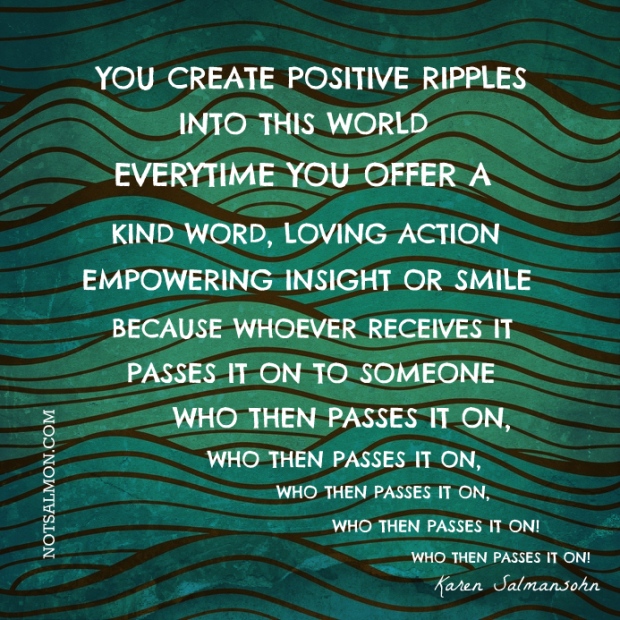
I curate a lot of Karen Salmansohn‘s ‘posters‘ on my blog — well over 100 at this point. Her she writes about posters as ‘pattern interrupts‘:

About two years ago, I gave birth to a baby boy. Shortly after, I found myself experiencing trouble giving birth to writing a book. I began believing in that much talked-about “mommy brain.”

Thankfully, I’ve always loved design. Being the positive problem solver that I am, I started experimenting with designing inspiring posters. It seems the “designer” part of my brain was not fogged by newbie mommyhood. (Perhaps this is a topic for yet another essay – where I explore the interesting workings of the right versus left brain! I know in the book My Stroke of Insight, the author said she found it easier to write in a journal rather than by computer when she was on her way to recovery. But I digress!)

I began calling my daily posters I was writing and designing my “Daily Inspirational Flashcards” – because their goal was to quickly remind people of positive psychological beliefs and productive habits which lead to the happiest life. Soon, my “Inspirational Flashcards” began to go viral – with thousands – then hundreds of thousands – then even millions of shares for a single poster. I began receiving hundreds of emails from people – thanking me – explaining that my daily “Inspirational Flashcards” were truly helping them battle depressed emotional states – even when it came to dealing with majorly challenging issues like a bipolar disorder or a loved one’s death.” Read the rest of the article here: Can Posters Work As Pattern Interrupts In Changing Moods? | Psychology Today.

I love Karen’s work [duh! Why else would I curate it so much?]. My friend and mentor RJ always says ‘never confuse the artist with the art’ but in this case, the artist is the art and it’s all beautiful. To answer the original question there have been many times when Karen’s posters have interrupted my mood in a good way hence the reason I share them so much…

The 7 Habits of Highly Effective People

English: Stephen Covey at the FMI Show, Palest...
Goodbye, Stephen Covey. Thanks for the gift you left us…

Habit 1: Be Proactive

Take initiative in life by realizing that your decisions (and how they align with life’s principles) are the primary determining factor for effectiveness in your life. Take responsibility for your choices and the consequences that follow.

Habit 2: Begin with the End in Mind

Self-discover and clarify your deeply important character values and life goals. Envision the ideal characteristics for each of your various roles and relationships in life.

Habit 3: Put First Things First

Prioritize, plan, and execute your week’s tasks based on importance rather than urgency. Evaluate whether your efforts exemplify your desired character values, propel you toward goals, and enrich the roles and relationships that were elaborated in Habit 2.

Habit 4: Think Win-Win

Genuinely strive for mutually beneficial solutions or agreements in your relationships. Value and respect people by understanding a “win” for all is ultimately a better long-term resolution than if only one person in the situation had gotten his way.

Habit 5: Seek First to Understand, Then to be Understood

Use empathic listening to be genuinely influenced by a person, which compels them to reciprocate the listening and take an open mind to being influenced by you. This creates an atmosphere of caring, respect, and positive problem solving.

Habit 6: Synergize

Combine the strengths of people through positive teamwork, so as to achieve goals no one person could have done alone. Get the best performance out of a group of people through encouraging meaningful contribution, and modeling inspirational and supportive leadership.

Habit 7: Sharpen the Saw

Balance and renew your resources, energy, and health to create a sustainable, long-term, effective lifestyle. It primarily emphasizes on exercise for physical renewal, prayer (mediation, yoga, etc.) and good reading for mental renewal. It also mentions service to the society for spiritual renewal.

– Stephen Covey, 7 Habits of Highly Effective People. Rest in peace.” via Today’s Quotes: The 7 Habits of Highly Effective People.

“Yes” Doesn’t Count if you can’t say “No” – Why Clear Boundaries are Important in Intimate Relationships

English: A young woman and man embracing while...

I found this over at Psychology Today:

Most people think of an ideal romantic relationship as a union of two inseparable beings forged into one heart, one mind, and one dream. If either partner has a conflicting desire, he or she too often does not express it. They consciously or unconsciously choose to protect the fantasy of perfect compatibility, but may not realize the limitations that are wedded to that decision.
Eventual conflicts are not as noticeable early when relationships are new. The joy of new discovery and lustful connection often eclipse any disagreements that might arise. Newly-in-love partners too often do not want to know anything about each other that could threaten the perfection they cherish. Both may choose to leave well enough alone even if the result is incomplete or inauthentic communication. In the void of unexpressed conflicts, the partners often want to maintain the illusion of a perfect match.

“He finishes my sentences before I even know what I’m going to say.”

“She anticipates what I want before I tell her.”

“We agree on everything. It’s amazing.”

“It’s so easy to be together. We love all the same things.”

Sadly, those constructed realities of perfect compatibility cannot sustain over time. People cannot feel genuinely loved if their partners are not aware of the other’s core feelings and desires. They can only keep renewing their love if they can face their conflicts openly and work through them.

That requires that both partners are willing to follow these six principles:

They are able to say what they need from their partners

They know what they are able to offer

They honestly share those thoughts and feelings

They listen to their partner’s needs without becoming defensive

They have or are willing to learn the skills to negotiate their differences

They respect each other’s conflicting desires

To make these principles work, partners must be clear from the beginning of their relationship to set clear boundaries that they both agree to honor. Boundaries are like the borders between countries. They can be barriers to communication and cooperation, or viable interfaces for exchanging ideas and resources.

When beautifully used in intimate relationships, they are symbolic lines of demarcation that help partners understand their differences while they seek whatever ways are necessary to authentically connect. Only the acceptance of those known similarities and differences can keep partners truly validating their mutual needs.

Healthy boundaries should be fluid and openly susceptible to changes by either partner during any time in their relationship. They hopefully know or are willing to learn what is personally important to them and make every effort to share those thoughts with each other. By working together over time, they learn to quickly recognize when they are in agreement, when they need to negotiate, and when they must turn down a request that could destroy their personal integrity.” Get more here: “Yes” Doesn’t Count if you can’t say “No” – Why Clear Boundaries are Important in Intimate Relationships | Psychology Today.

Healthy Boundaries: A Good Practice

English: Slate fencing marking field boundarie...

Kristin Barton Cuthriell writes:

“Boundaries are those invisible lines that separate you from other people. When children grow up in families that practice healthy boundaries, these boundaries are typically passed down through generations. The same is true when individuals are raised in dysfunctional families that have no sense of healthy boundaries. These poor boundaries, too, are often passed down the generational line.

Poor boundaries are usually too rigid or too loose. Like a concrete wall, rigid boundaries keep people out. When a person is closed off with rigid boundaries, they do not allow themselves to become vulnerable, which makes true intimacy impossible.

People with loose boundaries have little fence or no fence at all. The separation between self and others is blurred. Individuals with loose boundaries do not have a clear sense of self. These people trust easily, disclose too much, have a difficult time setting limits, and often become enmeshed with others.

Healthy relationships require healthy boundaries. If you are aware that your personal boundaries are either too loose or too rigid, you can learn healthy boundaries.

The first step to change is recognizing that change is needed.  What you do not acknowledge, you do not change.

What is a healthy boundary? Take a look.” Get more here: Healthy Boundaries: A Good Practice – Let Life in Practices.

Insisting on the Best

Melody Beattie writes:

We deserve the best life and love has to offer, but we are each faced with the challenge of learning to identify what that means in our life. We must each come to grips with our own understanding of what we believe we deserve, what we want, and whether we are receiving it.

There is only one place to start, and that is right where we are, in our current circumstances. The place we begin is with us.

What hurts? What makes us angry? What are we whining and complaining about? Are we discounting how much a particular behavior is hurting us? Are we making excuses for the other person, telling ourselves we’re “too demanding”?

Are we reluctant, for a variety of reasons, especially fear, to tackle the issues in our relationships that may be hurting us? Do we know what’s hurting us and do we know that we have a right to stop our pain, if we want to do that?

We can begin the journey from deprived to deserving. We can start it today. We can also be patient and gentle with ourselves as we travel in important increments from believing we deserve second best, to knowing in our hearts that we deserve the best, and taking responsibility for that.

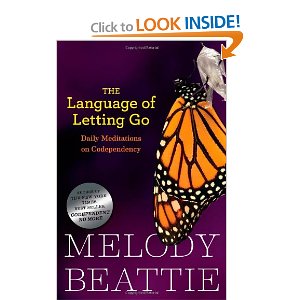
Today, I will pay attention to how I allow people to treat me, and how I feel about that. I will also watch how I treat others. I will not overreact by taking their issues too personally and too seriously; I will not under react by denying that certain behaviors are inappropriate and not acceptable to me.” Source: Language of Letting Go – July 16 – SoberRecovery : Alcoholism Drug Addiction Help and Information

Find Out What Makes You Tick

Susan Krauss Whitbourne, Ph.D. writes:

If you’ve ever been asked the question “What makes you tick?” you may have found it harder to answer than you realized. After all, if you don’t know yourself, who does? The reason this question is so hard to answer is that we don’t often think about our basic thoughts, feelings, and behavior. By learning about psychology’s major personality theories, you’ll gain self-insights into why you do what you do and how, if you want, you can change.

You might think that psychology decided long ago how to define personality. After all, this is one of the basic concepts that psychologists study. It turns out that there are almost as many definitions of personality as there are psychologists. From Freudians to Skinnerians, and everything in between, psychologists offer definitions that reflect their basic philosophy about the fundamentals of human nature.

If you’re not given to philosophical debates and would just like to know how to understand yourself, there’s hope.  Most psychologists agree on a working definition of personality to guide them in their professional work, research, and even personal lives, that personality is an individual’s characteristic ways of feeling or behaving. Different psychologists emphasize feelings, behavior, and the underlying reasons that people feel and behave in certain ways. However, all psychologists view personality as a characteristic of the individual, meaning that it is the basis for differences from person to person.

Get the answer here: Find Out What Makes You Tick | Psychology Today

Family Buttons

Melody Beattie writes:

“I was thirty five years old the first time I spoke up to my mother and refused to buy into her games and manipulation. I was terribly frightened and almost couldn’t believe I was doing this. I found I didn’t have to be meant. I didn’t have to start an argument. But I could say what I wanted and needed to say to take care of myself. I learned I could love and honor myself, and still care about my mother – the way I wanted to – not the way she wanted me to.” –Anonymous

Who knows better how to push our buttons than family members? Who, besides family members, do we give such power?

No matter how long we or our family members have been recovering, relationships with family members can be provocative.

One telephone conversation can put us in an emotional and psychological tailspin that lasts for hours or days.

Sometimes, it gets worse when we begin recovery because we become even more aware of our reactions and our discomfort. That’s uncomfortable, but good. It is by beginning this process of awareness and acceptance that we change, grow, and heal.

The process of detaching in love from family members can take years. So can the process of learning how to react in a more effective way. We cannot control what they do or try to do, but we can gain some sense of control over how we choose to react.

Stop trying to make them act or treat us any differently. Unhook from their system by refusing to try to change or influence them.

Their patterns, particularly their patterns with us, are their issues. How we react, or allow these patterns to influence us, is our issue. How we take care of ourselves is our issue.

We can love our family and still refuse to buy into their issues. We can love our family but refuse their efforts to manipulate, control, or produce guilt in us.

We can take care of ourselves with family members without feeling guilty. We can learn to be assertive with family members without being aggressive. We can set the boundaries we need and want to set with family members without being disloyal to the family.

We can learn to love our family without forfeiting love and respect for ourselves.

Today, help me start practicing self care with family members. Help me know that I do not have to allow their issues to control my life, my day, or my feelings. Help me know it’s okay to have all my feelings about family members, without guilt or shame.

Source: Detachment – Cyber Recovery Social Network Forums – Alcohol and Drug Addiction Help/Support

Go to the source for additional self-care thoughts on attachment and detachment.

Top Ten Rules for Being Human

Mastin Kipp writes:

Rule One – You will receive a body. Whether you love it or hate it, it’s yours for life, so accept it. What counts is what’s inside.

Rule Two – You will be presented with lessons. Life is a constant learning experience, which every day provides opportunities for you to learn more. These lessons are specific to you, and learning them ‘is the key to discovering and fulfilling the meaning and relevance of your own life’.

Rule Three – There are no mistakes, only lessons. Your development towards wisdom is a process of experimentation, trial and error, so it’s inevitable things will not always go to plan or turn out how you’d want. Compassion is the remedy for harsh judgment – of ourselves and others. Forgiveness is not only divine – it’s also ‘the act of erasing an emotional debt’. Behaving ethically, with integrity, and with humour – especially the ability to laugh at yourself and your own mishaps – are central to the perspective that ‘mistakes’ are simply lessons we must learn.

Rule Four – The lesson is repeated until learned. Lessons repeat until learned. What manifest as problems and challenges, irritations and frustrations are more lessons – they will repeat until you see them as such and learn from them. Your own awareness and your ability to change are requisites of executing this rule. Also fundamental is the acceptance that you are not a victim of fate or circumstance – ‘causality’ must be acknowledged; that is to say: things happen to you because of how you are and what you do. To blame anyone or anything else for your misfortunes is an escape and a denial; you yourself are responsible for you, and what happens to you. Patience is required – change doesn’t happen overnight, so give change time to happen.

Rule Five – Learning does not end. While you are alive there are always lessons to be learned. Surrender to the ‘rhythm of life’, don’t struggle against it. Commit to the process of constant learning and change – be humble enough to always acknowledge your own weaknesses, and be flexible enough to adapt from what you may be accustomed to, because rigidity will deny you the freedom of new possibilities.

Rule Six – “There” is no better than “here”. The other side of the hill may be greener than your own, but being there is not the key to endless happiness. Be grateful for and enjoy what you have, and where you are on your journey. Appreciate the abundance of what’s good in your life, rather than measure and amass things that do not actually lead to happiness. Living in the present helps you attain peace.

Rule Seven – Others are only mirrors of you. You love or hate something about another person according to what love or hate about yourself. Be tolerant; accept others as they are, and strive for clarity of self-awareness; strive to truly understand and have an objective perception of your own self, your thoughts and feelings. Negative experiences are opportunities to heal the wounds that you carry. Support others, and by doing so you support yourself. Where you are unable to support others it is a sign that you are not adequately attending to your own needs.

Rule Eight – What you make of your life is up to you. You have all the tools and resources you need. What you do with them is up to you. Take responsibility for yourself. Learn to let go when you cannot change things. Don’t get angry about things – bitter memories clutter your mind. Courage resides in all of us – use it when you need to do what’s right for you. We all possess a strong natural power and adventurous spirit, which you should draw on to embrace what lies ahead.

Rule Nine – Your answers lie inside of you. Trust your instincts and your innermost feelings, whether you hear them as a little voice or a flash of inspiration. Listen to feelings as well as sounds. Look, listen, and trust. Draw on your natural inspiration.

Rule Ten – You will forget all this at birth. We are all born with all of these capabilities – our early experiences lead us into a physical world, away from our spiritual selves, so that we become doubtful, cynical and lacking belief and confidence. The ten Rules are not commandments, they are universal truths that apply to us all. When you lose your way, call upon them. Have faith in the strength of your spirit. Aspire to be wise – wisdom the ultimate path of your life, and it knows no limits other than those you impose on yourself.” via Today’s Quotes: RULES for being HUMAN!.

Do You Need A Bad News Detox?

Terri Cole writes:

The onslaught of bad news in the media continues to fester. The climate of fear has reached epic proportions. We are inundated with bad news about our crumbling economy, the rising unemployment rate, executive greed, lack of affordable healthcare, etc. So the question is how can YOU stay positive and productive in a relentlessly negative climate and NOT drink the Armageddon Kool-Aid?

Well, as you may have guessed, I have a few ideas.” Get Terri’s ideas here: Do You Need A Bad News Detox?.

Bring back the 40 hour work week

40 hours? That would be like a vacation… :-D

Bring Back the 40 Hour Work Week Infographic
Source: OnlineMBA.com

Couples 911 – LaShelle’s Top 3 Tips for Couples

Taylor Duvall shares this:

I have followed CNVC Trainer LaShelle Lowe-Charde for years now and feel so grateful for learning how I typically ‘react’ in my long term relationships and how I can break any habitual pattern.  Her main focus is supporting couples and watch my interview with her on YouTube to hear her top 3 tips:

  • Spend a designated time each day focused on each other.
  • Share even small appreciations as often as possible.
  • Develop a language of feeling and needs to communicate what’s in our heart (what we want) not what’s wrong.

She also shares her relationship saving request and why once we ‘get’ the floor, we tend to go on and on…” via Couples 911 – LaShelle’s Top 3 Tips for Couples | The Center for Nonviolent Communication.

Here are a couple of bonus videos from LaShelle…

See Your Imperfect Self As Precious

Leslie Becker-PhelpsLeslie Becker-Phelps writes:

As a therapist, I am often faced with people who struggle with feeling essentially flawed in some way. They are quick to take responsibility for their errors or to blame themselves for problems with friends. And, they experience their struggles, mistakes, and imperfections as proof that they are lesser as a person.

As I listen to them, I know that when they look in the mirror, they do not see the value in them that I see. It is this negative self-perception that is the real source of their torture, not the daily issues that loom so large for them. Being overweight, shy, depressed, or socially awkward may cause them great pain; but I see this pain as a distress that requires caring – not condemnation. Making mistakes at work or becoming upset with your children is just part of life. After all, there’s a reason that “It’s only human” has come to be an expression. No one – and I mean no one – handles everything well all the time. And everyone – and, again, I mean everyone – has things they really struggle with.” Get more here: See Your Imperfect Self As Precious | Psychology Today.

Jeg har mistet min vei

Don’t worry! If you’re looking for Todd Lohenry, you’re in the right place — I’ve just made a few changes to get myself back on track!

For me birthdays are a time of reflection and this year was no exception; I spent a lot of time thinking about this blog and what it isn’t trying to accomplish here and here is my conclusion: I was a foreign language major in college and one semester I took a little Norwegian. One of the phrases I remember after 30 years is “I’m lost” — Jeg har mistet min vei. Point? Focus. I lost mine on this blog and it is affecting my life in other areas and draining resources from other important projects so I’m going through the same process for myself that I would do with any client — in other words, I’m going to eat my own dog food and sharpen my focus.

Backstory: I started blogging with Google’s blogger over seven years ago. Three years later I moved to WordPress. Throughout that seven years my personal blog has been a place to practice my blogging skills while sharing personal or non-business thoughts. Until 2008 I was very involved in the political process and earlier posts will reflect that. Now my focus has shifted from divisive politics to compassionate communication around Celebrate Recovery and the things that I have learned through that program. This blog is a way of working my “12th Step” by sharing the good things I find along the way and I am changing the name to reflect that sharpened focus.

The universe provided a great reminder this morning — a quote from David Allen in a post from Ciara Conlon on the Lifehacker blog which I curated here but the image is worth repeating…

My WordPress username is kingofcuration and there’s a good reason for that; in my consultancy I have developed a very efficient workflow for thought leadership marketing — kind of a “lather, rinse, repeat” cycle called the ‘e1evation workflow‘ — but just because I can do this better and faster than most people doesn’t mean I should. My focus should and must be my business, my business blog and applying the workflow to that process. Perhaps even more important at the moment is the book I am writing about thought leadership marketing which I must finish this month…

I don’t want to fall into this trap!

Questions? Feedback?

Is Your Life “Bucket” Leaking?

A plastic yellow bucket.

“Each of has a psychological “bucket.”

It’s our inner reservoir of positive energy that enables us to engage other people with good will, kindness, consideration, generosity, care and concern, acceptance, and respect.

And all of our buckets are leaky, to some extent or other.

At those times when our buckets are pretty well topped up, and not leaking very much, we feel good about ourselves and we’re likely to act in ways other people experience as “nourishing” – we help them feel good about themselves.

And when our internal buckets get leaky, we’re more inclined to treat others in ways they experience as “toxic” – we say and do things that cause them to feel offended, insulted, ignored, devalued, disrespected, unappreciated, or unloved.

Most of us manage to keep our buckets fairly well topped up, most of the time. Some days we’re more “up” than others, but over the long run most of us realize the value of expressing this positive energy to those around us.” Get the rest here: Is Your “Bucket” Leaking? | Psychology Today.

Success and achievement

English: Maslow's hierarchy of needs. Resized,...

“We fear our highest possibility (as well as our lowest one). We are generally afraid to become that which we can glimpse in our most perfect moments.” Abraham Maslow

In our daily lives, we may dream of success and achievement. We strive and compete in the workplace. We go to meetings and do our part on each Step in the program searching for better lives. When success comes, we are faced with a new problem we could not have expected. It comes as an outcome of some hard work, some good luck, and some help from our friends. It is frightening to have a good thing in our lives and not be in control of it.

We are just as powerless over our successes as we are over the worst of our behaviors. We can only be faithful to our duties and ourselves. The successes, which flow from our work, come and go. Since we can’t nail them down, they may make us feel insecure. Many a man has destroyed his moment of success because he couldn’t stand the powerless feeling. We must return to our program and allow success to rise and fall, as it will.

Today, I turn to my Higher Power for help in accepting success.” via Just For Today Meditations » Daily Recovery Readings – June 28, 2012.

Start a Blog at WordPress.com.

Up ↑