For the Next 24 Hours…

Melody Beattie writes:

For the next twenty-four hours…

In recovery, we live life one day at a time, an idea requiring an enormous amount of faith. We refuse to look back—unless healing from the past is part of today’s work. We look ahead only to make plans. We focus on this day’s activity, living it to the best of our ability. If we do that long enough, we’ll have enough connected days of healthy living to make something valuable of our life.

…I pray for knowledge of Your will for me only,…

We surrender to God’s will. We stop trying to control, and we settle for a life that is manageable. We trust our Higher Power’s will for us—that it’s good, generous, and with direction. We’re learning, through trial and error, to separate our will from God’s will. We’re learning that God’s will is not offensive. We’ve learned that sometimes there’s a difference between what others want us to do and God’s will. We’re also learning that God did not intend for us to be codependent, to be martyrs, to control or caretake. We’re learning to trust ourselves.

…and the power to carry that through.

Some of recovery is accepting powerlessness. An important part of recovery is claiming the power to take care of ourselves. Sometimes, we need to do things that are frightening or painful. Sometimes, we need to step out, step back, or step forward. We need to call on the help of a Power greater than ourselves to do that. We will never be called upon to do anything that we won’t be empowered to do.

Today, I can call upon an energizing Power Source to help me. That Power is God. I will ask for what I need.

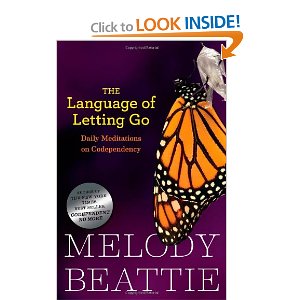
Beattie, Melody (2009-12-15). The Language of Letting Go (Hazelden Meditation Series) (pp. 122-123). Hazelden. Kindle Edition.

Perfection

Melody Beattie writes:

Many of us picked on ourselves unmercifully before recov­ery. We may also have a tendency to pick on ourselves after we begin recovery.

“If I was really recovering, I wouldn’t be doing that again…:’ “I should be further along than I am:’ These are statements that we indulge in when were feeling shame. We don’t need to treat ourselves that way. There is no benefit.

Remember, shame blocks us. But self-love and acceptance enable us to grow and change. If we truly have done some­thing we feel guilty about, we can correct it with an amend and an attitude of self-acceptance and love.

Even if we slip back to our old, codependent ways of think­ing, feeling, and behaving, we do not need to be ashamed. We all regress from time to time. That’s how we learn and grow. Relapse, or recycling, is an important and necessary part of recovery. And the way out of recycling is not by sham­ing ourselves. That leads us deeper into codependency.

Much pain comes from trying to be perfect. Perfection is impossible unless we think of it in a new way: Perfection is being who and where we are today; it’s accepting and lov­ing ourselves just as we are. We are each right where we need to be in our recovery.

Today, I will love and accept myself for who I am and where I am in my recovery process. I am right where I need to be to get to where I’m going tomorrow.” via June 2: Perfection | Language of Letting Go.

Just in case you missed this for 5/30/2012

  1. Todd’s tweets…

Let go and let God

Melody Beattie writes:

A friend was experiencing some financial difficulties. He was getting to the point of despair. “I don’t know what to do,” he said.

“Why don’t you ask God?” I said.

“I couldn’t do that. I’ve already asked God too many times to bail me out.”

“I don’t mean ask God to bail you out,” I said. “Ask God to show you what to do.”

“I never thought of that,” he said.

We all have access to the greatest resource in the world. We don’t have to sign up, register, or pay dues. Wherever we are, whatever we’re facing, all we need to do is ask our Higher Power what to do next. Why is it that the simplest things in life can be the hardest things to do?

Application: Got financial problems? Relationship problems? Facing a quandary in life? Stepping into the vast wilderness called the unknown? If we’ve run out of our own answers, it is time to ask for guidance. Or better yet, we can ask for guidance before running out of our own resources. Asking for guidance—for knowledge of God’s Will for us and the power to carry that out—is a good thing to do as needed and each day.” via May 30.

Affirm Yourself…

Cover of "The Language of Letting Go (Haz...

Melody Beattie writes:

Who or what do you want to become? A good parent? A sober, recovering person? A good girlfriend, boyfriend, or spouse? Do you want to become happy, peaceful, tolerant? Don’t wait until you’re successful to tell yourself you’re that. Start now by saying you are what you want to become instead of reinforcing the words I’m not. Yes, you have much to learn. Yes, there’s a ways to go on that path. And you may not be proficient at it, or an expert, yet. But you don’t have to be to say those two little words I am.

Help create the new part of your personality by using and affirming those powerful words I am. Then watch as a new part of yourself emerges.

God, help me use my creative powers to create a better, more fulfill­ing life. Help me use the words I am to create who you and I want me to be…

via April 23: Affirm Yourself | Language of Letting Go.

Are You Making Someone Else Your Higher Power?

Mastin Kipp writes:

A definition of interdependence is: “a reciprocal relation between interdependent entities.”

The key word here is: “reciprocal”. Interdependence can be thought of as a relationship where each party gives and receives from his or her own internal overflow. This is TOTALLY different than “codependence” which can be thought of as being “addicted to someone”.

Another way to look at it, spiritually, is this:

A codependent person makes someone else his or her Higher Power. An interdependent person knows that The Uni-verse is their Higher Power and keeps their focus on that, while choosing to be in a relationship with someone else who is also looking to The Uni-verse to fulfill them.” Get more here: Are You Making Someone Else Your Higher Power?.

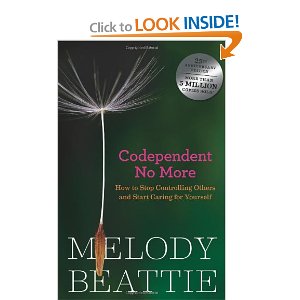
If any of this gives you pause to think, you might want to take a look at Melody Beattie‘s book Codependent No More — it’s full of pratical thoughts, tools and tactics for taking codependency head on. You can download a free sample here. I first became aware of this issue in my life about a year ago but this book, the accompanying workbook and her meditation book “Language of Letting Go” have been helpful to me in overcoming codependency and having better relationships…

On being connected…

LOL. ‘Make me one with everything’…

What did the Buddhist monk say to the hot-dog vendor? Can you make me one with everything?

I was buckling my seat belt in the little Cessna one day, get­ting ready for flight training, when my instructor Rob turned to me.

“I just take a second when I strap myself in and tell myself I’m becoming one with the plane as I do,” Rob said. “It really helped me in the beginning when I was nervous and felt so separate from the airplane.”

What a great idea, I thought. That day turned into one of my most comfortable flying sessions. It reminded me of a lesson I had learned a while back.

For most of my life, I felt disconnected from things: from myself, from other people, from life. That feeling of separate­ness haunted me. It explains why I tried so desperately to attach myself codependently to people, places, and things.

Over the years, I began to see that my separateness was an illusion. The same energy, the same life force, that runs through all the universe runs through you and me, too.

We’re connected, whether we know it or not.

Nobody has to make you one with everything. You already are.

Let go of your illusion of separateness.

Connect yourself.

God, help me know my oneness with the world. Help me know how connected I really am so I don’t have to connect in ways that don’t work.

via April 15: Connect Yourself | Language of Letting Go.

Something else I like about Melody Beattie — she’s a pilot, or at least a student pilot…

Just in case you missed this for 5/29/2012

  1. “I really, deeply believe that dreams do come true. Often, they might not come when you want them. They come in their own time.”

    – Diana Ross

  2. Todd’s tweets…

Letting Go of Self Doubt

Melody Beattie writes:

A married woman who had recently joined Al-Anon called me one afternoon. She worked part-time as a registered nurse, had assumed all the responsibilities for raising her two children, and did all the household chores, including repairs and finances. “I want to separate from my husband,” she sobbed. “I can’t stand him or his abuse any longer. But tell me, please tell me,” she said, “do you think I can take care of myself?” Codependent No More

Not only is it okay to take care of ourselves, we can take good care of ourselves.

Many of us, so confident about our ability to take care of others, doubt our inherent strength to care for ourselves. We may have come to believe, from our past or present circumstances, that we need to take care of others and we need others to take care of us. This is the ultimate codependent belief.

No matter where this self-defeating belief was born, we can release it and replace it with a better one, a healthier one, a more accurate one.

We can take care of ourselves — whether we are in or out of a relationship. Everything we need will be provided. We will have loved ones, friends, and our Higher Power to help.

Knowing that we can take care of ourselves doesn’t mean we won’t have feelings of fear, discomfort, doubt, anger, and fragility at times. It means we practice “courageous vulnerability,” as Colette Dowling called it in Cinderella Complex. We may feel scared, but we do it anyway.

Today, God, help me know how I can take care of myself.” via Daily Meditation ~ Letting Go of Self Doubt – Miracles In Progress Codependents Anonymous Group.

Choices

Melody Beattie says:

“We have choices, more choices than we let ourselves see. We may feel trapped in our relationships, our jobs, our life. We may feel locked into behaviors — such as caretaking or controlling. Feeling trapped is a symptom of codependency.

When we hear ourselves say, “I have to take care of this person…”, “I have to say yes….” ,”I have to try to control that person…”, “I have to behave this way, think this way, feel this way…” we can know we are choosing not to see choices.

That sense of being trapped is an illusion. We are not controlled by circumstances, our past, the expectations of others or our unhealthy expectations for ourselves. We can choose what feels right for us, without guilt. We have options.

Recovery is not about behaving perfectly or according to anyone else’s rules. More than anything else; recovery is about knowing we have choices and giving ourselves the freedom to choose.” via Inspiration.

Just in case you missed it for 5/27/12

  1. Todd’s tweets…

We have choices


Melody Beattie says:

“We have choices, more choices than we let ourselves see.

We may feel trapped in our relationships, our jobs, our life. We may feel locked into behaviors such as caretaking or controlling.

Feeling trapped is a symptom of codependency. When we hear ourselves say, I have to take care of this person . . . I have to say yes . . . I have to try to control that person . . . I have to behave this way, think this way, feel this way . . . we can know we are choosing not to see choices.

That sense of being trapped is an illusion. We are not controlled by circumstances, our past, the expectations of others, or our unhealthy expectations for ourselves. We can choose what feels right for us, without guilt. We have options.

Recovery is not about behaving perfectly or according to anyone else’s rules. More than anything else, recovery is about knowing we have choices and giving ourselves the freedom to choose.

Today, I will open my thinking and myself to the choices available to me. I will make choices that are good for me.” via Adult Children Anonymous.

Discovering intimacy

Intimacy is that warm gift of feeling connected to others and enjoying our connection to them.

As we grow in recovery, we find that gift in many, sometimes surprising, places. We may discover we’ve developed intimate relationships with people at work, with friends, with people in our support groups – sometimes with family members. Many of us are discovering intimacy in a special love relationship.

Intimacy is not sex, although sex can be intimate. Intimacy means mutually honest, warm, caring, safe relationships – relationships where the other person can be who he or she is and we can be who we are – and both people are valued.

Sometimes there are conflicts. Conflict is inevitable. Sometimes there are troublesome feelings to work through. Sometimes the boundaries or parameters of relationships change. But there is a bond – one of love and trust.

There are many blocks to intimacy and intimate relationships. Addictions and abuse block intimacy. Unresolved family of origin issues prevents intimacy. Controlling blocks intimacy. Off balance relationships, where there is too great a discrepancy in power, prevent intimacy. Caretaking can block intimacy. Nagging, withdrawing, and shutting down can hurt intimacy. So can a simple behavior like gossip — for example, gossiping about another for motives of diminishing him or her in order to build up ourselves or to judge the person. To discuss another person’s issues, shortcomings, or failures with someone else will have a predictable negative impact on the relationship.

We deserve to enjoy intimacy in as many of our relationships as possible. We deserve relationships that have not been sabotaged. That does not mean we walk around with our heads in the clouds; it means we strive to keep our motives clean when it comes to discussing other people.

If we have a serious issue with someone, the best way to resolve it is to bring the issue to that person.

Direct, clean conversation clears the air and paves the way for intimacy, for good feelings about ourselves and our relationships with others.

Today, God, help me let go of my fear of intimacy. Help me strive to keep my communications with others clean and free from malicious gossip. Help me work toward intimacy in my relationships. Help me deal as directly as possible with my feelings.

via Adult Children Anonymous.

Just in case you missed this for 5/25/2012

  1. On this day in 1977, Memorial Day weekend opens with an intergalactic bang as the first of George Lucas’ blockbuster Star Wars movies hits American theaters.

    The incredible success of Star Wars–it received seven Oscars, and earned $461 million in U.S. ticket sales and a gross of close to $800 million worldwide–began with an extensive, coordinated marketing push by Lucas and his studio, 20th Century Fox, months before the movie’s release date. “It wasn’t like a movie opening,” actress Carrie Fisher, who played rebel leader Princess Leia, later told Time magazine. “It was like an earthquake.” Beginning with–in Fisher’s words–“a new order of geeks, enthusiastic young people with sleeping bags,” the anticipation of a revolutionary movie-watching experience spread like wildfire, causing long lines in front of movie theaters across the country and around the world.

    With its groundbreaking special effects, Star Wars leaped off screens and immersed audiences in “a galaxy far, far away.” By now everyone knows the story, which followed the baby-faced Luke Skywalker (Mark Hamill) as he enlisted a team of allies–including hunky Han Solo (Harrison Ford) and the robots C3PO and R2D2–on his mission to rescue the kidnapped Princess Leia from an Evil Empire governed by Darth Vader. The film made all three of its lead actors overnight stars, turning Fisher into an object of adoration for millions of young male fans and launching Ford’s now-legendary career as an action-hero heartthrob.

  2. With George Washington presiding, the Constitutional Convention formally convenes on this day in 1787. The convention faced a daunting task: the peaceful overthrow of the new American government as it had been defined by the Article of Confederation.

    The process began with the proposal of James Madison’s Virginia Plan. Madison had dedicated the winter of 1787 to the study of confederacies throughout history and arrived in Philadelphia with a wealth of knowledge and an idea for a new American government. Virginia’s governor, Edmund Randolph, presented Madison’s plan to the convention. It featured a bicameral legislature, with representation in both houses apportioned to states based upon population; this was seen immediately as giving more power to large states, like Virginia. The two houses would in turn elect the executive and the judiciary and would possess veto power over the state legislatures. Madison’s conception strongly resembled Britain’s parliament. It omitted any discussion of taxation or regulation of trade, however; these items had been set aside in favor of outlining a new form of government altogether.

    William Patterson soon countered with a plan more attractive to the new nation’s smaller states. It too bore the imprint of America’s British experience. Under the New Jersey Plan, as it became known, each state would have a single vote in Congress as it had been under the Articles of Confederation, to even out power between large and small states. But, the plan also gave Congress new powers: the collection of import duties and a stamp tax, the regulation of trade and the enforcement of requisitions upon the states with military force.

  3. “If you believe in yourself and have the courage, the determination, the dedication, the competitive drive and if you are willing to sacrifice the little things in life and pay the price for the things that are worthwhile, it can be done.“

    – Vince Lombardi

  4. “Men often become what they believe themselves to be. If I believe I cannot do something, it makes me incapable of doing it. But when I believe I can, then I acquire the ability to do it even if I didn’t have it in the beginning.”

    – Mahatma Gandhi

  5. “Nothing splendid has ever been achieved except by those who dared believe that something inside of them was superior to circumstances.”

    – Bruce Barton

  6. Todd’s tweets…

Loving Ourselves Unconditionally

More Melody Beattie:

“Love yourself into health and a good life of your own.

Love yourself into relationships that work for you and the other person. Love yourself into peace, happiness, joy, success, and contentment.

Love yourself into all that you always wanted. We can stop treating ourselves the way others treated us, if they behaved in a less than healthy, desirable way. If we have learned to see ourselves critically, conditionally, and in a diminishing and punishing way, it’s time to stop. Other people treated us that way, but it’s even worse to treat ourselves that way now.

Loving ourselves may seem foreign, even foolish at times. People may accuse us of being selfish. We don’t have to believe them.

People who love themselves are truly able to love others and let others love them. People who love themselves and hold themselves in high esteem are those who give the most, contribute the most, and love the most.

How do we love ourselves? By forcing it at first. By faking it, if necessary. By acting as if. By working as hard at loving and liking ourselves as we have at not liking ourselves.

Explore what it means to love yourself.

Do things for yourself that reflect compassionate, nurturing, self love.

Embrace and love all of yourself – past, present, and future. Forgive yourself quickly and as often as necessary. Encourage yourself. Tell yourself good things about yourself.

If we think and believe negative ideas, get them out in the open quickly and honestly, so we can replace those beliefs with better ones.

Pat yourself on the back when necessary. Discipline yourself when necessary. Ask for help, for time; ask for what you need.

Sometimes, give yourself treats. Do not treat yourself like a pack mule, always pushing and driving harder. Learn to be good to yourself. Choose behaviors with preferable consequences – treating yourself well is one.

Learn to stop your pain, even when that means making difficult decisions. Do not unnecessarily deprive yourself. Sometimes, give yourself what you want, just because you want it.

Stop explaining and justifying yourself. When you make mistakes, let them go. We learn, we grow, and we learn some more. And through it all, we love ourselves.

We work at it, and then work at it some more. One day we’ll wake up, look in the mirror, and find that loving ourselves has become habitual. We’re now living with a person who gives and receives love, because that person loves him or herself. Self-love will take hold and become a guiding force in our life.

Today, I will work at loving myself. I will work as hard at loving myself as I have at not liking myself. Help me let go of self-hate and behaviors that reflect not liking myself. Help me replace those with behaviors that reflect self-love. Today, God, help me hold myself in high self-esteem. Help me know I’m lovable and capable of giving and receiving love.

From The Language of Letting Go by Melody Beattie ©1990, Hazelden Foundation. All rights reserved.” via the language of letting go | Tumblr.

Warning! Video: NSFW…

Impatience

“The hardest thing about practicing patience is that practicing impatience feels so justified.” via May 24 | Language of Letting Go.

Life is not to be endured

More wisdom from Melody Beattie:

“Life is not to be endured; life is to be enjoyed and embraced.

The belief that we must square our shoulders and get through a meager, deprived existence for far-off “rewards in Heaven” is a codependent belief.

Yes, most of us still have times when life will be stressful and challenge our endurance skills.  But, in recovery, we’re learning to live, to enjoy our lives, and handle situations as they come.

Our survival skills have served us well.  They have gotten us through difficult times-as children and adults.  Our ability to freeze feelings, deny problems, deprive ourselves, and cope with stress has helped us get where we are today.  But we’re safe now.  We’re learning to do more than survive.  We can let go of unhealthy survival behaviors.  We’re learning new, better ways to protect and care for ourselves.  We’re free to feel our feelings, identify and solve problems, and give ourselves the best.  We’re free to open up and come alive.

Today, I will let go of my unhealthy endurance and survival skills.  I will choose a new mode of living, one that allows me to be alive and enjoy the adventure.”

Source: this is a quote “Life is not to be endured; life is to be… | turtle_dove on Xanga

Times of Reprogramming

“Do not ask for success unless you’re ready to conquer the behaviors that would sabotage success.” Melody Beattie via Language of Letting Go – May 22 – Times of Reprogramming – SoberRecovery : Alcoholism Drug Addiction Help and Information.

Getting Needs Met

“I want to change careers . . .  I need a friend . . . I’m ready to be in a relationship . . .

Regularly, we become aware of new needs. We may need to change our behavior with our children. We may need a new couch, love and nurturing, a dollar, or help.

Do not be afraid to recognize a want or need. The birth of a want or need, the temporary frustration from acknowledging a need before it’s met, is the start of the cycle of receiving what we want. We follow this by letting go, then receiving that which we want and need. Identifying our needs is preparation for good things to come.

Acknowledging our needs means we are being prepared and drawn to that which will meet them. We can have faith to stand in that place in between.

Today, I will let go of my belief that my needs never get met. I will acknowledge my wants and needs, and then turn them over to my Higher Power. My Higher Power cares, sometimes about the silliest little things, if I do. My wants and needs are not an accident. God created me and all my desires.” via Daily Meditation ~ Getting Needs Met – Miracles In Progress Codependents Anonymous Group.

Sadness

Melody Beattie shares this:

“Ultimately, to grieve our losses means to surrender to our feelings.

So many of us have lost so much, have said so many good byes – have been through so many changes. We may want to hold back the tides of change, not because the change isn’t good, but because we have had so much change, so much loss.

Sometimes, when we are in the midst of pain and grief, we become shortsighted, like members of a tribe described in the movie Out of Africa.

“If you put them in prison,” one character said, describing this tribe, “they die.”

“Why?” asked another character.

“Because they can’t grasp the idea that they’ll be let out one day. They think it’s permanent, so they die.”

Many of us have so much grief to get through. Sometimes we begin to believe grief, or pain, is a permanent condition.

The pain will stop. Once felt and released, our feelings will bring us to a better place than where we started. Feeling our feelings, instead of denying or minimizing them, is how we heal from our past and move forward into a better future. Feeling our feelings is how we let go.

It may hurt for a moment, but peace and acceptance are on the other side. So is a new beginning.

God, help me fully embrace and finish my endings, so I may be ready for my new beginnings.” via Language of Letting Go – May 20 – Sadness – SoberRecovery : Alcoholism Drug Addiction Help and Information.

Why does life have to be so hard?

“Why does doing this have to be so hard?” I asked a friend one day.

“It doesn’t,” he said.

Challenge: Unquestionably, life can be tough and chal­lenging at times. It hurts. It can be scary and confusing. Many of us have had to garner great amounts of strength and courage to face difficult situations. There are times when endurance and rising to the occasion are important survival skills. It equally important to know when an easy-does-it approach is enough.” via May 18.

Start a Blog at WordPress.com.

Up ↑