You’ll Make It When You Fake It

Smile 2
Psychology Today reports:

In a newly released study subjects were given stressful tasks while holding chopsticks in their mouths to form a smile, and another group was asked to maintain a smile while performing the stress task.  None of the subjects were not told the true objective of the study and when compared with a control group performing the same stressful activities, both smiling groups had lower heart rates and faster cardiovascular stress recovery than the non-smiling controls.

As Ekman had predicted, when we hold a facial expression reflecting a particular emotion, even when the expression of happiness is faked, we experience some of that faked emotion.   ‘Fake it till you make it’ takes more meaning in light of this and other research along these lines.

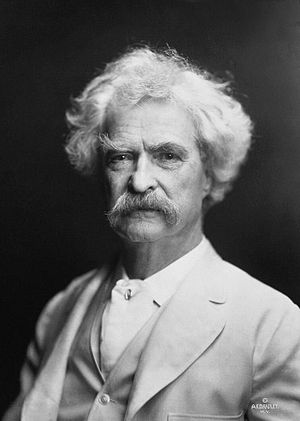
These findings suggest that there is a pathway connecting facial muscle activity to our ‘fight/flight’ response and that we can change our physiological and psychological states  by deliberately controlling our facial expressions.  So perhaps the quote by Mark Twain is true, “The world always looks brighter behind a smile.”

The next time you are feeling stressed, have a difficult task, or just wake up on the grumpy side of the bed, smile for a while and see how your mood can change for the better.” via You’ll Make It When You Fake It | Psychology Today.

I first heard about this reading Tony Robbin’s book ‘Awaken the Giant Within’ and yesterday I tried it and it actually worked for me!

I got sucked into being a timer for a swim meet with over 500 kids and 88 different events and multiple heats. First of all, I don’t even like competitive swimming — that’s my wife’s thing and my son was having his first meet. My wife had volunteered for a 4 hour shift and not only did a volunteer not come to relieve her but I became a backup timer and then a timer when other people left their shift. It was hot, wet and hard on the joints standing on a pool deck for 9 hours. I remembered what I had heard from Tony Robbins earlier in the week and put it into practice. Every time I started

Worry

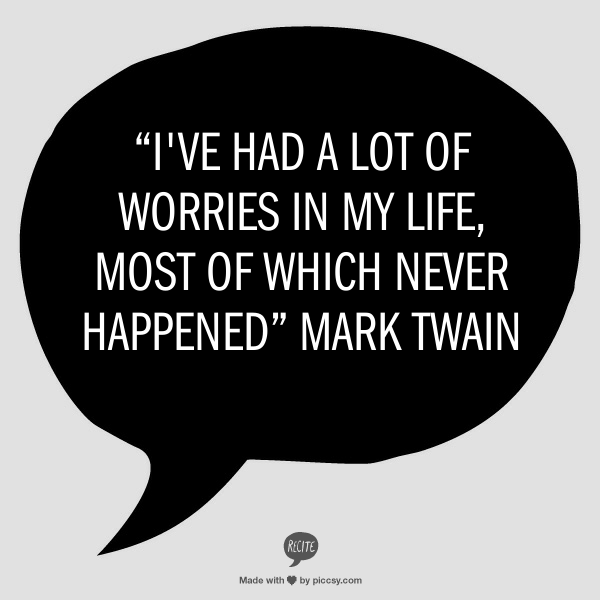
“I've had a lot of worries in my life, most of which never happened”  ― Mark Twain

My favorite quote on fatherhood…

My birth father abandoned my mother and me 3 months before my birth. I was raised by my grandmother while my mother supported our family unit until the day she met my dad. They were married over 50 years ago and he formally adopted me when I was 5 — I still remember going before the judge and having him ask me if I wanted my dad to be my dad. It’s an honor and a privilege that few sons have — to actually affirm their choice of a father before a judge…

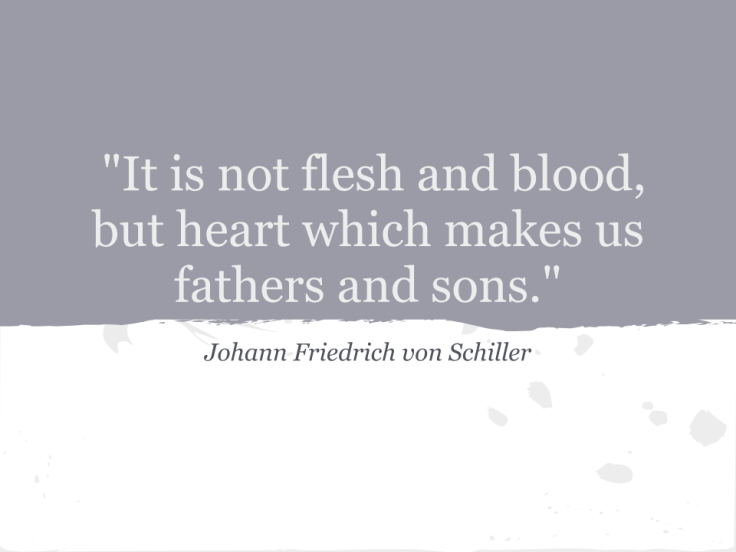
Years later as a student of German literature, I came across this quote: “Nicht Fleisch und Blut, das Herz macht uns zu Vätern und Söhnen.” I thank God every day for my dad’s heart; a heart which made him a father and me a son and gave me the courage to adopt my own son when I met the woman of my dreams like he did…

Related articles

Twenty years from now…

Twenty years from now, you will be more disappointed by the things you didn’t do than by the ones you did do. So throw off the bowlines. Sail away from the safe harbor. Catch the trade winds in your sails. Explore. Dream. Discover.” Mark Twain via Quote of the Day.

Rumors of my demise…

…are greatly exaggerated as Mark Twain once said…

http://youtu.be/CkXMEnLsj0w

On the Majority

A portrait of the American writer Mark Twain t...


“Whenever you find that you are on the side of the majority, it is time to pause and reflect.” via Mark Twain.


The Quotability of Samuel Johnson

Portrait of Samuel Johnson commissioned for He...
This is not Gretchen Rubin...

A tip of the hat to Gretchen Rubin for pointing me in the direction of Samuel Johnson with her Happiness Project quote du jour…

On this basis, my top five people who have featured most often in Quote … Unquote questions (as opposed to having just been quoted on the programme, which would be too big a task to measure) turn out to be: (1) Winston Churchill (2) Oscar Wilde (3) Noel Coward (4) Bernard Shaw (5) Mark Twain. No sign of Dr Johnson there, I’m afraid.
Then one of the readers of the Quote … Unquote Newsletter came along with his list of people who had featured most often in that Newsletter (and I have to emphasize that this was usually because of some issue regarding their quotations), and this gave a slightly different result, namely: Churchill (first), Wilde (second), Shaw and G.K. Chesterton (joint 4th), Mark Twain and P.G. Wodehouse (joint 6th). Samuel Johnson came 8th in that list.
Then, I counted up the number of quotations attributed to this sort of quotee (again I emphasize written and spoken quotees) in the latest editions of the two major dictionaries of quotations, the Oxford and Bartlett’s Familiar (in the United States). And what do you think I found?
In the Oxford, giving you the results in Miss World order, we have: in fifth place, Thomas Jefferson with 50 quotations, fourth, Winston Churchill with 53, third, Oscar Wilde with 61, second, a stonking 105 from Bernard Shaw, and in first place, with no fewer than 254, from Lichfield, England, Dr Samuel Johnson.
Turning to Bartlett’s Familiar Quotations, and again giving you the results in reverse order, we find: in fifth place with 48 quotations, Oscar Wilde, in fourth place, a new entry, Abraham Lincoln with 51, in third place, with 61, Winston Churchill, shooting up the charts to No. 2, with 83 quotations, Mark Twain, and – I hardly need tell you – this week’s, this year’s No. 1, the top of the quotation pops for all time, with 142 quotations, your own, your very own, Samuel Johnson. Gratifyingly, however you measure it, it’s game, set and match to Dr Johnson.
The next question that must be addressed is, Why is Johnson the most all-round quoted source apart from the Bible and Shakespeare? If you define a quotation, as I will, as: ‘Something written or spoken by another that we wish to use for our own ends because it expresses something memorably and well’, then I need hardly go any further. Apart from the truths and wisdom that they contain, Dr Johnson’s quotations are so memorably phrased that they cry out to be repeated until the end of time.
Does a gentleman who marries a second time show disregard of his first wife? ‘Not at all, Sir. On the contrary, were he not to marry again, it might be concluded that his first wife had given a disgust to marriage; but by taking a second wife he pays the highest compliment to the first, by shewing that she made him so happy as a married man, that he wishes to be so a second time.’
Johnson had a very positive view of marriage (though it is easily forgotten that he was himself a widower), hence his remark, ‘Even ill assorted marriages are preferable to cheerless celibacy’ – that’s in the Life – and ‘Marriage has many pains, but celibacy has no pleasures’ – which is in Rasselas.
`If I had no duties, and no reference to futurity, I would spend my life in driving briskly in a post-chaise with a pretty woman’ – and then he adds: ‘But she should be one who could understand me, and would add something to the conversation.’
Then there is the famous piece of advice he gave Boswell, who was having landlord trouble and considered it a ‘serious distress’. Johnson told him: ‘There is nothing in this mighty misfortune … Consider, Sir, how insignificant this will appear a twelvemonth hence.’ Which, frankly, is the best piece of advice you can give anybody.

Source: The Quotability of Samuel Johnson

Go to the source if you’re curious to know more about this most quotable of all authors…

Start a Blog at WordPress.com.

Up ↑