15 Great Excuses Not to Form the Fitness Habit

Leo Babauta writes:

Lots of people know they should be getting fit, but they can’t seem to find the time to form the fitness habit.

And while I understand this completely — I was stuck in overweight, unhealthy mode for years — I think it’s useful to take a look at the justifications we give ourselves to put it off.

I put things off because I didn’t have time, or energy, or I had too many family commitments, or not enough motivation, or work kept getting in the way, or I didn’t feel good enough to run, or I was sick, or other people would make things difficult, or I didn’t have the money for a gym membership … you get the idea.

But I’ve learned to kill all the excuses. Or to put it less violently, I’ve found loving ways to let them go and embrace the joy of a fit and healthy life.

I did it with six kids and a wife, a full-time job (and now my own business), a ton of family and work commitments, freelancing on the side, building a blog on the side, while writing various books … and so the excuses were ultimately meaningless.

Why might you be putting things off? Let’s look at the justifications, and try to blast them.

Full story at:  » 15 Great Excuses Not to Form the Fitness Habit :zenhabits

The Beginner’s Guide to Unschooling

Leo Babauta
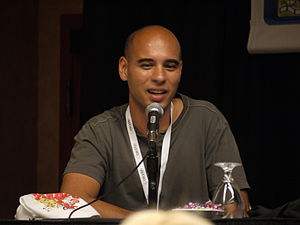
Leo Babauta (Photo credit: Wikipedia)

Leo Babauta writes today about a topic that interests me because we homeschool two of our boys…

There’s nothing I get asked about more as a parent than unschooling, and nothing I recommend more to other parents.

It’s an educational philosophy that provides for more freedom than any other learning method, and prepares kids for an uncertain and rapidly changing future better than anything else I know. My wife and I unschool four of our kids, and have been for several years.

And yet, as powerful as I believe unschooling to be, I’ve never written about it, because the truth is, I certainly don’t have all the answers. No one does.

The beauty of unschooling is in the search for the answers. If anyone had all the answers, there would be no search. And so what I’d love to teach unschooling parents and kids is that the search is the joy of it all.

But I’m getting ahead of myself: what is unschooling? Why should you do it? How do you do it? What should you read? We’ll talk about all that today.” Full story at: » The Beginner’s Guide to Unschooling :zenhabits.

There are many reasons to homeschool, but the think that caught my eye in Leo’s post is this: unschooling “prepares kids for an uncertain and rapidly changing future better than anything else I know”…

I work in a career that didn’t exist when I was in college and everything almost all the skills I learned to perform in this career I taught myself. I’m going to drill down on Leo’s post and evaluate what he has to say…

Limit Screen Time, Limit Sitting

Leo Babauta writes:

One of the hazards of our modern lifestyle is our tendency to become more and more addicted to staring at screens, and more and more sedentary.

We look at laptops and desktop computers, iPhones and Androids and iPads and iPods, TVs and movie screens, play video games, watch videos, surf the web, socialize online, work online. And we’re sitting the whole time.

I’m a victim of this as much as anyone else. My family and I are drifting toward this lifestyle, and while I’m no Luddite, I do believe that we should live less as victims and more consciously.

Too much screen time means less active time, less personal socializing, less focus on the present, less time for cooking healthy food, less time reading novels, painting, making music, making time for the ones you love. And too much sitting means fewer years on your life.

So what’s a better way?

Limits.

Limit how much screen time you have each day. Limit your sitting to short periods with breaks in between.

I realize that many people have jobs that require them to have a minimum amount of computer time, and probably mostly sitting. So I don’t recommend a certain number, only that you figure out a limit and work with that.

What I’ve Been Doing

Though I’ve set limits for myself in the past, I’ll admit that they’ve eroded in recent months, so that my screen time has grown over time. And not just for me — for my wife and kids. So recently Eva and I set limits for ourselves, and we’ve been working with them.

We find them to be great. I find daily limits to be a better balance than going on week-long or month-long digital sabbaticals, which aren’t realistic for many people.

Here’s an example:

  • We set a limit of either 4 or 5 hours of total screen time a day. (We haven’t figured out what’s best yet, still experimenting.)
  • That total is broken into 30-minute chunks. So if it’s 5 hours total, that’s 10 chunks of 30 minutes.
  • At the start of a 30-minute chunk, I set a computer timer and put a tally mark on a text document, so I know how many chunks I’ve used today. When the bell rings, I close my laptop.
  • After the 30-minute chunk, I take a break of at least 30 minutes. I try to get up and move, stretch, play with the kids, get outside. I also often read a novel. The moving is good for my body, and helps me to think.
  • If I have things I want to look up online, or write online, I’ll just make a note of it and do it when I start my next 30-minute chunk.

This isn’t the only way to do it — you’ll have to find the limit that works for you, and the chunk size that works for you. But the idea is to set limits, and to break the total up into pieces so you’ll take breaks and do other things.

Benefits of the Limits

We’ve loved it: we’re reading more books, spending more personal time with each other and the kids, getting more chores done, exercising more, playing outside more.

It also means that because we have a limit, we have to figure out the best way to use that time. We have to make choices — what’s worthy of our limited time, and what isn’t? This means more conscious use of our time.

We haven’t instituted the limits with the kids yet, though we have been talking to them about it and getting them thinking about what would work best for them. And we do tell them to take breaks from devices throughout the day, so they’ll do other things.

For the kids, this has meant they have more unstructured, imaginative play, more reading, more art and music, more activity. Kids get addicted to screens just as much as adults do, and it’s not a healthy thing for them. We’re trying to teach them ways to live a healthy lifestyle, which is a lesson with lifelong benefits.

We’ve found this lifestyle to be healthier, better for relationships, better for our peace of mind. And to me, that means it’s something work keeping.

More reading:

via Limit Screen Time, Limit Sitting.

The most important skill to master


Leo Babauta

Leo Babauta writes:

If you’re like me, you are constantly learning new skills — gardening, carpentry, pizza-making, languages, sports, and so on. And I think this is a fun and wonderful thing to do.

But what’s the most important skill?

That’s debatable. I think compassion is a huge one, as is mindfulness. I’d go with those two any day of the week.

But if I had to pick just one, it would be this: learning to be happy with yourself.

That seems too simple, to trite! Too mushy and New-Agey! And I’ll grant all of that, but I stand firmly by my pick.

Why? The answer has to do with how this one thing can affect everything else in your life. If you are not happy with yourself, or your body, you become insecure. You think you’re not good enough. You fear being abandoned and alone. You do lots of other things to compensate, and these lead to problems.

So many of the problems people have stem from this one thing — being unhappy with themselves (often in the form of being unhappy with their bodies). Let’s take a look at why, and then look at some ideas of how to master the skill.

Get more here: » The Most Important Skill to Master :zenhabits

Three Habits You Can Break or Create Today

Book Cover

“When you woke up this morning, what did you do first? Did you hop in the shower, check your email, or grab a doughnut? What did you say to your kids on the way out the door? Salad or hamburger for lunch? When you got home, did you put on your sneakers and go for a run, or pour yourself a drink and eat dinner in front of the television?

Most of the choices we make each day may feel like the products of well-considered decision making, but they’re not. They’re habits. And though each habit means relatively little on its own, over time the meals we order, what we say to our kids each night, and how often we exercise have enormous impacts on our health, productivity, financial security, and happiness.

In the last decade, our understanding of the neurology of habit formation has been transformed. We’ve learned how habits form — and why they are so hard to break.

As a result, we now know how to create good habits and change bad ones like never before.

At the core of every habit is a neurological loop with three parts: a cue, a routine, and a reward.” Go to the source: Charles Duhigg: Three Habits You Can Break or Create Today. There’s valuable information on understanding cues, routines and rewards…

How I Used the Power of Bad Habits to Change My Life

Leo Babauta

Spread the word! Leo Babauta’s doing a free webinar on bad habits later today. Here are the deets:

Today I’ll be holding a free webinar, “How I Used the Power of Bad Habits to Change My Life“, and I’d love for you to join me.

The webinar will be held today Mon. April 23 at 4 p.m. Pacific/7 p.m. Eastern, on the Habit Course channel on Ustream. You don’t need an account to watch, but if you’d like to ask questions and chat, I recommend signing up for a free Ustream.tv account.

In the webinar, I’ll talk about my struggle with bad habits, why bad habits are so powerful, and how I used the principles that make bad habits stick to beat them. I then applied these same principles to forming good habits, and will share how I did that in the webinar.

You’ll also be able to ask questions about habits when I’m done with the talk, via text chat.

I hope to see you there!

Join me here at 4 p.m. Pacific/7 p.m. Eastern:

How I Used the Power of Bad Habits to Change My Life

via Free Webinar: How I Used the Power of Bad Habits to Change My Life.

Get some!

A powerful three-step algorithm for happiness

Leo Babauta

Another powerful post from Leo Babauta

Today I’m going to share a really simple secret that can make your day instantly better. If you’re feeling down, it can make you happier, all day long.

It’s something I’ve been trying myself, with great results.

It’s three steps, and anyone can do them. This is an algorithm that can be repeated over and over, all day long. It starts with a basic assumption: that we are all human beings capable of goodness, of love, of pain, of broken hearts and passionate love. That we all have bad days, that inside our jaded exteriors is a person who just wants love.

It is based on my observation that we take other people for granted, and that we judge others and become irritated with them for almost no good reasons, and we expect everyone to make us happy or at least behave the way we want them to, and if they don’t, our day is ruined. That’s crazy. People are living their own lives, and aren’t trying to please us or act in accordance with our expectations, and once we accept that, we can be happy.

Here are the three steps. They might sound silly to some of you, but I urge you to give them a try. For just one day. Even just an hour. They are powerful, and they work.

Source: » A Powerful Three-Step Algorithm for Happiness :zenhabits

Go to the source if you’d like the 3 steps…

Empty-handed, full-hearted

A closeup of a hug.
Leo Babauta shared this back in March…

We often load ourselves up when we travel, because we want to be prepared for various situations. This burden of being prepared leaves us with our arms full, unable to receive whatever is there when we arrive.

It leaves us tired from carrying, so that we are not happy when we meet someone new on our travels.

What if we traveled with empty hands, ready to embrace new experiences, receive new foods, touch new people?

We might feel less prepared when we leave, but the preparedness is an illusion. Stuff doesn’t make us prepared. Having empty hands but a heart that is full of love leaves us prepared for anything. Continue reading “Empty-handed, full-hearted”

The Way of the Peaceful Parent

Father and Son

Leo Babauta shares this today…

There is no such thing as stress-free parenting.

A reader requested that I share my thoughts on stress-free parenting, as the father of six kids. And while I have learned a lot about being a dad, and finding joy in parenthood, I also know that stress-free parenting is a myth.

Parents will always have stress: we not only have to deal with tantrums and scraped knees and refusing to eat anything you cook, but we worry about potential accidents, whether we are ruining our kids, whether our children will find happiness as adults and be able to provide for themselves and find love.

That said, I’ve learned that we can find peace.

Peace isn’t a place with no stress, but a place where you take the stress as it comes, in stride, and don’t let it rule you. You let it flow through you, and then smile, and breathe, and give your child a hug.

There is a Way of the Peaceful Parent, but it isn’t one that I’ve learned completely. I’ll share what I’ve learned so far, with the caveat that I don’t always follow the Way, that I still make mistakes daily, that I still have a lot to learn, that I don’t claim to have all the answers as a parent.

Source: » The Way of the Peaceful Parent :zenhabits

Go to the source if you’d like to hear his way…

9 Essential Skills Kids Should Learn

Leo Babauta
Image via Wikipedia

Leo Babauta has a great post that got me thinking this morning…

As someone who went from the corporate world and then the government world to the ever-changing online world, I know how the world of yesterday is rapidly becoming irrelevant. I was trained in the newspaper industry, where we all believed we would be relevant forever — and I now believe will go the way of the horse and buggy.

Unfortunately, I was educated in a school system that believed the world in which it existed would remain essentially the same, with minor changes in fashion. We were trained with a skill set that was based on what jobs were most in demand in the 1980s, not what might happen in the 2000s.

And that kinda makes sense, given that no one could really know what life would be like 20 years from now. Imagine the 1980s, when personal computers were still fairly young, when faxes were the cutting-edge communication technology, when the Internet as we now know it was only the dream of sci-fi writers like William Gibson.

We had no idea what the world had in store for us.

And here’s the thing: we still don’t. We never do. We have never been good at predicting the future, and so raising and educating our kids as if we have any idea what the future will hold is not the smartest notion.

Source: » 9 Essential Skills Kids Should Learn :zenhabits

When I was younger, I was a German major. I got to the doctoral level at the University of Illinois before I bailed on my degree work. Why? In part I was finding it was irrelevant. After 10 years of studying German, I had read German literature from every period – I had even read every word of Das Nibelungenlied in ‘Mittelhochdeutsch’ – middle high German – an academic language that never actually existed. I could quote Goethe, Schiller, Heine – I knew more about German literature than most Germans. I could not, however, speak ‘street’ German – ‘umgangsprache’ – with an everyday German. My training, in many ways was worthless…

My wife and I used to home school. Now our boys are in a public school. Each night we see them come home with no homework. No challenges. No critical thinking. We wonder what kind of preparation they are receiving. Leo’s post is a wake up call for me. Go to the source and read it all!

The Pause


Leo Babauta
Image via Wikipedia

Leo Babauta shares this…

There is one little habit I’ve learned that has changed everything else in my life.

The pause.

When we fail, it’s because we act on urges without thinking, without realizing it. We have the urge to eat junk, and we do it. We have the urge to check email instead of writing a chapter of our book, and so we open our inbox. We have an urge to smoke, to drink, to do drugs, to chew our nails, to play a Facebook game, to procrastinate, to skip a workout, to eat more fries, to criticize, to act in jealousy or anger, to be rude … and we act on that urge.

What if instead we learned to pause after each urge? What if we stopped, looked at that urge, paid close attention to what it feels like inside our bodies, but didn’t act?

The urge would no longer control us. We would be able to make conscious choices that might be healthier for us, help us be happier.

If we can pause, we create space. Space to breathe, to think, to be without acting.

The pause is the answer to so many of our problems. Such a small thing, and so powerful.

To develop the pause, notice your next urge. Is it an urge to go check something online? Or eat something you know isn’t healthy for you? Pay attention to the urge, learn as much as you can about it. If you act on it after the pause, that’s OK. Just notice it, and pause, and pay attention.

Do it again for the next urge, and the next. You will get good at it with practice, and you’ll have lots of opportunities to practice.

The urges won’t go away, but your ability to pause will get stronger. And when you have the pause, you have everything.

Source: » The Pause Upon Which All Else Relies :zenhabits

Steven Covey also talked about The Pause. He talks about it in the context of Stimulus>Pause>Response and reminds us that human beings are the only creatures in God’s universe that have the ability to pause between a stimulus and response and ask ourselves whether or not our response is consistent with our goals…

My responses can be very nasty sometimes if I don’t remember The Pause

The Habits That Crush Us


Leo Babauta
Image via Wikipedia

Leo Babauta writes…

Why is it that we cannot break the bad habits that stand in our way, crushing our desires to live a healthy life, be fit, simplify, be happier?

How is it that our best intentions are nearly always beaten? We want to be focused and productive, exercise and eat healthy foods, stop smoking and learn to get rid of debt and clutter, but we just can’t.

The answer lies in something extremely simple, but something most people aren’t aware of:

We don’t know how to cope with stress and boredom in a healthy way.

Source: » The Habits That Crush Us :zenhabits

Go to the source if you’re interested in the rest of his thought on the topic…

A Compact Guide to Creating the Fitness Habit

A Marine of the United States Marine Corps run...
Image via Wikipedia

Health is one of my 3 words for 2012. Here are some good thoughts from Leo Babauta

A new year, a new slate of resolutions.

Perhaps the biggest resolution at New Year’s is to get fit — start exercising, start eating right, and all that jazz.

But resolutions never last. As you might already know, I’m not a fan of resolutions.

Instead of creating a list of resolutions this year, create a new habit.

Habits last, and they lead to long-term fitness (and more). They require more patience, but they are worth the wait.

As some of you know, fitness habits are what started me along the path to changing my life. I quit smoking, started running. Then I started eating healthier, became vegetarian (now vegan), quit the junk food addiction, started doing other types of workouts (bodyweight, weights, Crossfit, anything that was fun).

And six years later, I’m nearly 39 years old and in the best shape of my life. I have less bodyfat than any time since high school, more muscle than ever in my life, and I can run and hike and play longer than anytime in the history of Leo. That’s not to brag, but to show you what can be done with some simple fitness habits.

Source: » A Compact Guide to Creating the Fitness Habit :zenhabits

Go to the source if want the rest of his perspective…

Quashing the Self-Improvement Urge

Leo Babauta

Leo Babauta has some interesting thoughts on his blog this morning…

One of the driving forces of my life for many years was the need to improve myself. It’s one of the driving forces for people who read my work as well.

It’s an incredibly pervasive urge: we are always trying to improve, and if we’re not, that’s something we should improve.

It’s everywhere. Where does this urge come from? It’s embedded in our culture — in the U.S. from Benjamin Franklin to the early entrepreneurial titans, everyone is trying to better themselves. It goes deeper, to ancient Western ideals of the perfect well-rounded person. But it flourished in the 20th century, from Dale Carnegie and Napoleon Hill to Stephen Covey. And now it’s in full bloom, with blogs. And yes, I’m part of this movement.

So what’s the problem? You could say it’s great that people are constantly trying to improve themselves, but where does it end? When is anyone ever content with who they are? We are taught that we are not good enough yet, that we must improve, and so … we always feel a little inadequate.

Source: » Quashing the Self-Improvement Urge :zenhabits

Go to the source if you’re interested in the rest of his perspective…

7 Little Things That Make Life Effortless

Pelican cleaning itself
Image via Wikipedia
Leo Babauta writes this morning…

1. Do less. This is my productivity mantra, and it’s counterintuitive. I actually don’t believe in productivity, but instead believe in doing the important things. Do less, and you’ll force yourself to choose between what’s just busywork, and what really matters. Life then becomes effortless, as you accomplish big things while being less busy.

2. Having less is lighter. Start asking yourself if you really need everything you have, or if you just have it out of fear. Start to let go of what you have, so it doesn’t own you. And then, as you have less, you feel lighter. It’s wonderful.

3. Let the little things go. People who struggle often fight over little things. We obsess over things that don’t really matter. We create resistance instead of letting things glide off us. Let the little things go, breathe, and move on to the important things.

4. Clean as you go. I haven’t written about this for a long time, but early in the life of Zen Habits I wrote about the habit of cleaning as you go. Instead of letting the cleaning pile up, put things away when you’re done. Wash your bowl. Wipe the counters clean as you pass them. Sweep up dirt when you notice it. By cleaning a little bit at a time, as you make messes, cleaning up becomes a breeze, and it’s never difficult. By the way, this applies to everything in life, not just cleaning.

5. Make small, gradual changes. Most people are too impatient to follow this advice — they want to do everything at once. We have so many changes to make, but we don’t want to wait a year for it all to happen. As a result, we often fail, and then feel crappy about it. Or we don’t start at all, because so many big changes is intimidating and overwhelming. I’ve learned the hard way that small changes are incredibly powerful, and they last longer. Gradual change leads to huge change, but slowly, and in a way that sticks. And it’s effortless.

6. Learn to focus on the things that matter. This is implied in the items above, but it’s so important I have to emphasize it. Swimming (or any physical activity for that matter) is best done when you do only the motions that matter, and eliminate the extraneous motions. Stop thrashing, start becoming more efficient and fluid. You do this by learning what matters, and cutting out the wasted activity.

7. Be compassionate. This makes dealing with others much more effortless. It also makes you feel better about yourself. People like you more, and you improve the lives of others. Make every dealing with another human being one where you practice compassion.

Follow the ‘via’ link above for the rest of his thoughts on the topic…

The Half Step That Will Change Your Life

Leo Babauta
Image by wmrice via Flickr
Good stuff from Leo Babauta this morning…

You’d be surprised to know how many emails I get where people are stuck in their lives.

They’re broke, or unmotivated, or in a job they hate, or they can’t find their passion, or they can’t get motivated to get healthy.

And they don’t know where to start.

It hurts to read these emails. It brings back to life the pain I lived through not too many years ago, when I too was stuck.

I know the feeling of despair when you are unhappy with your life and don’t know how to change. When you’ve tried lots of changes, but couldn’t find the discipline to make them stick. When you feel crappy about yourself because you know you should get off your butt and start improving your life, but you’d rather put it off for another day.

Problems go away when you ignore them, right?

I also know that there is really only one way out of this mire of despair.

It’s to take an action, no matter how tiny.

You don’t need to fix everything in your life right now. You don’t even need to fix one thing.

You just need to do one little, miniscule, almost nothing thing.

Make a list. Go outside and take a walk. Get rid of some of your junk food. Clear off your kitchen table. Cancel something tomorrow so you can make time to create something, no matter how small.

Don’t do all of these. Do one. Or half of one, or one thousandth. It doesn’t matter how small — the smaller, the better.

Take that first step. Celebrate that first step. Love the step, not the destination. That step, even the motion of taking the first foot off the ground and moving it forward — that’s everything.

That’s the truth, and you’ll not read it in many self-help books: put every microparticle of your existence into that half step, and be nothing but that half step, and love it with all you have … and your life has changed.

With this half step, everything is different. You haven’t achieved any goals … but you’ve moved. You haven’t created something amazing … and yet, more than ever before, you have.

You’ve created beauty and joy and movement where none existed before, where previously only constriction and paralysis and confusion lived. You have changed the world.

h/t my buddy Steve…

Wordpress logo
Image by herzogbr via Flickr

With job satisfaction rates at record lows and more and more people looking to enjoy a higher quality of life, millions of people are desperately trying to leave their miserable jobs and are flocking to the world of blogging and Internet marketing.If you’re already a blogger, chances are you’ve heard of Darren Rowse, Brian Clark, and Leo Babauta. These names are synonymous with blogging success and the dream of living the “Internet lifestyle”.

On the surface, blogging as a business seems like a dream job. You get to set your own hours, work from anywhere with little more than a laptop, connect with fascinating people from all over the world, and potentially have an impact on the entire world.

Now THAT’S a job!

The Truth

Don’t get me wrong, blogging does offer all these things and more and beats the hell out of sitting in a cubicle working for the man every day of the week.

Given how many people are drawn to this lifestyle, the competition to stand out and become noticed is enormous. Millions of blogs are started each day and cover every conceivable topic imaginable.

What often begins as the thought of a life working on your iPad while sitting on a sandy beach, slowly transforms into the harsh reality of what goes into building a successful and profitable business from your blog.

Before you embark on a journey to quit your job and become the next pro blogger, you need to fully understand what goes into creating a sustainable business.

This article, while primarily written for those who can to build a sustainable business on blogging has some ‘truths’ that you need to consider. You can follow the ‘via’ link above to go to the source if you want to drill down on the 10 hard truths. Business blogging to promote your existing business is an altogether different topic — comment below or ‘connect’ above so we can talk about how this applies to your business…

Start a Blog at WordPress.com.

Up ↑