Are You Making Someone Else Your Higher Power?

Mastin Kipp writes:

A definition of interdependence is: “a reciprocal relation between interdependent entities.”

The key word here is: “reciprocal”. Interdependence can be thought of as a relationship where each party gives and receives from his or her own internal overflow. This is TOTALLY different than “codependence” which can be thought of as being “addicted to someone”.

Another way to look at it, spiritually, is this:

A codependent person makes someone else his or her Higher Power. An interdependent person knows that The Uni-verse is their Higher Power and keeps their focus on that, while choosing to be in a relationship with someone else who is also looking to The Uni-verse to fulfill them.” Get more here: Are You Making Someone Else Your Higher Power?.

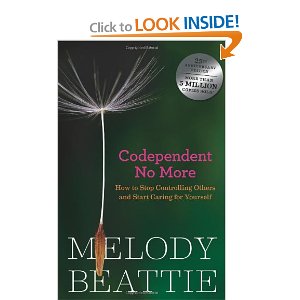
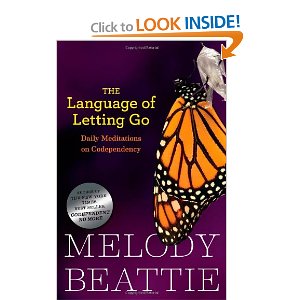
If any of this gives you pause to think, you might want to take a look at Melody Beattie‘s book Codependent No More — it’s full of pratical thoughts, tools and tactics for taking codependency head on. You can download a free sample here. I first became aware of this issue in my life about a year ago but this book, the accompanying workbook and her meditation book “Language of Letting Go” have been helpful to me in overcoming codependency and having better relationships…

On being connected…

LOL. ‘Make me one with everything’…

What did the Buddhist monk say to the hot-dog vendor? Can you make me one with everything?

I was buckling my seat belt in the little Cessna one day, get­ting ready for flight training, when my instructor Rob turned to me.

“I just take a second when I strap myself in and tell myself I’m becoming one with the plane as I do,” Rob said. “It really helped me in the beginning when I was nervous and felt so separate from the airplane.”

What a great idea, I thought. That day turned into one of my most comfortable flying sessions. It reminded me of a lesson I had learned a while back.

For most of my life, I felt disconnected from things: from myself, from other people, from life. That feeling of separate­ness haunted me. It explains why I tried so desperately to attach myself codependently to people, places, and things.

Over the years, I began to see that my separateness was an illusion. The same energy, the same life force, that runs through all the universe runs through you and me, too.

We’re connected, whether we know it or not.

Nobody has to make you one with everything. You already are.

Let go of your illusion of separateness.

Connect yourself.

God, help me know my oneness with the world. Help me know how connected I really am so I don’t have to connect in ways that don’t work.

via April 15: Connect Yourself | Language of Letting Go.

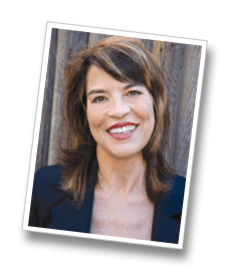
Something else I like about Melody Beattie — she’s a pilot, or at least a student pilot…

Loving Ourselves Unconditionally

More Melody Beattie:

“Love yourself into health and a good life of your own.

Love yourself into relationships that work for you and the other person. Love yourself into peace, happiness, joy, success, and contentment.

Love yourself into all that you always wanted. We can stop treating ourselves the way others treated us, if they behaved in a less than healthy, desirable way. If we have learned to see ourselves critically, conditionally, and in a diminishing and punishing way, it’s time to stop. Other people treated us that way, but it’s even worse to treat ourselves that way now.

Loving ourselves may seem foreign, even foolish at times. People may accuse us of being selfish. We don’t have to believe them.

People who love themselves are truly able to love others and let others love them. People who love themselves and hold themselves in high esteem are those who give the most, contribute the most, and love the most.

How do we love ourselves? By forcing it at first. By faking it, if necessary. By acting as if. By working as hard at loving and liking ourselves as we have at not liking ourselves.

Explore what it means to love yourself.

Do things for yourself that reflect compassionate, nurturing, self love.

Embrace and love all of yourself – past, present, and future. Forgive yourself quickly and as often as necessary. Encourage yourself. Tell yourself good things about yourself.

If we think and believe negative ideas, get them out in the open quickly and honestly, so we can replace those beliefs with better ones.

Pat yourself on the back when necessary. Discipline yourself when necessary. Ask for help, for time; ask for what you need.

Sometimes, give yourself treats. Do not treat yourself like a pack mule, always pushing and driving harder. Learn to be good to yourself. Choose behaviors with preferable consequences – treating yourself well is one.

Learn to stop your pain, even when that means making difficult decisions. Do not unnecessarily deprive yourself. Sometimes, give yourself what you want, just because you want it.

Stop explaining and justifying yourself. When you make mistakes, let them go. We learn, we grow, and we learn some more. And through it all, we love ourselves.

We work at it, and then work at it some more. One day we’ll wake up, look in the mirror, and find that loving ourselves has become habitual. We’re now living with a person who gives and receives love, because that person loves him or herself. Self-love will take hold and become a guiding force in our life.

Today, I will work at loving myself. I will work as hard at loving myself as I have at not liking myself. Help me let go of self-hate and behaviors that reflect not liking myself. Help me replace those with behaviors that reflect self-love. Today, God, help me hold myself in high self-esteem. Help me know I’m lovable and capable of giving and receiving love.

From The Language of Letting Go by Melody Beattie ©1990, Hazelden Foundation. All rights reserved.” via the language of letting go | Tumblr.

Warning! Video: NSFW…

Life is not to be endured

More wisdom from Melody Beattie:

“Life is not to be endured; life is to be enjoyed and embraced.

The belief that we must square our shoulders and get through a meager, deprived existence for far-off “rewards in Heaven” is a codependent belief.

Yes, most of us still have times when life will be stressful and challenge our endurance skills.  But, in recovery, we’re learning to live, to enjoy our lives, and handle situations as they come.

Our survival skills have served us well.  They have gotten us through difficult times-as children and adults.  Our ability to freeze feelings, deny problems, deprive ourselves, and cope with stress has helped us get where we are today.  But we’re safe now.  We’re learning to do more than survive.  We can let go of unhealthy survival behaviors.  We’re learning new, better ways to protect and care for ourselves.  We’re free to feel our feelings, identify and solve problems, and give ourselves the best.  We’re free to open up and come alive.

Today, I will let go of my unhealthy endurance and survival skills.  I will choose a new mode of living, one that allows me to be alive and enjoy the adventure.”

Source: this is a quote “Life is not to be endured; life is to be… | turtle_dove on Xanga

Codepedence is not just an issue for partners of addicts

I don’t normally curate this much content in one ‘swell foop’ as I like to say but Melody Beattie’s perspective on owning your own stuff and Mark Brower’s comments on same were so good I couldn’t find anything to exclude. Mark starts out and then quotes my ‘Language of Letting Go’ reading for today…

Many of us struggle with codependency. When addiction is present in a relationship, the old model was that the addict was “dependent” and his or her spouse was “codependent.” But today we know that usually both the addict and spouse struggle with codependency in its various forms.

Codependency happens when we lose touch with our sense of self, and become over-dependent on how other people are doing, and/or how they perceive us. Since we are not “okay” with ourselves, we have to work overtime to ensure that other people around us are doing okay, and/or that they feel good about us.

So we wind up tolerating things we shouldn’t tolerate, feeling responsible for things we shouldn’t feel responsible for, and compromising what we want simply in order to please someone else. This inevitably leads to distress and frustration, which causes the addict to move deeper into their addiction, and for the addict’s spouse to cope in other ways.

The issue of codependence is complicated for Christians, because it gets mixed up with our desire to love and serve other people. The Bible tells us to “consider others better than ourselves.” But the same Bible also tells us to love our neighbor as ourselves, which presupposes some sort of healthy self-regard. The Bible also portrays Jesus himself taking time away from the crowds – not being “nice” and doing what they want him to do – in order to rest and reconnect with God the Father.

The trick to living a recovery life in relationships with others is to know how to separate healthy love with unhealthy codependence.

Melody Beattie has been a great help for me over the years with her many books on this topic. One of her best books on this topic is a daily meditation book called “The Language of Letting Go.”

In another article on this blog, I wrote about codependence, and quoted at length from her book. But it’s so good and helpful that I want to quote some more! What follows are some excerpts about the issue of “Property Lines”:

A helpful tool in our recovery, especially in the behavior we call detachment, is learning to identify who owns what. Then we let each person own and possess his or her rightful property.

If another person has an addiction, a problem, a feeling, or a self-defeating behavior, that is their property, not ours. If someone is a martyr, immersed in negativity, controlling, or manipulative, that is their issue, not ours.

If someone has acted and experienced a particular consequence, both the behavior and the consequence belong to that person.

People’s lies, deceptions, tricks, manipulations, abusive behaviors, inappropriate behaviors, cheating behaviors, and tacky behaviors belong to them, too. Not us.

People’s hopes and dreams are their property. Their guilt belongs to them too. Their happiness or misery is also theirs. So are their beliefs and messages.

If some people don’t like themselves, that is their choice. Their choices are their property, not ours. What people choose to say and do is their business.

What is our property? Our property includes our behaviors, problems, feelings, happiness, misery, choices, and messages; our ability to love, care, and nurture; our thoughts, our denial, our hopes and dreams for ourselves. Whether we allow ourselves to be controlled, manipulated, deceived, or mistreated is our business.

In recovery, we learn an appropriate sense of ownership. If something isn’t ours, we don’t take it. If we take it, we learn to give it back. Let other people have their property, and learn to own and take good care of what’s ours.

Today, I will work at developing a clear sense of what belongs to me, and what doesn’t. If it’s not mine, I won’t keep it. I will deal with myself, my issues, and my responsibilities.

If you want to learn more about codependence, consider signing up for the Recovery Journey, an e-course for people in recovery from sexual struggles. If you are the partner of someone who struggles, note that we have a special module with materials just for the partners. You can learn more about this program at the website: http://recoveryjourney.com

Source: Codepedence is not just an issue for partners of addicts | sexualsanity.com

Codependence is a constant battle for me and it has made made my wife’s vacation in Italy even more difficult than the simple logistics of trying to run a business and hold down the fort with 4 boys while she’s gone but by the grace of God, with the help of Celebrate Recovery, my good friends Sandy and Steve and Melody Beattie’s good thoughts. we are winning on this trip! If these issues resonate with you, drop me a note below. I’ll be happy to share with you what I have…

…on 12 of life’s most important lessons

David Kanigan knocks it out of the part with this one…

“The more we know about ourselves, the more power we have to behave better. Humility is underrated. We each have an infinite capacity for self-deception — countless unconscious ways we protect ourselves from pain, uncertainty, and responsibility — often at the expense of others and of ourselves. Endless introspection can turn into self-indulgence, but deepening self-awareness is essential to freeing ourselves from our reactive, habitual behaviors.” Go to the source for 11 more: Twelve of life’s most important lessons… – Lead.Learn.Live..

10 Simple Ways to Find Happiness

An emoticon with a smile. For more emoticons i...

Mmmmm. Good thoughts from Barton Goldsmith at Psychology Today…

“We all want to feel happy, and each one of us has different ways of getting there. Here are 10 steps you can take to increase your joie de vivre and bring more happiness into your life: Continue reading “10 Simple Ways to Find Happiness”

You Are a Work of Art

Melody Beattie shares this today….

All the arts we practice are apprenticeship. The big art is our life. ~ M. C. Richards

What you do is not who you are.

You are more, much more, than that.

It’s easy to get so caught up in what we do that we’re only identifying ourselves through our daily tasks. I am a me­chanic. I am a parking lot attendant. I am a doctor. I am a dishwasher. When we link ourselves too closely to our jobs, we deny ourselves the chance to ever be anything else. We limit ourselves by believing that’s all we are and all we’ll ever be.

Our concept of who we are is one of the hardest, but most rewarding, ideas we can change. If you have been brought up believing that you are clumsy, you will probably demon­strate this belief in your actions—until you identify that idea, let go of it, and let yourself be something else.

Don’t limit yourself by saying you are just what you do. Stop seeing yourself as a static being. If I am “just” a parking lot attendant, then how can I hope to ever influence someone through my words, my art, my music, my life? But if I am a vital, living, growing soul who happens to be parking people’s cars, then everything I do can become a symphony. I can have an influence for good in the lives of everyone I touch. I can learn from them, and they from me. I can learn the lessons that I am supposed to learn at this place in my life, and I can move on to other lessons.

God gave us the power to change. You’re more than what you do. You’re a vital vibrant soul that came here to experi­ence, grow, and change. Make a masterpiece out of your life.

God, help me realize the glory of my soul. Thank you for my mor­tality and for the ability to learn and grow.

Source: April 24: You are a Work of Art | Language of Letting Go

Taking Care of Ourselves

In The Language of Letting Go Melody Beattie says…

“We often refer to recovery from codependency and adult child issues as “self-care.” Self-care is not, as some may think, a spin-off of the “me generation.” It isn’t self-indulgence. It isn’t selfishness—in the negative interpretation of that word. We’re learning to take care of ourselves, instead of obsessively focusing on another person. We’re learning self-responsibility, instead of feeling excessively responsible for others. Self-care also means tending to our true responsibilities to others; we do this better when we’re not feeling overly responsible. Self-care sometimes means, “me first,” but usually, “me too.” It means we are responsible for ourselves and can choose to no longer be victims. Self-care means learning to love the person we’re responsible for taking care of—ourselves. We do not do this to hibernate in a cocoon of isolation and self-indulgence; we do it so we can better love others, and learn to let them love us. Self-care isn’t selfish; it’s self-esteem. Today, God, help me love myself. Help me let go of feeling excessively responsible for those around me. Show me what what I need to do to take care of myself and be appropriately responsible to others.”

Beattie, Melody (2009-12-15). The Language of Letting Go (Hazelden Meditation Series) (pp. 105-106). Hazelden. Kindle Edition.

Feel free today to take care of yourself…

The Way of the Peaceful Parent

Father and Son

Leo Babauta shares this today…

There is no such thing as stress-free parenting.

A reader requested that I share my thoughts on stress-free parenting, as the father of six kids. And while I have learned a lot about being a dad, and finding joy in parenthood, I also know that stress-free parenting is a myth.

Parents will always have stress: we not only have to deal with tantrums and scraped knees and refusing to eat anything you cook, but we worry about potential accidents, whether we are ruining our kids, whether our children will find happiness as adults and be able to provide for themselves and find love.

That said, I’ve learned that we can find peace.

Peace isn’t a place with no stress, but a place where you take the stress as it comes, in stride, and don’t let it rule you. You let it flow through you, and then smile, and breathe, and give your child a hug.

There is a Way of the Peaceful Parent, but it isn’t one that I’ve learned completely. I’ll share what I’ve learned so far, with the caveat that I don’t always follow the Way, that I still make mistakes daily, that I still have a lot to learn, that I don’t claim to have all the answers as a parent.

Source: » The Way of the Peaceful Parent :zenhabits

Go to the source if you’d like to hear his way…

Giving

Icon from Nuvola icon theme for KDE 3.x.

Good thoughts this morning from Melody Beattie…

Learning to be a healthy giver can be a challenge. Many of us got caught up in compulsive giving charitable acts motivated by uncharitable feelings of guilt, shame, obligation, pity, and moral superiority.

We now understand that caretaking and compulsive giving don’t work. They backfire. Caretaking keeps us feeling victimized.

Many of us gave too much, thinking we were doing things right; then we became confused because our life and relationships weren’t working. Many of us gave so much for so long, thinking we were doing God’s will; then in recovery, we refused to give, care, or love for a time.

That’s okay. Perhaps we needed a rest. But healthy giving is part of healthy living. The goal in recovery is balance caring that is motivated by a true desire to give, with an underlying attitude of respect for ourselves and others. The goal in recovery is to choose what we want to give, to whom, when, and how much. The goal in recovery is to give, and not feel victimized by our giving.

Are we giving because we want to, because it’s our responsibility? Or are we giving because we feel obligated, guilty, ashamed, or superior? Are we giving because we feel afraid to say no? Are the ways we try to assist people helpful, or do they prevent others from facing their true responsibilities? Are we giving so that people will like us or feel obligated to us? Are we giving to prove we’re worthy? Or are we giving because we want to give and it feels right?

Recovery includes a cycle of giving and receiving. It keeps healthy energy flowing among us, our Higher Power, and others. It takes time to learn how to give in healthy ways. It takes time to learn to receive. Be patient. Balance will come.

God, please guide my giving and my motives today

December 5: Giving | Language of Letting Go

I gave because I expected something in return; I wanted people to think I’m brilliant and to be eternally indebted to me when I helped them. It didn’t work. I’m getting healthier now…

Let Go of Being a Victim

Victim of Love (album)
Image via Wikipedia

“It’s okay to have a good day. Really.

It’s okay to be doing okay and to feel like our life is manageable and on track.

Many of us have learned, as part of our survival behaviors, that the way to get the attention and approval we want is to be victims, if life is awful, too difficult, unmanageable, too hard, unfair, then others will accept, like, and approve of us, we think.

We may have learned this from living and associating with people who also learned to survive by being a victim.

We are not victims. We do not need to be victimized. We do not need to be helpless and out of control to get the attention and love we desire. In fact, the kind of love we are seeking cannot be obtained that way.
We can get the love we really want and need by only owning our power. We learn that we can stand on our own two feet, even though it sometimes feels good to lean a little. We learn that the people we are leaning on are not holding us up. They are standing next to us.

We all have bad days – days when things are not going the way we’d like, days when we have feelings of sadness and fear. But we can deal with our bad days and darker feelings in ways that reflect self responsibility rather than victimization.

It’s okay to have a good day too. We might not have as much to talk about, but we’ll have more to enjoy.

God, help me let go of my need to be a victim. Help me let go of my belief that to be loved and get attention I need to be a victim. Surround me with people who love me when I own my power. Help me start having good days and enjoying them.” Source; December 1: Let Go of Being a Victim | Language of Letting Go

Why You Should Learn By Doing

Learn to Skate
Image by wuperruper via Flickr

Do you enjoy learning new things? I certainly do.In particular, I enjoy about learning new ways to better myself and my relationships with others. When I first started on this quest I couldn’t get enough. I read about it all the time on blogs, online magazines and in books. There came a point where everything I read was just a slightly different version of the same thing. I was stuck.

I felt as though I had run out of things to read and ideas to try, yet I didn’t feel any better. I didn’t feel as though I was a better person or that my relationships with others had improved at all. There was something missing. It was the doing.

It wasn’t until I actually started applying what I had learned in the personal development realm to my own life that it started to make a difference. All the lessons, all the truths were suddenly having an impact. There was a huge difference in simply knowing it vs. actually doing it.

If you read all the books, blogs and articles on ice skating you would likely think it’s pretty easy, and it is … in theory. But strap on some skates and step on the ice for the very first time and my bets are that you’d be sitting on the ice a whole lot more than you’d be gracefully gliding around on it. It boils down to the old saying that practice makes perfect.

Here’s another reason I’ve found for ‘learning new things by doing’ — it makes me more sensitive to the learners in my life by reminding me how hard it can be to try anything new. What about you?

Start a Blog at WordPress.com.

Up ↑