Kristin Barton Cuthriell has an excellent post on codependency that I want to share with you this morning:
“Love is the ability and willingness to allow those that you care for to be what they choose for themselves without any insistence that they satisfy you.” Wayne Dyer.
Sally tells her husband, Ron, that she would like to go visit her sister for the weekend. Ron becomes upset and accuses Sally of not loving him. He gives Sally such a hard time, that even if she were to go, she would not enjoy herself. Ron tells Sally that he does not want her to go because he loves her and wants to spend all of his time with her.
Ken and Angie spend most evenings and weekends together. One Saturday, Ken is invited to go to a ballgame with the guys. When Ken asks Angie if he can go, she becomes upset and reasons that he would rather be with the guys than with her. She feels hurt and acts angry and resentful towards Ken. Ken can’t enjoy the game because he knows that he has hurt Angie.
Cindy joins a book club that meets the first Wednesday night of each month. Ted feels threatened by Cindy leaving the house to do something without him. As much as Cindy enjoys book club, she stops going. The way Ted treats her when she does go, just isn’t worth it.
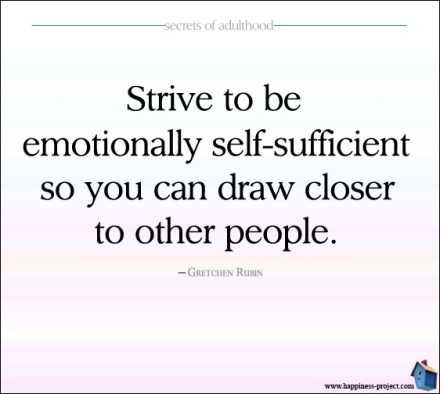
Unless the visit to the sister, the ballgame, and the book club are destructive to the individual or the couple in some way, Ron, Angie, and Ted are operating with their insecurities in the driver’s seat. They believe that they have been acting out of love. But this kind of love is about them, not their partner. What they call love is really dependency. They are not holding their partner back for the good of their partner, they are holding their partner back because they want to make themselves happy. They want to fulfill an unmet need within themselves.
When individuals function from a place of dependency rather than mature love, they are usually trying to get a childhood need for security and nurturing met. As infants, we are totally dependent on our caretakers for all of our needs. If those needs are met, we are more likely to experience mutual love in adult relationships. If those needs are not met when we are young, we do not outgrow them. Instead, we unconsciously demand that these needs be met by our partners. When this happens, our partner’s needs are often ignored and the relationship becomes more about us than about them.
A healthy parent child relationship is very different from a healthy adult relationship. In a healthy parent child relationship, the parent is to meet the child’s needs, not the other way around (Note: meeting a child’s needs is not the same as spoiling a child). The relationship is not mutual. It is about the child.
A healthy adult relationship is about mutual sharing. The adult is not enmeshed, as an infant often is with their primary caretaker. The relationship consists of a delicate balance of closeness and separateness.” If any of this resonates with you, you can read the rest of the article here: Love or dependency – Let Life in Practices.
While you’re there, signup to receive Kristin’s updates or follow her in social media! She is a continuous source of good, clear thinking on relationships and her perspective has helped me many times…


























 Reading
  Bright, shiny objects!
comments