Saint Francis and the Sow

recite-14687--1513544665-yscank

Continue reading “Saint Francis and the Sow”

You Are What You Focus On: The Strength of An Unstoppable Mindset

The FinerMinds teams shares this:

“It’s not what happens to you, it’s what you do about it.” – W Mitchell

Not many people have been as unfortunate as W Mitchell – or so it would seem.

He’s been involved in two separate serious accidents – one of which left him with burns covering most of his body, and the other that left him wheelchair-bound for life.

As a result of such disabilities, many would give up. But because of his firm belief that success is not dictated by what life deals to you, but by what you do with the challenges you’re dealt, W Mitchell re-trained himself to fly a plane, become a famous international speaker and an environmental lobbyist.

In this 4-minute video, he reinforces the fact that we become what we focus on, and how once he started focusing on how powerful and innovative he was, he not only changed his life – but the life of those around him.

Go to the source of this quote: You Are What You Focus On: The Strength of An Unstoppable Mindset

Love Yourself First!

…and remember to practice self-compassion this weekend!

American Minute for December 21st

Cover of "John Newton (Men of Faith)"

“Amazing grace! How sweet the sound,

That saved a wretch like me!

I once was lost, but now am found,

Was blind, but now I see.”

These were the words of John Newton, a former slave ship captain, who died DECEMBER 21, 1807.

At age 11, his mother died and he went to sea with his father.

He fell in love with Mary Catlett while on shore leave, but overstaying his visit, he missed his ship’s departure and was pressed by a gang onto the HMS Harwich.

His reckless behavior caused him to be traded to a slave ship.

While on a West African plantation buying slaves, his employer enslaved him.

He was rescued, but continued his immoral life, deriding Christians with blasphemy that shocked even sailors.

During a storm that nearly sank them, he first prayed.

He read Thomas a Kempis’ ‘Imitation of Christ,’ left the slave-trade and became a minister, preaching the rest of his life against slavery.

Having encouraged William Wilberforce to end slavery in England, his tombstone read,

“John Newton, Clerk,

once an infidel and libertine,

a servant of slaves in Africa,

was, by the rich mercy

of our Lord and Saviour Jesus Christ,

preserved, restored, pardoned,

and appointed to preach the faith

he had long labored to destroy.”

via American Minute for December 21st.


American Minute for November 7th

, American religious figure.

He wanted to be a baseball player, but after attending a revival at age 16, his life changed.

He has addressed crowds around the world and is unprecedented in having friendships with U.S. Presidents Truman, Eisenhower, Kennedy, Johnson, Nixon, Ford, Carter, Reagan, Bush, Clinton and Bush.

His name is Billy Graham, born NOVEMBER 7, 1918.

At a news conference, March 21, 1956, President Eisenhower stated:

“This is what I see in Billy Graham – A man who clearly understands that any advance in the world has got to be accompanied by a clear realization that man is, after all, a spiritual being.”

Ronald Reagan introduced Billy Graham at a California rally, saying:

“Why is a representative of government here? To welcome with humble pride a man whose mission in life has been to remind us that in all our seeking…the answer to each problem is to be found in the simple words of Jesus of Nazareth, who urged us to love one another.”

Upon receiving the Congressional Gold Medal in 1996, Billy Graham said:

“As we face a new millennium, I believe America has gone a long way down the wrong road. We must turn around…If ever we needed God’s help, it is now.” via American Minute for November 7th.

As A Flower To The Sun

Curated from Steve McSwain @ Mindful Living on Huffingtonpost.com who writes:
2012-07-24-flowersinsun.jpg

Benjamin Whichcote said, “The human soul is to God as a flower is to the sun; it opens at its approach; it shuts when it withdraws.”

Today, I will approach the sun; I will open to all that is divine. And the approach? Well, it’s just a simple acknowledgement, perhaps a thought, the awareness of desire, attention to a tiny inclination. It’s like magic really. There is no effort whatsoever.

It was Jesus who purportedly said, “Look at the flowers of the field … they neither toil nor spin … and yet, your heavenly father sees them … knows them” (Matthew 6).

No flower ever struggled to open to the sun. It simply turns and looks — and then, it freely shares its color and fragrance with the world.

How beautiful. I think I’ll be the same. Why must I make knowing God into a struggle? Why would I allow the religion within which I was raised continue to hound me inside my head with a catalogue of reminders of what I must do in order to be? No, instead, I’ll lay aside that narrow conditioning and just do nothing but be. I feel such freedom when I’m doing less and being more — more of who I am: a beautiful human flower, simply and effortlessly, opening to the sun.

Ah, that’s it for me. Which reminds me of something Thomas Merton once whispered: “As soon as a person” — that’s me and perhaps you, too — “As soon as a person is inclined to be with God” — as I am and, again, perhaps you are, too — “As soon as a person is inclined to be with God, they are … no matter where they are … in the monastery, in the city, in the woods.”

“Furthermore,” he continued, “Just when it would seem as if he (or, she) is in the middle of his journey” — and, for me, that’s like, most of the time — “Know this: he has actually arrived at his destination already.”

Already? You mean, I’m there now? In the sun? That this thought of God, this inclination for God that I feel from time to time, that’s all it takes and I’m in full bloom already?

Wow! What a Divine thought! Thank you Thomas. Thank you Whichcote. How could I not thank you? Whisper more, my friends. And do so often, this and every day. I’ll be listening for your reminders.

Will you, too? Yes, you, reading this. Can you lay aside the need to judge, to critique, to complain, to express your disapproval and so, temporarily suspend the insatiable need to evaluate the world — to fix, as if you could, what’s wrong with it? Can you release, at least for now, the impulsive need to see who’s reading what you’ve written, commenting on what you’ve labored over? Can you stop doing long enough to simply be? To look? To listen? To blossom?

I have to remind myself of this often, driven as I am to produce, to please, to proclaim, to complain, to impress, to make certain I’m heard, read and, mostly, admired by somebody — anybody. Even a critic and his criticism is better than nothing.

Today, however, I intend to do nothing. Instead, I plan to listen, to observe, to be open to perspectives other than my own, to watch for the divine reminders. They’re everywhere. But they usually come as whispers and are easily missed.

The same is true for you. Know that the sun is shining and you, my friend, are blossoming into Life itself. You are the color on the canvas of creation that creates what’s beautiful about this world. You are the fragrance that makes all things better. You are the flower that blooms and, in the end, what else could possibly matter more?” via Steve McSwain: As A Flower To The Sun”

The Gospel in Two Minutes

Earlier this Spring we had the chance to hear from Trip Lee on his new album and its connection to the gospel and on-the-ground sanctification. In this video he explains the gospel in two minutes.

via The Gospel in Two Minutes.

Remain in Jesus

Stained glass at St John the Baptist's Anglica...

The most famous verse in the whole Bible is probably John 3:16, which says,

“For God so loved the world that He gave His only Son, that whoever believes in Him shall not perish but have eternal life.”

You’ve undoubtably seen it on signs at sporting events, written on t-shirts, posted on billboards and even on drink cups at some fast food restaurants. And for good reason, it’s an amazing verse! Here’s Jesus telling us about why He came, who sent Him, and what happens for those who put their faith in Him. It’s a great snapshot of the Gospel message. If you’ve never begun the habit of memorizing Scripture, start with this one.

While John 3:16 is an amazing verse, John 3:17 is just as compelling. Jesus continues by telling us,

“For God did not send His Son into the world to condemn the world, but to save the world through Him.”

That’s a reassuring statement! Look at the two verses together; first, God loves us enough to send us a Savior, next, if we put our faith in Jesus, if we trust Him as our Lord and Savior, we will have eternal life, and Jesus wasn’t sent to condemn the world as some would have us believe, but to save the world.

That’s where the power for a changed life comes from, from the Savior of the world. Jesus gives us the power for a new life, for a life of freedom from our hurts, hang-ups and habits, but we have to bring them to Him and trust Him to heal us. As we go through Celebrate Recovery we need to ensure that Jesus is the center of our program. We can not do this on our own power. To find change, lasting change, we need to depend wholly on Jesus.

Today, ask yourself, have you been relying on Jesus’ power or your own? If you’ve been relying on Christ’s power, keep it up. Don’t get distracted, don’t stray from the path. But if you find that you’ve begun to rely on anything other than Jesus, a relationship, willpower, a new habit, anything, don’t wait to refocus your attention to Jesus. We all have the tendency to take our eyes off of Jesus, but when we realize we’ve done that, we need to turn to Him in prayer and ask Him for His help to remain focused on and in Him.

Later in the Book of John, Jesus tells us:

“I am the vine; you are the branches. If a man remains in me and I in him, he will bear much fruit; apart from me you can do nothing.” John 15:5

Jesus isn’t a part of recovery, He is recovery. If we want to live a new life, a life free from hurts, hang-ups and habits, we must remain in Jesus. It is only by and through Jesus that you and I can have new lives here on earth, and eternal life in heaven.

Today, what can you do to make sure that you remain in Jesus?

If you find that you have begun to focus on anything else, are you ready to make today the day you focus on Jesus as your Lord and Savior, as your Higher Power?

Don’t put it off any longer. Remember, Jesus didn’t come to condemn us, but to save us.” via Remain in Jesus.

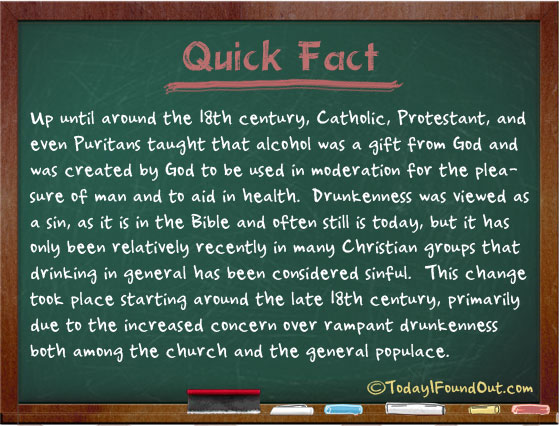
It Has Only Been Recently in History that Many Christian Groups Began Viewing Drinking as Sinful

Reference via It Has Only Been Recently in History that Many Christian Groups Began Viewing Drinking as Sinful.

Combating Shame

Melody Beattie writes:

“Shame can hold us back, hold us down, and keep us staring at our feet.” Beyond Codependency.

Watch out for shame.

Many systems and people reek of shame. They are con­trolled by shame and may want us to play their game with them. They may be hoping to hook us and control us through shame.

We don’t have to fall into their shame. Instead, well take the good feelings — self-acceptance, love, and nurturing.

Compulsive behaviors, sexually addictive behaviors, over­eating, chemical abuse, and addictive gambling are shame-

based behaviors. If we participate in them, we will feel ashamed. It’s inevitable. We need to watch out for addictive and other compulsive behaviors because those will immerse us in shame.

Our past, and the brainwashing we may have had that im­posed “original shame” upon us, may try to put shame on

us. This can happen when we’re all alone, walking through the grocery store or just quietly going about living our life. Don’t think . . Don’t feel…. Don’t grow or change… . Don’t be alive. . . . Don’t live life. . .. Be ashamed!

Be done with shame. Attack shame. Go to war with it. Learn to recognize it and avoid it like the plague.

Today, I will deliberately refuse to get caught up in the shame float­ing around in the world. If I cannot resist it, I will feel it, accept it, then be done with it as quickly as possible. God, help me know that it’s okay to love myself and help me to refuse to submit to shame. If I get off course, help me learn to change shame into guilt, correct the behavior, and move forward with my life in immediate self-love. via June 27: Combating Shame.

Scraping barnacles, losing spiritual fat, cleaning house

Barnacles (Chthamalus stellatus) and Limpets (...

Jon Swanson writes:

I wish I’d seen barnacles sometime in my life. I don’t like using cliche metaphors unless I’ve seen what I’m talking about. And I’ve heard that barnacles cling to the bottoms of boats and slow them down. And I’ve heard that it’s important to scrape them off from time to time lest the boat gets bogged down.

I spent the day yesterday scraping barnacles out of my office and off my heart. But since I’ve never seen barnacles, I can’t use that image.

Parts of my office hadn’t been adjusted since I moved in 53 months ago. A drawer was full of empty router boxes from some network projects we’ve done. There were drafts of various sorts, old catalogs, and pictures from projects that are long over.

I also took a couple steps on major projects, steps where the absence of action was slowing the progress of my heart. I was feeling trapped until I brushed off the inertia with a few keystrokes.

As I was thinking about my experiential ignorance, I remembered another image, this time about running. I’m not a runner, but I’m walking and riding more. And realizing the way baggage limits progress. Sometimes it’s the baggage of wrong actions and wronged relationships. Other times it’s just distractions we picked up along the way. The writer of Hebrews says,

It means we’d better get on with it. Strip down, start running—and never quit! No extra spiritual fat, no parasitic sins. Keep your eyes on Jesus, who both began and finished this race we’re in. Study how he did it. Because he never lost sight of where he was headed—that exhilarating finish in and with God—he could put up with anything along the way: Cross, shame, whatever..

Spiritual fat. Parasitic sins.  That’s cleaning my office, clearing piles, ending collections.” via Scraping barnacles, losing spiritual fat, cleaning house..

I hope that Jon won’t mind that I added barnacles to his post… :-D

Looking for something to do

think

Jon Swanson writes:

Time to talk about strengths. The capacities that we have to do things.

For example, I find it easy to see the connections between things that no one else sees. Sometimes this gets me in trouble. Sometimes people think I’m merely being silly. But sometimes these connections look like creativity. Sometimes people say “I never thought of it that way.”

That’s a strength of mine. It’s not the best strength or my only strength. It’s not something that other people need to desire. In fact, why do you need it if I have it? What you could say is, “What can Jon and I do together, if he can see odd connections and I can actually implement them?” Because I am a lousy implementer.

You may be able to see a strength of mine better than you can see your own strengths. What we do from our strengths, we don’t think of as a strength, because it is just how we are. So we believe we don’t have any strengths, nothing that we are capable of, nothing that God can use for anything significant. We just have what we do.

It’s worth thinking carefully and seriously to discover what our strengths are.

The first part of that thinking is to decide that it’s possible that God has created us with capacities. Because you know that you are thinking “I have no strengths” or “God’s got nothing I can use.” But didn’t the kid have fish and bread? 15,000 people fed.  Didn’t David know how to write little poems? The book of Psalms. Didn’t Barnabas know how to encourage people? Paul. Didn’t Moses know how to lead sheep through the desert? Deliverer.

We know the end of the stories. They just had what they did.

Tomorrow I’ll have some strength finding questions.” via Looking for something to do..

A prayer…

“May today there be peace within.  May you trust that you are exactly where you are meant to be.  May you not forget the infinite possibilities that are born of faith in yourself and others.  May you use the gifts that you have received, and pass on the love that has been given to you.  May you be content with yourself just the way you are.  Let this knowledge settle into your bones and allow your soul the freedom to sing, dance, praise, and love.  It is there for each and everyone of us.” St. Theresa’s Prayer via A prayer……………. Photo via Popsdigital.

Practice Rapture

Meera Bai (1498-1547), Hindu mystical poetess,...

What if the measure of our value in this lifetime is not…

  • how tidy we kept our car
  • whether our kid’s nose had snot crusted on it
  • how flat our stomach was
  • the number of zeroes in our bank account

But how diligently we practice rapture? Not perfectly, but devotedly studying passion.” via Practice Rapture: Ecstatic Sensual Poetry from Mirabai – The Hot Love Revolution: Monogamy is the hottest place on earth.

PS Michele Christensen, the woman who wrote this post, is one of the hottest, sexiest bloggers on the planet and she writes about the joy of monogomy at http://hotloverevolution.com/. Follow her blog — you’ll love it…

Shallow Small Group Bible Study

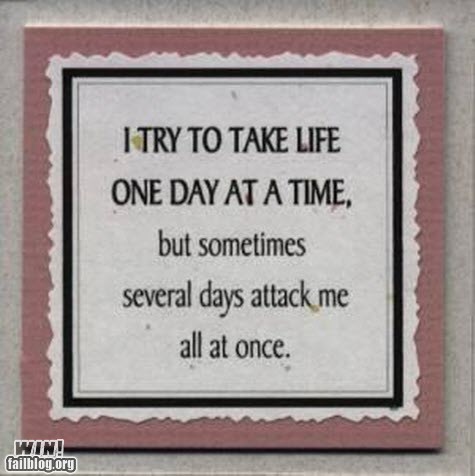
One Day at a Time

“One day at a time–this is enough. Do not look back and grieve over the past for it is gone; and do not be troubled about the future, for it has not yet come. Live in the present, and make it so beautiful it will be worth remembering.” via One Day at a Time – Single Parents – Families.com.

I had a bit of an epiphany yesterday while weeding in the garden. My wife and I were talking about taking things one day at a time. I told her that while she was in Italy, sometimes it was all I could do to live second to second, minute to minute, hour to hour let alone a day at a time. The purpose of living one day at a time is to reduce life to bite sized chunks — like the old riddle how do you eat an elephant? One bite at a time…

Jesus said ‘sufficient unto the day is the evil thereof‘ [I don’t know why I like the King James version of that quote so much, but I do]. The epiphany for me was that this not only applies to looking forward, but also looking back. Sometimes I can’t bear up under the future OR the past but I don’t have to. I can live one moment at a time when things get overwhelming!

The Apostle Paul said in Philippians chapter 3:”12 Not that I have already obtained all this, or have already arrived at my goal, but I press on to take hold of that for which Christ Jesus took hold of me. 13 Brothers and sisters, I do not consider myself yet to have taken hold of it. But one thing I do: Forgetting what is behind and straining toward what is ahead, 14 I press on toward the goal to win the prize for which God has called me heavenward in Christ Jesus.”

I forget what is behind and I strain toward what is ahead one day at a time…

Expectations and being ‘right’

Great Expectations (1998 film)

Lately, I have been thinking a lot about the word ‘right’ in my life. In my professional life, I am a thought leader in the internet marketing space. I have strong opinions about ‘right’ and ‘wrong’ when it comes to strategy, tactics and tools. I am learning lately that being right or thinking I am right can lead to disastrous consequences…

I have found fertile thinking in this quote from Nietzsche; “You have your way. I have my way. As for the right way, the correct way, and the only way, it does not exist.” When I think I am right, I think I HAVE rights and expectations. I think I know, however, that there is only one place disappointment comes from; false expectations…

Ponder this:

“There are/can be many disapointments in life and sometimes they can’t be avoided. Living up to what we expect is a big one. Whether it be in someone else or in ourselves. Our expectations can be “too high” unreasonable or unrealistic. No one is perfect nor can they be in this crazy world.

Sometimes we expect more from a person than they are able to give..at a particular time. Sometimes we expect a person to do more than they are capable of doing, or to be more than they are capable of being. Therefore we are the ones who wind up getting frustrated, angry, hurt, impatient and disapointed. We are the ones effected by our own actions. We are the ones who set ourselves up for disapointments.

Sometimes our approach can be critical, overbearing and destructive. Even when we simply suggest something or give an opinion it does’nt go over well. It can be viewed as an attack on ones charactor even tho that was not the intention. This should never be taken personally because we all have things we are trying to cope with from our past and present situations and we shut down.

Even when we simply try to point something out to someone they can go into the defend mode, protective mode because they are not ready to deal with “the problem” yet. They are still battling with it therefore they are consumed by it and it has power over their well being. Everyone needs to be comfortable in their own skin. Like no body states in one of my comments below..it must be the right message, from the right source, at the right time, by the right person (edified properly) or it will not be received in the way it was intended to be received. Otherwise it can be misinterpreted.

Our expectations, opinions and suggestions can sometimes be veiwed as attacks on self worth and competency. Therefore conflict, separation and alienation occures and the door is shut on communication. Then our relationships are compromised. I watched Charles Stanley‘s program last Sunday and he ministered on how “Words” can have a profound, everlasting effect on us and our well being, our growth and our lives. They can have a tremendous effect and sometimes we say things we later regret.

No one can live up to anyone’s” standards. It’s not that what everyone is doing is right or that we don’t have a big heart in wanting whats best for them, it’s just that our expectations may be overwelming.

A lot of people feel like failures because they can’t live up to the expectations they put on themselves or that others put on them. We can make others feel like failures because of our expections being “To high”> Expecting too much. Too much attention can be put on expectations and not on acheivements/accomplishments.” via Expectations.

Thinking I have rights as a husband leads me to expectations and the expectations lead to disappointment and frustration. Somehow, focusing on being friends with my wife is making a radical difference in my life and happiness has come from leaving ‘right’ behind…

I heard Dr. Phil say “would you rather be happy or right”. I choose happy and as for right? It really doesn’t exist according to Nietszche and only leads to sad for me. What do you think about this?

Fight Fair!

“A constructive complaint looks like this: You calmly ask him not to leave his things flung around the house, not because he’s a big slob (although that may be so) but because neatness is important to you. You “own” the problem (“I’m just not comfortable when you leave your briefcase and coat on the living room couch”) and appreciate that there are other women in the world who would be happy living with someone who didn’t pick up after himself. You mention the attacks you made earlier, at a time of frustration and you apologize for them.

At a relaxed time, you invite a conversation (“Can we make a rule about where briefcases and coats are kept?”) and figure out how to compromise on your different styles. You appreciate that change occurs slowly, in fits and starts, so you praise him for moves in the right direction. After all, you couldn’t transform yourself into a person comfortable with clutter overnight. You might even conclude that it would be simpler to sweep through the house twice a day and dump all his belongings on his big armchair until he decides what to do with them, if anything.

Constructive criticism asks for a specific behavioral adjustment that honors the other person’s capacity to change. It focuses on actions, not character judgments. The “lightly served” part is especially important if you’re talking to someone who responds poorly to anger or intensity in your voice.

People can say very difficult things if they calmly present the facts with no edge in their voice. And silliness helps enormously, as when my son’s wife threatened to charge him rent if he kept putting his clothes on her desk.” via Fight Fair! | Psychology Today.

Ever heard of ‘non violent communication‘? My wife and I have been using it as a tool for over a year. It’s simple, but it’s not easy — it is, however, effective. In NVC, there are 4 components. When I have an issue I talk about:

  • What I see
  • The story that I tell myself about what I see
  • How it makes me feel [mad, sad, glad, hurt]
  • What I would like to see instead

How your partner responds is their responsibility but if you use this tactic, you will have expressed yourself in a non-violent, non shaming, non blaming way and you might actually get heard. Oh and btw, I’ve found that it works even better if you keep the decibels down…

Codepedence is not just an issue for partners of addicts

I don’t normally curate this much content in one ‘swell foop’ as I like to say but Melody Beattie’s perspective on owning your own stuff and Mark Brower’s comments on same were so good I couldn’t find anything to exclude. Mark starts out and then quotes my ‘Language of Letting Go’ reading for today…

Many of us struggle with codependency. When addiction is present in a relationship, the old model was that the addict was “dependent” and his or her spouse was “codependent.” But today we know that usually both the addict and spouse struggle with codependency in its various forms.

Codependency happens when we lose touch with our sense of self, and become over-dependent on how other people are doing, and/or how they perceive us. Since we are not “okay” with ourselves, we have to work overtime to ensure that other people around us are doing okay, and/or that they feel good about us.

So we wind up tolerating things we shouldn’t tolerate, feeling responsible for things we shouldn’t feel responsible for, and compromising what we want simply in order to please someone else. This inevitably leads to distress and frustration, which causes the addict to move deeper into their addiction, and for the addict’s spouse to cope in other ways.

The issue of codependence is complicated for Christians, because it gets mixed up with our desire to love and serve other people. The Bible tells us to “consider others better than ourselves.” But the same Bible also tells us to love our neighbor as ourselves, which presupposes some sort of healthy self-regard. The Bible also portrays Jesus himself taking time away from the crowds – not being “nice” and doing what they want him to do – in order to rest and reconnect with God the Father.

The trick to living a recovery life in relationships with others is to know how to separate healthy love with unhealthy codependence.

Melody Beattie has been a great help for me over the years with her many books on this topic. One of her best books on this topic is a daily meditation book called “The Language of Letting Go.”

In another article on this blog, I wrote about codependence, and quoted at length from her book. But it’s so good and helpful that I want to quote some more! What follows are some excerpts about the issue of “Property Lines”:

A helpful tool in our recovery, especially in the behavior we call detachment, is learning to identify who owns what. Then we let each person own and possess his or her rightful property.

If another person has an addiction, a problem, a feeling, or a self-defeating behavior, that is their property, not ours. If someone is a martyr, immersed in negativity, controlling, or manipulative, that is their issue, not ours.

If someone has acted and experienced a particular consequence, both the behavior and the consequence belong to that person.

People’s lies, deceptions, tricks, manipulations, abusive behaviors, inappropriate behaviors, cheating behaviors, and tacky behaviors belong to them, too. Not us.

People’s hopes and dreams are their property. Their guilt belongs to them too. Their happiness or misery is also theirs. So are their beliefs and messages.

If some people don’t like themselves, that is their choice. Their choices are their property, not ours. What people choose to say and do is their business.

What is our property? Our property includes our behaviors, problems, feelings, happiness, misery, choices, and messages; our ability to love, care, and nurture; our thoughts, our denial, our hopes and dreams for ourselves. Whether we allow ourselves to be controlled, manipulated, deceived, or mistreated is our business.

In recovery, we learn an appropriate sense of ownership. If something isn’t ours, we don’t take it. If we take it, we learn to give it back. Let other people have their property, and learn to own and take good care of what’s ours.

Today, I will work at developing a clear sense of what belongs to me, and what doesn’t. If it’s not mine, I won’t keep it. I will deal with myself, my issues, and my responsibilities.

If you want to learn more about codependence, consider signing up for the Recovery Journey, an e-course for people in recovery from sexual struggles. If you are the partner of someone who struggles, note that we have a special module with materials just for the partners. You can learn more about this program at the website: http://recoveryjourney.com

Source: Codepedence is not just an issue for partners of addicts | sexualsanity.com

Codependence is a constant battle for me and it has made made my wife’s vacation in Italy even more difficult than the simple logistics of trying to run a business and hold down the fort with 4 boys while she’s gone but by the grace of God, with the help of Celebrate Recovery, my good friends Sandy and Steve and Melody Beattie’s good thoughts. we are winning on this trip! If these issues resonate with you, drop me a note below. I’ll be happy to share with you what I have…

…on The Difference Between Forgiving and Forgetting

“Some people think it’s holding that makes one strong. Sometimes it’s letting go.” ~ Unknown. Go to the source: The Difference Between Forgiving and Forgetting | Tiny Buddha: Wisdom Quotes, Letting Go, Letting Happiness In.

…on the Temporary Importance of Fear

“Perfect love, we know, casteth out fear [1 John 4:18]. But so do several other things — ignorance, alcohol, passion, presumption, and stupidity.

It is very desirable that we should all advance to that perfection of love in which we shall fear no longer; but it is very undesirable, until we have reached that stage, that we should allow any inferior agent to cast out our fear.” (“The World’s Last Night” in C. S. Lewis: Essay Collection and Other Short Pieces, 51) via C. S. Lewis on the Temporary Importance of Fear – Desiring God.

Start a Blog at WordPress.com.

Up ↑