Why Fast Food Is Addictive


Hailey Hobson writes:

Over the past 50-60 years, our American culture has slowly become out of balance with nature. With the speed of technology and the crazy, intense pace of our lives, our bodies can’t help but live in a chronic state of stress. The phrase is “fight or flight.” Either you’ve heard the terms, or you may — in fact — be living it yourself.

From the minute we wake up in the morning, our bodies are prepared for that state of emergency. It could be the almost car accident you got into on your way to work, the three jobs you’re trying to juggle, your kids screaming at you in the background, the marathon you’re training for or the relationship with your partner that has become less than ideal… Our bodies don’t know the difference. Stress is stress. And it’s chronic.

Our nervous systems are out of balance. So, Ronald McDonald went to India in 1954 to learn more about the six tastes in Ayurvedic nutrition. And, what did he find out?

According to Ayurvedic tradition, our bodies naturally crave tastes that balance our doshic make-up and shun tastes that are aggravating to our nature. The sweet taste of milkshakes are soothing and calming to our nervous systems. Salt (i.e. French fries) improves the taste of food, calms our nerves and prevents anxiety. And, the sour taste of pickles on burgers stimulates our appetites.

It’s called comfort food. Don’t you crave it when your life is going 90 miles an hour? Ah, that first bite! It’s like the needle to a heroine addict. It worked in America, and the rest of the world soon followed. Come 2012, and McDonald’s has more than 33,000 restaurants (do we actually call them that?), serving nearly 68 million people in 119 countries every day!

So, now we’re on track to have the entire world following in our American footsteps. Doesn’t that scare you?!

The problem is, there are actually six tastes that should be present in every meal and guide us toward proper nutritional health. Sweet, salty and sour are only three of them. The others are:

the bitter taste which is cleansing and detoxifying;

the pungent taste which strengthens our systems;

the astringent taste which cleanses our blood and helps us maintain healthy blood sugar levels.

Chances are, your tongue may also be missing a few of these tastes. Can you pass by the entrance to your favorite fast food restaurant, and add more peppers, chilies, radishes, ginger, lentils, broccoli, cabbage, cauliflower, green leafy vegetables, sprouts and beets to your diet instead?

via Why Fast Food Is Addictive: Ronald McDonald and The 6 Tastes of Ayurveda.


Being Both Strong and Hurt

“Pain is not a sign of weakness, but bearing it alone is a choice to grow weak.” ~from my book, Tiny Buddha via Tiny Wisdom: Being Both Strong and Hurt | Tiny Buddha.

Lasting Change Starts from Within: Transform Your Life

“All meaningful and lasting change starts on the inside and works its way out.”  ~Anon

Get the rest here: Lasting Change Starts from Within: Transform Your Life | Tiny Buddha.

Do You Have an Ego Problem?

/ id, ego, super-ego /

Alan Shelton writes:

In a world filled with the worship of the ego, those who pursue transformation stand in an opposite camp. What is it that they know that the rest of the world seems to ignore?

Our media is full of seminars and programs dedicated to what we might call self-mastery. But seekers seem to have seen through this masquerade. It is as though the world were the King in the story of the Emperor’s new clothes. So what is it that they see?

All transformation nests in a sense of being “in the flow”. Every serious seeker, whether it be in a class of yoga or a meditation retreat has had that earth shattering experience of disappearing into the whole.

It is that first experience that most will never forget nor can they ignore. When this occurs, it is almost immediately understood that the normal ego state has abated and something bigger has taken its place. Has the ego been lost? No. It simply has been re-situated into its rightful place as a placeholder in the whole movement in consciousness. Now, that movement is accessible to the new seeker.

In this revelation it is obvious that mastering the ego as a specific piece apart from the whole will not move one in the direction of permanent transformation. And so the transformative crowd moves with unquestioned inspiration into the unknown drawn by that first simple taste.

The beauty of this journey in today’s global and corporate world is that the new generations are demanding that life be about something bigger than “just me”. In their inner experience they have understood that the pursuit of goals for “myself only” is a continuing confirmation of the dominance of the ego. They have felt something bigger than that occur in their own world, and rightfully, they now seek to serve that bigger sense and lose their ego’s sense of authority in the process.

Years ago, while sitting in an ashram in India, I heard a master declare “ego is simply a functional resistance to what is”. In that moment, it was obvious to me that resistance is something that can be felt within and if that is the case, that a doorway to transformation was in the felt experience of the moment.

That first taste of disappearing into the “whole” that I had experienced as a young seeker was simply the resistance ebbing and wholeness which had always been present appearing in its proper place. So, it occurred to me that by tracking my internal felt experience that I could know when my ego was at play.

Over the years I have tracked that internal resistance and noted when it was most obvious that I was playing the egomaniac. These are my favorite obvious behaviors that indicate the ego is at large.” via Do You Have an Ego Problem? | FinerMinds.

How to Begin (Anything)

“I’m not ready.”

“I don’t know what I’m doing.”

“What if nobody likes it or I’m not a good writer?”

These questions haunted me for the past several months, as I got up the gumption to finally write my first post for Positively Positive.

Candor, self-disclosure, and transparency are my preferred teaching tools. No need to uphold an idealized version of myself—not helpful for you or me.

Yes, I was nervous to put myself “out there.” Every time I break open and expand, I’m met with self-doubt, fear, insecurity, and a comparing mind.

For my first post, I decided to tackle my self-doubting questions head-on and share some tools I find useful when battling the nasty voice of uncertainty: practical advice meets neuroscience meets spirituality.

Ask yourself: How do you handle the anxiety around a difficult transition and trust the unknown? Do you freeze (procrastination, excuses), run (avoid, deny, lie), or attack (irritable, critical, blame)?” via How to Begin (Anything) « Positively Positive.

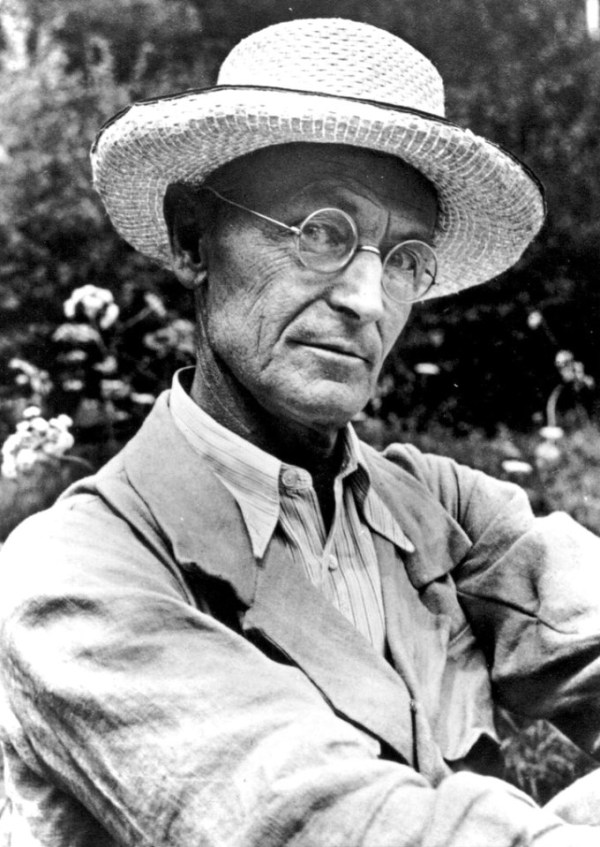
Happy birthday, Hermann Hesse!

I was a German language and literature major in college and went as far as my doctoral studies at University of Illinois before I took a ‘safer’ route. My plan was to become a world famous Hermann Hesse scholar and my dissertation would have explored the relationship between Hesse’s body of work and Hegel’s dialectic but alas. Here is his life in his own words:


I was born in Calw in the Black Forest on July 2, 1877. My father, a Baltic German, came from Estonia; my mother was the daughter of a Swabian and a French Swiss. My father’s father was a doctor, my mother’s father a missionary and Indologist. My father, too, had been a missionary in India for a short while, and my mother had spent several years of her youth in India and had done missionary work there.My childhood in Calw was interrupted by several years of living in Basle (1880-86). My family had been composed of different nationalities; to this was now added the experience of growing up among two different peoples, in two countries with their different dialects.

I spent most of my school years in boarding schools in Wuerttemberg and some time in the theological seminary of the monastery at Maulbronn. I was a good learner, good at Latin though only fair at Greek, but I was not a very manageable boy, and it was only with difficulty that I fitted into the framework of a pietist education that aimed at subduing and breaking the individual personality. From the age of twelve I wanted to be a poet, and since there was no normal or official road, I had a hard time deciding what to do after leaving school. I left the seminary and grammar school, became an apprentice to a mechanic, and at the age of nineteen I worked in book and antique shops in Tübingen and Basle. Late in 1899 a tiny volume of my poems appeared in print, followed by other small publications that remained equally unnoticed, until in 1904 the novel Peter Camenzind, written in Basle and set in Switzerland, had a quick success. I gave up selling books, married a woman from Basle, the mother of my sons, and moved to the country. At that time a rural life, far from the cities and civilization, was my aim. Since then I have always lived in the country, first, until 1912, in Gaienhofen on Lake Constance, later near Bern, and finally in Montagnola near Lugano, where I am still living.

Soon after I settled in Switzerland in 1912, the First World War broke out, and each year brought me more and more into conflict with German nationalism; ever since my first shy protests against mass suggestion and violence I have been exposed to continuous attacks and floods of abusive letters from Germany. The hatred of the official Germany, culminating under Hitler, was compensated for by the following I won among the young generation that thought in international and pacifist terms, by the friendship of Romain Rolland, which lasted until his death, as well as by the sympathy of men who thought like me even in countries as remote as India and Japan. In Germany I have been acknowledged again since the fall of Hitler, but my works, partly suppressed by the Nazis and partly destroyed by the war; have not yet been republished there.

In 1923, I resigned German and acquired Swiss citizenship. After the dissolution of my first marriage I lived alone for many years, then I married again. Faithful friends have put a house in Montagnola at my disposal.

Until 1914 I loved to travel; I often went to Italy and once spent a few months in India. Since then I have almost entirely abandoned travelling, and I have not been outside of Switzerland for over ten years.

I survived the years of the Hitler regime and the Second World War through the eleven years of work that I spent on the Glasperlenspiel (1943) [Magister Ludi], a novel in two volumes. Since the completion of that long book, an eye disease and increasing sicknesses of old age have prevented me from engaging in larger projects.

Of the Western philosophers, I have been influenced most by Plato, Spinoza, Schopenhauer, and Nietzsche as well as the historian Jacob Burckhardt. But they did not influence me as much as Indian and, later, Chinese philosophy. I have always been on familiar and friendly terms with the fine arts, but my relationship to music has been more intimate and fruitful. It is found in most of my writings. My most characteristic books in my view are the poems (collected edition, Zürich, 1942), the stories Knulp (1915), Demian (1919), Siddhartha (1922), Der Steppenwolf (1927) [Steppenwolf], Narziss und Goldmund. (1930), Die Morgenlandfahrt (1932) [The Journey to the East], and Das Glasperlenspiel (1943) [Magister Ludi]. The volume Gedenkblätter (1937, enlarged ed. 1962) [Reminiscences] contains a good many autobiographical things. My essays on political topics have recently been published in Zürich under the title Krieg und Frieden (1946) [War and Peace].

I ask you, gentlemen, to be contented with this very sketchy outline; the state of my health does not permit me to be more comprehensive.” via nobelprize.org

Happy birthday, Hermann! You made a profound impact on my life through your body of work…

Related articles

The Path To Healing

Tommy Rosen has been doing a great job covering the 12 step program over at The Daily Love. Today he writes:

In this Step, we will practice taking full ownership of the circumstances of our relationships in our lives to this point. We will own our side of the street completely and we will approach those that we have harmed with humility, honesty, compassion and a sincere desire to set things right. We will put out of our minds anything that they may have done wrong and approach them to apologize and also to make an amends. Many people confuse making amends with an apology. An apology is to say sorry for what you have done. To “make amends” is to express that you are changing yourself in such a way that you will not commit the same act again. To make amends also has a connotation of making reparations. We will need to make the situation right. If we have stolen, then we re-pay what we have stolen. If we have cheated, then we ask what we can do to make it up to them. Far beyond a simple apology, which by the way, we may have given before many times, when we give an amends, it is a more profound act that can bring true healing in its wake.

Go to your 8th Step list and note all the people who are in your general location. These are people who you can get to easily face to face. Begin to make appointments to see them. No need to let them know exactly what your intention is other than to get together to connect and that it is important to you. Sometimes they will not want to see you. We always try to make amends face to face unless it is not possible. If a person refuses to see you, or lives halfway across the world or if they have passed on, then writing a letter will be sufficient. Prepare yourself before you meet someone to make an amends. Make certain you are ready to own your side of the street and stay off of theirs. It is wise to discuss each amends first with your sponsor or teacher.” Get more here: Step Nine – The Path To Healing – Making Amends!.

Follow the link and read the whole series in you’re interested…

How To Eat Information

“Information, if viewed from the point of view of food, is never a production issue. … It’s a consumption issue, and we have to start thinking about how we create diets and exercise,” said JP Rangaswami in his TEDx presentation.

For a man who currently has 38,000 books in his collection and lives in Calcutta, India where they are known for their rich, savory and sweet Southern Indian cuisine, his is a theory that could very well make sense!

Since most of us consume food according to a certain diet, minimize our surrender to sinful indulgences, measure our nutrition intake to make sure we have enough of everything; it’s possible that we’ve been doing the exact same thing all along with our consumption of data – or perhaps we should. As Plato the philosopher once said, “Knowledge is the food of the soul”.

“When I saw Supersize Me, I started thinking, now what would happen if an individual had 31 days of nonstop Fox News?” joked JP Rangaswami.

What do you think? If you saw information the way you see food, what would you do to digest the knowledge differently – nibble, bite, scoff or binge?” via How To Eat Information | FinerMinds.

I ‘eat’ information via Gmail, Google Reader and Gist and then share the best of it here. If you want to ‘eat’ better, I suggest you need better thoughts, tools and tactics. One way to do that might be to read my free ebook on ‘personal news aggregation’. Register at http://e1evation.com/pna/…

“Thank You [Live]”

http://www.youtube.com/watch?feature=player_detailpage&v=DnBKRcdgwos

Alanis Morissette – Thank You [Live] – YouTube.

how bout getting off these antibiotics

how bout stopping eating when I’m full up

how bout them transparent dangling carrots

how bout that ever elusive kudo

thank you india

thank you terror

thank you disillusionment

thank you frailty

thank you consequence

thank you thank you silence Continue reading ““Thank You [Live]””

The Most Powerful Time Management Tool You Will Ever Need!

I always get excited when I see that Kute Blackson has posted again. Today is no exception…

The most powerful time management tool you will ever need:

Life is short.

Each moment is precious.

When it’s gone its gone.

You can make your money back, You can buy material possessions.

But not  your time.

How do you want to live each moment?

This really hit me many years ago as I sat in the back of an Indian taxi speeding down a country road in the Andhra Pradesh wilderness, at close to 115 mph. As I dozed off waiting to arrive at my destination, I looked up only to see a huge truck the size of a whale heading straight into our taxi.

This was not good.

In a matter of seconds everything turned slow motion, and I had one of those moments you hear so much about. My entire life flashed in front of me, including the images of those I loved,  and the regrets I had sat in my heart like a heavy weight.

I was sure I was going to die.  My destiny seemed certain.

I had often wondered how I would face death when that moment actually came. My moment had come. I closed my eyes, and strangely felt a deep calmness realizing there was nothing more I could do in that moment. I had lived a good life.

I prepared myself to meet my maker.

Then all of a sudden I felt the car spin around full circle and come to a screeching halt. Boom. I opened my eyes, and in a dazed state I was quite surprised to still be alive.

My life was never the same after that. It was like going through a death and the surrender that comes with it, only to find myself still alive.

We are all going to die.  You, me, Gandhi, Sai Baba, Mother Teresa, Hitler, Michael Jackson, Bruce Lee, your loved ones. All of us.

This is the bottom line. No one makes it out of this life alive.

The real question becomes “How are you going to live each moment of your life so that when that moment comes you will be ready with no regrets?”

Yet we often waste time on things that aren’t that important.

When you embrace death you embrace life. You embrace each moment as a precious opportunity to live fully and share your gifts with the world.

When you realize and fully accept that you will die. Then you no longer waste time on trivial matters. For each second wasted is a piece of life that if forever gone. Each second becomes more precious that gold. It frees you up to get on with living your life in a way that you have no regrets.

When that moment comes in your life, much of what you stressed about, worried about, fretted about, screamed about, argued about, gossiped about, cried about, fought about, controlled about won’t really matter.

When that moment comes what will matter will be “Did you love those in your life as fully as possible? Did you give your gifts as deeply as possible? Did you become the most authentic expression of who you were meant to be in this life?”

If you find yourself wasting time, being unproductive, or unsure how to allocate your time, ask your self. “Is this how I would like to die?”

And if not, then rearrange your time, your activities, your relationships, your state of mind and emotions in such a way that you can say “Yes” no matter when that moment arrives.

The time is truly now.

Source: The Most Powerful Time Management Tool You Will Ever Need! | The Official Blog of Kute Blackson

Clipart of bills and coins
Image via Wikipedia

“There’s never been a better time to take advantage of the expansive opportunities for online business development and growth that the internet affords. According to a Juniper Research study, the number of U.S. internet shoppers will grow at an average rate of 12 percent per year through 2010, resulting in more than $144 billion in online sales.” Click here to read more…

Start a Blog at WordPress.com.

Up ↑