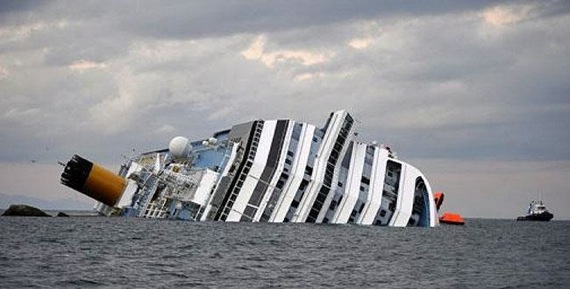
How to Know When to Change Course

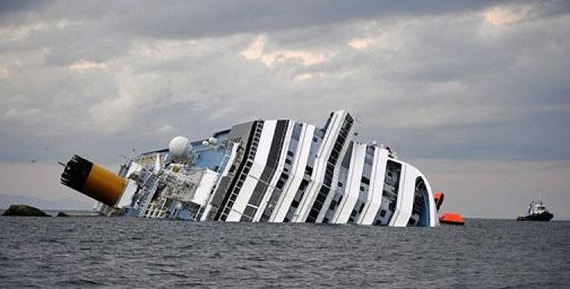
It is easy to compare the Costa Concordia with the Titanic, another cruise liner disaster from long ago. But there are some key differences. And it is in those differences that we can learn a few lessons to navigate life.

First, the Titanic was built in an era of big ships but with no technology available for the captain to see his way ahead. Radar was decades away from development. So as the Titanic was built and launched, its claim to being unsinkable was predicated on the toughness of the hull of the ship.

It is not surprising that the crew could not see an iceberg that was large above the water line and much larger still below the water line. Back then they could only see what their eyes could see. (Interestingly, if they really believed the ship was unsinkable, why would watches even need to be posted?)

The Costa Concordia, on the other hand, had all the advantages of modern technology. It not only had radar to see above the water, it had depth finders and quite possibly even sonar. (I am not one hundred percent sure of that, but the technology certainly exists today.) The crew should have known how deep the waters were and, because of GPS where they were within thirty feet of accuracy.

Yet due to hubris and human error, the Costa Concordia was where it should not have been. And despite the technology, the crew ran aground, the ship foundered, and lives were lost.

There is so much to learn here about leadership and life. Let me suggest four:

  • When we cannot see clearly, we should exercise caution. The Titanic’s crew could not see that far ahead, but they proceeded without caution. We may feel tough. We may feel unsinkable. But if we don’t have clear vision, or if we cannot enunciate a clear vision, we are in danger if we rush ahead blindly.
  • When we don’t pay attention to feedback, we can run aground. The danger here is due to not recognizing the danger. Failure to seek feedback is folly. Failure to listen to it is foolishness.
  • When we have vision, we need to clarify it regularly. Instruments on aircraft or ships need to be calibrated to verify accuracy. In life, we need to clarify our vision repeatedly in order to insure that we are on track with where we want to go. A friend once told me if you profess to have vision but no one is following you, it is likely you merely had indigestion.
  • When we have clarity, we need to practice humility. Every person who is more confident in themselves than in the vision they espouse is vulnerable to prideful downfalls. Great leaders can crash in the blink of an eye.

We all make choices as we navigate life. We all have an impact on others, whether it is our family, friends or colleagues. It is vitally important for us to have a clear sense of ourselves, a clear sense of our relationship with the Eternal, and a clear sense of our relationships with those we influence. If we have that clarity we will see success, but if we don’t we may well crash on the rocks.” via How to Know When to Change Course | Michael Hyatt.

Let me suggest two more:

  • Captains shouldn’t try to impress chicks by buzzing the shoreline in a cruise ship and…
  • …when they run aground, the should be the last, not the first, off the ship!

In other words think twice before and after engaging in bad behavior…

Profitability

Nicholas Bate via BackOfAnEnvelope: Profitability.

Any idea, plan, or purpose…

Any idea, plan, or purpose may be placed in the mind through repetition of thought. – Napoleon Hill

via Any idea, plan, or purpose may be placed in the mind through….

Christmas Tree Ship Presentation

The Door County Maritime Museum has a special event coming up that I’m sure I’ll be attending, being from Algoma and all. Why don’t you join me?

Join us to hear Rochelle Pennington, the author of The Christmas Tree Ship.

Pennington’s verbal presentation will focus on many of the little-known facts surrounding the story including the ship’s mysterious disappearance, clues washed ashore in the decades following the vessel’s demise, ghost ship sightings of the phantom schooner, and mysterious omens believed to have cursed the ship immediately before it set sail on its final voyage on November 22, 1912.

Pennington’s power-point presentation will include many of the century-old photographs of Captain Schuenemann, his family, and the ship.  In addition, the author will have several artifacts along with her to share with the audience:  an axe used to chop trees down, dishes, a spittoon, a clay pipe, an ornament carved from one of the first Christmas trees raised from the sunken ship in 1971 when the vessel was discovered, and an actual Christmas tree from the cargo.  Underwater photos of the ship in its present state, with trees still visible in the cargo area, will be on display as well.

“Author Rochelle Pennington has written two books detailing one of the most well-known shipwrecks of the Great Lakes, Lake Michigan‘s Christmas Tree Ship, which delivered holiday evergreens to the citizens of Chicago each Chirstmas season before it was caught in the “Great Storm of 1912″ and subsequently went to the bottom of the lake fully loaded with trees.”

She will be with us at 2:00 pm on June 24, 2012 at the Museum to do a presentation.  Pennington will also be signing books.  Copies of both Rochelle’s books, The Christmas Tree Ship: The Story of Captain Santa and The Historic Christmas Tree Ship: A True Story of Faith, Hope and Love are available in our Museum store.

Get more here: Christmas Tree Ship Presentation | Door County Maritime Museum.

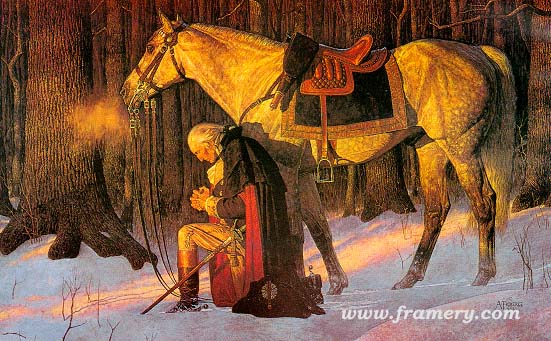
George Washington assigned to lead the Continental Army; This Day in History

On this day in 1775, George Washington, who would one day become the first American president, accepts an assignment to lead the Continental Army.

Washington had been managing his family’s plantation and serving in the Virginia House of Burgesses when the second Continental Congress unanimously voted to have him lead the revolutionary army. He had earlier distinguished himself, in the eyes of his contemporaries, as a commander for the British army in the French and Indian War of 1754.

Born a British citizen and a former Redcoat, Washington had, by the 1770s, joined the growing ranks of colonists who were dismayed by what they considered to be Britain’s exploitative policies in North America. In 1774, Washington joined the Continental Congress as a delegate from Virginia. The next year, the Congress offered Washington the role of commander in chief of the Continental Army.

After accepting the position, Washington sat down and wrote a letter to his wife, Martha, in which he revealed his concerns about his new role. He admitted to his “dear Patcy” that he had not sought the post but felt “it was utterly out of my power to refuse this appointment without exposing my Character to such censures as would have reflected dishonour upon myself, and given pain to my friends.” He expressed uneasiness at leaving her alone, told her he had updated his will and hoped that he would be home by the fall. He closed the letter with a postscript, saying he had found some of “the prettiest muslin” but did not indicate whether it was intended for her or for himself.

On July 3, 1775, Washington officially took command of the poorly trained and under-supplied Continental Army. After six years of struggle and despite frequent setbacks, Washington managed to lead the army to key victories and Great Britain eventually surrendered in 1781. Due largely to his military fame and humble personality, Americans overwhelmingly elected Washington their first president in 1789.

via George Washington assigned to lead the Continental Army — History.com This Day in History — 6/15/1775.

Don’t give up the ship; today in history…

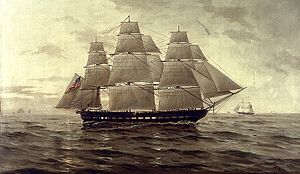
“Don’t Give Up The Ship!” commanded 31-year-old Captain James Lawrence, as he lay wounded on the deck of the U.S.S. Chesapeake.

Captain Lawrence fought Muslim Barbary pirates in 1804, and when the War of 1812 began, he commanded the U.S.S. Hornet which captured the privateer Dolphin and the H.M.S. Peacock.

President Madison wrote May 25, 1813:

“The brilliant achievements of our infant Navy, a signal triumph has been gained by Captain Lawrence…in the Hornet sloop of war…

The contest in which the United States are engaged appeals…to the sacred obligation of transmitting…to future generations that…which is held…by the present from the goodness of Divine Providence.”

On JUNE 1, 1813, Captain Lawrence sailed from Boston and was attacked by the British ship Shannon.

Within an hour, nearly every officer was killed.

Later, Captain Oliver Hazard Perry was inspired to name his flagship on Lake Erie “Lawrence.”

Theodore Roosevelt wrote in Hero Tales from American History, 1895:

“Lawrence, dying with the words on his lips, ‘Don’t give up the ship’ and Perry…with the same words blazoned on his banner…won glory in desperate conflicts and left a reputation hardly dimmed.” via William J Federer’s American Minute.

50 Traits and Habits Of Highly Effective Men

“It is every man’s obligation to put back into the world at least the equivalent of what he takes out of it.” Albert Einstein. Get them here: 50 Traits and Habits Of Highly Effective Men : All SWAGGA.com.

On ‘counting’

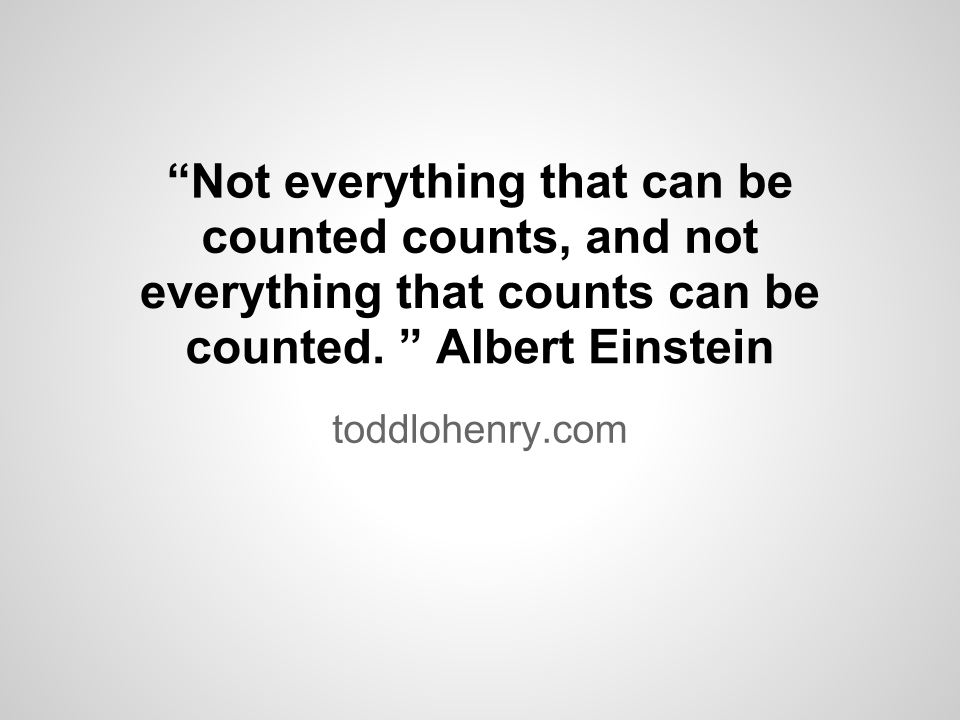
“Not everything that can be counted counts, and not everything that counts can be counted. ” Albert Einstein


Mary Wells gives Motown Records its first #1 hit with “My Guy”; This Day in History

Mary Wells

In 1959, Berry Gordy started his first record label, Tamla Records, running it out of a house he purchased at 2648 West Grand Blvd. in Detroit, Michigan—a location better known as Hitsville, USA. Over the next three years, Tamla made its headquarters live up to its name, turning out a string of hit records that included “Money (That’s What I Want)” by Barrett Strong (1959), “Shop Around,” by The Miracles (1960) and “Please Mr. Postman” by The Marvelettes (1961)–which is why a young aspiring songwriter named Mary Wells was so excited to be offered a recording contract by Berry Gordy in 1962. The catch was that Gordy wanted to make a record with Wells and issue it on a brand new label that had no identity or reputation in the marketplace: Motown Records. Not really in a position to argue, she signed on as the fledgling label’s very first artist, and two years later, Mary Wells gave Motown its first #1 hit when “My Guy” reached the top of the Billboard pop chart on this day in 1964.

Shortly after signing Mary Wells, Berry Gordy transformed her from a songwriter to a performer of other writers’ material. In this capacity, she was one of the first singers in the Motown stable to record a song by the now-legendary Holland/Dozier/Holland songwriting team. That song, “You Lost the Sweetest Boy” (1963), featured the Supremes and the Temptations singing backup to Wells—an indication of where she stood in the Motown hierarchy at the time. It was the songs of Motown Vice President and chief Miracle William “Smokey” Robinson, however, which brought Wells her greatest successes. In 1962, Wells earned her first and Motown’s first top 10 hits with the Robinson-penned “The One Who Really Loves Me,” “You Beat Me To The Punch” and “Two Lovers.” And then in 1964, she earned her first #1 with Robinson’s “My Guy.” via Mary Wells gives Motown Records its first #1 hit with “My Guy” — History.com This Day in History — 5/16/1964.

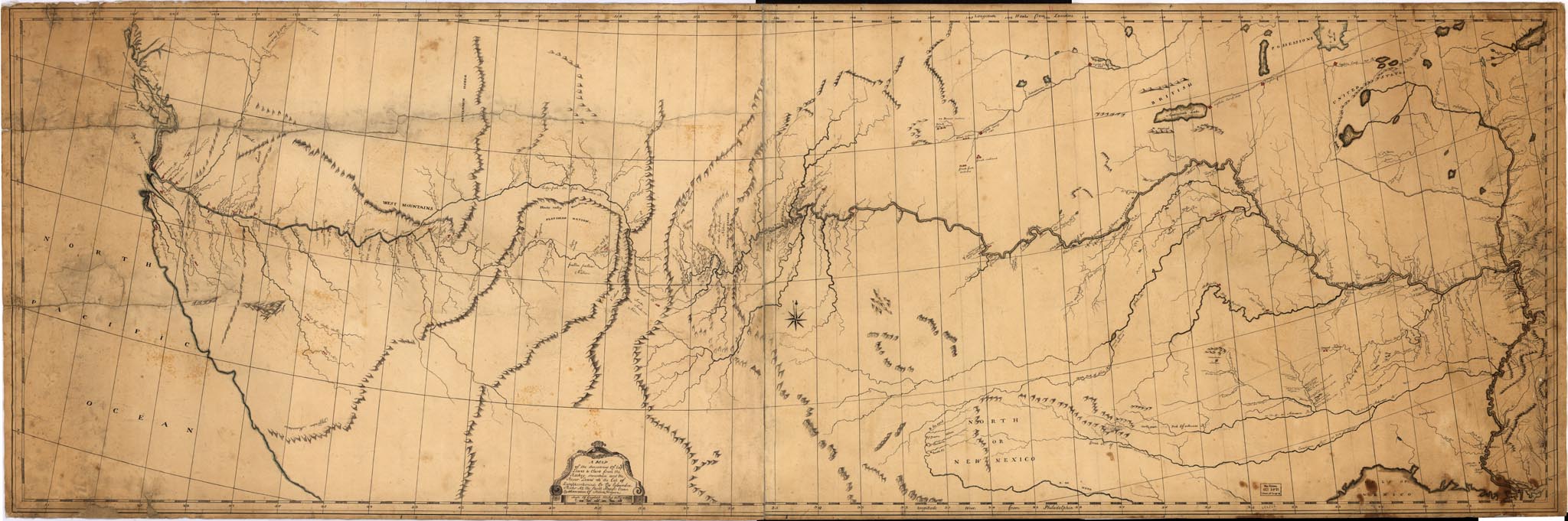
Lewis and Clark depart; This Day in History

One year after the United States doubled its territory with the Louisiana Purchase, the Lewis and Clark expedition leaves St. Louis, Missouri, on a mission to explore the Northwest from the Mississippi River to the Pacific Ocean.

Even before the U.S. government concluded purchase negotiations with France, President Thomas Jefferson commissioned his private secretary Meriwether Lewis and William Clark, an army captain, to lead an expedition into what is now the U.S. Northwest. On May 14, the “Corps of Discovery”–featuring approximately 45 men (although only an approximate 33 men would make the full journey)–left St. Louis for the American interior.

The expedition traveled up the Missouri River in a 55-foot long keelboat and two smaller boats. In November, Toussaint Charbonneau, a French-Canadian fur trader accompanied by his young Native American wife Sacagawea, joined the expedition as an interpreter. The group wintered in present-day North Dakota before crossing into present-day Montana, where they first saw the Rocky Mountains. On the other side of the Continental Divide, they were met by Sacagawea’s tribe, the Shoshone Indians, who sold them horses for their journey down through the Bitterroot Mountains. After passing through the dangerous rapids of the Clearwater and Snake rivers in canoes, the explorers reached the calm of the Columbia River, which led them to the sea. On November 8, 1805, the expedition arrived at the Pacific Ocean, the first European explorers to do so by an overland route from the east. After pausing there for the winter, the explorers began their long journey back to St. Louis.

On September 23, 1806, after almost two and a half years, the expedition returned to the city, bringing back a wealth of information about the largely unexplored region, as well as valuable U.S. claims to Oregon Territory.

via Lewis and Clark depart — History.com This Day in History — 5/14/1804.

Me? I think Lewis and Clark’s journey is right up there with the first landing on the moon and perhaps the greatest adventure of the 19th century…

An unlikely challenger ends the Beatles’ reign atop the U.S. pop charts; This Day in History

“Following the ascension of “I Wanna Hold Your Hand” to #1 in early February, the Beatles held the top spot on the Billboard Hot 100 for three and a half solid months—longer than any popular artist before or since. Over the course of those months, the Fab Four earned three consecutive #1 singles (a record); held all five spots in the top five in early April (a record); and had a total of 14 songs in the Billboard Hot 100 in mid-April (yet another record). But just when it seemed that no homegrown act would ever stand up to the British invaders, one of least likely American stars imaginable proved himself equal to the task. On May 9, 1964, the great Louis Armstrong, age 63, broke the Beatles’ stranglehold on the U.S. pop charts with the #1 hit “Hello Dolly.”” via An unlikely challenger ends the Beatles’ reign atop the U.S. pop charts — History.com This Day in History — 5/9/1964.

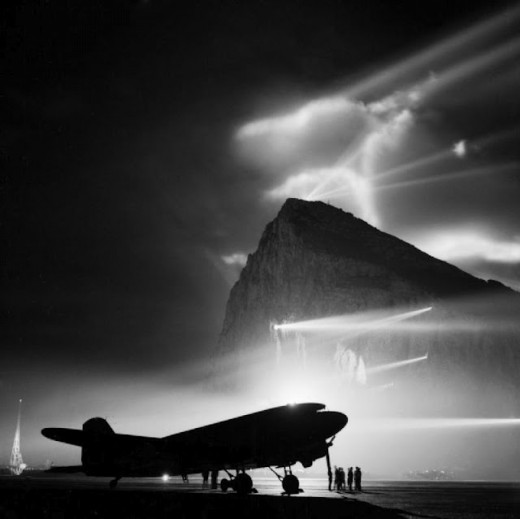
Searchlights, 1940-1945

Retronaut via Searchlights, 1940-1945.

Gene Vincent records “Be-Bop-A-Lula”; This Day in History

“When a music critic wants to indicate that a song lacks lyrical sophistication, he or she will often refer to its lyrics as being of the “moon in June” sort. It’s a label left over from the Tin Pan Alley era, when even great composers like Irving Berlin churned out a hundred uninspired Moon/June tunes for every highly original classic like “Blues Skies” or “Puttin’ On The Ritz.” If rock and roll has an equivalent in the area of clichéd lyrics, it is probably “Baby” and “Maybe”—a rhyming pair made most famous in the smoldering early-rock classic “Be-Bop-A-Lula,” which was recorded in Nashville, Tennessee, by the rockabilly legend Gene Vincent on this day in 1956.” via Gene Vincent records “Be-Bop-A-Lula” — History.com This Day in History — 5/4/1956.

This Day in History; The Loch Ness Monster sighted…

A personal picture of the Loch Ness Monster's ...

“Although accounts of an aquatic beast living in Scotland’s Loch Ness date back 1,500 years, the modern legend of the Loch Ness Monster is born when a sighting makes local news on May 2, 1933. The newspaper Inverness Courier related an account of a local couple who claimed to have seen “an enormous animal rolling and plunging on the surface.” The story of the “monster” (a moniker chosen by the Courier editor) became a media phenomenon, with London newspapers sending correspondents to Scotland and a circus offering a 20,000 pound sterling reward for capture of the beast.” via This Day in History — History.com — What Happened Today in History.


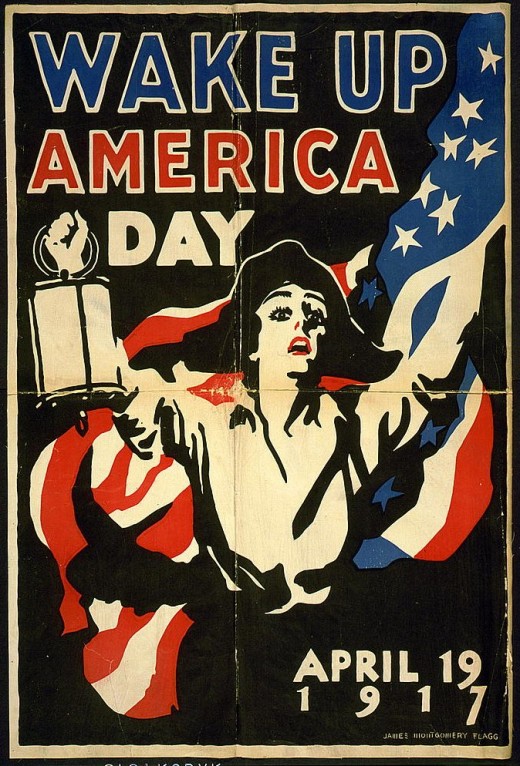
See more @ WWI posters by James Flagg, 1914-1918 | Retronaut.

The Manistee

Click image 3x to enlarge…

Yesterday, while my wife and I were enjoying a fine microbrew at The Titletown Brewing Company, traffic started to pile up as the bridges went up and a ship almost two football fields long went up the Fox River. Thanks to the miracle of the internet, here is her story:

Continue reading “The Manistee”

“Ich Bin Ein Berliner”

Myth: John F. Kennedy blundered in one of his most famous speeches, saying in German “I am a jelly-filled doughnut” instead of what he meant (in the figurative sense) “I am a person from Berlin”. via John F. Kennedy’s Statement “Ich Bin Ein Berliner” was Not Interpreted as “I am a Jelly-Filled Doughnut”.

Hmmm. As a German major in college, I have been guilty of spreading this myth therefore I am confession my ‘guilt’ in public along with the correction. Follow the ‘via’ link if you’d like to know the rest of the story. In the meantime, enjoy the speech if you’re a history buff like me…

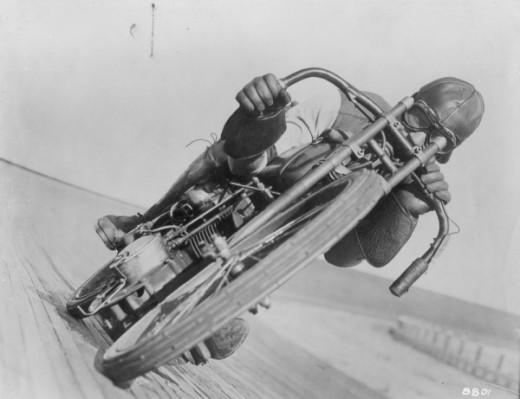
Harley Davidson “Hog” Boys, 1910s-1938

Think your Harley’s cool? You ain’t got nuttin’ on the ‘hog boys’…

Go to the source if you want more: Harley Davidson “Hog” Boys, 1910s-1938 | Retronaut.

He who knows best…

Happy birthday, Thomas Jefferson!

“The wise know their weakness too well to assume infallibility; and he who knows most, knows best how little he knows.” ~ Thomas Jefferson

via He who knows best… (Quotation) « Thomas Jefferson’s Monticello.

On focus…

“Concentrate all your thoughts upon the work at hand. The sun’s rays do not burn until brought to a focus.” ~ Alexander Graham Bell

via Today’s Quotes: @MarWilliamson Focus On What’s RIGHT!.

The era of prosperity-on-auto-pilot is over

David Kanigan curated this quote from Hugh MacLeod about the current economy…

“Hardly a mor­ning goes by these days without me hea­ring some story…about Ame­ri­can eco­no­mic woe…

The Great Con­ver­gence is upon us, and our friend, the Inter­net is acce­le­ra­ting the pro­cess…

The good news is, if you have a talent, the world wants it, and it has never been so easy to show your talent to the world…

The bad news is, espe­cially for us fat & lazy Ame­ri­cans, is that the great, century-long era of Prosperity-on-Autopilot  is over…

The world still wants serious talent. And it still wants peo­ple doing the grunt work: pushing mops, dig­ging ditches, wai­ting tables, ans­we­ring pho­nes, flip­ping bur­gers etc…

Learn how to work hard, work long hours. Find something you love, and then excel at it. Above all else, learn how to create, learn how to invent. That’s your only hope, really.

Source: The Era of Prosperity-on-Auto-Pilot Is Over – Lead.Learn.Live.

Continue reading “The era of prosperity-on-auto-pilot is over”

Start a Blog at WordPress.com.

Up ↑