7 Reasons to Love Apple Cider Vinegar

Jess-Ainscough-wellness-2Jess Ainscough writes:

I was first introduced to apple cider vinegar (ACV for short) several years ago after reading in a magazine that Fergie (Black Eyed Peas, not Duchess of York) takes a couple of teaspoons each day to assist weight loss. A body like Fergie by drinking apple cider vinegar? That is one bandwagon I was quick to jump on. While I’m still waiting for Fergie-like abs, I have been reaping the many other health benefits associated with including a little ACV in my diet. ACV has been touted for it many medicinal properties for yonks and it really is a cure-all remedy.

These are just a few benefits of apple cider vinegar…

Full story at: 7 Reasons to Love Apple Cider Vinegar.

It sounded disgusting to me, but I got used to it and it will certainly benefit your body more than that Coke you’re slugging with your meal. Continue reading “7 Reasons to Love Apple Cider Vinegar”

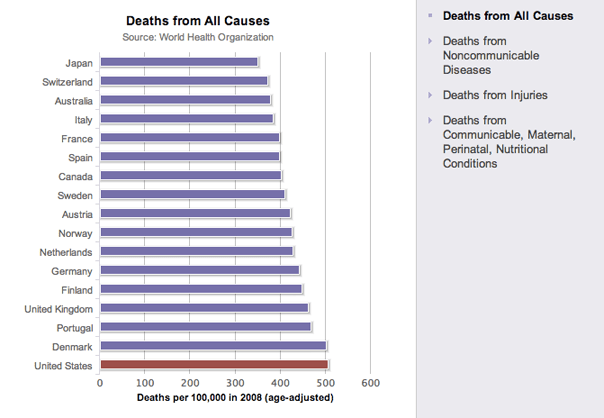
U.S. Is Unhealthier Than Any Other Rich Country, Report Says

Greatist – Health and Fitness Articles, News, and Tips

Full story at: U.S. Is Unhealthier Than Any Other Rich Country, Report Says.

77 Healthy Crock-Pot Recipes

Greatist – Health and Fitness Articles, News, and Tips

via 77 Healthy Crock-Pot Recipes.

12 Rules to Live By

My Philosophy Bookshelf(top)

Craig Ballantyne writes:

The one thing I admire about people who have strong nutrition beliefs is their dogmatic behavior.

For example, a vegetarian, under no circumstances, will ever eat meat. There is no, “well, everyone else is having a burger, so just this once, I will too.”

That’s not how it works.

Not when a vegetarian has a strong personal philosophy that they never, ever, ever eat meat.

And that strong personal philosophy guides them to guilt-free behavior that is congruent with their goals.

I’ve also taught my fat loss clients to develop their own personal philosophy – essentially a set of rules that dictate decisions, and I’ve also created my own rules that determine how I live my life so that I reduce guilt, stress, and wasted emotional energy.

Now the purpose of this email is not to say that my personal philosophies are wrong or right.

Instead, they are simply here to encourage you to adopt your own rules for the sake of living a better, more productive stress free life. You may have your own rules in your head, but I encourage you to put them in writing. And you can adopt a set of rules for every aspect of your life, from health to financial to family and business.

Go to the source if you’d like to get the rest of Craig’s perspective: » 12 Rules to Live By :zenhabits

12 Reasons to Drink More Water this New Year

Greatist – Health and Fitness Articles, News, and Tips

Full story at:  12 Unexpected Reasons to Drink More Water this New Year.

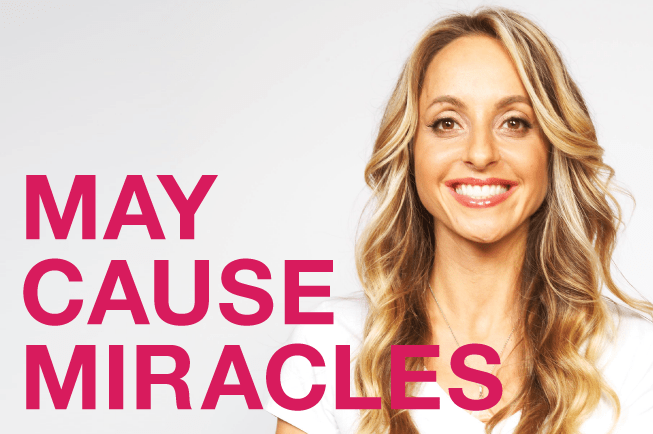
New Year’s Tips That May Cause Miracles

Gabrielle Bernstein writes:

“Each New Year brings awesome opportunities for personal growth. Now is the perfect time to make powerful change—your willingness is at an all-time high. To help you get a jump-start on your resoluting, I’m sharing thirteen happiness tips from my new book, May Cause Miracles: A 40-Day Guidebook of Subtle Shifts for Radical Change and Unlimited Happiness. Apply these principles, and you’ll kick off the New Year with power, commitment, and confidence. Each tip will greatly help you redirect your energy and learn to heighten an inner sense of power to let your outer life grow, expand, and flow.”New Year’s Tips That May Cause Miracles « Positively Positive

The Most Dangerous Word in the World

noMark Waldman and Andrew Newberg, M.D. write:

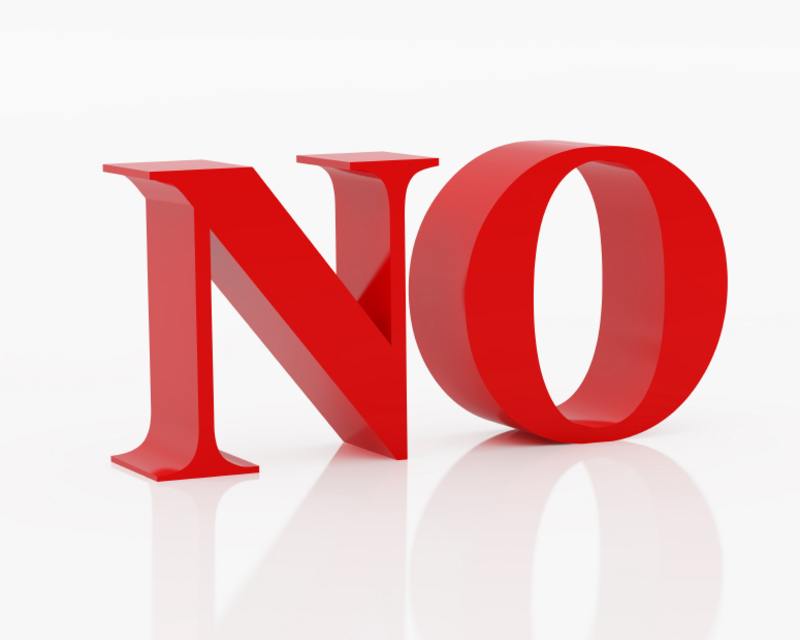
If I were to put you into an fMRI scanner—a huge donut-shaped magnet that can take a video of the neural changes happening in your brain—and flash the word “NO” for less than one second, you’d see a sudden release of dozens of stress-producing hormones and neurotransmitters. These chemicals immediately interrupt the normal functioning of your brain, impairing logic, reason, language processing, and communication.

In fact, just seeing a list of negative words for a few seconds will make a highly anxious or depressed person feel worse, and the more you ruminate on them, the more you can actually damage key structures that regulate your memory, feelings, and emotions.[1] You’ll disrupt your sleep, your appetite, and your ability to experience long-term happiness and satisfaction.

If you vocalize your negativity, or even slightly frown when you say “no,” more stress chemicals will be released, not only in your brain, but in the listener’s brain as well.[2] The listener will experience increased anxiety and irritability, thus undermining cooperation and trust. In fact, just hanging around negative people will make you more prejudiced toward others![3]

via 3. The Most Dangerous Word in the World | Psychology Today.

American Minute for December 22nd; Battle of the Bulge

600px-Patton-m2b

The Nazis amassed three armies for an enormous attack against the Allies in the Ardennes Forest and soon surrounded the 101 Airborne Division in southern Belgium, demanding their surrender.

U.S. General Anthony McAuliffe answered in one word: “Nuts.”

This response confused the Nazi commander, causing him to hesitate.

Marching to the rescue was the U.S. Third Army, but it was hindered due to bad weather.

General Patton directed Chaplain O’Neill to compose a prayer for his 250,000 troops to pray:

“Almighty and most merciful Father, we humbly beseech Thee, of Thy great goodness, to restrain these immoderate rains…Hearken to us as soldiers who call upon Thee…Establish Thy justice among men and nations.”

The weather cleared and the Allies counterattacked.

In his order, DECEMBER 22, 1944, General Eisenhower stated:

“By rushing out from his fixed defenses the enemy may give us the chance to turn his great gamble into his worst defeat.

So I call upon every man, of all the Allies, to rise now to new heights of courage…with unshakable faith in the cause for which we fight, we will, with God’s help, go forward to our greatest victory.”

Two days later President Franklin Roosevelt stated:

“It is not easy to say ‘Merry Christmas’ to you, my fellow Americans, in this time of destructive war…

We will celebrate this Christmas Day in our traditional American way…because the teachings of Christ are fundamental in our lives…the story of the coming of the immortal Prince of Peace.”

via American Minute for December 22nd.

You’ll Make It When You Fake It

Smile 2
Psychology Today reports:

In a newly released study subjects were given stressful tasks while holding chopsticks in their mouths to form a smile, and another group was asked to maintain a smile while performing the stress task.  None of the subjects were not told the true objective of the study and when compared with a control group performing the same stressful activities, both smiling groups had lower heart rates and faster cardiovascular stress recovery than the non-smiling controls.

As Ekman had predicted, when we hold a facial expression reflecting a particular emotion, even when the expression of happiness is faked, we experience some of that faked emotion.   ‘Fake it till you make it’ takes more meaning in light of this and other research along these lines.

These findings suggest that there is a pathway connecting facial muscle activity to our ‘fight/flight’ response and that we can change our physiological and psychological states  by deliberately controlling our facial expressions.  So perhaps the quote by Mark Twain is true, “The world always looks brighter behind a smile.”

The next time you are feeling stressed, have a difficult task, or just wake up on the grumpy side of the bed, smile for a while and see how your mood can change for the better.” via You’ll Make It When You Fake It | Psychology Today.

I first heard about this reading Tony Robbin’s book ‘Awaken the Giant Within’ and yesterday I tried it and it actually worked for me!

I got sucked into being a timer for a swim meet with over 500 kids and 88 different events and multiple heats. First of all, I don’t even like competitive swimming — that’s my wife’s thing and my son was having his first meet. My wife had volunteered for a 4 hour shift and not only did a volunteer not come to relieve her but I became a backup timer and then a timer when other people left their shift. It was hot, wet and hard on the joints standing on a pool deck for 9 hours. I remembered what I had heard from Tony Robbins earlier in the week and put it into practice. Every time I started

Affirmations

Melody-Beattie.pngMelody Beattie writes:

One of our choices in recovery is choosing what we want to think – using our mental energy positively.

Positive mental energy, positive thinking, does not mean we think unrealistically or revert to denial. If we don’t like something, we respect our own opinion. If we spot a problem, we’re honest about it. if something isn’t working out, we accept reality. But we don’t dwell on the negative parts of our experience.

Whatever we give energy to, we empower.

There is magic in empowering the good, because whatever we empower grows bigger. One way to empower the good is through affirmations: simple positive statements we make to ourselves: I love myself… I’m good enough… My life is good…I’m glad I’m alive today… What I want and need is coming to me… I can…

Our choice in recovery is not whether to use affirmations. We’ve been affirming thoughts and beliefs since we were old enough to speak. The choice in recovery is what we want to affirm.

Today, I will empower the good in myself, others, and life. I’m willing to release, or let go of, negative thought patterns and replace them with positive ones. I will choose what I want to affirm, and I will make it good.

via Just For Today Meditations » Daily Recovery Readings – December 11, 2012.

And, whatever we resists, persists…

Christmas Anxiety? 4 Ways Not To Sweat The Small Stuff

FinerMinds

Full story at: Christmas Anxiety? 4 Ways Not To Sweat The Small Stuff.

The Frustration Situation

Craig Harper shares these thoughts:

Frustration: it affects all of us at some stage. It’s a part of the human experience and it’s an emotion that doesn’t discriminate. We often find ourselves frustrated when things don’t turn out the way we expected or hoped they would or should. More often than not, our frustration is triggered by something (a situation, a conversation, a circumstance, a person, an event) which is beyond our immediate control.

Like that idiot who lives across the road.

Having said that, what is in our control, is our reaction. Like all emotions, frustration is a personal response to something that’s happening (or not happening, as the case may be) in our world. And while most people believe it’s the external stimulus that produces our internal response, in reality, our frustration is self-created. The challenge is not to overcome frustration (as such) but rather, to learn to manage it as opposed to being managed by it.

So, having worked with the frustrated multitudes for years, I thought I’d share a few suggestions that you might find helpful.

1. Don’t Try to Change People. Trying to change others (we’ve all done it) is an exercise in frustration and, at times, disconnection and aggravation. Giving people unwanted advice, direction or feedback (no matter how well-intended) will invariably end in tears. Either literally or metaphorically. Keep in mind that unwanted input or commentary is typically interpreted as criticism.

2. Stop Wasting Your Emotional Energy. Control what you can and let go of what you can’t. All too often, we invest our emotional energy into things (situations, circumstances, issues) over which we have little or no control. Not surprisingly, sending our blood pressure through the roof while screaming at a sporting event on television (for example) won’t change the outcome. Or the umpire’s stupid decisions. In fact, the only thing it might do is send us to an early grave. Oh, and possibly, annoy the crap out of everyone else within earshot.

3. Stop Juggling. Stop doing fifty things poorly and focus your time and energy on doing the important things well. That is, prioritise. I had to learn this lesson as I once had a propensity to bite off more than I could chew. Many of us simply take on more things than we can do well. Sometimes the answer is to put certain things on hold in order to be able to make progress in other areas. As a rule, over-commitment leads to exhaustion, anxiety and frustration. And eventually, physical illness. So, what’s the best use of your time, skill and energy right now? The answer to that question is your starting point.

4. Stop Aiming for Perfection. Aim for better. Aim for improvement. Aim for growth. Our society’s obsession with perfection has led to unrealistic expectations, unhealthy thinking, mass frustration and disappointment. Of course frustration will be the result when our goal is unattainable. When perfection is the goal, no result will ever be good enough.

5. Be Patient. Stop trying to reinvent yourself by next Tuesday. It took you a long time to get where you are now (practically, financially, emotionally, physically, psychologically, sociologically), so be realistic with your expectations as you work towards creating the new and improved version of you. I’m always amazed by people who have punished their body for decades (with atrocious eating, zero exercise and poor lifestyle habits) who then find a way to be disappointed and frustrated when they don’t look like a supermodel or elite athlete two weeks into their ‘weight-loss kick’. Good grief.

6. Stop Relying on Others to Get You There (wherever there is). It’s great to have support, encouragement and help along the way, but it’s not great to be totally dependant on others to make our dreams a reality. While it’s healthy to be part of a team of people who are all on the same page and all moving in the same direction, it’s still important for us to be functional, productive and effective on our own. Independent and strong. Being totally reliant on someone else (to reach our goals) is an exercise in both frustration and disempowerment.

7. Compare Yourself to Others – with Caution. Comparing ourselves to others rarely results in something positive. It can, but typically, it won’t. Invariably, it will focus our attention on what we don’t have or what we haven’t done and lead to self-pity and/or frustration. Having said that, it can work in our favour when we make it. Comparisons can be a positive when we use the achievements of others with similar attributes, potential and opportunities (to us) as a source of motivation, inspiration, learning and perspective for our own journey.

Now… deep breaths. :)

If you liked this article, subscribe to my blog and get a my FREE eBook, click here: I want a FREE eBook. You can also check out My Best Selling Book, and My Best Selling Video (Trailer).

Source: The Frustration Situation

The Secrets That Keep Happy Couples Together

Cynthia Belmer shares this:

What makes a relationship work? What can couples do to stay happy in their relationship, especially in this modern age with stress all around us?

Everyone wants to make their relationship last and everyone wants to feel loved, happy, and in harmony with their partner, but few experience it.

Harmony is about a mutual agreement of giving and receiving in the most balanced, loving and humble way, while maintaining the space needed for self-nurturing and self-love. You can realize it and live it in your relationship when you:

1. Become best friends. Understand the likes, dislikes, the fears, the pain and the gain of your partner and ask open-ended questions.

2. Explore your common vision for the future. Discuss your goals and your visions for the future. How does a great and lasting relationship look like to you? Follow through with this view and commit to realizing and nurturing it.

3. Be humble. Take responsibility of our own actions and say that you’re sorry when you mess up.

4. Be generous. Allow yourself to give with humbleness, to appreciate with love, to forgive with softness, to listen with care and to compromise while receiving your needs in return.

5. Invest in your own and constant self-growth. Follow through with your interests, your goals, your emotional needs and wants and share them with your partner.

6. Trust. Speak your truth, always and allow both of your fears to surface and share them gently together.

7. Listen and never forget. Listen very carefully to your partner and remember what interests them, what they enjoy, they dislike and most importantly, remember their stories.

8. Allow spaciousness. Give some alone time to yourself and your partner and do unique things that you enjoy and that make you feel good.

9. Get intimate. Express your love through hugging, kissing, caressing, cuddling, holding, and other forms of physical affection.

10. Have faith. Never give up on realizing the picture of a great relationship, especially when going through a big storm.

So my question to you is: If you were to make a change so you could live happily and in harmony in your relationship, what would you be doing?

via The Secrets That Keep Happy Couples Together.

Into the great unknown…

Melody-Beattie.pngMelody Beattie writes:

“When I go into the Unknown. I immediately start making lists,” one man said.

We each respond differently to loss, letting go. and the Unknown. We may try to fill up the vacuum immediately with something else. That usually doesn’t work, at least not well.

Try to he as present as you can for what you’re going through.

Action: Protect yourself. You’re vulnerable now. Do the simple. easy things that need to be done, one task at a time, even if nothing feels completely right. Remember the basics of self-care. Eat. Sleep. Shower. Get plenty of rest. Talk to trusted friends. Express what you’re feeling at the moment the best that you can.

We may vacillate between anger, rage, guilt, and sadness when we’re letting go. And then we may go numb and nor be able to think clearly. Don’t worry about that; your ability to think clearly will return. Don’t do anything that hurts yourself or anyone else. That won’t help. It’ll make things worse. Lists may help us stay on track.

Try not to see the big picture right nom It probably hasn’t been shown to you yet.” via December 3.

Rule 12: Live in Alignment

feat-craigharper.pngCraig Harper writes:

“Living in alignment.” Have you heard this expression before? It gets thrown around quite a lot these days and to be honest, it can be one of those cheesey, over-used clichés that gets way too much mileage in an already-cheesey personal development landscape but at the risk of immersing both of us in mozzarella, I thought I’d share what it means to me and how creating and living a life of alignment can transform our day-to-day, multi-dimensional emotional, physical, psychological and practical existence for the better.

So, what does ‘living in alignment’ mean?

“Living in alignment means living a life which is reflective of, and in alignment with, our core values, beliefs and principles.”

Q. What’s the point of living in alignment?
A. Authenticity and happiness.

When our typical choices, behaviours, habits and outcomes are reflective of our core values, then we’re in balance. We’re being true to ourselves. Consciously living a life of alignment produces less stress, less frustration, less misery and even less physical illness. And, therefore, more peace, satisfaction, happiness and health.

Who’s out of alignment?

  • The girl who says she wants to be healthy but continues to smoke.
  • The guy who says he values fidelity but cheats on his partner.
  • The girl who expects loyalty from others but betrays her friends.
  • The guy who criticises others while ignoring his own faults.
  • The minister who doesn’t walk the talk.
  • The speaker who advocates work-life balance while working a million hours each week.
  • The personal trainer who preaches health and self-control during the week while abusing alcohol every weekend.
  • The person who loves nature but never leaves suburbia.
  • The highly-principled employee who turns a blind eye to unethical behaviour in the workplace.
  • Anyone who doesn’t listen to their body.
  • Anyone who ignores their inner wisdom.
  • Anyone who consciously compromises their values.

Sounds good in theory but…

While it all makes sense in theory, sometimes the practical reality of our life situation means that ‘living our values’ twenty-four-seven can be a major challenge. I agree. And that’s okay. Nobody said it would be easy or painless. Everything worthwhile comes at a cost. The question is whether or not we’re prepared to make the necessary investment. Sometimes, the price of alignment is high in the short term but totally worth it over the long haul.

Sometimes, choosing to live our values means taking a backward step in certain areas. It means getting uncomfortable and doing what scares us. It might mean changing, or even ending, certain relationships. It could mean ruffling a few feathers, getting noses out of joint and standing up for what we know is right (for us). Sometimes the right thing is not the easy thing and, sometimes, the only approval we need is our own.

By the way, people-pleasers rarely live in alignment because they are always compromising.

How did I end up here?

Sometimes, we allow certain situations, circumstances, expectations (of others) and relationships to gradually come between us and the life we want to build and inhabit. We don’t do it intentionally or consciously but we do it. Most of us have woken up at some stage of our journey only to say something like “how on earth did I end up in this place (literally or metaphorically)? This wasn’t my plan. This wasn’t my intention. This isn’t who I want to be.”

So, how can you live a life of alignment?

Step 1: Get clear about your core values, beliefs and principles (not anyone else’s, yours).
Step 2: Build a life around those things. No matter what.

Is it easy? Not always.
Possible? Yes.
Worth it? Definitely.

If you liked this article, subscribe to my blog and get a my FREE eBook, click here: I want a FREE eBook. You can also check out My Best Selling Book, and My Best Selling Video (Trailer).

Source: Rule 12: Live in Alignment

By the way, if you want some help on discovering your core values, I strongly recommend this 5 minute video I curated earlier this week…

How to Spot A Narcissist and Walk Away

medicating-menKelly O’Brien writes this:

Most of us have been in a relationship with a narcissist. Perhaps you’ve been sucked in by a self-absorbed family member, a spouse, a boyfriend, a co-worker, or a friend.

Perhaps you thought it was your fault when the narcissist left you feeling diminished and full of despair.

The truth is, your only “fault” was getting involved with the narcissist in the first place!

Learning to spot this toxic behavior before it hurts you is crucial to your health. A huge part of wellness is surrounding ourselves with healthy people and healthy relationships. If we have unhealthy relationships, we need to assess whether or not they can transform, or we must find the strength to walk away.

So, let’s talk about how to spot a narcissist and how to walk away from one.

Here Are 6 Qualities of a Narcissist:

  1. He or she rarely takes responsibility for problems and instead blames them on everyone else.
  2. The narcissist expresses little emotion, particularly during conflict with you. When you do express emotion, he or she blames you for doing so. It’s a subtle form of abuse.
  3. He or she drains you, but thrives on your energy. Consider how much energy you are expending on this relationship… my guess is that it’s your effort keeping the relationship alive. You’re most likely exhausted emotionally and physically because you do all of the planning, all of the apologizing, and all of the work to ‘fix’ what is wrong.
  4. This person is charming, often a flirt, and thinks very highly of himself.
  5. This person is irresponsible with his finances, career, drinking, and/or keeping his home in order.
  6. Jekyll & Hyde: This person is so incredibly endearing, but when you say one thing wrong, she snaps at you. You walk on eggshells wanting to do everything right.

Once you have determined that you are with a narcissist, the wisest thing to do is to walk away.

Why?

There is no reasoning with this individual. You will inevitably lose every single argument and end most conflicts thinking everything was your fault. You will end up apologizing. You will end up in counseling and you will be the one to end up losing your self-esteem.

You can avoid all of this!

Go here to learn how: How to Spot A Narcissist and Walk Away

45 Characteristics of Healthy Relationships + The Secret to Applying Them

Sometimes, when I start curating content, I don’t know when to stop. In those times, only copying and pasting will suffice! Kristen Barton Cuthriell writes:

Is your relationship healthy?

Relationships take work.  Hard work.  But the rewards to having a fulfilling relationship are MANY.  Are you doing the things necessary to keep your relationship strong?  Could it be stronger?  Look for ways to improve your relationship today and everyday.

Characteristics of Healthy Relationships

  1. You can be your true self with the other.
  2. Communication is spontaneous and open.
  3. There is a balance of closeness and separateness.
  4. You are able to take responsibility for your own behaviors without blaming your partner for your actions. (Get rid of “He/she made me do it.”)
  5. You discuss and negotiate rather than fight.
  6. You feel comfortable sharing your fears and insecurities.
  7. Rules and boundaries are clear, yet flexibility exists.
  8. You don’t lie, but you also refrain from using hurtful language in the name of being brutally honest.  (Don’t say something just to be mean.)
  9. You enjoy doing things for yourself, as well as for the other.
  10. Personal growth is encouraged.
  11. You make it through rough times without splitting up or threatening divorce.
  12. You treat each other the way you would like to be treated.
  13. You have a strong sense of interdependence rather than dependency or co-dependency. (Equality within the relationship)
  14. There is play and humor in the relationship.  You have fun together.
  15. You enjoy being together, but are able to spend time alone.
  16. You do not attempt to control each other.
  17. Each is trustful of the other.
  18. Privacy is respected.
  19. You both refrain from passive-aggressive behavior. (Silent treatment, hanging up phone, being late when the other is waiting)
  20. You forgive each other for mistakes.
  21. You actively listen to the other. (Really hear what the other is saying)
  22. You both are able to apologize. (Even when you do not think you are at fault, you can be sorry that your partner is feeling hurt.)
  23. You avoid mind reading and making assumptions.  When upset you both seek clarity.
  24. You are able to validate each other- even when you disagree. (You recognize that the opinions and feelings of the other are important.)
  25. There is a balance in giving and receiving.
  26. Conflict is faced and resolved.  Avoid allowing resentment to take hold.
  27. Negotiations are fair and compromise is present.  Create win-win resolutions.
  28. Mistakes are accepted and lessons are learned.
  29. You NEVER bring up the intimate disclosures of the other when angry or arguing.  Intimate disclosures are off-limits.
  30. Humility is present.  You are able to give up always being “right.”  Don’t let your ego get in the way.
  31. You are willing to make sacrifices for the other.
  32. You speak each other’s love language even when it differs from your own.
  33. You share mutual activities and interests.
  34. You NEVER call each other names or physically assault one another.
  35. You have strong friendship.
  36. You encourage and support each other. (“I have got your back.”)
  37. In conflict, you respect your partner’s need for a time out.  (Time to calm down and think rationally before resolving an issue.)
  38. You do not expect your partner to complete you.  You are secure in your own worth and want to share your life with them.
  39. Physical contact is mutually enjoyed.
  40. Appreciate each other’s strengths and overlook each other’s idiosyncrasies.
  41. Both are open to constructive feedback.
  42. Other meaningful relationships and interests are present.
  43. You have similar values, but do not demand that the other have the same values as you. (Mutual respect exists)
  44. You are willing to take risks and be vulnerable.
  45. You avoid intentionally hurting the other because you have been hurt.  No tit for tat.  No keeping score of grievances.

The Secret to Applying Them

Focus on what you can change about yourself rather than concentrating on what your partner needs to change.  Instead of approaching your partner with a “This is what you need to work on” approach- approach them with a “this is what we need to work on approach.” Then work on yourself regardless of the actions of your partner.  You may be surprised to see what teaching by example can do for you and your relationship.

The more of these things you are doing- the healthier the relationship.  Use this list to guide your growth rather than to judge your relationship.  Just as no person is perfect, no relationship is perfect.  Rather than demanding that you or your partner be perfect, look for areas of needed growth.   See what you can do to improve the relationship with the one that you love.

Source: 45 Characteristics of Healthy Relationships + The Secret to Applying Them – Let Life in Practices

(When) Are You Neurotic?

I find it interesting that Dr. Gregg Henriques’ title implies many of us are a bit neurotic from time to time; reading his article may help some ‘get a grip’:

Although the term “neurotic” has more recently fallen out of favor, it was used by psychiatrists for most of the 20th Century to describe a broad category of conditions that were associated with poor functioning, anxiety and depression, but were clearly differentiated from “psychotic” in that in contrast to individuals in the latter category, neurotics maintained contact with reality and were rarely engaged in highly deviant, socially unacceptable behavior. (A factoid worth noting is that the term “borderline”, of borderline personality disorder fame, originated from the conceptual space between neurotic and psychotic. Originally, borderline individuals were those who generally maintained contact with reality, but under duress exhibited extreme volatility and primitive defenses and were not good candidates for psychoanalysis).

Get more here: (When) Are You Neurotic? | Psychology Today

I agree with Dr. Henriques when he says later in the article “The importance of understanding the meaning of “neurotic” in terms of character adaptations is that we are all neurotic some of the time, even if we might be low on trait Neuroticism.” Reading the rest of his thoughts gave me some valuable insights…

Create Healthy Habits!

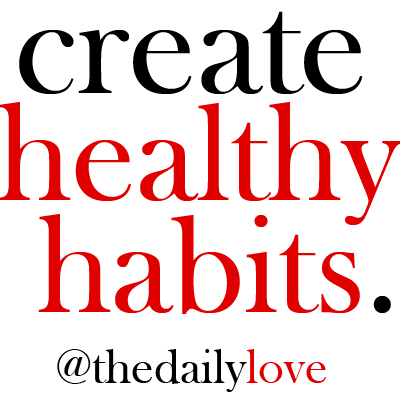
Take 21 days to create a new healthy habit and the habits you create will take care of you! With what healthy habits would you like to start the new year? A year from now, you’ll wish you had started today…

Oh, and by the way if you’re a geeky type you might want to look into tools like Habitforge to get you started!

image via Visual Inspiration: Create Healthy Habits!.

The science of overeating

Just in time for the holidays!

Today: A Unique Day

I love Australian Craig Harper’s perspective:

Today is Unique

You’ve never had this day before and you’ll never have it again. Sure, you’ve had days like it but you’ve never had this day; the one you’re in right now.

Naturally, you might think I’m being deep and philosophical when I say this but I’m not, I’m being literal. Practical. Of course, there’s a sense of familiarity and predictability about today but that feeling says nothing about the possibilities and potential of this day and everything about you because like every day, this one is not predetermined.

It’s you determined.

It might feel the same but it isn’t. It’s totally new. Original. Unique.

Of course you can choose, act, react, think and communicate just like you did yesterday (and most people will) – and therefore, you’ll probably create very similar outcomes – but again, that’s about you; not the day. Despite what you may have been taught, there are no (universal) good and bad days.

There are just days.

Now, before you try to prove me wrong (“but Craig, what about the woman who gets diagnosed with cancer?”), hit the pause button on your non-negotiable thinking for a moment and allow yourself to look through a different window. Is it possible that, as things happen (to you, around you), you label them based on your world view, beliefs, fears, standards, etc., you then react to those things, give those things meaning and finally, after all your labeling, assessing and processing, you somehow determine whether today is a good day or bad one?

That is, you create your own experience? Your own reality?

A Hypothetical

Your phone and wallet have been stolen while taking your early morning swim and, as a result, you’re having “the worst day ever”. You drive to work in a bad mood and you’re about to throw yourself a pity party when a colleague informs you that your boss has just been rushed to hospital after suffering a massive heart attack. In a matter of seconds you experience a major internal shift. Your enormous problem is now tiny. Insignificant. Your outlook changes completely and all of a sudden, your terrible day is now relatively fantastic (when compared with the day your boss is having). Well technically, the day is the same (of course) but in the middle of it, you are different. Well, to be more precise, your thinking is different which means your experience has changed.

Which means your day has changed.

The Manager vs The Managee

Is it possible that you’re living a reactive (wait and see what happens) type of existence rather than a proactive (I’ll determine the quality of my own day thanks) type of existence? Could today simultaneously be my ‘best day ever’ and your ‘total nightmare’? And finally, could it be that a good or bad day on Planet You is more about your personal interpretation of, and response to, certain (otherwise meaningless) happenings, events and outcomes, than the actual happenings, events and outcomes themselves?

Like yesterday, today is a blank canvas and like it or not, you’re going to paint something.

The question is, what will be hanging in your gallery tonight?

You can follow his blog here: Today: A Unique Day

Start a Blog at WordPress.com.

Up ↑