Self-Care Activities List

Do one and watch your day transform. Source: Self-Care Activities List – mindbodygreen

Is Caffeine Really Healthy?

All your coffee questions—answered.

Source: Is Caffeine Really Healthy? – mindbodygreen

Why Your Brain Wants to Take a Break in the Afternoon

The midday doldrums aren’t just about what you had for lunch.

Source: Why Your Brain Wants to Take a Break in the Afternoon | Psychology Today

Are You Giving Yourself the Level of Self-Care You Deserve?

Treating yourself with lovingkindness might help you reach your goals faster.

Source: Are You Giving Yourself the Level of Self-Care You Deserve?

Cope With Stress by Convincing Yourself It’s a Good Thing

Stress is one of those things we all have to deal with. But what if you could use stress to your advantage?

Source: Cope With Stress by Convincing Yourself It’s a Good Thing

Breathwork Is The Next Frontier Of Wellness

According to the breathwork experts, it can alleviate anxiety, depression, and more.

Source: Breathwork Is The Next Frontier Of Wellness – mindbodygreen

Why Is My Phone So Addictive?

Your phone triggers dopamine and oxytocin and relieves cortisol.

Source: Why Is My Phone So Addictive? | Psychology Today

The Healthiest Types Of Tea

Are you drinking No. 1?

Source: The Healthiest Types Of Tea – mindbodygreen

What I Learned From Not Drinking For 100 Days

Yes, you can manage stress without alcohol.

Source: What I Learned From Not Drinking For 100 Days – mindbodygreen

How To Prepare Your Body For Fall

Three easy days of wellness.

Source: How To Prepare Your Body For Fall – mindbodygreen

PURE, a New Global Nutrition Study, Changes Nothing

Why the science of healthy eating appears confusing—but isn’t. Source: PURE, a New Global Nutrition Study, Changes Nothing – The Atlantic

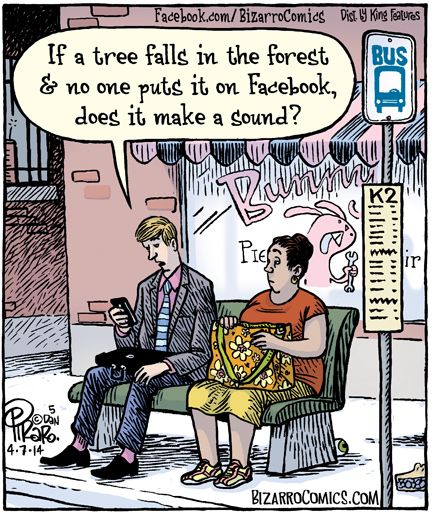
If a tree falls in the forest…

If a tree falls in the forest… | Bright, shiny objects!

Source: (31) If a tree falls in the forest… | Bright, shiny objects! | #brightshinyobjects | Pinterest

Come to the woods, for here is rest.

The Japanese call it ‘Shinrin-Yoku Forest Therapy’…

Live & Learn's avatarLive & Learn

tree-cold-winter

To Fight the Winter Blues, Try a Dose of Nature by Florence Williams (excerpts):

Wintertime is rough on those whom the 19th-century hiker-philosopher John Muir called “tired, nerve-shaken, over-civilized people.” But we have an obvious cure for our doldrums: go outside. Though we are months away from the flowers and leafy foliage of spring, a dose of nature can still calm the mind and solidify human bonds. The real question is why we don’t partake more often of this easy balm…

After crunching the data, Dr. MacKerron and Susana Mourato…found people were significantly happier outdoors, especially in natural settings, than they were indoors…But there was a catch: Most of the participants didn’t behave as if they knew this, because they were rarely outside. They were indoors or in vehicles for 93% of their waking hours.

The study reveals our epidemic dislocation from the outdoors—an indictment not just of the structures and…

View original post 481 more words

How? via Live & Learn


True…

This morning it rained. This afternoon it is sunny. How is that not like the mind? ~ Michael Kewley, May all beings be happy Sources: Quote – Some of my best friends are birds. Photo: Your Eyes Blaze Out

via How? — Live & Learn

If a tree falls in the forest

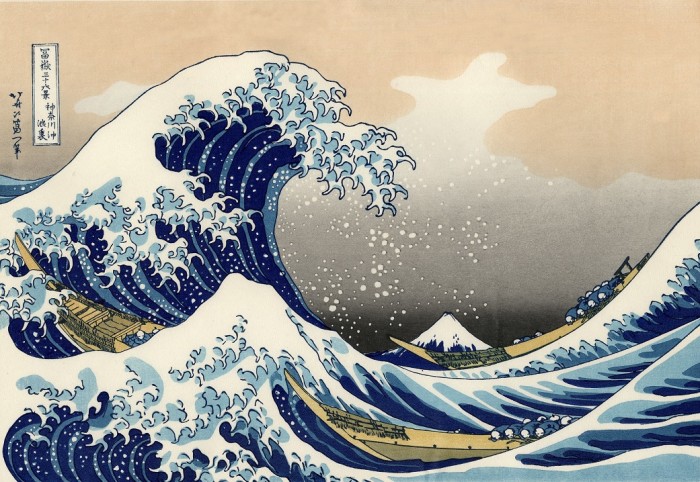
Waves…

Great-Wave-700x482

When I spin or spiral or go ‘sideways’, fear rolls over me like great waves and I am tossed about by the next crazy think that comes to my mind…

Consider this, however. Have you ever been at the ocean? Do you know what it’s like to drop below the waves and watch them from underneath? I have noticed that if you stay on the surface you can get pounded by wave after wave but if you drop a few feet below the surface, all you feel is a gentle tug.

This past weekend, I faced wave after wave of fears. I found that when I stayed on the surface, I was at the mercy of every memory and thought that rolled in but if I could drop down into myself and find a quite place, the ‘waves’ had no effect.

In her book True Refuge, teacher Tara Brach says this:

“I recently read in the book My Stroke of Insight by brain scientist Jill Bolte Taylor that the natural life span of an emotion—the average time it takes for it to move through the nervous system and body—is only a minute and a half. After that we need thoughts to keep the emotion rolling. So if we wonder why we lock into painful emotional states like anxiety, depression, or rage, we need look no further than our own endless stream of inner dialogue.” ~ True Refuge

One tool I used was to ‘pay attention’ to thoughts but journaling them in Evernote and most of ,u fears seemed to be appeased by the recognition of documentation. For the rest, I used Tara Brach’s RAIN acronym:

  • Recognize
  • Allow
  • Investigate with Kindness
  • Non-identify

If only I could claim perfection! This approach, however, did help me ‘drop under the waves’ and become happier overall…

Enhanced by Zemanta

If a tree falls in the forest…

Remembering Love

img_2943_2-tara-001

Remembering Love (from IMCW Spring Retreat) – The habit of self-judgment not only causes emotional pain, it creates a trance that obscures the purity and vastness of our Being. This talk explores how a wakeful and forgiving heart can heal and free us…

Tara Brach : Remembering Love (Retreat Talk).


From Story to Presence…

img_2943_2-tara-001A ‘quote*’ from Tara Brach’s meditation “From Story to Presence”…

“The reality is each one of us has caused hurt to other people and each one of us has been hurt by other people. But if we keep running the story of “You hurt me; you’re bad” or “I hurt you; I’m bad” all that happen is a looping that creates separation. What if instead we say the story is that I hurt you and we let that story be there, we don’t put it aside too quickly…

We let it be there and we feel what it feels like in our body. The very presence with that vulnerability awakens compassion. Now the trick — because this is where there can be more suffering is to take the story “I caused you suffering” and to get stuck on the “I’m bad, I’m bad, I’m bad”. We’re wedded to the story and we don’t have access to deeper presence…

So the pathway I am describing to you, and it takes a real sensitivity, is that when stories arise in our mind — to not to quickly go ‘it’s just a story, back to the breath’ because that is just another form of aversion and denial — is to let it be there a bit, but not to believe the story.”

She goes on to say “the story behind some of the more drama stories is really the story of Self. As we open to this presence, we wake up out of that core story that keeps us separate”.

You can hear the whole talk here:

*I tried to transcribe it as best I could; this is NOT an official transcription…

Self Esteem or Other Esteem?

Mel Schwartz, L.C.S.W. M.Phil. writes:

I have come to believe that the way the term self-esteem is used is actually a misnomer. The first half of the expression, self, would seem to indicate that esteem, the second half of the expression, is derived from one’s self. Yet if we look closer, we find that most people seek a sense of worthiness from that which lies outside of them. For a student, it might come from good grades; for a businessperson or worker, it’s derived from a promotion or a raise; and for most individuals, praise or acknowledgement provide a temporary increase in esteem. Our society generates billions of dollars in revenues from inducing people to seek the quick fix of vanity as a means toward feeling better. Yet none of these actually contributes one iota to self-esteem. Ironically, they may even get in the way. 

Continue reading: Self Esteem or Other Esteem? | Psychology Today.

Today’s Thoughts Are Tomorrow’s History

Ed and Deb Shapiro write:

Quite often we put too much importance on our thoughts and take them so seriously that they can lead us into all kinds of emotional turmoil. Some thoughts are inspiring, while others can be misleading. One time we were teaching meditation. and Ed said to Mary, a participant, that when we meditate all sorts of outrageous thoughts may arise. In response, Mary blurted out, “Wow, how’d you know?” Because of her negative thoughts, Mary felt she was a terrible person. Yet thoughts are simply words in our mind. Those we thought yesterday are gone and new thoughts arise only to disappear into the next moment.

We lived in Dartmouth, on the south coast of England, and each day we would take walks along the wide river Dart to the estuary. One day we were standing and gazing at the flowing water when it struck us that though the river always looked the same, day after day, it was no more the same than it was even a second ago. It was constantly changing, always moving, always different.

Which is just like our thoughts and feelings. Can you remember what you were thinking yesterday that seemed so important? Who we are now is not who we were last week, an hour ago, even a few minutes ago. Like the river, we are always changing. Continue reading “Today’s Thoughts Are Tomorrow’s History”

Start a Blog at WordPress.com.

Up ↑