“Thank God for the ability to break life down into days.
Gratitude Focus: We can start and end each day by being grateful for everything that happened in it and the help we encountered along the way.” via May 14.
Thinks I find along the way
“Thank God for the ability to break life down into days.
Gratitude Focus: We can start and end each day by being grateful for everything that happened in it and the help we encountered along the way.” via May 14.
 I don’t normally curate this much content in one ‘swell foop’ as I like to say but Melody Beattie’s perspective on owning your own stuff and Mark Brower’s comments on same were so good I couldn’t find anything to exclude. Mark starts out and then quotes my ‘Language of Letting Go’ reading for today…
Many of us struggle with codependency. When addiction is present in a relationship, the old model was that the addict was “dependent” and his or her spouse was “codependent.” But today we know that usually both the addict and spouse struggle with codependency in its various forms.
Codependency happens when we lose touch with our sense of self, and become over-dependent on how other people are doing, and/or how they perceive us. Since we are not “okay” with ourselves, we have to work overtime to ensure that other people around us are doing okay, and/or that they feel good about us.
So we wind up tolerating things we shouldn’t tolerate, feeling responsible for things we shouldn’t feel responsible for, and compromising what we want simply in order to please someone else. This inevitably leads to distress and frustration, which causes the addict to move deeper into their addiction, and for the addict’s spouse to cope in other ways.
The issue of codependence is complicated for Christians, because it gets mixed up with our desire to love and serve other people. The Bible tells us to “consider others better than ourselves.” But the same Bible also tells us to love our neighbor as ourselves, which presupposes some sort of healthy self-regard. The Bible also portrays Jesus himself taking time away from the crowds – not being “nice” and doing what they want him to do – in order to rest and reconnect with God the Father.
The trick to living a recovery life in relationships with others is to know how to separate healthy love with unhealthy codependence.
Melody Beattie has been a great help for me over the years with her many books on this topic. One of her best books on this topic is a daily meditation book called “The Language of Letting Go.”
In another article on this blog, I wrote about codependence, and quoted at length from her book. But it’s so good and helpful that I want to quote some more! What follows are some excerpts about the issue of “Property Lines”:
A helpful tool in our recovery, especially in the behavior we call detachment, is learning to identify who owns what. Then we let each person own and possess his or her rightful property.
If another person has an addiction, a problem, a feeling, or a self-defeating behavior, that is their property, not ours. If someone is a martyr, immersed in negativity, controlling, or manipulative, that is their issue, not ours.
If someone has acted and experienced a particular consequence, both the behavior and the consequence belong to that person.
People’s lies, deceptions, tricks, manipulations, abusive behaviors, inappropriate behaviors, cheating behaviors, and tacky behaviors belong to them, too. Not us.
People’s hopes and dreams are their property. Their guilt belongs to them too. Their happiness or misery is also theirs. So are their beliefs and messages.
If some people don’t like themselves, that is their choice. Their choices are their property, not ours. What people choose to say and do is their business.
What is our property? Our property includes our behaviors, problems, feelings, happiness, misery, choices, and messages; our ability to love, care, and nurture; our thoughts, our denial, our hopes and dreams for ourselves. Whether we allow ourselves to be controlled, manipulated, deceived, or mistreated is our business.
In recovery, we learn an appropriate sense of ownership. If something isn’t ours, we don’t take it. If we take it, we learn to give it back. Let other people have their property, and learn to own and take good care of what’s ours.
Today, I will work at developing a clear sense of what belongs to me, and what doesn’t. If it’s not mine, I won’t keep it. I will deal with myself, my issues, and my responsibilities.
If you want to learn more about codependence, consider signing up for the Recovery Journey, an e-course for people in recovery from sexual struggles. If you are the partner of someone who struggles, note that we have a special module with materials just for the partners. You can learn more about this program at the website: http://recoveryjourney.com
Source: Codepedence is not just an issue for partners of addicts | sexualsanity.com
Codependence is a constant battle for me and it has made made my wife’s vacation in Italy even more difficult than the simple logistics of trying to run a business and hold down the fort with 4 boys while she’s gone but by the grace of God, with the help of Celebrate Recovery, my good friends Sandy and Steve and Melody Beattie’s good thoughts. we are winning on this trip! If these issues resonate with you, drop me a note below. I’ll be happy to share with you what I have…
“It’s easy to look at all the tasks and unsolved problems and feel so pressured that we get paralyzed and don’t get anything done. It takes discipline to gather in our scattered forces and focus on one thing, one day, one step, and sometimes one hour—even when taking only that one step can seem so trivial in the face of all that looms.
Would you rather try to do everything at once and get nothing done, or take one small step and do that well? Remember, one plus one equals two.
Inventory Focus: Are you creating unnecessary fear and drama by taking on more than you can handle? Are you willing to trade in the I’m-out-of-control-and-overwhelmed feeling for a sense of manageability? Do you have any history with deliberately living life one day or one step at a time? How did that work? Plans, goals, and dreams are good, but the only way to get there is one day at a time.” via May 12.


“Some people fold after making one timid request. They quit too soon. Keep asking until you find the answers. There are usually four or five “no’s” before you get a “yes.”” Jack Canfield via Today’s Quotes: ASK For What You Want!.
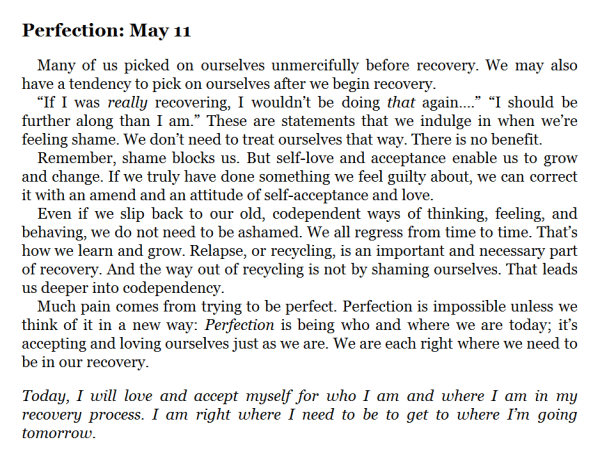
Another great perspective from Melody Beattie…

Bizarro Blog! via Less Than a Dozen Cartoons.
“Every time I see your face
My heart takes off on a high speed chase
Now dont be scared, its only love
Baby, that were falling in
I cant wait till tomorrow
This feeling has swallowed me whole
And know that Ive lost control
This heart that Ive followed
Has left me so hollow
That was then, this is now, yeah you have changed everything”
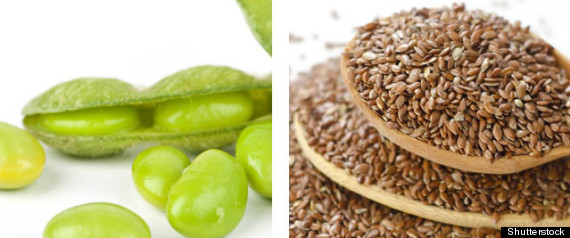
“We all know there are foods that taste delicious together — say, peanut butter and chocolate, French fries and ketchup, or chips and salsa. But despite the yumminess of these snacks, they don’t do much for our bodies — so wouldn’t it be incredible if we could get healthier just by eating certain things together?
Luckily, science seems to have figured out just that with the concept of ‘food synergy,’ which posits that particular nutrients can work better in our bodies alongside each other. While its basis is pure biology — a wide variety of whole foods will offer more benefits than a singular type of nutrient — recent studies showing just how and where these enhancements help us only adds impact to the pairings.” via Food Synergy: Foods That Work Better Together Than Apart.

“Great relationships develop not from the absence of conflict, but from determining an agreeable pattern for how to resolve conflict. Defining the rules of engagement for how you “fight” with someone you care about is ultimately much more important than trying to never have a disagreement.” Healthy Living on HuffingtonPost.com via Rory Vaden: 10 Rules Of Relationship Conflict Resolution.
“I watched a friend set up beach chairs and an umbrella. He was grunting, groaning, trying with all his might to accomplish a simple task. After he finished, he looked around and clapped the sand off his hands.
“I’m pretty dumb,” he said. “It didn’t have to be that hard or that much work.”
Yes, life really can be easier. Relaxing and letting it unfold can seem too simple and easy at times. What if we really knew that it was okay to gently go about our lives, living and working and handling things at a relaxed pace? What if we knew it was okay to gently take care of ourselves, and that a force would be present to guide us and help us accomplish each task, each problem, in fact, all the parts of our lives?
Life experience truly has taught me that when I relax, I am so much more capable of experiencing great happiness as well as simple joys. Things get done, problems get solved, and my needs get met.
Gratitude Focus: We can be grateful for all the situations that teach and remind us that “easy does it” works.” via May 11.
“Arc you always this happy?” I asked my favorite clerk at the grocery store.
“I am today,” he said.
Doing anything forever – even being happy – can seem like too much. The good news is that we don’t have to do anything forever. Just today.
Challenge: The hardest part about taking life one day at a time is remembering that the present moment is all we have.” via May 10.
“One day at a time” isn’t a value I acquired because I wanted to. I had to. Now I apply it because I want to.
Application: Sailing through life? Falling in love? Plenty of money? Or maybe things aren’t going that well. Lonely? Dealing with relationship issues? Not sure how the relationship will work out?Your boss is driving you nuts, but you don’t want to quit? Concerned about your child? Whatever circumstances we find ourselves in, taking each day as it comes is a good idea.” via May 9.
More Melody Beattie…
“My best friend was going through some tough situations in her life. I was in the midst of a hard stretch too. We didn’t particularly like the things we had to do in our lives. We talked about our feelings and decided that what we were going through was necessary and important, even though we didn’t like it.We expressed gratitude for our lives.
“It’s still a dreadful time,” I said.
“Brutal,” she said. “I guess we’re back to the old one day-at-a-time approach. We’re so lucky. What do people do that haven’t learned that gem?”
There are times when we can look at the stretch ahead and like what we see. Taking life one day at a time is still a good idea, even when things are going well.
Taking life one day at a time can be particularly useful when the road ahead looks dreadful. We may not even know where to start with some challenges. That’s when taking life one day at a time is essential.
“I’ve been using alcohol and other drugs every day since I’ve been twelve years old,” I said to my counselor years ago in treatment. “Now you’re telling me I need to stay sober the rest of my life. Plus get a job. And a life. How am I going to do that?”
“One day at a time,” she said. She was right. Sometimes I had to take life one minute at a time or one hour at a time. And all these years later, it still works.
Value: Taking life one day at a time is the gem we’ll focus on this week.” via May 8.
“Fear is at the core of codependency. It can motivate us to control situations or neglect ourselves. Many of us have been afraid for so long that we don’t label our feelings fear. We’re used to feeling upset and anxious. It feels normal. Peace and serenity may be uncomfortable. At one time, fear may have been appropriate and useful. We may have relied on fear to protect ourselves, much the way soldiers in a war rely on fear to help them survive. But now, in recovery, we’re living life differently. It’s time to thank our old fears for helping us survive, then wave good-bye to them. Welcome peace, trust, acceptance, and safety. We don’t need that much fear anymore. We can listen to our healthy fears, and let go of the rest. We can create a feeling of safety for ourselves, now. We are safe, now. We’ve made a commitment to take care of ourselves. We can trust and love ourselves.
God, help me let go of my need to be afraid. Replace it with a need to be at peace. Help me listen to my healthy fears and relinquish the rest.” Beattie, Melody (2009-12-15). The Language of Letting Go (Hazelden Meditation Series) (p. 127). Hazelden. Kindle Edition.
“Be yourself; everyone else is already taken.” ~ Oscar Wilde via Quote: Wilde Advice on Self-Esteem | Greatist.com.
David Kanigan knocks it out of the part with this one…
“The more we know about ourselves, the more power we have to behave better. Humility is underrated. We each have an infinite capacity for self-deception — countless unconscious ways we protect ourselves from pain, uncertainty, and responsibility — often at the expense of others and of ourselves. Endless introspection can turn into self-indulgence, but deepening self-awareness is essential to freeing ourselves from our reactive, habitual behaviors.” Go to the source for 11 more: Twelve of life’s most important lessons… – Lead.Learn.Live..
“Make yourself feel good. It’s our job to first make ourselves feel better and then make ourselves feel good. Recovery is not only about stopping painful feelings; it is about creating a good life for ourselves. We don’t have to deny ourselves activities that help us feel good. Going to meetings, basking in the sun, exercising, taking a walk, or spending time with a friend are activities that may help us feel good. We each have our list. If we don’t, we’re now free to explore, experiment, and develop that list. When we find a behavior or activity that produces a good feeling, put it on the list. Then, do it frequently. Let’s stop denying ourselves good feelings and start doing things that make us feel good. Today, I will do one activity or behavior that I know will create a good feeling for me. If I’m uncertain about what I like, I will experiment with one behavior today.” via Beattie, Melody (2009-12-15). The Language of Letting Go (Hazelden Meditation Series) (p. 126). Hazelden. Kindle
Edition.
Today I’ll be working hard on making myself feel good even though my wife is far away and I miss her terribly. What ‘feel good challenge will you over come today?


 Bright, shiny objects!
You must be logged in to post a comment.