
Are You Addicted To Suffering? (And Ready To Quit?)

I teach my students and clients that one should look for the best three paragraphs when curating; occasionally I say it’s OK to double dip and grab two quotes. When it comes to Kute Blackson, I usually break all my rules – his stuff is sooo good that I usually end up curating his entire post to that it’s easier for you to read the whole think. Today is no exception to the Kute Blackson rule:

Most guru’s or teachers will teach how to avoid suffering. I am going to share with you the seven steps of how to successfully create suffering in your life, so that you can be aware of them and make different choices.

Suffering can become a very dangerous addiction. An unhealthy way to feel. An ultimately unfulfilling way to feel alive. You can get so used to suffering that it becomes comfortable and familiar. Suffering is the ego’s way of feeling important.

Whether you are a businessman or a buddha, pain is inevitable. There is no way to avoid it. Just by virtue of being in a human body there will be some pain. Trying to avoid pain will only create more suffering. Embrace pain to release yourself from suffering.

Suffering is optional. Suffering is a choice.

Suffering comes from your story about what is happening in your life and less about what is actually happening. What is happening is simply what is happening. The suffering part comes from all your interpretations and meanings about the experience. Change your story and the way you are interpreting reality and you begin to change your reality. When you change your reality within yourself, you shift your experience of your reality outside. Once you understand this, you only suffer if you chose to.

What stories are you making up about yourself, your life, your partner, your current experience that is causing you suffering?

The Seven Keys to creating suffering:

1- Resist everything: Resist what is. Resist reality. Fight against what is happening in your life with all your might. This is a guaranteed method to suffer.

Key Solution: Accept what is, so that you can then decide how to shift it.

2- Holding the belief: “The experience that is happening to me should not be happening to me. I should be having some other experience than the one I am having. This shouldn’t be happening to me”. You have probably heard yourself doing some version of this. It just keeps you stuck.

Key Solution: Embrace your current experience. Your current experience is the experience that you are meant to be having because you are having it right now. Trust, and focus on what you can learn and how you can grow. The experience is here to help you evolve.

3- Focusing on all the things that you cannot control. This will only cause you to feel completely helpless and disempowered. It will leave you in a state of worry and anxiety. Some of us are professional “worriers”. No matter how much you worry, it doesn’t actually change the situation. Once you are done worrying, the situation will be the same. Worrying is a waste of time.

Key Solution: Focus on what you can control. Take actions that are in your power, step by step.

4- Refusing to change. Keep doing the same over and over and hoping for a different result. Well, as Einstein said, this is the definition of insanity. Are you so set in your ways that you are afraid of giving up the known suffering for the unknown possibility of happiness?

Key Solution: Embrace change. Be willing to do something different. Let go. Go into the unknown. Take different actions.

5- Give up your responsibility: Be a victim. Play the blame game, making everyone else at fault or responsible for your life and how you feel. Unless you take responsibility for your current experience, then you are powerless to change it.

Key Solution: Take full responsibility for your current reality and decide what changes you are committed to making. Give up blame.

6- Focus on everything that is wrong in your life. Whether a relationship or person. When you focus on what is wrong, you will surely find what is wrong. You will end up creating more of what is wrong to feel wrong about. Then the negative cycle continues.

Key Solution: Start focusing on what you are grateful for. Remember all your blessings, and appreciate that daily. What you appreciates, expands. What you thank about comes about.

7- Denial: Lie to yourself and others. Pretend that everything is fine when you know that it isn’t. When you avoid facing what is, you end up staying stuck and repeating the same patterns of pain and relationship. This only ends up prolonging your suffering.

Key Solution: Tell the truth to yourself first. Tell the truth to those in your life. Be honest. Face reality.

Life is too short to waste spent suffering. Most of what you worry about today, you won’t even remember a few months from now. Most of what you are trying to change in people today, you won’t care about on your deathbed.

You hold the padlock and you hold the key to your freedom.

Source: Are You Addicted To Suffering? (And Ready To Quit?)

‘Technology Addiction’ edition

epic fail photos - There I Fixed It: Technology Addiction

Or, “The Laptop Meets the Blacktop.” via There I Fixed It: Technology Addiction.

Making Life Easier

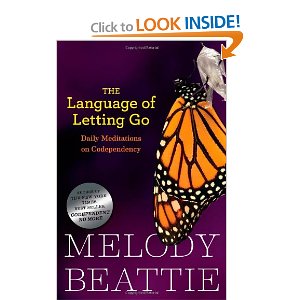
Melody Beattie writes:

Life doesn’t have to be hard.
Yes, there are times we need to endure, struggle through, and rely on our survival skills. But we don’t have to make life, growth, recovery, change, or our day-to-day affairs that hard all the time.
Having life be that hard is a remnant of our martyrdom, a leftover from old ways of thinking, feeling, and believing. We are worthy, even when life isn’t that hard. Our value and worth are not determined by how hard we struggle.
If we’re making it that hard, we may be making it harder than it needs to be, said one woman. Learn to let things happen easily and naturally. Learn to let events, and our participation in them, fall into place. It can be easy now. Easier than it has been. We can go with the flow, take the world off our shoulders, and let our Higher Power ease us into where we need to be.
Today, I will stop struggling so hard. I will let go of my belief that life and recovery have to be hard. I will replace it with a belief that I can walk this journey in ease and peace. And sometimes, it can actually be fun.

Source: Daily Meditation ~ Making Life Easier – Miracles In Progress Codependents Anonymous Group

Health Effects of Caffeine

Infographic List via Health Effects of Caffeine [INFOGRAPHIC].

Recognizing Choices

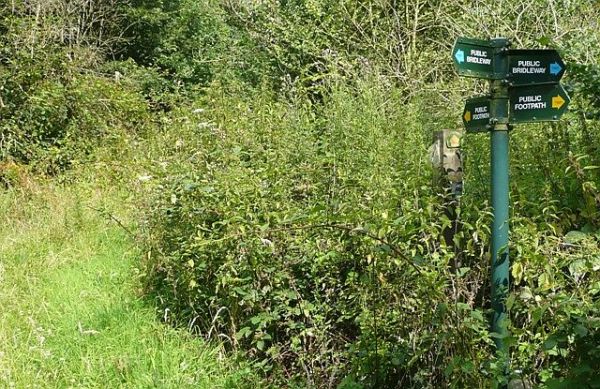
English: Choices, choices A network of paths a...

Melody Beattie writes:

We have choices, more choices than we let ourselves see.

We may feel trapped in our relationships, our jobs, our life. We may feel locked into behaviors — such as caretaking or controlling.

Feeling trapped is a symptom of codependency. When we hear ourselves say, “I have to take care of this person… .”

“I have to say yes… ” “I have to try to control that person…

“I have to behave this way, think this way, feel this way….” we can know we are choosing not to see choices.

That sense of being trapped is an illusion. We are not con­trolled by circumstances, our past, the expectations of others, or our unhealthy expectations for ourselves. We can choose what feels right for us, without guilt. We have options.

Recovery is not about behaving perfectly or according to anyone else’s rules. More than anything else, recovery is about knowing we have choices and giving ourselves the freedom to choose.

Today, I will open my thinking and myself to the choices available to me. I will make choices that are good for me.” via June 18: Recognizing Choices.

Surrender


Melody Beattie writes:

Master the lessons of your present circumstances.
We do not move forward by resisting what is undesirable in our life today. We move forward, we grow, we change by acceptance.
Avoidance is not the key; surrender opens the door.
Listen to this truth: We are each in our present circumstances for a reason. There is a lesson, a valuable lesson that must be learned before we can move forward.
Something important is being worked out in us, and in those around us. We may not be able to identify it today; but we can know that it is important. We can know it is good.
Overcome not by force, overcome by surrender. The battle is fought, and won, inside ourselves. We must go through it until we learn, until we accept, until we become grateful, until we are set free.
Today, I will be open to the lessons of my present circumstances. I do not have to label, know, or understand what I’m learning; I will see clearly in time. For today, trust and gratitude are sufficient.

Source: Language of Letting Go – June 17 – Surrender – SoberRecovery : Alcoholism Drug Addiction Help and Information

Maybe I should change the name of this blog to The Daily Beattie?! :-D

Four Steps To Cleanse Toxic People And Thoughts

Donna Gates shares this…

Sometimes when we experience a massive shift in our mental, emotional or spiritual life, things can get worse before they get better.

One of the first things that we must confront with any addiction, whether it is to a toxic substance, an unhealthy distraction or an abusive relationship, is the level of honesty that we bring to the table.

This means that in addition to coping with the neurochemical balancing act that is taking place in the body, we also must look closely at what we desire, our resolve and long-term objectives.

These are big questions. And asking them can stir up quite a storm. Nonetheless, every day many of us are making a change for the better. We are making changes, weathering the storm and seeing the benefits.

How we nourish our physical body is very similar to how we nourish our mental and emotional body.

When I cleanse or detoxify my physical body, I always apply four straightforward steps to the process. Guess what? These four steps work with the fundamental process of detoxification. They can be applied to any area of life!

Source: Four Steps To Cleanse Toxic People And Thoughts!

Go to the source if you’d like to know the 4 steps – they are full of ‘practical, tactical’ information you can use to detoxify spiritually, physically and emotionally…

Surrender

Melody Beattie writes:

Master the lessons of your present circumstances.
We do not move forward by resisting what is undesirable in our life today. We move forward, we grow, we change by acceptance.
Avoidance is not the key; surrender opens the door.
Listen to this truth: We are each in our present circumstances for a reason. There is a lesson, a valuable lesson that must be learned before we can move forward.
Something important is being worked out in us, and in those around us. We may not be able to identify it today; but we can know that it is important. We can know it is good.
Overcome not by force, overcome by surrender. The battle is fought, and won, inside ourselves. We must go through it until we learn, until we accept, until we become grateful, until we are set free.
Today, I will be open to the lessons of my present circumstances. I do not have to label, know, or understand what I’m learning; I will see clearly in time. For today, trust and gratitude are sufficient.

Source: Language of Letting Go – June 17 – Surrender – SoberRecovery : Alcoholism Drug Addiction Help and Information

20 Minutes of Exercise a Day Is Enough to Get You Fit

It seems like one of the major reasons people don’t like to workout is the amount of time it takes to do so. However, a new study in the Journal of Physiology suggests you might be able to get all the exercise you need in just 20 minutes if you’re willing to work at it.

We’ve talked briefly about interval training before, but this is one of the first studies to dig into if it actually works as a replacement for the usual recommendation of 30 minutes of continuous exercise. The idea is simple. You workout for one minute with strenuous activity and push your heart rate to about 90 percent of its maximum rate. You can get a rough estimate of your maximum heart rate by subtracting your age from 220. After the minute is up, you slow down and recover for one minute. You then repeat this 10 times for a total of 20 minutes (or 10 minutes of actual exercise). You can use this for running, cycling, swimming, or any number of cardiovascular workouts. (Note that this isn’t exactly the same as traditional high-intensity interval training, in which you push to 100 percent of your maximum heart rate.)

If you’re crunched for time and can’t get that full 30 minutes in, this is a great way to shorten the duration and still get in shape.” via 20 Minutes of Exercise a Day Is Enough to Get You Fit.

Workin’ your body weight…

David Kanigan shared this great video as part of his morning workout schedule…

It’s a great reminder for me! I live in rural Wisconsin where we don’t have health clubs or fitness centers. For years, I’ve let myself go to hell physically because the nearest YMCA is 18 miles away in Sturgeon Bay — after all, how could I workout without an elliptical machine?

Lately I’ve made a couple of important changes that are helping me quite a bit;

  • Eating mostly live or unprocessed foods [no more cheddarwurst, David!] — Brussels Sprouts ROCK!!! Try this recipe.
  • Drinking mostly water and tea, although I’m still addicted to my morning ‘red eye’ [coffee with two shots of espresso] and the occasional beer from Titletown Brewing Company in Green Bay. I don’t drink with meals — doesn’t help the digestion at all and food/beverage pairings have been the death of me; ie, cookies and milk, pizza and beer, cheddarwurst and diet soda. Some things that go together just shouldn’t go together in your body…
  • Walking every day. I used to be a runner until I had back surgery in 1990. I thought walking was for wusses — it was, the way I was doing it. I use Endomondo on my smartphone to compete against myself and walk miles in less than 14 minutes. Doing it that way, walking helps! NOT walking or exercising is for wusses. I bike, also and Endomondo has a website that shows me how all my efforts are adding up, too…
  • Yoga. Yup, Yoga. I have a couple of apps on my smartphone like Daily Yoga for Back Buildup and Sworkit that are really useful for toning my almost 54 year old body. Clients like Jackie Dumaine have been instrumental in changing my mindset around tools like yoga, too…
  • Last? I threw out my scale. In the past, I’ve lost 50lbs. three times; once using running in college, twice using Atkins. Atkins sucked for me — it was painful and the weight came back because the lifestyle is not sustainable. But, I wanted the instant gratification from the scale. This time around, I don’t let the scale tell me if I’m having a good day. I know if I’m doing the work or not and that if I do the right things, the right results will follow. I’m also not in it for a quick fix — I’m in it for the long haul; I want to live the rest of my life fit and healthy, not letting a mechanical device tell me if I’ve been good or bad.
You might be thinking to yourself at this point that I’m Captain Obvious but this stuff is just dawning on me now. David’s video got me thinking about the good decisions I’ve been making lately and the difference they are making in EVERYTHING I do and it’s encouragement to dig down deeper and do even more. Thanks, buddy! Saturday Morning Work-Out Inspiration: Workin’ your body weight… – Lead.Learn.Live..

He Who Sits the Most Dies the Soonest

Sitting Alone…people who sat more than 11 hours a day had a 40% higher risk of dying in the next three years than people who sat less than four hours a day. This was after adjusting for factors such as age, weight, physical activity and general health status, all of which affect the death risk. It also found a clear dose-response effect: the more people sat, the higher their risk of death.

The results are part of the Sax Institute’s 45 and Up Study, the largest ongoing study of healthy aging in the Southern Hemisphere. It compared the self-reported daily sitting time of 222,497 Australian adults 45 years or older with their likelihood of death in the next three years.

Healthy or sick, active or inactive, the more people sat, the more likely they were to die in the next three years. Physical activity did reduce this risk significantly: the 40% higher death risk found when comparing people who sat the most to those who sat the least increased to 100% when comparing those who sat the most and exercised the least to those who sat the least and exercised the most. But while the death risk was much lower for anyone who exercised five hours a week or more, it still rose as these active people sat longer.” via theatlantic.com

What a great study! If you sit….you need to move more! If you have pain from too much sitting and need help to get started on a more active lifestyle…call today to schedule a consultation.”via Confirmed: He Who Sits the Most Dies the Soonest | Ashwaubenon Chiropractic.

Letting the Cycles Flow

A beautiful monarch butterfly bears her transp...

Melody Beattie writes:

Life is cyclical, not static. Our relationships benefit when we allow them to follow their own natural cycles.

Like the tide ebbs and flows, so do the cycles in relation­ships. We have periods of closeness and periods of distance. We have times of coming together and times of separating to work on individual issues.

We have times of love and joy, and times of anger.

Sometimes, the dimensions of relationships change as we go through changes. Sometimes, life brings us new friends or a new loved one to teach us the next lesson.

That does not mean the old friend disappears forever. It means we have entered a new cycle.

We do not have to control the course of our relationships, whether these be friendships or love relationships. We do not have to satisfy our need to control by imposing a static form on relationships.

Let it flow. Be open to the cycles. Love will not disappear. The bond between friends will not sever. Things do not re­main the same forever, especially when we are growing and changing at such a rapid pace.

Trust the flow. Take care of yourself, but be willing to let people go. Hanging on to them too tightly will make them disappear.

The old adage about love still holds true: “If it’s meant to be, it will be. And if you love someone, let them go. If they come back to you, the love is yours.”

Today, I accept the cyclical nature of life and relationships. I will strive to go with the flow. I will strive for harmony with my own needs and the needs of the other person.” via June 15: Letting the Cycles Flow.

Disappointed Someone? It’s Okay. Get Over It.

“When we are the one responsible behind disappointment, we find ourselves poked by both ends of a double-edged sword – on the one side wounded by disappointment in ourselves, and the other traumatized with guilt towards the party affected.

But like toothaches and awkward puberty, we have to accept the fact that we are all bound to the possibility of disappointment, be it by ourselves, family, friends or co-workers; or by circumstances beyond our control, such as bad timing or a chain of events that eventually domino-crumble down our path.

Disappointment is an essential part of our growth and self-discovery, and despite being uncomfortable and hurtful, teaches us to trust ourselves, recognize our strengths and weaknesses, and let go of our hold on perfection.

By actively avoiding disappointment onto others, sometimes we set ourselves up for more failure and pain instead of less, or none at all.

We understand that like people, disappointment comes in many different shapes and sizes. While we don’t reproach the remorse that comes with our wrongdoing (hey, that’s a sign of empathy, right?), we’re definitely not down with the idea of indulging in continuous self-pity over a missed deadline or a forgotten detail.

So here are some tips you can apply in your personal or work life on how to overcome the emotional self-flagellation that comes with having disappointed someone.” Get more here: Disappointed Someone? It’s Okay. Get Over It..

Hanging on to Old Relationships

More Melody Beattie:

“We want to travel baggage-free on this journey. It makes the trip easier.

Some of the baggage we can let go of is lingering feelings and unfinished business with past relationships: anger; resentments; feelings of victimization, hurt, or longing.

If we have not put closure on a relationship, if we cannot walk away in peace, we have not yet learned our lesson. That may mean we will have to have another go-around with that lesson before we are ready to move on.

We may want to do a Fourth Step (a written inventory of our relationships) and a Fifth Step (an admission of our wrongs). What feelings did we leave with in a particular relationship? Are we still carrying those feelings around? Do we want the heaviness and impact of that baggage on our behavior today?

Are we still feeling victimized, rejected, or bitter about something that happened two, five, ten, or even twenty years ago?

It may be time to let it go. It may be time to open ourselves to the true lesson from that experience. It may be time to put past relationships to rest, so we are free to go on to new, more rewarding experiences.

We can choose to live in the past, or we can choose to finish our old business from the past and open ourselves to the beauty of today.

Let go of your baggage from past relationships.

Today, I will open myself to the cleansing and healing process that will put closure on yesterday and open me to the best today, and tomorrow, has to offer in my relationships.” Source: Hanging on to Old Relationships

Intelligence Follows the Wheel

English: Exercise wheel for a small rodent, di...

I ran across some interesting research the other day that I wanted to take a few moments to share here. For years scientists have known that giving mice “enriched” environments makes the mice smarter. They would put in colorful toys, tunnels, exercise wheels, etc. and mice who lived in the “enriched” environments performed better on tests than the mice in the non-enriched cages. Finally some scientists started trying to figure out exactly what it was in the enriched environment’s was making the mice smart.

It turned out it wasn’t the colorful balls or toys. it all came down to the exercise wheel. Even though the mice loved the toys the thing that made them smart was running on the wheel. The intelligence followed the exercise wheel–not the toys.

This has some interesting implications for people who want to perform at their peak mental capabilities. Maybe exercise is the one of the best ways to invest your time in getting smarter.” via Intelligence Follows the Wheel | Productivity501.

Moving Forward

Melody Beattie writes:

Much as we would like, we cannot bring everyone with us on this journey called recovery. We are not being disloyal by allowing ourselves to move forward. We don’t have to wait for those we love to decide to change as well.
Sometimes we need to give ourselves permission to grow, even though the people we love are not ready to change. We may even need to leave people behind in their dysfunction or suffering because we cannot recover for them. We don’t need to suffer with them.
It doesn’t help.
It doesn’t help for us to stay stuck just because someone we love is stuck. The potential for helping others is far greater when we detach, work on ourselves, and stop trying to force others to change with us.
Changing ourselves, allowing ourselves to grow while others seek their own path, is how we have the most beneficial impact on people we love. We’re accountable for ourselves. They’re accountable for themselves. We let them go, and let ourselves grow.

Today, I will affirm that it is my right to grow and change, even though someone I love may not be growing and changing alongside me.

Source: Moving Forward – Language of Letting Go – SoberRecovery : Alcoholism Drug Addiction Help and Information

Simple Tips to Calm Your Mental Chatter

David Magone: Simple Tips to Calm Your Mental Chatter.

Codependency? What it is…

“Codependency (or codependence, interdependency ) is defined as a psychological condition or a relationship in which a person is controlled or manipulated by another who is affected with a pathological condition (as in an addiction to alcohol or heroin); and in broader terms, it refers to the dependence on the needs of or control of another.[1] It also often involves placing a lower priority on one’s own needs, while being excessively preoccupied with the needs of others.[2] Codependency can occur in any type of relationship, including family, work, friendship, and also romantic, peer or community relationships.[2] Codependency may also be characterized by denial, low self-esteem, excessive compliance, or control patterns.[2] Narcissists are considered to be natural magnets for the codependent.” Get more here: Codependency – Wikipedia, the free encyclopedia.

Wondering if this applies to you? Here are some questions that may help you decide

Basics of Codependency

Codependency: The Game

“Whether Codependency is developed in childhood or in adulthood the Codependent demonstrates a lack of trust in themselves. Because they are unable to fix what they see as other peoples problems they feel deficient. Because they believe the lies that a Dependent tells them after being challenged by the Codependent (who often correctly asses the situation in the first place) they learn not to trust their own judgement or intuition. This lack of trust in themselves often leads to them clinging on to those who cannot or will not love them back – often settling for too little. Codependents are also controlled by others and find it hard to resist when someone they grow tired of caring for says or does something that indicates things may change, that they will make more effort and behave how the Codependent expects. So they stick by the Dependent hoping things will be different this time.

Codependents deny their true feelings (fear, neediness, anger, ambivalence towards a Dependent) because they are afraid that they may have to acknowledge that they have to take an action that they really don’t want to take e.g. leaving the Dependent or face a truth that they do not want to face e.g. they can’t fix this problem, the Dependent is abusive etc. Denial of feelings leads to physical problems as the body starts to struggle with the effects of stress and anxiety e.g. high blood pressure, fatigue etc. or as often can happen the effects of substance abuse/food abuse that the Codependent practices in order to numb their emotional pain.

Codependents undertake in manipulative behaviour in the name of love and trying to help but in the end “We aren’t the people who ‘make things happen’. Co-dependents are the people who consistently, and with a great deal of effort and energy, try to force things to happen” Beattie pg. 76. Codependents don’t understand that they don’t have to control others and that any element of control means that the other person would normally have no interest in achieving the outcome the Codependent wants to achieve. They ignore the reality because they are frightened of what it really means for them. “People ultimately do what they want to do. They feel how they want to feel (or how they are feeling); they think what they want to think; they do the things they believe they need to do; and they will change only when they are ready to change. It doesn’t matter if they’re wrong and we’re right. It doesn’t matter if they’re hurting themselves. It doesn’t matter that we could help them if they’d only listen to, and cooperate with, us. IT DOESN’T MATTER” Beattie pg. 80-81.” via Basics of Codependency.

Groovy Probiotics

English: Mature Kombucha

“We’ve been told yogurt is good for us.  And in times past, most cultures have traditions of fermented food, such as sauerkraut, kimchi, kefir, and a tasty tea-based drink I’ve been fermenting at home, called kombucha.  All these foods are jam-packed with living yeast and bacteria species that go down your gullet to comingle with the one hundred trillion (yes, trillion) bacteria already living there.

90% of the cells in your body are the bacteria who live on and within you. Most of them live in your colon.  The species of bacteria in your colon could determine how thin or fat you are, or maybe how vulnerable you are to stress.  The commensal beasties are difficult to study as they don’t live outside the human gut and can’t be cultured in a lab.  There’s a lot to learn.

So fermented food had an obvious advantage in that it kept longer in the days before refrigerators, but did it have another advantage perpetuating it’s existence in so many cultures in human history?  Are the probiotics helpful in keeping the beasties in our gut happy and healthy?  I’ve discussed this issue a bit in a previous post, but last year a new paper came out that is also interesting:

Probiotics function mechanistically as delivery vehicles for neuroactive compounds: Microbial endocrinology in the design and use of probiotics.” Get more here: Groovy Probiotics | Psychology Today.

Good stuff! Lately, my wife has been introducing us to probiotics and it’s definitely worth looking into…

I <3 Endomondo!

One of the most important things I’ve done in my fitness routine is to throw out my scale and to start using Endomondo on my Android [available for your iPhone, too]. Endomondo uses the GPS in my phone to track my exercise and keeps a running log with stats like this I can view on their website [click image to enlarge]…

My scale is a LIAR — it rarely says what I hope it will say. Endomondo reminds me that if I do the right thing, the right results will follow and it shows me how my efforts are adding up. THIS inspires me — you may benefit from it, too!

Start a Blog at WordPress.com.

Up ↑