Figuring out God’s will

Melody Beattie writes:

It was a stressful time in my life. I didn’t know what to do. I had pressing business decisions to make, and painful relationship issues to face. Everything felt like a mess.

I gathered up a few favorite books, the Bible, a journal, and some clothes. Then I headed for the mountains, a resort that was a favorite place of mine to hide out in and gather my thoughts.

I told myself, “I’m going to stay in there. Write in my journal. Pray. And meditate. I’m not coming out until I know what to do.”

After forty-eight hours of writing about my problems, praying about my problems, and meditating about my problems, I remembered something a friend had said to me.

“What are you doing?” he had asked.

“I’m trying to surrender to God’s will.”

“No you’re not, you’re trying to figure it out.”

Within six months, each of the problems I was wrestling with worked themselves out. I was either guided into an action that naturally felt right at the time, or a solution came to me. The immediate solution to each problem was the same: let go. Just surrender to the situation taking place. Sometimes, what we need to do next is surrender.

If you don’t like the word surrender, try calling it making peace.

God, help me surrender to your will, especially when I don’t know what to do next.” via Just For Today Meditations » Daily Recovery Readings – June 25, 2012.

Just in case you missed this for 6//25/2012

  1. “Learn to say ‘no’ to the good so you can say ‘yes’ to the best.”

    – John C. Maxwell

  2. It is good to have an end to journey towards, but it is the journey that matters, in the end.
    —Ursula K. LeGuin
  3. A man who has committed a mistake and doesn’t correct it is committing another mistake.
    –Confucius
  4. Don’t argue for other people’s weaknesses. Don’t argue for your own. When you make a mistake, admit it, correct it, and learn from it–immediately.
    –Stephen Covey
  5. Left to itself, nature takes ordinary garbage and transforms it into useful nutrients that help sustain life. It’s usually poor human action that makes garbage a problem.

    Our mental and emotional garbage takes the forms of bad memories, festering resentments, and useless regrets. We waste time berating ourselves and others about bad decisions and experiences that are behind us.

    The magic of the 12 Step program is that we can use it to transform this mental garbage into useful experience. A past mistake can become as asset when we share it with others. Pain and suffering can teach a lesson that helps all of us to grow. By forgiving others, a resentment can be turned into a friendship.

    I’ll resolve today not to worry about garbage any longer than it takes to identify it and release it to my Higher Power for transformation.

  6. Quote: When a man points a finger at someone else, he should remember that three of his fingers are pointing at himself.
    —Louis Nizer

    It’s so easy to blame others. Others are always making mistakes we can hide behind. That’s what blame is—hiding. When we blame others for our mistakes, we’re trying to hide our character defects.

    It’s nobody else’s fault that we act the way we do. It’s our fault. We’re responsible for our actions.

    And with the help of our Higher Power, we can change. We can turn over our character defects. Over time, we’re not afraid to learn about ourselves—even the parts we don’t like—because we want to know ourselves better.

    Prayer for the Day: I pray for help in facing my character defects.

    Action for the Day: I’ll think about the past week. I’ll list times I’ve used blame to hide from reality.

Charity

International Money Pile in Cash and Coins

Melody Beattie writes:

We need healthy boundaries about receiving money, and we need healthy boundaries about giving money.

Some of us give money for inappropriate reasons.

We may be ashamed because we have money and don’t believe we deserve it. We may belong to an organization that uses shame as a form of control to coerce us out of our money that the organization wants.

We can get hooked into giving money to our children, family members, or friends because we have earned or un­earned guilt. We allow ourselves to be financially black­mailed, sometimes by the people we love.

This is not money freely given, or given in health.

Some of us give money out of a sense of caretaking. We may have exaggerated feelings of responsibility for others, including financial responsibility.

We may be giving simply because we have not learned to own our power to say no when the answer is no.

Some of us give because we hope or believe people will love us if we take care of them financially.

We do not have to give money to anyone. Giving money is our choice. We do not have to allow ourselves to be victimized, manipulated, or coerced out of our money. We are financially responsible for ourselves. Part of being healthy is allowing those around us be financially responsible for themselves.

We do not have to be ashamed about having the money that we earn; we deserve to have the money we have been given — whatever the amount, without feeling obligated to give it all away, or guilty because others want what we have.

Charity is a blessing. Giving is part of healthy living. We can learn to develop healthy boundaries around giving.

Today, I will strive to begin developing healthy boundaries about giving money. I understand that giving is my choice.

via June 25: Charity | Language of Letting Go.

Attachment

Adrienne M. posted on the flipside of detachment over at her blog today:

Shirley MacLaine

If you attach yourself to one person, you ultimately end up having an unhealthy relationship. Shirley MacLaine.

Needing people in our lives is healthy, human, and natural. Needing a single person to love at a very deep level is also soothing to the soul’s well-being. Love and attachment are not synonymous, however. They are close to being opposites. If we “attach” ourselves to others, our movements as separate individuals are hampered. Attachment means dependency; it means letting our movements be controlled by the one we are “hooked” to.

Dependency on mood-altering chemicals, on food, on people, means unmanageability in our individual lives. Many of us in this recovery program, though abstinent, still struggle with our dependency on a certain person or a certain friend.

The tools we are learning apply in all cases of dependency. It is healthy independence we are striving for—taking responsibility for our own lives—making choices appropriate for our personal selves. Loving others means letting them make their own choices unhampered by our “attachment.”

Are my relationships attachments or are they based on love? I will take an inventory of them today.” via Daily Reading – June 24, 2012 « 12 Steps – Think About It!.

The Universe is really putting this issue front and center today. Ugggh…

Connecting the dots for 6/24/2012

  1. Today the reminders I received were about detachment, power and response-ability:
  2. We communicate in so many different ways and in so many situations, but if we don’t bring self-reflective consciousness into the equation by reflecting on what we say before we say it, we’ll fail to reach the depths of intimacy and cooperation that we are capable of.
  3. “When you feel in your gut what you are and then dynamically pursue it – don’t back down and don’t give up – then you’re going to mystify a lot of folks.”

    – Bob Dylan

  4. Just in case you missed this: 

  5. Todd’s tweets…

Detachment

English: Black Cat Yawning
My cat has taught me a great deal about ‘healthy detachment’…

Melody Beattie writes:

Detachment doesn’t come naturally for many of us. But once we realize
the value of this recovery principle, we understand how vital detachment
is. The following story illustrates how a woman came to understand
detachment.

“The first time I practiced detachment was when I let go of my alcoholic
husband. He had been drinking for seven years, since I had married him.
For that long, I had been denying his alcoholism and trying to make him
stop drinking.

“I did outrageous things to make him stop drinking, to make him see the
light, to make him realize how much he was hurting me. I really thought
I was doing things right by trying to control him.

“One night, I saw things clearly. I realized that my attempts to control
him would never solve the problem. I also saw that my life was
unmanageable. I couldn’t make him do anything he didn’t want to do. His
alcoholism was controlling me, even though I wasn’t drinking.

“I set him free, to do as he chose. The truth is, he did as he pleased
anyway. Things changed the night I detached. He could feel it, and so
could I. When I set him free, I set myself free to live my own life.
“I’ve had to practice the principle of detachment many times since then.
I’ve had to detach from unhealthy people and healthy people. It’s never
failed. Detachment works.”

Detachment is a gift. It will be given to us when we’re ready for it.
When we set the other person free, we are set free….

Source: Detachment…Melody Beattie [Archive] – Cyber Recovery Social Network Forums – Alcohol and Drug Addiction Help/Support

Learning healthy detachment has been one of the most difficult things I’ve ever done. I knew how to be attached in an unhealthy way; it’s called codependency. I knew how to be detached in an unhealthy way; it’s called “Eff you — I’m leaving!”. Healthy detachment for me looks a lot like interdependence without giving over control or response-ability to my partner but I can’t say that I’ve mastered it yet or that I will in this lifetime. It may come naturally to some people but it does not come naturally to me — I have to work hard at it every day. I don’t claim perfection — only progress — but I know that learning healthy detachment is one of the best investments I can make in myself…

Work and recovery

Melody Beattie writes this about work:

Just as we have relationship histories, most of us have work histories.

Just as we have a present circumstance to accept and deal with in our relationship life, we have a present circumstance to accept and deal with in our work life.

Just as we develop a healthy attitude toward our relationship history – one that will help us learn and move forward – we can develop a healthy attitude toward our work history.

I have worked many jobs in my life, since I was eleven years old. Just as I have learned many things about myself through my relationships, I have learned many lessons through my work. Often, these lessons run parallel to the lessons I’m learning in other areas of my life.

I have worked at jobs I hated but was temporarily dependent on. I have gotten stuck in jobs because I was afraid to strike out on my own and find my next set of circumstances.

I have been in some jobs to develop skills. Sometimes, I didn’t realize I was developing those skills until later on when they become an important part of the career of my choice.

I have worked at jobs where I felt victimized, where I gave and gave and received nothing in return. I have been in relationships where I manufactured similar feelings.

I have worked at some jobs that have taught me what I absolutely didn’t want; others sparked in me an idea of what I really did want and deserve in my career.

Some of my jobs have helped me develop character; others have helped me fine tune skills. They have all been a place to practice recovery behaviors.

Just as I have had to deal with my feelings and messages about myself in relationships, I have had to deal with my feelings and messages about myself, and what I believed I deserved at work.

I have been through two major career changes in my life. I learned that neither career was a mistake and no job was wasted time. I have learned something from each job, and my work history has helped create who I am.

I learned something else: there was a Plan, and I was being led. The more I trusted my instincts, what I wanted, and what felt right, the more I felt that I was being led.

The more I refused to lose my soul to a job and worked at it because I wanted to and not for the paycheck, the less victimized I felt by any career, even those jobs that paid a meager salary. The more I set goals and took responsibility for achieving the career I wanted, the more I could decide whether a particular job fit into that scheme of things. I could understand why I was working at a particular job and how that was going to benefit me.

There are times I have even panicked at work and about where I was in my employment history. Panic never helped. Trust and working my program did.

There were times I looked around and wondered why I was where I was. There were times people thought I should be someplace different. But when I looked into myself and at God, I knew I was in the right place, for the moment.

There were times I have had to quit a job and walk away in order to be true to myself. Sometimes, that was frightening. Sometimes, I felt like a failure. But I learned this: If I was working my program and true to myself, I never had to fear where I was being led.

There have been times I couldn’t survive on the small amount of money I was receiving. Instead of bringing that issue to a particular employer and making it his or her fault, I have had to learn to bring the issue to my Higher Power and myself. I’ve learned I’m responsible for setting my boundaries and establishing what I believe I deserve. I’ve also learned God, not a particular employer, is my source of guidance.

I’ve learned that I’m not stuck or trapped in a job no more than I am in a relationship. I have choices. I may not be able to see them clearly right now, but I do have choices. I’ve learned that if I really want to take care of myself in a particular way on a job, I will do that. And if I really want to be victimized by a job, I will allow that to happen too.

I am responsible for my choices, and I have choices.

Above all else, I’ve learned to accept and trust my present circumstances at work. That does not mean to submit; it does not mean to forego boundaries. It means to trust, accept, then take care of myself the best I’m able to on any given day.

God, help me bring my recovery behaviors to my career affairs.” via Thought for the Day — Hazelden.
Boundaries

Fence
Good fences make good neighbors…

Melody Beattie writes:

“Having boundaries doesn’t complicate life; boundaries simplify life.” Beyond Codependency.

There is a positive aspect to boundary setting. We learn to listen to ourselves and identify what hurt us and what we don’t like. But we also learn to identify what feels good.

When we are willing to take some risks and begin actively doing so, we will enhance the quality of our life.

What do we like? What feels good? What brings us pleasure? Whose company do we enjoy? What helps us to feel good in the morning? What’s a real treat in our life? What are the small, daily activities that make us feel nurtured and cared for?

What appeals to our emotional, spiritual, mental, and physical self? What actually feels good to us?

We have deprived ourselves too long. There is no need to do that anymore, no need. If it feels good, and the consequences are self-loving and not self-defeating, do it!

Today, I will do for myself those little things that make life more pleasurable. I will not deny myself healthy treats.” via Thought for the Day.

Gossip

Cover

A second shot of Melody Beattie for today! The Universe must think I need it:

Intimacy is that warm gift of feeling connected to others and enjoying our connection to them.

As we grow in recovery, we find that gift in many, some­times surprising places. We may discover we’ve developed intimate relationships with people at work, with friends, with people in our support groups — sometimes with family members. Many of us are discovering intimacy in a special love relationship.

Intimacy is not sex, although sex can be intimate. Intimacy means mutually honest, warm, caring, safe relationships ­relationships where the other person can be who he or she is and we can be who we are — and both people are valued.

Sometimes there are conflicts. Conflict is inevitable. Some­times there are troublesome feelings to work through. Some­times the boundaries or parameters of relationships change. But there is a bond — one of love and trust.

There are many blocks to intimacy and intimate relation­ships. Addictions and abuse block intimacy. Unresolved fam­ily of origin issues prevent intimacy. Controlling blocks intimacy. Off balance relationships, where there is too great a discrepancy in power, prevent intimacy. Caretaking can block intimacy. Nagging, withdrawing, and shutting down can hurt intimacy.

So can a simple behavior like gossip — for example, gos­siping about another for motives of diminishing him or her in order to build up ourselves or to judge the person. To dis­cuss another person’s issues, shortcomings, or failures with someone else will have a predictable negative impact on the relationship.

We deserve to enjoy intimacy in as many of our relation­ships as possible. We deserve relationships that have not been sabotaged.

That does not mean we walk around with our heads in the clouds; it means we strive to keep our motives clean when it comes to discussing other people.

If we have a serious issue with someone, the best way to resolve it is to bring the issue to that person.

Direct, clean conversation clears the air and paves the way for intimacy, for good feelings about ourselves and our relationships with others.

Today, God, help me let go of my fear of intimacy. Help me strive to keep my communications with others clean and free from mali­cious gossip. Help me work toward intimacy in my relationships. Help me deal as directly as possible with my feelings.” via June 17: Gossip.

Give & Forgive!

Yes, but! Set healthy boundaries and remember the lesson of the sage and the scorpion. The Daily Love via Visual Inspiration: Give &Forgive!.

Be a Dad. Or Just Act Like One.

Dr. Phil says:

FDblogBigWe’ve done a lot of shows about dads — absentee dads, dads who are too strict or not strict enough, and even about abusive dads.

Father’s Day is this week, and I’d like to talk about the dads who stick around. The fathers who take their share of the sleepless nights. Those who change diapers without being asked. Fathers who push the stroller and the swings, who stick bandages on skinned knees and who applaud both the kindergarten sing-alongs and the high school drama productions. All you dads who’ve thrown your arm around the shoulder of the new graduate: both of you grinning with pride.

Thanks to all of you! You are giving your children a priceless gift.

By being present — holding out love and support, establishing and maintaining rules and boundaries — you are modeling a vital part of healthy adulthood. You are giving your sons a pattern they can follow; You are showing your daughters what a healthy relationship looks like.

But for some children, their fathers are not present — a mom might be serving as both mother and father, or there may be abuse and neglect in their homes and so they’ve been removed and placed into the foster care system. For these children, having an advocate to make sure they don’t get lost in the social service system or languish in inappropriate foster homes is so important.

Robin and I have been telling you about CASA for Children. CASA for Children provides trained, compassionate Court Appointed Special Advocates who speak for abused and neglected children as they navigate the complexities of the child welfare system.

CASA for Children needs more volunteers — especially men. The children in the foster care system need someone who will keep showing up, someone who will stick by them and advocate for them until their case is settled — until the child is safe in the embrace of a loving family.

It takes 30 hours of training to become a CASA volunteer, half of that can be done online. Once you’re sworn in as an officer of the court, you’ll be assigned a case. You’ll be the voice of a child, in the courtroom and in the community. From the stories our guest bloggers tell, being a CASA volunteer is one of the most rewarding things they’ve ever done.

So this Father’s Day, I challenge you guys: are you man enough to become a CASA volunteer? Robin and I hope you’ll say, “Yes.”

via Be a Dad. Or Just Act Like One..

Boundaries


Can I go a single day without quoting Melody Beattie? I don’t think so!

“Sometimes, life and people seem to push and push. Be­cause we are so used to pain, we may tell ourselves it doesn’t hurt. Because we are so used to people controlling and manipulating us, we may tell ourselves there is something wrong with us.

There’s nothing wrong with us. Life is pushing and hurting to get our attention. Sometimes, the pain and pushing are pointing toward a lesson. The lesson may be that we’ve be­come too controlling. Or maybe were being pushed to own our power to take care of ourselves. The issue is boundaries.

If something or somebody is pushing us to our limits, that’s exactly what’s happening: we’re being pushed to our limits. We can be grateful for the lesson that’s here to help us explore and set our boundaries.

Today, I will give myself permission to set the limits I want and need to set in my life.” via June 8: Boundaries.

Detachment means “freedom from emotion”

The Way You Make Me Feel
The Way You Make Me Feel (Photo credit: Wikipedia)

Letting someone else’s behavior determine how we feel at every turn is irresponsible. Our emotions should be determined by us, not by someone else. But no doubt we have spent years confusing the boundaries that separate us from other people. Whether at work or at home, we have too often let someone else’s “insanity” affect how we behave and how we feel.

At first, it may seem insensitive not to react to others’ problems or negative behavior. We may fear they’ll think we simply don’t care about them. Learning that it is far more caring to let other people handle their own lives takes time and patience. But with practice, it will begin to feel comfortable. In fact, in time it will feel freeing and wonderful.

I will work on detachment today, knowing that in time the rewards will come. 

Discovering intimacy

Intimacy is that warm gift of feeling connected to others and enjoying our connection to them.

As we grow in recovery, we find that gift in many, sometimes surprising, places. We may discover we’ve developed intimate relationships with people at work, with friends, with people in our support groups – sometimes with family members. Many of us are discovering intimacy in a special love relationship.

Intimacy is not sex, although sex can be intimate. Intimacy means mutually honest, warm, caring, safe relationships – relationships where the other person can be who he or she is and we can be who we are – and both people are valued.

Sometimes there are conflicts. Conflict is inevitable. Sometimes there are troublesome feelings to work through. Sometimes the boundaries or parameters of relationships change. But there is a bond – one of love and trust.

There are many blocks to intimacy and intimate relationships. Addictions and abuse block intimacy. Unresolved family of origin issues prevents intimacy. Controlling blocks intimacy. Off balance relationships, where there is too great a discrepancy in power, prevent intimacy. Caretaking can block intimacy. Nagging, withdrawing, and shutting down can hurt intimacy. So can a simple behavior like gossip — for example, gossiping about another for motives of diminishing him or her in order to build up ourselves or to judge the person. To discuss another person’s issues, shortcomings, or failures with someone else will have a predictable negative impact on the relationship.

We deserve to enjoy intimacy in as many of our relationships as possible. We deserve relationships that have not been sabotaged. That does not mean we walk around with our heads in the clouds; it means we strive to keep our motives clean when it comes to discussing other people.

If we have a serious issue with someone, the best way to resolve it is to bring the issue to that person.

Direct, clean conversation clears the air and paves the way for intimacy, for good feelings about ourselves and our relationships with others.

Today, God, help me let go of my fear of intimacy. Help me strive to keep my communications with others clean and free from malicious gossip. Help me work toward intimacy in my relationships. Help me deal as directly as possible with my feelings.

via Adult Children Anonymous.

How to Draw the Line When You Have No Idea Where to Put It

“Have you ever felt at a loss when you needed to draw the line with someone?

Have you put yourself at a disadvantage when you failed to draw the line because you couldn’t think of a way to do it ?

Have you ever felt mistreated when someone drew a line to your disadvantage?

Setting boundaries is one of the most important parts of relationships. It is more important to satisfactory relationships that just about everything else, since without agreeable boundaries, most relationships cannot function well. The expression, “Good fences make good neighbors,” is true.

At the same time we all have had experience with poor boundaries, boundaries that are too loose or too strict, boundaries that are self-serving and boundaries that feel abusive.

So what can we do about this?” Go to the source: Setting Boundaries: How to Draw the Line When You Have No Idea Where to Put It.
Codepedence is not just an issue for partners of addicts

I don’t normally curate this much content in one ‘swell foop’ as I like to say but Melody Beattie’s perspective on owning your own stuff and Mark Brower’s comments on same were so good I couldn’t find anything to exclude. Mark starts out and then quotes my ‘Language of Letting Go’ reading for today…

Many of us struggle with codependency. When addiction is present in a relationship, the old model was that the addict was “dependent” and his or her spouse was “codependent.” But today we know that usually both the addict and spouse struggle with codependency in its various forms.

Codependency happens when we lose touch with our sense of self, and become over-dependent on how other people are doing, and/or how they perceive us. Since we are not “okay” with ourselves, we have to work overtime to ensure that other people around us are doing okay, and/or that they feel good about us.

So we wind up tolerating things we shouldn’t tolerate, feeling responsible for things we shouldn’t feel responsible for, and compromising what we want simply in order to please someone else. This inevitably leads to distress and frustration, which causes the addict to move deeper into their addiction, and for the addict’s spouse to cope in other ways.

The issue of codependence is complicated for Christians, because it gets mixed up with our desire to love and serve other people. The Bible tells us to “consider others better than ourselves.” But the same Bible also tells us to love our neighbor as ourselves, which presupposes some sort of healthy self-regard. The Bible also portrays Jesus himself taking time away from the crowds – not being “nice” and doing what they want him to do – in order to rest and reconnect with God the Father.

The trick to living a recovery life in relationships with others is to know how to separate healthy love with unhealthy codependence.

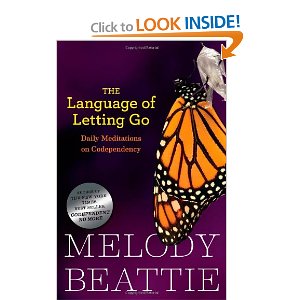
Melody Beattie has been a great help for me over the years with her many books on this topic. One of her best books on this topic is a daily meditation book called “The Language of Letting Go.”

In another article on this blog, I wrote about codependence, and quoted at length from her book. But it’s so good and helpful that I want to quote some more! What follows are some excerpts about the issue of “Property Lines”:
A helpful tool in our recovery, especially in the behavior we call detachment, is learning to identify who owns what. Then we let each person own and possess his or her rightful property.

If another person has an addiction, a problem, a feeling, or a self-defeating behavior, that is their property, not ours. If someone is a martyr, immersed in negativity, controlling, or manipulative, that is their issue, not ours.

If someone has acted and experienced a particular consequence, both the behavior and the consequence belong to that person.

People’s lies, deceptions, tricks, manipulations, abusive behaviors, inappropriate behaviors, cheating behaviors, and tacky behaviors belong to them, too. Not us.

People’s hopes and dreams are their property. Their guilt belongs to them too. Their happiness or misery is also theirs. So are their beliefs and messages.

If some people don’t like themselves, that is their choice. Their choices are their property, not ours. What people choose to say and do is their business.

What is our property? Our property includes our behaviors, problems, feelings, happiness, misery, choices, and messages; our ability to love, care, and nurture; our thoughts, our denial, our hopes and dreams for ourselves. Whether we allow ourselves to be controlled, manipulated, deceived, or mistreated is our business.

In recovery, we learn an appropriate sense of ownership. If something isn’t ours, we don’t take it. If we take it, we learn to give it back. Let other people have their property, and learn to own and take good care of what’s ours.

Today, I will work at developing a clear sense of what belongs to me, and what doesn’t. If it’s not mine, I won’t keep it. I will deal with myself, my issues, and my responsibilities.

If you want to learn more about codependence, consider signing up for the Recovery Journey, an e-course for people in recovery from sexual struggles. If you are the partner of someone who struggles, note that we have a special module with materials just for the partners. You can learn more about this program at the website: http://recoveryjourney.com

Source: Codepedence is not just an issue for partners of addicts | sexualsanity.com

Codependence is a constant battle for me and it has made made my wife’s vacation in Italy even more difficult than the simple logistics of trying to run a business and hold down the fort with 4 boys while she’s gone but by the grace of God, with the help of Celebrate Recovery, my good friends Sandy and Steve and Melody Beattie’s good thoughts. we are winning on this trip! If these issues resonate with you, drop me a note below. I’ll be happy to share with you what I have…

I <3 Gemma Stone…

Looking for another video post of hers I stumbled upon this to share with you…

“Jean-Paul Sartre says, “Hell is other people”.
I don’t think it’s quite that bad but the reality is much of the stuff that causes us to suffer, comes from our reactions to others.
What to do?
Let’s suppose you tried the strategies from the last vlog. Maybe you’ve also tried talking things out, setting healthy boundaries, and being ‘the better person’, and you’re still struggling.
This sucks. I know.
Do not close off your heart.”

Source: 3 more strategies for dealing with family drama | Gemma Stone.

I encourage you to visit her blog and subscribe or follow her on Twitter…

A seven-step prescription for self-love

Some people see the term ‘self love’ and immediately start to squirm, yet the Good Book says we must ‘love our neighbor as ourselves’ implying that self-love is fundamental in healthy relationship. Author Dr. Deborah Khoshaba shares her perspective here…

Self-love is a state of appreciation for oneself that grows from actions that support our physical, psychological and spiritual growth. Self-love is dynamic; it grows by actions that mature us. When we act in ways that expand self-love in us, we begin to accept much better our weaknesses as well as our strengths, have less need to explain away our short-comings, have compassion for ourselves as human beings struggling to find personal meaning, are more centered in our life purpose and values, and expect living fulfillment through our own efforts.

Here is my Seven-Step Prescription for Self-Love. Continue reading “A seven-step prescription for self-love”

A pause that refreshes…

When I leave the home needing a little detachment, I’m grateful that my commute to work is only 3.3 miles and that one of the midwest’s most beautiful lighthouses is blocks from my office…


Click image to enlarge…

Sometimes, I listen to my YouVersion bible while I walk the breakwater. Today, Proverbs 16 came up in my reading plan…

1 To humans belong the plans of the heart,

but from the LORD comes the proper answer of the tongue.

2 All a person’s ways seem pure to them,

but motives are weighed by the LORD.

3 Commit to the LORD whatever you do,

and he will establish your plans.

via Proverbs 16 NIV – To humans belong the plans of the – Bible Gateway.

Running a business on my own is not always easy. Sometimes an open day on my calendar seems like an abyss. As one of those social media ‘gooroos’, there are never any shortage of distractions to satisfy the ‘ADD’ in me. That’s when I turn to my Higher Power and contemplate my 11th Step guidlines…

Preparing for the Day Ahead
  • We ask God to direct our thinking, asking especially that it be divorced from self-pity, dishonest or self-seeking motives.
  • We consider our plans for the day. We can now use our mental faculties with assurance.
  • If we face indecision or we can’t determine what course to take, we ask God for inspiration, an intuitive thought or a decision. We relax and take it easy.
  • We pray to be shown all through the day what our next step is to be, that we be given whatever we need to take care of problems.
  • We ask especially for freedom from self-will. [We might also pray for help with specific defects or problem areas, and review our 10th step corrective measures for the day ahead.]
Prayers to be of Use
  • We ask for guidance in the way of patience, kindness, tolerance and love especially within the family.
  • We pray as to what we can do today for the person who is still sick. [We might also pray for specific people in need, or those with whom we’re angry.]
Spiritual/Religious Exercises
  • If appropriate, we attend to our religious devotions, or say set prayers which emphasize 12 Step principles.
  • We may read from a spiritual book.
Practicing the 11th Step Throughout the Day
  • We pause, when agitated or doubtful, and ask for the right thought or action.
  • We constantly remind ourselves we are no longer running the show, humbly saying to ourselves many times each day “Thy will be done.” Source: 11th Step Guidelines

You don’t have to have abused a substance to benefit from a 12 Step program! Celebrate Recovery — the Christian version of the AA 12 Step program — has been helpful to me in dealing with ‘hurts, hangups and habits’ and it may benefit you, too. God bless YOU today as you move into your week…

Letting Go of the Need to Control

English: Black cat Another great post from Melody Beattie – this time on the topic of detachment…

The rewards from detachment are great: serenity; a deep sense of peace; the ability to give and receive love in self-enhancing, energizing ways; and the freedom to find real solutions to our problems.

Codependent No More

Letting go of our need to control can set us and others free. It can set our Higher Power free to send the best to us.

If we weren’t trying to control someone or something, what would we be doing differently?

What would we do that we’re not letting ourselves do now? Where would we go? What would we say?

What decisions would we make?

What would we ask for? What boundaries would be set? When would we say no or yes?

If we weren’t trying to control whether a person liked us or his or her reaction to us, what would we do differently? If we weren’t trying to control the course of a relationship, what would we do differently? if we weren’t trying to con­trol another person’s behavior, how would we think, feel, speak, and behave differently than we do now?

What haven’t we been letting ourselves do while hoping that self-denial would influence a particular situation or per­son? Are there some things we’ve been doing that we’d stop?

How would we treat ourselves differently?

Would we let ourselves enjoy life more and feel better right now? Would we stop feeling so bad? Would we treat our­selves better?

If we weren’t trying to control, what would we do differ­ently? Make a list, then do it.

Today, I will ask myself what I would be doing differently if I weren’t trying to control. When I hear the answer, I will do it. God, help me let go of my need to control. Help me set myself and others free.

Source: March 18: Letting Go of the Need to Control | Language of Letting Go

Detachment is the most difficult of all recovery topics for me. I’m trying to understand the difference between trying to control and having health or reasonable expectations. Maybe there is no such thing as an expectation can have of my wife or children; not if I want to be happy or at peace anyway…

The times I have a glimpse of what detachment looks like are those times when I’m playing with my black cat Boo. I don’t expect Boo to bark like a dog or come when called. She meows and sometimes when it suits her mood she comes when called but I don’t expect her to be something that is not in her nature.

Someday I’ll write a book called ‘Everything I need to know about detachment I learned from my cat’ but I still have much to learn from her…

Freedom

POSTER-SEEK AND FIND

Many of us were oppressed and victimized as children. As adults, we may continue to keep ourselves oppressed.

Some of us don’t recognize that caretaking and not set­ting boundaries will leave us feeling victimized.

Some of us don’t understand that thinking of ourselves as victims will leave us feeling oppressed.

Some of us don’t know that we hold the key to our own freedom. That key is honoring ourselves, and taking care of ourselves.

We can say what we mean, and mean what we say.

We can stop waiting for others to give us what we need and take responsibility for ourselves. When we do, the gates to freedom will swing wide.

Walk through.

Today, I will understand that I hold the key to my freedom. I will stop participating in my oppression and victimization. I will take responsibility for myself, and let others do as they may.

Source: March 9: Freedom | Language of Letting Go

Start a Blog at WordPress.com.

Up ↑