Codepedence is not just an issue for partners of addicts

I don’t normally curate this much content in one ‘swell foop’ as I like to say but Melody Beattie’s perspective on owning your own stuff and Mark Brower’s comments on same were so good I couldn’t find anything to exclude. Mark starts out and then quotes my ‘Language of Letting Go’ reading for today…

Many of us struggle with codependency. When addiction is present in a relationship, the old model was that the addict was “dependent” and his or her spouse was “codependent.” But today we know that usually both the addict and spouse struggle with codependency in its various forms.

Codependency happens when we lose touch with our sense of self, and become over-dependent on how other people are doing, and/or how they perceive us. Since we are not “okay” with ourselves, we have to work overtime to ensure that other people around us are doing okay, and/or that they feel good about us.

So we wind up tolerating things we shouldn’t tolerate, feeling responsible for things we shouldn’t feel responsible for, and compromising what we want simply in order to please someone else. This inevitably leads to distress and frustration, which causes the addict to move deeper into their addiction, and for the addict’s spouse to cope in other ways.

The issue of codependence is complicated for Christians, because it gets mixed up with our desire to love and serve other people. The Bible tells us to “consider others better than ourselves.” But the same Bible also tells us to love our neighbor as ourselves, which presupposes some sort of healthy self-regard. The Bible also portrays Jesus himself taking time away from the crowds – not being “nice” and doing what they want him to do – in order to rest and reconnect with God the Father.

The trick to living a recovery life in relationships with others is to know how to separate healthy love with unhealthy codependence.

Melody Beattie has been a great help for me over the years with her many books on this topic. One of her best books on this topic is a daily meditation book called “The Language of Letting Go.”

In another article on this blog, I wrote about codependence, and quoted at length from her book. But it’s so good and helpful that I want to quote some more! What follows are some excerpts about the issue of “Property Lines”:

A helpful tool in our recovery, especially in the behavior we call detachment, is learning to identify who owns what. Then we let each person own and possess his or her rightful property.

If another person has an addiction, a problem, a feeling, or a self-defeating behavior, that is their property, not ours. If someone is a martyr, immersed in negativity, controlling, or manipulative, that is their issue, not ours.

If someone has acted and experienced a particular consequence, both the behavior and the consequence belong to that person.

People’s lies, deceptions, tricks, manipulations, abusive behaviors, inappropriate behaviors, cheating behaviors, and tacky behaviors belong to them, too. Not us.

People’s hopes and dreams are their property. Their guilt belongs to them too. Their happiness or misery is also theirs. So are their beliefs and messages.

If some people don’t like themselves, that is their choice. Their choices are their property, not ours. What people choose to say and do is their business.

What is our property? Our property includes our behaviors, problems, feelings, happiness, misery, choices, and messages; our ability to love, care, and nurture; our thoughts, our denial, our hopes and dreams for ourselves. Whether we allow ourselves to be controlled, manipulated, deceived, or mistreated is our business.

In recovery, we learn an appropriate sense of ownership. If something isn’t ours, we don’t take it. If we take it, we learn to give it back. Let other people have their property, and learn to own and take good care of what’s ours.

Today, I will work at developing a clear sense of what belongs to me, and what doesn’t. If it’s not mine, I won’t keep it. I will deal with myself, my issues, and my responsibilities.

If you want to learn more about codependence, consider signing up for the Recovery Journey, an e-course for people in recovery from sexual struggles. If you are the partner of someone who struggles, note that we have a special module with materials just for the partners. You can learn more about this program at the website: http://recoveryjourney.com

Source: Codepedence is not just an issue for partners of addicts | sexualsanity.com

Codependence is a constant battle for me and it has made made my wife’s vacation in Italy even more difficult than the simple logistics of trying to run a business and hold down the fort with 4 boys while she’s gone but by the grace of God, with the help of Celebrate Recovery, my good friends Sandy and Steve and Melody Beattie’s good thoughts. we are winning on this trip! If these issues resonate with you, drop me a note below. I’ll be happy to share with you what I have…

Perfection?

Another great perspective from Melody Beattie…

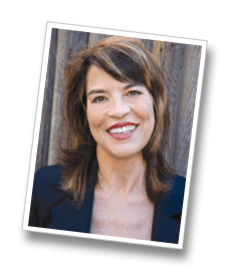
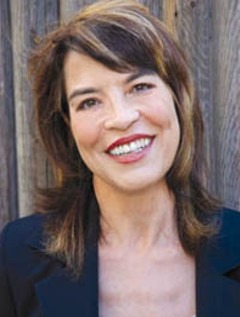
Melody Beattie

Fear & Codependency

“Fear is at the core of codependency. It can motivate us to control situations or neglect ourselves. Many of us have been afraid for so long that we don’t label our feelings fear. We’re used to feeling upset and anxious. It feels normal. Peace and serenity may be uncomfortable. At one time, fear may have been appropriate and useful. We may have relied on fear to protect ourselves, much the way soldiers in a war rely on fear to help them survive. But now, in recovery, we’re living life differently. It’s time to thank our old fears for helping us survive, then wave good-bye to them. Welcome peace, trust, acceptance, and safety. We don’t need that much fear anymore. We can listen to our healthy fears, and let go of the rest. We can create a feeling of safety for ourselves, now. We are safe, now. We’ve made a commitment to take care of ourselves. We can trust and love ourselves.

God, help me let go of my need to be afraid. Replace it with a need to be at peace. Help me listen to my healthy fears and relinquish the rest.Beattie, Melody (2009-12-15). The Language of Letting Go (Hazelden Meditation Series) (p. 127). Hazelden. Kindle Edition.

Taking Care of Ourselves

In The Language of Letting Go Melody Beattie says…

“We often refer to recovery from codependency and adult child issues as “self-care.” Self-care is not, as some may think, a spin-off of the “me generation.” It isn’t self-indulgence. It isn’t selfishness—in the negative interpretation of that word. We’re learning to take care of ourselves, instead of obsessively focusing on another person. We’re learning self-responsibility, instead of feeling excessively responsible for others. Self-care also means tending to our true responsibilities to others; we do this better when we’re not feeling overly responsible. Self-care sometimes means, “me first,” but usually, “me too.” It means we are responsible for ourselves and can choose to no longer be victims. Self-care means learning to love the person we’re responsible for taking care of—ourselves. We do not do this to hibernate in a cocoon of isolation and self-indulgence; we do it so we can better love others, and learn to let them love us. Self-care isn’t selfish; it’s self-esteem. Today, God, help me love myself. Help me let go of feeling excessively responsible for those around me. Show me what what I need to do to take care of myself and be appropriately responsible to others.”

Beattie, Melody (2009-12-15). The Language of Letting Go (Hazelden Meditation Series) (pp. 105-106). Hazelden. Kindle Edition.

Feel free today to take care of yourself…

Discover what works for you

Melody Beattie writes:

There is no quick fix, no panacea that will work for every person. Success rarely happens overnight or in five days. Even the Twelve Steps are only suggestions. Although proven to work, the details and decisions about how we apply those Steps in our lives are left to each one of us.

And few things happen overnight, except the beginning of a new day.

Listen to your mentors. Examine what’s been tried and true, and has worked and helped countless others along their paths. The Twelve Steps are one of those approaches. But don’t be taken in by false claims of overnight success and instant enlightenment along your path.

True change takes time and effort, especially when were changing and tackling big issues. We can often get exactly the help we need at times from a therapist, book, or seminar— the best things in life really are free and available to each one of us. The Twelve Steps, again, qualify in this area.

Discover what works for you.

Trust that you’ll be guided along your path and receive exactly the help and guidance you need. Then give it time. There really isn’t an easier, softer way.

God, give me perseverance to tackle my problems.

Source: April 8: Discover What Works for You | Language of Letting Go

Melody Beattie’s work on codependency works for me and has been a tremendous help over the past year as a supplement to the work I am doing in Celebrate Recovery. What is working for you this Easter as you think about resurrection and rebirth?

I <3 Gemma Stone…

Looking for another video post of hers I stumbled upon this to share with you…

“Jean-Paul Sartre says, “Hell is other people”.
I don’t think it’s quite that bad but the reality is much of the stuff that causes us to suffer, comes from our reactions to others.
What to do?
Let’s suppose you tried the strategies from the last vlog. Maybe you’ve also tried talking things out, setting healthy boundaries, and being ‘the better person’, and you’re still struggling.
This sucks. I know.
Do not close off your heart.”

Source: 3 more strategies for dealing with family drama | Gemma Stone.

I encourage you to visit her blog and subscribe or follow her on Twitter…

A seven-step prescription for self-love

Some people see the term ‘self love’ and immediately start to squirm, yet the Good Book says we must ‘love our neighbor as ourselves’ implying that self-love is fundamental in healthy relationship. Author Dr. Deborah Khoshaba shares her perspective here…

Self-love is a state of appreciation for oneself that grows from actions that support our physical, psychological and spiritual growth. Self-love is dynamic; it grows by actions that mature us. When we act in ways that expand self-love in us, we begin to accept much better our weaknesses as well as our strengths, have less need to explain away our short-comings, have compassion for ourselves as human beings struggling to find personal meaning, are more centered in our life purpose and values, and expect living fulfillment through our own efforts.

Here is my Seven-Step Prescription for Self-Love. Continue reading “A seven-step prescription for self-love”

Letting go of fear

fear

Melody Beattie shares this from the Language of Letting Go

Fear is at the core of codependency. It can motivate us to control situations or neglect ourselves.

Many of us have been afraid for so long that we don’t label our feelings fear. We’re used to feeling upset and anxious. It feels normal.

Peace and serenity may be uncomfortable.

At one time, fear may have been appropriate and useful. We may have relied on fear to protect ourselves, much the way soldiers in a war rely on fear to help them survive. But now, in recovery, we’re living life differently.

It’s time to thank our old fears for helping us survive, then wave good-bye to them. Welcome peace, trust, acceptance, and safety. We don’t need that much fear anymore. We can listen to our healthy fears, and let go of the rest.

We can create a feeling of safety for ourselves, now. We are safe, now. We’ve made a commitment to take care of ourselves. We can trust and love ourselves.

God, help me let go of my need to be afraid. Replace it with a need to be at peace. Help me listen to my healthy fears and relinquish the rest.

Source: March 28: Letting Go of Fear | Language of Letting Go

Fear sucks! Take care that you don’t get caught up in it…

A pause that refreshes…

When I leave the home needing a little detachment, I’m grateful that my commute to work is only 3.3 miles and that one of the midwest’s most beautiful lighthouses is blocks from my office…


Click image to enlarge…

Sometimes, I listen to my YouVersion bible while I walk the breakwater. Today, Proverbs 16 came up in my reading plan…

1 To humans belong the plans of the heart,

but from the LORD comes the proper answer of the tongue.

2 All a person’s ways seem pure to them,

but motives are weighed by the LORD.

3 Commit to the LORD whatever you do,

and he will establish your plans.

via Proverbs 16 NIV – To humans belong the plans of the – Bible Gateway.

Running a business on my own is not always easy. Sometimes an open day on my calendar seems like an abyss. As one of those social media ‘gooroos’, there are never any shortage of distractions to satisfy the ‘ADD’ in me. That’s when I turn to my Higher Power and contemplate my 11th Step guidlines…

Preparing for the Day Ahead
  • We ask God to direct our thinking, asking especially that it be divorced from self-pity, dishonest or self-seeking motives.
  • We consider our plans for the day. We can now use our mental faculties with assurance.
  • If we face indecision or we can’t determine what course to take, we ask God for inspiration, an intuitive thought or a decision. We relax and take it easy.
  • We pray to be shown all through the day what our next step is to be, that we be given whatever we need to take care of problems.
  • We ask especially for freedom from self-will. [We might also pray for help with specific defects or problem areas, and review our 10th step corrective measures for the day ahead.]
Prayers to be of Use
  • We ask for guidance in the way of patience, kindness, tolerance and love especially within the family.
  • We pray as to what we can do today for the person who is still sick. [We might also pray for specific people in need, or those with whom we’re angry.]
Spiritual/Religious Exercises
  • If appropriate, we attend to our religious devotions, or say set prayers which emphasize 12 Step principles.
  • We may read from a spiritual book.
Practicing the 11th Step Throughout the Day
  • We pause, when agitated or doubtful, and ask for the right thought or action.
  • We constantly remind ourselves we are no longer running the show, humbly saying to ourselves many times each day “Thy will be done.” Source: 11th Step Guidelines

You don’t have to have abused a substance to benefit from a 12 Step program! Celebrate Recovery — the Christian version of the AA 12 Step program — has been helpful to me in dealing with ‘hurts, hangups and habits’ and it may benefit you, too. God bless YOU today as you move into your week…

Letting Go of the Need to Control

English: Black cat Another great post from Melody Beattie – this time on the topic of detachment…

The rewards from detachment are great: serenity; a deep sense of peace; the ability to give and receive love in self-enhancing, energizing ways; and the freedom to find real solutions to our problems.

Codependent No More

Letting go of our need to control can set us and others free. It can set our Higher Power free to send the best to us.

If we weren’t trying to control someone or something, what would we be doing differently?

What would we do that we’re not letting ourselves do now? Where would we go? What would we say?

What decisions would we make?

What would we ask for? What boundaries would be set? When would we say no or yes?

If we weren’t trying to control whether a person liked us or his or her reaction to us, what would we do differently? If we weren’t trying to control the course of a relationship, what would we do differently? if we weren’t trying to con­trol another person’s behavior, how would we think, feel, speak, and behave differently than we do now?

What haven’t we been letting ourselves do while hoping that self-denial would influence a particular situation or per­son? Are there some things we’ve been doing that we’d stop?

How would we treat ourselves differently?

Would we let ourselves enjoy life more and feel better right now? Would we stop feeling so bad? Would we treat our­selves better?

If we weren’t trying to control, what would we do differ­ently? Make a list, then do it.

Today, I will ask myself what I would be doing differently if I weren’t trying to control. When I hear the answer, I will do it. God, help me let go of my need to control. Help me set myself and others free.

Source: March 18: Letting Go of the Need to Control | Language of Letting Go

Detachment is the most difficult of all recovery topics for me. I’m trying to understand the difference between trying to control and having health or reasonable expectations. Maybe there is no such thing as an expectation can have of my wife or children; not if I want to be happy or at peace anyway…

The times I have a glimpse of what detachment looks like are those times when I’m playing with my black cat Boo. I don’t expect Boo to bark like a dog or come when called. She meows and sometimes when it suits her mood she comes when called but I don’t expect her to be something that is not in her nature.

Someday I’ll write a book called ‘Everything I need to know about detachment I learned from my cat’ but I still have much to learn from her…

Freedom

POSTER-SEEK AND FIND

Many of us were oppressed and victimized as children. As adults, we may continue to keep ourselves oppressed.

Some of us don’t recognize that caretaking and not set­ting boundaries will leave us feeling victimized.

Some of us don’t understand that thinking of ourselves as victims will leave us feeling oppressed.

Some of us don’t know that we hold the key to our own freedom. That key is honoring ourselves, and taking care of ourselves.

We can say what we mean, and mean what we say.

We can stop waiting for others to give us what we need and take responsibility for ourselves. When we do, the gates to freedom will swing wide.

Walk through.

Today, I will understand that I hold the key to my freedom. I will stop participating in my oppression and victimization. I will take responsibility for myself, and let others do as they may.

Source: March 9: Freedom | Language of Letting Go

Taking care of Ourselves

Places of Self-Care

More Melody Beattie for those who can benefit from it…

We often refer to recovery from codependency and adult child issues as “self-care.” Self-care is not, as some may think, a spin-off of the “me generation.” It isn’t self-indulgence. It isn’t selfishness — in the negative interpretation of that word.

We’re learning to take care of ourselves, instead of obses­sively focusing on another person. We’re learning self-responsibility, instead of feeling excessively responsible for others. Self-care also means tending to our true responsi­bilities to others; we do this better when we’re not feeling overly responsible.

Self-care sometimes means, “me first,” but usually, “me too.” It means we are responsible for ourselves and can choose to no longer be victims.

Self-care means learning to love the person we’re respon­sible for taking care of — ourselves. We do not do this to hibernate in a cocoon of isolation and self-indulgence; we do it so we can better love others, and learn to let them love us.

Self-care isn’t selfish; it’s self-esteem.

Today, God, help me love myself. Help me let go of feeling exces­sively responsible for those around me. Show me what I need to do to take care of myself and be appropriately responsible to others.

Source: March 8: Taking care of Ourselves | Language of Letting Go

Take care of your self today!

Using Others to Stop Our Pain

Cover of "The Language of Letting Go (Haz...
Cover via Amazon
Melody Beattie has some thoughts I wanted to share with you this morning…

Our happiness is not a present someone else holds in his or her hands. Our well-being is not held by another to be given or withheld at whim. If we reach out and try to force someone to give us what we believe he or she holds, we will be disappointed. We will discover that it is an illusion. The person didn’t hold it. He or she never shall. That beautifully wrapped box with the ribbon on it that we believed contained our happiness that someone was holding — it’s an illusion!

In those moments when we are trying to reach out and force someone to stop our pain and create our joy, if we can find the courage to stop flailing about and instead stand still and deal with our issues, we will find our happiness.

Yes, it is true that if someone steps on our foot, he or she is hurting us and therefore holds the power to stop our pain by removing his or her foot. But the pain is still ours. And so is the responsibility to tell someone to stop stepping on our feet.

Healing will come when were aware of how we attempt to use others to stop our pain and create our happiness. We will heal from the past. We will receive insights that can change the course of our relationships.

We will see that, all along, our happiness and our well­being have been in our hands. We have held that box. The contents are ours for the opening.

God, help me remember that I hold the key to my own happiness. Give me the courage to stand still and deal with my own feelings. Give me the insights I need to improve my relationships. Help me stop doing the codependent dance and start doing the dance of recovery.

Source: March 1: Using Others to Stop Out Pain | Language of Letting Go

Here’s the dirty little secret. This blog is only a public scrapbook of the things I need to remember for myself. If it happens to resonate with anyone else that’s a blessing as well. Did anyone else need to hear this today?

Being right

Cover of "The Language of Letting Go (Haz...
Cover via Amazon

In recovery, we are learning how to strive for love in our relationships, not superiority. Yes, we may need to make decisions about people’s behavior from time to time. If someone is hurting us, we need to stand up for ourselves. We have a responsibility to set boundaries and take care of ourselves. But we do not need to justify taking care of ourselves by condemning someone else. We can avoid the trap of focusing on others instead of ourselves. In recovery, we are learning that what we do needs to be right only for us. What others do is their business and needs to be right only for them. It’s tempting to rest in the superiority of being right and in analyzing other people’s motives and actions, but it’s more rewarding to look deeper. Today, I will remember that I don’t have to hide behind being right. I don’t have to justify what I want and need with saying something is “right” or “wrong.” I can let myself be who I am.

Beattie, Melody (2009-12-15). The Language of Letting Go (Hazelden Meditation Series) (p. 47). Hazelden. Kindle Edition.

Owning our Power

Cover of "The Language of Letting Go (Haz...
Cover via Amazon

We need to make a distinction between powerlessness and owning our power. The first step in recovery is accepting powerlessness. There are some things we can’t do, no matter how long or hard we try. These things include changing other people, solving their problems, and controlling their behavior. Sometimes, we feel powerless over ourselves—what we feel or believe, or the effects of a particular situation or person on us. It’s important to surrender to powerlessness, but it’s equally important to own our power. We aren’t trapped. We aren’t helpless. Sometimes it may feel like we are, but we aren’t. We each have the God-given power, and the right, to take care of ourselves in any circumstance, and with any person. The middle ground of self-care lies between the two extremes of controlling others and allowing them to control us. We can walk that ground gently or assertively, but in confidence that it is our right and responsibility. Let the power come to walk that path. Today, I will remember that I can take care of myself. I have choices, and I can exercise the options I choose without guilt.

Beattie, Melody (2009-12-15). The Language of Letting Go (Hazelden Meditation Series) (p. 37). Hazelden. Kindle Edition.

Hooks

Red Bait Hook
Image via Wikipedia

We can learn not to get hooked into unhealthy, self-defeating behaviors in relationships—behaviors such as caretaking, controlling, discounting ourselves, and believing lies. We can learn to watch for and identify hooks, and choose not to allow ourselves to be hooked. Often, people do things consciously or without thinking that pull us into a series of our self-defeating behaviors we call codependency. More often than not, these hooks can be almost deliberate, and the results predictable. Someone may stand before us and hint or sigh about a problem, knowing or hoping that hint or sigh will hook us into taking care of him or her. That is manipulation. When people stand around us and hint and sigh about something, then coyly say, “Oh, never mind, that’s not for you to worry about,” that’s a game. We need to recognize it. We’re about to get sucked in, if we allow that to happen. We can learn to insist that people ask us directly for what they want and need. What are the words, the signs, the looks, the hints, the cues that hook us into a predictable, and often self-defeating behavior? What makes you feel sympathy? Guilt? Responsible for another? Our strong point is that we care so much. Our weak point is that we often underestimate the people with whom we’re dealing. They know what they’re doing. It is time we give up our naive assumption that people don’t follow agendas of their own in their best interest, and not necessarily in ours. We also want to check ourselves out. Do we give out hooks, looks, hints, hoping to hook another? We need to insist that we behave in a direct and honest manner with others, instead of expecting them to rescue us. If someone wants something from us, insist that the person ask us directly for it. Require the same from ourselves. If someone baits the hook, we don’t have to bite it. Today, I will be aware of the hooks that snag me into the caretaking acts that leave me feeling victimized. I will ignore the hints, looks, and words that hook me, and wait for the directness and honesty I, and others, deserve.

Beattie, Melody (2009-12-15). The Language of Letting Go (Hazelden Meditation Series) (pp. 25-26). Hazelden. Kindle Edition.

Standing up for ourselves

Books about Humour and Stand Up Comedy 03
Not being able to stand up for yourself is not funny...

It is so easy to come to the defense of others. How clear it is when others are being used, controlled, manipulated, or abused. It is so easy to fight their battles, become righteously indignant, rally to their aid, and spur them on to victory. “You have rights,” we tell them. “And those rights are being violated. Stand up for yourself, without guilt.” Why is it so hard, then, for us to rally to our own behalf? Why can’t we see when we are being used, victimized, lied to, manipulated, or otherwise violated? Why is it so difficult for us to stand up for ourselves? There are times in life when we can walk a gentle, loving path. There are times, however, when we need to stand up for ourselves—when walking the gentle, loving path puts us deeper into the hands of those who could mistreat us. Some days, the lesson we’re to be learning and practicing is one of setting boundaries. Some days, the lesson we’re learning is that of fighting for ourselves and our own rights. Sometimes, the lesson won’t stop until we do. Today, I will rally to my own cause. I will remember that it is okay to stand up for myself when that action is appropriate. Help me, God, to let go of my need to be victimized. Help me appropriately, and with confidence, stand up for myself.

Beattie, Melody (2009-12-15). The Language of Letting Go (Hazelden Meditation Series) (p. 15). Hazelden. Kindle Edition.

Family issues

English: Lorenz family members.
Image via Wikipedia

We can draw a healthy line, a healthy boundary, between ourselves and our nuclear family. We can separate ourselves from their issues. Some of us may have family members who are addicted to alcohol and other drugs and who are not in recovery from their addiction. Some of us may have family members who have unresolved codependency issues. Family members may be addicted to misery, pain, suffering, martyrdom, and victimization. We may have family members who have unresolved abuse issues or unresolved family of origin issues. We may have family members who are addicted to work, eating, or sex. Our family may be completely enmeshed, or we may have a disconnected family in which the members have little contact. We may be like our family. We may love our family. But we are separate human beings with individual rights and issues. One of our primary rights is to begin feeling better and recovering, whether or not others in the family choose to do the same. We do not have to feel guilty about finding happiness and a life that works. And we do not have to take on our family’s issues as our own to be loyal and to show we love them. Often when we begin taking care of ourselves, family members will reverberate with overt and covert attempts to pull us back into the old system and roles. We do not have to go. Their attempts to pull us back are their issues. Taking care of ourselves and becoming healthy and happy does not mean we do not love them. It means we’re addressing our issues. We do not have to judge them because they have issues; nor do we have to allow them to do anything they would like to us just because they are family. We are free now, free to take care of ourselves with family members. Our freedom starts when we stop denying their issues, and politely, but assertively, hand their stuff back to them—where it belongs—and deal with our own issues. Today, I will separate myself from family members. I am a separate human being, even though I belong to a unit called a family. I have a right to my own issues and growth; my family members have a right to their issues and a right to choose where and when they will deal with these issues. I can learn to detach in love from my family members and their issues. I am willing to work through all necessary feelings in order to accomplish this.

Beattie, Melody (2009-12-15). The Language of Letting Go (Hazelden Meditation Series) (p. 5). Hazelden. Kindle Edition.

Goals

Gordon Celebrates His First NHL Goal

It’s not too late to contemplate this…

Make New Year’s goals. Dig within, and discover what you would like to have happen in your life this year. This helps you do your part. It is an affirmation that you’re interested in fully living life in the year to come. Goals give us direction. They put a powerful force into play on a universal, conscious, and subconscious level. Goals give our life direction. What would you like to have happen in your life this year? What would you like to do, to accomplish? What good would you like to attract into your life? What particular areas of growth would you like to have happen to you? What blocks, or character defects, would you like to have removed? What would you like to attain? Little things and big things? Where would you like to go? What would you like to have happen in friendship and love? What would you like to have happen in your family life? Remember, we aren’t controlling others with our goals—we are trying to give direction to our life. What problems would you like to see solved? What decisions would you like to make? What would you like to happen in your career? What would you like to see happen inside and around you? Write it down. Take a piece of paper, a few hours of your time, and write it all down—as an affirmation of you, your life, and your ability to choose. Then let it go. Certainly, things happen that are out of our control. Sometimes, these events are pleasant surprises; sometimes, they are of another nature. But they are all part of the chapter that will be this year in our life and will lead us forward in the story. The new year stands before us, like a chapter in a book, waiting to be written. We can help write that story by setting goals. Today, I will remember that there is a powerful force motivated by writing down goals. I will do that now, for the year tocome, and regularly as needed. I will do it not to control but to do my part in living my life.
Beattie, Melody (2009-12-15). The Language of Letting Go (Hazelden Meditation Series) (p. 3). Hazelden. Kindle Edition.

Crazy People Can Make You Crazy

Crazy People

“He’s making me crazy I don’t understand. Why would someone say they were going to do one thing, then do something so different from what they say? He looks so good and talks so good. His promises sound so, so real, but then everything falls apart. I end up doing all this work, and he just disappears. I get so dang angry Then about the time I’m ready to blow a gasket, he calls, charms my socks off, and the whole cycle starts over again. I walk away, scratching my head and wondering, ‘What’s wrong with me? Did I just imagine this whole thing? Did I overreact?’ I don’t get it. I don’t understand,”

Maybe it’s time for an Al-Anon meeting.

“And when we’re talking on the phone, I feel like I’m the only one for him. But then when I see him, I know he’s lying to me. I know he’s seeing someone else and standing there looking me right in the eyes and lying about it. When I ask him, he says, ‘Your insecurity is enchanting, and you’re usually such a together person.’ I don’t understand why I feel so insane.”

Maybe it s time for an Al-Anon meeting.

“And then I catch him straight-out lying to me, and I blow up. I just can’t stand that lying stuff especially when

I knew all the time he was lying to me and he denied it. I put up with it and put up with it and then finally I can’t take it anymore. By the time I blow up, he’s standing there looking calm and serene and I’m acting like an insane person.”

Crazy people make us feel crazy. It’s not you. It’s him. How about that meeting?

“And then he calls a few days later, and he says how sorry he is and I can tell he’s sorry Before I know it, I’ve forgotten about everything that happened, and it starts all over again. I keep wondering whether I’m being used, and then I look at him and I just feel so guilty for everything I’m feeling and thinking. Oh yeah. That Al-Anon meeting.”

Step One: Powerless over people, places, and things. My life has become unmanageable. Take a deep breath. Say it again. Then say it one more time. Crazy people make us feel crazy It will happen every time.

Value: Detach in love. Disentangle. Un-embroil yourself from other people’s insanity so you can be restored to sanity. It’s a value many of us learned the hard way.

Source: January 2: Crazy People Can Make You Crazy | Language of Letting Go

Practice Detachment

Melody Beattie shares this on detachment today…

“‘My husband is using cocaine,” a woman said. “He won’t listen to me when I tell him to stop. So, how about this?

I’ll pop the movie Blow, about cocaine abuse, into the VCR and just keep playing it over and over until he gets the message.”

“How about this,” I said. “You go to an Al-Anon meeting and get some help for yourself.”

The first time we’re exposed to the value of detaching, it can seem so improbable and unlikely. After a while, we begin to see how well detaching works. When we let go of what we cannot change, the other person begins to experience his or her own consequences. The other person may or may not do what we want them to do, but because we’ve been restored to sanity; a clear path opens for us. The things we do actually begin to help.

The first time we practice detachment is the hardest. Later, it becomes easier.

Challenge: No matter how long we have practiced the value of detachment, recognizing when we need to do it can still be the hardest part. « December 30: Taking care of Yourself” Source: December 31: Practice Detachment | Language of Letting Go

Of all the lifeskills I’ve been working on, detachment has been the hardest for me but I find the most value in learning how to use it.

In the back of my mind, I’m working on a post called ‘Everything I need to know about detachment I learned from Boo’. Boo is my cat and I love her to pieces but I don’t expect her to act like a dog. Sometimes when I’m ready to play with her, she’s not ready to play with me and that’s ok. It’s easy for me to understand healthy detachment when I think about Boo. Not so easy when I think about my wife. But I’m learning…

Start a Blog at WordPress.com.

Up ↑