Commitment

Couple in love

Melody Beattie writes:

As we walk through life, there are many things and people we may lose, or lose out on, if we are unwilling to commit. We need to make a commitment for relationships to grow beyond the dating stage, to have the home or apartment we want, the job we want, or the car we desire.

We must commit, on deep levels, to careers — to goals ­to family, friends, recovery. Trying something will not ena­ble us to succeed. Committing ourselves will.

Yet, we need never commit before we are ready.

Sometimes, our fear of commitment is telling us some­thing. We may not want to commit to a particular relation­ship, purchase, or career. Other times, it is a matter of our fears working their way out. Wait, then. Wait until the issue becomes clear.

Trust yourself. Ask your Higher Power to remove your fear of commitment. Ask God to remove your blocks to commit­ment. Ask God for guidance.

Ask yourself if you are willing to lose what you will not commit to. Then listen, quietly. And wait until a decision seems consistently right and comfortable.

We need to be able to commit, but we need never commit until we are ready.

Trust that you will commit when you want to.

God, guide me in making my commitments. Give me the courage to make those that are right for me, the wisdom to not commit to that which does not feel right, and the patience to wait until I know.” via June 21: Commitment.
What If?

Melody Beattie writes:

I was talking to a friend one day about something I planned to do. Actually, I was worrying about how one par­ticular person might react to what I intended to do.

“What if he doesn’t handle it very well?” I asked.

“Then,” my friend replied, “you’re going to have to handle it well.”

“What if ‘s” can make us crazy. They put control over our life in someone else’s hands. “What if’s” are a sign that we have reverted to thinking that people have to react in a par­ticular way for us to continue on our course.

“What if’s” are also a clue that we may be wondering whether we can trust ourselves and our Higher Power to do what’s best for us. These are shreds of codependent ways of thinking, feeling, and behaving, and they signal fear.

The reactions, feelings, likes or dislikes of others don’t have to control our behaviors, feelings, and direction. We don’t need to control how others react to our choices. We can trust ourselves, with help from a Higher Power, to handle any out­come — even the most uncomfortable. And, my friend, we can trust ourselves to handle it well.

Today, I will not worry about other people’s reactions, or events outside of my control. Instead, I will focus on my reactions. I will handle my life well today and trust that, tomorrow, I can do the same.” via June 22: What If?.

The Good Feelings

Sunrise 3

Melody Beattie writes:

Let yourself feel the good feelings too.
Yes, sometimes, good feelings can be as distracting as the painful, more difficult ones. Yes, good feelings can be anxiety producing to those of us unaccustomed to them. But go ahead and feel the good feelings anyway.
Feel and accept the joy. The love. The warmth. The excitement. The pleasure. The satisfaction. The elation. The tenderness. The comfort.
Let yourself feel the victory, the delight.
Let yourself feel cared for.
Let yourself feel respected, important, and special.
These are only feelings, but they feel good. They are full of positive, upbeat energy – and we deserve to feel that when it comes our way.
We don’t have to repress. We don’t have to talk ourselves out of feeling good – not for a moment.
If we feel it, it’s ours for the moment. Own it. If it’s good, enjoy it.

Today, God, help me be open to the joy and good feelings available to me.

Source: Daily Meditation ~ The Good Feelings – Miracles In Progress Codependents Anonymous Group

Gossip

Cover

A second shot of Melody Beattie for today! The Universe must think I need it:

Intimacy is that warm gift of feeling connected to others and enjoying our connection to them.

As we grow in recovery, we find that gift in many, some­times surprising places. We may discover we’ve developed intimate relationships with people at work, with friends, with people in our support groups — sometimes with family members. Many of us are discovering intimacy in a special love relationship.

Intimacy is not sex, although sex can be intimate. Intimacy means mutually honest, warm, caring, safe relationships ­relationships where the other person can be who he or she is and we can be who we are — and both people are valued.

Sometimes there are conflicts. Conflict is inevitable. Some­times there are troublesome feelings to work through. Some­times the boundaries or parameters of relationships change. But there is a bond — one of love and trust.

There are many blocks to intimacy and intimate relation­ships. Addictions and abuse block intimacy. Unresolved fam­ily of origin issues prevent intimacy. Controlling blocks intimacy. Off balance relationships, where there is too great a discrepancy in power, prevent intimacy. Caretaking can block intimacy. Nagging, withdrawing, and shutting down can hurt intimacy.

So can a simple behavior like gossip — for example, gos­siping about another for motives of diminishing him or her in order to build up ourselves or to judge the person. To dis­cuss another person’s issues, shortcomings, or failures with someone else will have a predictable negative impact on the relationship.

We deserve to enjoy intimacy in as many of our relation­ships as possible. We deserve relationships that have not been sabotaged.

That does not mean we walk around with our heads in the clouds; it means we strive to keep our motives clean when it comes to discussing other people.

If we have a serious issue with someone, the best way to resolve it is to bring the issue to that person.

Direct, clean conversation clears the air and paves the way for intimacy, for good feelings about ourselves and our relationships with others.

Today, God, help me let go of my fear of intimacy. Help me strive to keep my communications with others clean and free from mali­cious gossip. Help me work toward intimacy in my relationships. Help me deal as directly as possible with my feelings.” via June 17: Gossip.

Relationship Martyrs

Are you a relationship martyr? Consider this:

Many of us have gone so numb and discounted our feelings so completely that we have gotten out of touch with our needs in relationships.

We can learn to distinguish whose company we enjoy, whether we’re talking about friends, business acquaintances, dates, or spouses. We all need to interact with people we might prefer to avoid, but we don’t have to force ourselves through long-term or intimate relationships with these people.

We are free to choose friends, dates, and spouses. We are free to choose how much time we spend with those people we can’t always choose to be around, such as relatives. This is our life. This is it. We can decide how we want to spend our days and hours. We’re not enslaved. We’re not trapped. And not one of us is without options. We may not see our options clearly. Although we may have to struggle through shame and learn to own our power, we can learn to spend our valuable hours and days with the people we enjoy and choose to be with.

God, help me value my time and life. Help me place value on how I feel being around certain people. Guide me as I learn to develop healthy, intimate, sharing relationships with people. Help me give myself the freedom to experiment, explore, and learn who I am and who I can be in my relationships.

Source: Daily Meditation ~ Relationship Martyrs – Miracles In Progress Codependents Anonymous Group

Letting Go of Self-Doubt

A second shot of Melody Beattie for today:

A married woman who had recently joined Al Anon called me one afternoon. She worked part-time as a registered nurse, had assumed all the responsibilities for raising her two chil­dren, and did all the household chores, including repairs and finances. “I want to separate from my husband,” she sobbed. “I can’t stand him or his abuse any longer. But tell me, please tell me,” she said, “do you think I can take care of myself?” Codependent No More

Not only is it okay to take care of ourselves, we can take good care of ourselves.

Many of us, so confident about our ability to take care of others, doubt our inherent strength to care for ourselves. We may have come to believe, from our past or present circum­stances, that we need to take care of others and we need others to take care of us. This is the ultimate codependent belief.

No matter where this self-defeating belief was born, we can release it and replace it with a better one, a healthier one, a more accurate one.

We can take care of ourselves — whether we are in or out of a relationship. Everything we need will be provided. We will have loved ones, friends, and our Higher Power to help.

Knowing that we can take care of ourselves doesn’t mean we won’t have feelings of fear, discomfort, doubt, anger, and fragility at times. It means we practice “courageous vulner­ability,” as Colette Dowling called it in Cinderella Complex. We may feel scared, but we do it anyway.

Today, God, help me know how I can take care of myself.” via June 19: Letting Go of Self-Doubt.

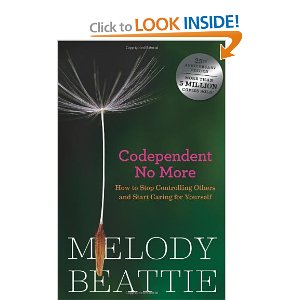
Few books have been more useful to me in my life — if any of the codependency scenarios resonate with you, I recommend you purchase it, the workbook and ‘The Language of Letting Go‘…

Give & Forgive!

Yes, but! Set healthy boundaries and remember the lesson of the sage and the scorpion. The Daily Love via Visual Inspiration: Give &Forgive!.

Making Life Easier

Melody Beattie writes:

Life doesn’t have to be hard.
Yes, there are times we need to endure, struggle through, and rely on our survival skills. But we don’t have to make life, growth, recovery, change, or our day-to-day affairs that hard all the time.
Having life be that hard is a remnant of our martyrdom, a leftover from old ways of thinking, feeling, and believing. We are worthy, even when life isn’t that hard. Our value and worth are not determined by how hard we struggle.
If we’re making it that hard, we may be making it harder than it needs to be, said one woman. Learn to let things happen easily and naturally. Learn to let events, and our participation in them, fall into place. It can be easy now. Easier than it has been. We can go with the flow, take the world off our shoulders, and let our Higher Power ease us into where we need to be.
Today, I will stop struggling so hard. I will let go of my belief that life and recovery have to be hard. I will replace it with a belief that I can walk this journey in ease and peace. And sometimes, it can actually be fun.

Source: Daily Meditation ~ Making Life Easier – Miracles In Progress Codependents Anonymous Group

Recognizing Choices

English: Choices, choices A network of paths a...

Melody Beattie writes:

We have choices, more choices than we let ourselves see.

We may feel trapped in our relationships, our jobs, our life. We may feel locked into behaviors — such as caretaking or controlling.

Feeling trapped is a symptom of codependency. When we hear ourselves say, “I have to take care of this person… .”

“I have to say yes… ” “I have to try to control that person…

“I have to behave this way, think this way, feel this way….” we can know we are choosing not to see choices.

That sense of being trapped is an illusion. We are not con­trolled by circumstances, our past, the expectations of others, or our unhealthy expectations for ourselves. We can choose what feels right for us, without guilt. We have options.

Recovery is not about behaving perfectly or according to anyone else’s rules. More than anything else, recovery is about knowing we have choices and giving ourselves the freedom to choose.

Today, I will open my thinking and myself to the choices available to me. I will make choices that are good for me.” via June 18: Recognizing Choices.

The Truth About Gluten Allergies

See on Scoop.itCodependency and recovery

The Truth About Gluten Allergies. There was a time when Amy Yoder Begley planned her runs around bathroom breaks. The professional runner and Olympian8217s problems started in high school.

See on www.livestrong.com

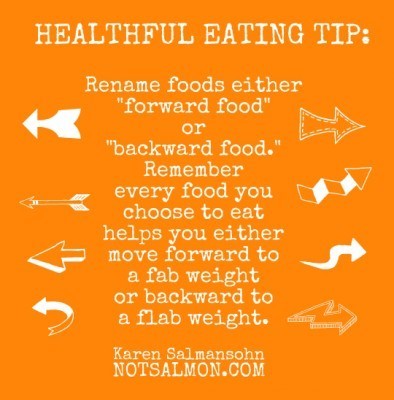
My new fun and helpful dieting tool!

See on Scoop.itCodependency and recovery

See on notsalmon.com

Be a Dad. Or Just Act Like One.

Dr. Phil says:

FDblogBigWe’ve done a lot of shows about dads — absentee dads, dads who are too strict or not strict enough, and even about abusive dads.

Father’s Day is this week, and I’d like to talk about the dads who stick around. The fathers who take their share of the sleepless nights. Those who change diapers without being asked. Fathers who push the stroller and the swings, who stick bandages on skinned knees and who applaud both the kindergarten sing-alongs and the high school drama productions. All you dads who’ve thrown your arm around the shoulder of the new graduate: both of you grinning with pride.

Thanks to all of you! You are giving your children a priceless gift.

By being present — holding out love and support, establishing and maintaining rules and boundaries — you are modeling a vital part of healthy adulthood. You are giving your sons a pattern they can follow; You are showing your daughters what a healthy relationship looks like.

But for some children, their fathers are not present — a mom might be serving as both mother and father, or there may be abuse and neglect in their homes and so they’ve been removed and placed into the foster care system. For these children, having an advocate to make sure they don’t get lost in the social service system or languish in inappropriate foster homes is so important.

Robin and I have been telling you about CASA for Children. CASA for Children provides trained, compassionate Court Appointed Special Advocates who speak for abused and neglected children as they navigate the complexities of the child welfare system.

CASA for Children needs more volunteers — especially men. The children in the foster care system need someone who will keep showing up, someone who will stick by them and advocate for them until their case is settled — until the child is safe in the embrace of a loving family.

It takes 30 hours of training to become a CASA volunteer, half of that can be done online. Once you’re sworn in as an officer of the court, you’ll be assigned a case. You’ll be the voice of a child, in the courtroom and in the community. From the stories our guest bloggers tell, being a CASA volunteer is one of the most rewarding things they’ve ever done.

So this Father’s Day, I challenge you guys: are you man enough to become a CASA volunteer? Robin and I hope you’ll say, “Yes.”

via Be a Dad. Or Just Act Like One..

Enjoyment

Melody Beattie writes:

Life is not to be endured; life is to be enjoyed and embraced.

The belief that we must square our shoulders and get through a meager, deprived existence for far-off “rewards in Heaven” is a codependent belief.

Yes, most of us still have times when life will be stressful and challenge our endurance skills. But in recovery, were learning to live, to enjoy our life, and handle situations as they come.

Our survival skills have served us well. They have gotten us through difficult times — as children and adults. Our abil­ity to freeze feelings, deny problems, deprive ourselves, and cope with stress has helped us get where we are today. But we’re safe now. We’re learning to do more than survive. We can let go of unhealthy survival behaviors. We’re learning new, better ways to protect and care for ourselves. We’re free to feel our feelings, identify and solve problems, and give ourselves the best. We’re free to open up and come alive.

Today, I will let go of my unhealthy endurance and survival skills. I will choose a new mode of living, one that allows me to be alive and enjoy the adventure.” via June 14: Enjoyment.

Hanging on to Old Relationships

More Melody Beattie:

“We want to travel baggage-free on this journey. It makes the trip easier.

Some of the baggage we can let go of is lingering feelings and unfinished business with past relationships: anger; resentments; feelings of victimization, hurt, or longing.

If we have not put closure on a relationship, if we cannot walk away in peace, we have not yet learned our lesson. That may mean we will have to have another go-around with that lesson before we are ready to move on.

We may want to do a Fourth Step (a written inventory of our relationships) and a Fifth Step (an admission of our wrongs). What feelings did we leave with in a particular relationship? Are we still carrying those feelings around? Do we want the heaviness and impact of that baggage on our behavior today?

Are we still feeling victimized, rejected, or bitter about something that happened two, five, ten, or even twenty years ago?

It may be time to let it go. It may be time to open ourselves to the true lesson from that experience. It may be time to put past relationships to rest, so we are free to go on to new, more rewarding experiences.

We can choose to live in the past, or we can choose to finish our old business from the past and open ourselves to the beauty of today.

Let go of your baggage from past relationships.

Today, I will open myself to the cleansing and healing process that will put closure on yesterday and open me to the best today, and tomorrow, has to offer in my relationships.” Source: Hanging on to Old Relationships

Moving Forward

Melody Beattie writes:

Much as we would like, we cannot bring everyone with us on this journey called recovery. We are not being disloyal by allowing ourselves to move forward. We don’t have to wait for those we love to decide to change as well.
Sometimes we need to give ourselves permission to grow, even though the people we love are not ready to change. We may even need to leave people behind in their dysfunction or suffering because we cannot recover for them. We don’t need to suffer with them.
It doesn’t help.
It doesn’t help for us to stay stuck just because someone we love is stuck. The potential for helping others is far greater when we detach, work on ourselves, and stop trying to force others to change with us.
Changing ourselves, allowing ourselves to grow while others seek their own path, is how we have the most beneficial impact on people we love. We’re accountable for ourselves. They’re accountable for themselves. We let them go, and let ourselves grow.

Today, I will affirm that it is my right to grow and change, even though someone I love may not be growing and changing alongside me.

Source: Moving Forward – Language of Letting Go – SoberRecovery : Alcoholism Drug Addiction Help and Information

The acoustic kings

Love Coldplay. Love this music. Seems to me, though, that so many love songs are codependent by their very nature. The sentiment is nice, but can you actually ‘fix’ another person? I’ll just shut up and enjoy the song… :-D

Codependency? What it is…

“Codependency (or codependence, interdependency ) is defined as a psychological condition or a relationship in which a person is controlled or manipulated by another who is affected with a pathological condition (as in an addiction to alcohol or heroin); and in broader terms, it refers to the dependence on the needs of or control of another.[1] It also often involves placing a lower priority on one’s own needs, while being excessively preoccupied with the needs of others.[2] Codependency can occur in any type of relationship, including family, work, friendship, and also romantic, peer or community relationships.[2] Codependency may also be characterized by denial, low self-esteem, excessive compliance, or control patterns.[2] Narcissists are considered to be natural magnets for the codependent.” Get more here: Codependency – Wikipedia, the free encyclopedia.

Wondering if this applies to you? Here are some questions that may help you decide

Basics of Codependency

Codependency: The Game

“Whether Codependency is developed in childhood or in adulthood the Codependent demonstrates a lack of trust in themselves. Because they are unable to fix what they see as other peoples problems they feel deficient. Because they believe the lies that a Dependent tells them after being challenged by the Codependent (who often correctly asses the situation in the first place) they learn not to trust their own judgement or intuition. This lack of trust in themselves often leads to them clinging on to those who cannot or will not love them back – often settling for too little. Codependents are also controlled by others and find it hard to resist when someone they grow tired of caring for says or does something that indicates things may change, that they will make more effort and behave how the Codependent expects. So they stick by the Dependent hoping things will be different this time.

Codependents deny their true feelings (fear, neediness, anger, ambivalence towards a Dependent) because they are afraid that they may have to acknowledge that they have to take an action that they really don’t want to take e.g. leaving the Dependent or face a truth that they do not want to face e.g. they can’t fix this problem, the Dependent is abusive etc. Denial of feelings leads to physical problems as the body starts to struggle with the effects of stress and anxiety e.g. high blood pressure, fatigue etc. or as often can happen the effects of substance abuse/food abuse that the Codependent practices in order to numb their emotional pain.

Codependents undertake in manipulative behaviour in the name of love and trying to help but in the end “We aren’t the people who ‘make things happen’. Co-dependents are the people who consistently, and with a great deal of effort and energy, try to force things to happen” Beattie pg. 76. Codependents don’t understand that they don’t have to control others and that any element of control means that the other person would normally have no interest in achieving the outcome the Codependent wants to achieve. They ignore the reality because they are frightened of what it really means for them. “People ultimately do what they want to do. They feel how they want to feel (or how they are feeling); they think what they want to think; they do the things they believe they need to do; and they will change only when they are ready to change. It doesn’t matter if they’re wrong and we’re right. It doesn’t matter if they’re hurting themselves. It doesn’t matter that we could help them if they’d only listen to, and cooperate with, us. IT DOESN’T MATTER” Beattie pg. 80-81.” via Basics of Codependency.

Responsibility

Melody Beattie writes:

Self care means taking responsibility for ourselves. Taking responsibility for ourselves includes assuming our true responsibilities to others. Sometimes, when we begin recovery, we’re worn down from feeling responsible for so many other people. Learning that we need only take responsibility for ourselves may be such a great relief that, for a time, we disown our responsibilities to others.
The goal in recovery is to find the balance: we take responsibility for ourselves, and we identify our true responsibilities to others.
This may take some sorting through, especially if we have functioned for years on distorted notions about our responsibilities to others. We may be responsible to one person as a friend or as an employee; to another person, we’re responsible as an employer or as a spouse. With each person, we have certain responsibilities. When we tend to those true responsibilities, we’ll find balance in our life.
We are also learning that while others aren’t responsible for us, they are accountable to us in certain ways.
We can learn to discern our true responsibilities for ourselves, and to others. We can allow others to be responsible for themselves and expect them to be appropriately responsible to us.
We’ll need to be gentle with ourselves while we learn.
Today, I will strive for clear thinking about my actual responsibilities to others. I will assume these responsibilities as part of taking care of myself.

Source: Language of Letting Go – June 10 – Responsibility – SoberRecovery : Alcoholism Drug Addiction Help and Information

Panic

Yup! More Melody Beattie:

“Few situations – no matter how greatly they appear to demand it – can be bettered by us going beserk.” Codependent No More

Don’t Panic!

If a swimmer was crossing a great lake, then suddenly focused too heavily on the distance remaining, he might start to flounder and go under – not because he couldn’t swim, but because he became overwhelmed by panic.

Panic, not the task, is the enemy.

Many of us have moments when we feel crowded and overwhelmed. We have times when we feel like we cannot possibly accomplish all that needs to be done.

We may be facing a task at work, an improvement in ourselves, or change in our family life.

For a moment, it is helpful to look forward and envision the project. It is normal, when we look ahead at what needs to be done, to have moments of panic. Feel the fear, then let it go. Take our eyes off the future and the enormity of the task. If we have envisioned the goal, it will be ours. We do not have to do everything today, or at once.

Focus on today. Focus on the belief that all is well. All we need to do to reach our goal is to focus on what presents itself naturally, and in an orderly way, to us today. We shall be empowered to accomplish, peacefully, what we need to get where we want to be tomorrow.

Panic will stop this process. Trust and guided action will further it. Breathe deeply. Get peaceful. Trust. Act as guided, today.

We can get back on track by treading water until we regain our composure. Once we feel peaceful, we can begin swimming again, with confidence. Keep the focus simple, on one stroke, one movement at a time. If we can make one movement, we have progressed. If we get tired, we can float – but only if we are relaxed. Before we know it, we shall reach the shore.” via THE RECOVERY PROCESS: Panic.

Living Our Lives

Melody Beattie writes:

“Don’t stop living your life!

So often, when a problem occurs, inside or around us, we revert to thinking that if we put our life on hold we can posi­tively contribute to the solution. If a relationship isn’t work­ing, if we face a difficult decision, if we’re feeling depressed, we may put our life on hold and torment ourselves with obsessive thoughts.

Abandoning our life or routines contributes to the problem and delays us from finding the solution.

Frequently, the solution comes when we let go enough to live our life, return to our routine, and stop obsessing about the problem.

Sometimes, even if we don’t feel like we have let go or can let go, we can “act as if” we have, and that will help bring about the letting go we desire.

You don’t have to give up your power to problems. You can take your focus off your problem and direct it to your life, trusting that doing so will bring you closer to a solution.

Today, I will go on living my life and tending to my routine. I will decide, as often as I need to to stop obsessing about whatever is bothering me. If I don’t feel like letting go of a particular thing, I will “act as if” I have let go of it until my feelings match my behavior.” via June 9: Living Our Lives.

Start a Blog at WordPress.com.

Up ↑