Practicing Detachment

Ahhh. Good one!

trophydaughter's avatarTrophy Daughter

Here’s an excerpt from SpiritualRiver.com entitled How Can I Help an Alcoholic or Drug Addict? I found it timely given that Jerri is starting to acknowledge she still has substance abuse issues. But I also think this is applicable to all of us who love someone with a brain disorder. It’s about practicing detachment.

One of the key principles that will help you in dealing with a struggling alcoholic or drug addict is detachment. The idea behind it is to separate yourself emotionally from the damaging effects of your relationship with the addict or alcoholic. It is not the same as complete disassociation or abandoning the relationship. The idea is to care for them while detaching emotionally. You can care for them but not feel like you are responsible for them. In other words, you are specifically trying to not get all wrapped up emotionally by an addict’s destructive behaviors.

View original post 544 more words

How to Create Healthy Boundaries

“An intimate relationship is one in which neither party silences, sacrifices, or betrays the self and each party expresses strength and vulnerability, weakness and competence in a balanced way.” Harriet Lerner

Setting boundaries is essential if we want to be both physically and emotionally healthy.

Creating healthy boundaries is empowering. By recognizing the need to set and enforce limits, you protect your self-esteem, maintain self-respect, and enjoy healthy relationships.

Unhealthy boundaries cause emotional pain that can lead to dependency, depression, anxiety, and even stress-induced physical illness. A lack of boundaries is like leaving the door to your home unlocked: anyone, including unwelcome guests, can enter at will. On the other hand, having too rigid boundaries can lead to isolation, like living in a locked-up castle surrounded by a mote. No one can get in, and you can’t get out.

What Are Boundaries?

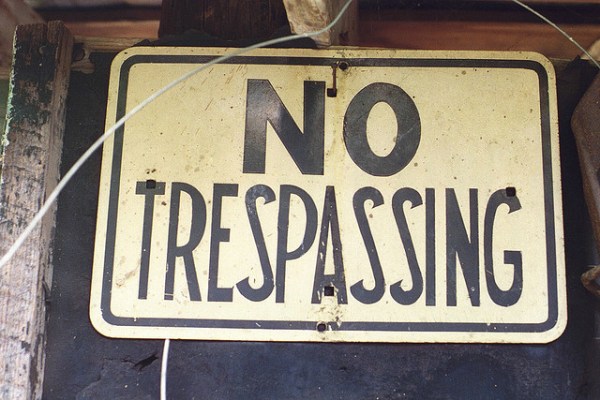
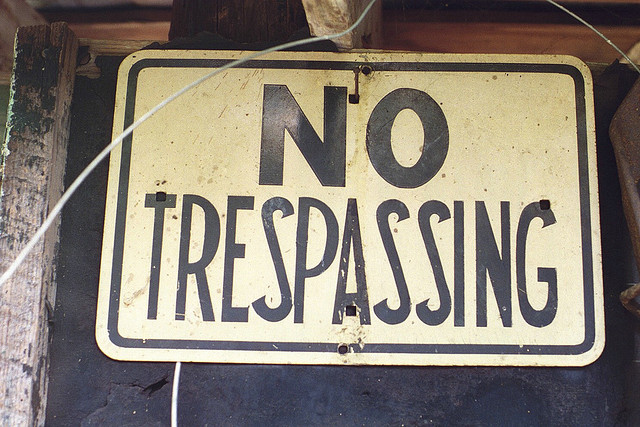
The easiest way to think about a boundary is a property line. We have all seen “No Trespassing” signs, which send a clear message that if you violate that boundary, there will be a consequence. This type of boundary is easy to picture and understand because you can see the sign and the border it protects. Personal boundaries can be harder to define because the lines are invisible, can change, and are unique to each individual.

Personal boundaries, just like the “No Trespassing” sign, define where you end and others begin and are determined by the amount of physical and emotional space you allow between yourself and others. Personal boundaries help you decide what types of communication, behavior, and interaction are acceptable.” Get more here: How to Create Healthy Boundaries « Positively Positive.

Into Orbit

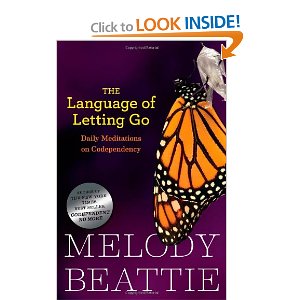
Melody Beattie writes:

“It doesn’t matter if they’re hurting themselves. It doesn’t matter that we could help them if they’d only listen to, and cooperate with, us. IT DOESN’T MATTER, DOESN’T MATTER, DOESN’T MATTER, DOESN’T MATTER.” Codependent No More

I think I can change him. Nobody’s ever really loved him and appreciated him before. I’ll be the one to do that, and then he’ll change.. .. She’s never been with anybody trust­worthy before. I’ll prove how trustworthy I am, and then she’ll be able to love. . . . Nobody’s been able to get to her, to conquer her, before. I’ll be the one to do that … Nobody’s ever really given him a chance. . . . Nobody’s ever really believed in him before….

These are warning signs. Red lights. Red flags. In fact, if we’re thinking these thoughts, they need to be stop signs.

If we have gotten hooked into believing that somehow we will be the one who will make the difference in someone’s life, if we are trying to prove how good we can be for some­one, we may be in trouble.

This is a game. A deception. It won’t work. It’ll make us crazy. We can trust that. We’re not seeing things clearly. Something’s going on with us.

It will be self-defeating.

We may be “the one” all right — the one to wind up victimized.

The whole thought pattern reeks of codependency, of not being responsible for oneself, and of victimization. Each per­son needs to do his or her own work.

Nobody in the past has really understood him…. Nobody has seen what I see in her…. It’s a set-up. It sets us up to stop paying attention to ourselves while we focus too much on the other person. It takes us away from our path and often puts us in orbit.

Nobody has appreciated him enough…. Nobody has been good enough to her, or done for her what I can do…. It’s a rescue. It’s a game move, a game we don’t have to play. We don’t have to prove were the one. If we’re out to show people we’re the best thing that ever happened to them, it may be time to see if they’re the best thing that ever happened to us.

We have not been appointed as guardian angel, god­mother, godfather, or “the one who will.”

The help, support, and encouragement that truly benefits others and ourselves emerges naturally. Let it.

God, help me let go of my need to meet dysfunctional challenges in my relationships.” via June 29: Into Orbit.

six {more} strategies for staying sane

Gemma Stone writes:

Last week, I chatted about the six strategies I use daily to help me from slipping into the darkness of mental health struggles. I actually use twelve strategies daily (I try, anyway). Here are the other six ::

Media. I am super strict with the type of media I expose myself to. I went on a negative media fast a few years ago, and it made all the difference.

Giving. I focus on giving throughout the day. A smile, a cup of coffee, passing on a book, sending a loving e-mail, writing a thank-you card, making a donation. Giving feels good.

Fun. My “purpose” is to have fun inspiring myself and others to live from love rather than fear. I tried living my purpose without the fun part and, well, it was no fun. So now I make plans for fun and giggles.

Boundaries. Saying “no” to what doesn’t deeply matter means I get to say “yes” to what does. Life is full, right? I know now that if I’m going to live fully, it means I have to set boundaries that honor who I am and the life I want to live.

Nature. Every day I chill with Mother Nature. It takes the edge off.

Self-reflection. When stuff comes up, I let myself get into it. If I don’t, I know it comes up in another (much less desirable) way. I feel what I am feeling and explore why I’m feeling that way

That’s it! My twelve secrets to staying sane.

Remember, there is so much to know and so much truth to discover. The direction my feet take and what speaks to my heart may not be right for you. I share my spark of truth with you to guide you through the dark, but not to tell you what to see.

Love,

via six {more} strategies for staying sane.

I feel more sane already…

The Gift of Readiness

Melody Beattie is one of America's most beloved self-help authors and a household name in addiction and recovery circles. Her international bestselling book, Codependent No More, introduced the world to the term "codependency" in 1986. Millions of readers have trusted Melody's words of wisdom and guidance because she knows firsthand what they're going through. In her lifetime, she has survived abandonment, kidnapping, sexual abuse, drug and alcohol addiction, divorce, and the death of a child. "Beattie understands being overboard, which helps her throw bestselling lifelines to those still adrift," said Time Magazine.Melody Beattie writes:

“Were entirely ready to have God remove all these defects of character.” Step Six of Al-Anon.

We progress to the Sixth Step by working diligently, to the best of our ability, on the first five Steps. This work readies us for a change of heart, an openness to becoming changed by a Power greater than ourselves — God.

The path to this willingness can be long and hard. Many of us have to struggle with a behavior or feeling before we become ready to let it go. We need to see, over and over again, that the coping device that once protected us is no longer useful.

The defects of character referred to in Step Six are old sur­vival behaviors that once helped us cope with people, life, and ourselves. But now they are getting in our way, and it is time to be willing to have them removed.

Trust in this time. Trust that you are being readied to let go of that which is no longer useful. Trust that a change of heart is being worked out in you.

God, help me become ready to let go of my defects of character. Help me know, in my mind and soul, that I am ready to let go of my self-defeating behaviors, the blocks and barriers to my life.” via June 28: The Gift of Readiness.

Just in case you missed this for 6/27/2012

  1. “Don’t wait. The time will never be just right.”- Napoleon Hill
    Mon, Jun 25 2012 10:14:57
  2. “You are your own master,
    you make your future.
    Therefore discipline yourself
    as a horse-dealer trains a thoroughbred.”- Buddha
    Mon, Jun 25 2012 10:14:57

Combating Shame

Melody Beattie writes:

“Shame can hold us back, hold us down, and keep us staring at our feet.” Beyond Codependency.

Watch out for shame.

Many systems and people reek of shame. They are con­trolled by shame and may want us to play their game with them. They may be hoping to hook us and control us through shame.

We don’t have to fall into their shame. Instead, well take the good feelings — self-acceptance, love, and nurturing.

Compulsive behaviors, sexually addictive behaviors, over­eating, chemical abuse, and addictive gambling are shame-

based behaviors. If we participate in them, we will feel ashamed. It’s inevitable. We need to watch out for addictive and other compulsive behaviors because those will immerse us in shame.

Our past, and the brainwashing we may have had that im­posed “original shame” upon us, may try to put shame on

us. This can happen when we’re all alone, walking through the grocery store or just quietly going about living our life. Don’t think . . Don’t feel…. Don’t grow or change… . Don’t be alive. . . . Don’t live life. . .. Be ashamed!

Be done with shame. Attack shame. Go to war with it. Learn to recognize it and avoid it like the plague.

Today, I will deliberately refuse to get caught up in the shame float­ing around in the world. If I cannot resist it, I will feel it, accept it, then be done with it as quickly as possible. God, help me know that it’s okay to love myself and help me to refuse to submit to shame. If I get off course, help me learn to change shame into guilt, correct the behavior, and move forward with my life in immediate self-love. via June 27: Combating Shame.

Surviving Slumps

Melody Beattie writes:

A slump can go on for days. We feel sluggish, unfocused, and sometimes overwhelmed with feelings we can’t sort out. We may not understand what is going on with us. Even our attempts to practice recovery behaviors may not appear to work. We still don’t feel emotionally, mentally, and spiritually as good as we would like.

In a slump, we may find ourselves reverting instinctively to old patterns of thinking, feeling, and behaving, even when we know better. We may find ourselves obsessing, even when we know that what we’re doing is obsessing and that it doesn’t work.

We may find ourselves looking frantically for other people to make us feel better, the whole time knowing our happiness and well being does not lay with others.

We may begin taking things personally that are not our issues, and reacting in ways we’ve learned all to well do not work.

We’re in a slump. It won’t last forever. These periods are normal, even necessary. These are the days to get through. These are the days to focus on recovery behaviors, whether or not the rewards occur immediately. These are sometimes the days to let ourselves be and love ourselves as much as we can.

We don’t have to be ashamed, no matter how long we’ve been recovering. We don’t have to unreasonably expect “more” from ourselves. We don’t ever have to expect ourselves to live life perfectly.

Get through the slump. It will end. Sometimes, a slump can go on for days and then, in the course of an hour, we see ourselves pull out of it and feel better. Sometimes it can last a little longer.

Practice one recovery behavior in one small area, and begin to climb uphill. Soon, the slump will disappear. We can never judge where we will be tomorrow by where we are today.

Today, I will focus on practicing one recovery behavior on one of my issues, trusting that this practice will move me forward. I will remember that acceptance, gratitude, and detachment are a good place to begin.” via Just For Today Meditations » Daily Recovery Readings – June 26, 2012.

Figuring out God’s will

Melody Beattie writes:

It was a stressful time in my life. I didn’t know what to do. I had pressing business decisions to make, and painful relationship issues to face. Everything felt like a mess.

I gathered up a few favorite books, the Bible, a journal, and some clothes. Then I headed for the mountains, a resort that was a favorite place of mine to hide out in and gather my thoughts.

I told myself, “I’m going to stay in there. Write in my journal. Pray. And meditate. I’m not coming out until I know what to do.”

After forty-eight hours of writing about my problems, praying about my problems, and meditating about my problems, I remembered something a friend had said to me.

“What are you doing?” he had asked.

“I’m trying to surrender to God’s will.”

“No you’re not, you’re trying to figure it out.”

Within six months, each of the problems I was wrestling with worked themselves out. I was either guided into an action that naturally felt right at the time, or a solution came to me. The immediate solution to each problem was the same: let go. Just surrender to the situation taking place. Sometimes, what we need to do next is surrender.

If you don’t like the word surrender, try calling it making peace.

God, help me surrender to your will, especially when I don’t know what to do next.” via Just For Today Meditations » Daily Recovery Readings – June 25, 2012.

Just in case you missed this for 6//25/2012

  1. “Learn to say ‘no’ to the good so you can say ‘yes’ to the best.”

    – John C. Maxwell

  2. It is good to have an end to journey towards, but it is the journey that matters, in the end.
    —Ursula K. LeGuin
  3. A man who has committed a mistake and doesn’t correct it is committing another mistake.
    –Confucius
  4. Don’t argue for other people’s weaknesses. Don’t argue for your own. When you make a mistake, admit it, correct it, and learn from it–immediately.
    –Stephen Covey
  5. Left to itself, nature takes ordinary garbage and transforms it into useful nutrients that help sustain life. It’s usually poor human action that makes garbage a problem.

    Our mental and emotional garbage takes the forms of bad memories, festering resentments, and useless regrets. We waste time berating ourselves and others about bad decisions and experiences that are behind us.

    The magic of the 12 Step program is that we can use it to transform this mental garbage into useful experience. A past mistake can become as asset when we share it with others. Pain and suffering can teach a lesson that helps all of us to grow. By forgiving others, a resentment can be turned into a friendship.

    I’ll resolve today not to worry about garbage any longer than it takes to identify it and release it to my Higher Power for transformation.

  6. Quote: When a man points a finger at someone else, he should remember that three of his fingers are pointing at himself.
    —Louis Nizer

    It’s so easy to blame others. Others are always making mistakes we can hide behind. That’s what blame is—hiding. When we blame others for our mistakes, we’re trying to hide our character defects.

    It’s nobody else’s fault that we act the way we do. It’s our fault. We’re responsible for our actions.

    And with the help of our Higher Power, we can change. We can turn over our character defects. Over time, we’re not afraid to learn about ourselves—even the parts we don’t like—because we want to know ourselves better.

    Prayer for the Day: I pray for help in facing my character defects.

    Action for the Day: I’ll think about the past week. I’ll list times I’ve used blame to hide from reality.

Charity

International Money Pile in Cash and Coins

Melody Beattie writes:

We need healthy boundaries about receiving money, and we need healthy boundaries about giving money.

Some of us give money for inappropriate reasons.

We may be ashamed because we have money and don’t believe we deserve it. We may belong to an organization that uses shame as a form of control to coerce us out of our money that the organization wants.

We can get hooked into giving money to our children, family members, or friends because we have earned or un­earned guilt. We allow ourselves to be financially black­mailed, sometimes by the people we love.

This is not money freely given, or given in health.

Some of us give money out of a sense of caretaking. We may have exaggerated feelings of responsibility for others, including financial responsibility.

We may be giving simply because we have not learned to own our power to say no when the answer is no.

Some of us give because we hope or believe people will love us if we take care of them financially.

We do not have to give money to anyone. Giving money is our choice. We do not have to allow ourselves to be victimized, manipulated, or coerced out of our money. We are financially responsible for ourselves. Part of being healthy is allowing those around us be financially responsible for themselves.

We do not have to be ashamed about having the money that we earn; we deserve to have the money we have been given — whatever the amount, without feeling obligated to give it all away, or guilty because others want what we have.

Charity is a blessing. Giving is part of healthy living. We can learn to develop healthy boundaries around giving.

Today, I will strive to begin developing healthy boundaries about giving money. I understand that giving is my choice.

via June 25: Charity | Language of Letting Go.

Attachment

Adrienne M. posted on the flipside of detachment over at her blog today:

Shirley MacLaine

If you attach yourself to one person, you ultimately end up having an unhealthy relationship. Shirley MacLaine.

Needing people in our lives is healthy, human, and natural. Needing a single person to love at a very deep level is also soothing to the soul’s well-being. Love and attachment are not synonymous, however. They are close to being opposites. If we “attach” ourselves to others, our movements as separate individuals are hampered. Attachment means dependency; it means letting our movements be controlled by the one we are “hooked” to.

Dependency on mood-altering chemicals, on food, on people, means unmanageability in our individual lives. Many of us in this recovery program, though abstinent, still struggle with our dependency on a certain person or a certain friend.

The tools we are learning apply in all cases of dependency. It is healthy independence we are striving for—taking responsibility for our own lives—making choices appropriate for our personal selves. Loving others means letting them make their own choices unhampered by our “attachment.”

Are my relationships attachments or are they based on love? I will take an inventory of them today.” via Daily Reading – June 24, 2012 « 12 Steps – Think About It!.

The Universe is really putting this issue front and center today. Ugggh…

10 Ways To Eat Clean

See on Scoop.itMy Perspective on Loving, Living, Learning and Laughing

When the seasons change, I get inspired to take a close look at my eating habits and simplify my diet by eating the things that really make my body feel best. Here are 10 healthy eating habits I am focusing on right now to detox my diet.

See on www.huffingtonpost.com

Connecting the dots for 6/24/2012

  1. Today the reminders I received were about detachment, power and response-ability:
  2. We communicate in so many different ways and in so many situations, but if we don’t bring self-reflective consciousness into the equation by reflecting on what we say before we say it, we’ll fail to reach the depths of intimacy and cooperation that we are capable of.
  3. “When you feel in your gut what you are and then dynamically pursue it – don’t back down and don’t give up – then you’re going to mystify a lot of folks.”

    – Bob Dylan

  4. Just in case you missed this: 

  5. Todd’s tweets…

Owning Our Power

More goodness for my spirit from Melody Beattie:

We don’t have to give others so much power and ourselves so little. We don’t have to give others so much credit and ourselves so little. In recovery from codependency, we learn there’s a big difference between humility and discounting ourselves.

When others act irresponsibly and attempt to blame their problems on us, we no longer feel guilty. We let them face their own consequences.

When others talk nonsense, we don’t question our own thinking.

When others try to manipulate or exploit us, we know it’s okay to feel anger and distrust and to say no to the plan.

When others tell us that we want something that we really don’t want, or someone tells us that we don’t want some­thing that we really do want, we trust ourselves. When others tell us things we don’t believe, we know it’s okay to trust our instincts.

We can even change our mind later.

We don’t have to give up our personal power to anyone: strangers, friends, spouses, children, authority figures, or those over whom we’re in authority. People may have things to teach us. They may have more information than we have, and may appear more confident or forceful than we feel. But we are equals. Our magic is not in them. Our magic, our light, is in us. And it is as bright a light as theirs.

We are not second-class citizens. By owning our power, we don’t have to become aggressive or controlling. We don’t have to discount others. But we don’t discount our­selves either.

Today, I will own my power with people. I will let myself know what I know, feel what I feel, believe what 1 believe, and see what I see. I will be open to changing and learning from others and experience, but I will trust and validate myself too. I will stand in my own truth.” via June 24: Owning Our Power.

Detachment

English: Black Cat Yawning
My cat has taught me a great deal about ‘healthy detachment’…

Melody Beattie writes:

Detachment doesn’t come naturally for many of us. But once we realize
the value of this recovery principle, we understand how vital detachment
is. The following story illustrates how a woman came to understand
detachment.

“The first time I practiced detachment was when I let go of my alcoholic
husband. He had been drinking for seven years, since I had married him.
For that long, I had been denying his alcoholism and trying to make him
stop drinking.

“I did outrageous things to make him stop drinking, to make him see the
light, to make him realize how much he was hurting me. I really thought
I was doing things right by trying to control him.

“One night, I saw things clearly. I realized that my attempts to control
him would never solve the problem. I also saw that my life was
unmanageable. I couldn’t make him do anything he didn’t want to do. His
alcoholism was controlling me, even though I wasn’t drinking.

“I set him free, to do as he chose. The truth is, he did as he pleased
anyway. Things changed the night I detached. He could feel it, and so
could I. When I set him free, I set myself free to live my own life.
“I’ve had to practice the principle of detachment many times since then.
I’ve had to detach from unhealthy people and healthy people. It’s never
failed. Detachment works.”

Detachment is a gift. It will be given to us when we’re ready for it.
When we set the other person free, we are set free….

Source: Detachment…Melody Beattie [Archive] – Cyber Recovery Social Network Forums – Alcohol and Drug Addiction Help/Support

Learning healthy detachment has been one of the most difficult things I’ve ever done. I knew how to be attached in an unhealthy way; it’s called codependency. I knew how to be detached in an unhealthy way; it’s called “Eff you — I’m leaving!”. Healthy detachment for me looks a lot like interdependence without giving over control or response-ability to my partner but I can’t say that I’ve mastered it yet or that I will in this lifetime. It may come naturally to some people but it does not come naturally to me — I have to work hard at it every day. I don’t claim perfection — only progress — but I know that learning healthy detachment is one of the best investments I can make in myself…

Work and recovery

Melody Beattie writes this about work:

Just as we have relationship histories, most of us have work histories.

Just as we have a present circumstance to accept and deal with in our relationship life, we have a present circumstance to accept and deal with in our work life.

Just as we develop a healthy attitude toward our relationship history – one that will help us learn and move forward – we can develop a healthy attitude toward our work history.

I have worked many jobs in my life, since I was eleven years old. Just as I have learned many things about myself through my relationships, I have learned many lessons through my work. Often, these lessons run parallel to the lessons I’m learning in other areas of my life.

I have worked at jobs I hated but was temporarily dependent on. I have gotten stuck in jobs because I was afraid to strike out on my own and find my next set of circumstances.

I have been in some jobs to develop skills. Sometimes, I didn’t realize I was developing those skills until later on when they become an important part of the career of my choice.

I have worked at jobs where I felt victimized, where I gave and gave and received nothing in return. I have been in relationships where I manufactured similar feelings.

I have worked at some jobs that have taught me what I absolutely didn’t want; others sparked in me an idea of what I really did want and deserve in my career.

Some of my jobs have helped me develop character; others have helped me fine tune skills. They have all been a place to practice recovery behaviors.

Just as I have had to deal with my feelings and messages about myself in relationships, I have had to deal with my feelings and messages about myself, and what I believed I deserved at work.

I have been through two major career changes in my life. I learned that neither career was a mistake and no job was wasted time. I have learned something from each job, and my work history has helped create who I am.

I learned something else: there was a Plan, and I was being led. The more I trusted my instincts, what I wanted, and what felt right, the more I felt that I was being led.

The more I refused to lose my soul to a job and worked at it because I wanted to and not for the paycheck, the less victimized I felt by any career, even those jobs that paid a meager salary. The more I set goals and took responsibility for achieving the career I wanted, the more I could decide whether a particular job fit into that scheme of things. I could understand why I was working at a particular job and how that was going to benefit me.

There are times I have even panicked at work and about where I was in my employment history. Panic never helped. Trust and working my program did.

There were times I looked around and wondered why I was where I was. There were times people thought I should be someplace different. But when I looked into myself and at God, I knew I was in the right place, for the moment.

There were times I have had to quit a job and walk away in order to be true to myself. Sometimes, that was frightening. Sometimes, I felt like a failure. But I learned this: If I was working my program and true to myself, I never had to fear where I was being led.

There have been times I couldn’t survive on the small amount of money I was receiving. Instead of bringing that issue to a particular employer and making it his or her fault, I have had to learn to bring the issue to my Higher Power and myself. I’ve learned I’m responsible for setting my boundaries and establishing what I believe I deserve. I’ve also learned God, not a particular employer, is my source of guidance.

I’ve learned that I’m not stuck or trapped in a job no more than I am in a relationship. I have choices. I may not be able to see them clearly right now, but I do have choices. I’ve learned that if I really want to take care of myself in a particular way on a job, I will do that. And if I really want to be victimized by a job, I will allow that to happen too.

I am responsible for my choices, and I have choices.

Above all else, I’ve learned to accept and trust my present circumstances at work. That does not mean to submit; it does not mean to forego boundaries. It means to trust, accept, then take care of myself the best I’m able to on any given day.

God, help me bring my recovery behaviors to my career affairs.” via Thought for the Day — Hazelden.

Directness

Melody Beattie shares this:

We feel safe around direct, honest people. They speak their minds, and we know where we stand with them.

Indirect people, people who are afraid to say who they are, what they want, and what they’re feeling, cannot be trusted. They will somehow act out their truth even though they do not speak it. And it may catch everyone by surprise.

Directness saves time and energy. It removes us as victims. It dispenses with martyrdom and games. It helps us own our power. It creates respectful relationships.

It feels safe to be around direct, honest people. Be one.

Today, I will own my power to be direct. I do not have to be pas­sive, nor do I need to be aggressive. I will become comfortable with my own truth, so those around me can become comfortable with me.” via June 23: Directness.

Perfection

Melody Beattie writes:

Try harder. Do better. Be perfect. These messages are tricks that people have played on us. No matter how hard we try, we think we have to do better. Perfection always eludes us and keeps us unhappy with the good we’ve done.
Messages of perfectionism are tricks because we can never achieve their goal. We cannot feel good about ourselves or what we have done while these messages are driving us. We will never be good enough until we change the
messages and tell ourselves we are good enough now.
We can start approving of and accepting ourselves. Who we are is good
enough. Our best yesterday was good enough; our best today is plenty good
too.
We can be who we are, and do it the way we do it – today. That is the
essence of avoiding perfection.
Help me let go of the messages that drive me into the crazies. I will
give myself permission to be who I am and let that be good enough.” Source: Daily SNIPS Discussion: 062706 0507-1111 – DailyStrength

Powerlessness & Unmanageability

Melody Beattie writes:

Willpower is not the key to the way of life we are seeking. Surrender is.

“I have spent much of my life trying to make people be, do, or feel something they aren’t, don’t want to do, and choose not to feel. I have made them, and myself, crazy in that process,” said one recovering woman.

I spent my childhood trying to make an alcoholic father who didn’t love himself be a normal person who loved me. I then married an alcoholic and spent a decade trying to make him stop drinking.

I have spent years trying to make emotionally unavailable people be emotionally present for me. I have spent even more years trying to make family members, who are content feeling miserable, happy.

What I’m saying is this: I’ve spent much of my life desperately and vainly trying to do the impossible and feeling like a failure when I couldn’t. It’s been like planting corn and trying to make the seeds grow peas. Won’t work!

By surrendering to powerlessness, I gain the presence of mind to stop wasting my time and energy trying to change and control that which I cannot change and control. It gives me permission to stop trying to do the impossible and focus on what is possible: being who I am, loving myself, feeling what I feel, and doing what I want to do with my life.

In recovery, we learn to stop fighting lions, simply because we cannot win. We also learn that the more we are focused on controlling and changing others, the more unmanageable our life becomes. The more we focus on living our own life, the more we have a life to live, and the more manageable our life will become.

Today, I will accept powerlessness where I have no power to change things, and I’ll allow my life to become manageable.” via Daily Meditation ~ Powerlessness & Unmanageability – Miracles In Progress Codependents Anonymous Group.

Today, I am thinking about how to apply this to my in-laws…

My mother in law will never love me like a son and my sibling in laws will never treat me like a brother. Three years ago during the ‘summer of forgiveness’, I made amends and was forgiven and yet I remain in their ‘penalty box‘. I refuse to let myself in an close the lid on top of me. I refuse to play a role in their drama. If I’m not going to get what I need it’s not worth the work…

Boundaries

Fence
Good fences make good neighbors…

Melody Beattie writes:

“Having boundaries doesn’t complicate life; boundaries simplify life.” Beyond Codependency.

There is a positive aspect to boundary setting. We learn to listen to ourselves and identify what hurt us and what we don’t like. But we also learn to identify what feels good.

When we are willing to take some risks and begin actively doing so, we will enhance the quality of our life.

What do we like? What feels good? What brings us pleasure? Whose company do we enjoy? What helps us to feel good in the morning? What’s a real treat in our life? What are the small, daily activities that make us feel nurtured and cared for?

What appeals to our emotional, spiritual, mental, and physical self? What actually feels good to us?

We have deprived ourselves too long. There is no need to do that anymore, no need. If it feels good, and the consequences are self-loving and not self-defeating, do it!

Today, I will do for myself those little things that make life more pleasurable. I will not deny myself healthy treats.” via Thought for the Day.

Start a Blog at WordPress.com.

Up ↑