“Yes” Doesn’t Count if you can’t say “No” – Why Clear Boundaries are Important in Intimate Relationships

English: A young woman and man embracing while...

I found this over at Psychology Today:

Most people think of an ideal romantic relationship as a union of two inseparable beings forged into one heart, one mind, and one dream. If either partner has a conflicting desire, he or she too often does not express it. They consciously or unconsciously choose to protect the fantasy of perfect compatibility, but may not realize the limitations that are wedded to that decision.
Eventual conflicts are not as noticeable early when relationships are new. The joy of new discovery and lustful connection often eclipse any disagreements that might arise. Newly-in-love partners too often do not want to know anything about each other that could threaten the perfection they cherish. Both may choose to leave well enough alone even if the result is incomplete or inauthentic communication. In the void of unexpressed conflicts, the partners often want to maintain the illusion of a perfect match.

“He finishes my sentences before I even know what I’m going to say.”

“She anticipates what I want before I tell her.”

“We agree on everything. It’s amazing.”

“It’s so easy to be together. We love all the same things.”

Sadly, those constructed realities of perfect compatibility cannot sustain over time. People cannot feel genuinely loved if their partners are not aware of the other’s core feelings and desires. They can only keep renewing their love if they can face their conflicts openly and work through them.

That requires that both partners are willing to follow these six principles:

They are able to say what they need from their partners

They know what they are able to offer

They honestly share those thoughts and feelings

They listen to their partner’s needs without becoming defensive

They have or are willing to learn the skills to negotiate their differences

They respect each other’s conflicting desires

To make these principles work, partners must be clear from the beginning of their relationship to set clear boundaries that they both agree to honor. Boundaries are like the borders between countries. They can be barriers to communication and cooperation, or viable interfaces for exchanging ideas and resources.

When beautifully used in intimate relationships, they are symbolic lines of demarcation that help partners understand their differences while they seek whatever ways are necessary to authentically connect. Only the acceptance of those known similarities and differences can keep partners truly validating their mutual needs.

Healthy boundaries should be fluid and openly susceptible to changes by either partner during any time in their relationship. They hopefully know or are willing to learn what is personally important to them and make every effort to share those thoughts with each other. By working together over time, they learn to quickly recognize when they are in agreement, when they need to negotiate, and when they must turn down a request that could destroy their personal integrity.” Get more here: “Yes” Doesn’t Count if you can’t say “No” – Why Clear Boundaries are Important in Intimate Relationships | Psychology Today.

Healthy Boundaries: A Good Practice

English: Slate fencing marking field boundarie...

Kristin Barton Cuthriell writes:

“Boundaries are those invisible lines that separate you from other people. When children grow up in families that practice healthy boundaries, these boundaries are typically passed down through generations. The same is true when individuals are raised in dysfunctional families that have no sense of healthy boundaries. These poor boundaries, too, are often passed down the generational line.

Poor boundaries are usually too rigid or too loose. Like a concrete wall, rigid boundaries keep people out. When a person is closed off with rigid boundaries, they do not allow themselves to become vulnerable, which makes true intimacy impossible.

People with loose boundaries have little fence or no fence at all. The separation between self and others is blurred. Individuals with loose boundaries do not have a clear sense of self. These people trust easily, disclose too much, have a difficult time setting limits, and often become enmeshed with others.

Healthy relationships require healthy boundaries. If you are aware that your personal boundaries are either too loose or too rigid, you can learn healthy boundaries.

The first step to change is recognizing that change is needed.  What you do not acknowledge, you do not change.

What is a healthy boundary? Take a look.” Get more here: Healthy Boundaries: A Good Practice – Let Life in Practices.

Family Buttons

Melody Beattie writes:

“I was thirty five years old the first time I spoke up to my mother and refused to buy into her games and manipulation. I was terribly frightened and almost couldn’t believe I was doing this. I found I didn’t have to be meant. I didn’t have to start an argument. But I could say what I wanted and needed to say to take care of myself. I learned I could love and honor myself, and still care about my mother – the way I wanted to – not the way she wanted me to.” –Anonymous

Who knows better how to push our buttons than family members? Who, besides family members, do we give such power?

No matter how long we or our family members have been recovering, relationships with family members can be provocative.

One telephone conversation can put us in an emotional and psychological tailspin that lasts for hours or days.

Sometimes, it gets worse when we begin recovery because we become even more aware of our reactions and our discomfort. That’s uncomfortable, but good. It is by beginning this process of awareness and acceptance that we change, grow, and heal.

The process of detaching in love from family members can take years. So can the process of learning how to react in a more effective way. We cannot control what they do or try to do, but we can gain some sense of control over how we choose to react.

Stop trying to make them act or treat us any differently. Unhook from their system by refusing to try to change or influence them.

Their patterns, particularly their patterns with us, are their issues. How we react, or allow these patterns to influence us, is our issue. How we take care of ourselves is our issue.

We can love our family and still refuse to buy into their issues. We can love our family but refuse their efforts to manipulate, control, or produce guilt in us.

We can take care of ourselves with family members without feeling guilty. We can learn to be assertive with family members without being aggressive. We can set the boundaries we need and want to set with family members without being disloyal to the family.

We can learn to love our family without forfeiting love and respect for ourselves.

Today, help me start practicing self care with family members. Help me know that I do not have to allow their issues to control my life, my day, or my feelings. Help me know it’s okay to have all my feelings about family members, without guilt or shame.

Source: Detachment – Cyber Recovery Social Network Forums – Alcohol and Drug Addiction Help/Support

Go to the source for additional self-care thoughts on attachment and detachment.

Just in case you missed this for 7/2/2012

  1. Maybe you know the drill here, maybe you don’t. Every day I share the best of what I find in my Google Reader that day. It’s amazing to me that even though I pull content from all over the internet, frequently it seems the Universe is acting in concert to emphasize a particular lesson. Today’s lesson? Starting over. Beginning. Letting go. Here’s the best of what I found this morning…

  2. “It’s easy to get lost in endless speculation. So today, release the need to know why things happen as they do. Instead, ask for the insight to recognize what you’re meant to learn.”

    – Caroline Myss

How to Create Healthy Boundaries

“An intimate relationship is one in which neither party silences, sacrifices, or betrays the self and each party expresses strength and vulnerability, weakness and competence in a balanced way.” Harriet Lerner

Setting boundaries is essential if we want to be both physically and emotionally healthy.

Creating healthy boundaries is empowering. By recognizing the need to set and enforce limits, you protect your self-esteem, maintain self-respect, and enjoy healthy relationships.

Unhealthy boundaries cause emotional pain that can lead to dependency, depression, anxiety, and even stress-induced physical illness. A lack of boundaries is like leaving the door to your home unlocked: anyone, including unwelcome guests, can enter at will. On the other hand, having too rigid boundaries can lead to isolation, like living in a locked-up castle surrounded by a mote. No one can get in, and you can’t get out.

What Are Boundaries?

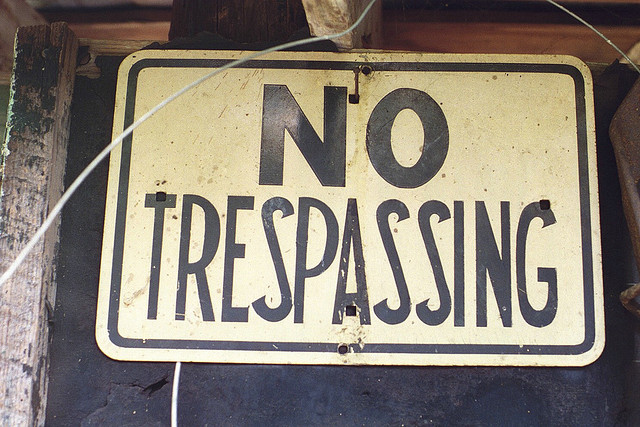
The easiest way to think about a boundary is a property line. We have all seen “No Trespassing” signs, which send a clear message that if you violate that boundary, there will be a consequence. This type of boundary is easy to picture and understand because you can see the sign and the border it protects. Personal boundaries can be harder to define because the lines are invisible, can change, and are unique to each individual.

Personal boundaries, just like the “No Trespassing” sign, define where you end and others begin and are determined by the amount of physical and emotional space you allow between yourself and others. Personal boundaries help you decide what types of communication, behavior, and interaction are acceptable.” Get more here: How to Create Healthy Boundaries « Positively Positive.

six {more} strategies for staying sane

Gemma Stone writes:

Last week, I chatted about the six strategies I use daily to help me from slipping into the darkness of mental health struggles. I actually use twelve strategies daily (I try, anyway). Here are the other six ::

Media. I am super strict with the type of media I expose myself to. I went on a negative media fast a few years ago, and it made all the difference.

Giving. I focus on giving throughout the day. A smile, a cup of coffee, passing on a book, sending a loving e-mail, writing a thank-you card, making a donation. Giving feels good.
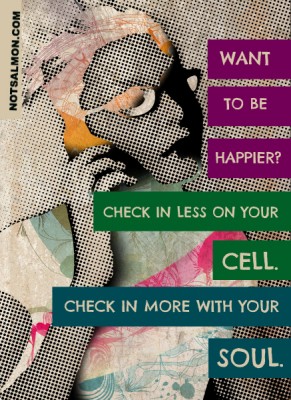
Fun. My “purpose” is to have fun inspiring myself and others to live from love rather than fear. I tried living my purpose without the fun part and, well, it was no fun. So now I make plans for fun and giggles.

Boundaries. Saying “no” to what doesn’t deeply matter means I get to say “yes” to what does. Life is full, right? I know now that if I’m going to live fully, it means I have to set boundaries that honor who I am and the life I want to live.

Nature. Every day I chill with Mother Nature. It takes the edge off.

Self-reflection. When stuff comes up, I let myself get into it. If I don’t, I know it comes up in another (much less desirable) way. I feel what I am feeling and explore why I’m feeling that way
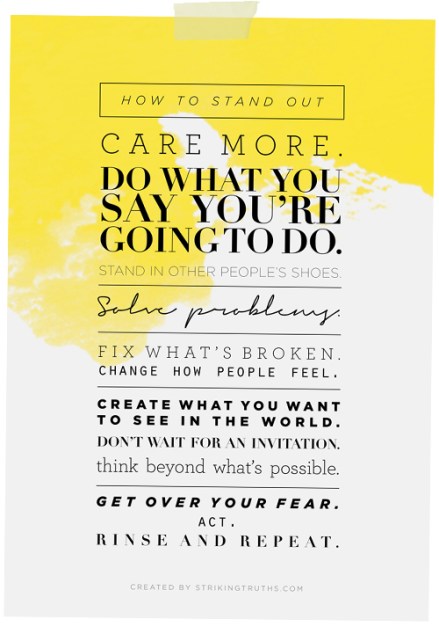
That’s it! My twelve secrets to staying sane.

Remember, there is so much to know and so much truth to discover. The direction my feet take and what speaks to my heart may not be right for you. I share my spark of truth with you to guide you through the dark, but not to tell you what to see.

Love,

via six {more} strategies for staying sane.

I feel more sane already…

Figuring out God’s will

Melody Beattie writes:

It was a stressful time in my life. I didn’t know what to do. I had pressing business decisions to make, and painful relationship issues to face. Everything felt like a mess.

I gathered up a few favorite books, the Bible, a journal, and some clothes. Then I headed for the mountains, a resort that was a favorite place of mine to hide out in and gather my thoughts.

I told myself, “I’m going to stay in there. Write in my journal. Pray. And meditate. I’m not coming out until I know what to do.”

After forty-eight hours of writing about my problems, praying about my problems, and meditating about my problems, I remembered something a friend had said to me.

“What are you doing?” he had asked.

“I’m trying to surrender to God’s will.”

“No you’re not, you’re trying to figure it out.”

Within six months, each of the problems I was wrestling with worked themselves out. I was either guided into an action that naturally felt right at the time, or a solution came to me. The immediate solution to each problem was the same: let go. Just surrender to the situation taking place. Sometimes, what we need to do next is surrender.

If you don’t like the word surrender, try calling it making peace.

God, help me surrender to your will, especially when I don’t know what to do next.” via Just For Today Meditations » Daily Recovery Readings – June 25, 2012.

Just in case you missed this for 6//25/2012

  1. “Learn to say ‘no’ to the good so you can say ‘yes’ to the best.”

    – John C. Maxwell

  2. It is good to have an end to journey towards, but it is the journey that matters, in the end.
    —Ursula K. LeGuin
  3. A man who has committed a mistake and doesn’t correct it is committing another mistake.
    –Confucius
  4. Don’t argue for other people’s weaknesses. Don’t argue for your own. When you make a mistake, admit it, correct it, and learn from it–immediately.
    –Stephen Covey
  5. Left to itself, nature takes ordinary garbage and transforms it into useful nutrients that help sustain life. It’s usually poor human action that makes garbage a problem.

    Our mental and emotional garbage takes the forms of bad memories, festering resentments, and useless regrets. We waste time berating ourselves and others about bad decisions and experiences that are behind us.

    The magic of the 12 Step program is that we can use it to transform this mental garbage into useful experience. A past mistake can become as asset when we share it with others. Pain and suffering can teach a lesson that helps all of us to grow. By forgiving others, a resentment can be turned into a friendship.

    I’ll resolve today not to worry about garbage any longer than it takes to identify it and release it to my Higher Power for transformation.

  6. Quote: When a man points a finger at someone else, he should remember that three of his fingers are pointing at himself.
    —Louis Nizer

    It’s so easy to blame others. Others are always making mistakes we can hide behind. That’s what blame is—hiding. When we blame others for our mistakes, we’re trying to hide our character defects.

    It’s nobody else’s fault that we act the way we do. It’s our fault. We’re responsible for our actions.

    And with the help of our Higher Power, we can change. We can turn over our character defects. Over time, we’re not afraid to learn about ourselves—even the parts we don’t like—because we want to know ourselves better.

    Prayer for the Day: I pray for help in facing my character defects.

    Action for the Day: I’ll think about the past week. I’ll list times I’ve used blame to hide from reality.

Charity

International Money Pile in Cash and Coins

Melody Beattie writes:

We need healthy boundaries about receiving money, and we need healthy boundaries about giving money.

Some of us give money for inappropriate reasons.

We may be ashamed because we have money and don’t believe we deserve it. We may belong to an organization that uses shame as a form of control to coerce us out of our money that the organization wants.

We can get hooked into giving money to our children, family members, or friends because we have earned or un­earned guilt. We allow ourselves to be financially black­mailed, sometimes by the people we love.

This is not money freely given, or given in health.

Some of us give money out of a sense of caretaking. We may have exaggerated feelings of responsibility for others, including financial responsibility.

We may be giving simply because we have not learned to own our power to say no when the answer is no.

Some of us give because we hope or believe people will love us if we take care of them financially.

We do not have to give money to anyone. Giving money is our choice. We do not have to allow ourselves to be victimized, manipulated, or coerced out of our money. We are financially responsible for ourselves. Part of being healthy is allowing those around us be financially responsible for themselves.

We do not have to be ashamed about having the money that we earn; we deserve to have the money we have been given — whatever the amount, without feeling obligated to give it all away, or guilty because others want what we have.

Charity is a blessing. Giving is part of healthy living. We can learn to develop healthy boundaries around giving.

Today, I will strive to begin developing healthy boundaries about giving money. I understand that giving is my choice.

via June 25: Charity | Language of Letting Go.

Work and recovery

Melody Beattie writes this about work:

Just as we have relationship histories, most of us have work histories.

Just as we have a present circumstance to accept and deal with in our relationship life, we have a present circumstance to accept and deal with in our work life.

Just as we develop a healthy attitude toward our relationship history – one that will help us learn and move forward – we can develop a healthy attitude toward our work history.

I have worked many jobs in my life, since I was eleven years old. Just as I have learned many things about myself through my relationships, I have learned many lessons through my work. Often, these lessons run parallel to the lessons I’m learning in other areas of my life.

I have worked at jobs I hated but was temporarily dependent on. I have gotten stuck in jobs because I was afraid to strike out on my own and find my next set of circumstances.

I have been in some jobs to develop skills. Sometimes, I didn’t realize I was developing those skills until later on when they become an important part of the career of my choice.

I have worked at jobs where I felt victimized, where I gave and gave and received nothing in return. I have been in relationships where I manufactured similar feelings.

I have worked at some jobs that have taught me what I absolutely didn’t want; others sparked in me an idea of what I really did want and deserve in my career.

Some of my jobs have helped me develop character; others have helped me fine tune skills. They have all been a place to practice recovery behaviors.

Just as I have had to deal with my feelings and messages about myself in relationships, I have had to deal with my feelings and messages about myself, and what I believed I deserved at work.

I have been through two major career changes in my life. I learned that neither career was a mistake and no job was wasted time. I have learned something from each job, and my work history has helped create who I am.

I learned something else: there was a Plan, and I was being led. The more I trusted my instincts, what I wanted, and what felt right, the more I felt that I was being led.

The more I refused to lose my soul to a job and worked at it because I wanted to and not for the paycheck, the less victimized I felt by any career, even those jobs that paid a meager salary. The more I set goals and took responsibility for achieving the career I wanted, the more I could decide whether a particular job fit into that scheme of things. I could understand why I was working at a particular job and how that was going to benefit me.

There are times I have even panicked at work and about where I was in my employment history. Panic never helped. Trust and working my program did.

There were times I looked around and wondered why I was where I was. There were times people thought I should be someplace different. But when I looked into myself and at God, I knew I was in the right place, for the moment.

There were times I have had to quit a job and walk away in order to be true to myself. Sometimes, that was frightening. Sometimes, I felt like a failure. But I learned this: If I was working my program and true to myself, I never had to fear where I was being led.

There have been times I couldn’t survive on the small amount of money I was receiving. Instead of bringing that issue to a particular employer and making it his or her fault, I have had to learn to bring the issue to my Higher Power and myself. I’ve learned I’m responsible for setting my boundaries and establishing what I believe I deserve. I’ve also learned God, not a particular employer, is my source of guidance.

I’ve learned that I’m not stuck or trapped in a job no more than I am in a relationship. I have choices. I may not be able to see them clearly right now, but I do have choices. I’ve learned that if I really want to take care of myself in a particular way on a job, I will do that. And if I really want to be victimized by a job, I will allow that to happen too.

I am responsible for my choices, and I have choices.

Above all else, I’ve learned to accept and trust my present circumstances at work. That does not mean to submit; it does not mean to forego boundaries. It means to trust, accept, then take care of myself the best I’m able to on any given day.

God, help me bring my recovery behaviors to my career affairs.” via Thought for the Day — Hazelden.

Boundaries

Fence
Good fences make good neighbors…

Melody Beattie writes:

“Having boundaries doesn’t complicate life; boundaries simplify life.” Beyond Codependency.

There is a positive aspect to boundary setting. We learn to listen to ourselves and identify what hurt us and what we don’t like. But we also learn to identify what feels good.

When we are willing to take some risks and begin actively doing so, we will enhance the quality of our life.

What do we like? What feels good? What brings us pleasure? Whose company do we enjoy? What helps us to feel good in the morning? What’s a real treat in our life? What are the small, daily activities that make us feel nurtured and cared for?

What appeals to our emotional, spiritual, mental, and physical self? What actually feels good to us?

We have deprived ourselves too long. There is no need to do that anymore, no need. If it feels good, and the consequences are self-loving and not self-defeating, do it!

Today, I will do for myself those little things that make life more pleasurable. I will not deny myself healthy treats.” via Thought for the Day.

Gossip

Cover

A second shot of Melody Beattie for today! The Universe must think I need it:

Intimacy is that warm gift of feeling connected to others and enjoying our connection to them.

As we grow in recovery, we find that gift in many, some­times surprising places. We may discover we’ve developed intimate relationships with people at work, with friends, with people in our support groups — sometimes with family members. Many of us are discovering intimacy in a special love relationship.

Intimacy is not sex, although sex can be intimate. Intimacy means mutually honest, warm, caring, safe relationships ­relationships where the other person can be who he or she is and we can be who we are — and both people are valued.

Sometimes there are conflicts. Conflict is inevitable. Some­times there are troublesome feelings to work through. Some­times the boundaries or parameters of relationships change. But there is a bond — one of love and trust.

There are many blocks to intimacy and intimate relation­ships. Addictions and abuse block intimacy. Unresolved fam­ily of origin issues prevent intimacy. Controlling blocks intimacy. Off balance relationships, where there is too great a discrepancy in power, prevent intimacy. Caretaking can block intimacy. Nagging, withdrawing, and shutting down can hurt intimacy.

So can a simple behavior like gossip — for example, gos­siping about another for motives of diminishing him or her in order to build up ourselves or to judge the person. To dis­cuss another person’s issues, shortcomings, or failures with someone else will have a predictable negative impact on the relationship.

We deserve to enjoy intimacy in as many of our relation­ships as possible. We deserve relationships that have not been sabotaged.

That does not mean we walk around with our heads in the clouds; it means we strive to keep our motives clean when it comes to discussing other people.

If we have a serious issue with someone, the best way to resolve it is to bring the issue to that person.

Direct, clean conversation clears the air and paves the way for intimacy, for good feelings about ourselves and our relationships with others.

Today, God, help me let go of my fear of intimacy. Help me strive to keep my communications with others clean and free from mali­cious gossip. Help me work toward intimacy in my relationships. Help me deal as directly as possible with my feelings.” via June 17: Gossip.

Give & Forgive!

Yes, but! Set healthy boundaries and remember the lesson of the sage and the scorpion. The Daily Love via Visual Inspiration: Give &Forgive!.

Be a Dad. Or Just Act Like One.

Dr. Phil says:

FDblogBigWe’ve done a lot of shows about dads — absentee dads, dads who are too strict or not strict enough, and even about abusive dads.

Father’s Day is this week, and I’d like to talk about the dads who stick around. The fathers who take their share of the sleepless nights. Those who change diapers without being asked. Fathers who push the stroller and the swings, who stick bandages on skinned knees and who applaud both the kindergarten sing-alongs and the high school drama productions. All you dads who’ve thrown your arm around the shoulder of the new graduate: both of you grinning with pride.

Thanks to all of you! You are giving your children a priceless gift.

By being present — holding out love and support, establishing and maintaining rules and boundaries — you are modeling a vital part of healthy adulthood. You are giving your sons a pattern they can follow; You are showing your daughters what a healthy relationship looks like.

But for some children, their fathers are not present — a mom might be serving as both mother and father, or there may be abuse and neglect in their homes and so they’ve been removed and placed into the foster care system. For these children, having an advocate to make sure they don’t get lost in the social service system or languish in inappropriate foster homes is so important.

Robin and I have been telling you about CASA for Children. CASA for Children provides trained, compassionate Court Appointed Special Advocates who speak for abused and neglected children as they navigate the complexities of the child welfare system.

CASA for Children needs more volunteers — especially men. The children in the foster care system need someone who will keep showing up, someone who will stick by them and advocate for them until their case is settled — until the child is safe in the embrace of a loving family.

It takes 30 hours of training to become a CASA volunteer, half of that can be done online. Once you’re sworn in as an officer of the court, you’ll be assigned a case. You’ll be the voice of a child, in the courtroom and in the community. From the stories our guest bloggers tell, being a CASA volunteer is one of the most rewarding things they’ve ever done.

So this Father’s Day, I challenge you guys: are you man enough to become a CASA volunteer? Robin and I hope you’ll say, “Yes.”

via Be a Dad. Or Just Act Like One..

Boundaries


Can I go a single day without quoting Melody Beattie? I don’t think so!

“Sometimes, life and people seem to push and push. Be­cause we are so used to pain, we may tell ourselves it doesn’t hurt. Because we are so used to people controlling and manipulating us, we may tell ourselves there is something wrong with us.

There’s nothing wrong with us. Life is pushing and hurting to get our attention. Sometimes, the pain and pushing are pointing toward a lesson. The lesson may be that we’ve be­come too controlling. Or maybe were being pushed to own our power to take care of ourselves. The issue is boundaries.

If something or somebody is pushing us to our limits, that’s exactly what’s happening: we’re being pushed to our limits. We can be grateful for the lesson that’s here to help us explore and set our boundaries.

Today, I will give myself permission to set the limits I want and need to set in my life.” via June 8: Boundaries.

Detachment means “freedom from emotion”

The Way You Make Me Feel
The Way You Make Me Feel (Photo credit: Wikipedia)

Letting someone else’s behavior determine how we feel at every turn is irresponsible. Our emotions should be determined by us, not by someone else. But no doubt we have spent years confusing the boundaries that separate us from other people. Whether at work or at home, we have too often let someone else’s “insanity” affect how we behave and how we feel.

At first, it may seem insensitive not to react to others’ problems or negative behavior. We may fear they’ll think we simply don’t care about them. Learning that it is far more caring to let other people handle their own lives takes time and patience. But with practice, it will begin to feel comfortable. In fact, in time it will feel freeing and wonderful.

I will work on detachment today, knowing that in time the rewards will come. 

Discovering intimacy

Intimacy is that warm gift of feeling connected to others and enjoying our connection to them.

As we grow in recovery, we find that gift in many, sometimes surprising, places. We may discover we’ve developed intimate relationships with people at work, with friends, with people in our support groups – sometimes with family members. Many of us are discovering intimacy in a special love relationship.

Intimacy is not sex, although sex can be intimate. Intimacy means mutually honest, warm, caring, safe relationships – relationships where the other person can be who he or she is and we can be who we are – and both people are valued.

Sometimes there are conflicts. Conflict is inevitable. Sometimes there are troublesome feelings to work through. Sometimes the boundaries or parameters of relationships change. But there is a bond – one of love and trust.

There are many blocks to intimacy and intimate relationships. Addictions and abuse block intimacy. Unresolved family of origin issues prevents intimacy. Controlling blocks intimacy. Off balance relationships, where there is too great a discrepancy in power, prevent intimacy. Caretaking can block intimacy. Nagging, withdrawing, and shutting down can hurt intimacy. So can a simple behavior like gossip — for example, gossiping about another for motives of diminishing him or her in order to build up ourselves or to judge the person. To discuss another person’s issues, shortcomings, or failures with someone else will have a predictable negative impact on the relationship.

We deserve to enjoy intimacy in as many of our relationships as possible. We deserve relationships that have not been sabotaged. That does not mean we walk around with our heads in the clouds; it means we strive to keep our motives clean when it comes to discussing other people.

If we have a serious issue with someone, the best way to resolve it is to bring the issue to that person.

Direct, clean conversation clears the air and paves the way for intimacy, for good feelings about ourselves and our relationships with others.

Today, God, help me let go of my fear of intimacy. Help me strive to keep my communications with others clean and free from malicious gossip. Help me work toward intimacy in my relationships. Help me deal as directly as possible with my feelings.

via Adult Children Anonymous.

How to Draw the Line When You Have No Idea Where to Put It

“Have you ever felt at a loss when you needed to draw the line with someone?

Have you put yourself at a disadvantage when you failed to draw the line because you couldn’t think of a way to do it ?

Have you ever felt mistreated when someone drew a line to your disadvantage?

Setting boundaries is one of the most important parts of relationships. It is more important to satisfactory relationships that just about everything else, since without agreeable boundaries, most relationships cannot function well. The expression, “Good fences make good neighbors,” is true.

At the same time we all have had experience with poor boundaries, boundaries that are too loose or too strict, boundaries that are self-serving and boundaries that feel abusive.

So what can we do about this?” Go to the source: Setting Boundaries: How to Draw the Line When You Have No Idea Where to Put It.

I <3 Gemma Stone…

Looking for another video post of hers I stumbled upon this to share with you…

“Jean-Paul Sartre says, “Hell is other people”.
I don’t think it’s quite that bad but the reality is much of the stuff that causes us to suffer, comes from our reactions to others.
What to do?
Let’s suppose you tried the strategies from the last vlog. Maybe you’ve also tried talking things out, setting healthy boundaries, and being ‘the better person’, and you’re still struggling.
This sucks. I know.
Do not close off your heart.”

Source: 3 more strategies for dealing with family drama | Gemma Stone.

I encourage you to visit her blog and subscribe or follow her on Twitter…

A seven-step prescription for self-love

Some people see the term ‘self love’ and immediately start to squirm, yet the Good Book says we must ‘love our neighbor as ourselves’ implying that self-love is fundamental in healthy relationship. Author Dr. Deborah Khoshaba shares her perspective here…

Self-love is a state of appreciation for oneself that grows from actions that support our physical, psychological and spiritual growth. Self-love is dynamic; it grows by actions that mature us. When we act in ways that expand self-love in us, we begin to accept much better our weaknesses as well as our strengths, have less need to explain away our short-comings, have compassion for ourselves as human beings struggling to find personal meaning, are more centered in our life purpose and values, and expect living fulfillment through our own efforts.

Here is my Seven-Step Prescription for Self-Love. Continue reading “A seven-step prescription for self-love”

Letting Go of the Need to Control

English: Black cat Another great post from Melody Beattie – this time on the topic of detachment…

The rewards from detachment are great: serenity; a deep sense of peace; the ability to give and receive love in self-enhancing, energizing ways; and the freedom to find real solutions to our problems.

Codependent No More

Letting go of our need to control can set us and others free. It can set our Higher Power free to send the best to us.

If we weren’t trying to control someone or something, what would we be doing differently?

What would we do that we’re not letting ourselves do now? Where would we go? What would we say?

What decisions would we make?

What would we ask for? What boundaries would be set? When would we say no or yes?

If we weren’t trying to control whether a person liked us or his or her reaction to us, what would we do differently? If we weren’t trying to control the course of a relationship, what would we do differently? if we weren’t trying to con­trol another person’s behavior, how would we think, feel, speak, and behave differently than we do now?

What haven’t we been letting ourselves do while hoping that self-denial would influence a particular situation or per­son? Are there some things we’ve been doing that we’d stop?

How would we treat ourselves differently?

Would we let ourselves enjoy life more and feel better right now? Would we stop feeling so bad? Would we treat our­selves better?

If we weren’t trying to control, what would we do differ­ently? Make a list, then do it.

Today, I will ask myself what I would be doing differently if I weren’t trying to control. When I hear the answer, I will do it. God, help me let go of my need to control. Help me set myself and others free.

Source: March 18: Letting Go of the Need to Control | Language of Letting Go

Detachment is the most difficult of all recovery topics for me. I’m trying to understand the difference between trying to control and having health or reasonable expectations. Maybe there is no such thing as an expectation can have of my wife or children; not if I want to be happy or at peace anyway…

The times I have a glimpse of what detachment looks like are those times when I’m playing with my black cat Boo. I don’t expect Boo to bark like a dog or come when called. She meows and sometimes when it suits her mood she comes when called but I don’t expect her to be something that is not in her nature.

Someday I’ll write a book called ‘Everything I need to know about detachment I learned from my cat’ but I still have much to learn from her…

Start a Blog at WordPress.com.

Up ↑