You never know…

…how an act of kindness will help. How many times have I said ‘Nahhhhhhhhhhhhhhh’, later or “I’m too tired” to the little voice in my heart?

PostSecret: Sunday Secrets.

Perhaps this is why the Christian Scriptures say: Anyone, then, who knows the good he ought to do and doesn’t do it, sins.

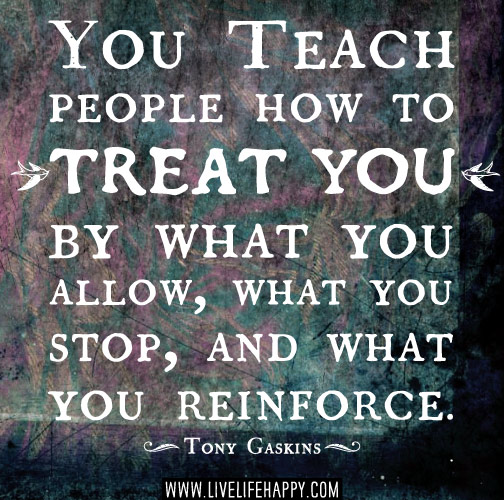
You Teach People How To Treat You

Live Life Quotes, Love Life Quotes, Live Life Happy

via You Teach People How To Treat You.


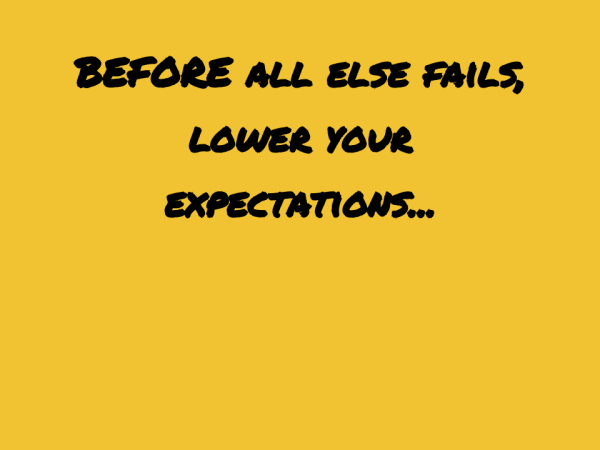
Lower Your Expectations

You’ve heard it said ‘when all else fails, lower your expectations’ — I say ‘before!’. Why? Long ago I heard this quote and took it with me: “Discouragement is the illegitimate child of false expectations!” Loyd Ogilive. I believe most, if not all, of our disappointment comes from what expect in a certain situation. In jest I say to my wife, “if only you’d lower your expectations, I could be the man of your dreams” and there is some truth in that. The only time I get frustrated with her is when I forget that people are unmanageable and that my expectations are just that; my expectations and not anyone else’s truth or reality…

One of my favorite authors Melody Beattie shares this on the topic:

When you’re starting a first creative project or beginning the study of an art or craft, what I want you to do is lower your standards until they disappear. That’s right. You’re not supposed to be any good at the beginning. So you might as well give your­self the liberating gift of joyously expecting yourself to be bad.

— Barbara Sheer and Annie Gotlieb, Wishcraft

When I first began writing newspaper and magazine arti­cles, it took me anywhere from one to three months to com­plete a short article. After writing for a few years, I brought a timer into my office one day. I told myself I knew how to do what I was doing, now I was going to learn to do it more quickly. Before long, I was able to write in two hours what had previously taken me months to accomplish. The key words here are in time.

When I first began recovering from chemical dependency, it took me eight months of treatment to understand what other people were comprehending in six weeks. In time, I became a chemical dependency counselor. In time, I wrote books on the subject. The key words here are in time.

When I first began recovering from codependency, I couldn’t tell a control gesture from setting a boundary I didn’t know when I was taking care of myself or what that even meant. I didn’t know manipulation from an honest attempt at expressing my emotions. In time, I wrote a best-seller on the subject. Again, the key words here are in time.

Start where you are. Start poorly. Just begin. Let yourself fumble, be awkward and confused. If you already knew how to do it, it wouldn’t be a lesson in your life. And you wouldn’t get the thrill of victory two, five, or ten years from now when you look back and say, “Wow. I’ve gotten good at that over time.”

All things are possible to him or her that believeth, the Bible says. Enjoy those awkward beginnings. Revel in them. They’re the key to your success.

God, help me stop putting off living out of fear of doing it poorly. Help me lower my expectations to allow room for awkward begin­nings.” via September 8: Lower Your Expectations.

When Things Don’t Work

Melody Beattie writes:

Frequently, when faced with a problem, we may attempt to solve it in a particular way. When that way doesn’t work, we may continue trying to solve the problem in that same way.

We may get frustrated, try harder, get more frustrated, and then exert more energy and influence into forcing the same solution that we have already tried and that didn’t work.

That approach makes us crazy. It tends to get us stuck and trapped. It is the stuff that unmanageability is made of.

We can get caught in this same difficult pattern in relationships, in tasks, in any area of our life. We initiate something, it doesn’t work, doesn’t flow, we feel badly, then try the same approach harder, even though it’s not working and flowing.

Sometimes, it’s appropriate not to give up and to try harder. Sometimes, it’s more appropriate to let go, detach, and stop trying so hard.

If it doesn’t work, if it doesn’t flow, maybe life is trying to tell us something. Life is a gentle teacher. She doesn’t always send neon road signs to guide us. Sometimes, the signs are more subtle. Something not working may be a sign!

Let go. If we have become frustrated by repeated efforts that aren’t producing desired results, we may be trying to force ourselves down the wrong path. Sometimes, a different solution is appropriate. Sometimes, a different path opens up. Often, the answer will emerge more clearly in the quietness of letting go than it will in the urgency, frustration, and desperation of pushing harder.

Learn to recognize when something isn’t working or isn’t flowing. Step back and wait for clear guidance.

Today, I will not make myself crazy by repeatedly trying solutions that have proven themselves unsuccessful. If something isn’t working, I will step back and wait for guidance.” via Just For Today Meditations » Daily Recovery Readings – June 28, 2012.

Remain in Jesus

Stained glass at St John the Baptist's Anglica...

The most famous verse in the whole Bible is probably John 3:16, which says,

“For God so loved the world that He gave His only Son, that whoever believes in Him shall not perish but have eternal life.”

You’ve undoubtably seen it on signs at sporting events, written on t-shirts, posted on billboards and even on drink cups at some fast food restaurants. And for good reason, it’s an amazing verse! Here’s Jesus telling us about why He came, who sent Him, and what happens for those who put their faith in Him. It’s a great snapshot of the Gospel message. If you’ve never begun the habit of memorizing Scripture, start with this one.

While John 3:16 is an amazing verse, John 3:17 is just as compelling. Jesus continues by telling us,

“For God did not send His Son into the world to condemn the world, but to save the world through Him.”

That’s a reassuring statement! Look at the two verses together; first, God loves us enough to send us a Savior, next, if we put our faith in Jesus, if we trust Him as our Lord and Savior, we will have eternal life, and Jesus wasn’t sent to condemn the world as some would have us believe, but to save the world.

That’s where the power for a changed life comes from, from the Savior of the world. Jesus gives us the power for a new life, for a life of freedom from our hurts, hang-ups and habits, but we have to bring them to Him and trust Him to heal us. As we go through Celebrate Recovery we need to ensure that Jesus is the center of our program. We can not do this on our own power. To find change, lasting change, we need to depend wholly on Jesus.

Today, ask yourself, have you been relying on Jesus’ power or your own? If you’ve been relying on Christ’s power, keep it up. Don’t get distracted, don’t stray from the path. But if you find that you’ve begun to rely on anything other than Jesus, a relationship, willpower, a new habit, anything, don’t wait to refocus your attention to Jesus. We all have the tendency to take our eyes off of Jesus, but when we realize we’ve done that, we need to turn to Him in prayer and ask Him for His help to remain focused on and in Him.

Later in the Book of John, Jesus tells us:

“I am the vine; you are the branches. If a man remains in me and I in him, he will bear much fruit; apart from me you can do nothing.” John 15:5

Jesus isn’t a part of recovery, He is recovery. If we want to live a new life, a life free from hurts, hang-ups and habits, we must remain in Jesus. It is only by and through Jesus that you and I can have new lives here on earth, and eternal life in heaven.

Today, what can you do to make sure that you remain in Jesus?

If you find that you have begun to focus on anything else, are you ready to make today the day you focus on Jesus as your Lord and Savior, as your Higher Power?

Don’t put it off any longer. Remember, Jesus didn’t come to condemn us, but to save us.” via Remain in Jesus.

Six month questions

Jon Swanson writes:

Sunday is July 1. The year is half over. This weekend, then, is a time to review the last 6 months, to check our goals or 3 words, to see if we are making progress.

Here are a bunch of questions to help in that review. But as you look at these questions, you will realize that progress isn’t always related to goals. Sometimes new things happen. Sometimes things change. Sometimes just keeping up with the basics (eating, breathing) is making progress.

Life change is its own set of goals…

  • Did a relationship end? start?
  • Did a family member die?
  • Did a child join the family? struggle? graduate?
  • Did a job change?
  • Did you keep doing the daily work?

Expression

  • Did you write an unplanned poem? a letter? a thank you note? a blog post? a song? a script?
  • Did you read a book? many books?

At least once…

  • Did you say no to an addiction? Can you do it again?
  • Did you change a habit?
  • Did you give someone flowers?
  • Did you choose to stay quiet?
  • Did you wrestle with a major question?
  • Did you apologize?
  • Did you say thank you?
  • Did you keep Sabbath?
  • Did you find solitude?
  • Did you forgive someone?

Looking at things as a farmer would (with thanks to Becky)….

  • Are you ripping out the old plants?
  • Are you between crops?
  • Are you planting?
  • Are you weeding?
  • Are you watering and waiting?
  • Are you harvesting?

Questions for thinking.

  • Did you complete one of last year’s goals? (right goal, wrong year)
  • Did you come back?
  • Did you step out?
  • Did you cry out for help?
  • Did you step back?
  • Did you let go?

Sounding formal…

  • How did you build capacity? Yours? someone else’s? your organization?
  • How have you developed infrastructure?
  • Are you looking forward to the next half of the year?
  • How did a goal change?
  • How did a new goal emerge?
  • Did you realize that your goals weren’t small enough? big enough?

via Six month questions..

Figuring out God’s will

Melody Beattie writes:

It was a stressful time in my life. I didn’t know what to do. I had pressing business decisions to make, and painful relationship issues to face. Everything felt like a mess.

I gathered up a few favorite books, the Bible, a journal, and some clothes. Then I headed for the mountains, a resort that was a favorite place of mine to hide out in and gather my thoughts.

I told myself, “I’m going to stay in there. Write in my journal. Pray. And meditate. I’m not coming out until I know what to do.”

After forty-eight hours of writing about my problems, praying about my problems, and meditating about my problems, I remembered something a friend had said to me.

“What are you doing?” he had asked.

“I’m trying to surrender to God’s will.”

“No you’re not, you’re trying to figure it out.”

Within six months, each of the problems I was wrestling with worked themselves out. I was either guided into an action that naturally felt right at the time, or a solution came to me. The immediate solution to each problem was the same: let go. Just surrender to the situation taking place. Sometimes, what we need to do next is surrender.

If you don’t like the word surrender, try calling it making peace.

God, help me surrender to your will, especially when I don’t know what to do next.” via Just For Today Meditations » Daily Recovery Readings – June 25, 2012.

Shallow Small Group Bible Study

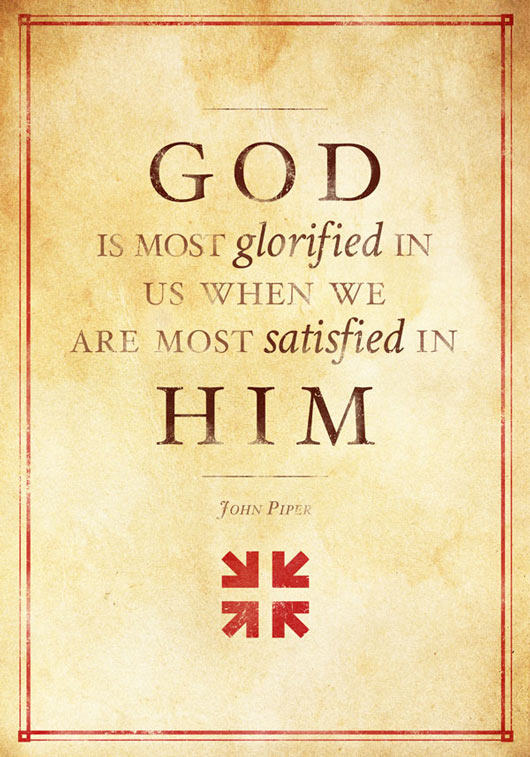
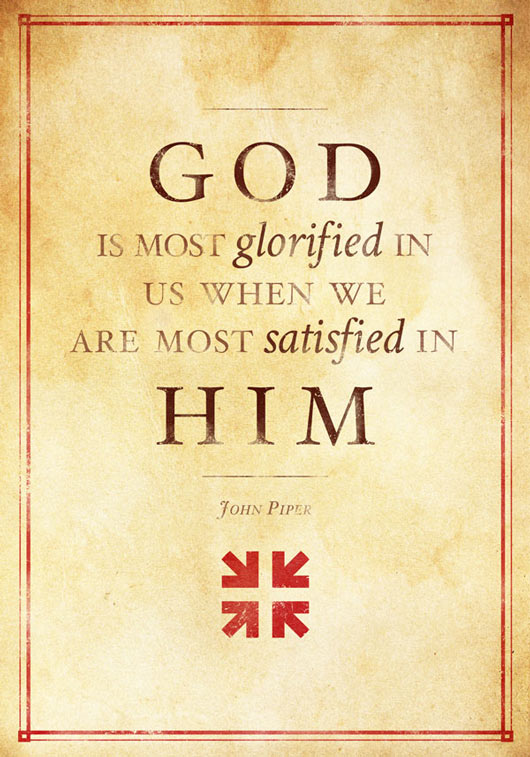
The Rock-Solid Foundation of Christian Hedonism

Desiring God Blog via The Rock-Solid Foundation of Christian Hedonism.

Expectations and being ‘right’

Great Expectations (1998 film)

Lately, I have been thinking a lot about the word ‘right’ in my life. In my professional life, I am a thought leader in the internet marketing space. I have strong opinions about ‘right’ and ‘wrong’ when it comes to strategy, tactics and tools. I am learning lately that being right or thinking I am right can lead to disastrous consequences…

I have found fertile thinking in this quote from Nietzsche; “You have your way. I have my way. As for the right way, the correct way, and the only way, it does not exist.” When I think I am right, I think I HAVE rights and expectations. I think I know, however, that there is only one place disappointment comes from; false expectations…

Ponder this:

“There are/can be many disapointments in life and sometimes they can’t be avoided. Living up to what we expect is a big one. Whether it be in someone else or in ourselves. Our expectations can be “too high” unreasonable or unrealistic. No one is perfect nor can they be in this crazy world.

Sometimes we expect more from a person than they are able to give..at a particular time. Sometimes we expect a person to do more than they are capable of doing, or to be more than they are capable of being. Therefore we are the ones who wind up getting frustrated, angry, hurt, impatient and disapointed. We are the ones effected by our own actions. We are the ones who set ourselves up for disapointments.

Sometimes our approach can be critical, overbearing and destructive. Even when we simply suggest something or give an opinion it does’nt go over well. It can be viewed as an attack on ones charactor even tho that was not the intention. This should never be taken personally because we all have things we are trying to cope with from our past and present situations and we shut down.

Even when we simply try to point something out to someone they can go into the defend mode, protective mode because they are not ready to deal with “the problem” yet. They are still battling with it therefore they are consumed by it and it has power over their well being. Everyone needs to be comfortable in their own skin. Like no body states in one of my comments below..it must be the right message, from the right source, at the right time, by the right person (edified properly) or it will not be received in the way it was intended to be received. Otherwise it can be misinterpreted.

Our expectations, opinions and suggestions can sometimes be veiwed as attacks on self worth and competency. Therefore conflict, separation and alienation occures and the door is shut on communication. Then our relationships are compromised. I watched Charles Stanley‘s program last Sunday and he ministered on how “Words” can have a profound, everlasting effect on us and our well being, our growth and our lives. They can have a tremendous effect and sometimes we say things we later regret.

No one can live up to anyone’s” standards. It’s not that what everyone is doing is right or that we don’t have a big heart in wanting whats best for them, it’s just that our expectations may be overwelming.

A lot of people feel like failures because they can’t live up to the expectations they put on themselves or that others put on them. We can make others feel like failures because of our expections being “To high”> Expecting too much. Too much attention can be put on expectations and not on acheivements/accomplishments.” via Expectations.

Thinking I have rights as a husband leads me to expectations and the expectations lead to disappointment and frustration. Somehow, focusing on being friends with my wife is making a radical difference in my life and happiness has come from leaving ‘right’ behind…

I heard Dr. Phil say “would you rather be happy or right”. I choose happy and as for right? It really doesn’t exist according to Nietszche and only leads to sad for me. What do you think about this?

Codepedence is not just an issue for partners of addicts

I don’t normally curate this much content in one ‘swell foop’ as I like to say but Melody Beattie’s perspective on owning your own stuff and Mark Brower’s comments on same were so good I couldn’t find anything to exclude. Mark starts out and then quotes my ‘Language of Letting Go’ reading for today…
Many of us struggle with codependency. When addiction is present in a relationship, the old model was that the addict was “dependent” and his or her spouse was “codependent.” But today we know that usually both the addict and spouse struggle with codependency in its various forms.

Codependency happens when we lose touch with our sense of self, and become over-dependent on how other people are doing, and/or how they perceive us. Since we are not “okay” with ourselves, we have to work overtime to ensure that other people around us are doing okay, and/or that they feel good about us.

So we wind up tolerating things we shouldn’t tolerate, feeling responsible for things we shouldn’t feel responsible for, and compromising what we want simply in order to please someone else. This inevitably leads to distress and frustration, which causes the addict to move deeper into their addiction, and for the addict’s spouse to cope in other ways.

The issue of codependence is complicated for Christians, because it gets mixed up with our desire to love and serve other people. The Bible tells us to “consider others better than ourselves.” But the same Bible also tells us to love our neighbor as ourselves, which presupposes some sort of healthy self-regard. The Bible also portrays Jesus himself taking time away from the crowds – not being “nice” and doing what they want him to do – in order to rest and reconnect with God the Father.

The trick to living a recovery life in relationships with others is to know how to separate healthy love with unhealthy codependence.

Melody Beattie has been a great help for me over the years with her many books on this topic. One of her best books on this topic is a daily meditation book called “The Language of Letting Go.”

In another article on this blog, I wrote about codependence, and quoted at length from her book. But it’s so good and helpful that I want to quote some more! What follows are some excerpts about the issue of “Property Lines”:

A helpful tool in our recovery, especially in the behavior we call detachment, is learning to identify who owns what. Then we let each person own and possess his or her rightful property.

If another person has an addiction, a problem, a feeling, or a self-defeating behavior, that is their property, not ours. If someone is a martyr, immersed in negativity, controlling, or manipulative, that is their issue, not ours.

If someone has acted and experienced a particular consequence, both the behavior and the consequence belong to that person.

People’s lies, deceptions, tricks, manipulations, abusive behaviors, inappropriate behaviors, cheating behaviors, and tacky behaviors belong to them, too. Not us.

People’s hopes and dreams are their property. Their guilt belongs to them too. Their happiness or misery is also theirs. So are their beliefs and messages.

If some people don’t like themselves, that is their choice. Their choices are their property, not ours. What people choose to say and do is their business.

What is our property? Our property includes our behaviors, problems, feelings, happiness, misery, choices, and messages; our ability to love, care, and nurture; our thoughts, our denial, our hopes and dreams for ourselves. Whether we allow ourselves to be controlled, manipulated, deceived, or mistreated is our business.

In recovery, we learn an appropriate sense of ownership. If something isn’t ours, we don’t take it. If we take it, we learn to give it back. Let other people have their property, and learn to own and take good care of what’s ours.

Today, I will work at developing a clear sense of what belongs to me, and what doesn’t. If it’s not mine, I won’t keep it. I will deal with myself, my issues, and my responsibilities.

If you want to learn more about codependence, consider signing up for the Recovery Journey, an e-course for people in recovery from sexual struggles. If you are the partner of someone who struggles, note that we have a special module with materials just for the partners. You can learn more about this program at the website: http://recoveryjourney.com

Source: Codepedence is not just an issue for partners of addicts | sexualsanity.com

Codependence is a constant battle for me and it has made made my wife’s vacation in Italy even more difficult than the simple logistics of trying to run a business and hold down the fort with 4 boys while she’s gone but by the grace of God, with the help of Celebrate Recovery, my good friends Sandy and Steve and Melody Beattie’s good thoughts. we are winning on this trip! If these issues resonate with you, drop me a note below. I’ll be happy to share with you what I have…

Some days…

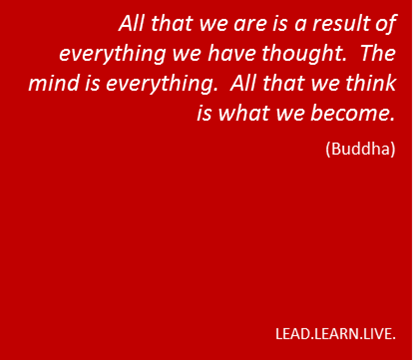
via Some days… – Lead.Learn.Live.. If the B word [Buddha] freaks you out, consider this: “For as he thinketh in his heart, so is he” via Proverbs 23:7a KJV – When thou sittest to eat with a ruler, – Bible Gateway.

Finally, brothers and sisters…

“Finally, brothers and sisters, whatever is true, whatever is noble, whatever is right, whatever is pure, whatever is lovely, whatever is admirable—if anything is excellent or praiseworthy—think about such things.”

via Philippians 4:8 NIV – Finally, brothers and sisters, whatever – Bible Gateway.

The basic elements of creativity

swissmiss | The Basic Elements of Creativity

What has been will be again, what has been done will be done again; there is nothing new under the sun.Ecclesiastes 1:9 NIV – What has been will be again, what has – Bible Gateway

On understanding…

“O God, help us not to despise or oppose what we do not understand.” ~ William Penn

via Anderson Layman’s Blog: On understanding……….

Job 11:13-19 NIV

Job 11:13-19

New International Version (NIV)

13 “Yet if you devote your heart to him
and stretch out your hands to him,
14 if you put away the sin that is in your hand
and allow no evil to dwell in your tent,
15 then, free of fault, you will lift up your face;
you will stand firm and without fear.
16 You will surely forget your trouble,
recalling it only as waters gone by.
17 Life will be brighter than noonday,
and darkness will become like morning.
18 You will be secure, because there is hope;
you will look about you and take your rest in safety.
19 You will lie down, with no one to make you afraid,
and many will court your favor.

Source: Job 11:13-19 NIV – “Yet if you devote your heart to him – Bible Gateway

Those were different days…

The title page to the 1611 first edition of th...
Image via Wikipedia

September 11, 1777, the Chaplain of Congress, Patrick Allison, brought to the attention of the Continental Congress that Revolutionary War had interrupted trade with the King’s authorized printers in England, thereby causing a shortage of the King James Authorized Version of the Bible, commonly used in education. A Continental Congress committee passed the motion: “The use of the Bible is so universal and its importance so great that your committee refers the above to the consideration of Congress…The Committee recommends that Congress will order the Committee of Commerce to import 20,000 Bibles from Holland, Scotland, or elsewhere, into the different parts of the States of the Union. Whereupon it was resolved accordingly to direct said Committee of Commerce to import 20,000 copies of the Bible.” That same day, the British won the Battle of Brandywine, forcing Washington’s troops to retreat to Valley Forge. In a panic, the Continental Congress evacuated Philadelphia before action could be taken on the resolution. Five years later, the Continental Congress again responded to the shortage of Bibles by authorizing the printing of America’s first English language Bible, which had been described in a petition as: “a neat edition of the Holy Scriptures for the use of schools.” Congress, on September 10, 1782, selected the publisher of The Pennsylvania Magazine, Robert Aitken, who died JULY 15, 1802, for the printing: “Resolved, That the United States in Congress assembled highly approve the pious and laudable undertaking of Mr. Aitken, as subservient to the interest of religion, as well as an influence in the progress of arts in this country, and being satisfied from the above report of his care and accuracy in the execution of the work, they recommend this edition of the Bible to the inhabitants of the United States, and hereby authorize him to publish this recommendation. – Charles Thomson, Secretary.” Copies of this Bible are with the American Bible Society’s Museum of Biblical Art in New York, and Houston Baptist University’s Dunham Bible Museum.

Bishops urged to embrace social media to evangelize effectively

Stained glass at St John the Baptist's Anglica...
Image via Wikipedia

Social media is not only here to stay but should be recognized and used as a “new form of pastoral ministry,” U.S. bishops were told Nov. 15 in their annual meeting.

“Social media is proving itself to be a force with which to be reckoned. If not, the church may be facing as great a challenge as that of the Protestant Reformation,” said Bishop Ronald P. Herzog of Alexandria, La., a member of the bishops’ Committee on Communications, in an address to the U.S. Conference of Catholic Bishops in Baltimore.

Bishop Herzog noted that although social media has been around for less than 10 years, it lacks the “makings of a fad” and is “causing as fundamental a shift in communication patterns and behavior as the printing press did 500 years ago.”

“I don’t think I have to remind you of what happened when the Catholic Church was slow to adapt to that new technology,” he told the bishops. “By the time we decided to seriously promote that common folk should read the Bible, the Protestant Reformation was well under way.”

What if the apostles developed an App?

“After more than two years worth of apps for the iPhone, not to mention other handsets like the Android, there are very few applications that come as a complete surprise. But one app I looked at recently definitely fell into that category — if only because it has been installed close to 10 million times, and has millions of regular and devoted users, but hardly anyone in the tech press ever writes about it. It’s called YouVersion, but it is better known simply as “the Bible app.”

Yes, the Bible has an app. No, it was not delivered to anyone on a mountain, and there were no burning bushes involved. And yes, it is close to 10 million installs, according to Bobby Gruenewald — a pastor at Lifechurch.tv, a high-tech church based in Oklahoma (with branches in seven other states) and the brains behind the Bible app. Gruenewald was involved in the tech industry before he joined the church (he had a web-hosting company in the 1990s that he eventually sold) so the idea of using the web and mobile to help people connect with the Bible seemed like a natural, he says.

The app provides an easy-to-read interface to the Bible (obviously) in more than 40 different versions and 22 different languages, but has social features and other interesting functions built in as well: users can share their favorite passages by posting them to their Facebook wall or sharing them on Twitter, and Gruenewald says there have been half a million such tweets over the past year. Users can also choose from a number of pre-set reading plans (read the New Testament in six weeks, etc.) and then track and share their progress much like runners do with Runkeeper.” Source: What If the Apostles Developed an iPhone App?: Tech News

Nice post by Mathew Ingram! Go the source to read the rest of the article…

Our Daily Journey: technology and the trivial

Image representing Twitter as depicted in Crun...

If our technology had existed in Jesus’ day, our Bibles might read: “Jesus asked His disciples, ‘Who do people say that the Son of Man is?’ but they were checking their e-mail and missed the question.” Or “A third time He asked him, ‘Simon . . . do you love Me?’ Peter was hurt that Jesus asked the question a third time, but then his cell phone rang and he replied, ‘I’m sorry, Lord, I’ve got to take this.’ ” Or on Pentecost, “Peter continued preaching for a long time, and a handful of people believed and were baptized while thousands more texted and sent out tweets on Twitter” (see Mark 8:27-28; John 21:15; Acts 2:40-41).

Technology can stifle our spiritual growth in subtle ways. The first Christians “devoted themselves to the apostles’ teaching, and to fellowship, and to sharing in meals (including the Lord’s Supper), and to prayer” (Acts 2:42). None of these things come easily in our wired world.

Who has the time or discipline to study the apostles’ teaching and pray when cable television and the Internet jangle with unimportant yet interesting diversions? Let’s face it, our lives would be little changed if we missed that latest score, review, or celebrity gossip. Yet filling our minds with such minutiae comes at some cost, for we may unknowingly project our reading of the virtual world upon the eternal truths of God’s Word. When everything is trivial, then anything is trivial.

Remember the line in Jesus Christ Superstar? “Israel in 4BC had no mass communication”. Maybe there was a reason for that? :-D

Start a Blog at WordPress.com.

Up ↑