I began to list the qualities or skills I applied that helped me go from loser to a winner at something I knew absolutely nothing about when I started. I didn’t take me long to see that these are identical to the qualities that help me succeed at anything I want to do. While these ideas aren’t revolutionary, it’s easy to forget that each is within our power to do.
Realize I’m where I am on purpose, even if it’s an accident. Sometimes the most trivial things that happen to us are more important than we believe. When I look for the big, the exciting and the momentous – I leave empty-handed. When I surrender to the present moment, understanding the sheer magnificence of each of these in my life – even those that suck — and then follow that with gratitude, my wheelbarrow overflows. (I use that expression because my entire life, I wanted a wheelbarrow and now I have one, a good one I won one for not much money at all at DealDash and because “cups overflowing” has become a cliché, something writers should avoid.) I really am thrilled about having a wheelbarrow and in my most far-fetched moments of self-love, couldn’t justify buying one.
“Make yourself feel good. It’s our job to first make ourselves feel better and then make ourselves feel good. Recovery is not only about stopping painful feelings; it is about creating a good life for ourselves. We don’t have to deny ourselves activities that help us feel good. Going to meetings, basking in the sun, exercising, taking a walk, or spending time with a friend are activities that may help us feel good. We each have our list. If we don’t, we’re now free to explore, experiment, and develop that list. When we find a behavior or activity that produces a good feeling, put it on the list. Then, do it frequently. Let’s stop denying ourselves good feelings and start doing things that make us feel good. Today, I will do one activity or behavior that I know will create a good feeling for me. If I’m uncertain about what I like, I will experiment with one behavior today.” via Beattie, Melody (2009-12-15). The Language of Letting Go (Hazelden Meditation Series) (p. 126). Hazelden. Kindle Edition.
Today I’ll be working hard on making myself feel good even though my wife is far away and I miss her terribly. What ‘feel good challenge will you over come today?
Melody Beattie has a good reminder I needed to hear this morning…
“Control is an illusion, especially the kind of control we’ve been trying to exert. In fact, controlling gives other people, events, and diseases, such as alcoholism, control over us. Whatever we try to control does have control over us and our life. I have given this control to many things and people in my life. I have never gotten the results I wanted from controlling or trying to control people. What I received for my efforts is an unmanageable life, whether that unmanageability was inside me or in external events. In recovery, we make a trade-off. We trade a life that we have tried to control, and we receive in return something better—a life that is manageable. Today, I will exchange a controlled life for one that is manageable.
Beattie, Melody (2009-12-15). The Language of Letting Go (Hazelden Meditation Series) (pp. 125-126). Hazelden. Kindle Edition.”
All the arts we practice are apprenticeship. The big art is our life. ~ M. C. Richards
What you do is not who you are.
You are more, much more, than that.
It’s easy to get so caught up in what we do that we’re only identifying ourselves through our daily tasks. I am a mechanic. I am a parking lot attendant. I am a doctor. I am a dishwasher. When we link ourselves too closely to our jobs, we deny ourselves the chance to ever be anything else. We limit ourselves by believing that’s all we are and all we’ll ever be.
Our concept of who we are is one of the hardest, but most rewarding, ideas we can change. If you have been brought up believing that you are clumsy, you will probably demonstrate this belief in your actions—until you identify that idea, let go of it, and let yourself be something else.
Don’t limit yourself by saying you are just what you do. Stop seeing yourself as a static being. If I am “just” a parking lot attendant, then how can I hope to ever influence someone through my words, my art, my music, my life? But if I am a vital, living, growing soul who happens to be parking people’s cars, then everything I do can become a symphony. I can have an influence for good in the lives of everyone I touch. I can learn from them, and they from me. I can learn the lessons that I am supposed to learn at this place in my life, and I can move on to other lessons.
God gave us the power to change. You’re more than what you do. You’re a vital vibrant soul that came here to experience, grow, and change. Make a masterpiece out of your life.
God, help me realize the glory of my soul. Thank you for my mortality and for the ability to learn and grow.
Many of us have been trying to keep the whole world in orbit with sheer and forceful application of mental energy.
What happens if we let go, if we stop trying to keep the world orbiting and just let it whirl? It’ll keep right on whirling. It’ll stay right on track with no help from us. And we’ll be free and relaxed enough to enjoy our place on it.
Control is an illusion, especially the kind of control we’ve been trying to exert. In fact, controlling gives other people, events, and diseases, such as alcoholism, control over us. Whatever we try to control does have control over us and our life.
I have given this control to many things and people in my life. I have never gotten the results I wanted from controlling or trying to control people. What I received for my efforts is an unmanageable life, whether that unmanageability was inside me or in external events.
In recovery, we make a trade-off. We trade a life that we have tried to control, and we receive in return something better — a life that is manageable.
Today, I will exchange a controlled life for one that is manageable.
Here’s a lesson from Melody Beattie I found so good I had to share it right away…
You can think. You can feel. You can solve your problems. You can take care of yourself. Those words have often benefited me more than the most profound and elaborate advice. How easy it is to fall into the trap of doubting ourselves and others. When someone tells us about a problem, what is our reaction? Do we believe we need to solve it for the person? Do we believe that that person’s future rests on our ability to advise him or her? That’s standing on shaky ground—not the stuff of which recovery is made. When someone is struggling through a feeling, or a morass of feelings, what is our reaction? That the person will never survive that experience? That it’s not okay for someone to feel? That he or she will never get through this intact? When a person is faced with the task of assuming responsibility for their life and behaviors, what is our response? That the person can’t do that? I must do it myself to save him or her from dissipating into ashes? From crumbling? From failing? What is our reaction to ourselves when we encounter a problem, a feeling, or when we face the prospect of assuming responsibility for ourselves? Do we believe in ourselves and others? Do we give power to people—including ourselves—and their abilities? Or do we give the power to the problem, the feeling, or the irresponsibility? We can learn to check ourselves out. We can learn to think, and consider our response, before we respond. “I’m sorry you’re having that problem. I know you can figure out a solution. Sounds like you’ve got some feelings going on. I know you’ll work through them and come out on the other side.” Each of us is responsible for ourselves. That does not mean we don’t care. It does not mean a cold, calculated withdrawal of our support from others. It means we learn to love and support people in ways that work. It means we learn to love and support ourselves in ways that work. It means that we connect with friends who love and support us in ways that work. To believe in people, to believe in each person’s inherent ability to think, feel, solve problems, and take care of themselves is a great gift we can give and receive from others. Today, I will strive to give and receive support that is pure and empowering. I will work at believing in myself and others—and our mutual abilities to be competent at dealing with feelings, solving problems, and taking responsibility for ourselves.
Me? I still struggle with thinking I can change other people or that I’m entitled to ask them to change and expect that they will. When they don’t ‘comply’, frequently I give away too much of my power. I need to accept responsibility for my own condition and get off the Crazy Train…
In recovery, we are learning how to strive for love in our relationships, not superiority. Yes, we may need to make decisions about people’s behavior from time to time. If someone is hurting us, we need to stand up for ourselves. We have a responsibility to set boundaries and take care of ourselves. But we do not need to justify taking care of ourselves by condemning someone else. We can avoid the trap of focusing on others instead of ourselves. In recovery, we are learning that what we do needs to be right only for us. What others do is their business and needs to be right only for them. It’s tempting to rest in the superiority of being right and in analyzing other people’s motives and actions, but it’s more rewarding to look deeper. Today, I will remember that I don’t have to hide behind being right. I don’t have to justify what I want and need with saying something is “right” or “wrong.” I can let myself be who I am.
Beattie, Melody (2009-12-15). The Language of Letting Go (Hazelden Meditation Series) (p. 47). Hazelden. Kindle Edition.
We need to make a distinction between powerlessness and owning our power. The first step in recovery is accepting powerlessness. There are some things we can’t do, no matter how long or hard we try. These things include changing other people, solving their problems, and controlling their behavior. Sometimes, we feel powerless over ourselves—what we feel or believe, or the effects of a particular situation or person on us. It’s important to surrender to powerlessness, but it’s equally important to own our power. We aren’t trapped. We aren’t helpless. Sometimes it may feel like we are, but we aren’t. We each have the God-given power, and the right, to take care of ourselves in any circumstance, and with any person. The middle ground of self-care lies between the two extremes of controlling others and allowing them to control us. We can walk that ground gently or assertively, but in confidence that it is our right and responsibility. Let the power come to walk that path. Today, I will remember that I can take care of myself. I have choices, and I can exercise the options I choose without guilt.
Beattie, Melody (2009-12-15). The Language of Letting Go (Hazelden Meditation Series) (p. 37). Hazelden. Kindle Edition.
We can learn not to get hooked into unhealthy, self-defeating behaviors in relationships—behaviors such as caretaking, controlling, discounting ourselves, and believing lies. We can learn to watch for and identify hooks, and choose not to allow ourselves to be hooked. Often, people do things consciously or without thinking that pull us into a series of our self-defeating behaviors we call codependency. More often than not, these hooks can be almost deliberate, and the results predictable. Someone may stand before us and hint or sigh about a problem, knowing or hoping that hint or sigh will hook us into taking care of him or her. That is manipulation. When people stand around us and hint and sigh about something, then coyly say, “Oh, never mind, that’s not for you to worry about,” that’s a game. We need to recognize it. We’re about to get sucked in, if we allow that to happen. We can learn to insist that people ask us directly for what they want and need. What are the words, the signs, the looks, the hints, the cues that hook us into a predictable, and often self-defeating behavior? What makes you feel sympathy? Guilt? Responsible for another? Our strong point is that we care so much. Our weak point is that we often underestimate the people with whom we’re dealing. They know what they’re doing. It is time we give up our naive assumption that people don’t follow agendas of their own in their best interest, and not necessarily in ours. We also want to check ourselves out. Do we give out hooks, looks, hints, hoping to hook another? We need to insist that we behave in a direct and honest manner with others, instead of expecting them to rescue us. If someone wants something from us, insist that the person ask us directly for it. Require the same from ourselves. If someone baits the hook, we don’t have to bite it. Today, I will be aware of the hooks that snag me into the caretaking acts that leave me feeling victimized. I will ignore the hints, looks, and words that hook me, and wait for the directness and honesty I, and others, deserve.
It’s easy to be thankful for answered prayers, easy to be joyfully grateful when the universe gives us exactly what we want. What’s not so easy is to remember to be grateful when we don’t get what we want.
John wanted an executive position in the company he worked for. He worked hard for the promotion. He prayed daily for his promotion, while giving a hundred percent of his energy and dedication to the position that he was in. But when the time came, he was passed over for his dream job. He left the company shortly after that. Today, he runs his own company with more responsibility, success, and joy than he could have ever hoped for at his old firm.
Susan, a recovering addict, wanted to date Sam more than anything. They got along great those times they ran into each other at work. He was charming, handsome, and sober, she thought. For months she tried to arrange a date with him, prayed that God would bring him into her life. But things never seemed to work out. She didn’t know why. He seemed so interested in her. She was positive that the relationship was divinely ordained. She was stunned when she arrived at work one morning to find that Sam had died the night before of a drug overdose. He had been using drugs and lying about it the whole time.
Sometimes we get what we ask for. Sometimes we don’t. God says, “No.” Be grateful—force gratitude; fake it if you must—when God answers your furtive prayers by saying no.
Take the rejections with a smile. Let God’s “no’s” move you happily down the road. Maybe you’re not being punished, after all. Maybe God is protecting you from yourself.
God, thank you for not always giving me what I think is best.
Not being able to stand up for yourself is not funny...
It is so easy to come to the defense of others. How clear it is when others are being used, controlled, manipulated, or abused. It is so easy to fight their battles, become righteously indignant, rally to their aid, and spur them on to victory. “You have rights,” we tell them. “And those rights are being violated. Stand up for yourself, without guilt.” Why is it so hard, then, for us to rally to our own behalf? Why can’t we see when we are being used, victimized, lied to, manipulated, or otherwise violated? Why is it so difficult for us to stand up for ourselves? There are times in life when we can walk a gentle, loving path. There are times, however, when we need to stand up for ourselves—when walking the gentle, loving path puts us deeper into the hands of those who could mistreat us. Some days, the lesson we’re to be learning and practicing is one of setting boundaries. Some days, the lesson we’re learning is that of fighting for ourselves and our own rights. Sometimes, the lesson won’t stop until we do. Today, I will rally to my own cause. I will remember that it is okay to stand up for myself when that action is appropriate. Help me, God, to let go of my need to be victimized. Help me appropriately, and with confidence, stand up for myself.
We can draw a healthy line, a healthy boundary, between ourselves and our nuclear family. We can separate ourselves from their issues. Some of us may have family members who are addicted to alcohol and other drugs and who are not in recovery from their addiction. Some of us may have family members who have unresolved codependency issues. Family members may be addicted to misery, pain, suffering, martyrdom, and victimization. We may have family members who have unresolved abuse issues or unresolved family of origin issues. We may have family members who are addicted to work, eating, or sex. Our family may be completely enmeshed, or we may have a disconnected family in which the members have little contact. We may be like our family. We may love our family. But we are separate human beings with individual rights and issues. One of our primary rights is to begin feeling better and recovering, whether or not others in the family choose to do the same. We do not have to feel guilty about finding happiness and a life that works. And we do not have to take on our family’s issues as our own to be loyal and to show we love them. Often when we begin taking care of ourselves, family members will reverberate with overt and covert attempts to pull us back into the old system and roles. We do not have to go. Their attempts to pull us back are their issues. Taking care of ourselves and becoming healthy and happy does not mean we do not love them. It means we’re addressing our issues. We do not have to judge them because they have issues; nor do we have to allow them to do anything they would like to us just because they are family. We are free now, free to take care of ourselves with family members. Our freedom starts when we stop denying their issues, and politely, but assertively, hand their stuff back to them—where it belongs—and deal with our own issues. Today, I will separate myself from family members. I am a separate human being, even though I belong to a unit called a family. I have a right to my own issues and growth; my family members have a right to their issues and a right to choose where and when they will deal with these issues. I can learn to detach in love from my family members and their issues. I am willing to work through all necessary feelings in order to accomplish this.
Make New Year’s goals. Dig within, and discover what you would like to have happen in your life this year. This helps you do your part. It is an affirmation that you’re interested in fully living life in the year to come. Goals give us direction. They put a powerful force into play on a universal, conscious, and subconscious level. Goals give our life direction. What would you like to have happen in your life this year? What would you like to do, to accomplish? What good would you like to attract into your life? What particular areas of growth would you like to have happen to you? What blocks, or character defects, would you like to have removed? What would you like to attain? Little things and big things? Where would you like to go? What would you like to have happen in friendship and love? What would you like to have happen in your family life? Remember, we aren’t controlling others with our goals—we are trying to give direction to our life. What problems would you like to see solved? What decisions would you like to make? What would you like to happen in your career? What would you like to see happen inside and around you? Write it down. Take a piece of paper, a few hours of your time, and write it all down—as an affirmation of you, your life, and your ability to choose. Then let it go. Certainly, things happen that are out of our control. Sometimes, these events are pleasant surprises; sometimes, they are of another nature. But they are all part of the chapter that will be this year in our life and will lead us forward in the story. The new year stands before us, like a chapter in a book, waiting to be written. We can help write that story by setting goals. Today, I will remember that there is a powerful force motivated by writing down goals. I will do that now, for the year tocome, and regularly as needed. I will do it not to control but to do my part in living my life. Beattie, Melody (2009-12-15). The Language of Letting Go (Hazelden Meditation Series) (p. 3). Hazelden. Kindle Edition.
Fun becomes fun, love becomes love, life becomes worth living. And we become grateful. —Beyond Codependency Wait, and expect good things—for yourself and your loved ones. When you wonder what is coming, tell yourself the best is coming, the very best life and love have to offer, the best God and His universe have to send. Then open your hands to receive it. Claim it, and it is yours. See the best in your mind; envision what it will look like, what it will feel like. Focus, until you can see it clearly. Let your whole being, body and soul, enter into and hold onto the image for a moment. Then, let it go. Come back into today, the present moment. Do not obsess. Do not become fearful. Become excited. Live today fully, expressing gratitude for all you have been, all you are, and all you will become. Wait, and expect good things. Today, when I think about the year ahead, I will focus on the good that is coming.
Sometimes, the holidays are filled with the joy we associate with that time of year. The season flows. Magic is in the air. Sometimes, the holidays can be difficult and lonely. Here are some ideas I’ve learned through personal experience, and practice, to help us get through difficult holidays: Deal with feelings, but try not to dwell unduly on them. Put the holidays in perspective: A holiday is one day out of 365. We can get through any 24-hour period. Get through the day, but be aware that there may be a post-holiday backlash. Sometimes, if we use our survival behaviors to get through the day, the feelings will catch up to us the next day. Deal with them too. Get back on track as quickly as possible. Find and cherish the love that’s available, even if it’s not exactly what we want. Is there someone we can give love to and receive love from? Recovering friends? Is there a family who would enjoy sharing their holiday with us? Don’t be a martyr; go. There may be those who would appreciate our offer to share our day with them. We are not in the minority if we find ourselves experiencing a less-than-ideal holiday. How easy, but untrue, to tell ourselves the rest of the world is experiencing the perfect holiday, and we’re alone in conflict. We can create our own holiday agenda. Buy yourself a present. Find someone to whom you you can give. Unleash your loving, nurturing self and give in to the holiday spirit. Maybe past holidays haven’t been terrific. Maybe this year wasn’t terrific. But next year can be better, and the next a little better. Work toward a better life—one that meets your needs. Before long, you’ll have it.
God, help me enjoy and cherish this holiday. If my situation is less than ideal, help me take what’s good and let go of the rest.
These thoughts from Melody Beattie are helpful to me…
For some, the sights, signs, and smells of the holidays bring joy and a warm feeling. But, while others are joyously diving into the season, some of us are dipping into conflict, guilt, and a sense of loss. We read articles on how to enjoy the holidays, we read about the Christmas blues, but many of us still can’t figure out how to get through the holiday season. We may not know what a joyous holiday would look and feel like. Many of us are torn between what we want to do on the holiday, and what we feel we have to do. We may feel guilty because we don’t want to be with our families. We may feel a sense of loss because we don’t have the kind of family to be with that we want. Many of us, year after year, walk into the same dining room on the same holiday, expecting this year to be different. Then we leave, year after year, feeling let down, disappointed, and confused by it all. Many of us have old, painful memories triggered by the holidays. Many of us feel a great deal of relief when the holiday is ended. One of the greatest gifts of recovery is learning that we are not alone. There are probably as many of us in conflict during the holidays as there are those who feel at peace. We’re learning, through trial and error, how to take care of ourselves a little better each holiday season. Our first recovery task during the holidays is to accept ourselves, our situation, and our feelings about our situation. We accept our guilt, anger, and sense of loss. It’s all okay. There is no right or perfect way to handle the holidays. Our strength can be found in doing the best we can, one year at a time. This holiday season, I will give myself permission to take care of myself.
This is me — “Many of us, year after year, walk into the same dining room on the same holiday, expecting this year to be different. Then we leave, year after year, feeling let down, disappointed, and confused by it all. Many of us have old, painful memories triggered by the holidays. Many of us feel a great deal of relief when the holiday is ended.” — This year, I have healthy boundaries around the holidays and I’m not walking into that dining room and I feel relief already…
“It is our job to identify our needs, and then determine a balanced way of getting those needs met. We ultimately expect our Higher Power and the Universe—not one particular person—to be our source. It is unreasonable to expect anyone to be able or willing to meet our every request. We are responsible for asking for what we want and need. It’s the other person’s responsibility to freely choose whether or not to respond to our request. If we try to coerce or force another to be there for us, that’s controlling. There’s a difference between asking and demanding. We want love that is freely given. It is unreasonable and unhealthy to expect one person to be the source for meeting all our needs. Ultimately, we will become angry and resentful, maybe even punishing, toward that person for not supporting us as we expected. It is reasonable to have certain and well-defined expectations of our spouse, children, and friends. If a person cannot or will not be there for us, then we need to take responsibility for ourselves in that relationship. We may need to set a boundary, alter our expectations, or change the limits of the relationship to accommodate that person’s unavailability. We do this for ourselves. It is reasonable to sprinkle our wants and needs around and to be realistic about how much we ask or expect of any particular person. We can trust ourselves to know what’s reasonable. The issue of expectations goes back to knowing that we are responsible for identifying our needs, believing they deserve to get met, and discovering an appropriate, satisfactory way to do that in our life. Today, I will strive for reasonable expectations about getting my needs met in relationships.”
Beattie, Melody (2009-12-15). The Language of Letting Go (Hazelden Meditation Series) (pp. 365-366). Hazelden. Kindle Edition.
Each day, ask God what God wants us to do today; then ask God to help. A simple request, but so profound and far-reaching it can take us anywhere we need to go. Listen: all that we want, all that we need, all the answers, all the help, all the good, all the love, all the healing, all the wisdom, all the fulfillment of desire is embodied in this simple request. We need say no more than Thank You. This Plan that has been made for us is not one of deprivation. It is one of fullness, joy, and abundance. Walk into it. See for yourself. Today, I will ask God to show me what God wants me to do for this day, and then ask for help to do that. I will trust that is sufficient to take me into light and joy.
“The following summarizes the description of the 11th Step provided in Alcoholics Anonymous (primarily on pp. 86-88). This is supplemented by some suggestions [in brackets] that we have found helpful.
Preparing for the Day Ahead
We ask God to direct our thinking, asking especially that it be divorced from self-pity, dishonest or self-seeking motives.
We consider our plans for the day. We can now use our mental faculties with assurance.
If we face indecision or we can’t determine what course to take, we ask God for inspiration, an intuitive thought or a decision. We relax and take it easy.
We pray to be shown all through the day what our next step is to be, that we be given whatever we need to take care of problems.
We ask especially for freedom from self-will. [We might also pray for help with specific defects or problem areas, and review our 10th step corrective measures for the day ahead.]
Prayers to be of Use
We ask for guidance in the way of patience, kindness, tolerance and love especially within the family.
We pray as to what we can do today for the person who is still sick. [We might also pray for specific people in need, or those with whom we’re angry.]
Spiritual/Religious Exercises
If appropriate, we attend to our religious devotions, or say set prayers which emphasize 12 Step principles.
We may read from a spiritual book.
Practicing the 11th Step Throughout the Day
We pause, when agitated or doubtful, and ask for the right thought or action.
We constantly remind ourselves we are no longer running the show, humbly saying to ourselves many times each day “Thy will be done.””
For the record, the first excerpt can be found in Melody Beattie‘s book “The Language of Letting Go”. I recommend getting the Kindle edition — it’s cheaper and you can view it on your computer, smartphone or Kindle. The second reading comes from Recovery.net which features a website and an android app…
One of our choices in recovery is choosing what we want to think—using our mental energy positively. Positive mental energy, positive thinking, does not mean we think unrealistically or revert to denial. If we don’t like something, we respect our own opinion. If we spot a problem, we’re honest about it. If something isn’t working out, we accept reality. But we don’t dwell on the negative parts of our experience. Whatever we give energy to, we empower. There is magic in empowering the good, because whatever we empower grows bigger. One way to empower the good is through affirmations: simple positive statements we make to ourselves: I love myself…. I’m good enough…. My life is good…. I’m glad I’m alive today…. What I want and need is coming to me…. I can…. Our choice in recovery is not whether to use affirmations. We’ve been affirming thoughts and beliefs since we were old enough to speak. The choice in recovery is what we want to affirm. Today, I will empower the good in myself, others, and life. I’m willing to release, or let go of, negative thought patterns and replace them with positive ones. I will choose what I want to affirm, and I will make it good.
Beattie, Melody (2009-12-15). The Language of Letting Go (Hazelden Meditation Series) (pp. 358-359). Hazelden. Kindle Edition.
Gemma Stone has some great thoughts on dealing with the drama that sometimes accompanies the holidays…
Gemma calls out a strategy and tactic that I have been using recently with some positive results, although I did not realize it was called ‘non-violent communication’.
“When something ‘dramatic’ come up” she says “use this four step communication process.
1. When I see/hear…
2. The story I tell myself about that is…
3. What I feel is…
4. What I need/want/like is…
Here’s what it might sound like,
“When I hear you raising your voice, the story I tell myself is that you don’t respect me and I feel hurt. What I really need is for us to speak to each other with kindness.”
Let’s say your attempt at influencing the family drama is an epic fail. Don’t lose hope (or storm out), you can always control your internal environment.”
Step 2 is new to me, but I have been working with “what I see, what I feel, what I would like to see” and that has been helping to de-escalate some of the drama in my life and I agree with Gemma that it is a valuable tool…
Go to the source of the article to read the rest of Gemma’s thoughts on the topic and I strongly urge you to follow her blog for more great thinking like this…
I have also found great comfort and help in Melody Beattie‘s works on Codependency; Codependent No More, The ‘Codependent No More’ Workbook, and The Language of Letting Go. Recently, I found this in The Language of Letting Go and it helps me to better understand the concept of using boundaries and healty detachment to remain sane during the holidays…
When we don’t ask for what we want and need, we discount ourselves. We deserve better. Maybe others taught us it wasn’t polite or appropriate to speak up for ourselves. The truth is, if we don’t, our unmet wants and needs may ultimately come back to haunt our relationships. We may end up feeling angry or resentful, or we may begin to punish someone else for not guessing what we need. We may end the relationship because it doesn’t meet our needs. Intimacy and closeness are only possible in a relationship when both people can say what they want and need. Sustained intimacy demands this. Sometimes, we may even have to demand what we want. That’s called setting a boundary. We do this not to control another person, but to gain control of our life. Our attitude toward our needs is important too. We must value them and take them seriously if we expect others to take us seriously. When we begin to place value and importance on our needs, we’ll see a remarkable change. Our wants and needs will begin to get met. Today, I will respect the wants and needs of myself and others. I will tell myself, others, and my Higher Power what I want and need. I will listen to what they want and need too.
On the topic of detaching in love, Melody recently wrote this…
Few things can make us feel crazier than expecting something from someone who has nothing to give. Few things can frustrate us more than trying to make a person someone he or she isn’t; we feel crazy when we try to pretend that person is someone he or she is not. We may have spent years negotiating with reality concerning particular people from our past and our present. We may have spent years trying to get someone to love us in a certain way, when that person cannot or will not. It is time to let it go. It is time to let him or her go. That doesn’t mean we can’t love that person anymore. It means that we will feel the immense relief that comes when we stop denying reality and begin accepting. We release that person to be who he or she actually is. We stop trying to make that person be someone he or she is not. We deal with our feelings and walk away from the destructive system. We learn to love and care differently in a way that takes reality into account. We enter into a relationship with that person on new terms—taking ourselves and our needs into account. If a person is addicted to alcohol, other drugs, misery, or other people, we let go of his or her addiction; we take our hands off it. We give his or her life back. And we, in the process, are given our life and freedom in return. We stop letting what we are not getting from that person control us. We take responsibility for our life. We go ahead with the process of loving and taking care of ourselves. We decide how we want to interact with that person, taking reality and our own best interests into account. We get angry, we feel hurt, but we land in a place of forgiveness. We set him or her free, and we become set free from bondage. This is the heart of detaching in love. Today, I will work at detaching in love from troublesome people in my life. I will strive to accept reality in my relationships. I will give myself permission to take care of myself in my relationships, with emotional, physical, mental, and spiritual freedom for both people as my goal.
Beattie, Melody (2009-12-15). The Language of Letting Go (Hazelden Meditation Series) (pp. 352-353). Hazelden. Kindle Edition.
Whatever you take from this, I hope it leaves you feeling better about the holidays and better equipped to deal with some of the drama that may pop up along the way…
“When we don’t ask for what we want and need, we discount ourselves. We deserve better. Maybe others taught us it wasn’t polite or appropriate to speak up for ourselves. The truth is, if we don’t, our unmet wants and needs may ultimately come back to haunt our relationships. We may end up feeling angry or resentful, or we may begin to punish someone else for not guessing what we need. We may end the relationship because it doesn’t meet our needs. Intimacy and closeness are only possible in a relationship when both people can say what they want and need. Sustained intimacy demands this. Sometimes, we may even have to demand what we want. That’s called setting a boundary. We do this not to control another person, but to gain control of our life. Our attitude toward our needs is important too. We must value them and take them seriously if we expect others to take us seriously. When we begin to place value and importance on our needs, we’ll see a remarkable change. Our wants and needs will begin to get met. Today, I will respect the wants and needs of myself and others. I will tell myself, others, and my Higher Power what I want and need. I will listen to what they want and need too.”
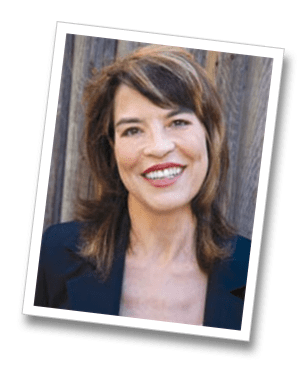
 Melody Beattie has a loooong post on New Year‘s mindfulness. Here’s an excerpt:


 Bright, shiny objects!
You must be logged in to post a comment.