7 WARNING Signs You’re Addicted to Technology

7 WARNING Signs You’re Addicted to Technology

Stepcase Lifehack

Full story at: 7 WARNING Signs You’re Addicted to Technology.

Today: A Unique Day

I love Australian Craig Harper’s perspective:

Today is Unique

You’ve never had this day before and you’ll never have it again. Sure, you’ve had days like it but you’ve never had this day; the one you’re in right now.

Naturally, you might think I’m being deep and philosophical when I say this but I’m not, I’m being literal. Practical. Of course, there’s a sense of familiarity and predictability about today but that feeling says nothing about the possibilities and potential of this day and everything about you because like every day, this one is not predetermined.

It’s you determined.

It might feel the same but it isn’t. It’s totally new. Original. Unique.

Of course you can choose, act, react, think and communicate just like you did yesterday (and most people will) – and therefore, you’ll probably create very similar outcomes – but again, that’s about you; not the day. Despite what you may have been taught, there are no (universal) good and bad days.

There are just days.

Now, before you try to prove me wrong (“but Craig, what about the woman who gets diagnosed with cancer?”), hit the pause button on your non-negotiable thinking for a moment and allow yourself to look through a different window. Is it possible that, as things happen (to you, around you), you label them based on your world view, beliefs, fears, standards, etc., you then react to those things, give those things meaning and finally, after all your labeling, assessing and processing, you somehow determine whether today is a good day or bad one?

That is, you create your own experience? Your own reality?

A Hypothetical

Your phone and wallet have been stolen while taking your early morning swim and, as a result, you’re having “the worst day ever”. You drive to work in a bad mood and you’re about to throw yourself a pity party when a colleague informs you that your boss has just been rushed to hospital after suffering a massive heart attack. In a matter of seconds you experience a major internal shift. Your enormous problem is now tiny. Insignificant. Your outlook changes completely and all of a sudden, your terrible day is now relatively fantastic (when compared with the day your boss is having). Well technically, the day is the same (of course) but in the middle of it, you are different. Well, to be more precise, your thinking is different which means your experience has changed.

Which means your day has changed.

The Manager vs The Managee

Is it possible that you’re living a reactive (wait and see what happens) type of existence rather than a proactive (I’ll determine the quality of my own day thanks) type of existence? Could today simultaneously be my ‘best day ever’ and your ‘total nightmare’? And finally, could it be that a good or bad day on Planet You is more about your personal interpretation of, and response to, certain (otherwise meaningless) happenings, events and outcomes, than the actual happenings, events and outcomes themselves?

Like yesterday, today is a blank canvas and like it or not, you’re going to paint something.

The question is, what will be hanging in your gallery tonight?

You can follow his blog here: Today: A Unique Day
Awww…

My new blogging buddy Lexocat gave me a song today — I hope she doesn’t mind if I share it with you…

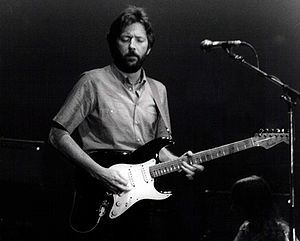
Actually, I’m quite familiar with this one being the blues fan that I am. I think Clapton did my favorite rendition but BB King covered it well, too. Here are a few others including one by the Jackson 5 with Michael Jackson singing lead…


Cooking At Home Helps You Live Longer

“A new study just found that older people who cook at home for up to five times a week were 47% more likely to live longer than those who don’t. Conducted on 1,888 men and women aged above 65 in Taiwan over the course of 10 years, the study was published in Cambridge University’s journal Public Health Nutrition.

At the beginning of the study, each participant was interviewed on lifestyle factors such as cooking and shopping habits, diet, knowledge of health, and transportation – factors that would determine their likeliness to cook at home. 43% of the subjects never cooked, 17% cooked once or twice a week, 9% cooked three to five times a week and 31% cooked five or more times a week.

At the end of the 10-year run, 695 participants had passed away, leaving 1,193 behind. The researchers discovered that cooking was related to survival, and that lifestyle factors of the participants also contributed to the theory, as these involved errands related to cooking like grocery shopping, waking to the supermarket and taking public transportation.” Read more here: Cooking At Home Helps You Live Longer | FinerMinds.

107421-634.jpg…if I won a blogging trip to Australia? What? A blogging trip? Yes! A few weeks ago, I read a post on Darren Rowse’s ProBlogger blog. He shared…

A year ago I was in Queensland for a conference and, sitting at the airport, I had the crazy idea that we should run a ProBlogger Down Under competition. The idea was simple—we run a competition to bring a group of bloggers to Australia to see the Great Barrier Reef and also do a little blogging training. I tweeted the idea and was inundated by people wanting to enter. I also received tweets from some tourism organisations.

To cut a long story short, today I’m ecstatic to announce a competition to bring ten highly creative bloggers from all corners of the globe to Queensland to become Queensland Blogger Correspondents. Lucky winners will not only experience the destination first hand, they will get to blog about it plus become a guest blogger for Tourism Queensland’s own blog later this year.

Source: Win 1 of 10 Trips to The Great Barrier Reef in Queensland Australia #QldBlog : @ProBlogger

Sounds great, I said what do I have to do to win? Darren said…

For your chance to win a spot on this exciting trip we want you to tell us why you would make the ideal Queensland Blogger Correspondent.We will choose ten winners based on how you would cover the experience. How you would get the word out about what you’re doing. What kind of exposure you could bring to the destination. What creative methods you would use to share your story.

via Win 1 of 10 Trips to The Great Barrier Reef in Queensland Australia #QldBlog : @ProBlogger.

The form they gave me doesn’t give me near enough space to tell the story so I thought why not post about it and show by example a little of what I’d actually do?! When I told my wife about the possibility, it was the first time she actually got excited about my blogging – that is until she found out it was not a trip for two!

I’m a guy from a town of 3,500 in rural Wisconsin – I have never been to Australia and as a father of six a trip like this would likely be my only hope! My impressions of Australia – like many Americans of my generation – come from movies like these:

I have been blessed in the past, however, to make 7 international trips to 15 countries – one of them was as a social media correspondent for AGCO covering the 2009 Agritechnica trade show in Hannover, Germany. The Agritechnica content is not available on their site, but while traveling as a social media ‘journalist’, I shot and posted videos like this…

In Hannover, I interviewed company representatives and show attendees using business blogging, Facebook, Twitter, and YouTube to extend the trade show experience to people around the globe using what became my ‘e1evation workflow’ – a toolkit with a repeatable process of finding and sharing great content to drive traffic. The work our team did won the first NAMA award in the social media category…

The work we did at Agritechnica seems pretty ‘run of the mill’ today, but it was quite ground breaking back then. We mastered the logistics of international social media ‘trip coverage’ and set a new standard. As I did in Hannover, I would use each and every tool in my workflow to ferret out stories and capture and produce great content that would drive interest in the trip. I would also benefit from the opportunity to work directly with Darren Rowse — a person whose blogging has directly and indirectly given me many insights over the course of my blogging career. If you doubt just search this blog…

'e1evation workflow'

I think my ignorance of Australia would actually be an asset in this case – I would use it to fuel my curiosity and share what I learn. As a management consultant, I have lots of experience getting up to speed quickly on a subject matter and I’d take on Australia in the same way I did agriculture for AGCO. Among other things I’d…

  • Study for weeks in advance to get a good background on the places I’d be visiting
  • Take pictures and video at every step along the way that would be posted on a timely basis to Flickr and a YouTube channel [rural Wisconsin blogger from the shores of Lake Michigan goes to Great Barrier reef would be an interesting juxtaposition]
  • Share my thoughts via audio and text for my blog daily [which I know from experience is NOT an easy task!]
  • I’d learn from Darren Rowse in the special sessions to be an even better blogger [and photographer] and put my new skills to immediate use…

The end result would be some great content for Tourism Queensland targeted at Americans like me that would drive traffic and interest for years to come. The skills I would gain would benefit my business and my customers as well. I may not be the first choice for a trip like this, but I think I could be the 10th…

Please comment below for the folks at Tourism Queensland and ProBlogger if you think I’d do a good job of getting them the coverage and content they want! Thanks in advance…

The Pause


Leo Babauta
Image via Wikipedia

Leo Babauta shares this…

There is one little habit I’ve learned that has changed everything else in my life.

The pause.

When we fail, it’s because we act on urges without thinking, without realizing it. We have the urge to eat junk, and we do it. We have the urge to check email instead of writing a chapter of our book, and so we open our inbox. We have an urge to smoke, to drink, to do drugs, to chew our nails, to play a Facebook game, to procrastinate, to skip a workout, to eat more fries, to criticize, to act in jealousy or anger, to be rude … and we act on that urge.

What if instead we learned to pause after each urge? What if we stopped, looked at that urge, paid close attention to what it feels like inside our bodies, but didn’t act?

The urge would no longer control us. We would be able to make conscious choices that might be healthier for us, help us be happier.

If we can pause, we create space. Space to breathe, to think, to be without acting.

The pause is the answer to so many of our problems. Such a small thing, and so powerful.

To develop the pause, notice your next urge. Is it an urge to go check something online? Or eat something you know isn’t healthy for you? Pay attention to the urge, learn as much as you can about it. If you act on it after the pause, that’s OK. Just notice it, and pause, and pay attention.

Do it again for the next urge, and the next. You will get good at it with practice, and you’ll have lots of opportunities to practice.

The urges won’t go away, but your ability to pause will get stronger. And when you have the pause, you have everything.

Source: » The Pause Upon Which All Else Relies :zenhabits

Steven Covey also talked about The Pause. He talks about it in the context of Stimulus>Pause>Response and reminds us that human beings are the only creatures in God’s universe that have the ability to pause between a stimulus and response and ask ourselves whether or not our response is consistent with our goals…

My responses can be very nasty sometimes if I don’t remember The Pause

SR 99 construction bypass and ramp looking south

A friend who works with in construction industry is skeptical. He’s not convinced that ‘inbound marketing’ [blogging and other social media tools] can be applied to the construction industry. I respectfully disagree! I’ve seen content management and marketing for thought leadership applied to everything from Agriculture to Yoga and I believe it will work in the construction industry as well. Why?

Here are some of my beliefs:

  • Most companies have great stories and content — they just don’t use it as well as they could…
  • At the core, all great marketing is great storytelling
  • At the end of the day, every business is a people business

First, though what is this ‘thought leadership’? A simple definition might be a public display of expertise that can be easily found by people who are searching for it. How does a brand accomplish this? Though effective content management and content marketing. Because of my core beliefs, I think any company — even a construction company — can use the content they have or can create to tell great stories that attract people to their brand.

In his thought leadership classic ‘Brand Stand‘, Craig Badings tells the story of Dick Dusseldorp, a thought leader in the Australian construction industry before the phrase ‘thought leader’ was cool

During the 1970s and 1980s, when union action on most construction sites in Sydney were crippling the construction industry, the sites on which Lend Lease was building suffered no such misfortune. This was because Dusseldorp’s philosophy was to create a community of interest between Lend Lease’s key stakeholders. When other companies around him were banging heads with the unions, with resultant long delays and cost overruns on projects, Dusseldorp was sitting down with the workers and unions and discussing their issues. The results were agreements, jointly committed to by workers and management, and a share in the resulting rewards for buildings completed on time. He was a master at getting people to transcend their traditional conflicts and work towards mutually beneficial goals.

Badings, Craig (2009-07-08). BRAND STAND (Kindle Locations 237-243). BookPal. Kindle Edition.

How did he do it? In part he used content management and content marketing along with other communication skills to position his firm at the thought leadership center of his industry in his country. Speaking of Dusseldorp’s organization Lend Lease, Badings says…

It launched a website… along with a four-part DVD series, using a former TV journalist to interview a number of independent third parties about their views on the future workspace and its impacts across business, design, people and location. As a result, Lend Lease reached those who made decisions about office space and helped stimulate and frame the debate around the impacts and implications of future work environments in Australia. Through the series, the company engaged communities linked to its industry and positioned itself at the centre of this debate. It is the logical place to be as a leader in the construction industry, but Lend Lease has done it in a way that doesn’t push the company’s point of view. It took the approach that it would rather invite leading experts in this field across various disciplines to participate in and frame the discus-sion.

Badings, Craig (2009-07-08). BRAND STAND (Kindle Locations 224-231). BookPal. Kindle Edition.

Joy Davis, CSI, CCPR, of CSI in Albuquerque, says…

“In many ways, construction is a relationship-driven business, and at the root of every great relationship is trust. No single person can know everything about construction, so we need trustworthy experts we can turn to who can help us achieve our goals. Thought Leadership is a strategy based on the idea that you can be your clients’ preferred expert – a person they trust, and whom they think of first when they have a question, or a new project.” Source: Thought Leadership and Social Media in the Workplace

Every business — not just construction — is a people business, but because of the critical nature of construction projects trust may be even more important. How can that trust be most effectively engendered? Content management and marketing for thought leadership may be an answer that the construction industry has overlooked! Comment, call or ‘connect’ so we can talk about how this applies to you and your organization…

Enhanced by Zemanta

Acting As If

"Gratitude unlocks the fullness of life...
Image by ~K~ via Flickr

Acting as if is another recovery truism that’s been around for a long time. I still use it regularly in my life.

I know people who are not in recovery athletes, performers, artists -who use the technique too.

All it means is that if it’s time to act, we do— whether taking that action feels comfortable or not. Instead of doing nothing, or waiting for confidence, success, or inspiration to overtake and motivate us first, we go ahead and move forward with an action anyway and let the good feelings catch up to us. We act as if the desired change has already taken place.

Just getting started as a blogger?

Darren Rowse, Problogger
Image by Technosailor via Flickr

My brother in law Alan is a talented writer [his new book is called “Gods of Venice“] who is just moving into the online world. If you’re like him, you may benefit from brainstorming around these 20 different types of posts that a blogger can use to build their site content…

“Blog Tip 18 – Change up your posting form – find new blog topics – In the same way that it’s easy to get ’stuck’ in always posting in the same voice – it’s also possible to get stuck in always writing in the same form or genre.

Yesterday I decided to look through a the 500 blogs entered in Australia’s Best Blog Competition (I didn’t view them all but looked over at least 200). I was amazed by the talent out there. I also came away from the exercise struck by variety of different approaches that people take to blogging – especially with the form of posts that they write.” 20 Types of Blog Posts – Battling Bloggers Block

Click the link to go to the source and read through the 20 different types of posts — it’s great stuff, but too long to incorporate here. Comment, call or use the contact form to connect so we can talk about how this applies to your business…

Start a Blog at WordPress.com.

Up ↑