“Like the mechanical advantage, today AI has become our cognitive advantage…
The technological implications of this cognitive revolution are significant. As AI becomes increasingly entwined with human cognition, it’s shifting from being a mere tool of convenience to a crucial partner in our cognitive explorations and manifestations.
AI is enhancing our cognitive abilities, enabling us to construct digital realities through sheer thought. Today, we (and technology) have reached a point where mere verbal prompts can yield hyper-realistic images and videos.
Such technological breakthroughs do not just represent an augmentation of human cognition; they are a testament to the paradigm shift in our understanding of the relationship between thought and reality.” Source: AI as Cognitive Partner: A New Cognitive Age Dawns
I don’t know why, but every time I watch this clip I weep. “Tell me I’m a good man. Tell me I’ve lived a good life.” Isn’t this all every man wants to hear?
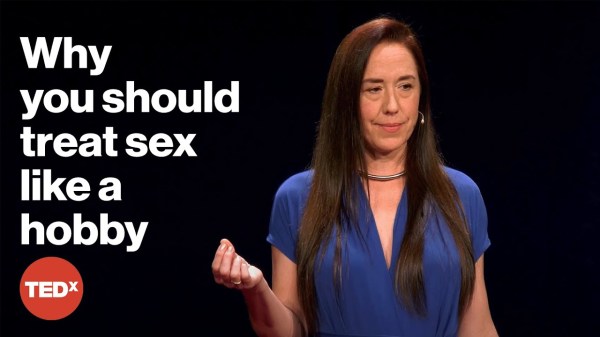
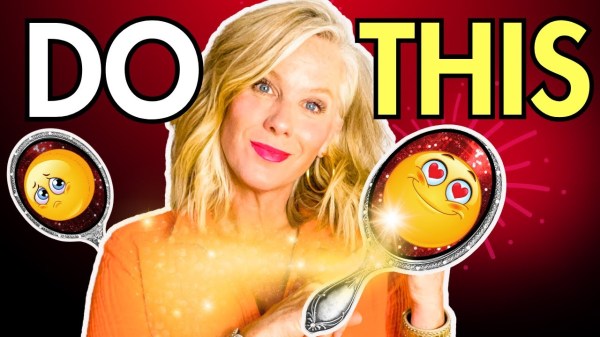
Is there a simple mindset shift that can radically improve our sex lives? One which can apply whatever our circumstances, experience or preferences? Yes! Sex coach Ruth Ramsay shares this shift, and how its ramifications go way beyond increasing our pleasure. Ruth Ramsay is an adult sex educator and coach. She helps people understand who they are sexually, how their bodies and minds work, what they need and desire, and how to communicate that. Her style is upbeat, shame-free and pleasure-led.
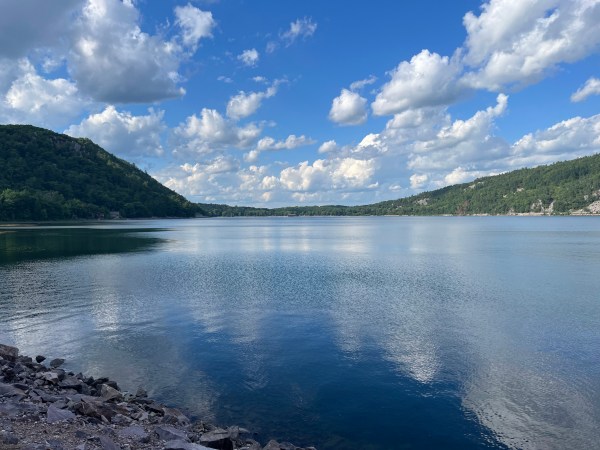
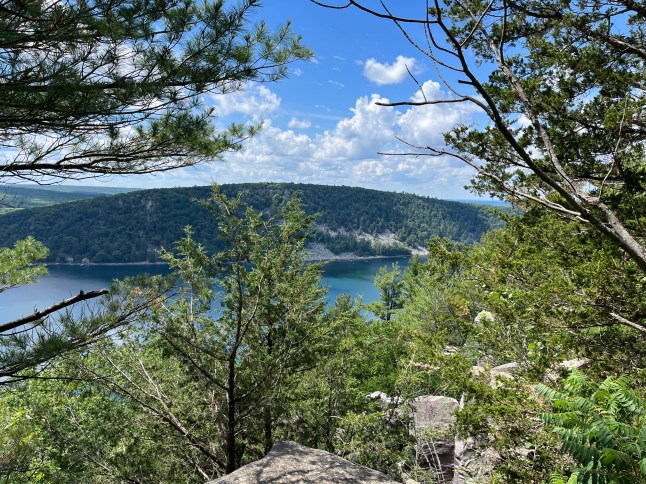
“Devil’s Lake State Park is a state park located in the Baraboo Range in eastern Sauk County, just south of Baraboo, Wisconsin. It is around thirty-five miles northwest of Madison, and is on the western edge of the last ice-sheet deposited during the Wisconsin glaciation.[2] The state park encompasses 9,217 acres (3,730 ha),[3] making it the largest in Wisconsin.[4] The state park is known for its 500-foot-high (150 m) quartzite bluffs along the 360-acre (150 ha) Devil’s Lake, which was created by a glacier depositing terminal moraines that plugged the north and south ends of the gap in the bluffs during the last ice age approximately 12,000 years ago. The sand at the bottom of Devil’s Lake is thought to be deposited by glaciers.
Drone shotClick to enlarge
There are many quartzite rock formations, such as Balanced Rock and Devil’s Doorway, throughout the park. Effigy mounds are also located throughout the park. The park contains approximately eleven miles of the 1,200-mile (1,900 km) Ice Age Trail.[5] Its scenic beauty, along with its proximity to the Wisconsin Dells, has made it one of the most popular of Wisconsin’s state parks for both day use and overnight camping; the park receives over three million visitors annually.[6] During the fall, the park’s brilliant foliage makes it a popular attraction. Parfrey’s Glen, Wisconsin’s first state natural area, is managed by the Devil’s Lake State Park and located just east of the park.” Go to the source to learn more: Devil’s Lake State Park (Wisconsin) – Wikipedia
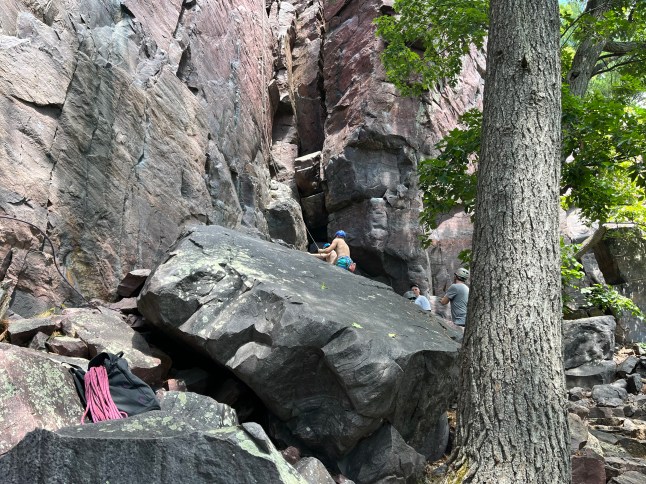
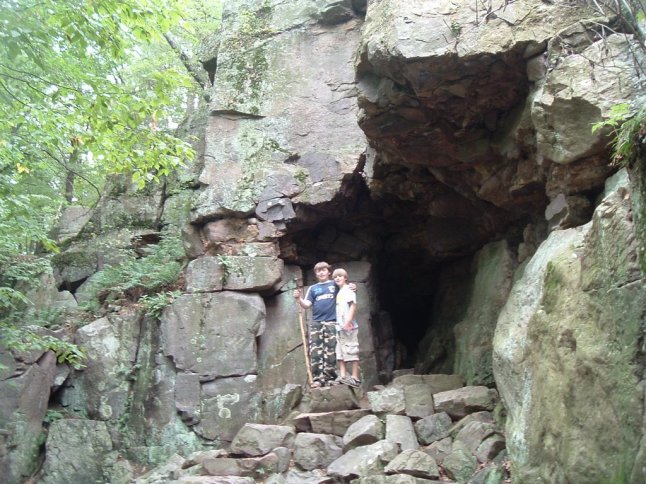
While hiking here Saturday I realized that my first trip here was exactly 50 years ago with my family of origin and my best friend from high school. Some 35 years later, I brought my own family here.
Click to enlarge
This past weekend, I was able to share the experience again with a beautiful friend. I’m so grateful that this place as been a part of my life that long and that I was able to share it with her as well. I think I will file that under ‘saving the best for last’…
Sinéad O’Connor, the Irish singer known for her intense and beautiful voice, her political convictions and the personal tumult that overtook her later years, has died. She was 56 years old.
O’Connor’s recording of “Nothing Compares 2 U” was one of the biggest hits of the early 1990s. Her death was announced by her family. The cause and date of her death were not made public. The statement said: “It is with great sadness that we announce the passing of our beloved Sinéad. Her family and friends are devastated and have requested privacy at this very difficult time.”
Embarrassment is a painful but important emotional state. Most researchers believe that the purpose of embarrassment is to make people feel badly about their social or personal mistakes as a form of internal (or societal) feedback, so that they learn not to repeat the error. The accompanying physiological changes, including blushing, sweating, or stammering, may signal to others that a person recognizes their own error, and so is not cold-hearted or oblivious. Go to the source to find the Psychology Today ‘shame’ archives: Embarrassment
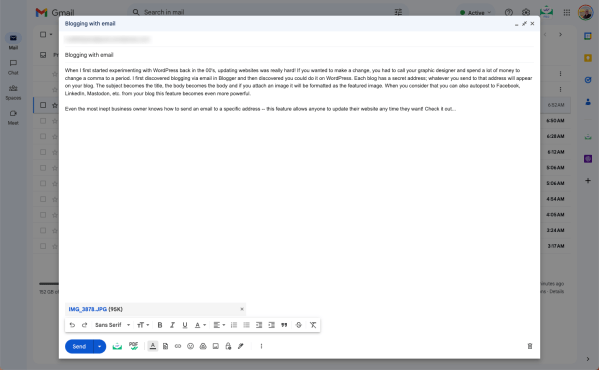
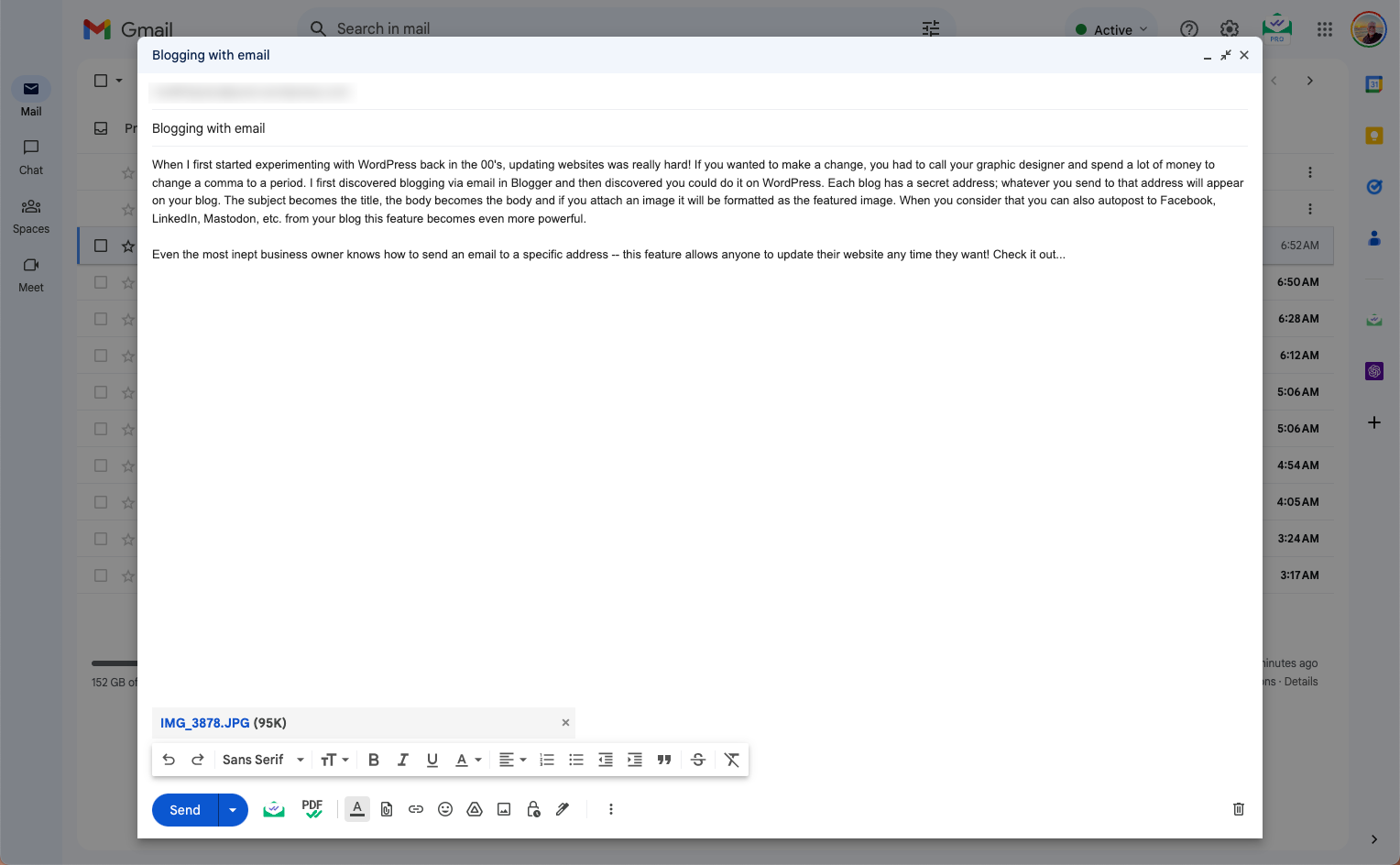
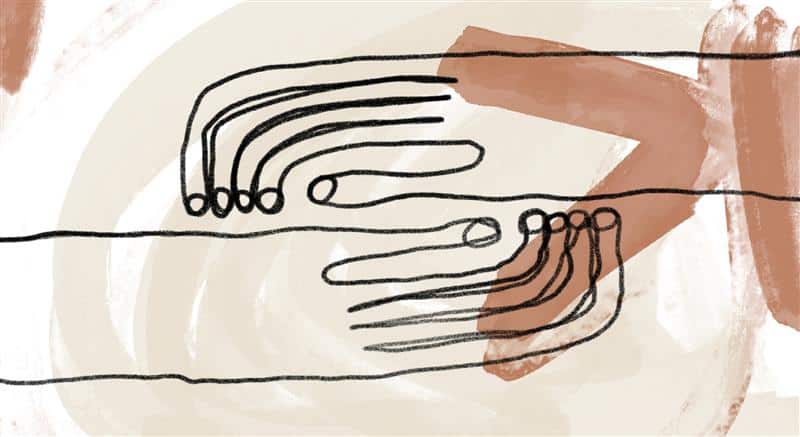
When I first started experimenting with WordPress back in the 00’s, updating websites was really hard! If you wanted to make a change, you had to call your graphic designer and spend a lot of money to change a comma to a period. I first discovered blogging via email in Blogger and then discovered you could do it on WordPress. Each blog has a secret address; whatever you send to that address will appear on your blog. The subject becomes the title, the body becomes the body and if you attach an image it will be formatted as the featured image. When you consider that you can also autopost to Facebook, LinkedIn, Mastodon, etc. from your blog this feature becomes even more powerful.
Even the most inept business owner knows how to send an email to a specific address — this feature allows anyone to update their website any time they want! Check it out…
Richard Rohr writes: “When I entered the Franciscan novitiate in 1961, part of our training was learning to avoid, resist, and oppose all distractions. It was such poor teaching, but it was the only way they thought back then. It was all about willpower: celibacy through willpower, poverty through willpower, community through willpower. But what we need isn’t willpower; we need the power to surrender thewill and to trust what is. That’s heroic! It was a fruitless and futile effort because if we start with negative energy, a “don’t,” we won’t get very far (see Romans 7:7–11). That was the extent of the teaching, and it’s really no teaching at all—it’s just “Don’t! Don’t do anything!” When we hear that, the ego immediately pushes back. Somedays we have strong willpower and we succeed, but most days we barely succeed.” Go to the Source: What We Resist Persists




















 Bright, Shiny Objects!
You must be logged in to post a comment.