Think you know your beer? Take a walk through the rich and detailed evolution of beer with this interesting infographic.

Thinks I find along the way
Think you know your beer? Take a walk through the rich and detailed evolution of beer with this interesting infographic.

“When we think about betrayal in terms of the marble jar metaphor [you’ll have to go to the source at the bottom if you want to understand the metaphor], most of us think of someone we trust doing something so terrible that it forces us to grab the jar and dump out every single marble. What’s the worst betrayal of trust? He sleeps with my best friends. She lies about where the money went. He/she chooses someone over me. Someone uses my vulnerability against me [an act of emotional treason that causes most of us to slam the entire jar to the ground rather than just dumping out the marbles]. All terrible betrayals, definitely, but there is a particular sort of betrayal that is more insidious and equally corrosive to trust.In fact, this betrayal usually happens long before the other ones. I’m talking about the betrayal of disengagement. Of not caring. Of letting the connection go. Of not being willing to devote time and effort to the relationship. The word betrayal evokes experiences of cheating, lying, breaking a confidence, failing to defend us to someone else who’s gossiping about us, and not choosing us over other people. These behaviors are certainly betrayals, but they’re not the only form of betrayal. If I had to choose the form of betrayal that emerged most frequently from my research and that was the most dangerous in terms of corroding the trust connection, I would say disengagement.When the people we love or with whom we have a deep connection stop caring, stop paying attention, stop investing and fighting for the relationship, trust begins to slip away and hurt starts seeping in. Disengagement triggers shame and our greatest fears—the fears of being abandoned, unworthy, and unlovable. What can make this covert betrayal so much more dangerous than something like a lie or an affair is that we can’t point to the source of our pain—there’s no event, no obvious evidence of brokenness. It can feel crazy-making.”
Go to the source: The Worst Kind of Betrayal « Positively Positive



Check out “Rebellion” on Netflix
http://www.netflix.com/title/80094273?source=android
True…

This morning it rained. This afternoon it is sunny. How is that not like the mind? ~ Michael Kewley, May all beings be happy Sources: Quote – Some of my best friends are birds. Photo: Your Eyes Blaze Out
Here’s another excellent podcast from author Christine Hassler. I encourage you to subscribe if you like this one…
Insecurity can be painful and it blinds us from seeing who we truly are. We are not born insecure, we become that way. It’s a feeling we have based on the beliefs we accumulate when people are critical of us or we feel judged in some way. The problem is, we live in a world…
via EP 41: Be More Confident and Less Critical of Yourself — Christine Hassler

“As we express our gratitude, we must never forget that the highest appreciation is not to utter words, but to live by them.” ~ John F. Kennedy Life’s Adversities
Great post about a good article…
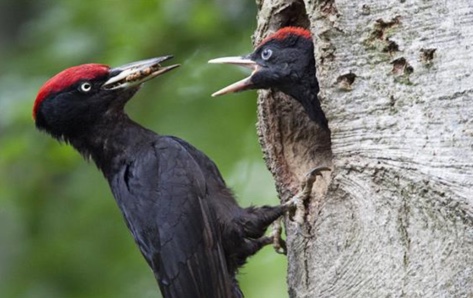
Excerpts from Jennifer Ackerman‘s: Why Bird Fathers Are Superior:
They are attentive parents, building nests, feeding chicks and even showing their young how to sing.
Tally up the good dads and the bad dads in the animal world, and mammals come up surprisingly short. Males provide direct care of their young in less than 5% of mammal species. Some mammals, like grizzly bears, are notoriously bad dads, known to kill their own cubs…most mammal fathers are deadbeats with a “love ’em and leave ’em” approach, sticking around only to mate.
Then there are birds. For our avian friends, attentive care of the young by both males and females is the norm. True, females shoulder the full parenting load in a few avian families, such as hummingbirds. But in some 90% of bird species, the males stay around to help: They share the duties of nest-building, incubate eggs, feed…
View original post 694 more words


 Bright, shiny objects!
You must be logged in to post a comment.