Why We Work, and What We’ll Do in a Post-Work Future

Work isn’t just about paying the bills. For many, it is also a way of fulfilling higher human needs. In a high-tech future, we may need to find new ways of satisfying them.

For anyone employed and under the age of 55, the next decade may reveal a job landscape unlike anything ever seen since the beginning of the Industrial Age (circa 1760): a world without work.

Thomas Rutledge Ph.D.

The article “Why We Work, and What We’ll Do in a Post-Work Future” explores the multifaceted role of work in human life beyond mere financial needs. It emphasizes that work can fulfill higher human needs such as purpose, belonging, and personal growth. As we move into a high-tech future where traditional employment may shift, the piece highlights the necessity of finding new methods to meet these deeper needs and engage individuals meaningfully in society.

Go to the source article: Why We Work, and What We’ll Do in a Post-Work Future

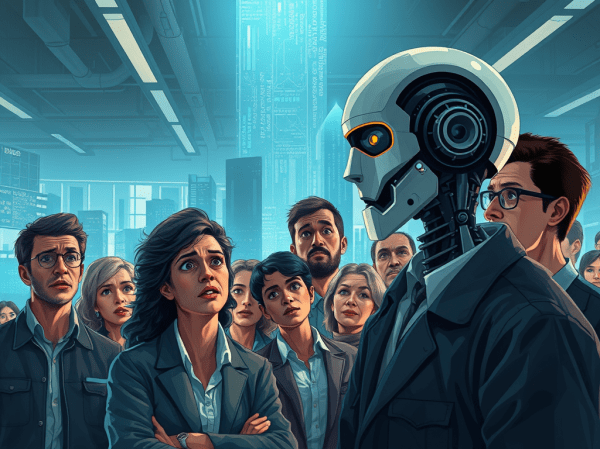
Want to Save Your Job from AI? Be More Human

AI is already becoming a dominant force in the workplace. There is no need for fear, but there is an opportunity for better leadership.

The article discusses the growing presence of AI in the workplace and emphasizes that rather than fearing this technological shift, individuals should view it as an opportunity to enhance leadership qualities. It advocates for a more human-centered approach to work, focusing on the importance of emotional intelligence and interpersonal skills as essential components in a world increasingly influenced by AI. By prioritizing these human traits, workers can position themselves favorably in relation to the evolving job landscape.

Source: Want to Save Your Job from AI? Be More Human

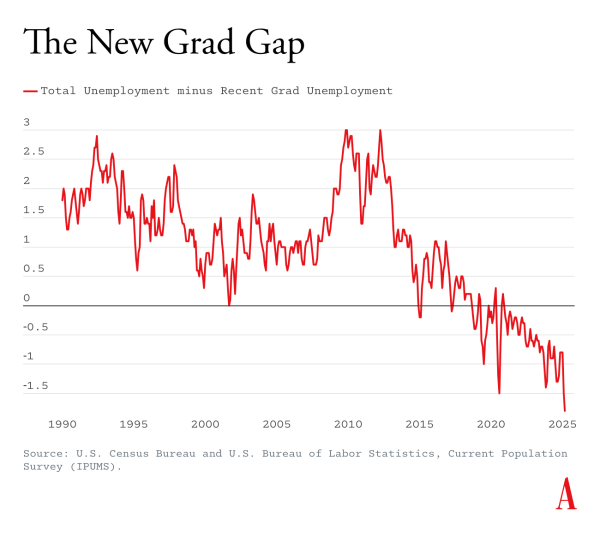
Something Alarming Is Happening to the Job Market

A new sign that AI is competing with college grads.

The article discusses the alarming trends in the job market where artificial intelligence (AI) is increasingly competing with college graduates for employment opportunities. It highlights the challenges faced by young job seekers as companies lean towards AI capabilities that can perform tasks traditionally reserved for human workers. The piece emphasizes the need for adaptation in education and workforce development to address the shifting landscape brought about by technological advancements, urging a reconsideration of skills that will remain relevant in the evolving job market.

Source: Something Alarming Is Happening to the Job Market

That One Annoying Coworker Might Just Be Your Best Teacher

We all have that one person who pushes our buttons. But what if they’re also holding up a mirror, challenging us to grow, shift our perspective, and show up better?

Source: That One Annoying Coworker Might Just Be Your Best Teacher

That One Annoying Coworker Might Just Be Your Best Teacher

We all have that one person who pushes our buttons. But what if they’re also holding up a mirror, challenging us to grow, shift our perspective, and show up better?

Source: That One Annoying Coworker Might Just Be Your Best Teacher

Changing Organizations From Below

Why business schools teach the wrong lessons about organizational change: Changing Organizations From Below

Suppressing boredom at work hurts future productivity, study shows

“Boredom is more common at work than in any other setting, studies show, and employees are bored at work for more than 10 hours per week on average.

Even astronauts and police officers get bored on the job. No occupation is immune.

Boredom serves an important purpose — it signals the need to stop an action and find an alternative project. But boredom becomes problematic when it’s ignored.

New research from the University of Notre Dame shows that trying to stifle boredom prolongs its effects and that alternating boring and meaningful tasks helps to prevent the effects of one boring task from spilling over to reduce productivity on others.

Breaking Boredom: Interrupting the Residual Effect of State Boredom on Future Productivity” is forthcoming in the Journal of Applied Psychology from lead author Casher Belinda, assistant professor of management at Notre Dame’s Mendoza College of Business, along with Shimul Melwani from the University of North Carolina and Chaitali Kapadia from Florida International University.” Go to the source: Suppressing boredom at work hurts future productivity, study shows

The Power of Creating Connections

Fostering connections is an impactful way of helping when you think you can’t. Source: The Power of Creating Connections

5 Things to Do Before Every Meeting

A vague agenda can mean vague outcomes. Source: 5 Things to Do Before Every Meeting

Think Twice Before Taking the Top Job

It can be lonely in the corner office. So it’s worth knowing that you could be sacrificing a little happiness. Source: Think Twice Before Taking the Top Job

What You Need to Know About Your Work Team

Here’s a short guide on what to know about your team, why, and how to learn it. Source: What You Need to Know About Your Work Team

Why the Remote-Work Debate Stays So Heated

I work from home and do not have the option of going to an office. I wish that I did! I would like an alternative to working in social isolation.

“The conversation often foregrounds large-scale issues such as productivity and company culture, but the question of where an employee works is intensely personal.” Source: Why the Remote-Work Debate Stays So Heated

How to Start Work

The first weeks and months of any role are critical to future success. Source: How to Start Work

How to Be Happy at Work

Einstein wasn’t trying to “crush it” at work. You shouldn’t either. Source: How to Be Happy at Work

The ONE Thing: The Surprisingly Simple Truth About Extraordinary Results via @the1thingbook

Want to learn how? Read the book…

How to Use The Domino Effect to Get Results

A single domino can bring down another domino that is actually 50% larger. Read about practical steps how you can implement the Domino Effect in your life. Source: How to Use The Domino Effect to Get Results – Timewiser.com

How Psychological Safety Can Benefit Organizations via @VictorLipman1

“Tone at the top” can encourage innovation or discourage it through fear. Source: How Psychological Safety Can Benefit Organizations

Remote Work Is Here to Stay. It’s Time to Update the Way You Lead.

How managers can modernize their approach to succeed in leading their remote team, boost team performance and build a better culture. Source: Remote Work Is Here to Stay. It’s Time to Update the Way You Lead.

Why Companies May Be Overlooking Their Best Talent

Implicit biases and a preference for like-minded people may be the cause. Source: Why Companies May Be Overlooking Their Best Talent


You 2.0: Deep Work

When your phone buzzes or a notification pops up your screen, do you stop what you’re doing to look and respond? That’s what many of us are doing. Even though we think we should be less distracted by technology, we haven’t admitted the true cost of these interruptions. This week, we revisit our 2017 conversation with computer scientist Cal Newport, and consider ways we can all immerse ourselves in more meaningful work. Source: You 2.0: Deep Work

Radical Candor Podcast via @candor #recommended #podcast #communication

Listen to the Radical Candor podcast to learn to give and receive radically candid guidance and feedback like a boss: Radical Candor Podcast | Learn Our Feedback Framework

Start a Blog at WordPress.com.

Up ↑