Does Your Mind Feel Like a Browser With 167 Tabs Open?

Mental clutter steals joy. Learn how values and mindful attention can quiet the noise and restore presence to the moments that matter most.

The article “Does Your Mind Feel Like a Browser With 167 Tabs Open?” discusses how mental clutter can hinder our ability to find joy and stay present in important moments. It emphasizes the need to identify and prioritize our values to reduce cognitive overload. By practicing mindfulness and focusing our attention intentionally, we can quiet the mental noise, thereby fostering a greater sense of presence and fulfillment in our lives.

Source: Does Your Mind Feel Like a Browser With 167 Tabs Open?

12 Powerful Questions That Only You Can Answer

The questions we ask ourselves and how we respond can influence who we are and who we might become.

The article “12 Powerful Questions That Only You Can Answer” emphasizes the significance of self-reflection and the impact of our internal dialogues on personal growth. It presents a series of thought-provoking questions designed to encourage individuals to explore their beliefs, values, and motivations. By grappling with these questions, readers can gain insights into their true selves and make more informed decisions, ultimately shaping their identities and futures.

Go to the source article: 12 Powerful Questions That Only You Can Answer

Paying Attention in The Attention Economy

The article “Paying Attention: The Attention Economy” explores the concept of the attention economy, where human attention is viewed as a scarce commodity. It discusses how digital platforms and social media vie for users’ attention, often leading to distractions and reduced productivity. The piece highlights the implications of this economy on individual behavior, mental health, and societal structures, emphasizing the need for awareness and strategies to manage attention effectively in a world filled with constant information overload. Furthermore, it considers potential solutions and the importance of fostering environments that prioritize meaningful engagement over mindless consumption.

Go to the source to read the entire article: Paying Attention: The Attention Economy

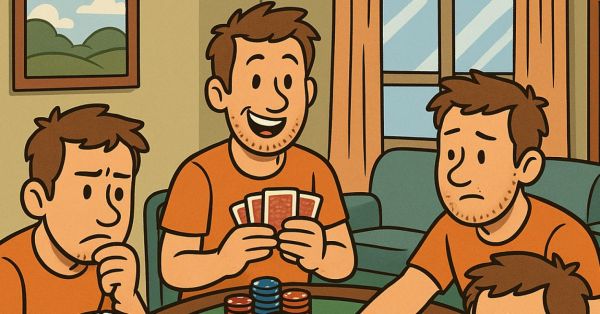
The Poker Game of Life

In life, we make the best decisions we can with the information available at the time, but the results are not always within our control.

In “The Poker Game of Life,” the author explores how life decisions often resemble a game of poker, where individuals must navigate uncertainty and risk based on the information at hand. The article emphasizes that while we strive to make informed choices, the outcomes are not always predictable or under our control. It highlights the importance of understanding the inherent risks in decision-making and accepting that we cannot control every result, much like in a game of poker where luck plays a significant role alongside strategy.

Source: The Poker Game of Life

AI Can Make Things Easier for You, but Should It?

Research shows that cognitive effort feels unpleasant. AI can take over most of that unpleasant effort, but avoiding the discomfort could mean missing out on learning and growing.

The article “AI Can Make Things Easier for You, but Should It?” discusses the balance between the convenience provided by artificial intelligence and the cognitive discomfort associated with learning and problem-solving. It highlights that while AI can alleviate challenging tasks and reduce unpleasant cognitive effort, relying heavily on AI might hinder personal growth and the learning experience. The piece ultimately raises questions about the implications of using AI for ease versus the necessity of engaging in uncomfortable tasks for development.

Go to the source: AI Can Make Things Easier for You, but Should It?

3 Ways to Kick the Habit of Chronic Complaining

Focusing on the negative can make positive thoughts hard to come by.

In the article “3 Ways to Kick the Habit of Chronic Complaining,” the author explores strategies to overcome a tendency for negative thinking and constant complaining. It emphasizes that focusing on the negative can hinder the ability to see positive aspects in life. The article suggests practical methods to shift one’s mindset, including recognizing the impact of complaints on oneself and others, cultivating gratitude, and actively seeking positive experiences. By adopting these strategies, individuals can enhance their outlook and foster a more positive environment.

Source: 3 Ways to Kick the Habit of Chronic Complaining

The Myth of the Human Brain

The neuroanatomy of your unconscious mind lies in an unexpected place.

The article “The Myth of the Human Brain” discusses misconceptions about brain function and structure. It emphasizes that the human brain is often misunderstood, overvalued, and the complexity of consciousness and cognition may not solely reside in brain anatomy. The piece encourages a broader perspective on how we understand the mind, suggesting that various external factors play a vital role in shaping our behaviors and thoughts. The author calls for a reevaluation of the traditional narratives surrounding brain science and highlights the potential influence of the environment and experiences on our mental processes.

Source: The Myth of the Human Brain

Intelligence Isn’t Set in Stone

“Simultaneous Intelligence” is the ability to understand how all parts connect to solve problems, shaping true Intelligence beyond mere knowledge. It can be nurtured and taught.

The article “Your Intelligence Isn’t Set in Stone” discusses the concept of “Simultaneous Intelligence,” defined as the ability to understand the interconnectedness of various elements to solve problems effectively. It emphasizes that true intelligence transcends mere accumulation of knowledge. Moreover, the piece highlights that this form of intelligence can be developed and cultivated through teaching and nurturing, suggesting that cognitive abilities can be enhanced rather than fixed.

Source: Your Intelligence Isn’t Set in Stone

Think Like a Fact-Checker: The Skill Most People Don’t Use

Most people judge online info by how it looks—but expert fact-checkers do something totally different. Here’s the skill they use—and how you can learn it too.

The article “Think Like a Fact-Checker: The Skill Most People Don’t Use” emphasizes the importance of critical thinking when evaluating online information. Unlike the average person who often judges content based on its appearance, expert fact-checkers utilize a systematic approach to verify the authenticity and accuracy of data. The piece outlines specific skills that can be developed to enhance one’s ability to discern reliable information, encouraging readers to adopt these practices in their own consumption of online content.

Source: Think Like a Fact-Checker: The Skill Most People Don’t Use

Does Your Mind Shape Reality?

Can your mind shape reality itself? A bold new theory suggests that consciousness is not just a passive observer of the quantum world; it’s active.

Source: Does Your Mind Shape Reality?


Why Facts Can’t Break Through the Mind’s Firewall

The mind resists facts, but we can bypass our mental barriers.

Source: Why Facts Can’t Break Through the Mind’s Firewall

Reason

Reason is no match for pain.

Anonymous

The Silent Erosion of Our Critical Thinking Skills

Overreliance on artificial intelligence may diminish critical thinking skills.

Source: The Silent Erosion of Our Critical Thinking Skills

Why Someone Is ALWAYS On Your Mind

Have you ever found yourself unable to shake off thoughts of a particular person? That lingering feeling, the images replaying in the mind—what does it all mean? In this intriguing video, viewers will delve into the wisdom of Carl Jung, the legendary psychologist who explored the depths of the human psyche. His insights into the connections people form with others reveal why some individuals leave an indelible mark on consciousness. This exploration will uncover the complexities of the mind and relationships. Are viewers ready to discover the reasons behind those unforgettable connections? Let’s dive in!

How do you start your day?

Is Mel Robbins’ morning routine really the key to success? Discover why it might not work for everyone and how to create your own healthy start to your day.

Source: Think Twice About Adopting This Viral Morning Routine

Cognitive Biases and How They Lead to Bad Decisions

A cognitive bias is a mental shortcut intended to spare us time, effort, or discomfort, but at the cost of accuracy and reliability.

Source: Cognitive Biases and How They Lead to Bad Decisions

How We Create Our Own Unhappiness and How to Stop

What we resist persists…

Carl Jung

Life involves difficulty and pain. We create unnecessary distress when we resist this truth. Recognizing and working with our resistance allows for greater happiness and less pain.

Source: How We Create Our Own Unhappiness and How to Stop

Recommended reading…

Calmness Is the Most Exciting Romantic Experience

Romantic excitement is often stormy, but in our speedy society, dynamic calmness is the new romantic excitement: Calmness Is the Most Exciting Romantic Experience


How I Changed My Life by Becoming a Thought Snob

If you want to change your life, you need to recognize and challenge your beliefs. Only then can make different choices. Source: How I Changed My Life by Becoming a Thought Snob – Tiny Buddha

4 Strategies to Free Yourself From Rumination

It’s trickier than just trying not to ruminate. Source: 4 Strategies to Free Yourself From Rumination

Your Brain Is Bad at Doing Everything Everywhere All at Once

It actually costs a lot to pay a little attention. Source: Your Brain Is Bad at Doing Everything Everywhere All at Once


Start a Blog at WordPress.com.

Up ↑