Your Brain on Scrolling

How scrolling hurts your mind and what you can do to feel better.

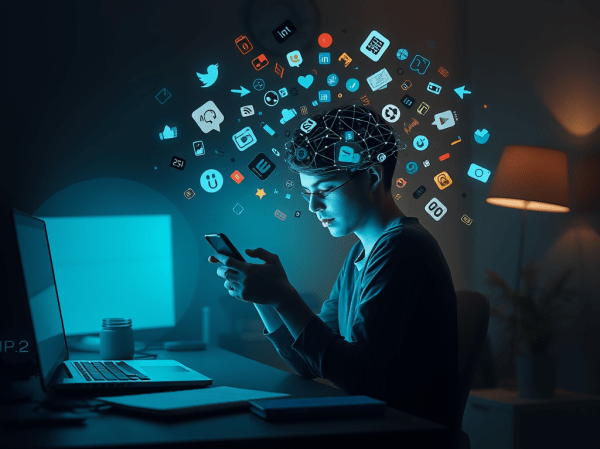
Scrolling through social media and digital content can have detrimental effects on mental health. The constant influx of information may lead to feelings of anxiety, stress, and decreased attention span. This behavior can trigger a cycle of comparison and self-doubt, impacting overall well-being.

To counteract these effects, it is recommended to take breaks from screens, engage in offline activities, and establish boundaries around social media use. Mindfulness practices, such as meditation or journaling, can also help foster a healthier relationship with technology. Prioritizing real-life connections and focusing on personal interests outside of digital platforms can contribute positively to mental health and improve life satisfaction.

Go to the source to read the entire article: Your Brain on Scrolling

Why Go Out When You Can Have the World Come to You?

Where do you find community? Third places offer belonging, yet many young people today have turned to social media instead of each other and it’s affecting their mental health.

The article “Why Go Out When You Can Have the World Come to You?” discusses the shift among young people from real-world social interactions to engaging with social media platforms. It highlights how this trend is impacting their sense of community and belonging, which are often found in “third places”—social environments outside of home and work. The author argues that while social media provides convenience and connection, it can negatively affect mental health by fostering isolation and diminishing real-life relationships. The piece emphasizes the importance of seeking out physical spaces where community can thrive, suggesting that engaging with others face-to-face is crucial for overall well-being.

Source: Why Go Out When You Can Have the World Come to You?


How the Engagement Algorithm Destroys Civil Society

Digital natives have every advantage in affluence and opportunity, yet no generation has been more conspicuously unhappy.

The article “How the Engagement Algorithm Destroys Civil Society” discusses the paradox of digital natives who, despite having unprecedented access to wealth and opportunities, are experiencing significant unhappiness. The author argues that the algorithms used by social media platforms prioritize engagement over well-being, resulting in a society where meaningful connections are undermined, and individuals feel more isolated. The article highlights the detrimental effects of this engagement-driven approach, suggesting that it not only harms individuals but also weakens the fabric of civil society by promoting divisiveness and superficial interactions. Overall, it calls for a reevaluation of how social media impacts our social structures and individual mental health.

Source: How the Engagement Algorithm Destroys Civil Society

Recommended reading:


Social Media as a Cause of Mental Health Problems

Criticisms of evidence suggesting causal relationships between social media and mental health problems have some scientific merit, but clinically are wide of the mark: Social Media as a Cause of Mental Health Problems

The Unseen Perils of Social Media

How technology’s invisible hand shapes our well-being—and what we can do about it. Source: The Unseen Perils of Social Media


Emotionally Intelligent Scrolling?

How positive psychology can improve your relationship with social media. Source: Emotionally Intelligent Scrolling?

btw, another strategy that the author doesn’t mention is using a tool like Inoreader to track only the sites, searches, sources and ‘someday/maybe’ info you find interesting. A feed reader gives you only what you want to actually see. Here’s a short intro…

Does Facebook Make People Unhappy?

A new study synthesizing information from almost 1 million people gives answers. Source: Does Facebook Make People Unhappy?

Reducing social media usage by just 15 minutes a day improves one’s well-being, research suggests

People who spend less time on platforms like Facebook, Twitter and Instagram are less likely to be depressed or lonely, a recent study found. Source: Reducing social media usage by just 15 minutes a day improves one’s well-being, research suggests

Why Do People Even Use Social Media?

We all have a basic drive to connect with others. Social media helps us do that. Source: Why Do People Even Use Social Media?

Facebook is getting stupider by the day

I’ve been seeing a lot about Facebook in the news lately and I’m pretty sure they have more pressing issues than policing a video I shared two years ago without comment!

How to Have a Healthier Relationship With Social Media

Put an end to the mindless doomscrolling, once and for all: How to Have a Healthier Relationship With Social Media

On privacy and your ‘online life’

Here are some (what I think) are compelling ideas on privacy and your ‘online life’ from multiple perspectives. Dig in!

How will these perspectives inform you? What, if any online behaviors will you change? I’m thinking about it…

Bonus!

#SMTPowerTalk 3; SEO in the Social Media Marketing Age

The power of podcasting: How to boost your reputation and search engine rankings

Podcasting is hot and a must-use SEO tactic, says contributor Sherry Bonelli. Here is Part 1 of a three-part series on how to use podcasts to boost your SEO and brand reputation.

Source: The power of podcasting: How to boost your reputation and search engine rankings – Search Engine Land

How to create content to support local SEO and rock the rankings

Are you looking for ways to increase your organic visibility and rankings in local search results?  Contributor Kristopher Jones shares how to shine in local search results using locally focused content. Source: How to create content to support local SEO and rock the rankings

Survey: Social Media Marketing Prioritized in SEO Efforts

Marketers are continuing to invest in SEO, and as they do so, research shows that they are shifting their focus toward social media marketing in the new year.

Source: Survey: Social Media Marketing Prioritized in SEO Efforts | KoMarketing

Top 10 Ways To Use Pinterest To Grow Your Business

Are you a pinterest user?

As the 3rd most popular social network site in the United States, having an active Pinterest strategy should be a priority for your small business. If you aren’t quite sure how exactly Pinterest can work for you, here are 10 great ways to use Pinterest for your small business, courtesy of Karen Leeland.

via Top 10 Ways To Use Pinterest To Grow Your Business.

The primary way I use Pinterest is to find and share great visual content. I can use it to find the right image or infographic for my post but having created a post that has rich visual content, I also want to use Pinterest to share that content from my blog so that it drives people to my website. Make sense? Questions? Feedback?

Do Not Build Your ‘Brand House’ On Rented Land…

English: House for sale near Ardlethen

Facebook, Google+ and other social networks are great tools, but in this week’s edition of This Old Marketing with Joe Pulizzi and Robert Rose, they reference a ‘readworthy’ article that I’ll be referencing from now on. Here’s a sample:

Quick: Name one successful publisher that built its brand on the back of a social platform? Can’t do it? Neither can I, unless you count sites like UpWorthy. And those flying near the social network sun risk getting seriously burned. There’s a reason publishers don’t build on top of social platforms: publishers are an independent lot, and they naturally understand the value of owning your own domain. Publishers don’t want to be beholden to the shifting sands of inscrutable platform policies. So why on earth would a brand?

Go to the source: To Be Clear: Do Not Build Your Brand House On Land You Don’t Own | John Battelle’s Search Blog.

I’ve been using this ‘concept’ of rented land in my courses for years so I’m sure it’s not original. John Batelle’s article is definitely worth the read. You can download Joe and Robert’s podcast here.

How to save things in Google+

One of my favorite clients is trying to get a handle on how to save things for later in Google+. Here’s a quick pass at a couple of ideas…

http://www.youtube.com/watch?v=cyfY8WXpSR8

The main thing is to keep the main thing the main thing, right? Here’s a minimalist workflow for content and thought leadership marketing that will help you get found when people are looking for you and what you do in the coming year…

tlwwflow

The beautiful thing about this simple workflow is that you have to do the reading anyway in order to maintain your expert status — why not turn it into thought leadership marketing? Also every tool is free and completely cross platform and it could all be executed from a $199 Chromebook. I explain here:

How could I explain this more clearly or make this post better? Comment below or use the contact form above…

Start a Blog at WordPress.com.

Up ↑