Richard Rohr writes: “When I entered the Franciscan novitiate in 1961, part of our training was learning to avoid, resist, and oppose all distractions. It was such poor teaching, but it was the only way they thought back then. It was all about willpower: celibacy through willpower, poverty through willpower, community through willpower. But what we need isn’t willpower; we need the power to surrender the will and to trust what is. That’s heroic! It was a fruitless and futile effort because if we start with negative energy, a “don’t,” we won’t get very far (see Romans 7:7–11). That was the extent of the teaching, and it’s really no teaching at all—it’s just “Don’t! Don’t do anything!” When we hear that, the ego immediately pushes back. Somedays we have strong willpower and we succeed, but most days we barely succeed.” Go to the Source: What We Resist Persists

Why Vacations Are So Good for the Brain
The power of a “brain-cation” in unleashing creativity. Source: Why Vacations Are So Good for the Brain
9 Men Reveal The Truth About Whether Successful Women Intimidate Them
Are smart, successful women intimidating? We asked men what they think. Source: 9 Men Reveal The Truth About Whether Successful Women Intimidate Them
Cutting and Running From Relationships Comes With a Cost
What makes you leave a relationship? Is it time to adjust your bottom lines? Source: Cutting and Running From Relationships Comes With a Cost
The Cure to Male Loneliness
“No gender has a lock on loneliness, but men in particular seem to be struggling with the basics of making friends today. Surveys indicate that men have seen a much sharper decline than women in their close friendships over the past 30 years; a higher percentage of men than women report having no close friends at all (15 percent versus 10 percent); men receive less emotional support from friends than do women; and they are less likely than women to admit being lonely, making it tough to gauge, much less address, their suffering.” Go to the source…
For the good
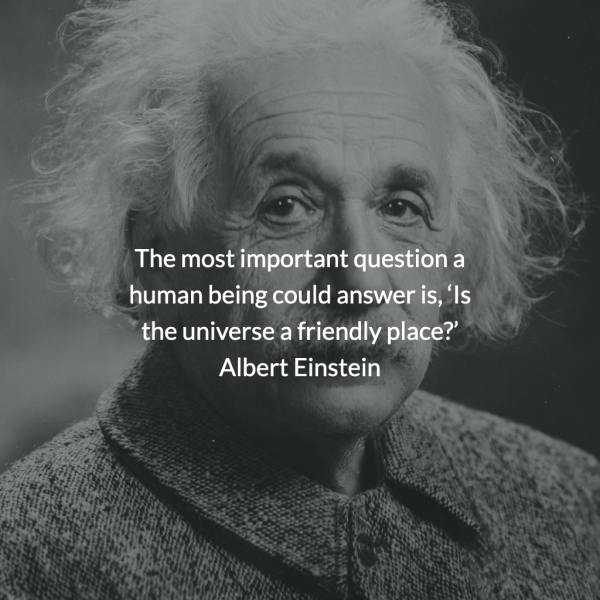
Karl Duffy writes ‘Albert Einstein once said that the most important question a human being could answer is, ‘Is the universe a friendly place?’ Source: For the good
The silent epidemic: loneliness
Loneliness and being alone may appear similar but have distinct differences. Being alone refers to physical solitude, where a person is by themselves without the presence of others. It is a state of being without companionship.
On the other hand, loneliness is an emotional state that arises from a sense of isolation or dissatisfaction with one’s social connections. It is possible to feel lonely even when surrounded by others, as it is more about the quality and depth of social interactions rather than the mere absence of people.
Being alone can be a choice and may provide an individual with solitude and self-reflection. It doesn’t necessarily lead to negative feelings. In fact, it can be a source of creativity, relaxation, and personal growth.
However, loneliness is generally considered undesirable and can have negative effects on mental and physical well-being. It can lead to feelings of emptiness, sadness, and a longing for meaningful connections. Loneliness can be temporary or chronic, and it’s important to address and alleviate it by nurturing social relationships, seeking support, and engaging in activities that foster a sense of belonging.
Are you alone or lonely? Your perspective may have a lot to do with how socially isolated you are or how much agency or choice you feel you have in the matter. Author and podcaster Andrew Marshall takes on this topic here with guest Dr. Sam Carr:
Self-Talk: How You Do It Matters a Lot
“What you say to yourself under your breath matters. It can shape how you feel and determine the quality of your life. It also shapes how you see the world, and it is your perception of the world that becomes your reality. For better or sometimes for worse, that little voice in your head helps you through the day or makes each day more difficult to bear.” Source: Self-Talk: How You Do It Matters a Lot | Psychology Today
Speaking to yourself like you would to a best friend
How you speak to yourself matters to your mental health. You will never speak to someone more than you speak to yourself in your head, so, rather than constantly self-criticising ourselves, Katy Moles suggests that we speak to ourselves how we would advise our best friend. Source: Speaking to yourself like you would to a best friend | MHT
The Noble Art of Self-Deception
“How is it possible to deceive oneself? Wouldn’t one immediately recognize the trickery if attempted? In reality, we are surprisingly adept at deceiving ourselves, often unconsciously. Psychologists have long understood that people live with various kinds of life lies, but self-deception manifests in many more contexts.” Source: The Noble Art of Self-Deception | Psychology Today
Nurturing Secure Attachment: Building Healthy Relationships
Secure attachment is a foundation of healthy and fulfilling relationships. Source: Nurturing Secure Attachment: Building Healthy Relationships
Leaving an Abusive Relationship: What I’ve Learned and How I’ve Moved On
Emotional, financial, psychological, or sexual abuse can be as damaging as physical. Here’s what I learned and how I moved on. Source: Leaving an Abusive Relationship: What I’ve Learned and How I’ve Moved On – Tiny Buddha
How People Change
“We create ourselves. The sequence is suffering, insight, will, action, change.” Source: How People Change: Psychoanalyst Allen Wheelis on the Essence of Freedom and the Two Elements of Self-Transcendence
The Truelove
Poet and Philosopher David Whyte on Reaching Beyond Our Limiting Beliefs About the Love We Deserve…
“There is a faith in loving fiercely
the one who is rightfully yours,
especially if you have
waited years and especially
if part of you never believed
you could deserve this
loved and beckoning hand
held out to you this way…”
Go to the source to read the rest of the poem and hear the author read it in his own voice: The Truelove: Poet and Philosopher David Whyte on Reaching Beyond Our Limiting Beliefs About the Love We Deserve
Meditation: Loving What Is by @TaraBrach
Tara Brach writes “while we might not directly love what is, there is a pathway to this inner freedom. As we explore in this meditation, we begin with allowing the changing sensations and emotions to move through us, just as they are. As this allowing presence deepens, it becomes suffused with the tenderness of love”…
In this choiceless, never ending flow of life
Dorothy Hunt
There is an infinite array of choices
One alone brings happiness
To love what is.
Discussing Relationships and Core Wounds with @ashleyberges
I’ve been spending a lot of time lately trying to understand my anxious attachment style. Ashley Berges is a trusted source for great advice as you’ll see here:
Aloneness to Oneness
“Only 5% of the stuff in our universe is made up of normal matter, but that is where most of us put 100% of our focus and attention. This creates an illusion of separateness where we believe we are alone and that when our material body dies, that’s the end. We even call this stuff “matter” because we believe it is all that matters. But, the other 95% of stuff in our universe is made up of energies and a mysterious dark matter, which actually govern our universe, our bodies, our experiences and our lives. This non-material universe can also be called the spiritual universe. As we tap into this spiritual dimension, we start to see how all things are connected, we see relationships, we feel energies, we sense intuition, and we discover the true nature of our mind. Todd Perelmuter takes us on a spiritual journey, from Aloneness to Oneness, where borders and barriers disappear, and open hearts and open minds take hold. It takes us to a place where anger, greed, hatred and fear cease to be, and only love, joy, peace and gratitude remain. Todd Perelmuter studied meditation and mindfulness from world-renowned teachers around the world for over 9 years. Upon his return to the States, he created EastWesticism, a nonprofit dedicated to helping everyone reach their highest potential and lead a peaceful, calm, and stress-free life.
Recommended reading; Raffaello Palandri
I recently connected with a very interesting person on WordPress; Raffaello Palandri. You can find his website here. He also has authored a few books that I’m interested in digging into. You can find them on Amazon…
Both are free for Amazon Unlimited customers…
6 Things to Remember When You Feel Anxious in Your Relationships
Me? I have an anxious attachment style so I need to read articles like this because I learn things like this:
“When you’re feeling anxious, you might cling, act controlling, or argue over minor issues that make you feel neglected or rejected—all behaviors that can cause someone to withdraw. I can’t even count the number of times I caused unnecessary drama because I assumed that because I felt insecure, someone else had done something to make me feel that way.
Everything changed when I recognized I could pause, recognize how I was feeling (and why), and then choose to respond from a place of calm awareness.
If you can learn to recognize when you’re feeling triggered, you can practice regulating your own nervous system—through deep breathing, for example—instead of inadvertently pushing the other person away.”
Sooo…
“If you feel anxious in relationships and worry about being rejected or abandoned, it may help to read these six things.” Source: 6 Things to Remember When You Feel Anxious in Your Relationships – Tiny Buddha
If you can relate I recommend this book…
What Marcus Aurelius Learned from His Father About Being a Good Man
Another excellent post from Ryan Holiday, this time about the things that Marcus Aurelius learned from his father:
A wholistic approach to human growth
A holistic approach to human growth is a way of thinking about and promoting human development that considers all aspects of a person’s life, including their physical, mental, emotional, social, and spiritual well-being. This approach recognizes that all of these aspects are interconnected and that a healthy and fulfilling life requires attention to all of them.
There are many different ways to promote holistic human growth. Some common approaches include:
- Physical health: Eating a healthy diet, getting regular exercise, and getting enough sleep are all important for physical health.
- Mental health: Maintaining positive relationships, practicing relaxation techniques, and seeking professional help if needed are all important for mental health.
- Emotional health: Learning how to express and manage emotions in a healthy way is important for emotional health.
- Social health: Building strong relationships with family and friends, participating in community activities, and learning how to resolve conflict are all important for social health.
- Spiritual health: Finding meaning and purpose in life, developing a personal belief system, and connecting with something larger than oneself are all important for spiritual health.
A holistic approach to human growth can be beneficial for people of all ages. It can help people to live longer, healthier, and happier lives. It can also help people to cope with challenges and to reach their full potential.

Here are some additional tips for promoting holistic human growth:
- Set goals for yourself in all areas of your life. This will help you to stay motivated and focused on your overall well-being.
- Make time for self-care. This could include activities such as reading, spending time in nature, or getting a massage.
- Be kind to yourself. Everyone makes mistakes. Don’t dwell on your failures. Instead, learn from them and move on.
- Find a support system. Having people who care about you and who can offer you support is essential for your emotional and social well-being.
- Be open to change. Life is constantly changing. Be willing to adapt to new challenges and opportunities.
By taking a holistic approach to human growth, you can create a life that is full of meaning, purpose, and joy.

You must be logged in to post a comment.