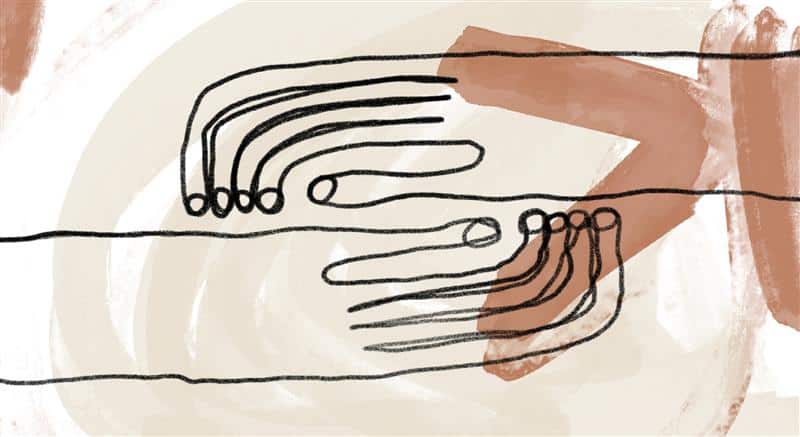
Creating God

If you’ve taken part in a religious service, have you ever stopped to think about how it all came to be? How did people become believers? Where did the rituals come from? And what purpose does it all serve? This week, we bring you a July 2018 episode with social psychologist Azim Shariff. He argues that we should consider religion from a Darwinian perspective, as an innovation that helped human societies to thrive and flourish.

In the July 2018 episode of Hidden Brain, social psychologist Azim Shariff explores the origins and evolution of religion from a Darwinian perspective. He discusses how religious beliefs and rituals may have served as innovations that contributed to the thriving and flourishing of human societies. By examining the reasons behind belief systems, Shariff encourages listeners to consider the adaptive functions of religion in shaping social cohesion and moral frameworks within communities. For more details, you can listen to the episode here.

Source: Creating God – Hidden Brain Media

Is Religion Good for Your Mental Health?

There is a long-standing idea in psychology that religious people live longer and healthier lives. New mental health research shows the answer isn’t quite so simple.

The article “Is Religion Good for Your Mental Health?” discusses the complex relationship between religion and mental well-being. While previous studies have suggested that religious individuals tend to live longer and healthier lives, new mental health research indicates that the connection may not be straightforward. The findings explore various factors that influence mental health, demonstrating that the benefits of religion can vary significantly among individuals. Overall, the article highlights the need for a nuanced understanding of the impact of religious beliefs on mental health.

Me personally? I would say it depends on the ‘religion’…

Source: Is Religion Good for Your Mental Health?

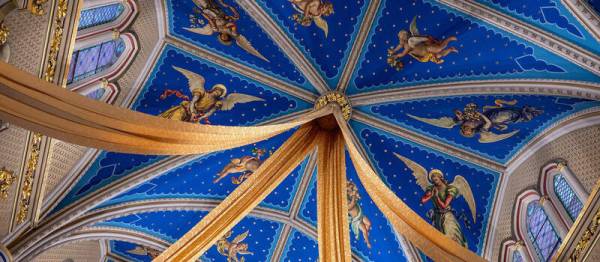
Basilica of the Sacred Heart

The Basilica serves as the University Church for the University of Notre Dame and as the mother church for the Congregation of Holy Cross in the United States. Source: Basilica of the Sacred Heart

What does it mean to be agnostic?

To be agnostic means to hold the belief that the existence of something, particularly in the context of religion or the supernatural, is unknowable or cannot be proven. Agnostics take the position that it is not possible to affirm or deny the existence of a higher power or ultimate reality with certainty. They often advocate for a skeptical or open-minded approach to questions of spirituality and prefer not to adhere to any specific religious or metaphysical beliefs. Agnosticism is derived from the Greek word “agnostos,” meaning “unknown” or “unknowable.”

Continue reading “What does it mean to be agnostic?”

Nonviolence Begins Within

“There is always a linkage between the inner journey of contemplation and our ability to work against violence in the world, in our culture, and in ourselves. As long as we bring to our actions a violence that primarily exists within ourselves, nothing really changes. The future is always the same as the present. That’s why we have to change the present.” Source: Nonviolence Begins Within

What We Resist Persists

Richard Rohr writes: “When I entered the Franciscan novitiate in 1961, part of our training was learning to avoid, resist, and oppose all distractions. It was such poor teaching, but it was the only way they thought back then. It was all about willpower: celibacy through willpower, poverty through willpower, community through willpower. But what we need isn’t willpower; we need the power to surrender the will and to trust what is. That’s heroic! It was a fruitless and futile effort because if we start with negative energy, a “don’t,” we won’t get very far (see Romans 7:7–11). That was the extent of the teaching, and it’s really no teaching at all—it’s just “Don’t! Don’t do anything!” When we hear that, the ego immediately pushes back. Somedays we have strong willpower and we succeed, but most days we barely succeed.” Go to the Source: What We Resist Persists

Recommended reading; Raffaello Palandri

I recently connected with a very interesting person on WordPress; Raffaello Palandri. You can find his website here. He also has authored a few books that I’m interested in digging into. You can find them on Amazon…


Both are free for Amazon Unlimited customers…

The Path of Right View

Koun Franz on seeing what’s in front of you, even the things you’d rather not see. Go to the Source for more: The Path of Right View – Lions Roar

What things do Buddhism and Greek Orthodoxy have in common?

Buddhism and Greek Orthodoxy are two of the world’s oldest religions, and they share a number of similarities. Here are a few of the things that Buddhism and Greek Orthodoxy have in common:

  • A focus on the individual: Both Buddhism and Greek Orthodoxy emphasize the importance of individual spiritual development. In Buddhism, this is achieved through the practice of meditation and mindfulness, while in Greek Orthodoxy, it is achieved through prayer, fasting, and good works.
  • A belief in karma: Both Buddhism and Greek Orthodoxy believe in the law of karma, which states that every action has a reaction. This belief encourages people to live moral lives and to avoid doing harm to others.
  • A focus on compassion: Both Buddhism and Greek Orthodoxy emphasize the importance of compassion for others. This compassion is expressed in both religions through acts of charity and kindness.
  • A belief in the afterlife: Both Buddhism and Greek Orthodoxy believe in an afterlife, although they have different views on what happens after death. In Buddhism, the goal is to achieve nirvana, which is a state of perfect peace and enlightenment. In Greek Orthodoxy, the goal is to be reunited with God in heaven.
Continue reading “What things do Buddhism and Greek Orthodoxy have in common?”

Start a Blog at WordPress.com.

Up ↑