“There is always a linkage between the inner journey of contemplation and our ability to work against violence in the world, in our culture, and in ourselves. As long as we bring to our actions a violence that primarily exists within ourselves, nothing really changes. The future is always the same as the present. That’s why we have to change the present.” Source: Nonviolence Begins Within
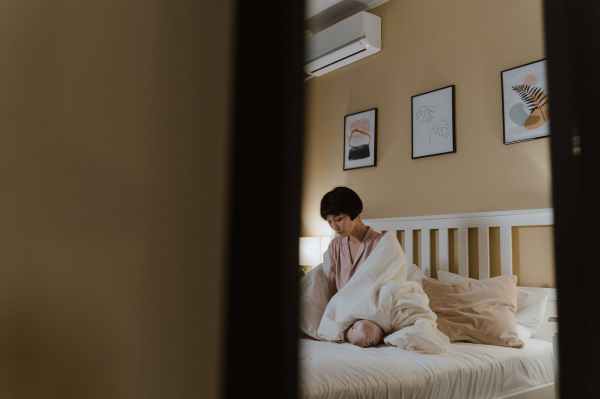
Loneliness and being alone may appear similar but have distinct differences. Being alone refers to physical solitude, where a person is by themselves without the presence of others. It is a state of being without companionship.
On the other hand, loneliness is an emotional state that arises from a sense of isolation or dissatisfaction with one’s social connections. It is possible to feel lonely even when surrounded by others, as it is more about the quality and depth of social interactions rather than the mere absence of people.
Being alone can be a choice and may provide an individual with solitude and self-reflection. It doesn’t necessarily lead to negative feelings. In fact, it can be a source of creativity, relaxation, and personal growth.
However, loneliness is generally considered undesirable and can have negative effects on mental and physical well-being. It can lead to feelings of emptiness, sadness, and a longing for meaningful connections. Loneliness can be temporary or chronic, and it’s important to address and alleviate it by nurturing social relationships, seeking support, and engaging in activities that foster a sense of belonging.
Are you alone or lonely? Your perspective may have a lot to do with how socially isolated you are or how much agency or choice you feel you have in the matter. Author and podcaster Andrew Marshall takes on this topic here with guest Dr. Sam Carr:
Andrew Marshall writes “If you love someone and they love you, shouldn’t you be able to tell them if something they do upsets you? It is a beautiful thought and something I’m sure most people would agree on.
But how can you do it in a loving way—a way that won’t be heard as criticism? Having spent 35 years listening to couples arguing, I have also had plenty of opportunities to think about how to turn this ambition into a reality.” Source: Why Does My Partner Only Hear Criticism?
First, I’m not a mental health professional but I’m surprised to find an article that addresses this issue without mentioning confirmation bias or non-violent communication. Let’s look into those ideas in hopes it will add to the original article.
“A couple is out of sync when one partner wants a more intimate relationship while the other wants more time for self. When men and women are young, she is typically the partner who wants more intimacy; kissing, caressing, embracing, and cuddling may be more satisfying to her than intercourse. At midlife, she may develop a need for self-fulfillment that makes intimacy less important to her, while she also has increased sexual self-confidence and finds greater satisfaction in intercourse. Orgasm, more easily achieved, may take on a new significance in her erotic life. But now, inspired by his changing physiology, he wants more tenderness in their lovemaking, and more shared confidences in their afterplay. Intimacy has become more meaningful and important to him. Early in the relationship, she may have complained he doesn’t have enough “we” and too much “I.” Now she is reveling in her “I” time, while he is craving more “we.”” Source: Getting in Intimacy-Sync With a Partner | Psychology Today
A new analysis finds loneliness and social isolation could lead to early death.
“The analysis found people who experienced social isolation had a 32% higher risk of dying early compared to those who were not socially isolated. Participants who experienced loneliness were 14% more likely to die early compared to those who did not. Researchers explain that’s most likely because social isolation means a lack of contact with people, whereas participants who are lonely have contact with others, but feel less strong connections.” Source: Loneliness Harms Your Health
On a personal note, I thought I was struggling with loneliness but reading this I think the issue could actually be social isolation. Over the past year, I have worked from home, lived with a cat and rarely see other people in my day to day comings and goings. I’m blessed with a beautiful love relationship, but even that is long distance. I’m getting ready to make some big changes to address all these things but I’m still for the most part living in isolation for at least the next month. The key for me is to continue to build good habits during isolation…
Vikki Stark M.S.W., M.F.T. writes “Shaman Joseph White Wolf told us about when he first got to know his wife who had been married before. She traced a big square in the air and told him that she had a map of her life with all the pieces in place in this square, just like she liked them. Her family, her home, her work, her friends – she liked the life she had constructed for herself. Then she said, “Now I see your little nose poking up into the corner of my map. I’ll let you come inside but you need to know, I’m not changing any of it for you. So you’re welcome to come into my life but you have to be a plus because my life is good just as it already is.”
This article resonates with me. I have met a brilliant, beautiful, bad-ass banker who has a ‘map’ like that. Vikki’s perspective validates what my intuition told me from the beginning: the map she constructed was a big part of what made her attractive in the first place — to try to change any of that would be the worst mistake I ever made! Now every day I wake up in gratitude for the knowing of her, aiming to be that ‘plus’. that ‘cherry on top of her sundae’. You can read the rest of Vikki’s article here: Learning to Trust After Romantic Abandonment
Poet and Philosopher David Whyte on Reaching Beyond Our Limiting Beliefs About the Love We Deserve…
“There is a faith in loving fiercely the one who is rightfully yours, especially if you have waited years and especially if part of you never believed you could deserve this loved and beckoning hand held out to you this way…”
Healthy interdependence is a dynamic and balanced relationship where individuals or entities mutually rely on and support one another while maintaining their autonomy. Here are some characteristics of healthy interdependence:
Mutual Respect: Each party recognizes and values the needs, rights, and boundaries of the other, promoting a sense of fairness and equality.
Effective Communication: Open and honest communication allows for clear expression of thoughts, feelings, and needs, leading to better understanding and conflict resolution.
Cooperation and Collaboration: Individuals work together towards common goals, pooling their resources, skills, and strengths to achieve shared objectives.
Interpersonal Boundaries: Healthy interdependence respects personal boundaries, allowing each person to maintain their individuality, autonomy, and self-care.
Reciprocity: Both parties contribute and benefit from the relationship, providing support, assistance, and understanding when needed.
Trust and Reliability: Trust forms the foundation of healthy interdependence, where each party can rely on the other to fulfill their commitments and keep their word.
Encouragement and Empowerment: Healthy interdependence involves supporting and empowering each other’s personal growth, success, and well-being.
Remember, healthy interdependence is about balance and cooperation, where the needs and well-being of both parties are equally valued and fostered. By the way, if you enjoyed these thoughts, you might also enjoy a previous post on how a healthy relationship is like taking a bike ride with your partner…
Attachment theory, developed by psychologist John Bowlby, proposes that individuals develop specific attachment styles based on their early experiences with caregivers. Insecure attachment styles are characterized by difficulties in forming and maintaining healthy relationships. There are three main types of insecure attachment styles:
Anxious-Preoccupied Attachment: Individuals with this attachment style often feel a constant need for reassurance and fear abandonment. They may be clingy, possessive, and highly emotional in their relationships. They tend to exaggerate problems and seek constant validation from their partners.
Dismissive-Avoidant Attachment: People with this attachment style are uncomfortable with emotional intimacy and tend to avoid it. They may appear emotionally distant, self-reliant, and dismissive of their own or others’ needs. They often value independence and may have difficulty relying on others.
Fearful-Avoidant Attachment: Individuals with this attachment style have a mix of anxious and avoidant traits. They desire close relationships but are afraid of intimacy and potential rejection. They may have low self-esteem, struggle with trust, and frequently experience a push-pull dynamic in their relationships.
It’s important to note that attachment styles can evolve and change over time with self-awareness and personal growth. Understanding your attachment style can provide insights into your relationship patterns and help you cultivate healthier and more fulfilling connections with others.



















 Bright, shiny objects!
You must be logged in to post a comment.